

Growth and Development
Stages of Growth & Development – Lesson 2
Home science
1
Stages of
Growth and
Development
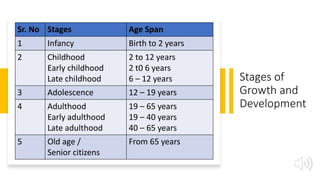
Sr. No Stages Age Span
1 Infancy Birth to 2 years
2 Childhood
Early childhood
Late childhood
2 to 12 years
2 t0 6 years
6 – 12 years
3 Adolescence 12 – 19 years
4 Adulthood
Early adulthood
Late adulthood
19 – 65 years
19 – 40 years
40 – 65 years
5 Old age /
Senior citizens
From 65 years
Infancy
• Birth to one year
• Period of rapid growth
• Males are usually
heavier and taller than
females at birth
3
4
Early Childhood
• One year to six years of age
• Gradual loss of “baby fat”
• Girls lose less fat than boys
• Rapid growth but not as rapid as infancy
• Quite flexible
• Muscle development while at play
Mid-Childhood
Six to ten years of age
Slower, more constant growth
Improved coordination and motor
functioning
Late Childhood – 6 to 12 years
• Increased rate of growth
• Fat deposition just prior to adolescent
growth spurt
• 9-10 years of age in girls
• 11-12 years of age in boys
Individual differences in maturation
• Development of the reproductive system
• Appearance of secondary sex characteristics
• Breasts
• Pubic Hair
Redistribution of body weight
• Boys - muscle tissue, body fat
• Girls - slight body fat
5
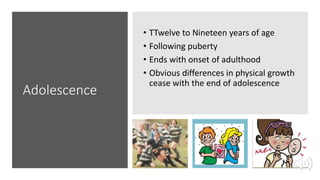
Adolescence
• TTwelve to Nineteen years of age
• Following puberty
• Ends with onset of adulthood
• Obvious differences in physical growth
cease with the end of adolescence
Maturation &
learning
• These two interact always
• Growth in height is not learnt but a
biological process
• Speaking, walking etc depend on
maturation and learning
• Maturation refers to qualitative and
quantitative changes that occur
independent of external conditions
• Learning implies experience and
exercise
Physical
Development
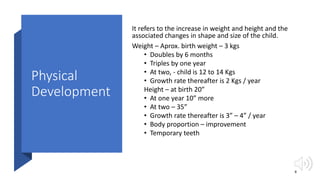
It refers to the increase in weight and height and the
associated changes in shape and size of the child.
Weight – Aprox. birth weight – 3 kgs
• Doubles by 6 months
• Triples by one year
• At two, - child is 12 to 14 Kgs
• Growth rate thereafter is 2 Kgs / year
Height – at birth 20”
• At one year 10” more
• At two – 35”
• Growth rate thereafter is 3” – 4” / year
• Body proportion – improvement
• Temporary teeth
8
Physical
Development
9
At Age 5 child weighs
about 35 pounds and is
35-40” tall.
Girls at this age are
shorter and weigh less
than the boys of that age.
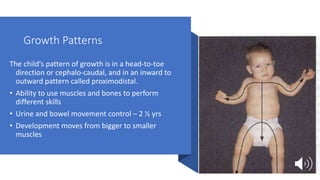
Growth Patterns
The child’s pattern of growth is in a head-to-toe
direction or cephalo-caudal, and in an inward to
outward pattern called proximodistal.
• Ability to use muscles and bones to perform
different skills
• Urine and bowel movement control – 2 ½ yrs
• Development moves from bigger to smaller
muscles
Growth
Patterns
contd…
• Comparison of a child’s development with
the benchmark helps to determine whether
developmental milestones are met.
• Slight variations may be possible
• Some may show reversal of the recognized
order or skip some phases.
• Red flag – when the developmental
milestones are not met with it is called a red
flag. Parents will then consult doctors or
other professionals.
11
Growth and
Development
End of Lesson 2
12

Growth and developoment lesson 2

  • 1.
    Growth and Development Stagesof Growth & Development – Lesson 2 Home science 1
  • 2.
    Stages of Growth and Development Sr.No Stages Age Span 1 Infancy Birth to 2 years 2 Childhood Early childhood Late childhood 2 to 12 years 2 t0 6 years 6 – 12 years 3 Adolescence 12 – 19 years 4 Adulthood Early adulthood Late adulthood 19 – 65 years 19 – 40 years 40 – 65 years 5 Old age / Senior citizens From 65 years
  • 3.
    Infancy • Birth toone year • Period of rapid growth • Males are usually heavier and taller than females at birth 3
  • 4.
    4 Early Childhood • Oneyear to six years of age • Gradual loss of “baby fat” • Girls lose less fat than boys • Rapid growth but not as rapid as infancy • Quite flexible • Muscle development while at play Mid-Childhood Six to ten years of age Slower, more constant growth Improved coordination and motor functioning
  • 5.
    Late Childhood –6 to 12 years • Increased rate of growth • Fat deposition just prior to adolescent growth spurt • 9-10 years of age in girls • 11-12 years of age in boys Individual differences in maturation • Development of the reproductive system • Appearance of secondary sex characteristics • Breasts • Pubic Hair Redistribution of body weight • Boys - muscle tissue, body fat • Girls - slight body fat 5
  • 6.
    Adolescence • TTwelve toNineteen years of age • Following puberty • Ends with onset of adulthood • Obvious differences in physical growth cease with the end of adolescence
  • 7.
    Maturation & learning • Thesetwo interact always • Growth in height is not learnt but a biological process • Speaking, walking etc depend on maturation and learning • Maturation refers to qualitative and quantitative changes that occur independent of external conditions • Learning implies experience and exercise
  • 8.
    Physical Development It refers tothe increase in weight and height and the associated changes in shape and size of the child. Weight – Aprox. birth weight – 3 kgs • Doubles by 6 months • Triples by one year • At two, - child is 12 to 14 Kgs • Growth rate thereafter is 2 Kgs / year Height – at birth 20” • At one year 10” more • At two – 35” • Growth rate thereafter is 3” – 4” / year • Body proportion – improvement • Temporary teeth 8
  • 9.
    Physical Development 9 At Age 5child weighs about 35 pounds and is 35-40” tall. Girls at this age are shorter and weigh less than the boys of that age.
  • 10.
    Growth Patterns The child’spattern of growth is in a head-to-toe direction or cephalo-caudal, and in an inward to outward pattern called proximodistal. • Ability to use muscles and bones to perform different skills • Urine and bowel movement control – 2 ½ yrs • Development moves from bigger to smaller muscles
  • 11.
    Growth Patterns contd… • Comparison ofa child’s development with the benchmark helps to determine whether developmental milestones are met. • Slight variations may be possible • Some may show reversal of the recognized order or skip some phases. • Red flag – when the developmental milestones are not met with it is called a red flag. Parents will then consult doctors or other professionals. 11
  • 12.