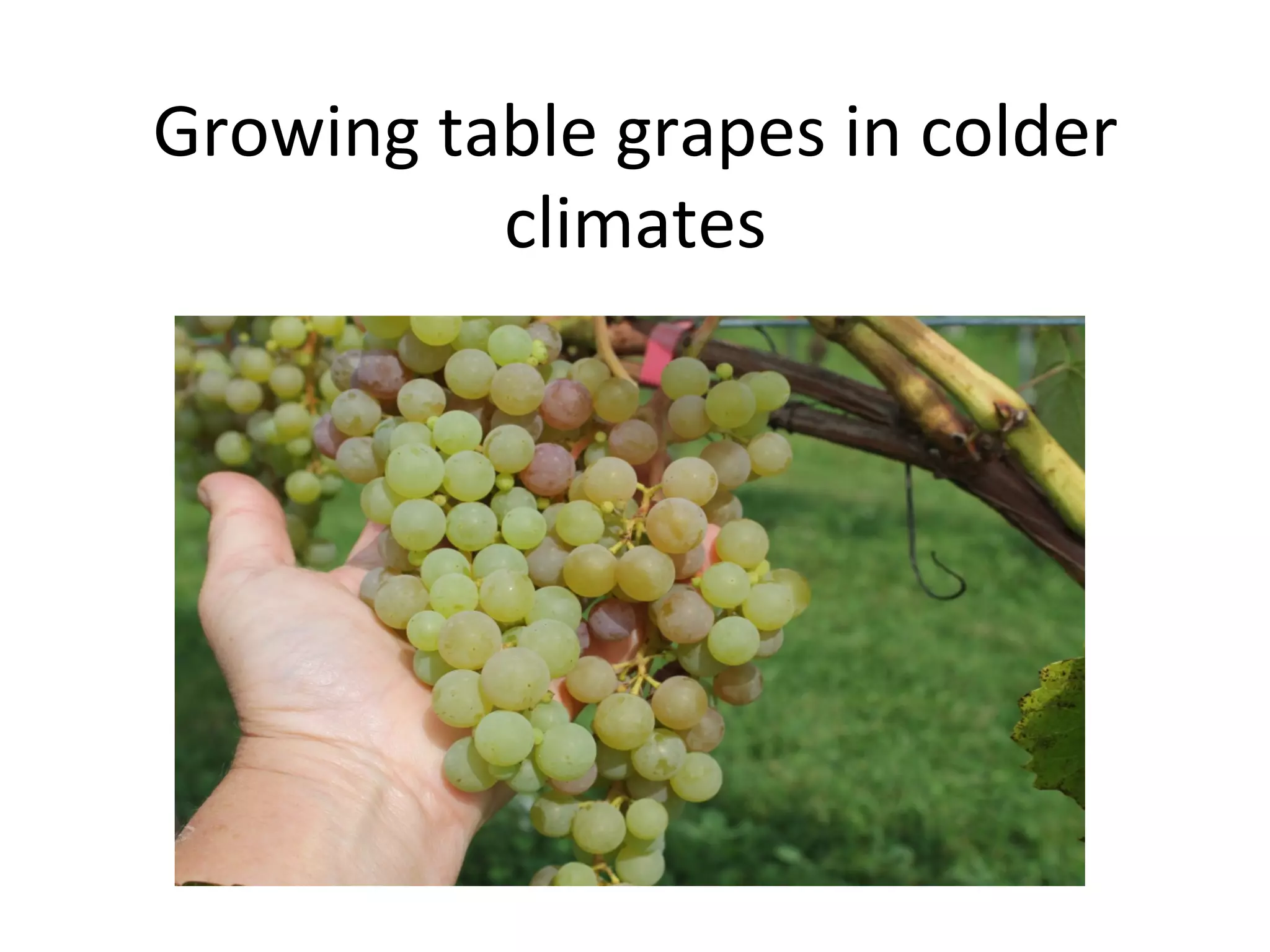
Growing	
  table	
  grapes	
  in	
  colder	
  
climates	
  
What	
  is	
  a	
  table	
  grape?	
  
•  Very	
  simply	
  a	
  table	
  grape	
  is	
  a	
  grape	
  that	
  we	
  like	
  to	
  eat	
  ,	
  
just	
  like	
  that!	
  
•  Some	
  considera>ons	
  when	
  choosing	
  a	
  table	
  grape	
  
•  Flavour	
  
•  Color	
  
•  Size	
  
•  Texture	
  	
  
•  Seedless	
  
•  Customers	
  don’t	
  object	
  to	
  seeds	
  when	
  the	
  grapes	
  are	
  
larger.	
  Small	
  grapes	
  with	
  lots	
  of	
  seeds	
  are	
  not	
  
acceptable	
  
Why	
  do	
  we	
  try	
  growing	
  table	
  grapes?	
  
•  Some	
  success	
  with	
  wine	
  grapes	
  in	
  our	
  general	
  	
  
area	
  
•  New	
  product	
  for	
  our	
  farm	
  
•  Time	
  to	
  try	
  something	
  different	
  and	
  a	
  bit	
  
exo>c	
  
•  Market	
  exists	
  for	
  this	
  product	
  
•  Someone	
  told	
  me	
  it	
  couldn’t	
  be	
  done..	
  
Steps	
  I	
  took	
  to	
  establish	
  my	
  small	
  
vineyard	
  
•  Get	
  informed-­‐	
  research	
  
•  Training	
  
•  Visits	
  area	
  vineyards	
  
•  Ask	
  ques>ons	
  
•  Go	
  for	
  it..	
  Jump	
  right	
  in!	
  
Site	
  considera>ons	
  
•  All	
  grapes	
  do	
  best	
  in	
  well	
  drained	
  soils.	
  If	
  the	
  
water	
  table	
  is	
  above	
  60cm,	
  you	
  will	
  have	
  
problems	
  
•  Best	
  on	
  a	
  southern	
  facing	
  slope	
  but	
  not	
  
essen>al	
  
•  Wind	
  direc>on-­‐	
  know	
  where	
  your	
  
predominant	
  winds	
  are	
  in	
  spring	
  and	
  summer	
  
Soil	
  prepara>on	
  
•  Soil	
  sample	
  to	
  determine	
  what	
  you	
  have	
  	
  in	
  
nutrients	
  
•  Prepare	
  for	
  soil	
  amendments	
  if	
  necessary	
  
•  Aim	
  for	
  a	
  pH	
  of	
  at	
  least	
  5.6	
  best	
  over	
  6.0	
  
•  Do	
  not	
  over	
  fer>lize.	
  Check	
  nitrogen	
  levels,	
  
too	
  much	
  and	
  you	
  will	
  have	
  too	
  much	
  vine	
  
and	
  no	
  fruits.	
  
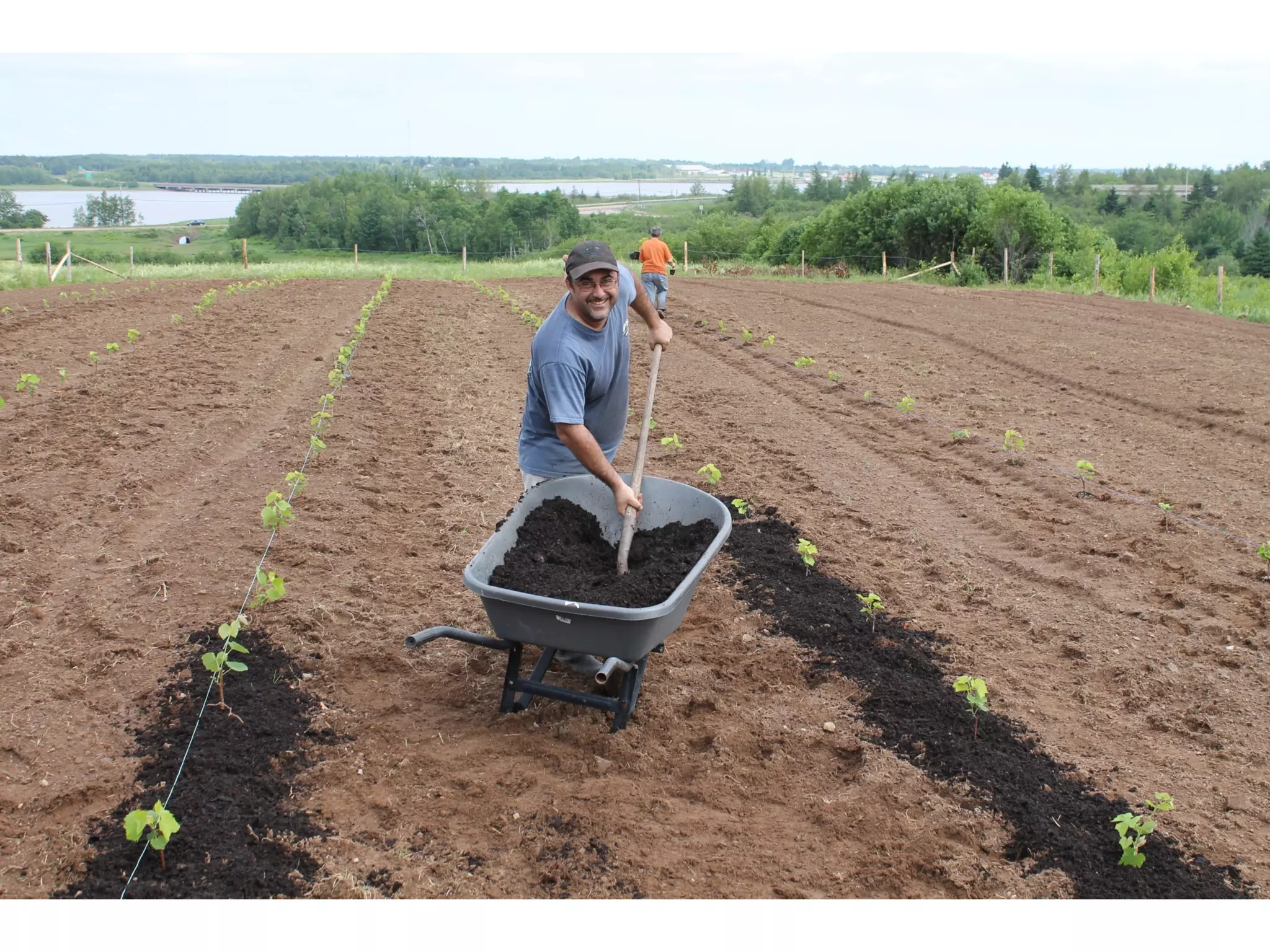
•  5t/ha	
  compost	
  before	
  plan>ng	
  and	
  every	
  5	
  
years	
  is	
  recommended.	
  
Recommended	
  varie>es	
  
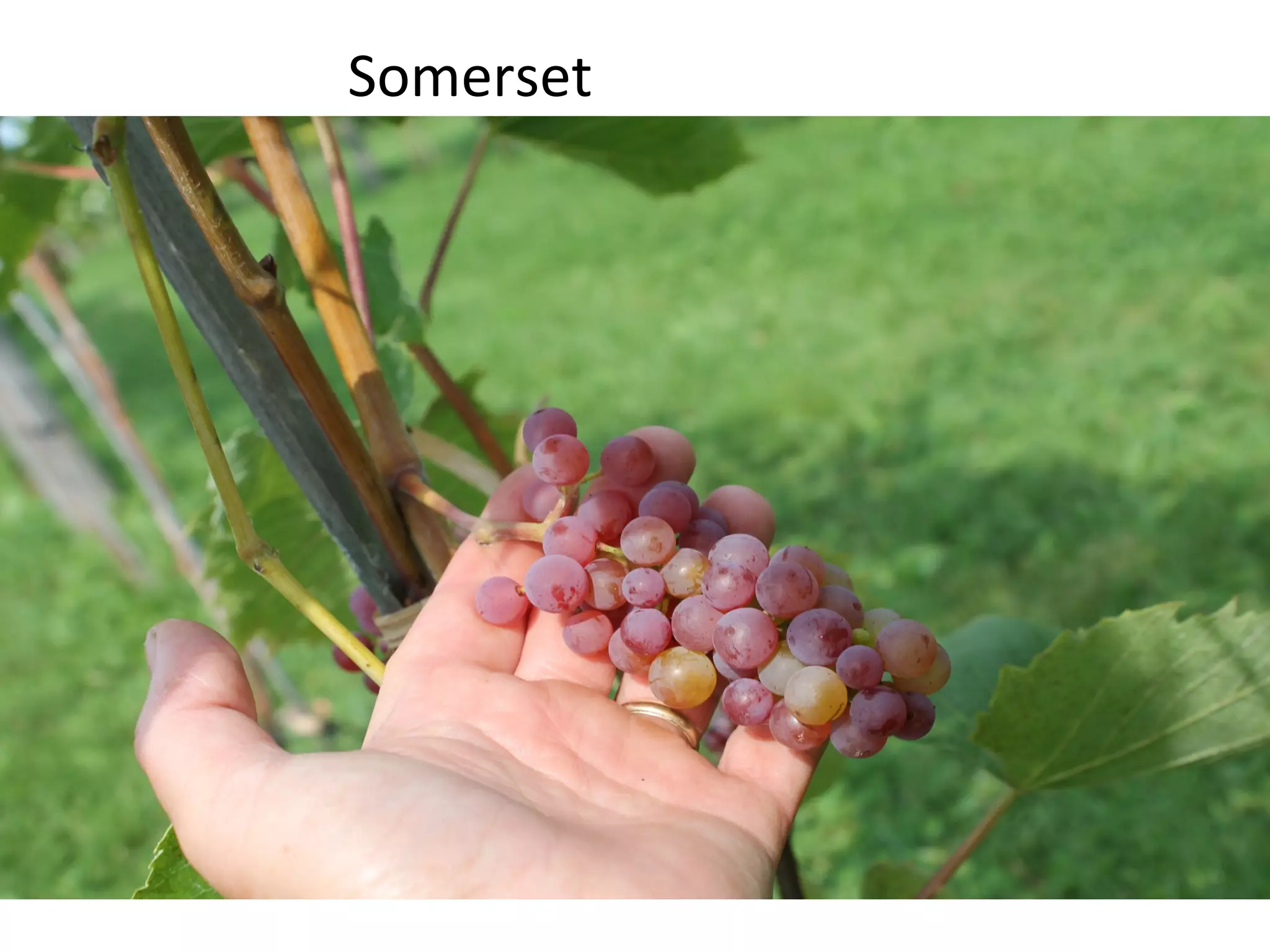
•  Sommerset-­‐	
  very	
  early	
  	
  seedless	
  red..	
  highly	
  recommended	
  
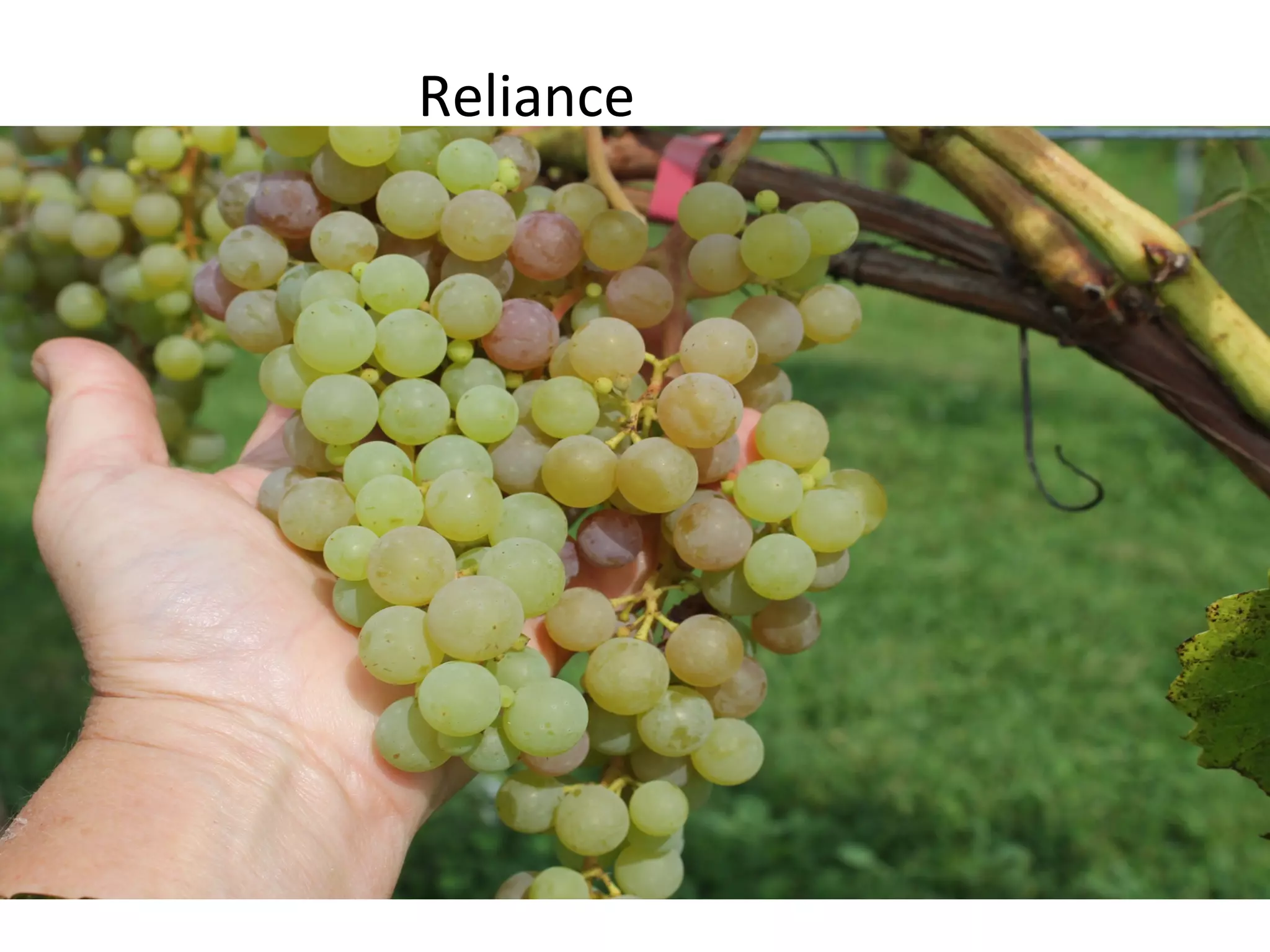
•  Reliance-­‐	
  mid	
  season	
  seedless	
  red-­‐	
  notes	
  of	
  grapefruit	
  flavor	
  is	
  excellent	
  
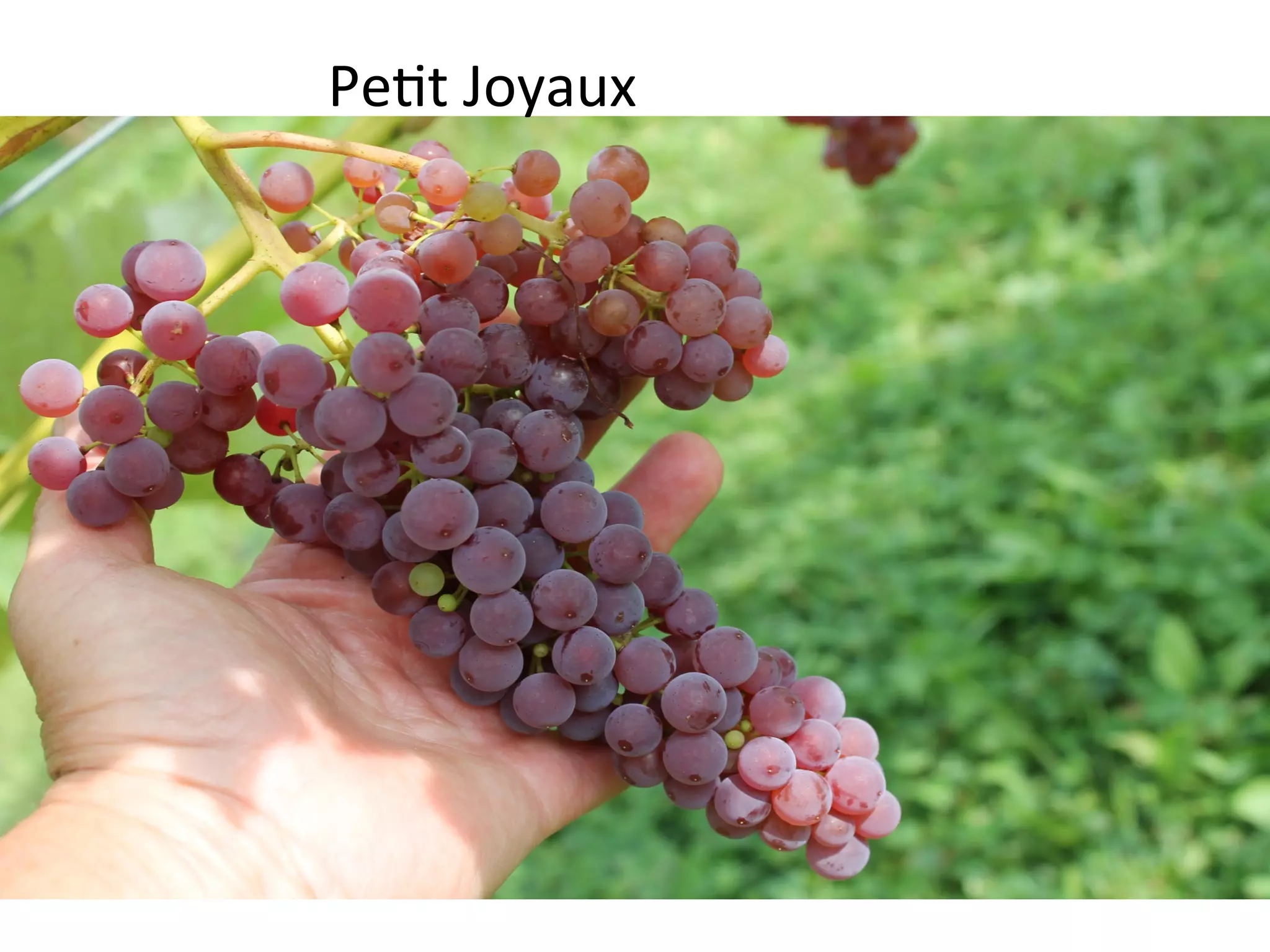
•  Pe/t	
  Joyaux	
  -­‐very	
  early	
  small	
  seedless	
  red-­‐nice	
  uniform	
  color	
  
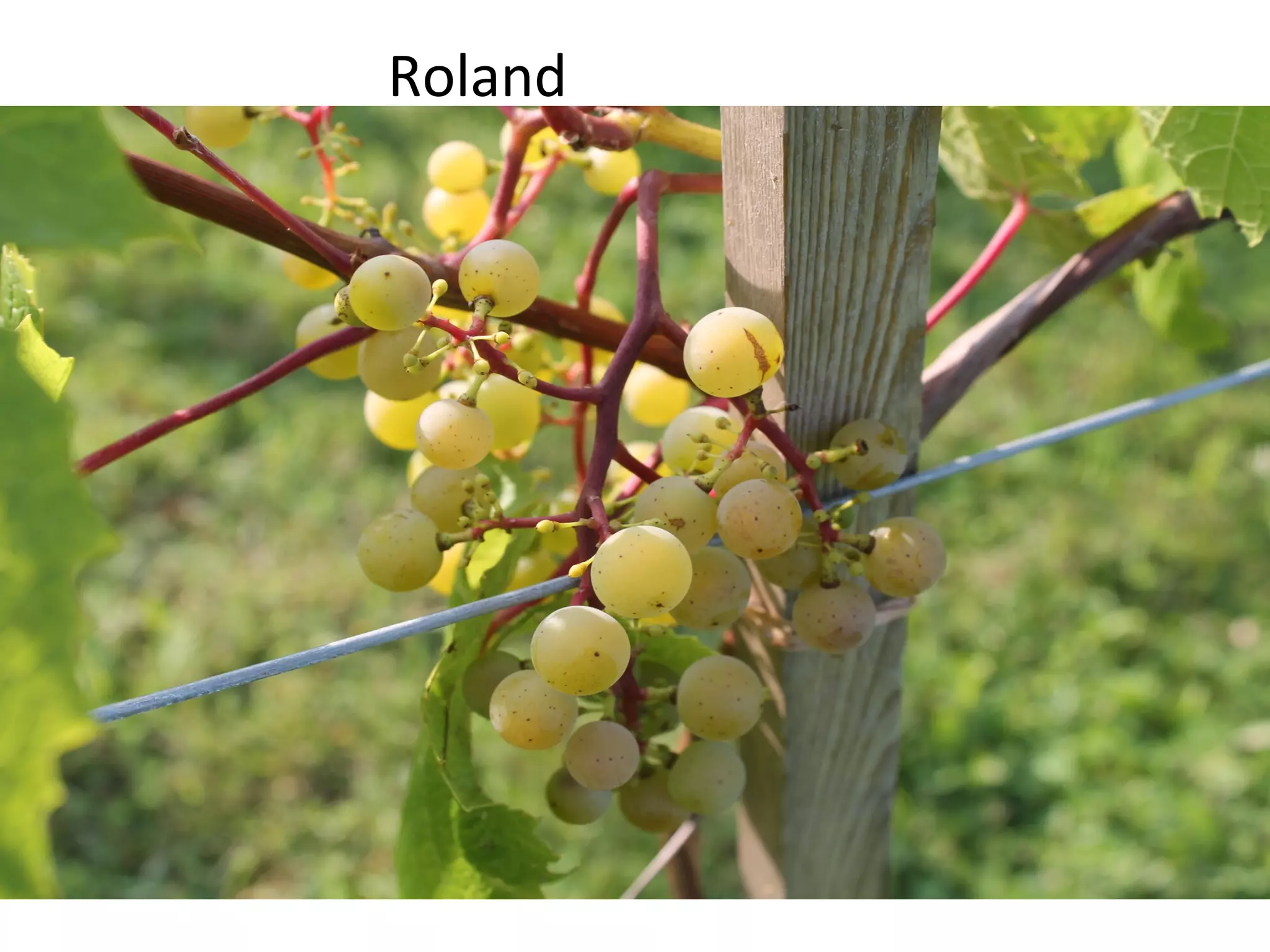
•  Roland-­‐	
  very	
  early	
  seeded	
  green-­‐	
  excep>onal	
  flavor	
  
•  Himrod-­‐	
  mid	
  season	
  seedless	
  green-­‐	
  doesn’t	
  keep	
  long	
  aZer	
  harvest	
  but	
  good	
  flavor-­‐	
  
sensi>ve	
  to	
  cold	
  
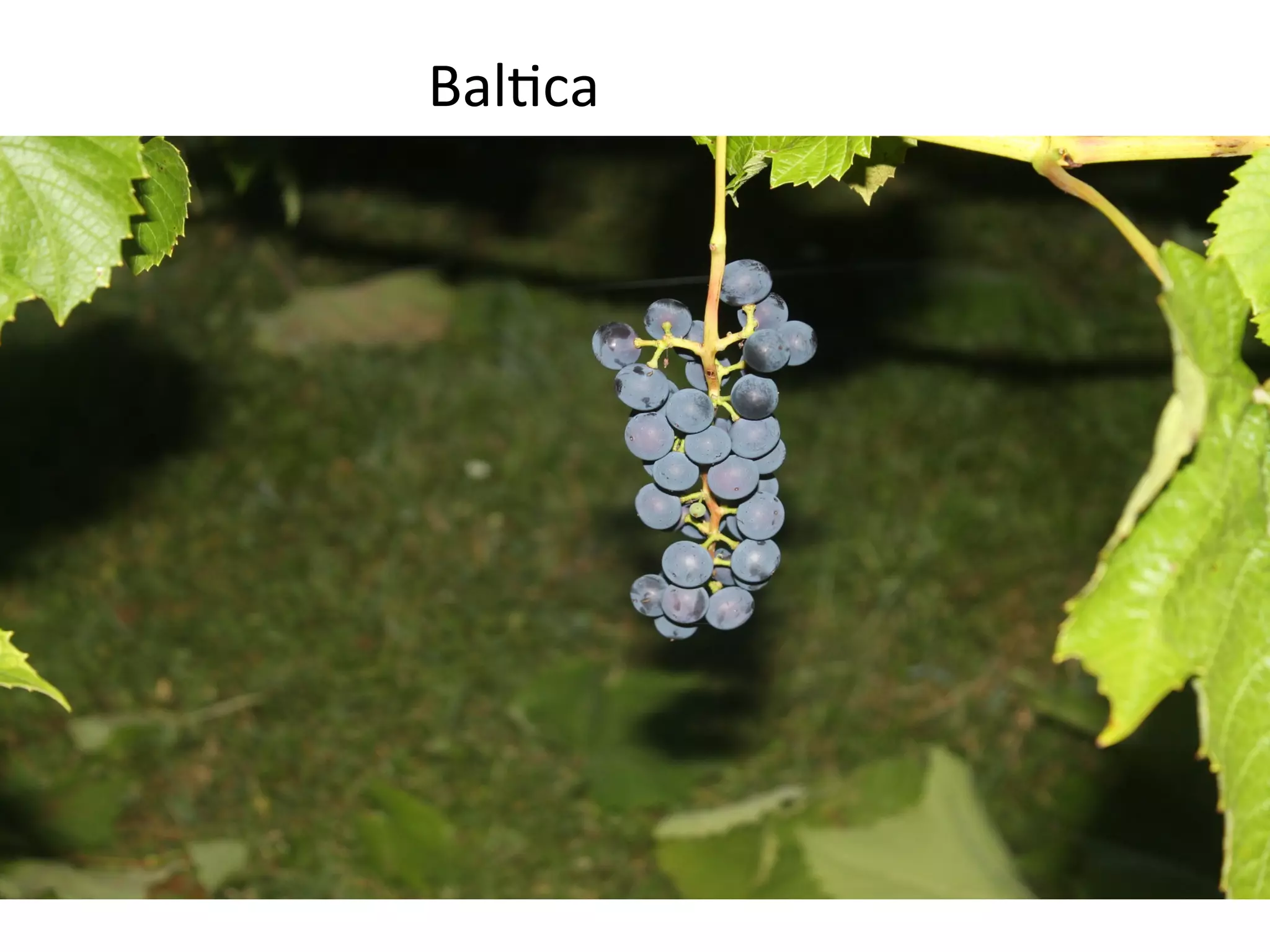
•  Bal/ca-­‐	
  very	
  early	
  seeded	
  blue-­‐	
  labrusca	
  flavor	
  
•  Canadice-­‐	
  mid	
  season	
  seedless	
  red-­‐	
  very	
  sweet	
  
•  Montreal	
  Blue-­‐	
  late	
  seedless	
  blue-­‐	
  acidic	
  
•  Bluebell	
  	
  mid	
  season	
  seeded	
  blue-­‐	
  labrusca	
  flavors(	
  like	
  Valiant-­‐	
  Concord)	
  
•  Brianna-­‐	
  mid	
  season	
  green-­‐	
  lots	
  of	
  seeds-­‐	
  pineapple	
  flavor	
  
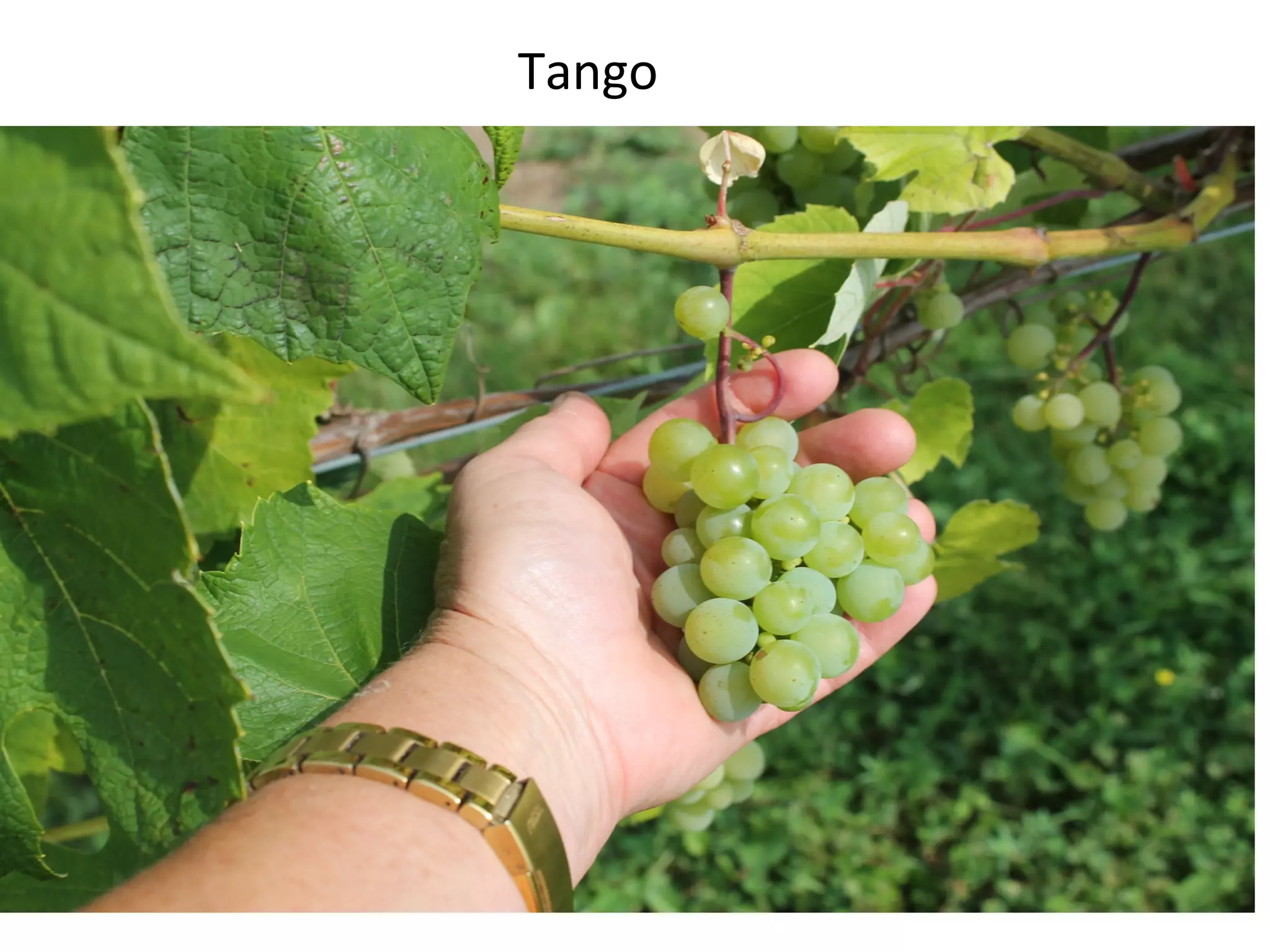
•  Tango-­‐	
  mid	
  season	
  green-­‐seeded,	
  tangerine	
  -­‐	
  honey	
  flavor	
  
•  Kandioyi	
  	
  late	
  season	
  large	
  blue	
  seeded-­‐	
  large	
  fruit	
  but	
  not	
  overly	
  flavorful	
  
•  Sovereign	
  corona>on-­‐	
  mid	
  season	
  seedless	
  blue-­‐	
  good	
  flavor	
  but	
  does	
  not	
  produce	
  a	
  
large	
  crop	
  
•  Swenson	
  red-­‐	
  mid	
  season	
  red	
  ,	
  seeded,	
  keeps	
  long	
  aZer	
  harvest	
  
•  Troll-­‐	
  very	
  early	
  seeded	
  blue-­‐	
  small	
  bunches	
  
•  New	
  York	
  Muscat-­‐	
  mid	
  to	
  late	
  season,	
  bleu-­‐	
  excep>onal	
  flavor	
  
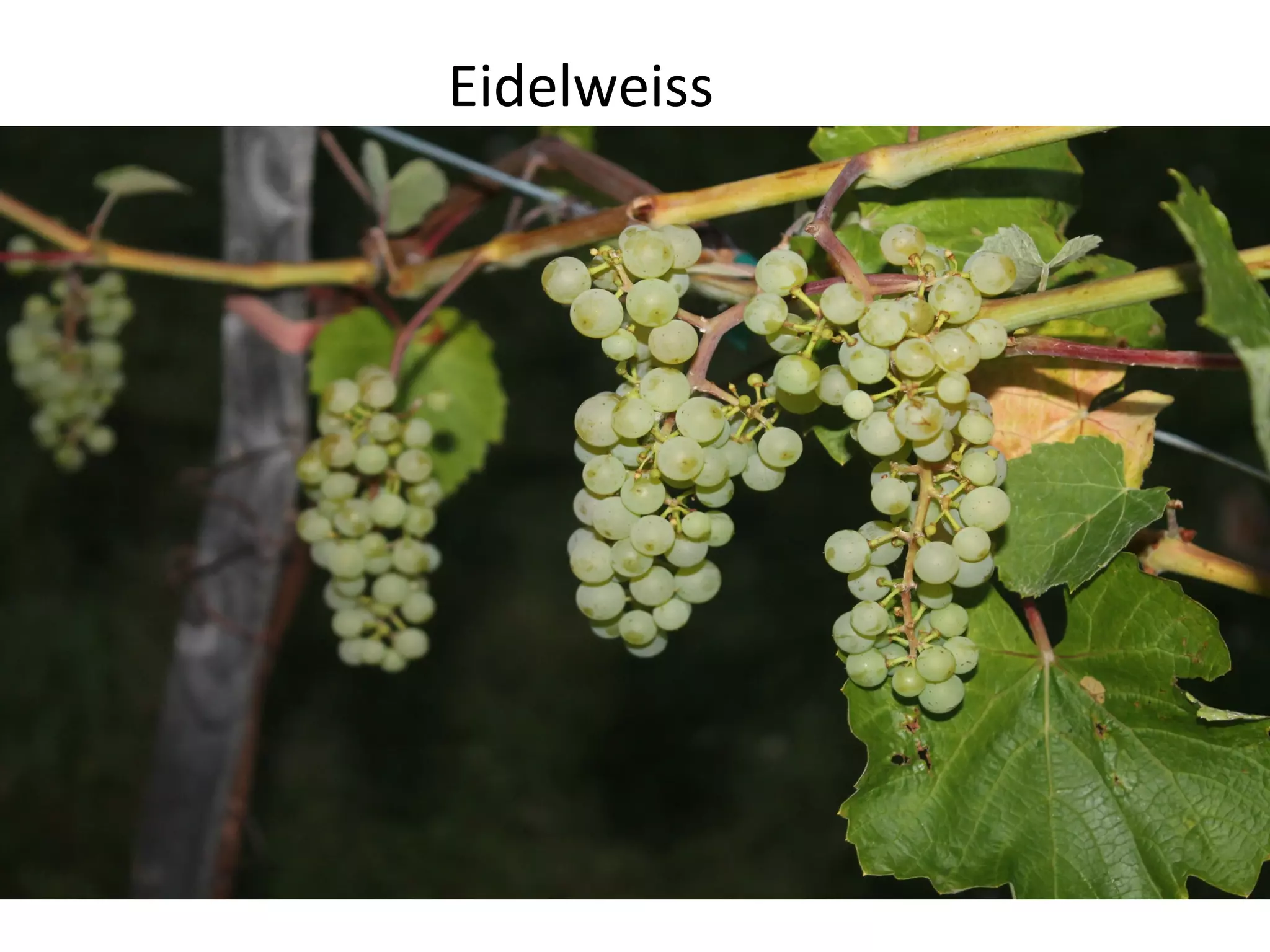
•  Eidelweiss-­‐	
  mid	
  season-­‐	
  green-­‐	
  labrusca	
  flavor	
  
Establishing	
  plan>ng	
  
	
  Get	
  plants	
  or	
  cu`ngs	
  from	
  disease	
  
free	
  stock.	
  
We	
  purchased	
  from	
  Claude	
  Gelineau	
  
St.	
  Gerome	
  (Quebec)	
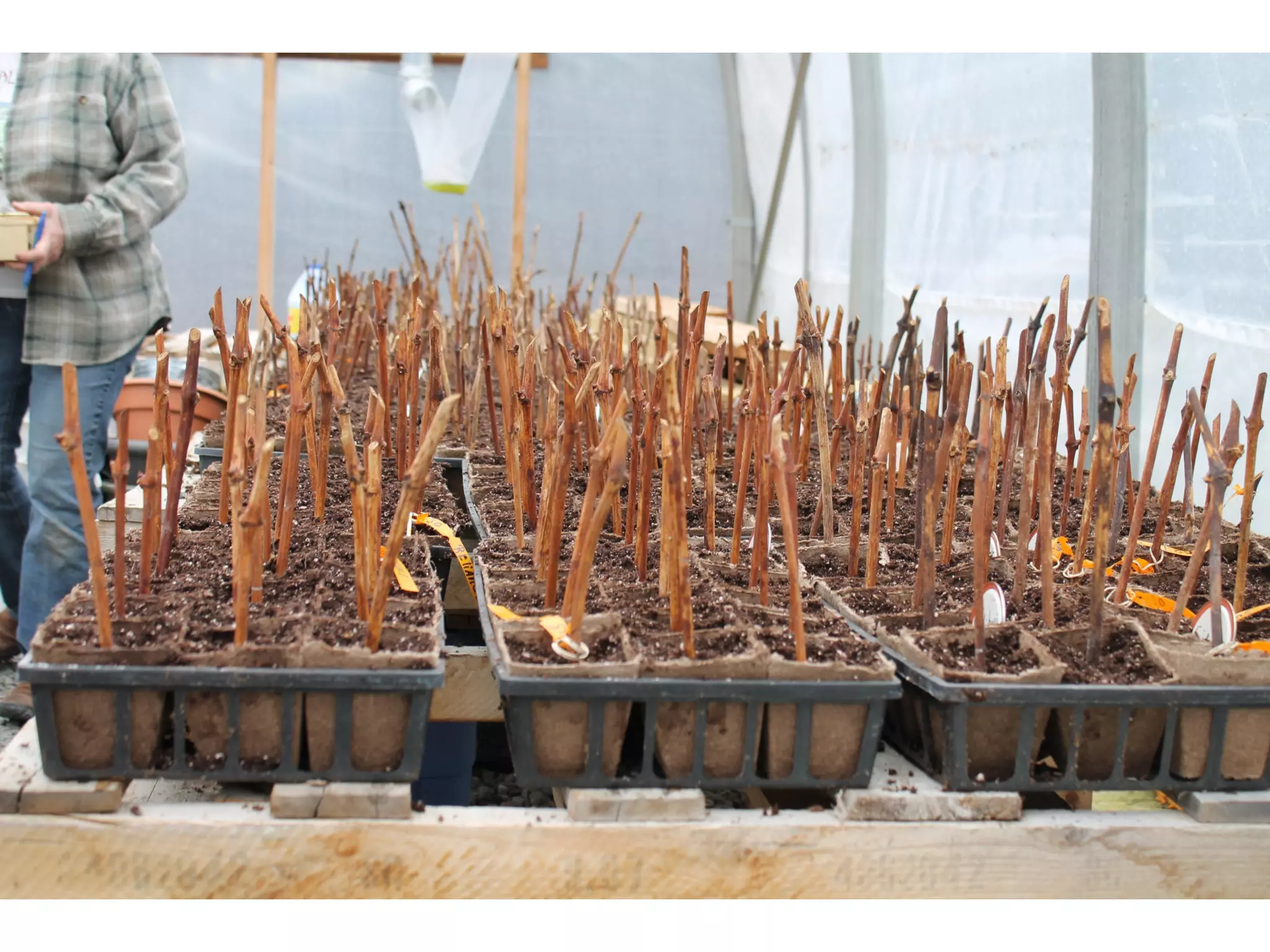
  500+	
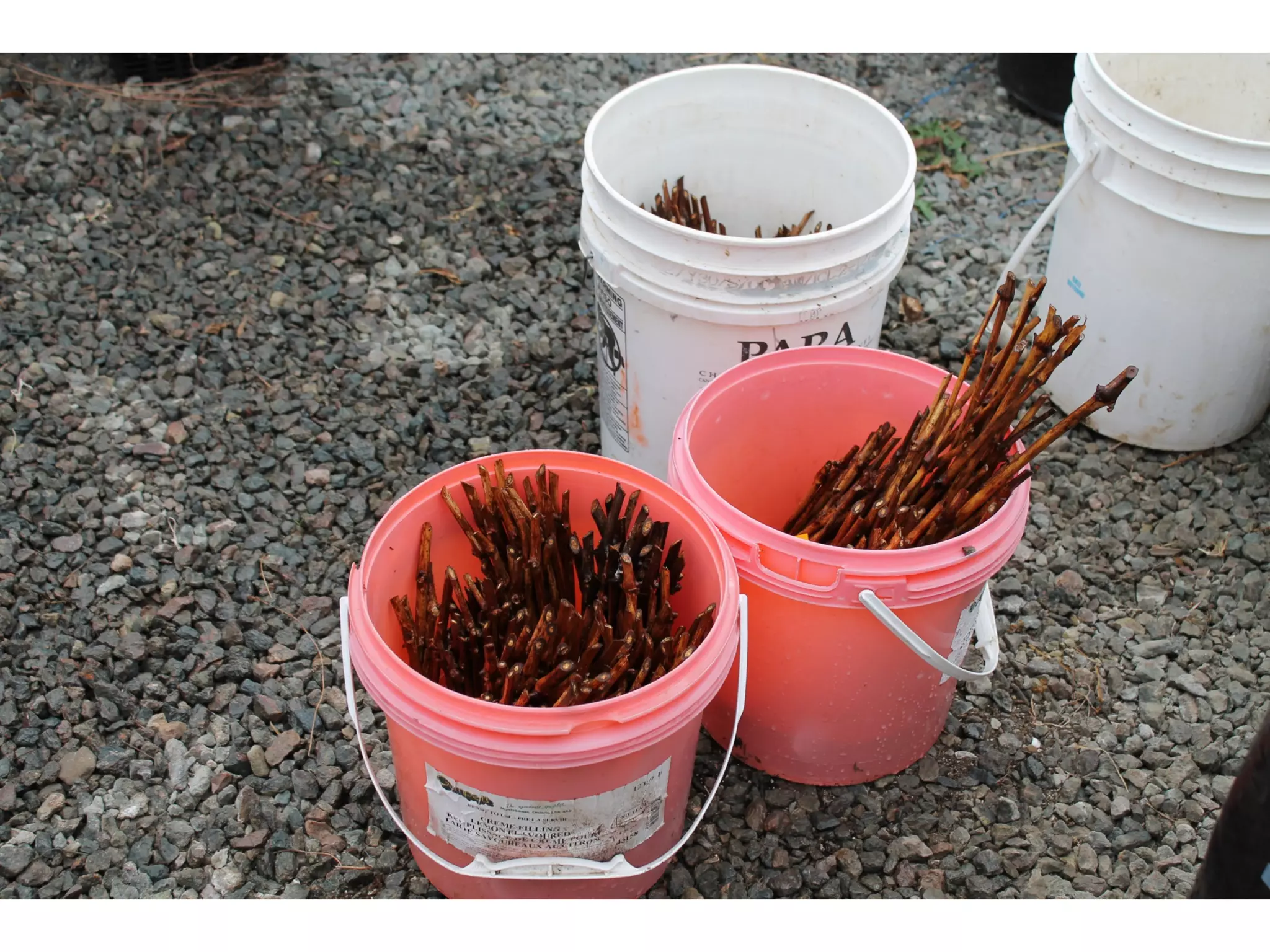
  dormant	
  
cu`ngs	
  in	
  late	
  2012.	
  	
  
Store	
  cu`ngs	
  at	
  1C	
  wrapped	
  in	
  damp	
  
newspapers	
  or	
  wood	
  shavings,	
  in	
  a	
  
plas>c	
  bag.	
  
•  Early	
  spring	
  
•  Soak	
  cu`ngs	
  in	
  a	
  couple	
  of	
  inches	
  of	
  water	
  
overnight	
  to	
  ensure	
  that	
  they	
  are	
  well	
  
hydrated.	
  
•  Sani>ze	
  by	
  dipping	
  for	
  30	
  seconds	
  in	
  a	
  solu>on	
  
of	
  5%	
  	
  hydrogen	
  peroxide.	
  	
  
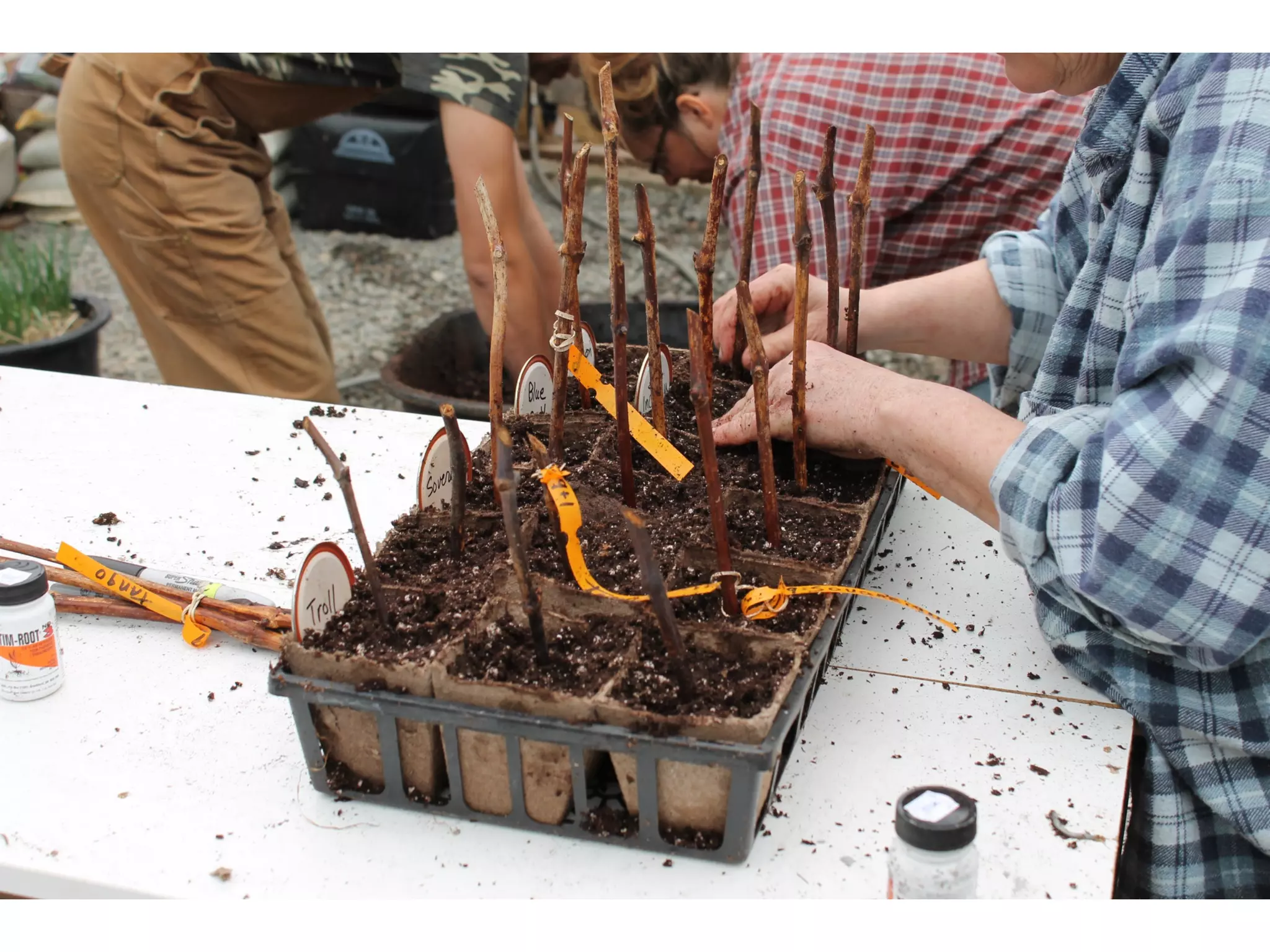
•  Pot	
  	
  
•  Place	
  in	
  greenhouse	
  and	
  keep	
  well	
  watered	
  
•  Between	
  40%-­‐90%	
  of	
  cu`ngs	
  rooted	
  
depending	
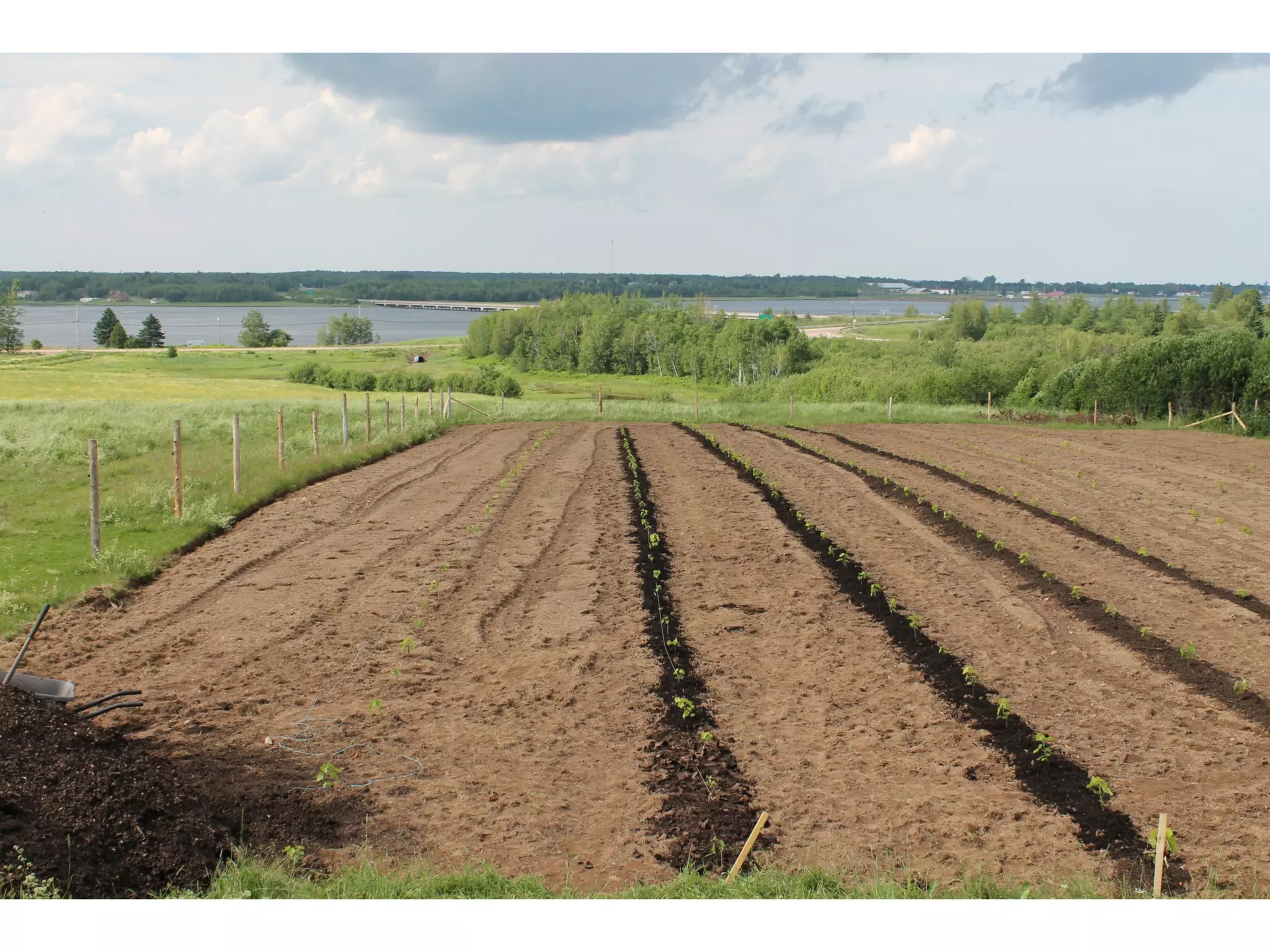
  on	
  the	
  variety.	
  
Field	
  plan>ng	
  
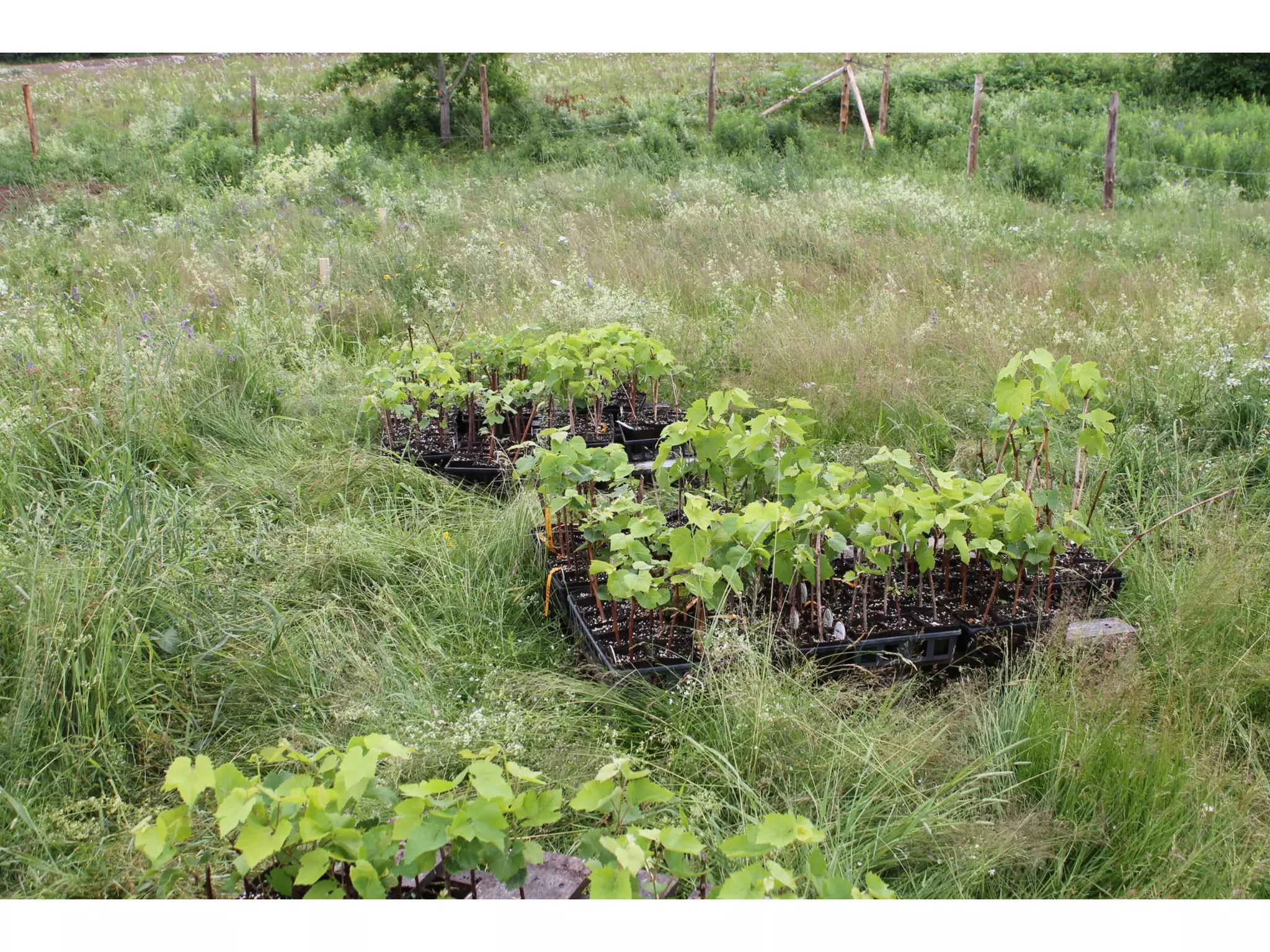
•  Harden	
  off	
  cu`ngs	
  	
  
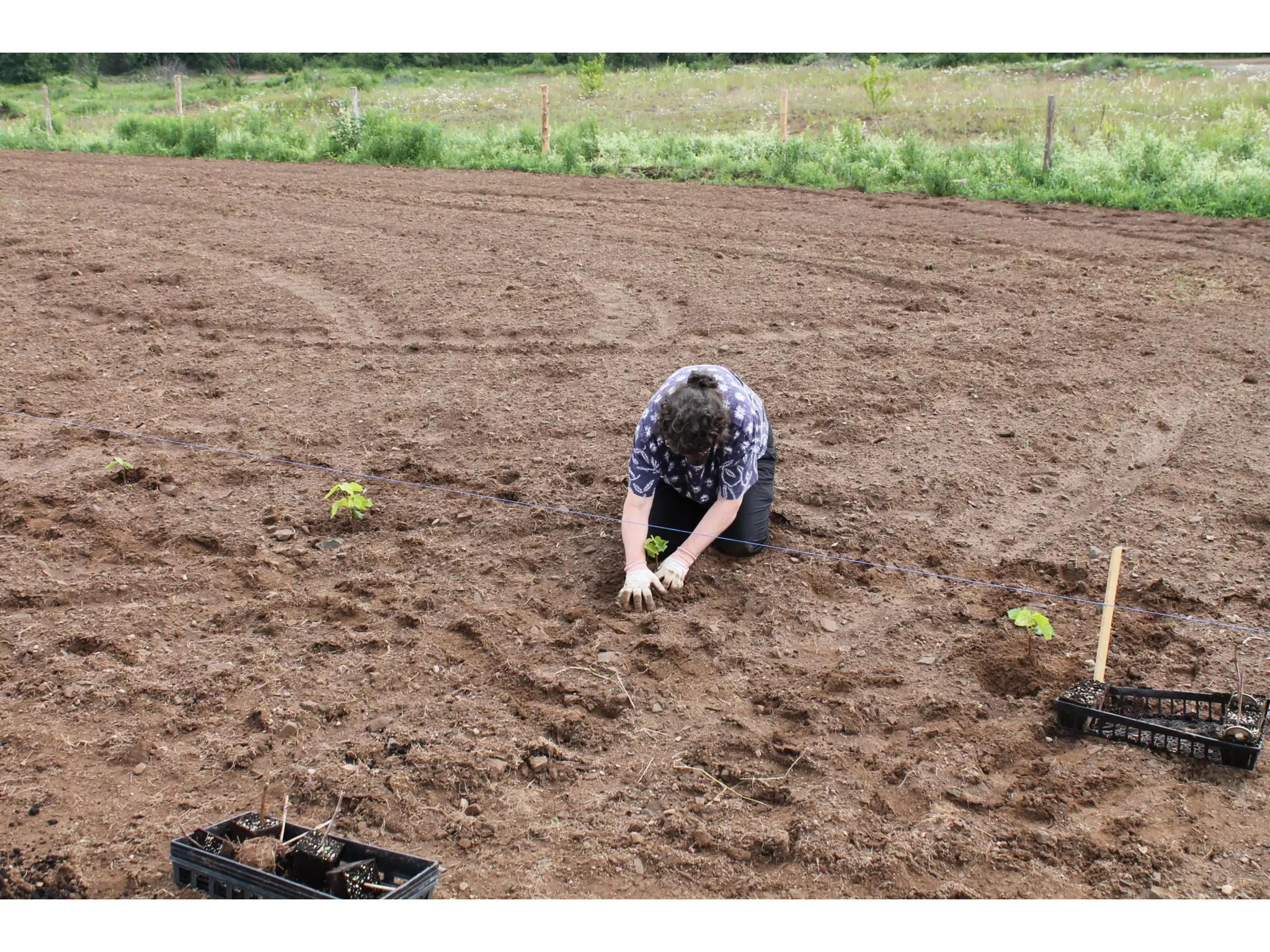
•  Prepare	
  field	
  	
  
•  Plant	
  
•  Add	
  soil	
  amendments	
  if	
  not	
  done	
  already	
  
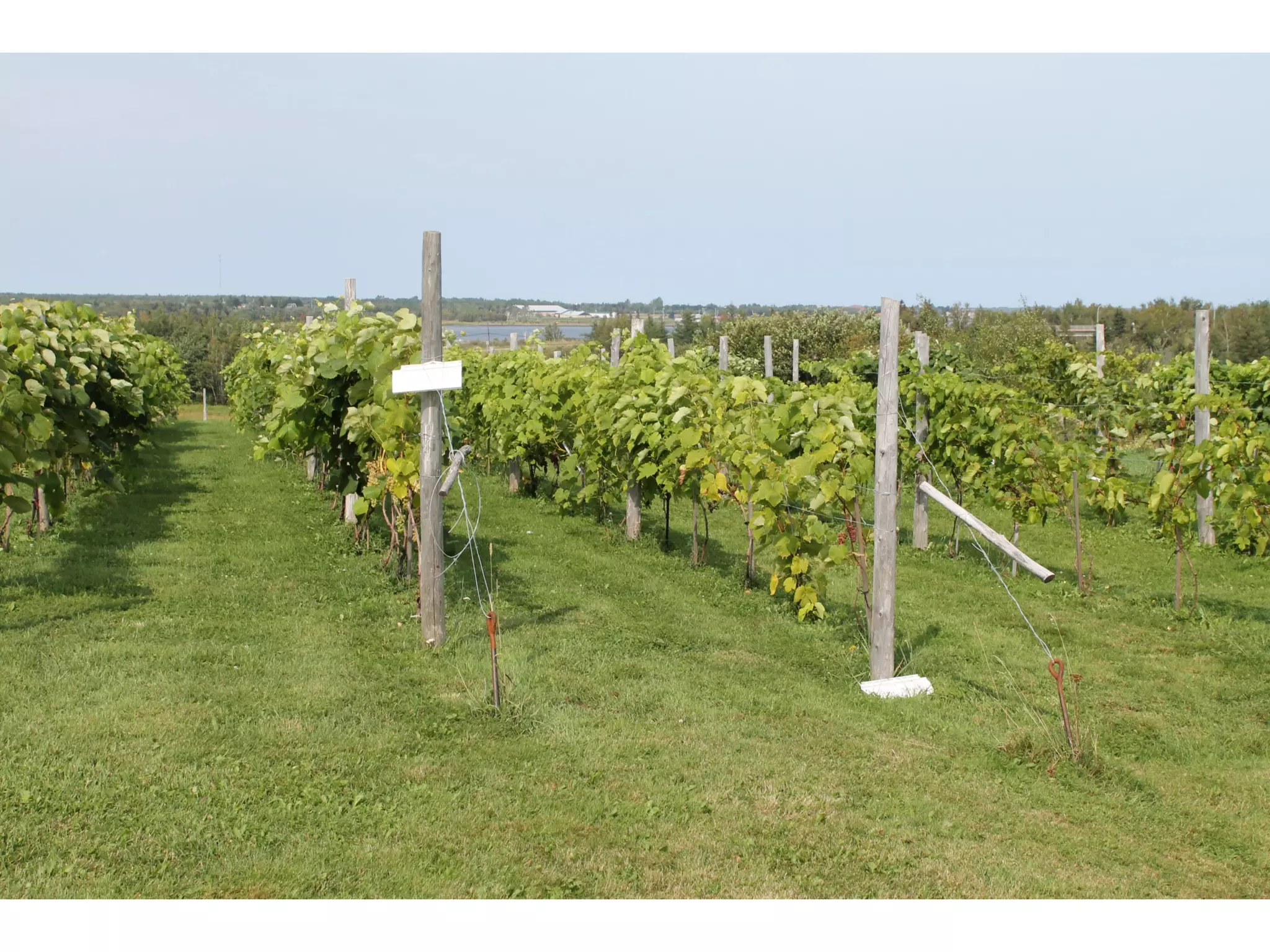
•  Install	
  drip	
  irriga>on	
  
•  Stake	
  plants	
  
•  Install	
  trellis	
  systems	
  
•  Keep	
  weed	
  free	
  1m	
  around	
  each	
  plant	
  
Drip	
  irriga>on	
  system	
  
Year	
  2	
  
•  Con>nue	
  to	
  irrigate	
  if	
  necessary	
  
•  Con>nue	
  to	
  maintain	
  a	
  weed	
  free	
  strip	
  around	
  
the	
  vines	
  
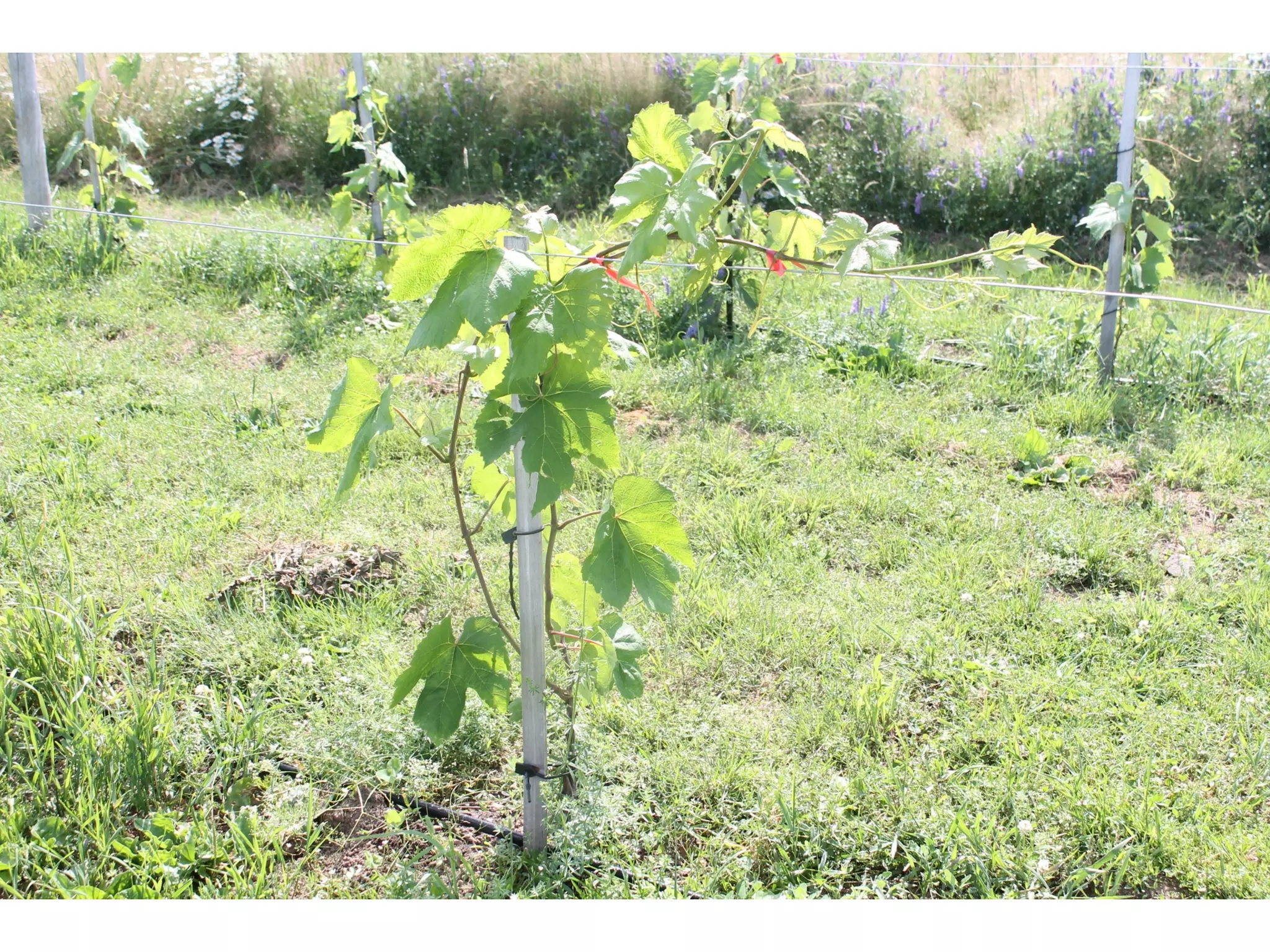
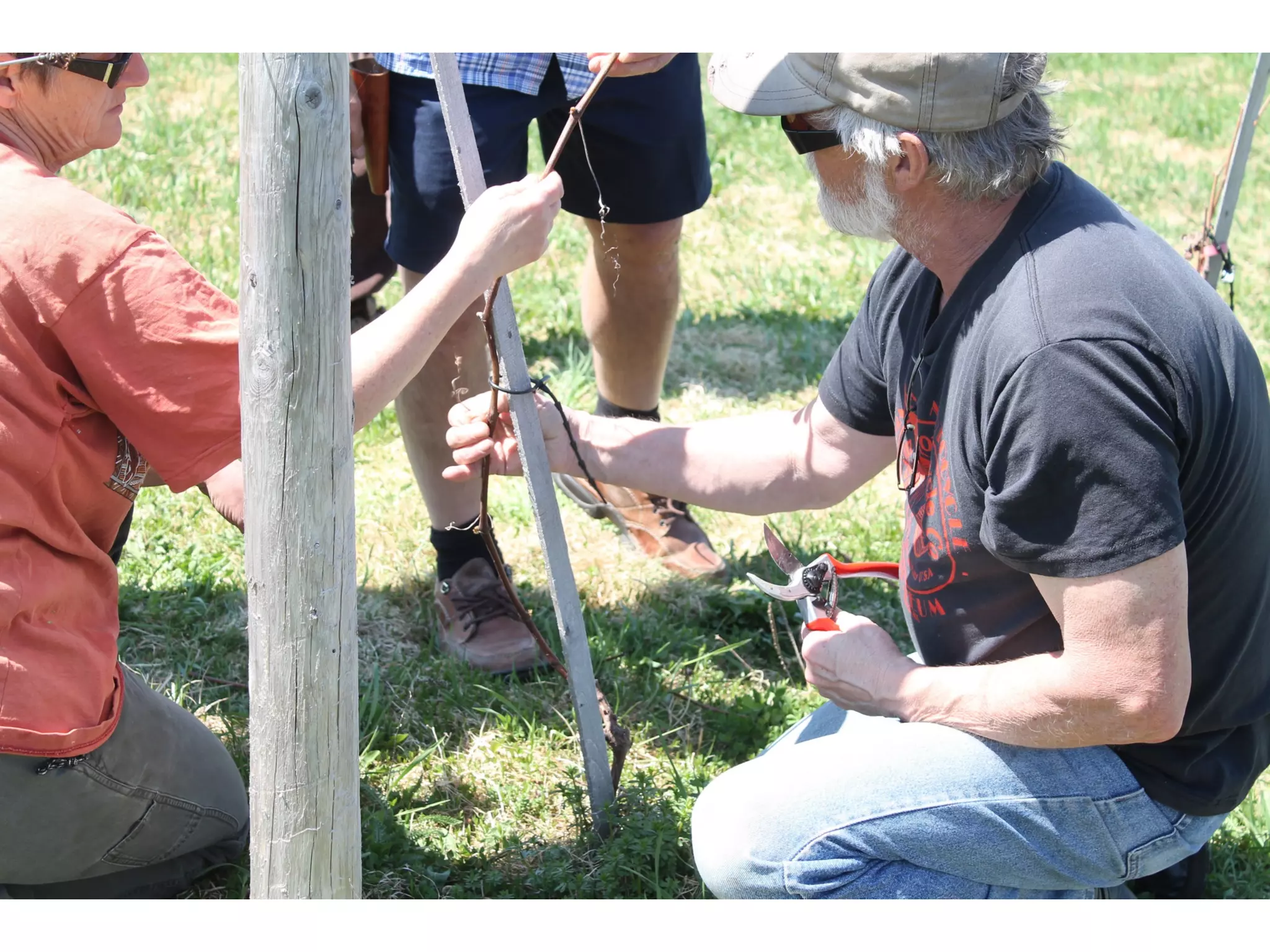
•  Prune	
  to	
  select	
  one	
  main	
  shoot	
  	
  
•  Train	
  to	
  cordon	
  or	
  arm	
  
•  Establish	
  permanent	
  grass	
  in	
  between	
  rows	
  if	
  you	
  
haven’t	
  in	
  the	
  first	
  year.	
  	
  
•  Remove	
  suckers	
  –	
  some	
  varie>es	
  seem	
  to	
  sucker	
  
more	
  than	
  others.	
  
Year	
  3	
  and	
  beyond	
  
	
  •  Prune	
  cordon	


•  Guide	
  the	
  new	
  growth	
  between	
  the	
  two	
  wires	
  
so	
  that	
  you	
  can	
  have	
  some	
  support	
  
•  Verify	
  weekly	
  for	
  bugs	
  or	
  disease	
  or	
  any	
  other	
  
problem	
  that	
  may	
  manifest	
  itself-­‐remove	
  
suckers	
  	
  
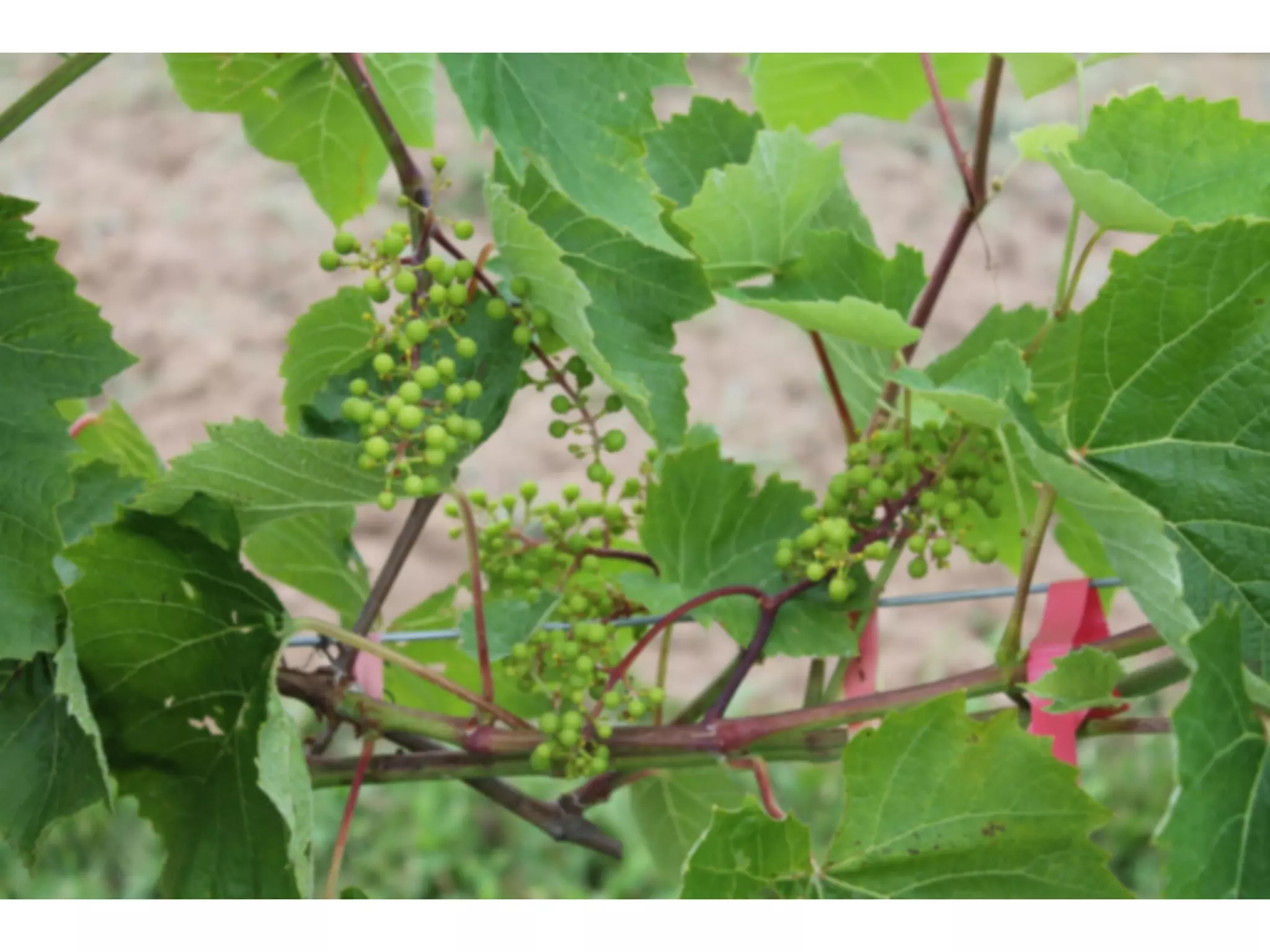
•  Remove	
  excess	
  frui>ng	
  clusters	
  at	
  bloom	
  
•  Remove	
  leaves	
  in	
  August	
  to	
  help	
  fruit	
  mature	
  
•  Protect	
  from	
  birds	
  
•  Eat	
  grapes	
  	
  
Eidelweiss	
  
Bal>ca	
  
Tango	
  
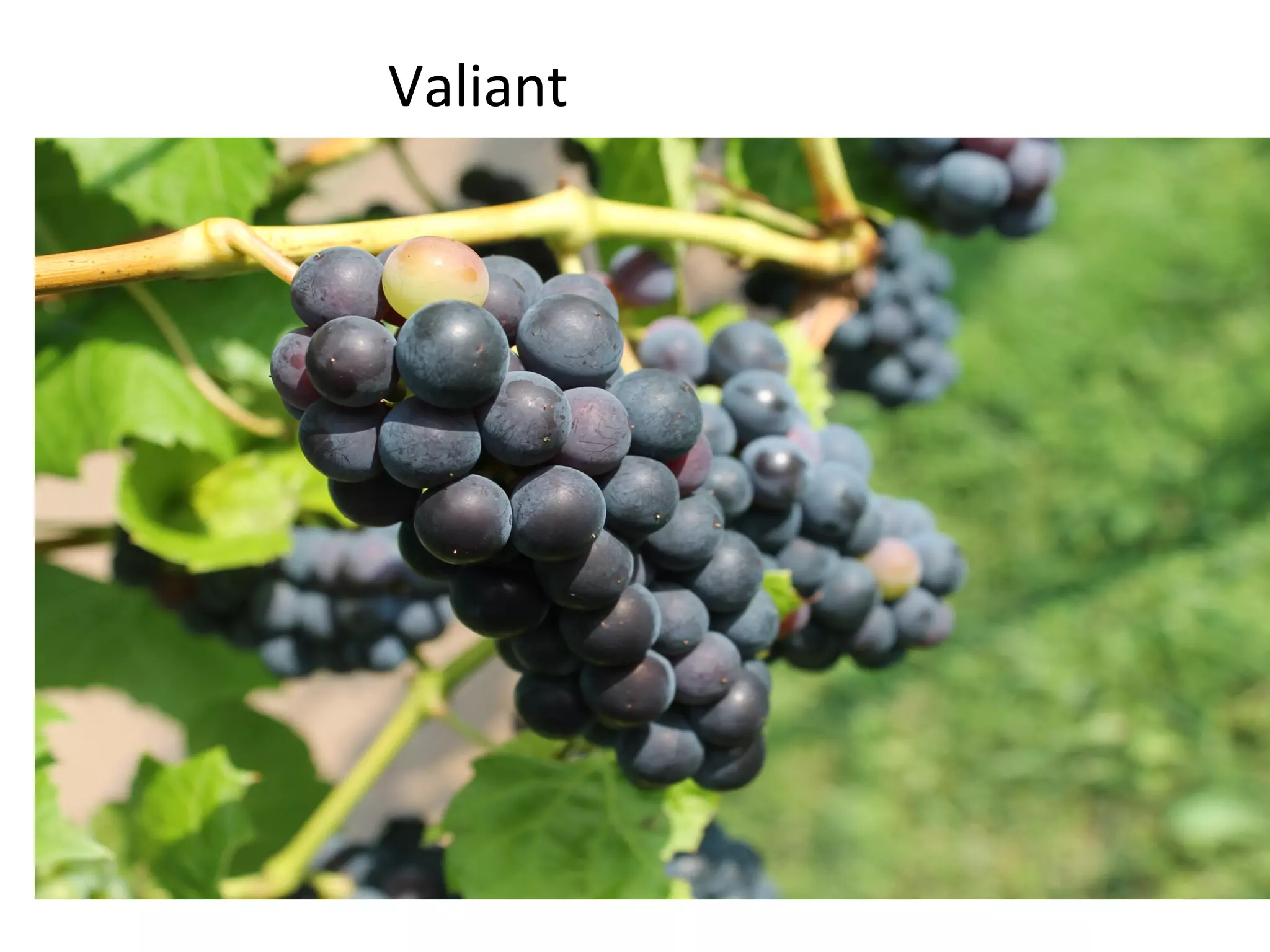
Valiant	
  
Pe>t	
  Joyaux	
  
Reliance	
  
Somerset	
  
Roland	
  
Things	
  I	
  would/will	
  do	
  different	
  
•  Would	
  keep	
  irriga>on	
  during	
  frui>ng	
  year	
  
•  Establish	
  permanent	
  sod	
  selec>ng	
  grasses	
  that	
  
require	
  less	
  mowing	
  
•  Mulch	
  instead	
  of	
  weed	
  
•  Control	
  of	
  wasps.	
  

Growing table grapes in colder climat

  • 1.
    Growing  table  grapes  in  colder   climates  
  • 2.
    What  is  a  table  grape?   •  Very  simply  a  table  grape  is  a  grape  that  we  like  to  eat  ,   just  like  that!   •  Some  considera>ons  when  choosing  a  table  grape   •  Flavour   •  Color   •  Size   •  Texture     •  Seedless   •  Customers  don’t  object  to  seeds  when  the  grapes  are   larger.  Small  grapes  with  lots  of  seeds  are  not   acceptable  
  • 3.
    Why  do  we  try  growing  table  grapes?   •  Some  success  with  wine  grapes  in  our  general     area   •  New  product  for  our  farm   •  Time  to  try  something  different  and  a  bit   exo>c   •  Market  exists  for  this  product   •  Someone  told  me  it  couldn’t  be  done..  
  • 4.
    Steps  I  took  to  establish  my  small   vineyard   •  Get  informed-­‐  research   •  Training   •  Visits  area  vineyards   •  Ask  ques>ons   •  Go  for  it..  Jump  right  in!  
  • 5.
    Site  considera>ons   • All  grapes  do  best  in  well  drained  soils.  If  the   water  table  is  above  60cm,  you  will  have   problems   •  Best  on  a  southern  facing  slope  but  not   essen>al   •  Wind  direc>on-­‐  know  where  your   predominant  winds  are  in  spring  and  summer  
  • 6.
    Soil  prepara>on   • Soil  sample  to  determine  what  you  have    in   nutrients   •  Prepare  for  soil  amendments  if  necessary   •  Aim  for  a  pH  of  at  least  5.6  best  over  6.0   •  Do  not  over  fer>lize.  Check  nitrogen  levels,   too  much  and  you  will  have  too  much  vine   and  no  fruits.   •  5t/ha  compost  before  plan>ng  and  every  5   years  is  recommended.  
  • 8.
    Recommended  varie>es   • Sommerset-­‐  very  early    seedless  red..  highly  recommended   •  Reliance-­‐  mid  season  seedless  red-­‐  notes  of  grapefruit  flavor  is  excellent   •  Pe/t  Joyaux  -­‐very  early  small  seedless  red-­‐nice  uniform  color   •  Roland-­‐  very  early  seeded  green-­‐  excep>onal  flavor   •  Himrod-­‐  mid  season  seedless  green-­‐  doesn’t  keep  long  aZer  harvest  but  good  flavor-­‐   sensi>ve  to  cold   •  Bal/ca-­‐  very  early  seeded  blue-­‐  labrusca  flavor   •  Canadice-­‐  mid  season  seedless  red-­‐  very  sweet   •  Montreal  Blue-­‐  late  seedless  blue-­‐  acidic   •  Bluebell    mid  season  seeded  blue-­‐  labrusca  flavors(  like  Valiant-­‐  Concord)   •  Brianna-­‐  mid  season  green-­‐  lots  of  seeds-­‐  pineapple  flavor   •  Tango-­‐  mid  season  green-­‐seeded,  tangerine  -­‐  honey  flavor   •  Kandioyi    late  season  large  blue  seeded-­‐  large  fruit  but  not  overly  flavorful   •  Sovereign  corona>on-­‐  mid  season  seedless  blue-­‐  good  flavor  but  does  not  produce  a   large  crop   •  Swenson  red-­‐  mid  season  red  ,  seeded,  keeps  long  aZer  harvest   •  Troll-­‐  very  early  seeded  blue-­‐  small  bunches   •  New  York  Muscat-­‐  mid  to  late  season,  bleu-­‐  excep>onal  flavor   •  Eidelweiss-­‐  mid  season-­‐  green-­‐  labrusca  flavor  
  • 9.
    Establishing  plan>ng    Get  plants  or  cu`ngs  from  disease   free  stock.   We  purchased  from  Claude  Gelineau   St.  Gerome  (Quebec)  500+  dormant   cu`ngs  in  late  2012.     Store  cu`ngs  at  1C  wrapped  in  damp   newspapers  or  wood  shavings,  in  a   plas>c  bag.  
  • 10.
    •  Early  spring   •  Soak  cu`ngs  in  a  couple  of  inches  of  water   overnight  to  ensure  that  they  are  well   hydrated.   •  Sani>ze  by  dipping  for  30  seconds  in  a  solu>on   of  5%    hydrogen  peroxide.     •  Pot     •  Place  in  greenhouse  and  keep  well  watered   •  Between  40%-­‐90%  of  cu`ngs  rooted   depending  on  the  variety.  
  • 14.
    Field  plan>ng   • Harden  off  cu`ngs     •  Prepare  field     •  Plant   •  Add  soil  amendments  if  not  done  already   •  Install  drip  irriga>on   •  Stake  plants   •  Install  trellis  systems   •  Keep  weed  free  1m  around  each  plant  
  • 17.
  • 18.
    Year  2   • Con>nue  to  irrigate  if  necessary   •  Con>nue  to  maintain  a  weed  free  strip  around   the  vines   •  Prune  to  select  one  main  shoot     •  Train  to  cordon  or  arm   •  Establish  permanent  grass  in  between  rows  if  you   haven’t  in  the  first  year.     •  Remove  suckers  –  some  varie>es  seem  to  sucker   more  than  others.  
  • 20.
    Year  3  and  beyond    •  Prune  cordon       •  Guide  the  new  growth  between  the  two  wires   so  that  you  can  have  some  support   •  Verify  weekly  for  bugs  or  disease  or  any  other   problem  that  may  manifest  itself-­‐remove   suckers     •  Remove  excess  frui>ng  clusters  at  bloom   •  Remove  leaves  in  August  to  help  fruit  mature   •  Protect  from  birds   •  Eat  grapes    
  • 25.
  • 26.
  • 27.
  • 28.
  • 29.
  • 30.
  • 31.
  • 32.
  • 33.
    Things  I  would/will  do  different   •  Would  keep  irriga>on  during  frui>ng  year   •  Establish  permanent  sod  selec>ng  grasses  that   require  less  mowing   •  Mulch  instead  of  weed   •  Control  of  wasps.