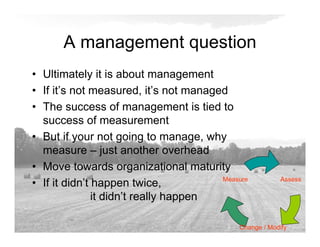
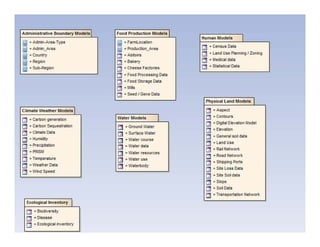
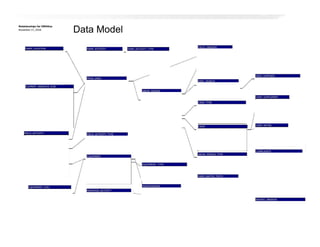
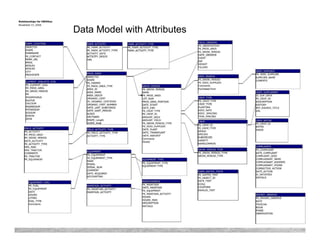
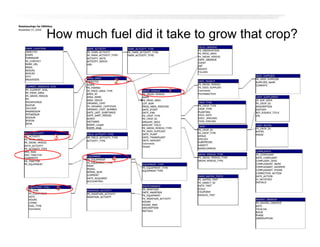
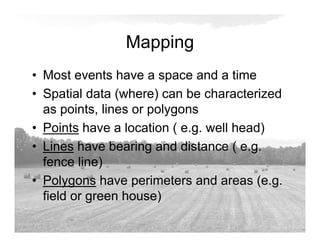
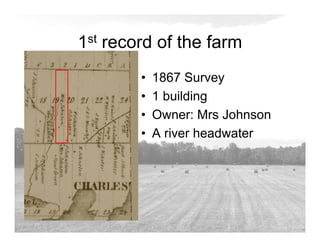
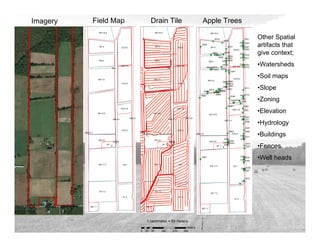
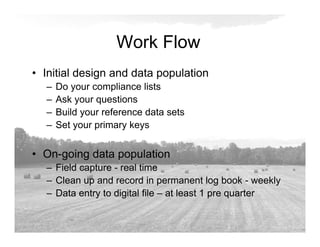
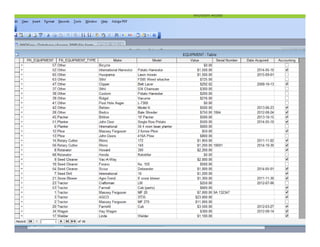
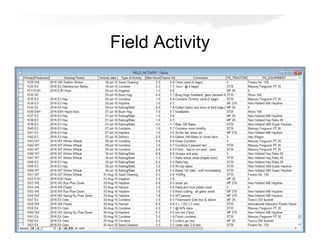
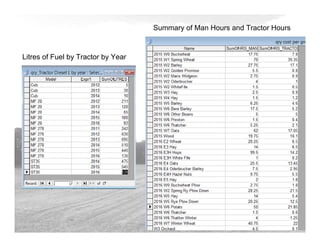
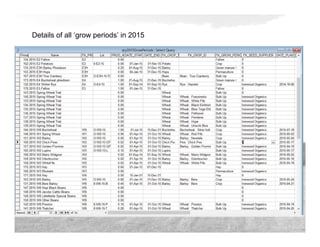
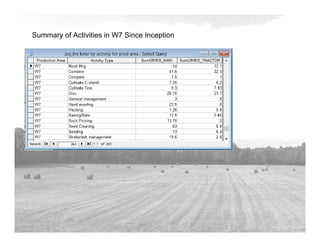
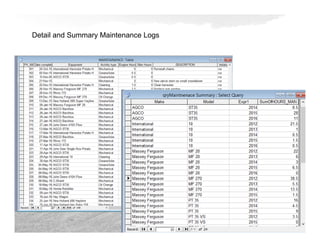
This document discusses the importance and benefits of on-farm record keeping. It notes that record keeping allows farms to be managed by providing data on costs, activities, finances, and other metrics over time. Proper record keeping is essential for compliance, financial planning, traceability, and analyzing farm performance and costs of production. The document provides examples of different types of records farms can keep and recommends starting with key questions to determine what specific data should be prioritized. It also discusses best practices for organizing records through entity relationship diagrams and data modeling to facilitate analysis and insights. Spatial mapping of farm features and activities over years is also presented as an important component of comprehensive record keeping.