OD INTERVENTIONS
By: vaishnavi khandelwal
OD interventions are sets of structured activities in which
selected organizational units engage in a series of tasks
which will lead to organizational improvement.
The intervention is the procedure the OD consultant
uses, after diagnosing an organizational
providing feedback to management,
situation and
to address an
organization problem or positive future.
Interventions are actions taken to produce desired changes. There are one of
four reasons why there is need for OD interventions:
1. The organization has a problem- some thing is “broken”, and corrective actions
need to be taken i.e. it needs to be “fixed”.
2. The organization sees an unrealized opportunity: something it wants is beyond
its reach. Enabling actions- interventions- are developed to seize the
opportunity.
3. Features of the organization are out of alignment: parts of the organization are
working at cross-purposes. Alignment activities- interventions- are developed to
get things back in tune.
4. The vision guiding the organizational changes: yesterday’s vision is no longer
good enough. Actions to build the necessary structures, processes, and culture
to support the new vision- interventions- are developed to make the new vision a
reality.
• OD interventions are planned sets of actions to change situations
Criteria for successful intervention
• Communicate more openly
• Collaborate more effectively
• Take more responsibility
• Maintain a shared vision
• Solve problems more effectively
• Show more respect and support for others
• Interact with each other more effectively
• Be more inquisitive
• Be more open to experimentation and new
• ways of doing things
The most successful of them possess three key characteristics:
1. They are based on valid information about the functioning of the
organization, usually collected by the employees.
2. The intervention (under the guidance of the change agent)
provides employees with opportunities to make their own choices
regarding the nature of the problems and their preferred
solutions.
3. Interventions are aimed at gaining the employees personal
commitment to their choices.
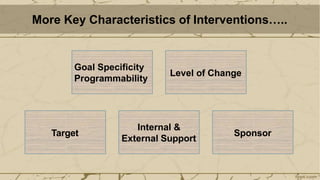
More Key Characteristics of Interventions…..
Goal Specificity
Programmability
Level of Change
Target
Internal &
External Support
Sponsor
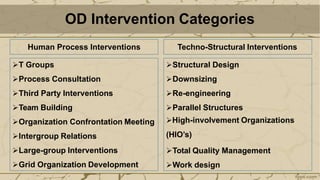
OD Intervention Categories
Human Process Interventions
T Groups
Process Consultation
Third Party Interventions
Team Building
Organization Confrontation Meeting
Intergroup Relations
Large-group Interventions
Grid Organization Development
Techno-Structural Interventions
Structural Design
Downsizing
Re-engineering
Parallel Structures
High-involvement Organizations
(HIO’s)
Total Quality Management
Work design
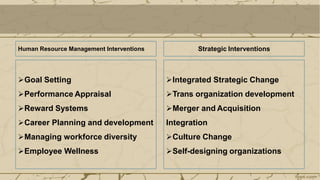
Human Resource Management Interventions
Goal Setting
Performance Appraisal
Reward Systems
Career Planning and development
Managing workforce diversity
Employee Wellness
Strategic Interventions
Integrated Strategic Change
Trans organization development
Merger and Acquisition
Integration
Culture Change
Self-designing organizations
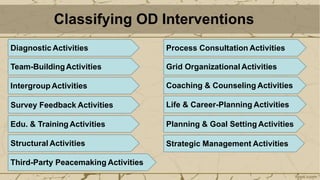
Classifying OD Interventions
Diagnostic Activities
Team-BuildingActivities
Intergroup Activities
Survey Feedback Activities
Edu. & Training Activities
Process Consultation Activities
Grid Organizational Activities
Third-Party Peacemaking Activities
Coaching & Counseling Activities
Structural Activities
Life & Career-Planning Activities
Planning & Goal Setting Activities
Strategic Management Activities
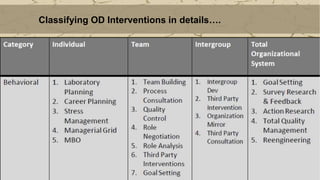
Classifying OD Interventions in details….
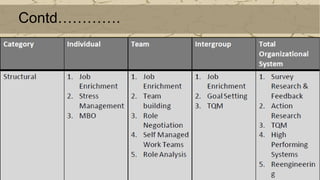
Contd………….
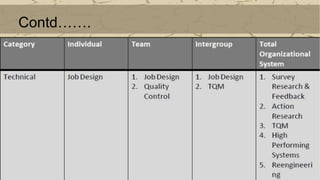
Contd…….
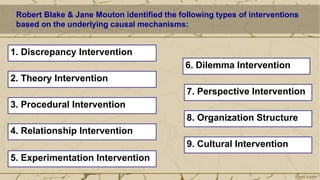
Robert Blake & Jane Mouton identified the following types of interventions
based on the underlying causal mechanisms:
1. Discrepancy Intervention
2. Theory Intervention
3. Procedural Intervention
4. Relationship Intervention
5. Experimentation Intervention
6. Dilemma Intervention
7. Perspective Intervention
8. Organization Structure
9. Cultural Intervention
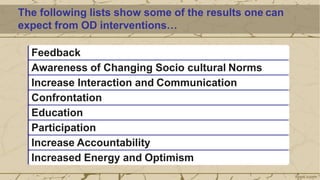
The following lists show some of the results one can
expect from OD interventions…
Feedback
Awareness of Changing Socio cultural Norms
Increase Interaction and Communication
Confrontation
Education
Participation
Increase Accountability
Increased Energy and Optimism
Od intervention ppt by vaishnavi khandelwal

Od intervention ppt by vaishnavi khandelwal

  • 1.
  • 2.
    OD interventions aresets of structured activities in which selected organizational units engage in a series of tasks which will lead to organizational improvement. The intervention is the procedure the OD consultant uses, after diagnosing an organizational providing feedback to management, situation and to address an organization problem or positive future.
  • 3.
    Interventions are actionstaken to produce desired changes. There are one of four reasons why there is need for OD interventions: 1. The organization has a problem- some thing is “broken”, and corrective actions need to be taken i.e. it needs to be “fixed”. 2. The organization sees an unrealized opportunity: something it wants is beyond its reach. Enabling actions- interventions- are developed to seize the opportunity. 3. Features of the organization are out of alignment: parts of the organization are working at cross-purposes. Alignment activities- interventions- are developed to get things back in tune. 4. The vision guiding the organizational changes: yesterday’s vision is no longer good enough. Actions to build the necessary structures, processes, and culture to support the new vision- interventions- are developed to make the new vision a reality. • OD interventions are planned sets of actions to change situations
  • 4.
    Criteria for successfulintervention • Communicate more openly • Collaborate more effectively • Take more responsibility • Maintain a shared vision • Solve problems more effectively • Show more respect and support for others • Interact with each other more effectively • Be more inquisitive • Be more open to experimentation and new • ways of doing things
  • 5.
    The most successfulof them possess three key characteristics: 1. They are based on valid information about the functioning of the organization, usually collected by the employees. 2. The intervention (under the guidance of the change agent) provides employees with opportunities to make their own choices regarding the nature of the problems and their preferred solutions. 3. Interventions are aimed at gaining the employees personal commitment to their choices.
  • 6.
    More Key Characteristicsof Interventions….. Goal Specificity Programmability Level of Change Target Internal & External Support Sponsor
  • 7.
    OD Intervention Categories HumanProcess Interventions T Groups Process Consultation Third Party Interventions Team Building Organization Confrontation Meeting Intergroup Relations Large-group Interventions Grid Organization Development Techno-Structural Interventions Structural Design Downsizing Re-engineering Parallel Structures High-involvement Organizations (HIO’s) Total Quality Management Work design
  • 8.
    Human Resource ManagementInterventions Goal Setting Performance Appraisal Reward Systems Career Planning and development Managing workforce diversity Employee Wellness Strategic Interventions Integrated Strategic Change Trans organization development Merger and Acquisition Integration Culture Change Self-designing organizations
  • 9.
    Classifying OD Interventions DiagnosticActivities Team-BuildingActivities Intergroup Activities Survey Feedback Activities Edu. & Training Activities Process Consultation Activities Grid Organizational Activities Third-Party Peacemaking Activities Coaching & Counseling Activities Structural Activities Life & Career-Planning Activities Planning & Goal Setting Activities Strategic Management Activities
  • 10.
  • 11.
  • 12.
  • 13.
    Robert Blake &Jane Mouton identified the following types of interventions based on the underlying causal mechanisms: 1. Discrepancy Intervention 2. Theory Intervention 3. Procedural Intervention 4. Relationship Intervention 5. Experimentation Intervention 6. Dilemma Intervention 7. Perspective Intervention 8. Organization Structure 9. Cultural Intervention
  • 14.
    The following listsshow some of the results one can expect from OD interventions… Feedback Awareness of Changing Socio cultural Norms Increase Interaction and Communication Confrontation Education Participation Increase Accountability Increased Energy and Optimism