PLANNING THEORY
Progressive /social oriented
GARDEN CITY CONCEPT
 Given by Ebenezer Howard
 He analyzed the reason for people to move to city or country side
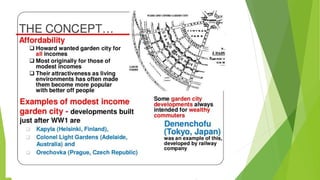
 This concept attempts to reduce and solve social problems
 The garden city consist for different zones, street types and green
 The core in central park, surrounded by a commercial, cultural and
administrative zone.
 To avoid problems which occurs in city expansion, the concept limits the city
max population to 32000 people
 Thus new city has to be found in a reasonable distance of 7km. So the cities
are well connected
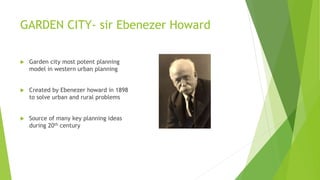
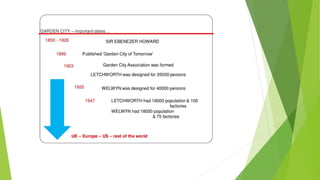
GARDEN CITY- sir Ebenezer Howard
 Garden city most potent planning
model in western urban planning
 Created by Ebenezer howard in 1898
to solve urban and rural problems
 Source of many key planning ideas
during 20th century
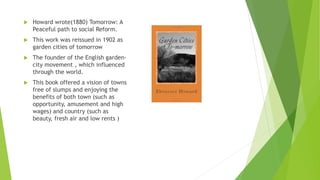
 Howard wrote(1880) Tomorrow: A
Peaceful path to social Reform.
 This work was reissued in 1902 as
garden cities of tomorrow
 The founder of the English garden-
city movement , which influenced
through the world.
 This book offered a vision of towns
free of slumps and enjoying the
benefits of both town (such as
opportunity, amusement and high
wages) and country (such as
beauty, fresh air and low rents )
The concept
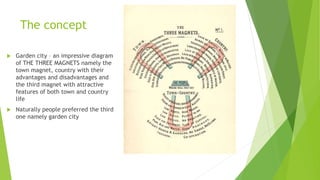
 Garden city – an impressive diagram
of THE THREE MAGNETS namely the
town magnet, country with their
advantages and disadvantages and
the third magnet with attractive
features of both town and country
life
 Naturally people preferred the third
one namely garden city
The concept
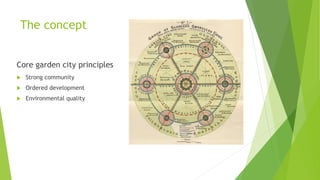
Core garden city principles
 Strong community
 Ordered development
 Environmental quality
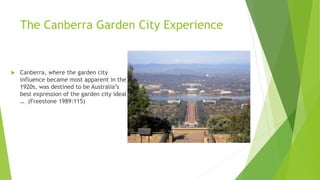
The Canberra Garden City Experience
 Canberra, where the garden city
influence became most apparent in the
1920s, was destined to be Australia’s
best expression of the garden city ideal
… (Freestone 1989:115)
THANK YOU

Garden city planning

  • 1.
  • 2.
    GARDEN CITY CONCEPT Given by Ebenezer Howard  He analyzed the reason for people to move to city or country side  This concept attempts to reduce and solve social problems  The garden city consist for different zones, street types and green  The core in central park, surrounded by a commercial, cultural and administrative zone.  To avoid problems which occurs in city expansion, the concept limits the city max population to 32000 people  Thus new city has to be found in a reasonable distance of 7km. So the cities are well connected
  • 3.
    GARDEN CITY- sirEbenezer Howard  Garden city most potent planning model in western urban planning  Created by Ebenezer howard in 1898 to solve urban and rural problems  Source of many key planning ideas during 20th century
  • 4.
     Howard wrote(1880)Tomorrow: A Peaceful path to social Reform.  This work was reissued in 1902 as garden cities of tomorrow  The founder of the English garden- city movement , which influenced through the world.  This book offered a vision of towns free of slumps and enjoying the benefits of both town (such as opportunity, amusement and high wages) and country (such as beauty, fresh air and low rents )
  • 6.
    The concept  Gardencity – an impressive diagram of THE THREE MAGNETS namely the town magnet, country with their advantages and disadvantages and the third magnet with attractive features of both town and country life  Naturally people preferred the third one namely garden city
  • 8.
    The concept Core gardencity principles  Strong community  Ordered development  Environmental quality
  • 14.
    The Canberra GardenCity Experience  Canberra, where the garden city influence became most apparent in the 1920s, was destined to be Australia’s best expression of the garden city ideal … (Freestone 1989:115)
  • 15.