1/29/2010


Emerging lessons from the
Ground with REDD-
            REDD-
Readiness
 FPP presentation to the Chatham House and Rights
 and Resources Initiative Third Dialogue on Forests,
         Governance and Climate Change


              Friday 22nd January 2010

    Chatham House, 10 St James’s Square, London


Questions to be addressed

• What are governments and international
climate funds doing to improve forest
governance, address tenure and promote
rights?
• Will climate policies in developed
countries promote forest governance and
other forest sector reforms in tropical
forests?


                                                              1
1/29/2010


Who is doing REDD readiness?

   World Bank Forest Carbon Partnership Facility
   (FCPF) – 37 countries: 5 RPPs submitted (2
   approved with recommendations – despite
   failure to meet required safeguards and other
   shortcomings)
   UN REDD Programme – 9 countries (6
   countries with readiness programme approved
   by Policy Board)
   bilateral initiatives and regional forest and
   carbon funds
   private sector and NGO voluntary initiatives


Information blockage
Consultations are not reaching indigenous
peoples and vulnerable forest communities
(e.g. Nepal, Thailand, DRC, Nicaragua)
“the grass roots know nothing about the
(REDD) issue” (COICA, December 2009)
“There is a need to bring more information to
the community level – we have 17 different
indigenous peoples and proper consultation
will take time” (CAPI, Paraguay)


                                                          2
1/29/2010


rushed and delayed consultations
RPPs submitted with little or no consultation with rights
holders in forests (e.g., Indonesia, Suriname, Panama)
info bias on potential ‘benefits’, with minimal attention to
risks/costs (e.g. Panama, Mexico)
No information on problems with offsets and carbon markets
info is not tailored to community needs
readiness funds like the World Bank FCPF are postponing
consultation requirements (delay in triggering safeguards)
incorrect assumptions are being made in readiness plans
without community consultation (e.g. Guyana R-PP definition
                                                 R-
of “Amerindian lands”)
there are questions marks over claims of “best practice”
consultation e.g. UNREDD in DRC


No mechanisms for free, prior and
informed consent (FPIC)
no practical measures yet in place to
implement FPIC (Guyana, Vietnam, DRC)
Indigenous peoples are being encouraged to
“support” or agree to REDD and carbon
markets without adequate information –
violating FPIC
tendency to focus on a few prominent leaders
and umbrella organisations (e.g. Panama)
Indigenous peoples are challenging
government claims that they “support” REDD
and carbon trading (Colombia, Panama,
Guatemala)


                                                                      3
1/29/2010


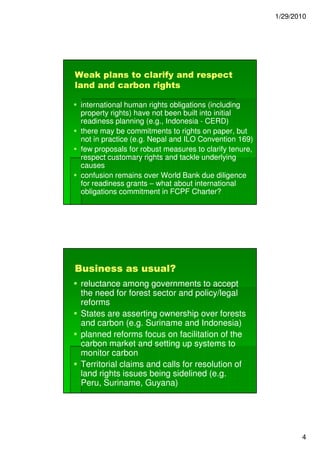
Weak plans to clarify and respect
land and carbon rights

 international human rights obligations (including
 property rights) have not been built into initial
 readiness planning (e.g., Indonesia - CERD)
 there may be commitments to rights on paper, but
 not in practice (e.g. Nepal and ILO Convention 169)
 few proposals for robust measures to clarify tenure,
 respect customary rights and tackle underlying
 causes
 confusion remains over World Bank due diligence
 for readiness grants – what about international
 obligations commitment in FCPF Charter?


Business as usual?
 reluctance among governments to accept
 the need for forest sector and policy/legal
 reforms
 States are asserting ownership over forests
 and carbon (e.g. Suriname and Indonesia)
 planned reforms focus on facilitation of the
 carbon market and setting up systems to
 monitor carbon
 Territorial claims and calls for resolution of
 land rights issues being sidelined (e.g.
 Peru, Suriname, Guyana)


                                                               4
1/29/2010


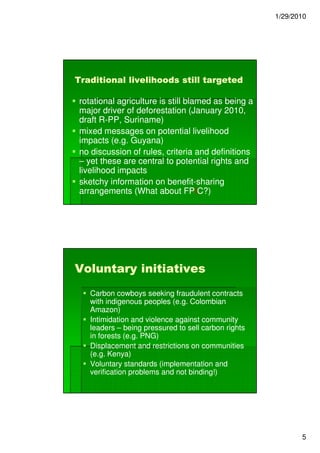
Traditional livelihoods still targeted

 rotational agriculture is still blamed as being a
 major driver of deforestation (January 2010,
 draft R-PP, Suriname)
        R-
 mixed messages on potential livelihood
 impacts (e.g. Guyana)
 no discussion of rules, criteria and definitions
 – yet these are central to potential rights and
 livelihood impacts
 sketchy information on benefit-sharing
                           benefit-
 arrangements (What about FPIC?) FPI


Voluntary initiatives
    Carbon cowboys seeking fraudulent contracts
    with indigenous peoples (e.g. Colombian
    Amazon)
    Intimidation and violence against community
    leaders – being pressured to sell carbon rights
    in forests (e.g. PNG)
    Displacement and restrictions on communities
    (e.g. Kenya)
    Voluntary standards (implementation and
    verification problems and not binding!)


                                                             5
1/29/2010


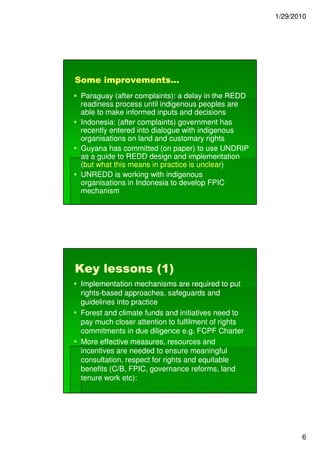
Some improvements…
 Paraguay (after complaints): a delay in the REDD
 readiness process until indigenous peoples are
 able to make informed inputs and decisions
 Indonesia: (after complaints) government has
 recently entered into dialogue with indigenous
 organisations on land and customary rights
 Guyana has committed (on paper) to use UNDRIP
 as a guide to REDD design and implementation
 (but what this means in practice is unclear)
                                     unclear)
 UNREDD is working with indigenous
 organisations in Indonesia to develop FPIC
 mechanism


Key lessons (1)
 Implementation mechanisms are required to put
 rights-
 rights-based approaches, safeguards and
 guidelines into practice
 Forest and climate funds and initiatives need to
 pay much closer attention to fulfilment of rights
 commitments in due diligence e.g. FCPF Charter
 More effective measures, resources and
 incentives are needed to ensure meaningful
 consultation, respect for rights and equitable
 benefits (C/B, FPIC, governance reforms, land
 tenure work etc):


                                                            6
1/29/2010


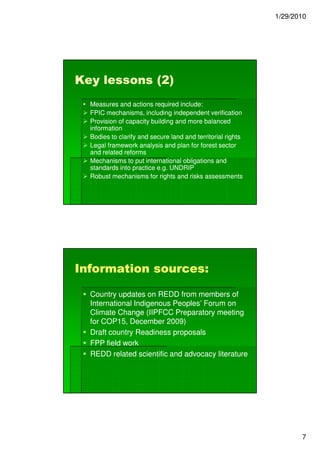
Key lessons (2)
  Measures and actions required include:
  FPIC mechanisms, including independent verification
  Provision of capacity building and more balanced
  information
  Bodies to clarify and secure land and territorial rights
  Legal framework analysis and plan for forest sector
  and related reforms
  Mechanisms to put international obligations and
  standards into practice e.g. UNDRIP
  Robust mechanisms for rights and risks assessments


Information sources:

  Country updates on REDD from members of
  International Indigenous Peoples’ Forum on
  Climate Change (IIPFCC Preparatory meeting
  for COP15, December 2009)
  Draft country Readiness proposals
  FPP field work
  REDD related scientific and advocacy literature


                                                                    7
1/29/2010


Thank you


                   8

Griffiths220110

  • 1.
    1/29/2010 Emerging lessons fromthe Ground with REDD- REDD- Readiness FPP presentation to the Chatham House and Rights and Resources Initiative Third Dialogue on Forests, Governance and Climate Change Friday 22nd January 2010 Chatham House, 10 St James’s Square, London Questions to be addressed • What are governments and international climate funds doing to improve forest governance, address tenure and promote rights? • Will climate policies in developed countries promote forest governance and other forest sector reforms in tropical forests? 1
  • 2.
    1/29/2010 Who is doingREDD readiness? World Bank Forest Carbon Partnership Facility (FCPF) – 37 countries: 5 RPPs submitted (2 approved with recommendations – despite failure to meet required safeguards and other shortcomings) UN REDD Programme – 9 countries (6 countries with readiness programme approved by Policy Board) bilateral initiatives and regional forest and carbon funds private sector and NGO voluntary initiatives Information blockage Consultations are not reaching indigenous peoples and vulnerable forest communities (e.g. Nepal, Thailand, DRC, Nicaragua) “the grass roots know nothing about the (REDD) issue” (COICA, December 2009) “There is a need to bring more information to the community level – we have 17 different indigenous peoples and proper consultation will take time” (CAPI, Paraguay) 2
  • 3.
    1/29/2010 rushed and delayedconsultations RPPs submitted with little or no consultation with rights holders in forests (e.g., Indonesia, Suriname, Panama) info bias on potential ‘benefits’, with minimal attention to risks/costs (e.g. Panama, Mexico) No information on problems with offsets and carbon markets info is not tailored to community needs readiness funds like the World Bank FCPF are postponing consultation requirements (delay in triggering safeguards) incorrect assumptions are being made in readiness plans without community consultation (e.g. Guyana R-PP definition R- of “Amerindian lands”) there are questions marks over claims of “best practice” consultation e.g. UNREDD in DRC No mechanisms for free, prior and informed consent (FPIC) no practical measures yet in place to implement FPIC (Guyana, Vietnam, DRC) Indigenous peoples are being encouraged to “support” or agree to REDD and carbon markets without adequate information – violating FPIC tendency to focus on a few prominent leaders and umbrella organisations (e.g. Panama) Indigenous peoples are challenging government claims that they “support” REDD and carbon trading (Colombia, Panama, Guatemala) 3
  • 4.
    1/29/2010 Weak plans toclarify and respect land and carbon rights international human rights obligations (including property rights) have not been built into initial readiness planning (e.g., Indonesia - CERD) there may be commitments to rights on paper, but not in practice (e.g. Nepal and ILO Convention 169) few proposals for robust measures to clarify tenure, respect customary rights and tackle underlying causes confusion remains over World Bank due diligence for readiness grants – what about international obligations commitment in FCPF Charter? Business as usual? reluctance among governments to accept the need for forest sector and policy/legal reforms States are asserting ownership over forests and carbon (e.g. Suriname and Indonesia) planned reforms focus on facilitation of the carbon market and setting up systems to monitor carbon Territorial claims and calls for resolution of land rights issues being sidelined (e.g. Peru, Suriname, Guyana) 4
  • 5.
    1/29/2010 Traditional livelihoods stilltargeted rotational agriculture is still blamed as being a major driver of deforestation (January 2010, draft R-PP, Suriname) R- mixed messages on potential livelihood impacts (e.g. Guyana) no discussion of rules, criteria and definitions – yet these are central to potential rights and livelihood impacts sketchy information on benefit-sharing benefit- arrangements (What about FPIC?) FPI Voluntary initiatives Carbon cowboys seeking fraudulent contracts with indigenous peoples (e.g. Colombian Amazon) Intimidation and violence against community leaders – being pressured to sell carbon rights in forests (e.g. PNG) Displacement and restrictions on communities (e.g. Kenya) Voluntary standards (implementation and verification problems and not binding!) 5
  • 6.
    1/29/2010 Some improvements… Paraguay(after complaints): a delay in the REDD readiness process until indigenous peoples are able to make informed inputs and decisions Indonesia: (after complaints) government has recently entered into dialogue with indigenous organisations on land and customary rights Guyana has committed (on paper) to use UNDRIP as a guide to REDD design and implementation (but what this means in practice is unclear) unclear) UNREDD is working with indigenous organisations in Indonesia to develop FPIC mechanism Key lessons (1) Implementation mechanisms are required to put rights- rights-based approaches, safeguards and guidelines into practice Forest and climate funds and initiatives need to pay much closer attention to fulfilment of rights commitments in due diligence e.g. FCPF Charter More effective measures, resources and incentives are needed to ensure meaningful consultation, respect for rights and equitable benefits (C/B, FPIC, governance reforms, land tenure work etc): 6
  • 7.
    1/29/2010 Key lessons (2) Measures and actions required include: FPIC mechanisms, including independent verification Provision of capacity building and more balanced information Bodies to clarify and secure land and territorial rights Legal framework analysis and plan for forest sector and related reforms Mechanisms to put international obligations and standards into practice e.g. UNDRIP Robust mechanisms for rights and risks assessments Information sources: Country updates on REDD from members of International Indigenous Peoples’ Forum on Climate Change (IIPFCC Preparatory meeting for COP15, December 2009) Draft country Readiness proposals FPP field work REDD related scientific and advocacy literature 7
  • 8.