Welcome to The Forests Dialogue’s

                        Scoping Dialogue on
                      REDD+ Benefit Sharing


23-24 March 2013
Washington, DC, USA
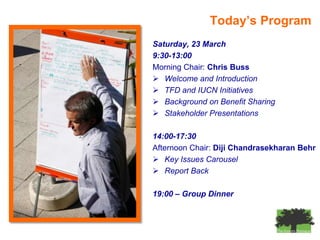
Today’s Program
Saturday, 23 March
9:30-13:00
Morning Chair: Chris Buss
 Welcome and Introduction
 TFD and IUCN Initiatives
 Background on Benefit Sharing
 Stakeholder Presentations

14:00-17:30
Afternoon Chair: Diji Chandrasekharan Behr
 Key Issues Carousel
 Report Back

19:00 – Group Dinner
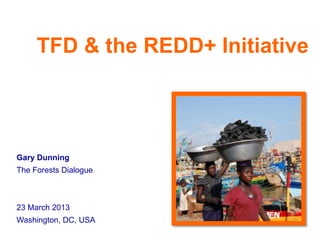
TFD & the REDD+ Initiative


Gary Dunning
The Forests Dialogue


23 March 2013
Washington, DC, USA
Welcome
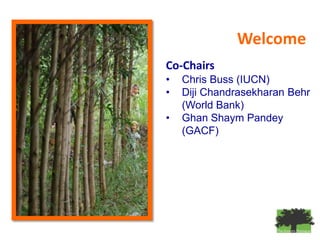
Co-Chairs
•   Chris Buss (IUCN)
•   Diji Chandrasekharan Behr
    (World Bank)
•   Ghan Shaym Pandey
    (GACF)
Dialogue Support

Partners


Support


Host
The Forests Dialogue
Purpose
• Established in 2000 by
  NGO and Business Leaders
• Reduce conflict among
  stakeholders in the forest
  sector
• International platform and
  process to discuss key SFM
  and conservation issues
• Build mutual trust,
  enhanced understanding
  and commitment to
  change

Structure
• Steering Committee
• Secretariat
• Network of Partners
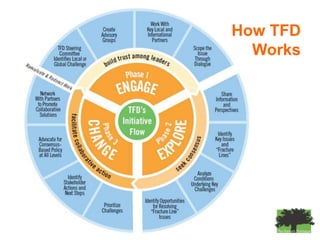
How TFD Works TFD
           How
            Works
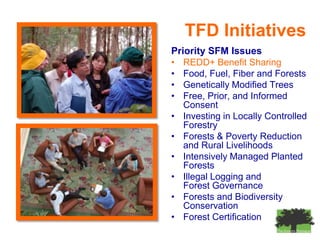
TFD Initiatives
Priority SFM Issues
• REDD+ Benefit Sharing
• Food, Fuel, Fiber and Forests
• Genetically Modified Trees
• Free, Prior, and Informed
   Consent
• Investing in Locally Controlled
   Forestry
• Forests & Poverty Reduction
   and Rural Livelihoods
• Intensively Managed Planted
   Forests
• Illegal Logging and
   Forest Governance
• Forests and Biodiversity
   Conservation
• Forest Certification
Purpose of TFDs “Scoping”
• Small group of invited participants are asked to share
  their experience and “weigh-in” on TFDs ability to
  positively address challenges
• Intended to be an initial foray into a challenging, forest
  related issue
• Listen, learn and share broad range of knowledge and
  experience
• Not driving toward solutions…yet. Focus on key
  questions and opportunities for progress
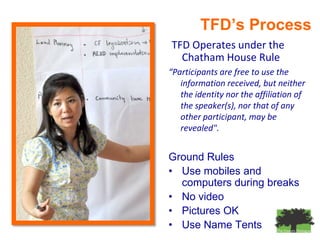
TFD’s Process
TFD Operates under the
  Chatham House Rule
“Participants are free to use the
   information received, but neither
   the identity nor the affiliation of
   the speaker(s), nor that of any
   other participant, may be
   revealed".


Ground Rules
• Use mobiles and
  computers during breaks
• No video
• Pictures OK
• Use Name Tents
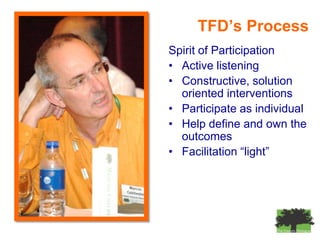
TFD’s Process
Spirit of Participation
• Active listening
• Constructive, solution
  oriented interventions
• Participate as individual
• Help define and own the
  outcomes
• Facilitation “light”
REDD+ Benefit Sharing
     Initiative
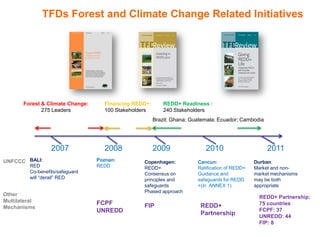
TFDs Forest and Climate Change Related Initiatives


       Forest & Climate Change:     Financing REDD+:       REDD+ Readiness :
              275 Leaders           100 Stakeholders       240 Stakeholders
                                                       Brazil; Ghana; Guatemala; Ecuador; Cambodia


                  2007              2008               2009                2010                      2011
UNFCCC BALI:                      Poznan:        Copenhagen:            Cancun:                 Durban:
         RED                      REDD           REDD+                  Ratification of REDD+   Market and non-
         Co-benefits/safeguard                   Consensus on           Guidance and            market mechanisms
         will “derail” RED                       principles and         safeguards for REDD     may be both
                                                 safeguards             +(in ANNEX 1)           appropriate
                                                 Phased approach
Other                                                                                             REDD+ Partnership:
Multilateral                      FCPF           FIP                     REDD+                    75 countries
Mechanisms
                                  UNREDD                                                          FCPF: 37
                                                                         Partnership              UNREDD: 44
                                                                                                  FIP: 8
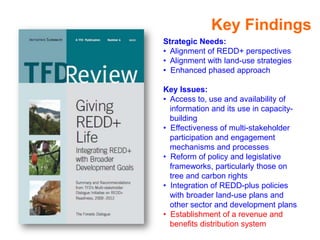
Key Findings
Strategic Needs:
• Alignment of REDD+ perspectives
• Alignment with land-use strategies
• Enhanced phased approach

Key Issues:
• Access to, use and availability of
  information and its use in capacity-
  building
• Effectiveness of multi-stakeholder
  participation and engagement
  mechanisms and processes
• Reform of policy and legislative
  frameworks, particularly those on
  tree and carbon rights
• Integration of REDD-plus policies
  with broader land-use plans and
  other sector and development plans
• Establishment of a revenue and
  benefits distribution system
Objectives of this Dialogue
• Develop and understand the current state of REDD+
  Benefit Sharing in several countries to identify the
  challenges of designing and implementing those
  mechanisms more broadly;
• Build a community of practice among locally-rooted,
  well connected REDD practitioners to share
  experiences and to develop practical tools that support
  effective, efficient and equitable benefit sharing for
  REDD+;
• Promote appropriate economic, policy and institutional
  arrangements at local, national and international levels
  to facilitate equitable and efficient delivery of REDD+
  Benefit Sharing mechanisms.
Thank You!
TFD Documents and
Publications
Available electronically in English at:
www.theforestsdialogue.org
 Follow us on Twitter: @forestsdialogue

 Like us on Facebook: the forests dialogue


                   The Forests Dialogue Secretariat
                                     Yale University
                               New Haven, CT, USA

                                    +1 203 432 5966

                                       tfd@yale.edu
                          www.theforestsdialogue.org

Day 1_TFD. gary dunning

  • 1.
    Welcome to TheForests Dialogue’s Scoping Dialogue on REDD+ Benefit Sharing 23-24 March 2013 Washington, DC, USA
  • 2.
    Today’s Program Saturday, 23March 9:30-13:00 Morning Chair: Chris Buss  Welcome and Introduction  TFD and IUCN Initiatives  Background on Benefit Sharing  Stakeholder Presentations 14:00-17:30 Afternoon Chair: Diji Chandrasekharan Behr  Key Issues Carousel  Report Back 19:00 – Group Dinner
  • 3.
    TFD & theREDD+ Initiative Gary Dunning The Forests Dialogue 23 March 2013 Washington, DC, USA
  • 4.
    Welcome Co-Chairs • Chris Buss (IUCN) • Diji Chandrasekharan Behr (World Bank) • Ghan Shaym Pandey (GACF)
  • 5.
  • 6.
    The Forests Dialogue Purpose •Established in 2000 by NGO and Business Leaders • Reduce conflict among stakeholders in the forest sector • International platform and process to discuss key SFM and conservation issues • Build mutual trust, enhanced understanding and commitment to change Structure • Steering Committee • Secretariat • Network of Partners
  • 7.
    How TFD WorksTFD How Works
  • 8.
    TFD Initiatives Priority SFMIssues • REDD+ Benefit Sharing • Food, Fuel, Fiber and Forests • Genetically Modified Trees • Free, Prior, and Informed Consent • Investing in Locally Controlled Forestry • Forests & Poverty Reduction and Rural Livelihoods • Intensively Managed Planted Forests • Illegal Logging and Forest Governance • Forests and Biodiversity Conservation • Forest Certification
  • 9.
    Purpose of TFDs“Scoping” • Small group of invited participants are asked to share their experience and “weigh-in” on TFDs ability to positively address challenges • Intended to be an initial foray into a challenging, forest related issue • Listen, learn and share broad range of knowledge and experience • Not driving toward solutions…yet. Focus on key questions and opportunities for progress
  • 10.
    TFD’s Process TFD Operatesunder the Chatham House Rule “Participants are free to use the information received, but neither the identity nor the affiliation of the speaker(s), nor that of any other participant, may be revealed". Ground Rules • Use mobiles and computers during breaks • No video • Pictures OK • Use Name Tents
  • 11.
    TFD’s Process Spirit ofParticipation • Active listening • Constructive, solution oriented interventions • Participate as individual • Help define and own the outcomes • Facilitation “light”
  • 12.
  • 13.
    TFDs Forest andClimate Change Related Initiatives Forest & Climate Change: Financing REDD+: REDD+ Readiness : 275 Leaders 100 Stakeholders 240 Stakeholders Brazil; Ghana; Guatemala; Ecuador; Cambodia 2007 2008 2009 2010 2011 UNFCCC BALI: Poznan: Copenhagen: Cancun: Durban: RED REDD REDD+ Ratification of REDD+ Market and non- Co-benefits/safeguard Consensus on Guidance and market mechanisms will “derail” RED principles and safeguards for REDD may be both safeguards +(in ANNEX 1) appropriate Phased approach Other REDD+ Partnership: Multilateral FCPF FIP REDD+ 75 countries Mechanisms UNREDD FCPF: 37 Partnership UNREDD: 44 FIP: 8
  • 14.
    Key Findings Strategic Needs: •Alignment of REDD+ perspectives • Alignment with land-use strategies • Enhanced phased approach Key Issues: • Access to, use and availability of information and its use in capacity- building • Effectiveness of multi-stakeholder participation and engagement mechanisms and processes • Reform of policy and legislative frameworks, particularly those on tree and carbon rights • Integration of REDD-plus policies with broader land-use plans and other sector and development plans • Establishment of a revenue and benefits distribution system
  • 15.
    Objectives of thisDialogue • Develop and understand the current state of REDD+ Benefit Sharing in several countries to identify the challenges of designing and implementing those mechanisms more broadly; • Build a community of practice among locally-rooted, well connected REDD practitioners to share experiences and to develop practical tools that support effective, efficient and equitable benefit sharing for REDD+; • Promote appropriate economic, policy and institutional arrangements at local, national and international levels to facilitate equitable and efficient delivery of REDD+ Benefit Sharing mechanisms.
  • 16.
    Thank You! TFD Documentsand Publications Available electronically in English at: www.theforestsdialogue.org Follow us on Twitter: @forestsdialogue Like us on Facebook: the forests dialogue The Forests Dialogue Secretariat Yale University New Haven, CT, USA +1 203 432 5966 tfd@yale.edu www.theforestsdialogue.org

Editor's Notes

  • #14 What is “REDD”? (2005) Reducing emissions from deforestation and forest degradation in developing countries; What is “plus”? (Bali Action Plan 2007…) and the role of conservation, sustainable management of forests and enhancement of forest carbon stocks The final decision compromises on the divisive issue of market versus non-market based approaches, recognizing both approaches may be appropriate, dependent on the country’s circumstances. Market based approaches would likely mean the sale of rights to carbon stored in or sequestered by the forest, whereas non-market based approaches are more ambiguous. At the moment, non-market refers to grant-based finance for REDD+ readiness. However, it could come to include mechanisms that focus on the implementation phase, as well.The Forest Investment Program (FIP) is a targeted program of the Strategic Climate Fund (SCF), which is one of two funds within the framework of the Climate Investment Funds (CIF).  The FIP supports developing country efforts to reduce deforestation and forest degradation and promote sustainable forest management that leads to emissions reductions and enhancement of forest carbon stocks (REDD+).FACTUS$ 639 million...the amount of money that is pledged to the FIP. - Photo: Kimie Velhagen/CIF Admin UnitChanneled through the MDBs as grants and near-zero interest credits, FIP financing complements large-scale investments and leverages additional resources, including from the private sector, to:Promote forest mitigation efforts, including protection of forest ecosystem servicesProvide support outside the forest sector to reduce pressure on forestsHelp countries strengthen institutional capacity, forest governance, and forest-related knowledgeMainstream climate resilience considerations and contribute to biodiversity conservation, protection of the rights of indigenous peoples and local communities, and poverty reduction through rural livelihoods enhancements