GRIEF
AND BEREAVEMENT
PRESENTED BY:
M.C.KNIRANDA
ASSISTANT PROFESSOR
SSNSR, SU.
CAUSES OF GRIEF
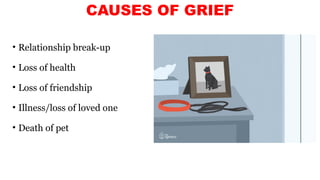
• Relationship break-up
• Loss of health
• Loss of friendship
• Illness/loss of loved one
• Death of pet
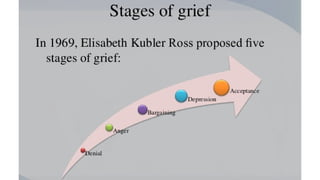
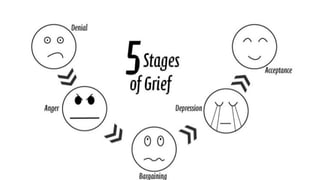
STAGES OF GRIEF
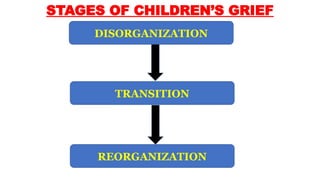
STAGES OF CHILDREN’S GRIEF
DISORGANIZATION
TRANSITION
REORGANIZATION
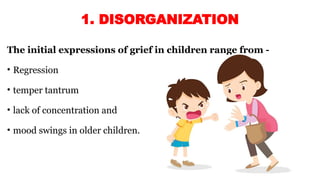
1. DISORGANIZATION
The initial expressions of grief in children range from -
• Regression
• temper tantrum
• lack of concentration and
• mood swings in older children.
2. TRANSITION
• Feelings of hopelessness, helplessness and
despair follow stress and chaotic behavior.
• Many children will exhibit true depression.
• More common are symptoms of withdrawal,
aggression and giving up in school.
3. REORGANIZATION
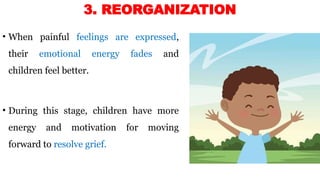
• When painful feelings are expressed,
their emotional energy fades and
children feel better.
• During this stage, children have more
energy and motivation for moving
forward to resolve grief.
SYMPTOMS OF GRIEF
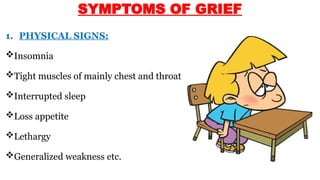
1. PHYSICAL SIGNS:
Insomnia
Tight muscles of mainly chest and throat
Interrupted sleep
Loss appetite
Lethargy
Generalized weakness etc.
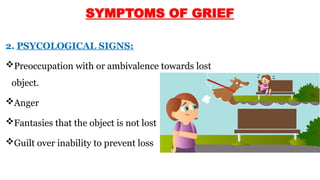
2. PSYCOLOGICAL SIGNS:
Preoccupation with or ambivalence towards lost
object.
Anger
Fantasies that the object is not lost
Guilt over inability to prevent loss
SYMPTOMS OF GRIEF
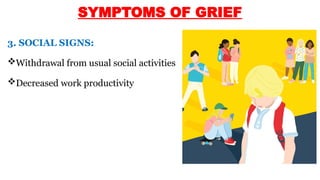
3. SOCIAL SIGNS:
Withdrawal from usual social activities
Decreased work productivity
SYMPTOMS OF GRIEF
GRIEF MANAGEMENT IN CHILDREN
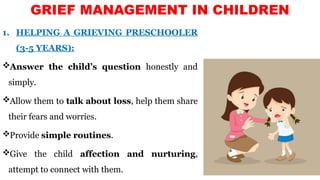
1. HELPING A GRIEVING PRESCHOOLER
(3-5 YEARS):
Answer the child’s question honestly and
simply.
Allow them to talk about loss, help them share
their fears and worries.
Provide simple routines.
Give the child affection and nurturing,
attempt to connect with them.
1. HELPING A GRIEVING PRESCHOOLER
(3-5 YEARS):
Provide more opportunities for play.
Be patient with regressive behaviors such as
thumb sucking.
Provide opportunities for expression of
painful emotions through play, creative outlets
and talk.
Teach them to recognize and name their
feelings.
GRIEF MANAGEMENT IN CHILDREN
2. HELPING A GRIEVING ELEMENTARY
SCHOOL AGE (6-9 YEARS):
Keep tasks simple. Try to keep the child busy
in these simple tasks.
Insist that children express their feelings
in words and not by acting out.
Encourage them to let you know when they
are worried or having a difficult time.
GRIEF MANAGEMENT IN CHILDREN
3. HELPING GRIEVING PRETEENS
AND EARLY ADOLESCENTS:
Accept their mood swings and physical
symptoms.
Encourage them to honestly recognize
their painful feelings and find positive
outlets in physical and creative activities.
GRIEF MANAGEMENT IN CHILDREN
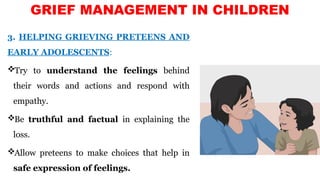
3. HELPING GRIEVING PRETEENS AND
EARLY ADOLESCENTS:
Try to understand the feelings behind
their words and actions and respond with
empathy.
Be truthful and factual in explaining the
loss.
Allow preteens to make choices that help in
safe expression of feelings.
GRIEF MANAGEMENT IN CHILDREN
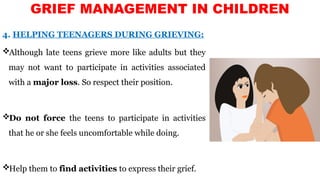
4. HELPING TEENAGERS DURING GRIEVING:
Although late teens grieve more like adults but they
may not want to participate in activities associated
with a major loss. So respect their position.
Do not force the teens to participate in activities
that he or she feels uncomfortable while doing.
Help them to find activities to express their grief.
GRIEF MANAGEMENT IN CHILDREN
grief and bereavement              .pptx

grief and bereavement .pptx

  • 1.
  • 4.
    CAUSES OF GRIEF •Relationship break-up • Loss of health • Loss of friendship • Illness/loss of loved one • Death of pet
  • 5.
  • 13.
    STAGES OF CHILDREN’SGRIEF DISORGANIZATION TRANSITION REORGANIZATION
  • 14.
    1. DISORGANIZATION The initialexpressions of grief in children range from - • Regression • temper tantrum • lack of concentration and • mood swings in older children.
  • 15.
    2. TRANSITION • Feelingsof hopelessness, helplessness and despair follow stress and chaotic behavior. • Many children will exhibit true depression. • More common are symptoms of withdrawal, aggression and giving up in school.
  • 16.
    3. REORGANIZATION • Whenpainful feelings are expressed, their emotional energy fades and children feel better. • During this stage, children have more energy and motivation for moving forward to resolve grief.
  • 17.
    SYMPTOMS OF GRIEF 1.PHYSICAL SIGNS: Insomnia Tight muscles of mainly chest and throat Interrupted sleep Loss appetite Lethargy Generalized weakness etc.
  • 18.
    2. PSYCOLOGICAL SIGNS: Preoccupationwith or ambivalence towards lost object. Anger Fantasies that the object is not lost Guilt over inability to prevent loss SYMPTOMS OF GRIEF
  • 19.
    3. SOCIAL SIGNS: Withdrawalfrom usual social activities Decreased work productivity SYMPTOMS OF GRIEF
  • 20.
    GRIEF MANAGEMENT INCHILDREN 1. HELPING A GRIEVING PRESCHOOLER (3-5 YEARS): Answer the child’s question honestly and simply. Allow them to talk about loss, help them share their fears and worries. Provide simple routines. Give the child affection and nurturing, attempt to connect with them.
  • 21.
    1. HELPING AGRIEVING PRESCHOOLER (3-5 YEARS): Provide more opportunities for play. Be patient with regressive behaviors such as thumb sucking. Provide opportunities for expression of painful emotions through play, creative outlets and talk. Teach them to recognize and name their feelings. GRIEF MANAGEMENT IN CHILDREN
  • 22.
    2. HELPING AGRIEVING ELEMENTARY SCHOOL AGE (6-9 YEARS): Keep tasks simple. Try to keep the child busy in these simple tasks. Insist that children express their feelings in words and not by acting out. Encourage them to let you know when they are worried or having a difficult time. GRIEF MANAGEMENT IN CHILDREN
  • 23.
    3. HELPING GRIEVINGPRETEENS AND EARLY ADOLESCENTS: Accept their mood swings and physical symptoms. Encourage them to honestly recognize their painful feelings and find positive outlets in physical and creative activities. GRIEF MANAGEMENT IN CHILDREN
  • 24.
    3. HELPING GRIEVINGPRETEENS AND EARLY ADOLESCENTS: Try to understand the feelings behind their words and actions and respond with empathy. Be truthful and factual in explaining the loss. Allow preteens to make choices that help in safe expression of feelings. GRIEF MANAGEMENT IN CHILDREN
  • 25.
    4. HELPING TEENAGERSDURING GRIEVING: Although late teens grieve more like adults but they may not want to participate in activities associated with a major loss. So respect their position. Do not force the teens to participate in activities that he or she feels uncomfortable while doing. Help them to find activities to express their grief. GRIEF MANAGEMENT IN CHILDREN