Grief and
Bereavement
Presentation By:
Ms. Chandani Modi
Child Health Nursing
Definition
• Grief:
Grief is a powerful emotional reaction to a
separation or loss like declining health,
impending death, death to loved ones or loss of
valuable object.
Healthy grieving is time-limited,
becoming less intense as time passes but takes
1 year or more to resolve fully.
• Mourning:
Mourning is the process by which grief is
resolved. It is societal expression of post
bereavement behavior and practices.
• Bereavement:
Bereavement means the state of being
deprived of someone by death and refers to
being in the state of mourning.
Causes, Incidence and Risk Factors
Grief may be caused by any loss including-
• Relationship break-up
• Loss of health
• Loss of friendship
• Illness of loved one
• Death of pet
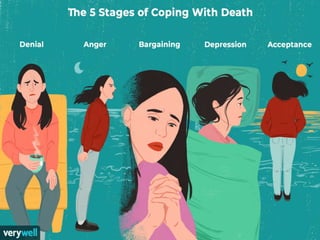
Stages of Grief
In 1969, psychiatrist Elisabeth Kubler Ross
introduced “five stages of grief” which are as
follows-
1. Denial: “This can’t happen to me”.
2. Anger: “Why is this happening”?
3. Bargaining: “Make this not happen and in return
I will….”.
4. Depression: “I am too sad to do anything”.
5. Acceptance: “I’m at peace with what happened”.
• https://www.verywellmind.com/five-stages-
of-grief-4175361
Stages of Children’s Grief
1. Disorganization
2. Transition
3. Reorganization
Symptoms
• Grief can have physical, psychological and social
signs.
A. Physical signs
- Insomnia
- Tight muscles of mainly chest and throat
- Interrupted sleep
- Loss of appetite
- Lethargy
- Generalized weakness
B. Psychological Signs
- Preoccupation with or ambivalence towards
lost object
- Anger
- Fantasies that the object is not lost
- Guilt over inability to prevent loss
C. Social Signs
- Withdrawal from usual social activities
- Decreased work productivity
Factors
• Strongly dependant on deceased
• Love-hate relationship
• Experienced a number of recent losses
• Loss of child or young person
• Holds himself responsible for the loss
Grief response becomes easier if-
1. The individual has support of significant
others
2. The individual was already prepared for the
loss
Length of loss Process
• Depends on individual
• Usually 6-8 weeks
Complicated or Dysfunctional Grief
a. Chronic Grief
b. Hypertrophic Grief
c. Delayed Grief
Management
a. Helping a grieving preschooler
b. Helping a grieving elementary school age
c. Helping grieving Pre-teens and early
adolescents
d. Helping teenagers during grieving
Grief and Bereavement.pptx

Grief and Bereavement.pptx

  • 1.
    Grief and Bereavement Presentation By: Ms.Chandani Modi Child Health Nursing
  • 2.
    Definition • Grief: Grief isa powerful emotional reaction to a separation or loss like declining health, impending death, death to loved ones or loss of valuable object. Healthy grieving is time-limited, becoming less intense as time passes but takes 1 year or more to resolve fully.
  • 3.
    • Mourning: Mourning isthe process by which grief is resolved. It is societal expression of post bereavement behavior and practices. • Bereavement: Bereavement means the state of being deprived of someone by death and refers to being in the state of mourning.
  • 4.
    Causes, Incidence andRisk Factors Grief may be caused by any loss including- • Relationship break-up • Loss of health • Loss of friendship • Illness of loved one • Death of pet
  • 5.
    Stages of Grief In1969, psychiatrist Elisabeth Kubler Ross introduced “five stages of grief” which are as follows- 1. Denial: “This can’t happen to me”. 2. Anger: “Why is this happening”? 3. Bargaining: “Make this not happen and in return I will….”. 4. Depression: “I am too sad to do anything”. 5. Acceptance: “I’m at peace with what happened”.
  • 7.
  • 8.
    Stages of Children’sGrief 1. Disorganization 2. Transition 3. Reorganization
  • 9.
    Symptoms • Grief canhave physical, psychological and social signs. A. Physical signs - Insomnia - Tight muscles of mainly chest and throat - Interrupted sleep - Loss of appetite - Lethargy - Generalized weakness
  • 10.
    B. Psychological Signs -Preoccupation with or ambivalence towards lost object - Anger - Fantasies that the object is not lost - Guilt over inability to prevent loss
  • 11.
    C. Social Signs -Withdrawal from usual social activities - Decreased work productivity
  • 12.
    Factors • Strongly dependanton deceased • Love-hate relationship • Experienced a number of recent losses • Loss of child or young person • Holds himself responsible for the loss
  • 13.
    Grief response becomeseasier if- 1. The individual has support of significant others 2. The individual was already prepared for the loss
  • 14.
    Length of lossProcess • Depends on individual • Usually 6-8 weeks
  • 15.
    Complicated or DysfunctionalGrief a. Chronic Grief b. Hypertrophic Grief c. Delayed Grief
  • 16.
    Management a. Helping agrieving preschooler b. Helping a grieving elementary school age c. Helping grieving Pre-teens and early adolescents d. Helping teenagers during grieving