MICRO-ORGANISMS TRANSMITED
THROUGH FOOD
and
FOOD POISONING
PRESENTED BY:
M.C.KNIRANDA
ASSISTANT PROFESSOR
SSNSR, SU.
INTRODUCTION
Microorganisms transmitted through food, such
as bacteria like E. coli, Salmonella, and Campylobacter,
as well as viruses like Norovirus and fungi, can cause
foodborne illnesses.
Common Microorganisms and
Foodborne Illness:
BACTERIA:
 Bacillus cereus: Can cause vomiting and
diarrhea.
 Escherichia coli (E. coli): Some strains can
cause severe illness, often linked to
undercooked meat or contaminated water.
 Salmonella: A common cause of food
poisoning, often found in poultry, eggs, and
dairy products.
 Staphylococcus aureus: Can contaminate
food through poor handling and cause illness.
 Campylobacter: A common cause of
foodborne illness, often found in poultry.
 Vibrio: Can cause illness when consuming
contaminated seafood.
 Listeria monocytogenes: Can cause serious
illness, especially in vulnerable populations.
 Clostridium perfringens: Can cause food
poisoning, often linked to improperly stored
cooked meat.
 Yersinia enterocolitica: A zoonotic (animals to
human transmission) pathogen that can cause
foodborne illness.
Common Microorganisms and
Foodborne Illness:
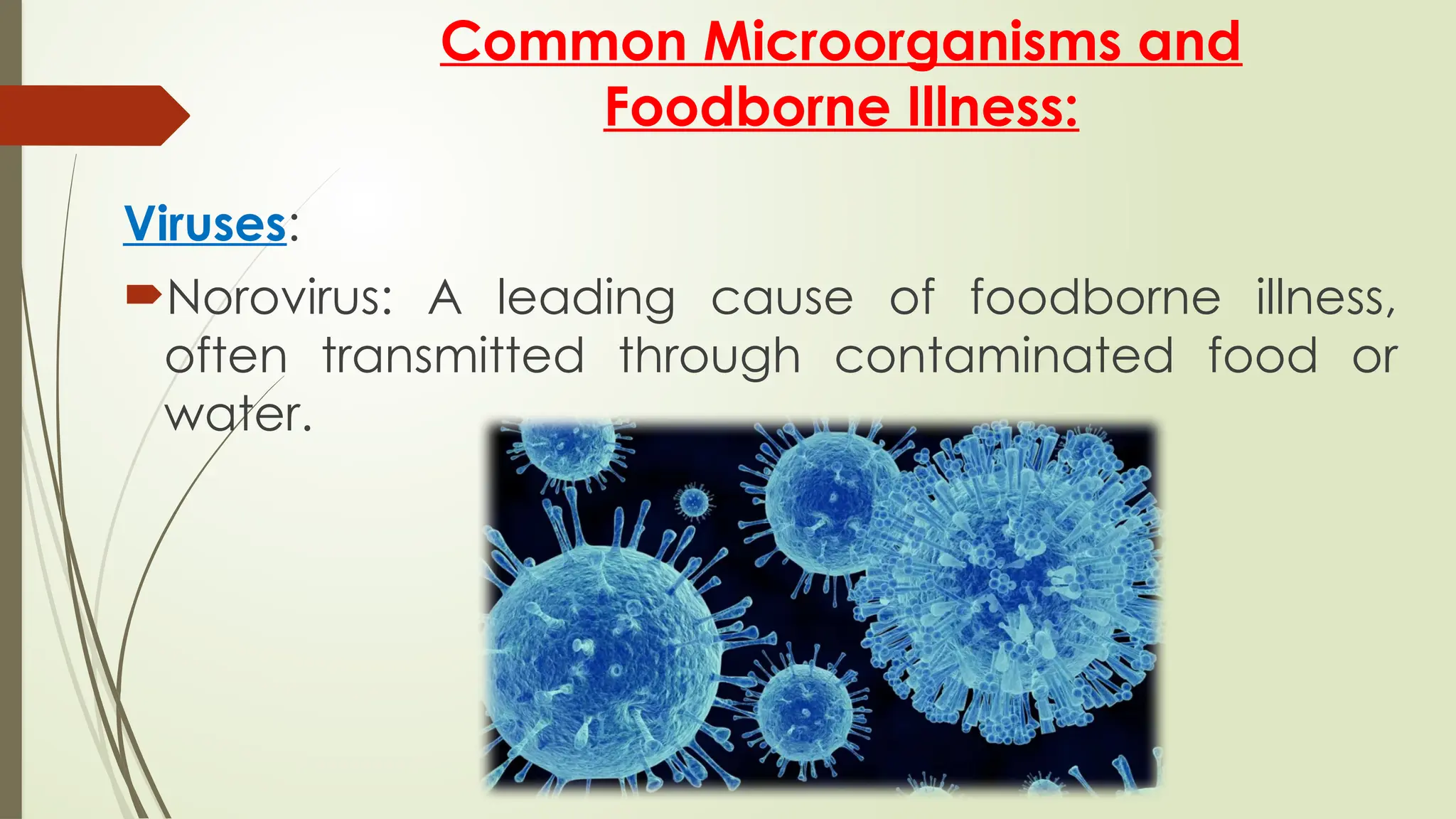
Viruses:
Norovirus: A leading cause of foodborne illness,
often transmitted through contaminated food or
water.
Common Microorganisms and
Foodborne Illness:
Fungi:
Fungi can grow on food and produce toxins,
causing foodborne illness.
Common Microorganisms and
Foodborne Illness:
Ways to Transmit Micro organisms
Through Food
1. Contamination:
Microorganisms can contaminate food during various
stages, from farm to table, including improper handling,
storage, and cooking.
2. Poor Hygiene:
Lack of proper hand washing and sanitation can
lead to the spread of microorganisms.
Ways to Transmit Micro organisms
Through Food
3. Cross-Contamination:
Microorganisms can spread from one food to another if
surfaces and utensils are not properly cleaned.
Ways to Transmit Micro organisms
Through Food
4. Inadequate Cooking:
Not cooking food to a safe temperature can allow
microorganisms to survive and cause illness.
Ways to Transmit Micro organisms
Through Food
5. Time and Temperature Abuse:
Allowing food to sit at unsafe temperatures (between
40°F and 140°F) allows bacteria to multiply.
Ways to Transmit Micro organisms
Through Food
FOOD POISONING
INTRODUCTION
Food poisoning is an acute illness, usually of sudden
onset, brought about by eating contaminated or
poisonous food.
Food poisoning can happen to anyone who swallows
contaminated food. Most people recover on their own,
but some can become gravely ill.
CAUSATIVE AGENT OF FOOD POISONI
 Bacterial
 Viral
 Fungal
 Parasite
 Chemicals
CAUSES OF FOOD POISONING
Food can become contaminated at any stage of
production, from harvesting to storage to cooking or
preparation.
Contamination occurs when food isn’t:
 Fresh.
 Washed well.
 Handled in a sanitary way.
 Cooked to a safe internal temperature.
 Held at proper temperatures.
TYPES
VIRAL FOOD POISONING
Viral food poisoning, also known as viral gastroenteritis or a
stomach flu, occurs when a person consume food or drink
contaminated with a virus, leading to symptoms like
diarrhea, vomiting, and stomach cramps
COMMON VIRUSES
Some common viruses that cause food poisoning
include norovirus, rotavirus, and astrovirus.
CONTAMINATION
These viruses can contaminate food and
water, often through contact with
infected individuals or contaminated
surfaces.
SYMPTOMS
The symptoms of viral food poisoning can
include diarrhea, vomiting, stomach
cramps, nausea, and sometimes fever.
DURATION
Symptoms usually start within a few hours
to a few days after consuming
contaminated food or water.
TREATMENT
Treatment:
Most cases of viral food poisoning resolve on their own
within a few days with rest and plenty of fluids.
When to seek medical attention:
Seek medical attention if symptoms are severe or if
experience signs of dehydration
FUNGAL FOOD POISONING
Fungal food poisoning, or mycotoxicosis, occurs when
a person consume food contaminated with toxins
produced by certain molds (fungi), leading to various
health issues.
MYCOTOXINS
Mycotoxins are toxic substances produced by fungi, also
known as molds, that can contaminate food and feed.
These toxins can be harmful to humans and animals,
causing both acute and chronic health problems.
Examples of mycotoxins include aflatoxins, ochratoxin A,
fumonisins, and trichothecenes.
FOODS AT RISK
Mycotoxins can be found in various foods, including:
Cereals (maize, wheat, rice, etc.)
Nuts (peanuts, soybeans, tree nuts)
Spices
Dried fruits
Apples
Coffee beans
Molds often grow on these foods under warm and
humid conditions or during improper storage.
PARASITIC FOOD POISONING
Parasitic food poisoning, or foodborne parasitic
diseases, occurs when a person ingest food or
water contaminated with parasites, leading to
symptoms like diarrhea, nausea, and vomiting.
CAUSES AND SYMPTOMS
Parasites can contaminate food and water, especially if
they are not properly cooked or if the food is handled
unsanitarily.
Common sources of parasitic contamination include raw or
undercooked meat, fish, poultry, and shellfish, as well as
contaminated water and produce.
Poor hygiene practices, such as not washing hands after
using the restroom or before preparing food, can also
contribute to the spread of parasites.
PARASITES CAUSING FOOD POISONING
Giardia
Cryptosporidium
Cyclospora
Toxoplasma gondii
Trichinella, and tapeworms like Taenia saginata and
Taenia solium.
CHEMICALS FOD POISONING
Chemical food poisoning occurs when harmful chemicals
contaminate food, potentially causing illness.
Sources include pesticides, heavy metals, naturally
occurring toxins, and chemicals formed during food
processing.
Sources of Chemical Contamination
Pesticides:
Residues of pesticides used on crops can contaminate
produce.
Heavy Metals:
Metals like arsenic, lead, mercury, and cadmium can
accumulate in food from environmental pollution or
industrial processes.
Natural Toxins:
Some plants and animals naturally produce toxins, such
as alkaloids, mycotoxins, and cyanogenic glycosides
eg. Foxglove
Chemicals from Food Processing:
Certain chemicals can form during cooking, processing, or
storage, such as acrylamide and furan.
Environmental Contaminants:
Industrial or agricultural pollution can contaminate soil,
water, and food, leading to exposure to chemicals
Food Additives:
While generally safe, some food additives can cause
problems if ingested in large amounts.
Sources of Chemical Contamination
SYMPTOMS
Nausea and vomiting
Diarrhea
Stomach pain and cramps
Fever
Headache
Dizziness
Weakness
In severe cases, dehydration, kidney damage, or even
death.
DIAGNOSIS FOR FOD POISONING
History collection
Physical examination
Stool sample
Blood tests
Wash hands
Wash your hands with soap and water for at least 20
seconds
Wash your hands before eating, after using the toilet, and
before and after handling food
Wash your hands after handling raw meat, chicken,
seafood, eggs, or flour
PREVENTION OF FOOD POISONING
Keep food at safe temperatures
Cook beef to at least 160°F (71°C), poultry to at least 165°F
(73.8°C), and fish to at least 145°F (62.7°C)
Refrigerate leftovers within 2 hours
Keep the refrigerator set to around 40°F (4.4°C) and your
freezer at or below 0°F (-18°C)
PREVENTION OF FOOD POISONING
Avoid cross-contamination
Keep raw meat, poultry, seafood, and eggs separate from
ready-to-eat food
Use separate cutting boards and plates for raw meat and
produce
Clean dishes and utensils with hot, soapy water after
contact with raw meat
Don't place cooked meat or fish back onto the same
plate or container that held the raw meat
PREVENTION OF FOOD POISONING
MICROORGANISMS TRANSMITTED THROUGH FOOD.pptx

MICROORGANISMS TRANSMITTED THROUGH FOOD.pptx

  • 1.
    MICRO-ORGANISMS TRANSMITED THROUGH FOOD and FOODPOISONING PRESENTED BY: M.C.KNIRANDA ASSISTANT PROFESSOR SSNSR, SU.
  • 2.
    INTRODUCTION Microorganisms transmitted throughfood, such as bacteria like E. coli, Salmonella, and Campylobacter, as well as viruses like Norovirus and fungi, can cause foodborne illnesses.
  • 3.
    Common Microorganisms and FoodborneIllness: BACTERIA:  Bacillus cereus: Can cause vomiting and diarrhea.  Escherichia coli (E. coli): Some strains can cause severe illness, often linked to undercooked meat or contaminated water.  Salmonella: A common cause of food poisoning, often found in poultry, eggs, and dairy products.  Staphylococcus aureus: Can contaminate food through poor handling and cause illness.
  • 4.
     Campylobacter: Acommon cause of foodborne illness, often found in poultry.  Vibrio: Can cause illness when consuming contaminated seafood.  Listeria monocytogenes: Can cause serious illness, especially in vulnerable populations.  Clostridium perfringens: Can cause food poisoning, often linked to improperly stored cooked meat.  Yersinia enterocolitica: A zoonotic (animals to human transmission) pathogen that can cause foodborne illness. Common Microorganisms and Foodborne Illness:
  • 5.
    Viruses: Norovirus: A leadingcause of foodborne illness, often transmitted through contaminated food or water. Common Microorganisms and Foodborne Illness:
  • 6.
    Fungi: Fungi can growon food and produce toxins, causing foodborne illness. Common Microorganisms and Foodborne Illness:
  • 7.
    Ways to TransmitMicro organisms Through Food 1. Contamination: Microorganisms can contaminate food during various stages, from farm to table, including improper handling, storage, and cooking.
  • 8.
    2. Poor Hygiene: Lackof proper hand washing and sanitation can lead to the spread of microorganisms. Ways to Transmit Micro organisms Through Food
  • 9.
    3. Cross-Contamination: Microorganisms canspread from one food to another if surfaces and utensils are not properly cleaned. Ways to Transmit Micro organisms Through Food
  • 10.
    4. Inadequate Cooking: Notcooking food to a safe temperature can allow microorganisms to survive and cause illness. Ways to Transmit Micro organisms Through Food
  • 11.
    5. Time andTemperature Abuse: Allowing food to sit at unsafe temperatures (between 40°F and 140°F) allows bacteria to multiply. Ways to Transmit Micro organisms Through Food
  • 12.
  • 13.
    INTRODUCTION Food poisoning isan acute illness, usually of sudden onset, brought about by eating contaminated or poisonous food. Food poisoning can happen to anyone who swallows contaminated food. Most people recover on their own, but some can become gravely ill.
  • 14.
    CAUSATIVE AGENT OFFOOD POISONI  Bacterial  Viral  Fungal  Parasite  Chemicals
  • 15.
    CAUSES OF FOODPOISONING Food can become contaminated at any stage of production, from harvesting to storage to cooking or preparation. Contamination occurs when food isn’t:  Fresh.  Washed well.  Handled in a sanitary way.  Cooked to a safe internal temperature.  Held at proper temperatures.
  • 16.
  • 20.
    VIRAL FOOD POISONING Viralfood poisoning, also known as viral gastroenteritis or a stomach flu, occurs when a person consume food or drink contaminated with a virus, leading to symptoms like diarrhea, vomiting, and stomach cramps
  • 21.
    COMMON VIRUSES Some commonviruses that cause food poisoning include norovirus, rotavirus, and astrovirus.
  • 22.
    CONTAMINATION These viruses cancontaminate food and water, often through contact with infected individuals or contaminated surfaces.
  • 23.
    SYMPTOMS The symptoms ofviral food poisoning can include diarrhea, vomiting, stomach cramps, nausea, and sometimes fever.
  • 24.
    DURATION Symptoms usually startwithin a few hours to a few days after consuming contaminated food or water.
  • 25.
    TREATMENT Treatment: Most cases ofviral food poisoning resolve on their own within a few days with rest and plenty of fluids. When to seek medical attention: Seek medical attention if symptoms are severe or if experience signs of dehydration
  • 26.
    FUNGAL FOOD POISONING Fungalfood poisoning, or mycotoxicosis, occurs when a person consume food contaminated with toxins produced by certain molds (fungi), leading to various health issues.
  • 27.
    MYCOTOXINS Mycotoxins are toxicsubstances produced by fungi, also known as molds, that can contaminate food and feed. These toxins can be harmful to humans and animals, causing both acute and chronic health problems. Examples of mycotoxins include aflatoxins, ochratoxin A, fumonisins, and trichothecenes.
  • 28.
    FOODS AT RISK Mycotoxinscan be found in various foods, including: Cereals (maize, wheat, rice, etc.) Nuts (peanuts, soybeans, tree nuts) Spices Dried fruits Apples Coffee beans Molds often grow on these foods under warm and humid conditions or during improper storage.
  • 29.
    PARASITIC FOOD POISONING Parasiticfood poisoning, or foodborne parasitic diseases, occurs when a person ingest food or water contaminated with parasites, leading to symptoms like diarrhea, nausea, and vomiting.
  • 30.
    CAUSES AND SYMPTOMS Parasitescan contaminate food and water, especially if they are not properly cooked or if the food is handled unsanitarily. Common sources of parasitic contamination include raw or undercooked meat, fish, poultry, and shellfish, as well as contaminated water and produce. Poor hygiene practices, such as not washing hands after using the restroom or before preparing food, can also contribute to the spread of parasites.
  • 31.
    PARASITES CAUSING FOODPOISONING Giardia Cryptosporidium Cyclospora Toxoplasma gondii Trichinella, and tapeworms like Taenia saginata and Taenia solium.
  • 32.
    CHEMICALS FOD POISONING Chemicalfood poisoning occurs when harmful chemicals contaminate food, potentially causing illness. Sources include pesticides, heavy metals, naturally occurring toxins, and chemicals formed during food processing.
  • 33.
    Sources of ChemicalContamination Pesticides: Residues of pesticides used on crops can contaminate produce. Heavy Metals: Metals like arsenic, lead, mercury, and cadmium can accumulate in food from environmental pollution or industrial processes. Natural Toxins: Some plants and animals naturally produce toxins, such as alkaloids, mycotoxins, and cyanogenic glycosides eg. Foxglove
  • 34.
    Chemicals from FoodProcessing: Certain chemicals can form during cooking, processing, or storage, such as acrylamide and furan. Environmental Contaminants: Industrial or agricultural pollution can contaminate soil, water, and food, leading to exposure to chemicals Food Additives: While generally safe, some food additives can cause problems if ingested in large amounts. Sources of Chemical Contamination
  • 35.
    SYMPTOMS Nausea and vomiting Diarrhea Stomachpain and cramps Fever Headache Dizziness Weakness In severe cases, dehydration, kidney damage, or even death.
  • 36.
    DIAGNOSIS FOR FODPOISONING History collection Physical examination Stool sample Blood tests
  • 37.
    Wash hands Wash yourhands with soap and water for at least 20 seconds Wash your hands before eating, after using the toilet, and before and after handling food Wash your hands after handling raw meat, chicken, seafood, eggs, or flour PREVENTION OF FOOD POISONING
  • 38.
    Keep food atsafe temperatures Cook beef to at least 160°F (71°C), poultry to at least 165°F (73.8°C), and fish to at least 145°F (62.7°C) Refrigerate leftovers within 2 hours Keep the refrigerator set to around 40°F (4.4°C) and your freezer at or below 0°F (-18°C) PREVENTION OF FOOD POISONING
  • 39.
    Avoid cross-contamination Keep rawmeat, poultry, seafood, and eggs separate from ready-to-eat food Use separate cutting boards and plates for raw meat and produce Clean dishes and utensils with hot, soapy water after contact with raw meat Don't place cooked meat or fish back onto the same plate or container that held the raw meat PREVENTION OF FOOD POISONING