DESIGN

 Building a Grid Architecture
 Building Architecture Models
 Grid Topologies
 Phases and Activities
BUILDING A GRID ARCHITECTURE

 The foundation of a grid solution design is typically
  built upon an existing infrastructure investment
 At a glance, the grid architecture design should offer
  the following:
• The “blueprint” for the detailed conceptual design
• The use of open standards prescribed by the grid
  framework
BUILDING ARCHITECTURE MODELS

 Some grids are designed to take advantage of extra
  processing resources, whereas some grid architectures
  are designed to support collaboration between various
  organizations
 The type of grid selected is based primarily on the
  business problem that is being solved
 The selection of a specific grid type will have a direct
  impact on the grid solution design.
 COMPUTATION GRID
      A computational grid aggregates the processing
  power from a distributed collection of systems.This
  type of grid is primarily comprised of low-powered
  computers with minimal application logic awareness
  and minimal storage capacity
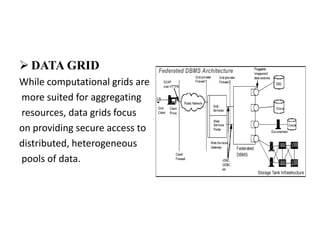
 DATA GRID
While computational grids are
more suited for aggregating
resources, data grids focus
on providing secure access to
distributed, heterogeneous
pools of data.
GRID TOPOLOGIES

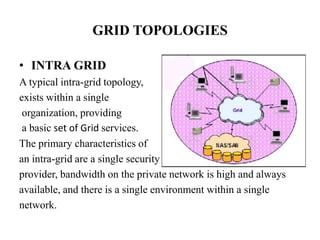
• INTRA GRID
A typical intra-grid topology,
exists within a single
 organization, providing
 a basic set of Grid services.
The primary characteristics of
an intra-grid are a single security
provider, bandwidth on the private network is high and always
available, and there is a single environment within a single
network.
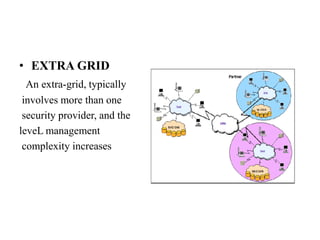
• EXTRA GRID
  An extra-grid, typically
 involves more than one
 security provider, and the
leveL management
 complexity increases
.


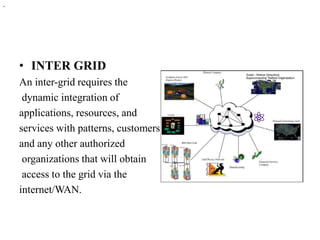
    • INTER GRID
    An inter-grid requires the
     dynamic integration of
    applications, resources, and
    services with patterns, customers
    and any other authorized
     organizations that will obtain
     access to the grid via the
    internet/WAN.
PHARASES AND ACTIVITIES

• Deciding which grid type and topology to chose from is
  just the first step in the grid architecture design. A mature
  end-to-end design methodology is comprised of distinct
  phases and activities.
• Basic Methodology
     For building a grid architecture, using a basic
  methodology allows the design to follow a consistent
  path from beginning to end. A methodology is not a
  cookbook for building a grid architecture, but a way
  to trace the progress of the design from the kickoff
  meeting to the final end state.
• Recommended Steps
1.Grid Design Workshop
The purpose of the grid design workshops is to help all
  of the parties involved to better understand the
  variables, options, and considerations that need to be
  taken into account when developing a grid
  infrastructure design
2. Documentation
An extremely critical means of communicating the
 design (your solution) of your grid infrastructure is
 via an architecture or solution document. The solution
 document should start with a high-level overview of
 the environment and subsequently should drill down
 into the most detailed configuration diagrams and
 descriptions possible
3. Prototype
Building a prototype of a grid system can save
  significant time that would otherwise be spent
  debugging and re-tooling unforeseen system
  incompatibilities. Your goal in building a prototype
  should be to produce a small-scale, end-to-end
  backbone of what your production environment will
  look like.
BENEFITS

• Exploiting Under Utilized Resources
• Parallel CPU Capacity
• Virtual Resources And Virtual Organization For
  Collaboration
• Access To Additional Resources
• Resource Balancing
• Reliability
• Management
EXPLOITING UNDER UTILIZED
             RESOURCES
• One of the basic uses of grid computing is to run an
  existing application on a different machine
• There are at least two prerequisites for this scenario.
  First, the application must be executable remotely and
  without undue overhead
• For example, a batch job that spends a significant
  amount of time processing a set of input data to
  produce an output data set is perhaps the most ideal
  and simple use case for a grid.
PARALLEL CPU CAPACITY

• The potential for massive parallel CPU capacity is
  one of the most common visions and attractive
  features of a grid
• A CPU-intensive grid application can be thought of as
  many smaller subjobs, each executing on a different
  machine in the grid.
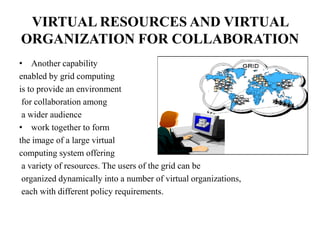
VIRTUAL RESOURCES AND VIRTUAL
ORGANIZATION FOR COLLABORATION
• Another capability
enabled by grid computing
is to provide an environment
 for collaboration among
 a wider audience
• work together to form
the image of a large virtual
computing system offering
 a variety of resources. The users of the grid can be
 organized dynamically into a number of virtual organizations,
 each with different policy requirements.
ACCESS TO ADDITIONAL RESOURCES

• The additional resources can be provided in
  additional numbers and/or capacity.
• The additional resources can be provided in
  additional numbers and/or capacity. For example,
  if a user needs to increase their total bandwidth to
  the Internet to implement a data mining search
  engine, the work can be split among grid
  machines that have independent connections to
  the Internet.
RESOURCE BALANCING

• A grid federates a large number of resources
  contributed by individual machines into a large
  single-system image.
• For applications that are grid-enabled, the grid can
  offer a resource balancing effect by scheduling grid
  jobs on machines with low utilization
RELIABILITY

• High-end conventional computing systems use
  expensive hardware to increase reliability.
• The systems are operated on special power sources
  that can start generators if utility power is interrupted.
MANAGEMENT

• The goal to virtualize the resources on the grid and
  more uniformly handle heterogeneous systems will
  create new opportunities to better manage a larger,
  more distributed IT infrastructure.
• The grid offers management of priorities among
  different projects

Grid computing

  • 1.
    DESIGN  Building aGrid Architecture  Building Architecture Models  Grid Topologies  Phases and Activities
  • 2.
    BUILDING A GRIDARCHITECTURE  The foundation of a grid solution design is typically built upon an existing infrastructure investment  At a glance, the grid architecture design should offer the following: • The “blueprint” for the detailed conceptual design • The use of open standards prescribed by the grid framework
  • 3.
    BUILDING ARCHITECTURE MODELS Some grids are designed to take advantage of extra processing resources, whereas some grid architectures are designed to support collaboration between various organizations  The type of grid selected is based primarily on the business problem that is being solved  The selection of a specific grid type will have a direct impact on the grid solution design.
  • 4.
     COMPUTATION GRID A computational grid aggregates the processing power from a distributed collection of systems.This type of grid is primarily comprised of low-powered computers with minimal application logic awareness and minimal storage capacity
  • 5.
     DATA GRID Whilecomputational grids are more suited for aggregating resources, data grids focus on providing secure access to distributed, heterogeneous pools of data.
  • 6.
    GRID TOPOLOGIES • INTRAGRID A typical intra-grid topology, exists within a single organization, providing a basic set of Grid services. The primary characteristics of an intra-grid are a single security provider, bandwidth on the private network is high and always available, and there is a single environment within a single network.
  • 7.
    • EXTRA GRID An extra-grid, typically involves more than one security provider, and the leveL management complexity increases
  • 8.
    . • INTER GRID An inter-grid requires the dynamic integration of applications, resources, and services with patterns, customers and any other authorized organizations that will obtain access to the grid via the internet/WAN.
  • 9.
    PHARASES AND ACTIVITIES •Deciding which grid type and topology to chose from is just the first step in the grid architecture design. A mature end-to-end design methodology is comprised of distinct phases and activities. • Basic Methodology For building a grid architecture, using a basic methodology allows the design to follow a consistent path from beginning to end. A methodology is not a cookbook for building a grid architecture, but a way to trace the progress of the design from the kickoff meeting to the final end state.
  • 10.
    • Recommended Steps 1.GridDesign Workshop The purpose of the grid design workshops is to help all of the parties involved to better understand the variables, options, and considerations that need to be taken into account when developing a grid infrastructure design
  • 11.
    2. Documentation An extremelycritical means of communicating the design (your solution) of your grid infrastructure is via an architecture or solution document. The solution document should start with a high-level overview of the environment and subsequently should drill down into the most detailed configuration diagrams and descriptions possible
  • 12.
    3. Prototype Building aprototype of a grid system can save significant time that would otherwise be spent debugging and re-tooling unforeseen system incompatibilities. Your goal in building a prototype should be to produce a small-scale, end-to-end backbone of what your production environment will look like.
  • 13.
    BENEFITS • Exploiting UnderUtilized Resources • Parallel CPU Capacity • Virtual Resources And Virtual Organization For Collaboration • Access To Additional Resources • Resource Balancing • Reliability • Management
  • 14.
    EXPLOITING UNDER UTILIZED RESOURCES • One of the basic uses of grid computing is to run an existing application on a different machine • There are at least two prerequisites for this scenario. First, the application must be executable remotely and without undue overhead • For example, a batch job that spends a significant amount of time processing a set of input data to produce an output data set is perhaps the most ideal and simple use case for a grid.
  • 15.
    PARALLEL CPU CAPACITY •The potential for massive parallel CPU capacity is one of the most common visions and attractive features of a grid • A CPU-intensive grid application can be thought of as many smaller subjobs, each executing on a different machine in the grid.
  • 16.
    VIRTUAL RESOURCES ANDVIRTUAL ORGANIZATION FOR COLLABORATION • Another capability enabled by grid computing is to provide an environment for collaboration among a wider audience • work together to form the image of a large virtual computing system offering a variety of resources. The users of the grid can be organized dynamically into a number of virtual organizations, each with different policy requirements.
  • 17.
    ACCESS TO ADDITIONALRESOURCES • The additional resources can be provided in additional numbers and/or capacity. • The additional resources can be provided in additional numbers and/or capacity. For example, if a user needs to increase their total bandwidth to the Internet to implement a data mining search engine, the work can be split among grid machines that have independent connections to the Internet.
  • 18.
    RESOURCE BALANCING • Agrid federates a large number of resources contributed by individual machines into a large single-system image. • For applications that are grid-enabled, the grid can offer a resource balancing effect by scheduling grid jobs on machines with low utilization
  • 19.
    RELIABILITY • High-end conventionalcomputing systems use expensive hardware to increase reliability. • The systems are operated on special power sources that can start generators if utility power is interrupted.
  • 20.
    MANAGEMENT • The goalto virtualize the resources on the grid and more uniformly handle heterogeneous systems will create new opportunities to better manage a larger, more distributed IT infrastructure. • The grid offers management of priorities among different projects