SUBMITTED BY : HABIBA AYUB
BUTT
S/2012-1922
BS.ED(HONS)SELF-SUPPORT
2/11/2016
2
•
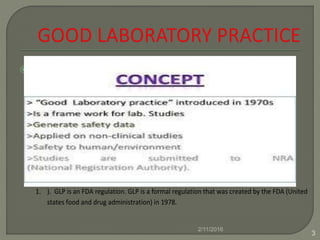
1. ). GLP is an FDA regulation. GLP is a formal regulation that was created by the FDA (United
states food and drug administration) in 1978.
2/11/2016
3
DEFINITION
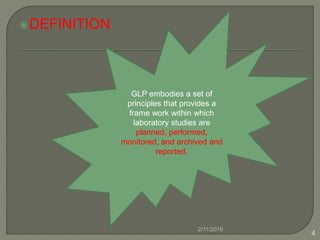
GLP embodies a set of
principles that provides a
frame work within which
laboratory studies are
planned, performed,
monitored, and archived and
reported.
2/11/2016
4
 • In the early 70’s FDA
became aware of cases
of poor laboratory
practice all over the
United States.
 • They discovered a lot f
a lot of poor lab
practices.
 Like Equipment not
been calibrated to
standard form ,
therefore giving wrong
measurements.
2/11/2016
5
2/11/2016
6
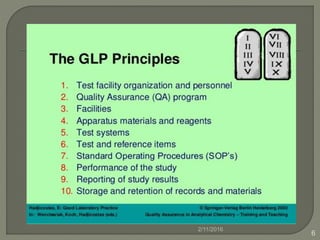
Management responsibilties
Sponsor responsibility
Study-director responsibilities
Principle investigator responsibilities
Study personnel responsibility(people
employed in an organization such as staff)
2/11/2016
7
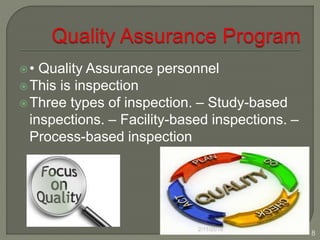
• Quality Assurance personnel
This is inspection
Three types of inspection. – Study-based
inspections. – Facility-based inspections. –
Process-based inspection
2/11/2016
8
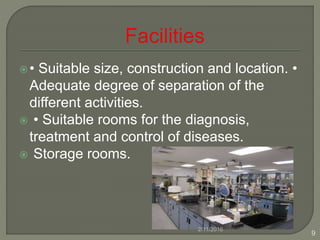
• Suitable size, construction and location. •
Adequate degree of separation of the
different activities.
 • Suitable rooms for the diagnosis,
treatment and control of diseases.
 Storage rooms.
2/11/2016
9
• Apparatus of appropriate design and
adequate capacity.
• Documented Inspection, cleaning,
maintenance and calibration of apparatus.
 • Chemicals, reagent and solutions should
be labeled to indicate identity, expiry and
specific storage instructions.
2/11/2016
10
• Physical and chemical test systems.
 Biological test systems.
 • Records of source, date of arrival, and
arrival conditions of test systems.
 • Proper identification of test systems in
their container or when removed.
 • Cleaning and sanitization of containers.
2/11/2016
11
• Receipt, handling, sampling and storage
 • Characterization.
 • Known stability of test and reference
items.
 • Stability of the test item in its vehicle
(container).
 • Samples for analytical purposes for each
batch.
2/11/2016
12
They define how to carry out protocol-
specified activities.
They are written to explain how the
procedures are suppose to work.
2/11/2016
13
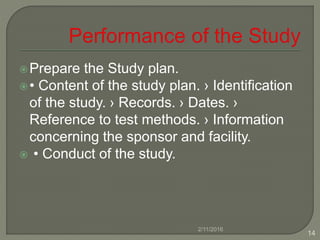
Prepare the Study plan.
• Content of the study plan. › Identification
of the study. › Records. › Dates. ›
Reference to test methods. › Information
concerning the sponsor and facility.
 • Conduct of the study.
2/11/2016
14
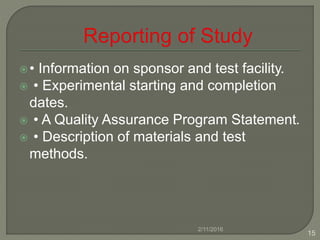
• Information on sponsor and test facility.
 • Experimental starting and completion
dates.
 • A Quality Assurance Program Statement.
 • Description of materials and test
methods.
2/11/2016
15
Storage (samples, reference items, raw
data, final reports) etc.
Index of materials retained(maintainence
of the material)
2/11/2016
16
 • Area should be free from smoke, smell,
dust etc.
• Ensure good ventilation, proper
illumination and prefer natural light.
 • Air conditioned the lab with humidity
control.
 • Enough space for measuring and testing
instrument.
GLPs have heavy emphasis on data
recording, record & specimen retention
2/11/2016
17
2/11/2016
18
2/11/2016
19

good laboratory practice

  • 1.
    SUBMITTED BY :HABIBA AYUB BUTT S/2012-1922 BS.ED(HONS)SELF-SUPPORT
  • 2.
  • 3.
    • 1. ). GLPis an FDA regulation. GLP is a formal regulation that was created by the FDA (United states food and drug administration) in 1978. 2/11/2016 3
  • 4.
    DEFINITION GLP embodies aset of principles that provides a frame work within which laboratory studies are planned, performed, monitored, and archived and reported. 2/11/2016 4
  • 5.
     • Inthe early 70’s FDA became aware of cases of poor laboratory practice all over the United States.  • They discovered a lot f a lot of poor lab practices.  Like Equipment not been calibrated to standard form , therefore giving wrong measurements. 2/11/2016 5
  • 6.
  • 7.
    Management responsibilties Sponsor responsibility Study-directorresponsibilities Principle investigator responsibilities Study personnel responsibility(people employed in an organization such as staff) 2/11/2016 7
  • 8.
    • Quality Assurancepersonnel This is inspection Three types of inspection. – Study-based inspections. – Facility-based inspections. – Process-based inspection 2/11/2016 8
  • 9.
    • Suitable size,construction and location. • Adequate degree of separation of the different activities.  • Suitable rooms for the diagnosis, treatment and control of diseases.  Storage rooms. 2/11/2016 9
  • 10.
    • Apparatus ofappropriate design and adequate capacity. • Documented Inspection, cleaning, maintenance and calibration of apparatus.  • Chemicals, reagent and solutions should be labeled to indicate identity, expiry and specific storage instructions. 2/11/2016 10
  • 11.
    • Physical andchemical test systems.  Biological test systems.  • Records of source, date of arrival, and arrival conditions of test systems.  • Proper identification of test systems in their container or when removed.  • Cleaning and sanitization of containers. 2/11/2016 11
  • 12.
    • Receipt, handling,sampling and storage  • Characterization.  • Known stability of test and reference items.  • Stability of the test item in its vehicle (container).  • Samples for analytical purposes for each batch. 2/11/2016 12
  • 13.
    They define howto carry out protocol- specified activities. They are written to explain how the procedures are suppose to work. 2/11/2016 13
  • 14.
    Prepare the Studyplan. • Content of the study plan. › Identification of the study. › Records. › Dates. › Reference to test methods. › Information concerning the sponsor and facility.  • Conduct of the study. 2/11/2016 14
  • 15.
    • Information onsponsor and test facility.  • Experimental starting and completion dates.  • A Quality Assurance Program Statement.  • Description of materials and test methods. 2/11/2016 15
  • 16.
    Storage (samples, referenceitems, raw data, final reports) etc. Index of materials retained(maintainence of the material) 2/11/2016 16
  • 17.
     • Areashould be free from smoke, smell, dust etc. • Ensure good ventilation, proper illumination and prefer natural light.  • Air conditioned the lab with humidity control.  • Enough space for measuring and testing instrument. GLPs have heavy emphasis on data recording, record & specimen retention 2/11/2016 17
  • 18.
  • 19.