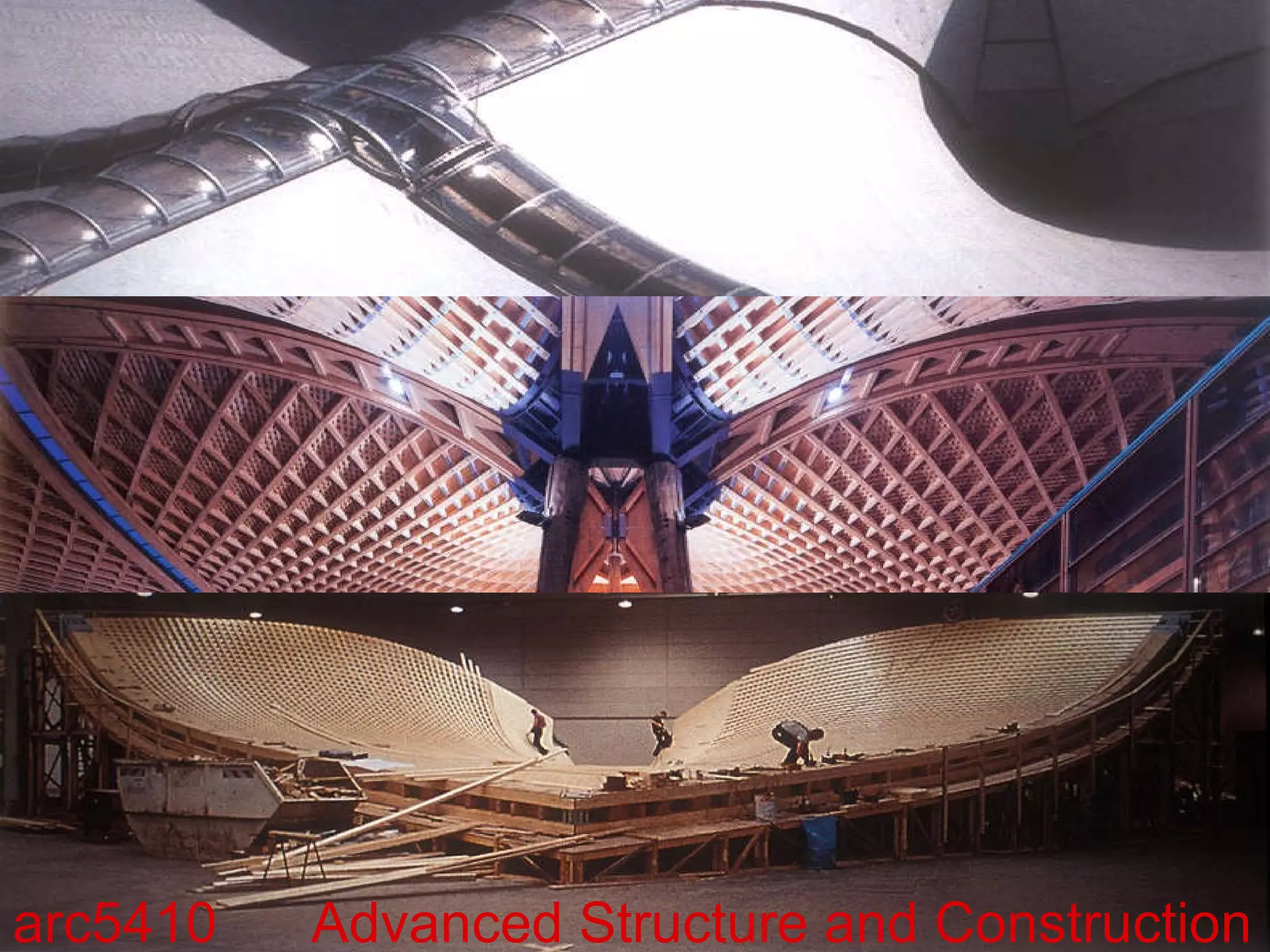
arc5410  Advanced Structure and Construction
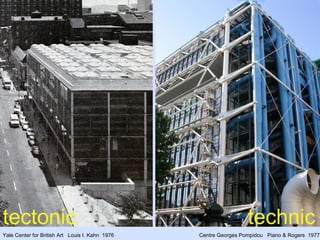
tectonic  technic Yale Center for British Art  Louis I. Kahn  1976   Centre Georges Pompidou  Piano & Rogers  1977
“ If one poses the question as to what might be a comparable ground for architecture, then one must turn to a similar material base, namely that architecture must of necessity be embodied in structural and constructional form.” “ However, building remains essentially tectonic rather than scenographic in character and it may be argued that it is an act of construction first, rather than a discourse predicated on the surface, volume and plan, to cite the “Three Reminders to Architects” of Le Corbusier. Thus one may assert that building is ontological rather than representational in character and that built form is a presence rather than something standing for an absence. In Martin Heidegger’s terminology we may think of it as a ‘thing’ rather than a ‘sign.’” Kenneth Frampton from “Rappel a l’Ordre, The Case for the Tectonic”
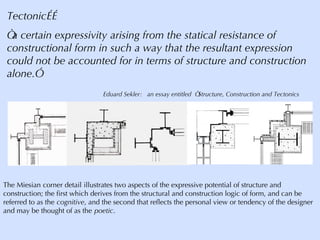
Tectonics…… “ a manifestation in architecture of the esthetic imperative as part of human nature. It attends to the potential of building for qualities inherent in the material, economy in their use, potential for elegance in resolution in their juxtaposition, and the total compositional quality of form. It goes beyond necessity and responds to a sensibility of a higher order as mastery and skill. It relates to the sensibility that has characterized all fine works of architecture. It has been the quality of all work of architecture” .   Tectonics Studio description in  ArchitectureCUHK 2007
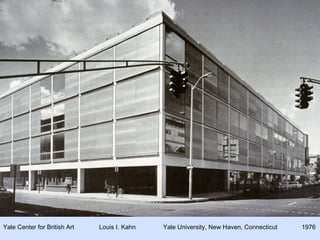
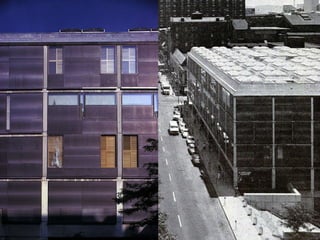
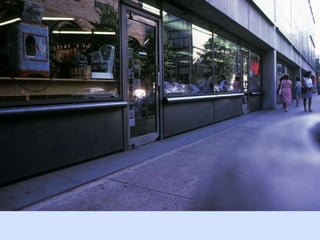
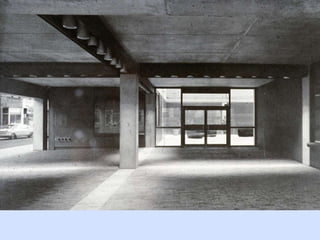
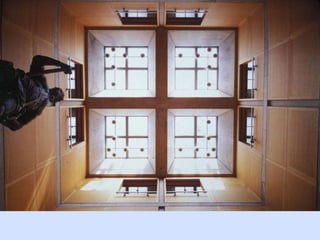
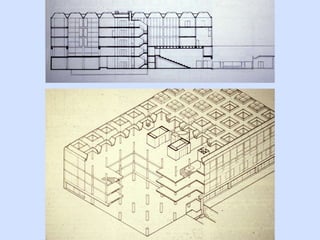
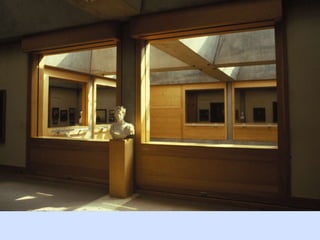
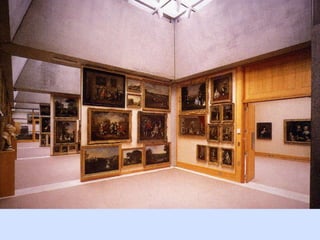
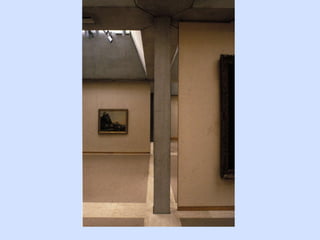
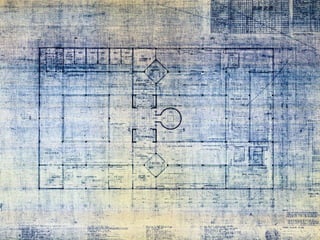
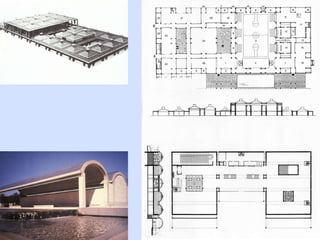
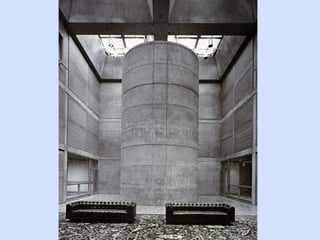
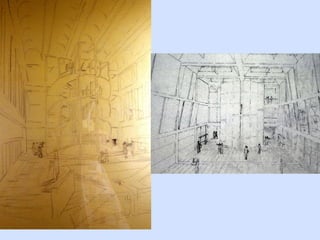
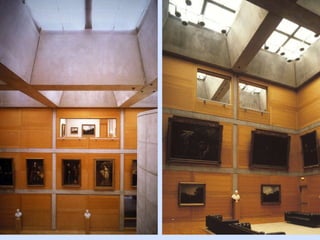
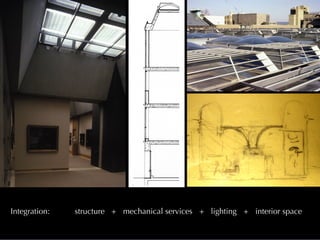
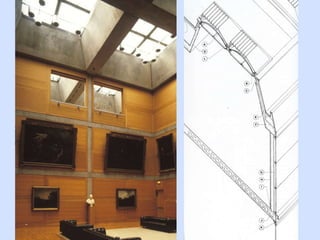
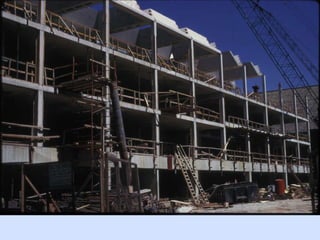
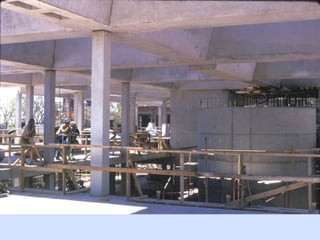
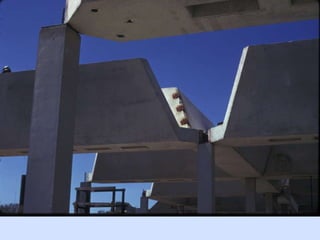
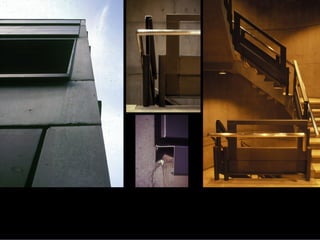
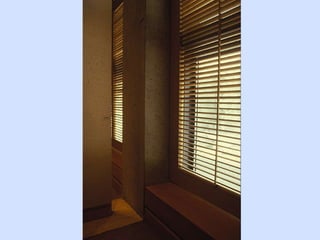
Yale Center for British Art Louis I. Kahn Yale University, New Haven, Connecticut   1976
 
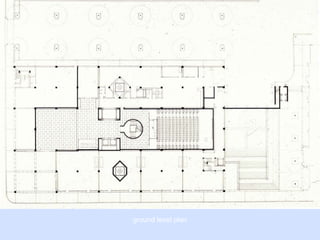
ground level plan


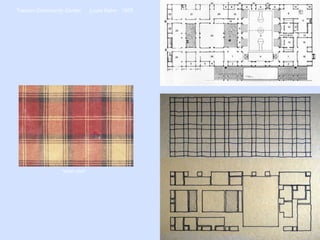
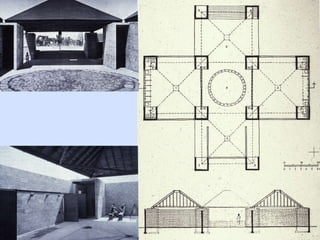
Trenton Community Center  Louis Kahn  1955 “ tartan plaid”


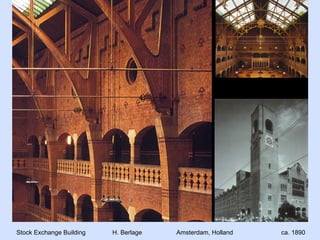
Stock Exchange Building H. Berlage Amsterdam, Holland   ca. 1890
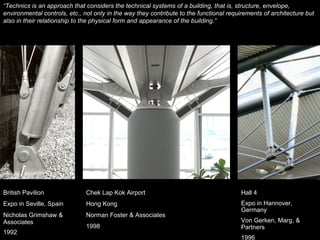
“ Technics is an approach that considers the technical systems of a building, that is, structure, envelope, environmental controls, etc., not only in the way they contribute to the functional requirements of architecture but also in their relationship to the physical form and appearance of the building.”
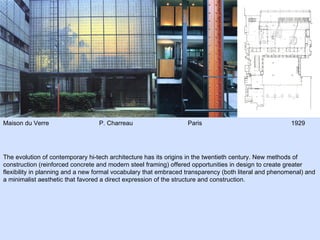
Maison du Verre P. Charreau    Paris 1929 The evolution of contemporary hi-tech architecture has its origins in the twentieth century. New methods of construction (reinforced concrete and modern steel framing) offered opportunities in design to create greater flexibility in planning and a new formal vocabulary that embraced transparency (both literal and phenomenal) and a minimalist aesthetic that favored a direct expression of the structure and construction.
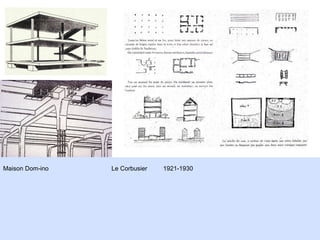
Maison Dom-ino   Le Corbusier  1921-1930
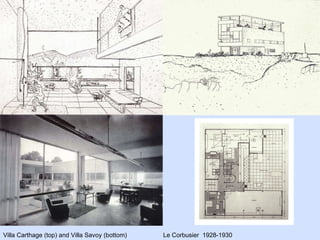
Villa Carthage (top) and Villa Savoy (bottom) Le Corbusier  1928-1930
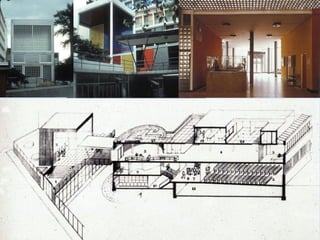
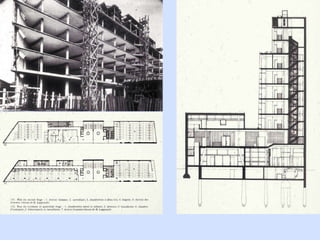
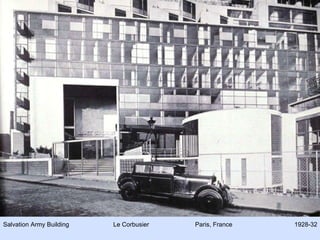
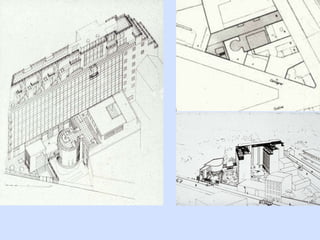
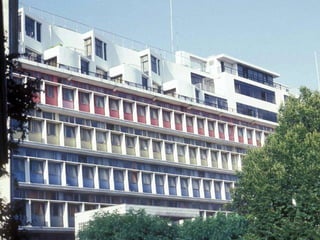
Salvation Army Building   Le Corbusier   Paris, France    1928-32


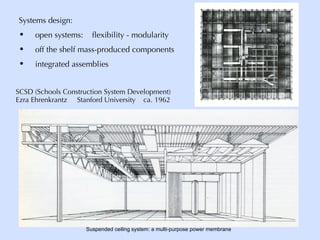
Systems design:  open systems:  flexibility - modularity off the shelf mass-produced components integrated assemblies SCSD (Schools Construction System Development)  Ezra Ehrenkrantz  Stanford University  ca. 1962  Suspended ceiling system: a multi-purpose power membrane
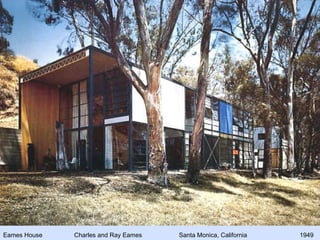
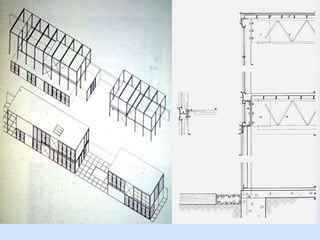
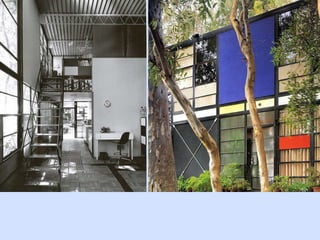
Eames House   Charles and Ray Eames   Santa Monica, California   1949
 
 
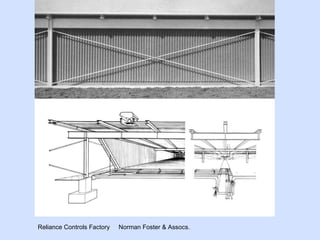
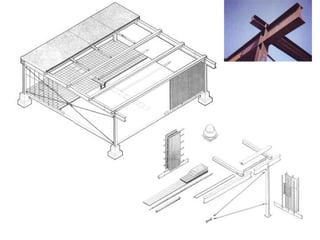
Reliance Controls Factory  Norman Foster & Assocs.
 
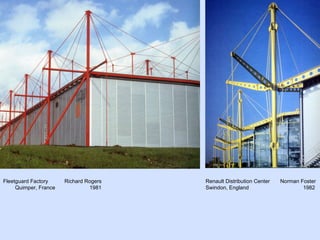
Fleetguard Factory  Richard Rogers    Renault Distribution Center  Norman Foster  Quimper, France   1981   Swindon, England     1982
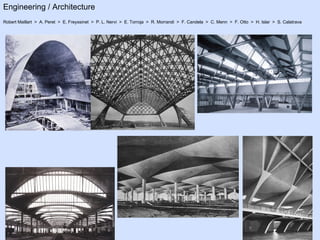
Engineering / Architecture Robert Maillart  >  A. Peret  >  E. Freyssinet  >  P. L. Nervi  >  E. Torroja  >  R. Morrandi  >  F. Candela  >  C. Menn  >  F. Otto  >  H. Islar  >  S. Calatrava
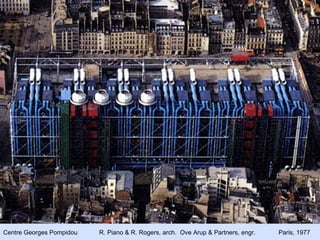
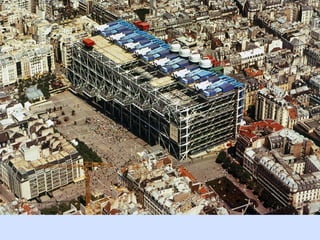
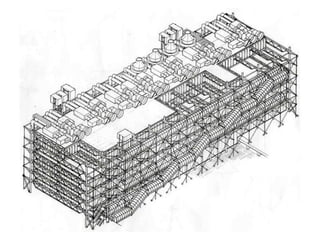
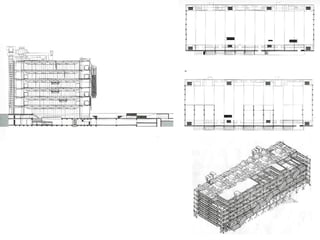
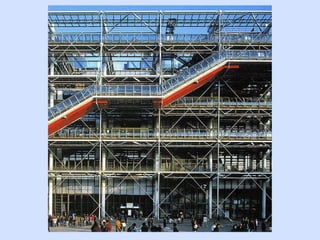
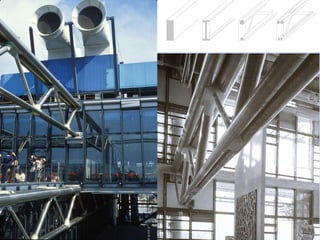
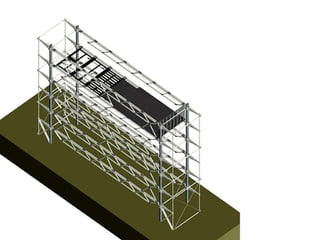
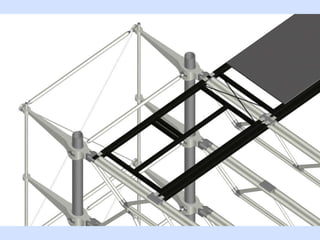
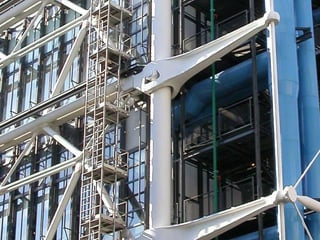
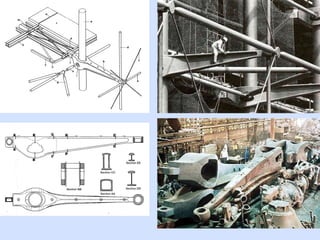
Centre Georges Pompidou R. Piano & R. Rogers, arch.  Ove Arup & Partners, engr.   Paris, 1977


What is the scope of architecture from a technics view? “ Architecture is both an interior and an exterior experience. The best architecture comes from a synthesis of all of the elements that separately comprise a building; from its relationship to the streetscape or skyline to the structure that holds it up, the services that allow it to work, the ecology of the building, the material used, the character of the spaces, the use of light and shade, the symbolism of the form and the way in which it signals its presence in the city or the countryside.” Norman Foster What is the purpose of design from a technics view? “ The designer’s task could be summed up as analyzing set problems in the widest sense and organizing the best available resources to achieve the highest-performance solution in the most economical manner.” Norman Foster
Technics Lightweight construction: save materials and lessen weight and thereby loads. Achieved by structural efficiency, that is , design of structure to improve the strength to weight ratio, and by the use of new and improved materials Energy conservation: where possible favor  selective  mode of design over the  regenerative. Methods of production: improve quality of construction while reducing cost. Lower the cost of labor through application of prefabrication and off-site production  see  refabricating Architecture assemble buildings in “chunks” produced offsite by    Timberlake and Kiernan   subcontractors use of 3D modeling with embedded information and online    information sharing to improve coordination Lower the cost of construction through speeding up the cycle. Faster construction = $ Lower the total building cost by reducing construction error. Visual quality can be achieved through clarity, simplicity and the integrity of the design.
good

  • 1.
    arc5410 AdvancedStructure and Construction
  • 2.
    tectonic technicYale Center for British Art Louis I. Kahn 1976 Centre Georges Pompidou Piano & Rogers 1977
  • 3.
    “ If oneposes the question as to what might be a comparable ground for architecture, then one must turn to a similar material base, namely that architecture must of necessity be embodied in structural and constructional form.” “ However, building remains essentially tectonic rather than scenographic in character and it may be argued that it is an act of construction first, rather than a discourse predicated on the surface, volume and plan, to cite the “Three Reminders to Architects” of Le Corbusier. Thus one may assert that building is ontological rather than representational in character and that built form is a presence rather than something standing for an absence. In Martin Heidegger’s terminology we may think of it as a ‘thing’ rather than a ‘sign.’” Kenneth Frampton from “Rappel a l’Ordre, The Case for the Tectonic”
  • 4.
    Tectonics…… “ amanifestation in architecture of the esthetic imperative as part of human nature. It attends to the potential of building for qualities inherent in the material, economy in their use, potential for elegance in resolution in their juxtaposition, and the total compositional quality of form. It goes beyond necessity and responds to a sensibility of a higher order as mastery and skill. It relates to the sensibility that has characterized all fine works of architecture. It has been the quality of all work of architecture” . Tectonics Studio description in ArchitectureCUHK 2007
  • 5.
    Yale Center forBritish Art Louis I. Kahn Yale University, New Haven, Connecticut 1976
  • 6.
  • 7.
  • 8.
  • 9.
  • 10.
  • 11.
  • 12.
  • 13.
  • 14.
  • 15.
  • 16.
  • 17.
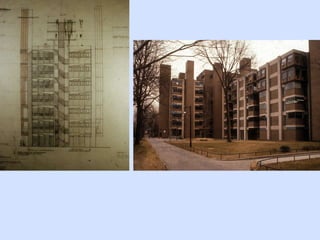
    Trenton Community Center Louis Kahn 1955 “ tartan plaid”
  • 18.
  • 19.
  • 20.
  • 21.
  • 22.
  • 23.
  • 24.
  • 25.
  • 26.
  • 27.
  • 28.
  • 29.
  • 30.
  • 31.
    Stock Exchange BuildingH. Berlage Amsterdam, Holland ca. 1890
  • 32.
    “ Technics isan approach that considers the technical systems of a building, that is, structure, envelope, environmental controls, etc., not only in the way they contribute to the functional requirements of architecture but also in their relationship to the physical form and appearance of the building.”
  • 33.
    Maison du VerreP. Charreau Paris 1929 The evolution of contemporary hi-tech architecture has its origins in the twentieth century. New methods of construction (reinforced concrete and modern steel framing) offered opportunities in design to create greater flexibility in planning and a new formal vocabulary that embraced transparency (both literal and phenomenal) and a minimalist aesthetic that favored a direct expression of the structure and construction.
  • 34.
    Maison Dom-ino Le Corbusier 1921-1930
  • 35.
    Villa Carthage (top)and Villa Savoy (bottom) Le Corbusier 1928-1930
  • 36.
    Salvation Army Building Le Corbusier Paris, France 1928-32
  • 37.
  • 38.
  • 39.
  • 40.
  • 41.
    Systems design: open systems: flexibility - modularity off the shelf mass-produced components integrated assemblies SCSD (Schools Construction System Development) Ezra Ehrenkrantz Stanford University ca. 1962 Suspended ceiling system: a multi-purpose power membrane
  • 42.
    Eames House Charles and Ray Eames Santa Monica, California 1949
  • 43.
  • 44.
  • 45.
    Reliance Controls Factory Norman Foster & Assocs.
  • 46.
  • 47.
    Fleetguard Factory Richard Rogers Renault Distribution Center Norman Foster Quimper, France 1981 Swindon, England 1982
  • 48.
    Engineering / ArchitectureRobert Maillart > A. Peret > E. Freyssinet > P. L. Nervi > E. Torroja > R. Morrandi > F. Candela > C. Menn > F. Otto > H. Islar > S. Calatrava
  • 49.
    Centre Georges PompidouR. Piano & R. Rogers, arch. Ove Arup & Partners, engr. Paris, 1977
  • 50.
  • 51.
  • 52.
  • 53.
  • 54.
  • 55.
  • 56.
  • 57.
  • 58.
  • 59.
    What is thescope of architecture from a technics view? “ Architecture is both an interior and an exterior experience. The best architecture comes from a synthesis of all of the elements that separately comprise a building; from its relationship to the streetscape or skyline to the structure that holds it up, the services that allow it to work, the ecology of the building, the material used, the character of the spaces, the use of light and shade, the symbolism of the form and the way in which it signals its presence in the city or the countryside.” Norman Foster What is the purpose of design from a technics view? “ The designer’s task could be summed up as analyzing set problems in the widest sense and organizing the best available resources to achieve the highest-performance solution in the most economical manner.” Norman Foster
  • 60.
    Technics Lightweight construction:save materials and lessen weight and thereby loads. Achieved by structural efficiency, that is , design of structure to improve the strength to weight ratio, and by the use of new and improved materials Energy conservation: where possible favor selective mode of design over the regenerative. Methods of production: improve quality of construction while reducing cost. Lower the cost of labor through application of prefabrication and off-site production see refabricating Architecture assemble buildings in “chunks” produced offsite by Timberlake and Kiernan subcontractors use of 3D modeling with embedded information and online information sharing to improve coordination Lower the cost of construction through speeding up the cycle. Faster construction = $ Lower the total building cost by reducing construction error. Visual quality can be achieved through clarity, simplicity and the integrity of the design.