Downloaded 13 times
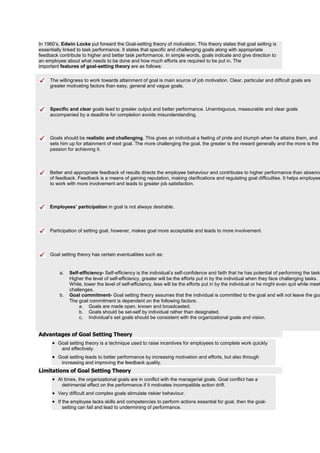


Goal-setting theory states that specific, challenging goals along with feedback lead to higher task performance. The theory proposes that goals motivate employees and indicate what needs to be done. Goals are most effective when they are clear, difficult but attainable, and accompanied by feedback. According to the theory, self-efficacy and commitment also impact goal achievement, such that employees with higher self-efficacy and commitment work harder to attain goals even when facing challenges. While goal-setting can improve performance by increasing motivation and feedback, it may fail if goals conflict or if employees lack the skills required.


