Belgrave Road Feasibility and Design Study
Update Meeting – Presentation of Draft Options
2nd November 2015
Objective of today’s presentation
• To let you know what progress we have made on the analysis and designs
• To explain the principles of how we have developed the options so far
• To get some interim feedback on these ideas
• To set out the next steps of the process
STREET AUDIT
Street Audit
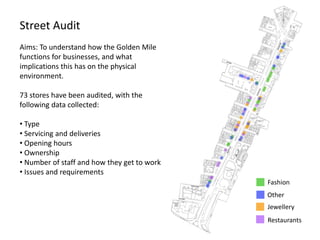
Aims: To understand how the Golden Mile
functions for businesses, and what
implications this has on the physical
environment.
73 stores have been audited, with the
following data collected:
• Type
• Servicing and deliveries
• Opening hours
• Ownership
• Number of staff and how they get to work
• Issues and requirements
Fashion
Other
Jewellery
Restaurants
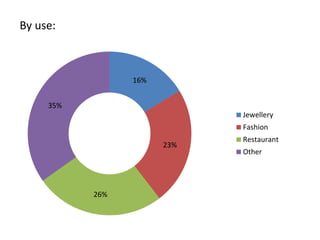
By use:
16%
23%
26%
35%
Jewellery
Fashion
Restaurant
Other
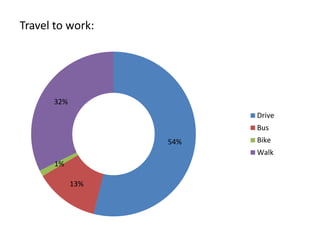
Travel to work:
54%
13%
1%
32%
Drive
Bus
Bike
Walk
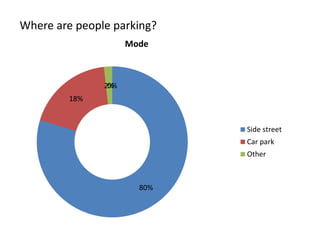
Where are people parking?
80%
18%
2%0%
Mode
Side street
Car park
Other
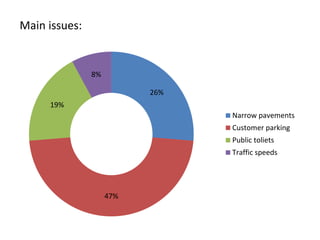
Main issues:
26%
47%
19%
8%
Narrow pavements
Customer parking
Public toliets
Traffic speeds
DESIGN PRINCIPLES
You said, we listened
• You said that there was widespread dissatisfaction with the number of
traffic signals on Belgrave Road
• We understand there is uncertainty about how significant changes to
Belgrave Road might work
• You told us about importance of these four pedestrian crossings:
– Cossington Street
– Law Street
– Rothley Street
– Dorset Street
• We have developed three options based on the previous workshop:
– Retain the existing arrangement of 4 traffic lanes
– Reduce the number of lanes to 2, but keep the central median
– Reduce the number of lanes to 2 and remove the central median
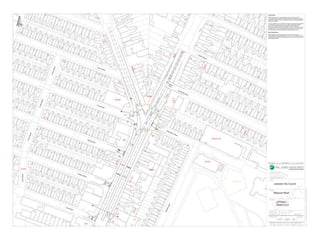
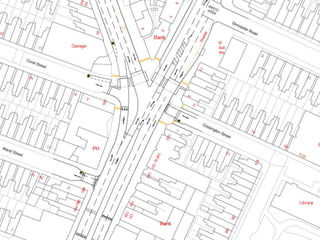
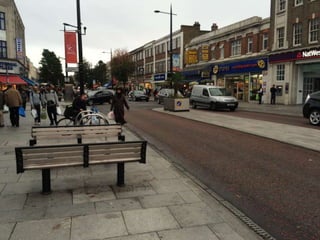
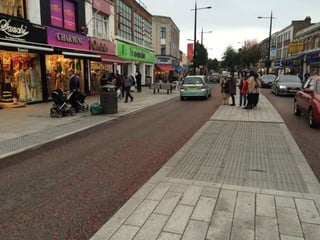
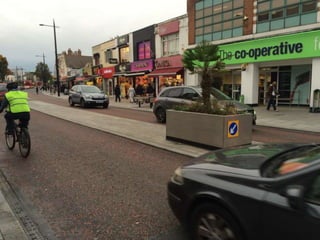
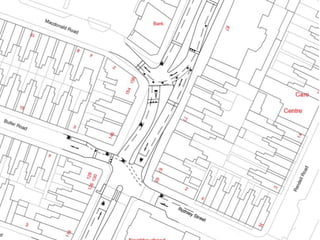
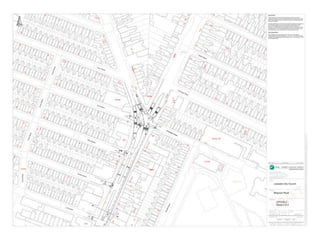
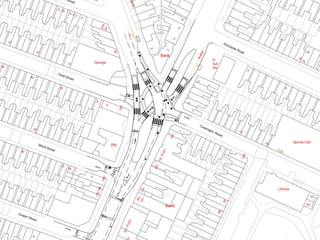
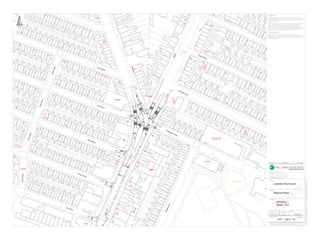
Existing situation
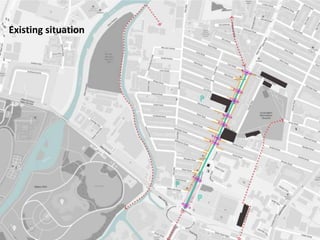
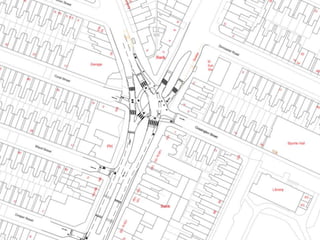
• Nine sets of traffic signals between Belgrave Circle and Melton Turn
• All pedestrian crossings require people to cross the road in two stages
• Pedestrians, motorists and cyclists all have difficulty moving across
Belgrave Road
• Access to the car parks is not obvious
• Discontinuous provision for cycling
Existing situation
EMERGING OPTIONS
Common to all options
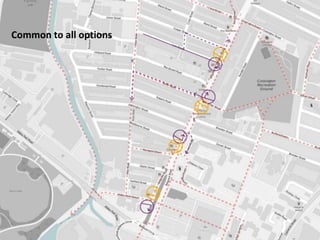
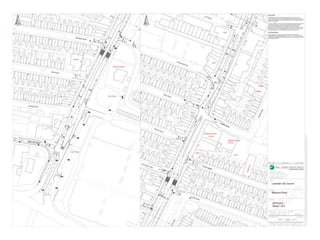
• Fewer traffic signals – improved efficiency of remaining signals
• Retained controlled pedestrian crossings at these key locations:
– Cossington Street
– Law Street
– Rothley Street
– Dorset Street
– Abbey Park Street
• Pedestrians can cross the road in one go at these locations
• However, there are changes to minor road traffic movements to achieve
this
• Provision for cyclists to cross Belgrave Road
• Bus laybys removed to maximise footway and minimise delay to buses
• Better access to car park at Belgrave Gate
Common to all options
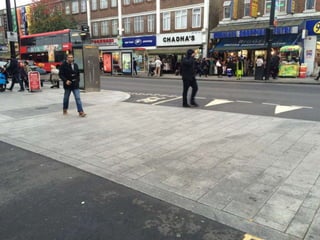
Examples
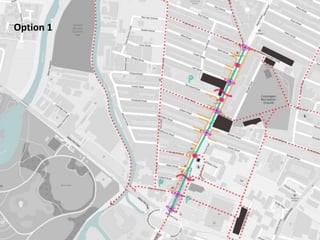
Option 1 – Four traffic lanes with a central median
• The option that is most similar to the existing situation
• The junction at Melton Turn is simplified to operate more efficiently and
with a better crossing arrangement for pedestrians
• Macdonald Road junction has signals removed but the junction is placed on
a raised table – this slows traffic to make it easier to judge gaps in traffic
flow, and a Zebra Crossing is also introduced
• The remaining five sets of signals are designed to operate with as few
stages as possible: meaning the delay to traffic is minimised
Option 1
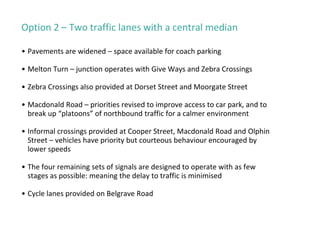
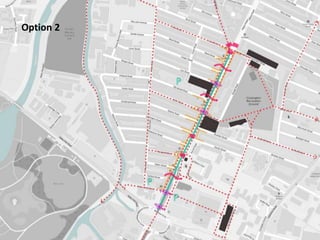
Option 2 – Two traffic lanes with a central median
• Pavements are widened – space available for coach parking
• Melton Turn – junction operates with Give Ways and Zebra Crossings
• Zebra Crossings also provided at Dorset Street and Moorgate Street
• Macdonald Road – priorities revised to improve access to car park, and to
break up “platoons” of northbound traffic for a calmer environment
• Informal crossings provided at Cooper Street, Macdonald Road and Olphin
Street – vehicles have priority but courteous behaviour encouraged by
lower speeds
• The four remaining sets of signals are designed to operate with as few
stages as possible: meaning the delay to traffic is minimised
• Cycle lanes provided on Belgrave Road
Option 2
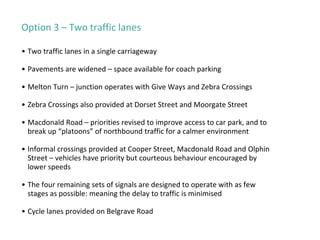
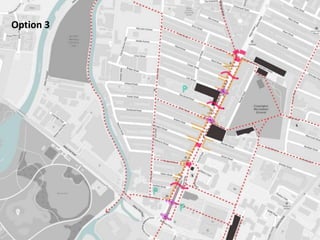
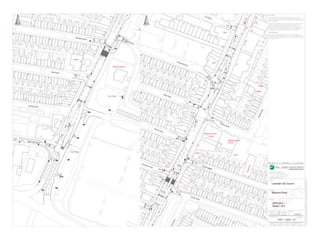
Option 3 – Two traffic lanes
• Two traffic lanes in a single carriageway
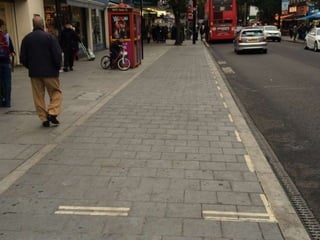
• Pavements are widened – space available for coach parking
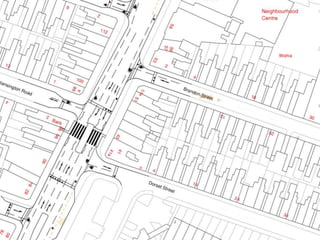
• Melton Turn – junction operates with Give Ways and Zebra Crossings
• Zebra Crossings also provided at Dorset Street and Moorgate Street
• Macdonald Road – priorities revised to improve access to car park, and to
break up “platoons” of northbound traffic for a calmer environment
• Informal crossings provided at Cooper Street, Macdonald Road and Olphin
Street – vehicles have priority but courteous behaviour encouraged by
lower speeds
• The four remaining sets of signals are designed to operate with as few
stages as possible: meaning the delay to traffic is minimised
• Cycle lanes provided on Belgrave Road
Option 3
PUBLIC REALM CONCEPTS
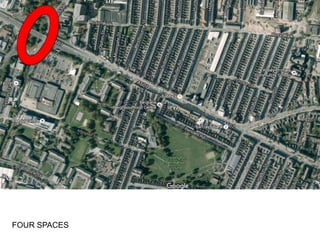
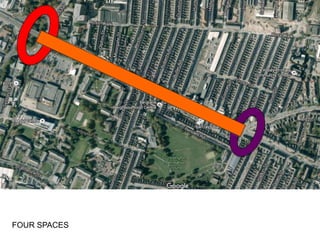
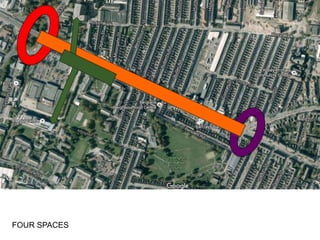
FOUR SPACES
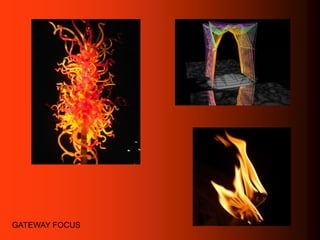
GATEWAY FOCUS
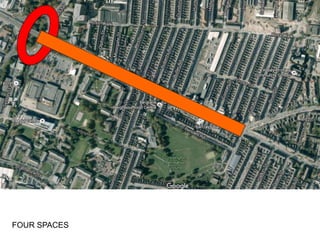
FOUR SPACES
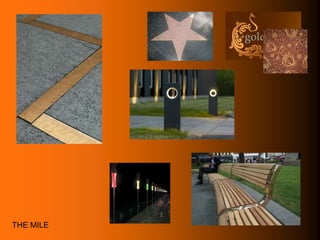
THE MILE
FOUR SPACES
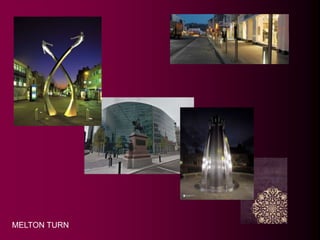
MELTON TURN
FOUR SPACES
NEW ‘PEEPUL’ GARDEN
NEXT STEPS
Next Steps
• Base traffic model now complete
• Welcome initial feedback on traffic options and public realm ideas – by end
of this week at the latest
• Traffic modelling will help us to refine the options to provide the most
optimal solutions, which will be taken to consultation
• Public consultation begins 1 December with exhibition at the
Neighbourhood Centre

Gm20151102 updatemeeting finaledited

  • 1.
    Belgrave Road Feasibilityand Design Study Update Meeting – Presentation of Draft Options 2nd November 2015
  • 2.
    Objective of today’spresentation • To let you know what progress we have made on the analysis and designs • To explain the principles of how we have developed the options so far • To get some interim feedback on these ideas • To set out the next steps of the process
  • 3.
  • 4.
    Street Audit Aims: Tounderstand how the Golden Mile functions for businesses, and what implications this has on the physical environment. 73 stores have been audited, with the following data collected: • Type • Servicing and deliveries • Opening hours • Ownership • Number of staff and how they get to work • Issues and requirements Fashion Other Jewellery Restaurants
  • 5.
  • 6.
  • 7.
    Where are peopleparking? 80% 18% 2%0% Mode Side street Car park Other
  • 8.
    Main issues: 26% 47% 19% 8% Narrow pavements Customerparking Public toliets Traffic speeds
  • 9.
  • 10.
    You said, welistened • You said that there was widespread dissatisfaction with the number of traffic signals on Belgrave Road • We understand there is uncertainty about how significant changes to Belgrave Road might work • You told us about importance of these four pedestrian crossings: – Cossington Street – Law Street – Rothley Street – Dorset Street • We have developed three options based on the previous workshop: – Retain the existing arrangement of 4 traffic lanes – Reduce the number of lanes to 2, but keep the central median – Reduce the number of lanes to 2 and remove the central median
  • 11.
    Existing situation • Ninesets of traffic signals between Belgrave Circle and Melton Turn • All pedestrian crossings require people to cross the road in two stages • Pedestrians, motorists and cyclists all have difficulty moving across Belgrave Road • Access to the car parks is not obvious • Discontinuous provision for cycling
  • 12.
  • 13.
  • 14.
    Common to alloptions • Fewer traffic signals – improved efficiency of remaining signals • Retained controlled pedestrian crossings at these key locations: – Cossington Street – Law Street – Rothley Street – Dorset Street – Abbey Park Street • Pedestrians can cross the road in one go at these locations • However, there are changes to minor road traffic movements to achieve this • Provision for cyclists to cross Belgrave Road • Bus laybys removed to maximise footway and minimise delay to buses • Better access to car park at Belgrave Gate
  • 15.
  • 16.
  • 17.
    Option 1 –Four traffic lanes with a central median • The option that is most similar to the existing situation • The junction at Melton Turn is simplified to operate more efficiently and with a better crossing arrangement for pedestrians • Macdonald Road junction has signals removed but the junction is placed on a raised table – this slows traffic to make it easier to judge gaps in traffic flow, and a Zebra Crossing is also introduced • The remaining five sets of signals are designed to operate with as few stages as possible: meaning the delay to traffic is minimised
  • 18.
  • 24.
    Option 2 –Two traffic lanes with a central median • Pavements are widened – space available for coach parking • Melton Turn – junction operates with Give Ways and Zebra Crossings • Zebra Crossings also provided at Dorset Street and Moorgate Street • Macdonald Road – priorities revised to improve access to car park, and to break up “platoons” of northbound traffic for a calmer environment • Informal crossings provided at Cooper Street, Macdonald Road and Olphin Street – vehicles have priority but courteous behaviour encouraged by lower speeds • The four remaining sets of signals are designed to operate with as few stages as possible: meaning the delay to traffic is minimised • Cycle lanes provided on Belgrave Road
  • 25.
  • 33.
    Option 3 –Two traffic lanes • Two traffic lanes in a single carriageway • Pavements are widened – space available for coach parking • Melton Turn – junction operates with Give Ways and Zebra Crossings • Zebra Crossings also provided at Dorset Street and Moorgate Street • Macdonald Road – priorities revised to improve access to car park, and to break up “platoons” of northbound traffic for a calmer environment • Informal crossings provided at Cooper Street, Macdonald Road and Olphin Street – vehicles have priority but courteous behaviour encouraged by lower speeds • The four remaining sets of signals are designed to operate with as few stages as possible: meaning the delay to traffic is minimised • Cycle lanes provided on Belgrave Road
  • 34.
  • 40.
  • 41.
  • 42.
  • 43.
  • 44.
  • 45.
  • 46.
  • 47.
  • 48.
  • 49.
  • 50.
    Next Steps • Basetraffic model now complete • Welcome initial feedback on traffic options and public realm ideas – by end of this week at the latest • Traffic modelling will help us to refine the options to provide the most optimal solutions, which will be taken to consultation • Public consultation begins 1 December with exhibition at the Neighbourhood Centre