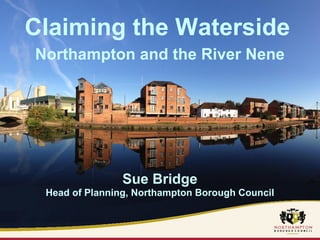
Claiming the Waterside 
Northampton and the River Nene 
Sue Bridge 
Head of Planning, Northampton Borough Council
Outline of presentation: 
• Historical context 
• Key issues 
• The Vision for 
Northampton and the 
Nene 
• Strategic objectives 
• Policies for the 
Waterside 
• Implementation 
• Future key challenges
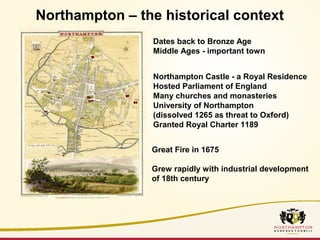
Northampton – the historical context 
Dates back to Bronze Age 
Middle Ages - important town 
Northampton Castle - a Royal Residence 
Hosted Parliament of England 
Many churches and monasteries 
University of Northampton 
(dissolved 1265 as threat to Oxford) 
Granted Royal Charter 1189 
Great Fire in 1675 
Grew rapidly with industrial development 
of 18th century
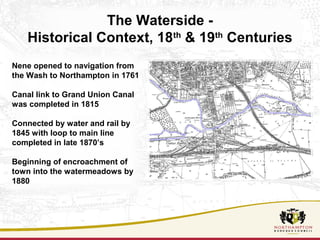
The Waterside - 
Historical Context, 18th & 19th Centuries 
Nene opened to navigation from 
the Wash to Northampton in 1761 
Canal link to Grand Union Canal 
was completed in 1815 
Connected by water and rail by 
1845 with loop to main line 
completed in late 1870’s 
Beginning of encroachment of 
town into the watermeadows by 
1880
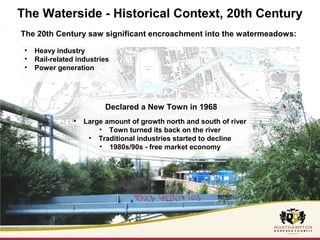
The Waterside - Historical Context, 20th Century 
The 20th Century saw significant encroachment into the watermeadows: 
• Heavy industry 
• Rail-related industries 
• Power generation 
Declared a New Town in 1968 
• Large amount of growth north and south of river 
• Town turned its back on the river 
• Traditional industries started to decline 
• 1980s/90s - free market economy
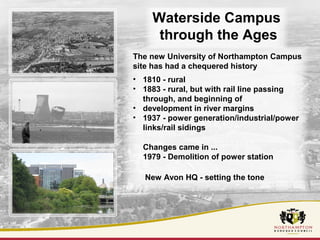
Waterside Campus 
through the Ages 
The new University of Northampton Campus 
site has had a chequered history 
• 1810 - rural 
• 1883 - rural, but with rail line passing 
through, and beginning of 
• development in river margins 
• 1937 - power generation/industrial/power 
links/rail sidings 
Changes came in ... 
1979 - Demolition of power station 
New Avon HQ - setting the tone
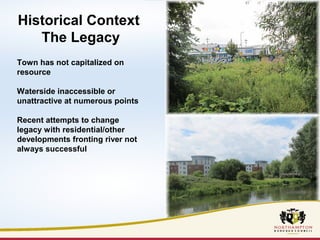
Historical Context 
The Legacy 
Town has not capitalized on 
resource 
Waterside inaccessible or 
unattractive at numerous points 
Recent attempts to change 
legacy with residential/other 
developments fronting river not 
always successful
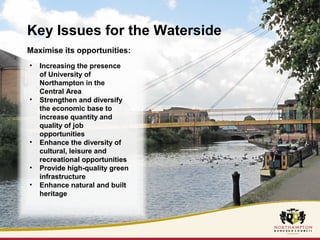
Key Issues for the Waterside 
Maximise its opportunities: 
• Increasing the presence 
of University of 
Northampton in the 
Central Area 
• Strengthen and diversify 
the economic base to 
increase quantity and 
quality of job 
opportunities 
• Enhance the diversity of 
cultural, leisure and 
recreational opportunities 
• Provide high-quality green 
infrastructure 
• Enhance natural and built 
heritage
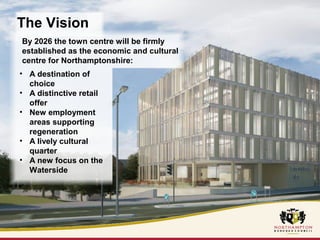
The Vision 
By 2026 the town centre will be firmly 
established as the economic and cultural 
centre for Northamptonshire: 
• A destination of 
choice 
• A distinctive retail 
offer 
• New employment 
areas supporting 
regeneration 
• A lively cultural 
quarter 
• A new focus on the 
Waterside
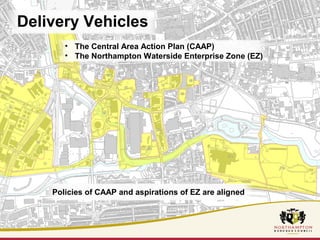
Delivery Vehicles 
• The Central Area Action Plan (CAAP) 
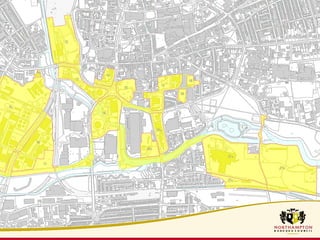
• The Northampton Waterside Enterprise Zone (EZ) 
Policies of CAAP and aspirations of EZ are aligned
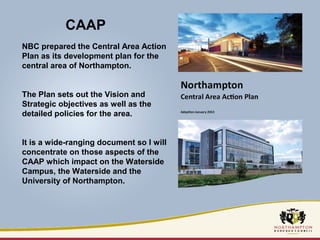
CAAP 
NBC prepared the Central Area Action 
Plan as its development plan for the 
central area of Northampton. 
The Plan sets out the Vision and 
Strategic objectives as well as the 
detailed policies for the area. 
It is a wide-ranging document so I will 
concentrate on those aspects of the 
CAAP which impact on the Waterside 
Campus, the Waterside and the 
University of Northampton.
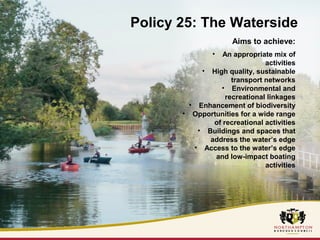
Policy 25: The Waterside 
Aims to achieve: 
• An appropriate mix of 
activities 
• High quality, sustainable 
transport networks 
• Environmental and 
recreational linkages 
• Enhancement of biodiversity 
• Opportunities for a wide range 
of recreational activities 
• Buildings and spaces that 
address the water’s edge 
• Access to the water’s edge 
and low-impact boating 
activities
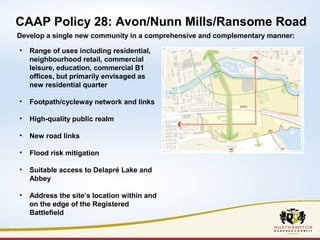
CAAP Policy 28: Avon/Nunn Mills/Ransome Road 
Develop a single new community in a comprehensive and complementary manner: 
• Range of uses including residential, 
neighbourhood retail, commercial 
leisure, education, commercial B1 
offices, but primarily envisaged as 
new residential quarter 
• Footpath/cycleway network and links 
• High-quality public realm 
• New road links 
• Flood risk mitigation 
• Suitable access to Delapré Lake and 
Abbey 
• Address the site’s location within and 
on the edge of the Registered 
Battlefield
From Policy to Delivery 
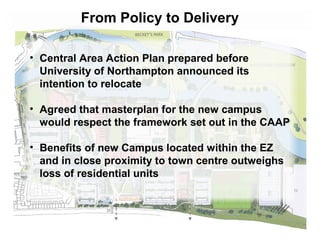
• Central Area Action Plan prepared before 
University of Northampton announced its 
intention to relocate 
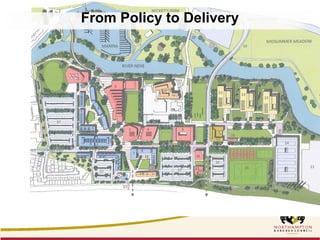
• Agreed that masterplan for the new campus 
would respect the framework set out in the CAAP 
• Benefits of new Campus located within the EZ 
and in close proximity to town centre outweighs 
loss of residential units
From Policy to Delivery
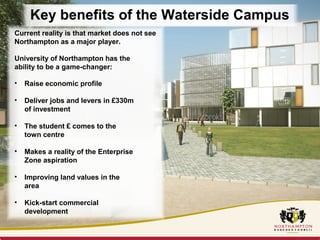
Key benefits of the Waterside Campus 
Current reality is that market does not see 
Northampton as a major player. 
University of Northampton has the 
ability to be a game-changer: 
• Raise economic profile 
• Deliver jobs and levers in £330m 
of investment 
• The student £ comes to the 
town centre 
• Makes a reality of the Enterprise 
Zone aspiration 
• Improving land values in the 
area 
• Kick-start commercial 
development
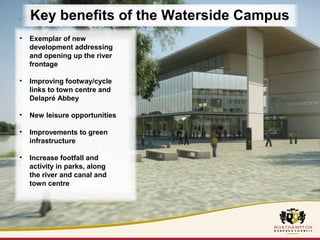
Key benefits of the Waterside Campus 
• Exemplar of new 
development addressing 
and opening up the river 
frontage 
• Improving footway/cycle 
links to town centre and 
Delapré Abbey 
• New leisure opportunities 
• Improvements to green 
infrastructure 
• Increase footfall and 
activity in parks, along 
the river and canal and 
town centre
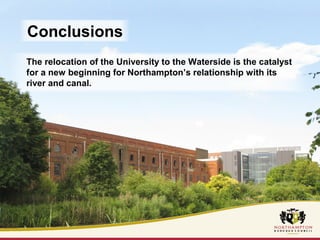
Conclusions 
The relocation of the University to the Waterside is the catalyst 
for a new beginning for Northampton’s relationship with its 
river and canal.

Claiming the waterside - Sue Bridge

  • 1.
    Claiming the Waterside Northampton and the River Nene Sue Bridge Head of Planning, Northampton Borough Council
  • 2.
    Outline of presentation: • Historical context • Key issues • The Vision for Northampton and the Nene • Strategic objectives • Policies for the Waterside • Implementation • Future key challenges
  • 3.
    Northampton – thehistorical context Dates back to Bronze Age Middle Ages - important town Northampton Castle - a Royal Residence Hosted Parliament of England Many churches and monasteries University of Northampton (dissolved 1265 as threat to Oxford) Granted Royal Charter 1189 Great Fire in 1675 Grew rapidly with industrial development of 18th century
  • 4.
    The Waterside - Historical Context, 18th & 19th Centuries Nene opened to navigation from the Wash to Northampton in 1761 Canal link to Grand Union Canal was completed in 1815 Connected by water and rail by 1845 with loop to main line completed in late 1870’s Beginning of encroachment of town into the watermeadows by 1880
  • 5.
    The Waterside -Historical Context, 20th Century The 20th Century saw significant encroachment into the watermeadows: • Heavy industry • Rail-related industries • Power generation Declared a New Town in 1968 • Large amount of growth north and south of river • Town turned its back on the river • Traditional industries started to decline • 1980s/90s - free market economy
  • 6.
    Waterside Campus throughthe Ages The new University of Northampton Campus site has had a chequered history • 1810 - rural • 1883 - rural, but with rail line passing through, and beginning of • development in river margins • 1937 - power generation/industrial/power links/rail sidings Changes came in ... 1979 - Demolition of power station New Avon HQ - setting the tone
  • 7.
    Historical Context TheLegacy Town has not capitalized on resource Waterside inaccessible or unattractive at numerous points Recent attempts to change legacy with residential/other developments fronting river not always successful
  • 8.
    Key Issues forthe Waterside Maximise its opportunities: • Increasing the presence of University of Northampton in the Central Area • Strengthen and diversify the economic base to increase quantity and quality of job opportunities • Enhance the diversity of cultural, leisure and recreational opportunities • Provide high-quality green infrastructure • Enhance natural and built heritage
  • 9.
    The Vision By2026 the town centre will be firmly established as the economic and cultural centre for Northamptonshire: • A destination of choice • A distinctive retail offer • New employment areas supporting regeneration • A lively cultural quarter • A new focus on the Waterside
  • 10.
    Delivery Vehicles •The Central Area Action Plan (CAAP) • The Northampton Waterside Enterprise Zone (EZ) Policies of CAAP and aspirations of EZ are aligned
  • 11.
    CAAP NBC preparedthe Central Area Action Plan as its development plan for the central area of Northampton. The Plan sets out the Vision and Strategic objectives as well as the detailed policies for the area. It is a wide-ranging document so I will concentrate on those aspects of the CAAP which impact on the Waterside Campus, the Waterside and the University of Northampton.
  • 12.
    Policy 25: TheWaterside Aims to achieve: • An appropriate mix of activities • High quality, sustainable transport networks • Environmental and recreational linkages • Enhancement of biodiversity • Opportunities for a wide range of recreational activities • Buildings and spaces that address the water’s edge • Access to the water’s edge and low-impact boating activities
  • 14.
    CAAP Policy 28:Avon/Nunn Mills/Ransome Road Develop a single new community in a comprehensive and complementary manner: • Range of uses including residential, neighbourhood retail, commercial leisure, education, commercial B1 offices, but primarily envisaged as new residential quarter • Footpath/cycleway network and links • High-quality public realm • New road links • Flood risk mitigation • Suitable access to Delapré Lake and Abbey • Address the site’s location within and on the edge of the Registered Battlefield
  • 15.
    From Policy toDelivery • Central Area Action Plan prepared before University of Northampton announced its intention to relocate • Agreed that masterplan for the new campus would respect the framework set out in the CAAP • Benefits of new Campus located within the EZ and in close proximity to town centre outweighs loss of residential units
  • 16.
  • 17.
    Key benefits ofthe Waterside Campus Current reality is that market does not see Northampton as a major player. University of Northampton has the ability to be a game-changer: • Raise economic profile • Deliver jobs and levers in £330m of investment • The student £ comes to the town centre • Makes a reality of the Enterprise Zone aspiration • Improving land values in the area • Kick-start commercial development
  • 18.
    Key benefits ofthe Waterside Campus • Exemplar of new development addressing and opening up the river frontage • Improving footway/cycle links to town centre and Delapré Abbey • New leisure opportunities • Improvements to green infrastructure • Increase footfall and activity in parks, along the river and canal and town centre
  • 19.
    Conclusions The relocationof the University to the Waterside is the catalyst for a new beginning for Northampton’s relationship with its river and canal.