Mixing Uses in a Mixed Up City: the
theory and practice of mixed use property
development in urban policy
London Met Post-Graduate Conference
2010
Glyn Robbins (Cities Institute)
What is Mixed Use?
• Defining the concept of mixed use has
become one of the research questions.
• Additional complication because the
term is over-used, but under-theorised.
Look out of the window
•Almost any urban landscape, including
Holloway Road, will have examples of mixed
use.
•Mixing uses e.g. living above shops, has
been the norm of human urban experience.
•Moves to separate land uses, particularly
associated with 20th
century UK planning
policy, are the exception
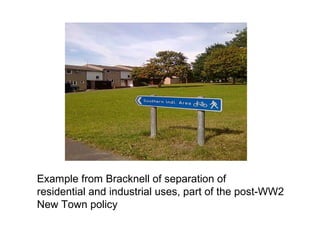
Example from Bracknell of separation of
residential and industrial uses, part of the post-WW2
New Town policy
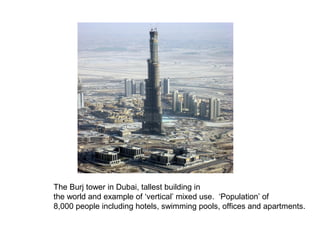
The Burj tower in Dubai, tallest building in
the world and example of ‘vertical’ mixed use. ‘Population’ of
8,000 people including hotels, swimming pools, offices and apartments.
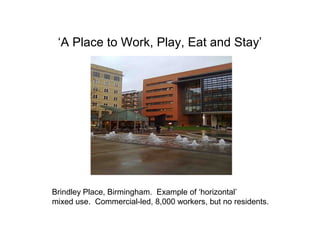
‘A Place to Work, Play, Eat and Stay’
Brindley Place, Birmingham. Example of ‘horizontal’
mixed use. Commercial-led, 8,000 workers, but no residents.
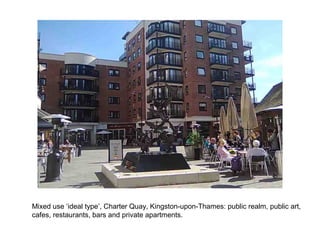
Mixed use ‘ideal type’, Charter Quay, Kingston-upon-Thames: public realm, public art,
cafes, restaurants, bars and private apartments.
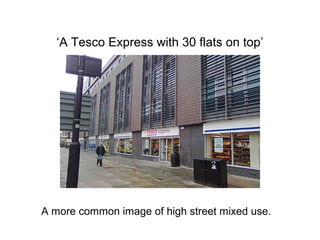
‘A Tesco Express with 30 flats on top’
A more common image of high street mixed use.
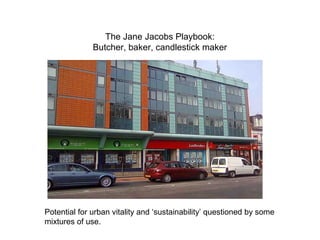
The Jane Jacobs Playbook:
Butcher, baker, candlestick maker
Potential for urban vitality and ‘sustainability’ questioned by some
mixtures of use.
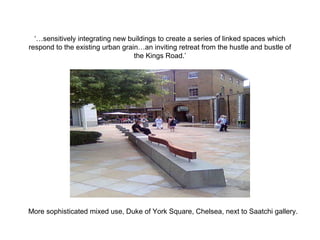
‘…sensitively integrating new buildings to create a series of linked spaces which
respond to the existing urban grain…an inviting retreat from the hustle and bustle of
the Kings Road.’
More sophisticated mixed use, Duke of York Square, Chelsea, next to Saatchi gallery.
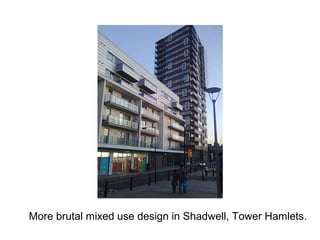
More brutal mixed use design in Shadwell, Tower Hamlets.
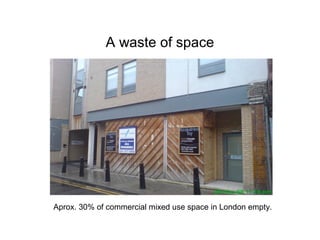
A waste of space
Aprox. 30% of commercial mixed use space in London empty.
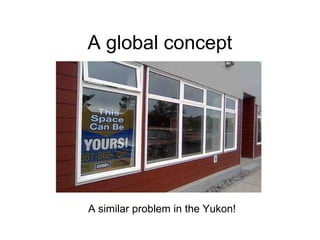
A global concept
A similar problem in the Yukon!
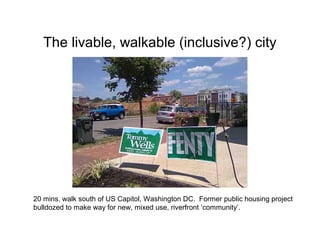
The livable, walkable (inclusive?) city
20 mins. walk south of US Capitol, Washington DC. Former public housing project
bulldozed to make way for new, mixed use, riverfront ‘community’.
Theoretical Possibilities
• A response to the 21st
century city?
• A route to ‘sustainable urbanism’?
• A reaction against urban planning?
• A green-washed justification for gentrifcation?
• A well-intentioned policy aspiration that
became an empty slogan?
‘It enables vitality through activity and diversity.
It makes areas safer. It also reduces the need to
travel, making people less reliant on cars, bringing
welcome environmental benefits.’
Tory Environment Minister John Gummer, 1995
‘…set out a vision of well designed, compact
and connected cities supporting a diverse
range of uses – where people live, work and
enjoy leisure time at close quarters – in a
sustainable urban environment…’
Lord Rogers’ Urban Task Force, 2005
Mixed Use at the Coalface: how planners
understand and implement mixed use
• The Planners’ Dilemma
• No mixed use consensus
• Local variability
• Mixed motives
• Differential outcomes, with some
common themes
Watney Street Case Study
• A place in flux
• Little evidence of mixed use promoting
social integration
• Racialised response to changing built
environment
• Competing narratives
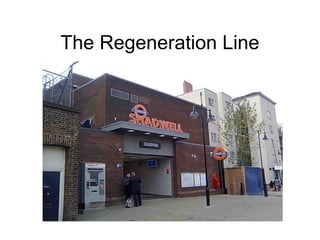
The Regeneration Line
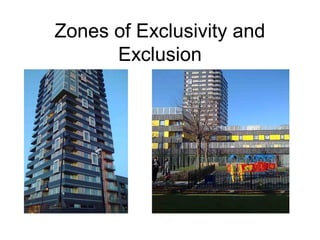
Zones of Exclusivity and
Exclusion
‘I’ve made friends with one person in that
development (Tarling Heights)…I don’t see
them. (Barry)
‘They don’t seem to be part of the texture of
the area. It’s more mixed, but people don’t
seem to be interacting.’ (Ishmail)
‘I don’t see this as a Mixed Use
development in a meaningful way because
it’s polarised.’ (Ben)
‘Where they wanted integration, it’s caused
segregation. Don’t get me wrong, I’m not
racist, but the Asian community gets all
these new builds because they’re purposely
built for them. They’re making communities
of Asians. They don’t want to mix with us.’
(Eliza)
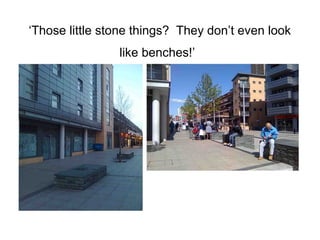
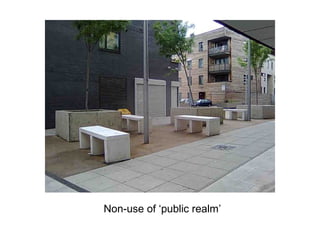
‘Those little stone things? They don’t even look
like benches!’
‘They’ve tried to manufacture the public realm.
It’s typical planners. They set down rules and
we’ve got to conform to them.’ (Barry)
‘I’d tell the architects “there is no public space
here”. All there is are some concrete planters
and benches. It could have been much more
carefully designed. (Mario)
Non-use of ‘public realm’
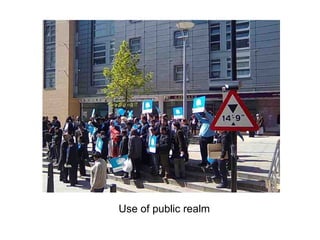
Use of public realm
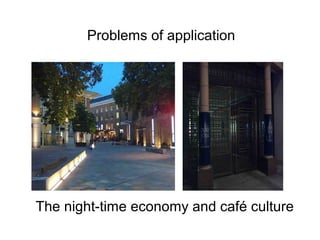
The night-time economy and café culture
Problems of application
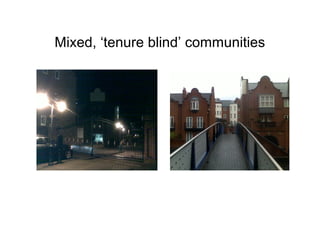
Mixed, ‘tenure blind’ communities
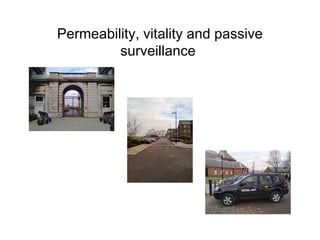
Permeability, vitality and passive
surveillance
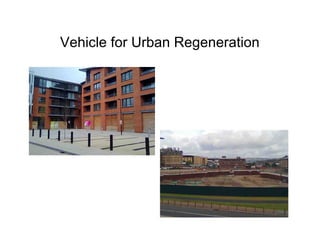
Vehicle for Urban Regeneration
Conclusions
• Contradictory policies and outcomes
• No thorough policy analysis (EBP?)
• Seductive, design oriented rhetoric
• Mixed Use part of ‘The Game’ between
planners, developers and politicians
• Raises broader issues - expectations
and meanings of place, space,
entitlement and rights to the city

Glyn robbins

  • 1.
    Mixing Uses ina Mixed Up City: the theory and practice of mixed use property development in urban policy London Met Post-Graduate Conference 2010 Glyn Robbins (Cities Institute)
  • 2.
    What is MixedUse? • Defining the concept of mixed use has become one of the research questions. • Additional complication because the term is over-used, but under-theorised.
  • 3.
    Look out ofthe window •Almost any urban landscape, including Holloway Road, will have examples of mixed use. •Mixing uses e.g. living above shops, has been the norm of human urban experience. •Moves to separate land uses, particularly associated with 20th century UK planning policy, are the exception
  • 4.
    Example from Bracknellof separation of residential and industrial uses, part of the post-WW2 New Town policy
  • 5.
    The Burj towerin Dubai, tallest building in the world and example of ‘vertical’ mixed use. ‘Population’ of 8,000 people including hotels, swimming pools, offices and apartments.
  • 6.
    ‘A Place toWork, Play, Eat and Stay’ Brindley Place, Birmingham. Example of ‘horizontal’ mixed use. Commercial-led, 8,000 workers, but no residents.
  • 7.
    Mixed use ‘idealtype’, Charter Quay, Kingston-upon-Thames: public realm, public art, cafes, restaurants, bars and private apartments.
  • 8.
    ‘A Tesco Expresswith 30 flats on top’ A more common image of high street mixed use.
  • 9.
    The Jane JacobsPlaybook: Butcher, baker, candlestick maker Potential for urban vitality and ‘sustainability’ questioned by some mixtures of use.
  • 10.
    ‘…sensitively integrating newbuildings to create a series of linked spaces which respond to the existing urban grain…an inviting retreat from the hustle and bustle of the Kings Road.’ More sophisticated mixed use, Duke of York Square, Chelsea, next to Saatchi gallery.
  • 11.
    More brutal mixeduse design in Shadwell, Tower Hamlets.
  • 12.
    A waste ofspace Aprox. 30% of commercial mixed use space in London empty.
  • 13.
    A global concept Asimilar problem in the Yukon!
  • 14.
    The livable, walkable(inclusive?) city 20 mins. walk south of US Capitol, Washington DC. Former public housing project bulldozed to make way for new, mixed use, riverfront ‘community’.
  • 15.
    Theoretical Possibilities • Aresponse to the 21st century city? • A route to ‘sustainable urbanism’? • A reaction against urban planning? • A green-washed justification for gentrifcation? • A well-intentioned policy aspiration that became an empty slogan?
  • 16.
    ‘It enables vitalitythrough activity and diversity. It makes areas safer. It also reduces the need to travel, making people less reliant on cars, bringing welcome environmental benefits.’ Tory Environment Minister John Gummer, 1995
  • 17.
    ‘…set out avision of well designed, compact and connected cities supporting a diverse range of uses – where people live, work and enjoy leisure time at close quarters – in a sustainable urban environment…’ Lord Rogers’ Urban Task Force, 2005
  • 18.
    Mixed Use atthe Coalface: how planners understand and implement mixed use • The Planners’ Dilemma • No mixed use consensus • Local variability • Mixed motives • Differential outcomes, with some common themes
  • 19.
    Watney Street CaseStudy • A place in flux • Little evidence of mixed use promoting social integration • Racialised response to changing built environment • Competing narratives
  • 20.
  • 21.
    Zones of Exclusivityand Exclusion
  • 22.
    ‘I’ve made friendswith one person in that development (Tarling Heights)…I don’t see them. (Barry) ‘They don’t seem to be part of the texture of the area. It’s more mixed, but people don’t seem to be interacting.’ (Ishmail) ‘I don’t see this as a Mixed Use development in a meaningful way because it’s polarised.’ (Ben)
  • 23.
    ‘Where they wantedintegration, it’s caused segregation. Don’t get me wrong, I’m not racist, but the Asian community gets all these new builds because they’re purposely built for them. They’re making communities of Asians. They don’t want to mix with us.’ (Eliza)
  • 24.
    ‘Those little stonethings? They don’t even look like benches!’
  • 25.
    ‘They’ve tried tomanufacture the public realm. It’s typical planners. They set down rules and we’ve got to conform to them.’ (Barry) ‘I’d tell the architects “there is no public space here”. All there is are some concrete planters and benches. It could have been much more carefully designed. (Mario)
  • 26.
  • 27.
  • 28.
    The night-time economyand café culture Problems of application
  • 29.
  • 30.
    Permeability, vitality andpassive surveillance
  • 31.
    Vehicle for UrbanRegeneration
  • 32.
    Conclusions • Contradictory policiesand outcomes • No thorough policy analysis (EBP?) • Seductive, design oriented rhetoric • Mixed Use part of ‘The Game’ between planners, developers and politicians • Raises broader issues - expectations and meanings of place, space, entitlement and rights to the city

Editor's Notes

  • #7 The Mars bar epithet
  • #8 Charter Quay, mixed use in the planners, developers and politicians eye
  • #9 Has become a high street standard. Although there is an attempt to move away from it, this interpretation of .mixed use’ has left a significant legacy and raises questions about diversity and the aspiration for fine grain, active street frontages.
  • #10 Has often become estate agent, bookies and fast food outlet in the name of mixed use.
  • #11 An example of the importance of specificity and socio-spatial context, raising questions about social and ethnic integration. Also note the cultural and heritage dimensions of mixed use developments.
  • #12 ‘…the proposed mixed use development will deliver a range of significant planning and regeneration benefits. It has been designed to relate positively, yet sensitively to the surrounding urban context and will make valuable contributions to local and strategic employment, residential and social objectives.’
  • #16 The purpose of my research and this paper is to discuss whether mixed use is a panacea, a placebo, or a proxy for urban gentrification under the cover of a vague, feel-good notion of ‘sustainability’.
  • #18 New Labour brought a significant boost to mixed use through association with the Urban Renaissance.
  • #20 The development, completed in 2008, provides 221 homes (including a 20-storey tower block), six shops, a gym and a new ‘public realm’. Desk-top analysis, interviews and observation to place the scheme in context.
  • #24 Racialised responses