PROCESS OF ICH
PRESENTED BY
SWATHI.P
DEPARTMENT OF PHARMACEUTICAL QUALITY
ASSURANCE
JSS COLLEGE OF PHARMACY,OOTY.
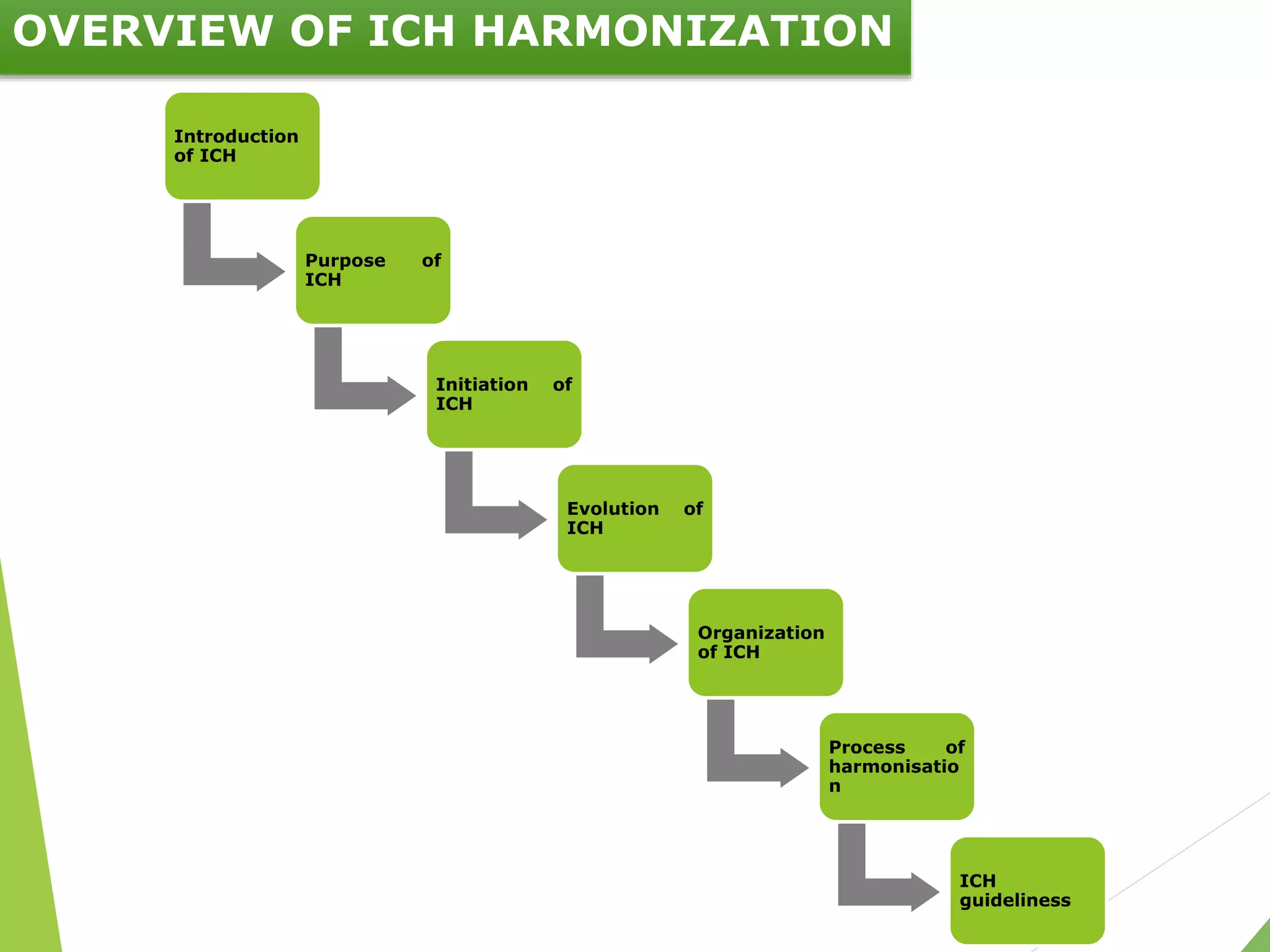
OVERVIEW OF ICH HARMONIZATION
Introduction
of ICH
Purpose of
ICH
Initiation of
ICH
Evolution of
ICH
Organization
of ICH
Process of
harmonisatio
n
ICH
guideliness
WHAT IS ICH
“Technical Requirements for registration of pharmaceuticals for human use”.
 Ensure and assess the safety, quality & efficacy of medicines.
HISTORY
 Joint initiative involving regulators & industry
 In the scientific & technical discussions of the testing procedures
 The birth of ICH took place at meeting in April 1990 in Brussels.
 The International Conference on Harmonisation has renamed itself as the
International Council on Harmonisation on 23october 2015.
 This changes will help to expand its membership, which includes
pharmaceutical regulators from US, EU, Japan, Canada and Switzerland.
PURPOSE OF ICH
 Harmonization of technical requirements.
Ensure safety, efficacy and quality of medicines.
Prevent duplication of clinical trials in humans.
Minimize the use of animal testing without compromising safety and
effectiveness.
Achieving greater harmonization
 In the interpretation and application of technical guidelines and
 Requirements for pharmaceutical product registration.
MISSION
Continu..
 To maintain forum for a constructive dialog on scientific issues.
 To contribute to the protection of public health
 To monitor and update harmonised technical requirements regarding
acceptance and research data.
 To avoid divergent future requirements through harmonisation of selected
topics
 To encourage the implementation and integration of common standards.
 To develop the policy for the ICH Medical Dictionary for Regulatory
Activities Terminology (MedDRA)
 To facilitate the adoption of new or improved technical research and
development approaches.
INITIATION OF ICH
 Harmonization of regulatory requirements was pioneered by European
community(Now EU) in 1980s.
 Success achieved by Europe demonstrated that harmonisation was
feasible.
 At same time there were bilateral discussions between Europe, Japan &
US, on possibilities for harmonization.
 Topics selected for harmonization
 Safety
 Quality &
 Efficacy
EVOLUTION OF ICH
 Two decades of success, attributed by scientific consensus & the
commitment between industry and regulatory parties.
 First decade saw significant progress in the development of tripartite ICH
guidelines on SAFETY, QUALITY & EFFICACY topics and also on
Multidisciplinary topics (MedDRA, CTD).
 Expanded communication & dissemination of information on ICH
guidelines with Non-ICH regions.
 Second decade towards facilitating the implementation of ICH Guidelines
in ICH and maintaining already existing ICH Guidelines.
 Est. Global cooperation Group (GCG)-in response to a growing interest
from beyond the ICH region in the use of ICH guidelines.
ORGANIZATION
STEERING COMMITTEE
 Governing body that overseas the harmonization activities
 Six co-sponsors has two seats on the SC(EU, EFPIA, MHLW, JPMA, USFDA,
PhRMA)
 3 Observers are WHO, Health Canada, European Free trade Association
(EFTA)
 The IFPMA host the secretariat & participates as a non-voting member
GCG & MedDRA MANAGEMENT BOARD
 Global Cooperation Group represents from 5 Regional Harmonization
Initiatives (RHI’s) APEC, ASEAN, EAC, GCC, PANDRH, SADC’.
 MedDRA management Board:-Overall responsibility for direction of
MedDRA
 MedDRA and ICH standardized dictionary of medical terminology
 The board overseas the activities of MedDRA “Maintenance and Support
Services” (MSSO) which serves as the repository, maintainer, developer
and distributor of MedDRA.
GLOBAL COOPERATION GROUP
APEC
ASEAN
EAC
GCC
PANDRH
SADC
 Formed in 1999
 Sub-committee of SC
 Participants:
MedDRA
 Medial dictionary of regulatory activities
 MedDRA is registered trademark of IFPMA
 MedDRA is free to regulatory authorities, academic, healthcare providers
 It is used in 60 countries & available in II different languages
 Prepared by ICH and owned by IFPMA
 Used for registration, documentation and safety monitoring of medical
products
 MSSO is responsible to maintain, develop and distribute MedDRA
MedDRA MANAGEMENT BOARD
EU EFPIA MHLW PMDA
JPMA FDA US PhRMA
MHRA UK
Health
canada
WHO
 Overseas the activities of the MedDRA “Maintenance and Support Services
Organization” (MSSO)
 Members
SECRETARIAT AND COORDINATORS
 Secretariat located in Geneva, Switzerland, operating from IFPMA officers.
 Secretariat staff is responsible for day to day management of ICH, namely
preparations for & documentation of, meetings of the SC and its working
group
 Coordinators: fundamental to the smooth running of ICH, Acts as a main
contact point with the ICH secretariat.
 To combat H5N1 pandemic threat IFPMA’s research-based vaccine
manufacturing members are conducting a growing number of clinical trials
of ‘prototype’ influenza vaccines, designed to counter to the threats of
avian and pandemic influenza.
WHAT IS AN ICH WORKING GROUP?
 Depending on the type of harmonization activity needed, the steering
committee will endorse the establishment of one of three types of working
group i.e.,
 Expert Working Group (EWG) ,
 Implementation Working group (IWG) or
 Informal Working Group
 Discussion Group
ICH WORKING GROUP
There are several different types of ICH working groups.
 EWG: developing a harmonized guideline that meets the objectives in the
concept paper and business plan
 IWG: develop Q & A to facilitate implementation of existing guidelines
 InWG: developing/finalizing a concept paper, as well as developing a
business plan
 DG: discuss specific scientific considerations and views
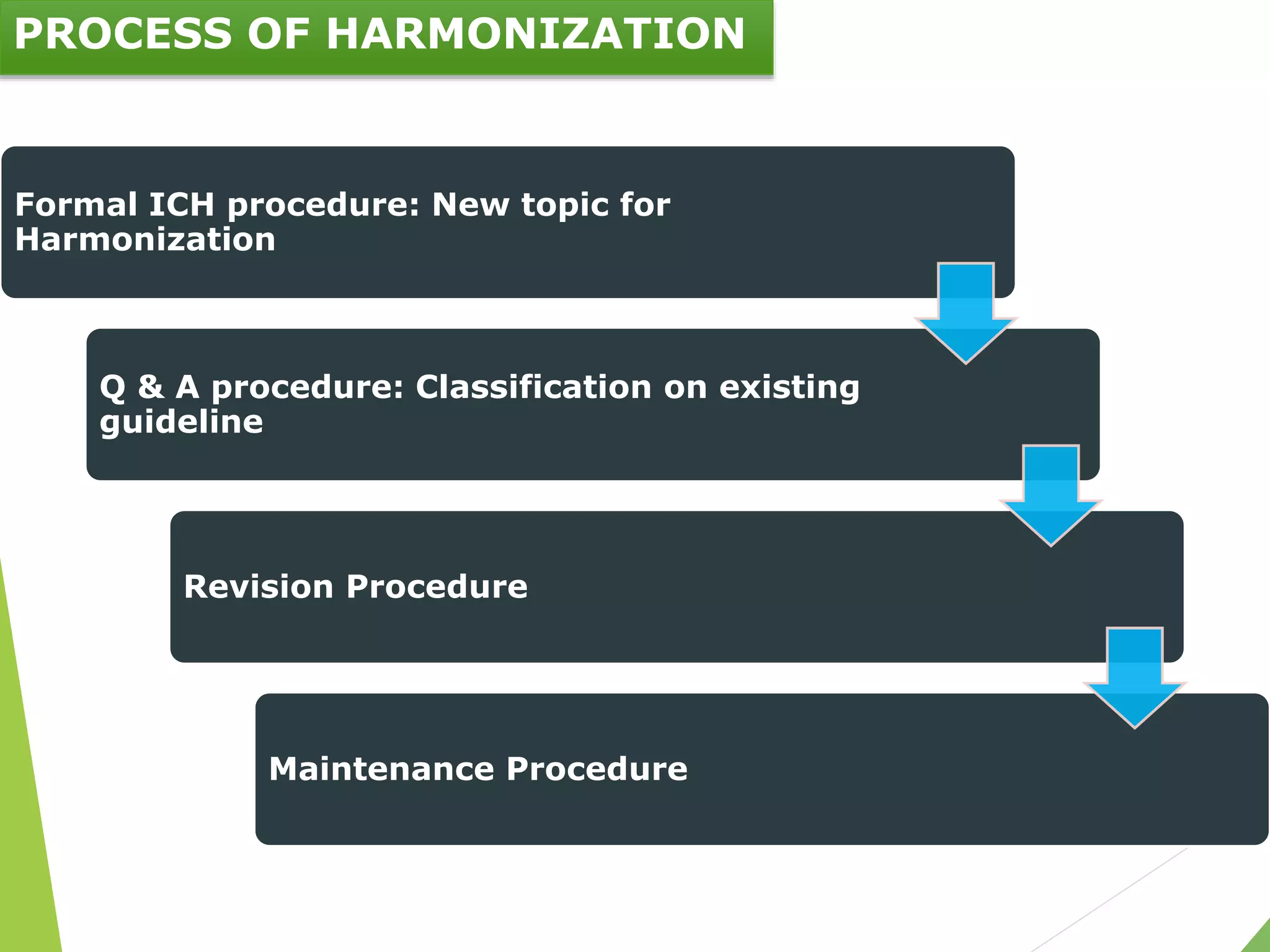
PROCESS OF HARMONIZATION
Formal ICH procedure: New topic for
Harmonization
Q & A procedure: Classification on existing
guideline
Revision Procedure
Maintenance Procedure
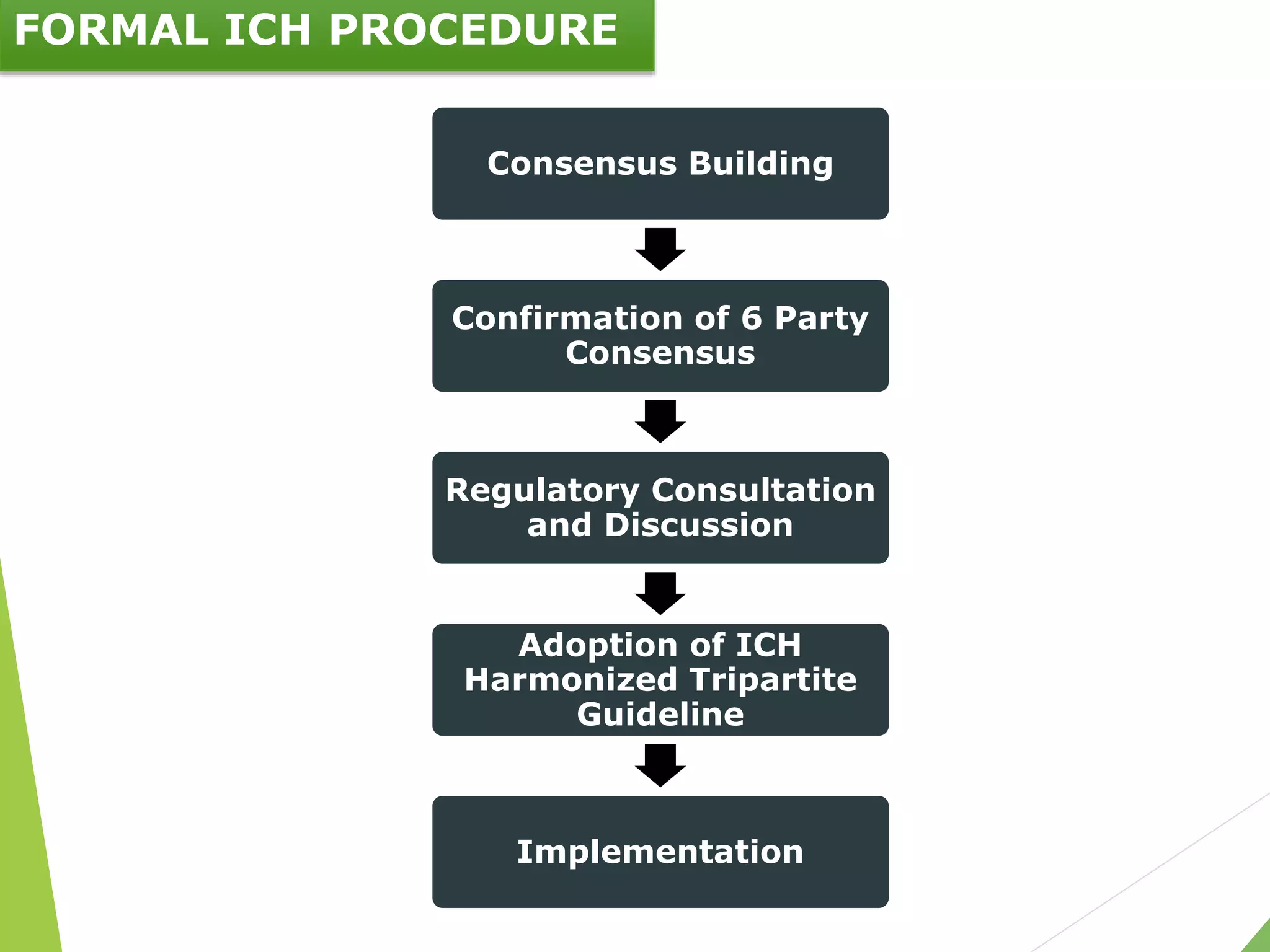
FORMAL ICH PROCEDURE
Consensus Building
Confirmation of 6 Party
Consensus
Regulatory Consultation
and Discussion
Adoption of ICH
Harmonized Tripartite
Guideline
Implementation
Q&A PROCEDURE
 It is followed when additional guidance is necessary
 Additional guidance is developed in form of Q&As
 The procedure is initiated with endorsement by the ICH Assembly of
concept paper
 An Implementation Working Group is established
REVISION PROCEDURE
 Followed when content of existing ICH Guideline is no longer up-to-date or
valid
 Or in case where new information is needed to be added with no
amendments
 The new information is added in the form of Addendum or an Annex
 An Expert Working Group (EWG) is established
MAINTENANCE PROCEDURE
 It is applicable only for changes to the Q3C and Q3D and M2
Recommendations
 This procedure is used when the technical content is out-of-date
Maintenance procedure for Q3C and Q3D
 Followed when there is “Permitted daily exposure” (PDE) for new
solvent/elemental impurity or revised PDA for an already classified
solvent/elemental impurity.
WORK PRODUCTS
 ICH Guidelines
 MedDRA
 CTD (Common Technical Document)
 Electronic Standards
 Consideration Documents
 Open Consultants
BENEFITS OF ICH PROCESS
 More then 50 harmonized guidelines
 Streamlined R & D process
 Rapid access to new regulators
 Benefits for the regulators
 Reference and educational material for non-ICH members
 Expanded participation in the development and implementation of ICH
products will play a key role in promoting a more globally consistent
approach to drug development and oversight
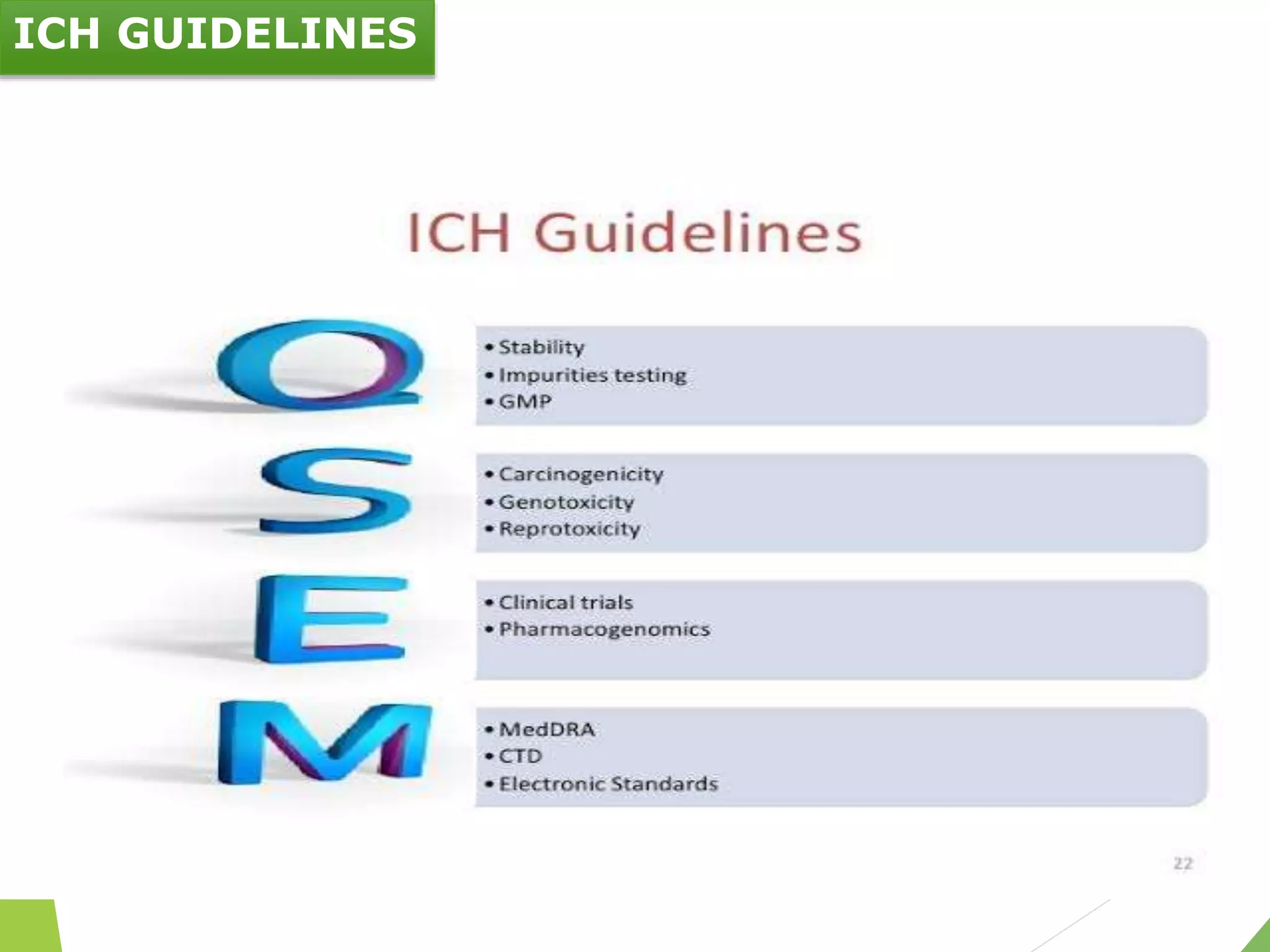
ICH GUIDELINES
QUALITY GUIDELINES
 stability studies, determining relevant thresholds for impurities testing and a more
flexible approach to pharmaceutical quality based on Good Manufacturing Practice
(GMP) risk management..
 Q1A – Q1F Stability
 Q2 Analytical Validation
 Q3A - Q3D Impurities
 Q4 - Q4B Pharmacopoeias
 Q5A - Q5E Quality of Biotechnological Products
 Q6A- Q6B Specifications
 Q7 Good Manufacturing Practice
 Q8 Pharmaceutical Development
 Q9 Quality Risk Management
 Q1O Pharmaceutical Quality System
 Q11 Development and Manufacture of Drug Substances
 Q12 Lifecycle Management
 Q13 Continuous Manufacturing of Drug Substances and Drug Products
 Q14 Analytical Procedure Development
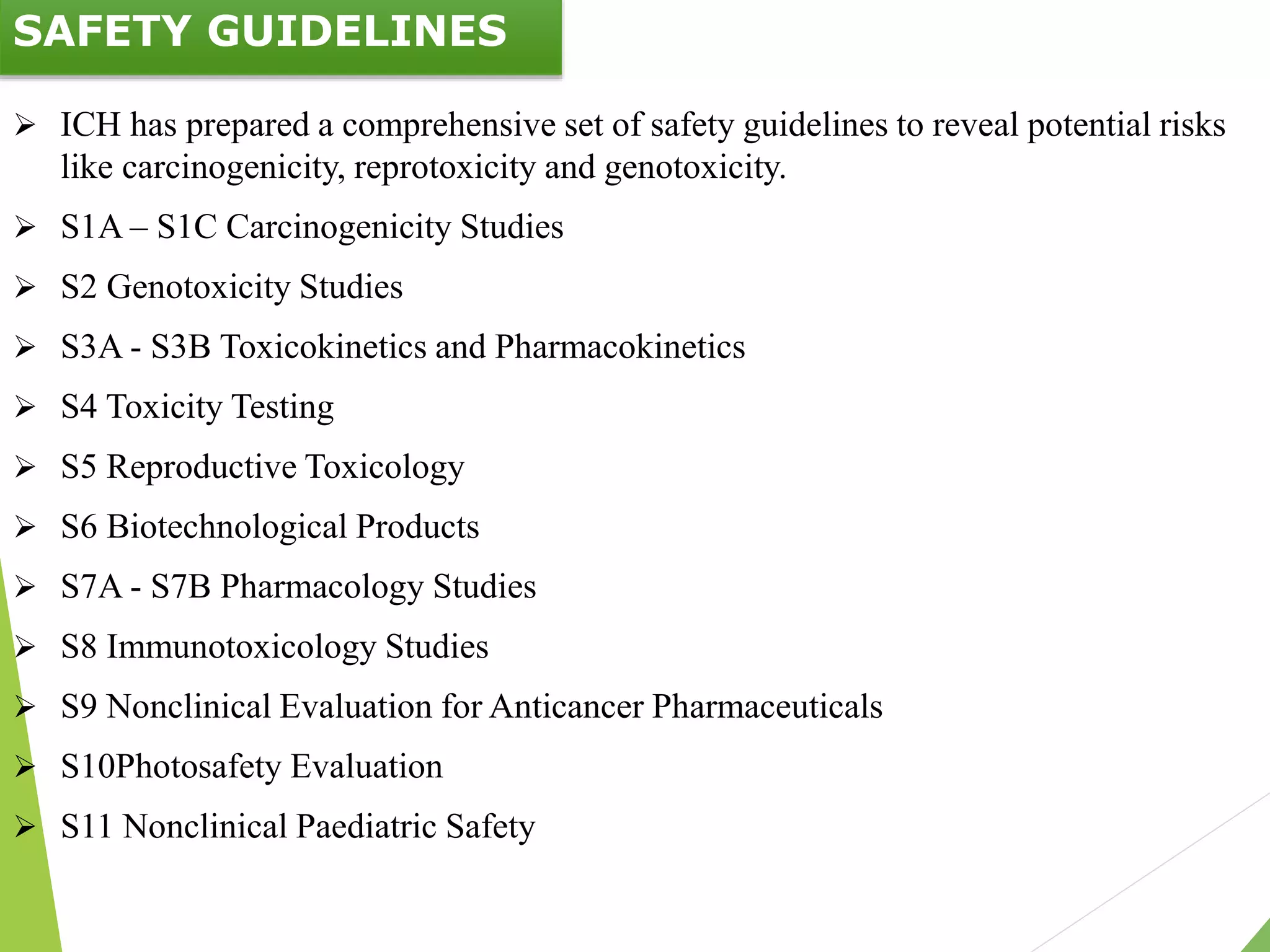
SAFETY GUIDELINES
 ICH has prepared a comprehensive set of safety guidelines to reveal potential risks
like carcinogenicity, reprotoxicity and genotoxicity.
 S1A – S1C Carcinogenicity Studies
 S2 Genotoxicity Studies
 S3A - S3B Toxicokinetics and Pharmacokinetics
 S4 Toxicity Testing
 S5 Reproductive Toxicology
 S6 Biotechnological Products
 S7A - S7B Pharmacology Studies
 S8 Immunotoxicology Studies
 S9 Nonclinical Evaluation for Anticancer Pharmaceuticals
 S10Photosafety Evaluation
 S11 Nonclinical Paediatric Safety
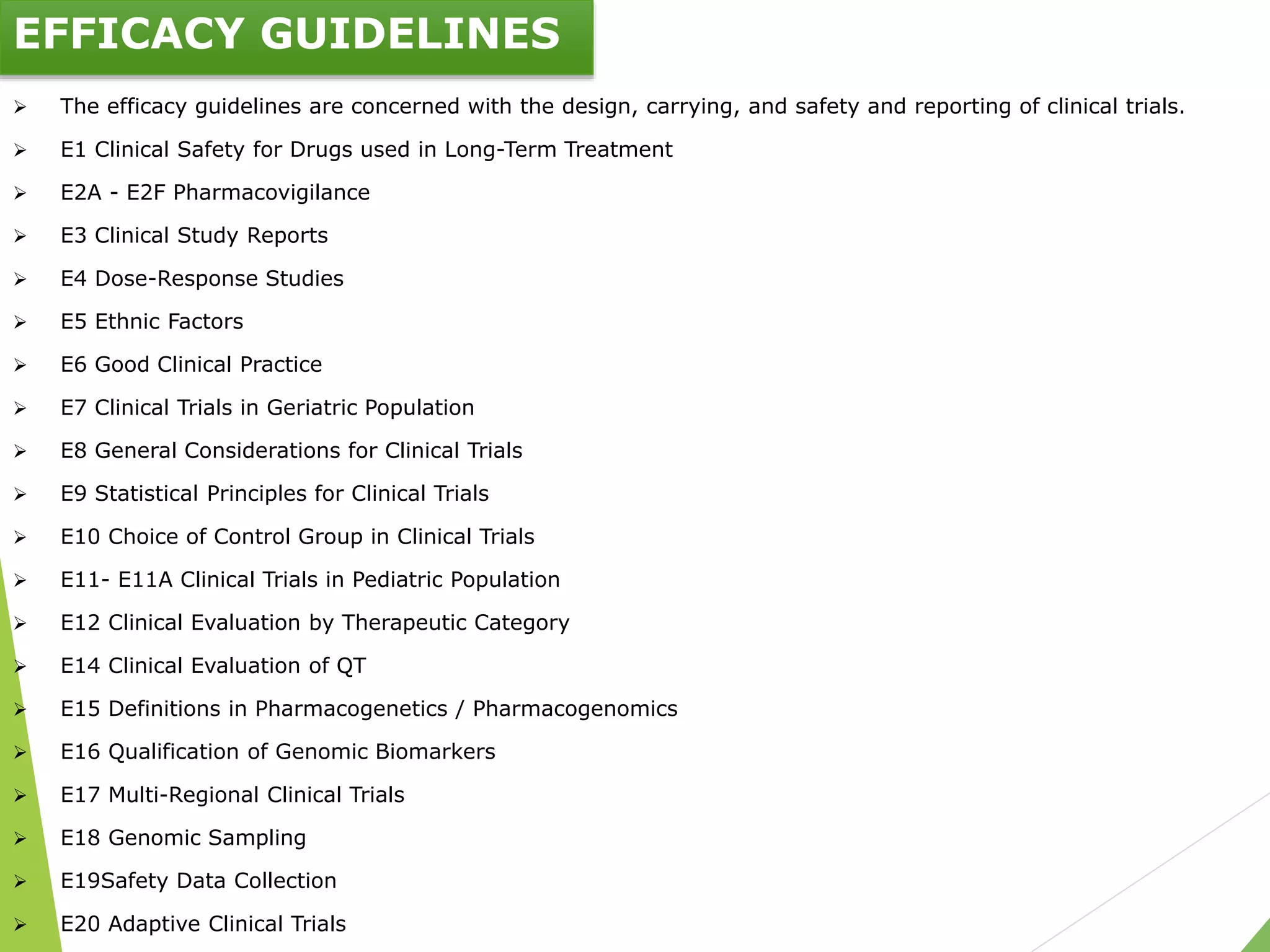
EFFICACY GUIDELINES
 The efficacy guidelines are concerned with the design, carrying, and safety and reporting of clinical trials.
 E1 Clinical Safety for Drugs used in Long-Term Treatment
 E2A - E2F Pharmacovigilance
 E3 Clinical Study Reports
 E4 Dose-Response Studies
 E5 Ethnic Factors
 E6 Good Clinical Practice
 E7 Clinical Trials in Geriatric Population
 E8 General Considerations for Clinical Trials
 E9 Statistical Principles for Clinical Trials
 E10 Choice of Control Group in Clinical Trials
 E11- E11A Clinical Trials in Pediatric Population
 E12 Clinical Evaluation by Therapeutic Category
 E14 Clinical Evaluation of QT
 E15 Definitions in Pharmacogenetics / Pharmacogenomics
 E16 Qualification of Genomic Biomarkers
 E17 Multi-Regional Clinical Trials
 E18 Genomic Sampling
 E19Safety Data Collection
 E20 Adaptive Clinical Trials
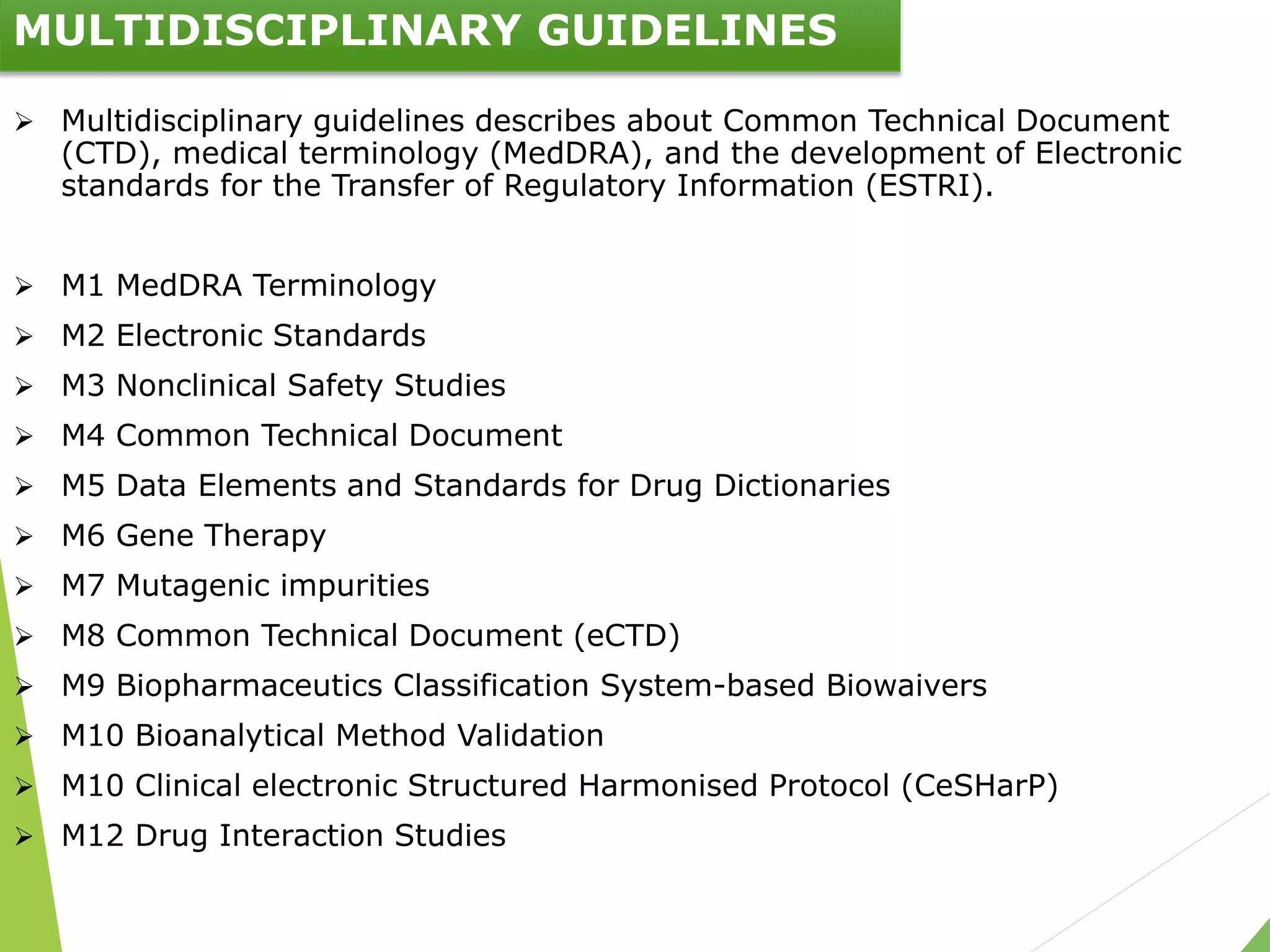
MULTIDISCIPLINARY GUIDELINES
 Multidisciplinary guidelines describes about Common Technical Document
(CTD), medical terminology (MedDRA), and the development of Electronic
standards for the Transfer of Regulatory Information (ESTRI).
 M1 MedDRA Terminology
 M2 Electronic Standards
 M3 Nonclinical Safety Studies
 M4 Common Technical Document
 M5 Data Elements and Standards for Drug Dictionaries
 M6 Gene Therapy
 M7 Mutagenic impurities
 M8 Common Technical Document (eCTD)
 M9 Biopharmaceutics Classification System-based Biowaivers
 M10 Bioanalytical Method Validation
 M10 Clinical electronic Structured Harmonised Protocol (CeSHarP)
 M12 Drug Interaction Studies
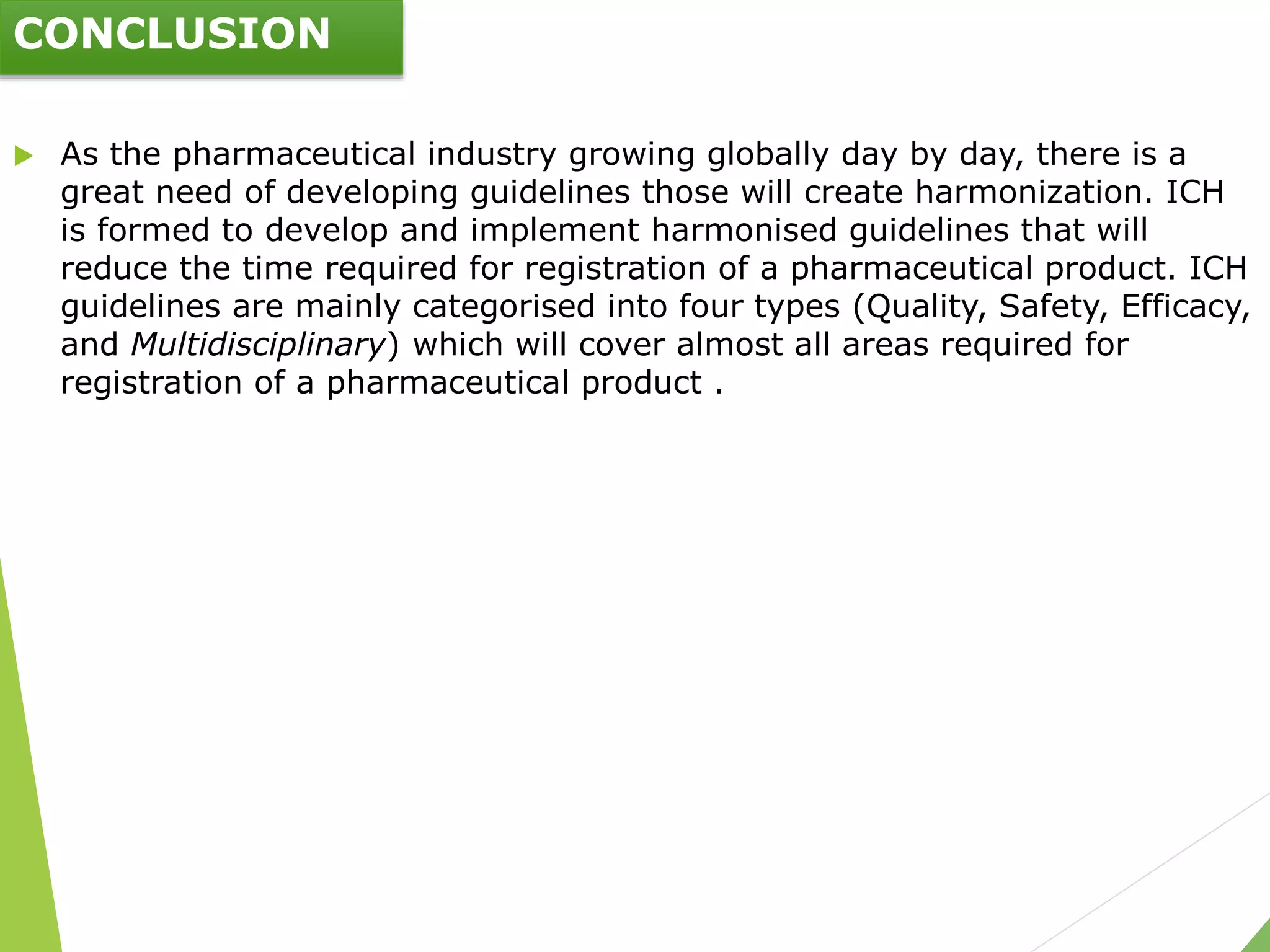
CONCLUSION
 As the pharmaceutical industry growing globally day by day, there is a
great need of developing guidelines those will create harmonization. ICH
is formed to develop and implement harmonised guidelines that will
reduce the time required for registration of a pharmaceutical product. ICH
guidelines are mainly categorised into four types (Quality, Safety, Efficacy,
and Multidisciplinary) which will cover almost all areas required for
registration of a pharmaceutical product .
REFERENCE
PROCESS OF ICH HARMONIZATION.
https://www.ich.org/home.html
PROCESS OF ICH (International Council for Harmonisation)

PROCESS OF ICH (International Council for Harmonisation)

  • 1.
    PROCESS OF ICH PRESENTEDBY SWATHI.P DEPARTMENT OF PHARMACEUTICAL QUALITY ASSURANCE JSS COLLEGE OF PHARMACY,OOTY.
  • 2.
    OVERVIEW OF ICHHARMONIZATION Introduction of ICH Purpose of ICH Initiation of ICH Evolution of ICH Organization of ICH Process of harmonisatio n ICH guideliness
  • 3.
    WHAT IS ICH “TechnicalRequirements for registration of pharmaceuticals for human use”.  Ensure and assess the safety, quality & efficacy of medicines. HISTORY  Joint initiative involving regulators & industry  In the scientific & technical discussions of the testing procedures  The birth of ICH took place at meeting in April 1990 in Brussels.  The International Conference on Harmonisation has renamed itself as the International Council on Harmonisation on 23october 2015.  This changes will help to expand its membership, which includes pharmaceutical regulators from US, EU, Japan, Canada and Switzerland.
  • 4.
    PURPOSE OF ICH Harmonization of technical requirements. Ensure safety, efficacy and quality of medicines. Prevent duplication of clinical trials in humans. Minimize the use of animal testing without compromising safety and effectiveness. Achieving greater harmonization  In the interpretation and application of technical guidelines and  Requirements for pharmaceutical product registration. MISSION
  • 5.
    Continu..  To maintainforum for a constructive dialog on scientific issues.  To contribute to the protection of public health  To monitor and update harmonised technical requirements regarding acceptance and research data.  To avoid divergent future requirements through harmonisation of selected topics  To encourage the implementation and integration of common standards.  To develop the policy for the ICH Medical Dictionary for Regulatory Activities Terminology (MedDRA)  To facilitate the adoption of new or improved technical research and development approaches.
  • 6.
    INITIATION OF ICH Harmonization of regulatory requirements was pioneered by European community(Now EU) in 1980s.  Success achieved by Europe demonstrated that harmonisation was feasible.  At same time there were bilateral discussions between Europe, Japan & US, on possibilities for harmonization.  Topics selected for harmonization  Safety  Quality &  Efficacy
  • 7.
    EVOLUTION OF ICH Two decades of success, attributed by scientific consensus & the commitment between industry and regulatory parties.  First decade saw significant progress in the development of tripartite ICH guidelines on SAFETY, QUALITY & EFFICACY topics and also on Multidisciplinary topics (MedDRA, CTD).  Expanded communication & dissemination of information on ICH guidelines with Non-ICH regions.  Second decade towards facilitating the implementation of ICH Guidelines in ICH and maintaining already existing ICH Guidelines.  Est. Global cooperation Group (GCG)-in response to a growing interest from beyond the ICH region in the use of ICH guidelines.
  • 8.
  • 9.
    STEERING COMMITTEE  Governingbody that overseas the harmonization activities  Six co-sponsors has two seats on the SC(EU, EFPIA, MHLW, JPMA, USFDA, PhRMA)  3 Observers are WHO, Health Canada, European Free trade Association (EFTA)  The IFPMA host the secretariat & participates as a non-voting member
  • 10.
    GCG & MedDRAMANAGEMENT BOARD  Global Cooperation Group represents from 5 Regional Harmonization Initiatives (RHI’s) APEC, ASEAN, EAC, GCC, PANDRH, SADC’.  MedDRA management Board:-Overall responsibility for direction of MedDRA  MedDRA and ICH standardized dictionary of medical terminology  The board overseas the activities of MedDRA “Maintenance and Support Services” (MSSO) which serves as the repository, maintainer, developer and distributor of MedDRA.
  • 11.
    GLOBAL COOPERATION GROUP APEC ASEAN EAC GCC PANDRH SADC Formed in 1999  Sub-committee of SC  Participants:
  • 12.
    MedDRA  Medial dictionaryof regulatory activities  MedDRA is registered trademark of IFPMA  MedDRA is free to regulatory authorities, academic, healthcare providers  It is used in 60 countries & available in II different languages  Prepared by ICH and owned by IFPMA  Used for registration, documentation and safety monitoring of medical products  MSSO is responsible to maintain, develop and distribute MedDRA
  • 13.
    MedDRA MANAGEMENT BOARD EUEFPIA MHLW PMDA JPMA FDA US PhRMA MHRA UK Health canada WHO  Overseas the activities of the MedDRA “Maintenance and Support Services Organization” (MSSO)  Members
  • 14.
    SECRETARIAT AND COORDINATORS Secretariat located in Geneva, Switzerland, operating from IFPMA officers.  Secretariat staff is responsible for day to day management of ICH, namely preparations for & documentation of, meetings of the SC and its working group  Coordinators: fundamental to the smooth running of ICH, Acts as a main contact point with the ICH secretariat.  To combat H5N1 pandemic threat IFPMA’s research-based vaccine manufacturing members are conducting a growing number of clinical trials of ‘prototype’ influenza vaccines, designed to counter to the threats of avian and pandemic influenza.
  • 15.
    WHAT IS ANICH WORKING GROUP?  Depending on the type of harmonization activity needed, the steering committee will endorse the establishment of one of three types of working group i.e.,  Expert Working Group (EWG) ,  Implementation Working group (IWG) or  Informal Working Group  Discussion Group
  • 16.
    ICH WORKING GROUP Thereare several different types of ICH working groups.  EWG: developing a harmonized guideline that meets the objectives in the concept paper and business plan  IWG: develop Q & A to facilitate implementation of existing guidelines  InWG: developing/finalizing a concept paper, as well as developing a business plan  DG: discuss specific scientific considerations and views
  • 17.
    PROCESS OF HARMONIZATION FormalICH procedure: New topic for Harmonization Q & A procedure: Classification on existing guideline Revision Procedure Maintenance Procedure
  • 18.
    FORMAL ICH PROCEDURE ConsensusBuilding Confirmation of 6 Party Consensus Regulatory Consultation and Discussion Adoption of ICH Harmonized Tripartite Guideline Implementation
  • 19.
    Q&A PROCEDURE  Itis followed when additional guidance is necessary  Additional guidance is developed in form of Q&As  The procedure is initiated with endorsement by the ICH Assembly of concept paper  An Implementation Working Group is established REVISION PROCEDURE  Followed when content of existing ICH Guideline is no longer up-to-date or valid  Or in case where new information is needed to be added with no amendments  The new information is added in the form of Addendum or an Annex  An Expert Working Group (EWG) is established
  • 20.
    MAINTENANCE PROCEDURE  Itis applicable only for changes to the Q3C and Q3D and M2 Recommendations  This procedure is used when the technical content is out-of-date Maintenance procedure for Q3C and Q3D  Followed when there is “Permitted daily exposure” (PDE) for new solvent/elemental impurity or revised PDA for an already classified solvent/elemental impurity.
  • 22.
    WORK PRODUCTS  ICHGuidelines  MedDRA  CTD (Common Technical Document)  Electronic Standards  Consideration Documents  Open Consultants
  • 23.
    BENEFITS OF ICHPROCESS  More then 50 harmonized guidelines  Streamlined R & D process  Rapid access to new regulators  Benefits for the regulators  Reference and educational material for non-ICH members  Expanded participation in the development and implementation of ICH products will play a key role in promoting a more globally consistent approach to drug development and oversight
  • 24.
  • 25.
    QUALITY GUIDELINES  stabilitystudies, determining relevant thresholds for impurities testing and a more flexible approach to pharmaceutical quality based on Good Manufacturing Practice (GMP) risk management..  Q1A – Q1F Stability  Q2 Analytical Validation  Q3A - Q3D Impurities  Q4 - Q4B Pharmacopoeias  Q5A - Q5E Quality of Biotechnological Products  Q6A- Q6B Specifications  Q7 Good Manufacturing Practice  Q8 Pharmaceutical Development  Q9 Quality Risk Management  Q1O Pharmaceutical Quality System  Q11 Development and Manufacture of Drug Substances  Q12 Lifecycle Management  Q13 Continuous Manufacturing of Drug Substances and Drug Products  Q14 Analytical Procedure Development
  • 26.
    SAFETY GUIDELINES  ICHhas prepared a comprehensive set of safety guidelines to reveal potential risks like carcinogenicity, reprotoxicity and genotoxicity.  S1A – S1C Carcinogenicity Studies  S2 Genotoxicity Studies  S3A - S3B Toxicokinetics and Pharmacokinetics  S4 Toxicity Testing  S5 Reproductive Toxicology  S6 Biotechnological Products  S7A - S7B Pharmacology Studies  S8 Immunotoxicology Studies  S9 Nonclinical Evaluation for Anticancer Pharmaceuticals  S10Photosafety Evaluation  S11 Nonclinical Paediatric Safety
  • 27.
    EFFICACY GUIDELINES  Theefficacy guidelines are concerned with the design, carrying, and safety and reporting of clinical trials.  E1 Clinical Safety for Drugs used in Long-Term Treatment  E2A - E2F Pharmacovigilance  E3 Clinical Study Reports  E4 Dose-Response Studies  E5 Ethnic Factors  E6 Good Clinical Practice  E7 Clinical Trials in Geriatric Population  E8 General Considerations for Clinical Trials  E9 Statistical Principles for Clinical Trials  E10 Choice of Control Group in Clinical Trials  E11- E11A Clinical Trials in Pediatric Population  E12 Clinical Evaluation by Therapeutic Category  E14 Clinical Evaluation of QT  E15 Definitions in Pharmacogenetics / Pharmacogenomics  E16 Qualification of Genomic Biomarkers  E17 Multi-Regional Clinical Trials  E18 Genomic Sampling  E19Safety Data Collection  E20 Adaptive Clinical Trials
  • 28.
    MULTIDISCIPLINARY GUIDELINES  Multidisciplinaryguidelines describes about Common Technical Document (CTD), medical terminology (MedDRA), and the development of Electronic standards for the Transfer of Regulatory Information (ESTRI).  M1 MedDRA Terminology  M2 Electronic Standards  M3 Nonclinical Safety Studies  M4 Common Technical Document  M5 Data Elements and Standards for Drug Dictionaries  M6 Gene Therapy  M7 Mutagenic impurities  M8 Common Technical Document (eCTD)  M9 Biopharmaceutics Classification System-based Biowaivers  M10 Bioanalytical Method Validation  M10 Clinical electronic Structured Harmonised Protocol (CeSHarP)  M12 Drug Interaction Studies
  • 29.
    CONCLUSION  As thepharmaceutical industry growing globally day by day, there is a great need of developing guidelines those will create harmonization. ICH is formed to develop and implement harmonised guidelines that will reduce the time required for registration of a pharmaceutical product. ICH guidelines are mainly categorised into four types (Quality, Safety, Efficacy, and Multidisciplinary) which will cover almost all areas required for registration of a pharmaceutical product .
  • 30.
    REFERENCE PROCESS OF ICHHARMONIZATION. https://www.ich.org/home.html