N a me : S H A I K H U WA I S S H A B B I R S A B
C o u r s e t i t l e : G E N E T I C E N G I N E E R I N G
C o u r s e n o : A B T 5 0 3
V I L A S R A O D E S H M U K H C O L L E G E O F A G R I C U LT U R E
B I O T E C H N O L O G Y, L AT U R
VA S A N TA R A O N A I K M A R AT H WA D A K R I S H I V I D YA P E E T H ,
PA R B H A N I
DNAse-1 FOOTPRINTING
Content
 Introduction
 principle
 Similar techniques
 Methodology
 Applications
 References
Introduction
DNA footprinting: it is an in vitro method to identify the
specific site of DNA binding proteins.
 technique used to study interactions between proteins and DNA.
 Discovered by: David Galas and Albert Schmitz(1978) to study
the binding specificity of lac repressor protein.
 Two types of DNA footprinting:
1. DNAse 1 footprinting
2. DMS Footprinting
Similar techniques
 There are various techniques to study DNA-PROTEIN
interaction like,
1. CHIP(chromatin immunoprecipitation assay)
2. EMSA(electrophoretic mobility shift assay)
3. DNA pull down assay
4. DNAse 1 Footprinting
Principle
 As we know nuclease cleave dna at specific site.
 Nuclease enzyme DNAse 1 is used.
 DNAse 1 degrade DNA molecule.
 But main Principle of this process is,Nucleases can not
degrade DNA if it is bounded by protein.so we can
easily detect the dna protein interactions.
 The protected DNA region-FOOTPRINT
Methodology
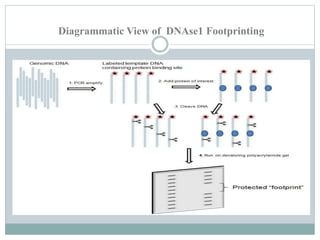
1. Amplification of genomic DNA of interest by using
PCR.
2. Labeling at the one end of each strand of amplified
DNA.
3. The protein of interest is added.
4. DNA is cleaved by DNAse 1 nuclease
5. Fragments are run on polyacrylamide gel.
6. We will get bands on the gel.
Diagrammatic View of DNAse1 Footprinting
Applications
 To study DNA Protein interaction
 Transcriptional regulation can be studied
 To find regions in gene where transcription factor is bind.
 To identify functional gene in human genome.
 Promoter, enhancer and silencer sequence of a gene can
be studied.
References
• https://www.creativebiomart.net/resource/principle-protocol-dnase-i-
footprinting-377.htm
 https://en.wikipedia.org/wiki/DNase_footprinting_assay
 https://www.youtube.com/watch?v=Lya0yoymgG8
THANK YOU!

DNA FOOTPRINTING.pptx

  • 1.
    N a me: S H A I K H U WA I S S H A B B I R S A B C o u r s e t i t l e : G E N E T I C E N G I N E E R I N G C o u r s e n o : A B T 5 0 3 V I L A S R A O D E S H M U K H C O L L E G E O F A G R I C U LT U R E B I O T E C H N O L O G Y, L AT U R VA S A N TA R A O N A I K M A R AT H WA D A K R I S H I V I D YA P E E T H , PA R B H A N I DNAse-1 FOOTPRINTING
  • 2.
    Content  Introduction  principle Similar techniques  Methodology  Applications  References
  • 3.
    Introduction DNA footprinting: itis an in vitro method to identify the specific site of DNA binding proteins.  technique used to study interactions between proteins and DNA.  Discovered by: David Galas and Albert Schmitz(1978) to study the binding specificity of lac repressor protein.  Two types of DNA footprinting: 1. DNAse 1 footprinting 2. DMS Footprinting
  • 4.
    Similar techniques  Thereare various techniques to study DNA-PROTEIN interaction like, 1. CHIP(chromatin immunoprecipitation assay) 2. EMSA(electrophoretic mobility shift assay) 3. DNA pull down assay 4. DNAse 1 Footprinting
  • 5.
    Principle  As weknow nuclease cleave dna at specific site.  Nuclease enzyme DNAse 1 is used.  DNAse 1 degrade DNA molecule.  But main Principle of this process is,Nucleases can not degrade DNA if it is bounded by protein.so we can easily detect the dna protein interactions.  The protected DNA region-FOOTPRINT
  • 6.
    Methodology 1. Amplification ofgenomic DNA of interest by using PCR. 2. Labeling at the one end of each strand of amplified DNA. 3. The protein of interest is added. 4. DNA is cleaved by DNAse 1 nuclease 5. Fragments are run on polyacrylamide gel. 6. We will get bands on the gel.
  • 7.
    Diagrammatic View ofDNAse1 Footprinting
  • 8.
    Applications  To studyDNA Protein interaction  Transcriptional regulation can be studied  To find regions in gene where transcription factor is bind.  To identify functional gene in human genome.  Promoter, enhancer and silencer sequence of a gene can be studied.
  • 9.
  • 10.