April 23, 2012
Changes in the Global Economy since
1989
 End of the Cold War
 Acceleration of Globalization
 September 11
 Rise of Neo-Liberalism
    Washington Consensus
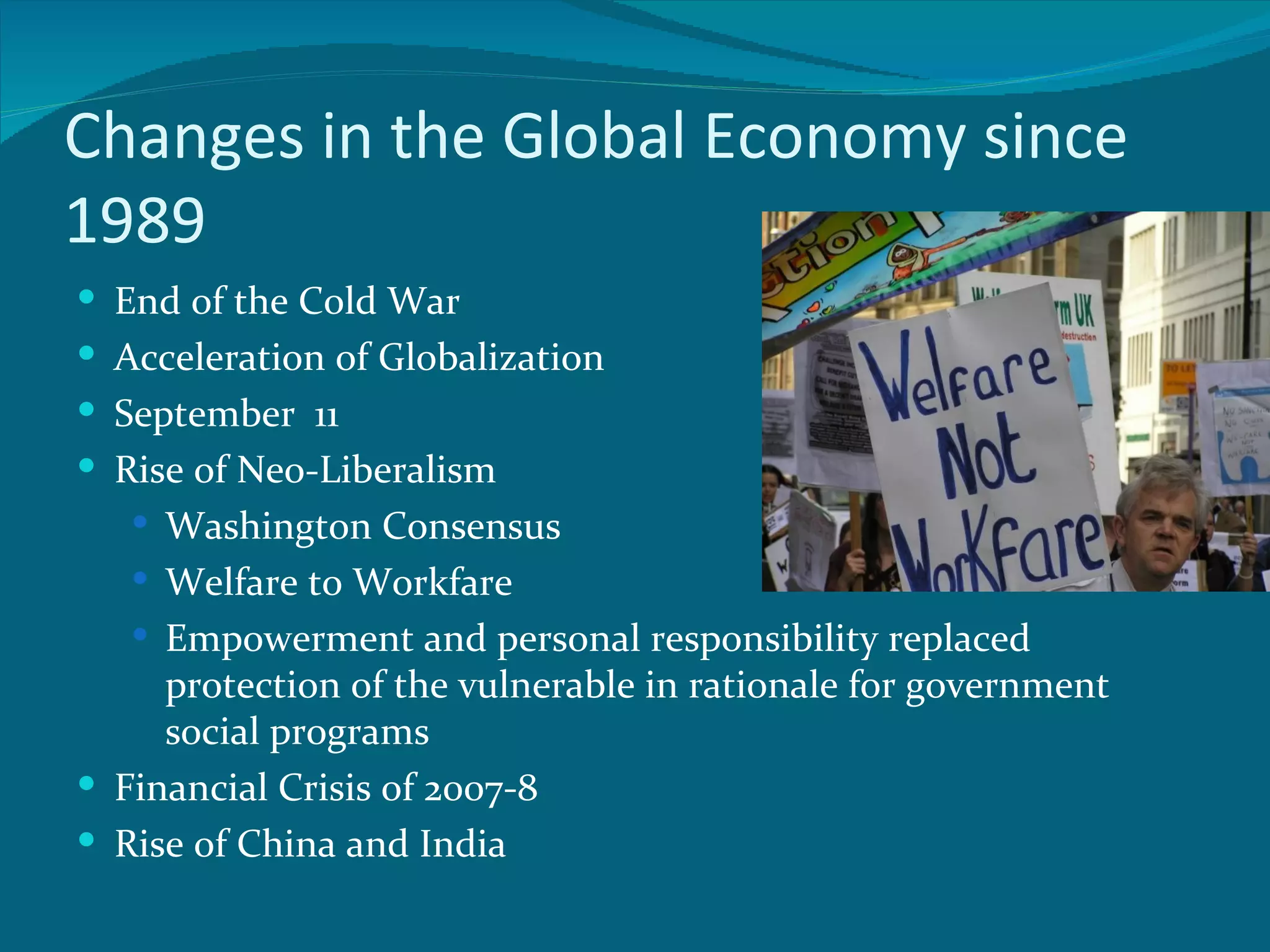
    Welfare to Workfare
    Empowerment and personal responsibility replaced
     protection of the vulnerable in rationale for government
     social programs
 Financial Crisis of 2007-8
 Rise of China and India
The Euro Crisis
 What is the future of the Euro
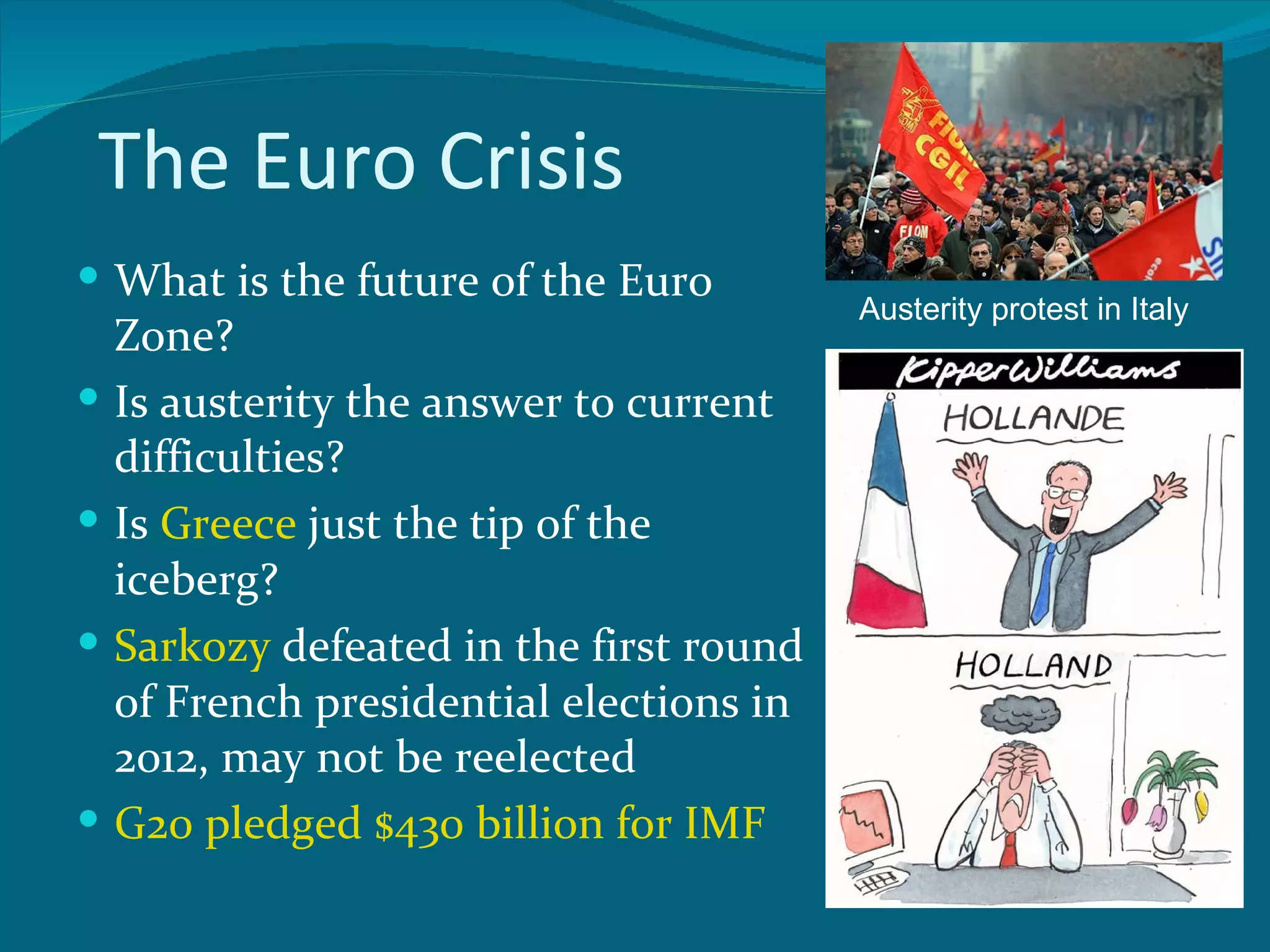
                                          Austerity protest in Italy
    Zone?
   Is austerity the answer to current
    difficulties?
   Is Greece just the tip of the
    iceberg?
   Sarkozy defeated in the first round
    of French presidential elections in
    2012, may not be reelected
   G20 pledged $430 billion for IMF
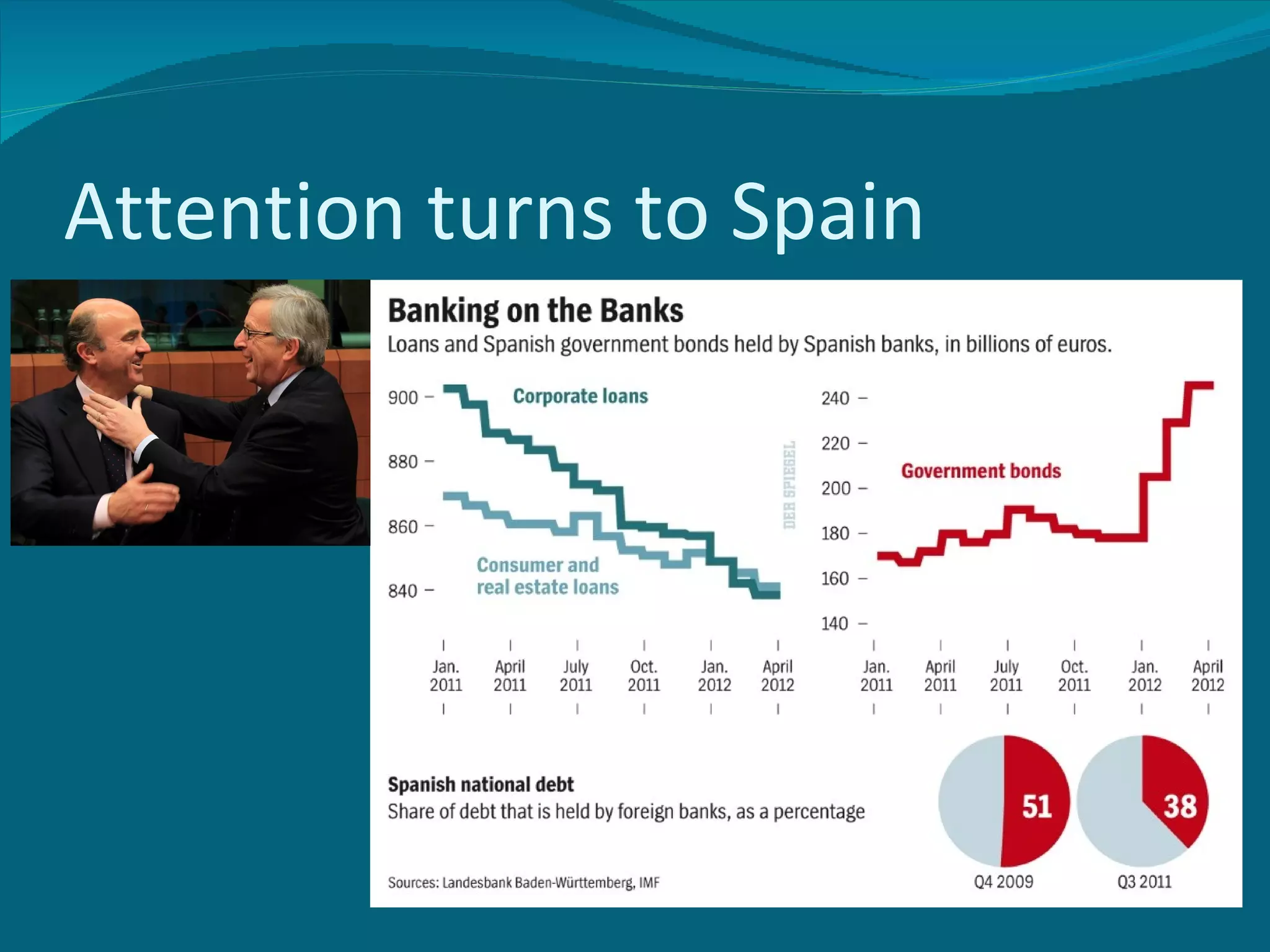
Attention turns to Spain
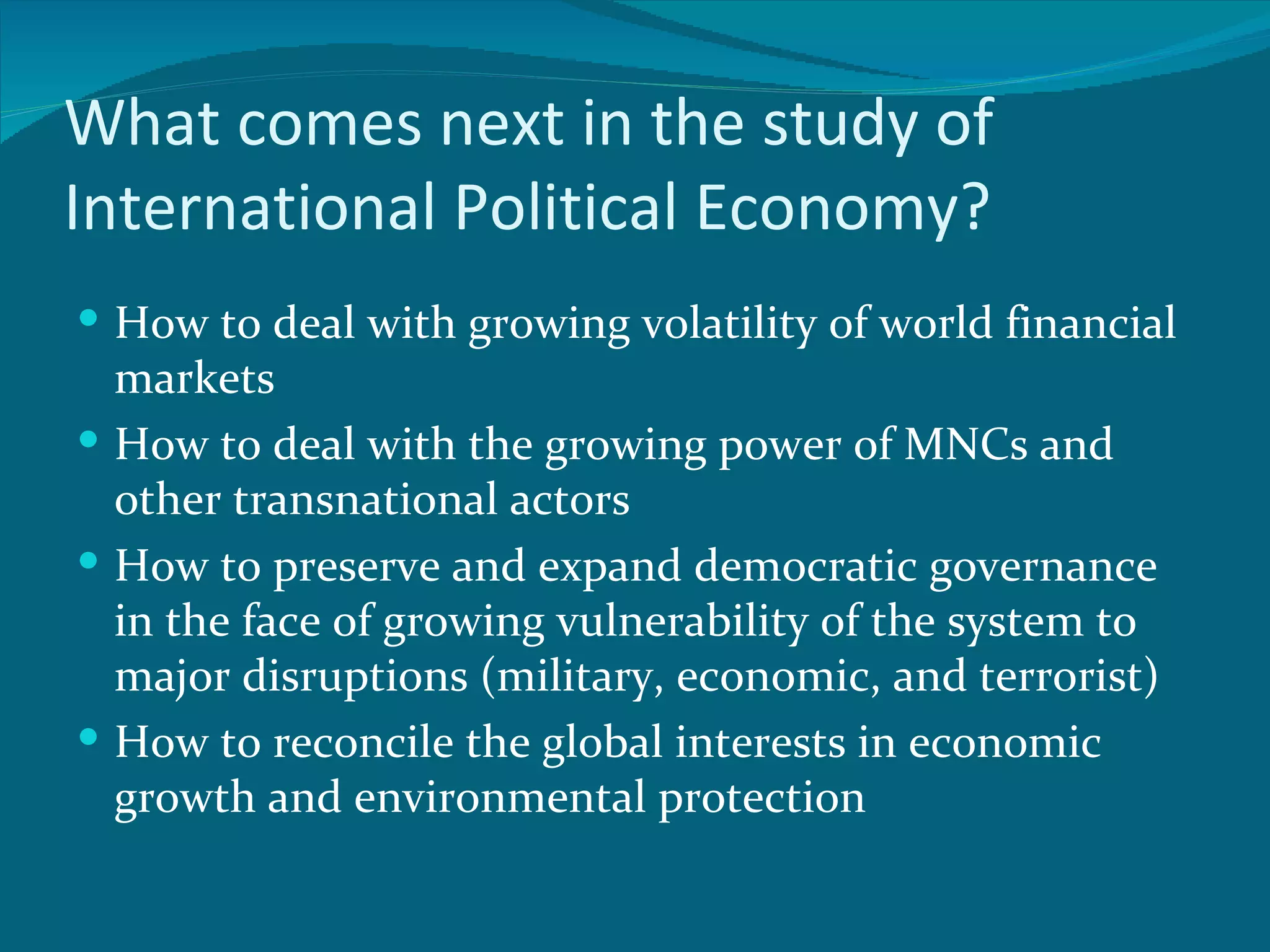
What comes next in the study of
International Political Economy?
 How to deal with growing volatility of world financial
  markets
 How to deal with the growing power of MNCs and
  other transnational actors
 How to preserve and expand democratic governance
  in the face of growing vulnerability of the system to
  major disruptions (military, economic, and terrorist)
 How to reconcile the global interests in economic
  growth and environmental protection
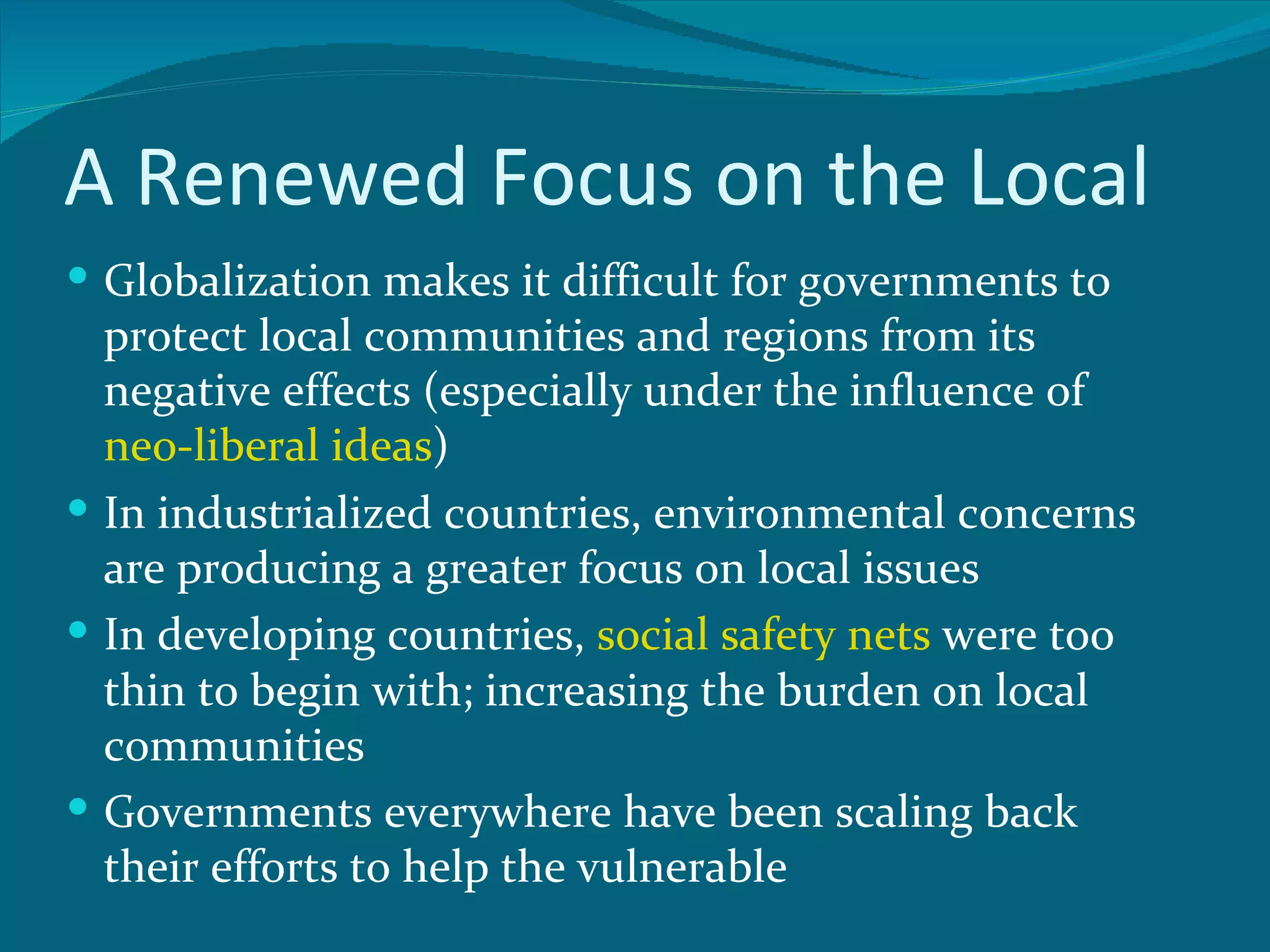
A Renewed Focus on the Local
 Globalization makes it difficult for governments to
  protect local communities and regions from its
  negative effects (especially under the influence of
  neo-liberal ideas)
 In industrialized countries, environmental concerns
  are producing a greater focus on local issues
 In developing countries, social safety nets were too
  thin to begin with; increasing the burden on local
  communities
 Governments everywhere have been scaling back
  their efforts to help the vulnerable
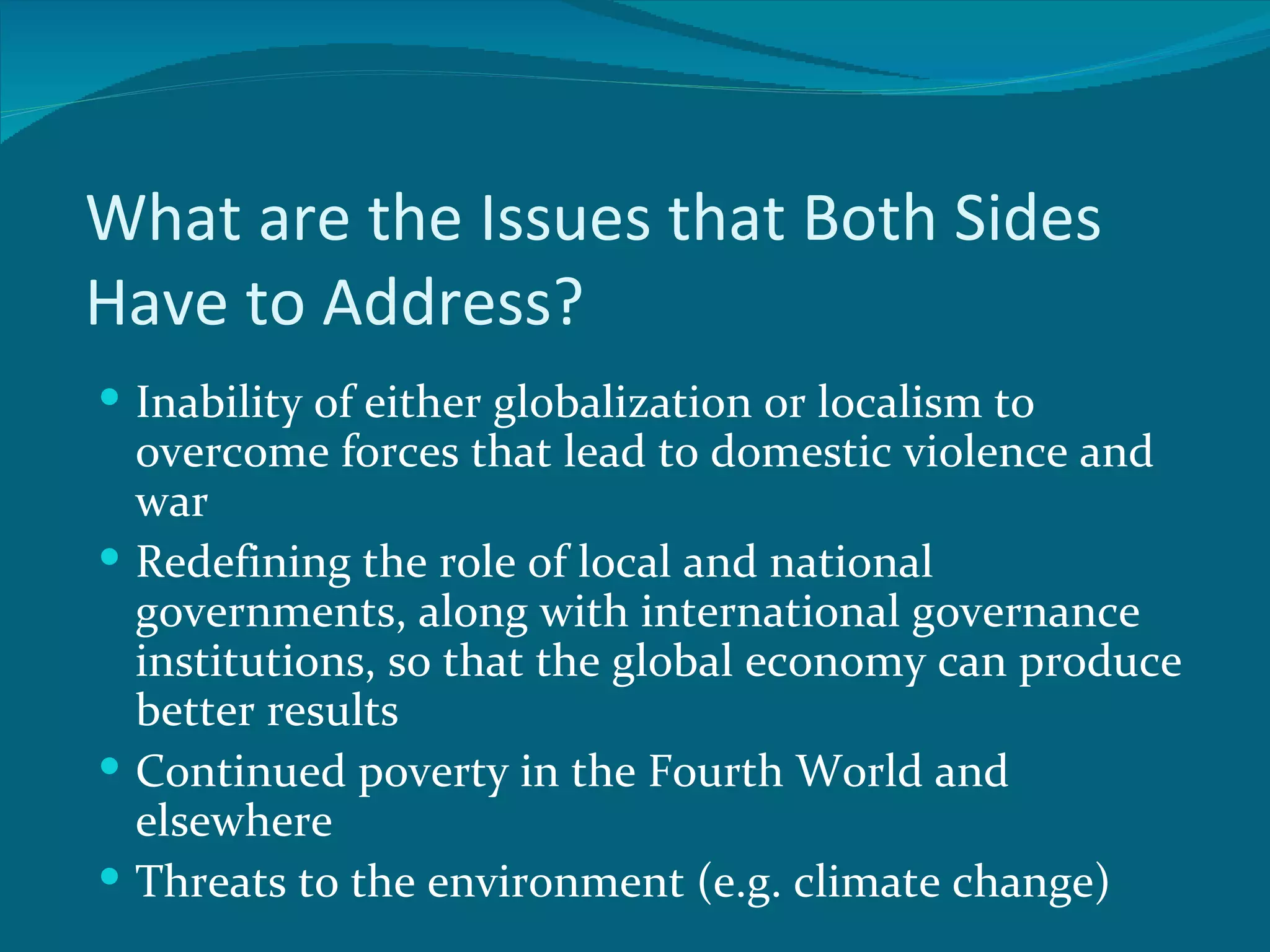
What are the Issues that Both Sides
Have to Address?
 Inability of either globalization or localism to
  overcome forces that lead to domestic violence and
  war
 Redefining the role of local and national
  governments, along with international governance
  institutions, so that the global economy can produce
  better results
 Continued poverty in the Fourth World and
  elsewhere
 Threats to the environment (e.g. climate change)
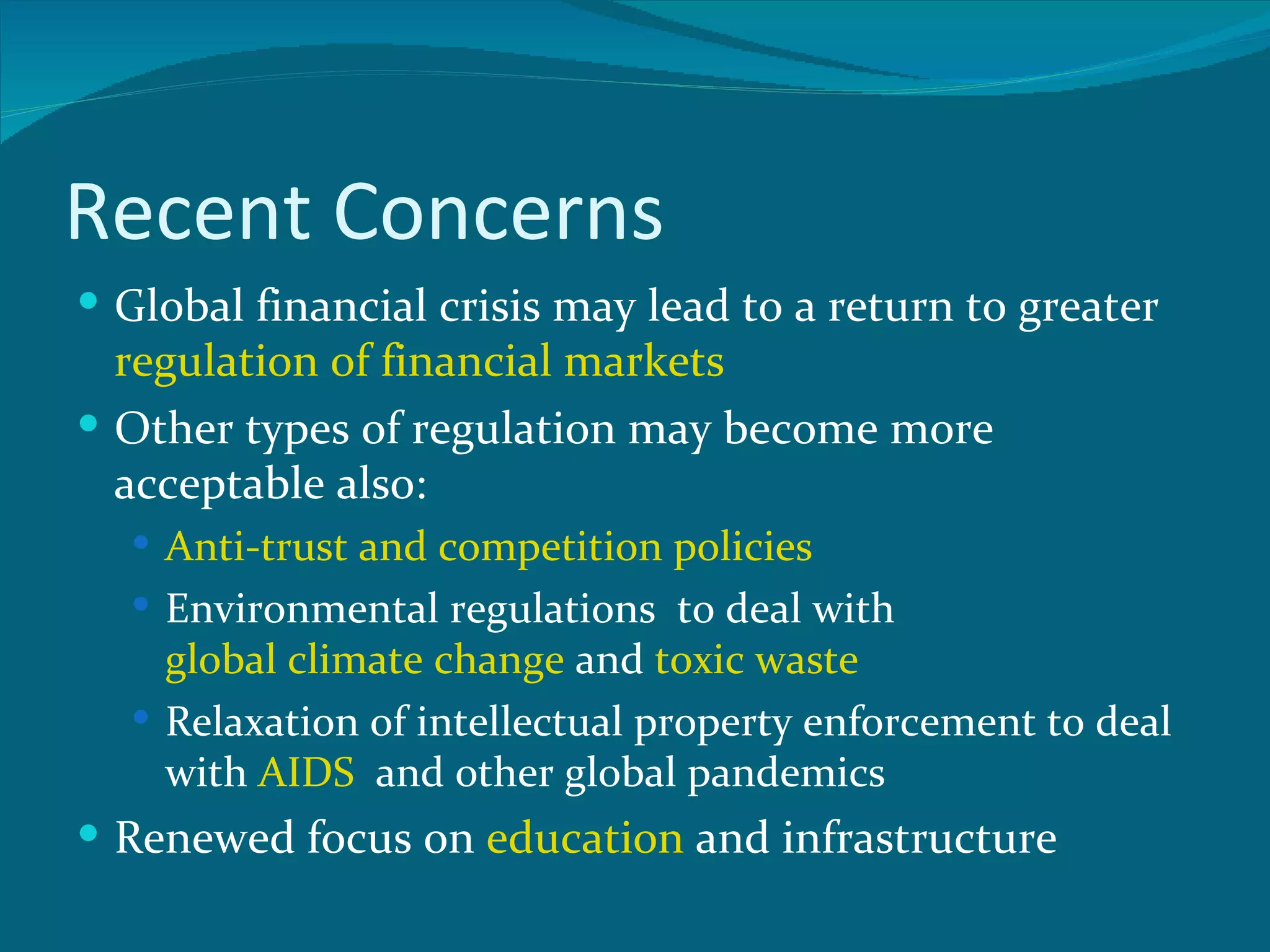
Recent Concerns
 Global financial crisis may lead to a return to greater
  regulation of financial markets
 Other types of regulation may become more
  acceptable also:
   Anti-trust and competition policies
   Environmental regulations to deal with
    global climate change and toxic waste
   Relaxation of intellectual property enforcement to deal
    with AIDS and other global pandemics
 Renewed focus on education and infrastructure
Who is thinking about these
things? Just a few names…
 Saskia Sassen
 Suzanne Berger
 William Easterly
 Hernando de Soto
 Joseph Stiglitz
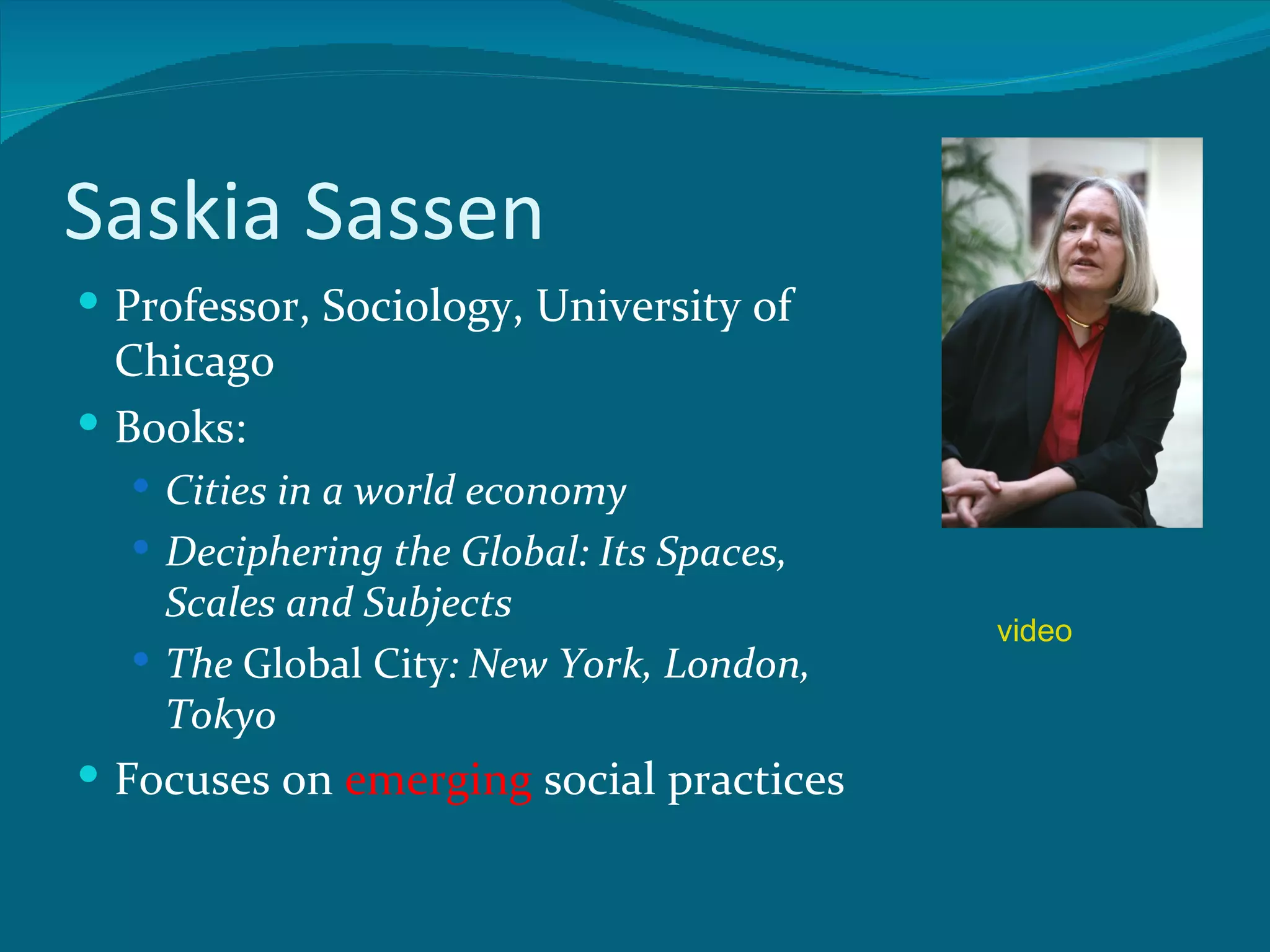
Saskia Sassen
 Professor, Sociology, University of
  Chicago
 Books:
   Cities in a world economy
   Deciphering the Global: Its Spaces,
    Scales and Subjects
                                          video
   The Global City: New York, London,
    Tokyo
 Focuses on emerging social practices
Suzanne Berger
 Professor, Political Science, MIT
 Books:
   National Diversity and Global
    Capitalism
   How We Compete                      video

 Focuses on the political economy of
 globalization and particularly on
 convergence
William Easterly
 Argues against panaceas
 Argues for proper structuring of group incentives
 Formerly employed by World Bank
 Now professor at NYU
 Video
 Bill Gates hated his books
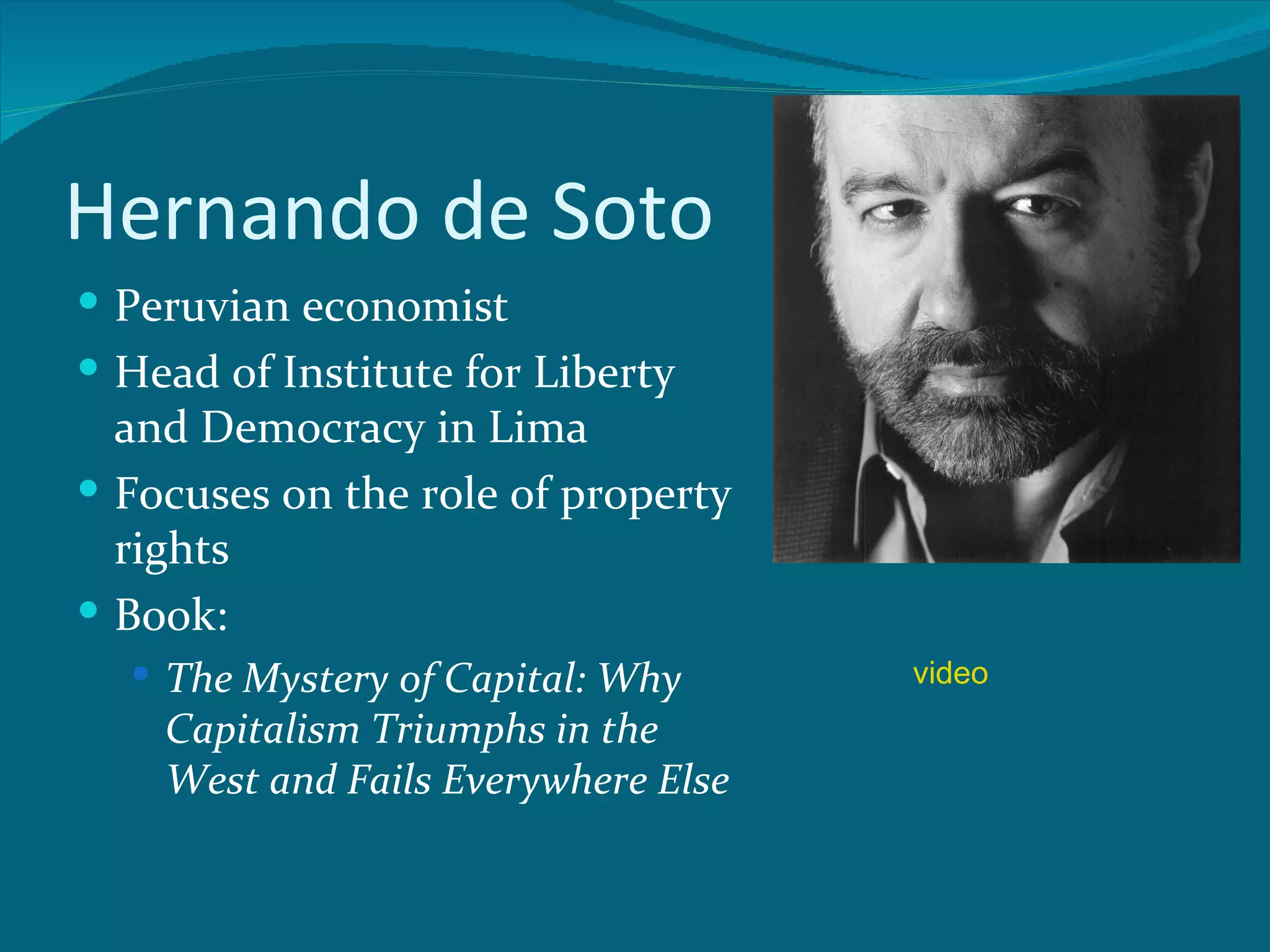
Hernando de Soto
 Peruvian economist
 Head of Institute for Liberty
  and Democracy in Lima
 Focuses on the role of property
  rights
 Book:
   The Mystery of Capital: Why      video
    Capitalism Triumphs in the
    West and Fails Everywhere Else
Joseph Stiglitz
 Former chief economist of the World Bank turned
  critic of the IMF after the Asia Crisis
 Argues the IMF mismanaged globalization         video
 Too focused on inflation and fiscal rectitude
 Neglected economic growth and employment

Ipe21

  • 1.
  • 2.
    Changes in theGlobal Economy since 1989  End of the Cold War  Acceleration of Globalization  September 11  Rise of Neo-Liberalism  Washington Consensus  Welfare to Workfare  Empowerment and personal responsibility replaced protection of the vulnerable in rationale for government social programs  Financial Crisis of 2007-8  Rise of China and India
  • 3.
    The Euro Crisis What is the future of the Euro Austerity protest in Italy Zone?  Is austerity the answer to current difficulties?  Is Greece just the tip of the iceberg?  Sarkozy defeated in the first round of French presidential elections in 2012, may not be reelected  G20 pledged $430 billion for IMF
  • 4.
  • 5.
    What comes nextin the study of International Political Economy?  How to deal with growing volatility of world financial markets  How to deal with the growing power of MNCs and other transnational actors  How to preserve and expand democratic governance in the face of growing vulnerability of the system to major disruptions (military, economic, and terrorist)  How to reconcile the global interests in economic growth and environmental protection
  • 6.
    A Renewed Focuson the Local  Globalization makes it difficult for governments to protect local communities and regions from its negative effects (especially under the influence of neo-liberal ideas)  In industrialized countries, environmental concerns are producing a greater focus on local issues  In developing countries, social safety nets were too thin to begin with; increasing the burden on local communities  Governments everywhere have been scaling back their efforts to help the vulnerable
  • 7.
    What are theIssues that Both Sides Have to Address?  Inability of either globalization or localism to overcome forces that lead to domestic violence and war  Redefining the role of local and national governments, along with international governance institutions, so that the global economy can produce better results  Continued poverty in the Fourth World and elsewhere  Threats to the environment (e.g. climate change)
  • 8.
    Recent Concerns  Globalfinancial crisis may lead to a return to greater regulation of financial markets  Other types of regulation may become more acceptable also:  Anti-trust and competition policies  Environmental regulations to deal with global climate change and toxic waste  Relaxation of intellectual property enforcement to deal with AIDS and other global pandemics  Renewed focus on education and infrastructure
  • 9.
    Who is thinkingabout these things? Just a few names… Saskia Sassen Suzanne Berger William Easterly Hernando de Soto Joseph Stiglitz
  • 10.
    Saskia Sassen  Professor,Sociology, University of Chicago  Books:  Cities in a world economy  Deciphering the Global: Its Spaces, Scales and Subjects video  The Global City: New York, London, Tokyo  Focuses on emerging social practices
  • 11.
    Suzanne Berger  Professor,Political Science, MIT  Books:  National Diversity and Global Capitalism  How We Compete video  Focuses on the political economy of globalization and particularly on convergence
  • 12.
    William Easterly  Arguesagainst panaceas  Argues for proper structuring of group incentives  Formerly employed by World Bank  Now professor at NYU  Video  Bill Gates hated his books
  • 13.
    Hernando de Soto Peruvian economist  Head of Institute for Liberty and Democracy in Lima  Focuses on the role of property rights  Book:  The Mystery of Capital: Why video Capitalism Triumphs in the West and Fails Everywhere Else
  • 14.
    Joseph Stiglitz  Formerchief economist of the World Bank turned critic of the IMF after the Asia Crisis  Argues the IMF mismanaged globalization video  Too focused on inflation and fiscal rectitude  Neglected economic growth and employment