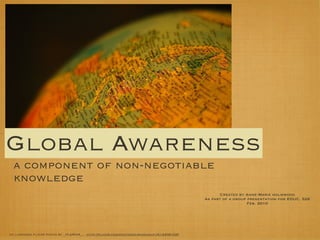
Global Awareness
 a component of non-negotiable
 knowledge
                                                                                            Created by Anne-Marie holmwood
                                                                                      As part of a group presentation for EDUC. 526
                                                                                                         Feb. 2010


cc licensed flickr photo by _fLeMmA__: http://flickr.com/photos/mirkogarufi/514406103/
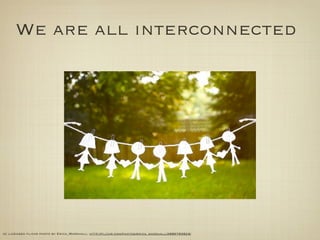
We are all interconnected


cc licensed flickr photo by Erica_Marshall: http://flickr.com/photos/erica_marshall/2885783824/
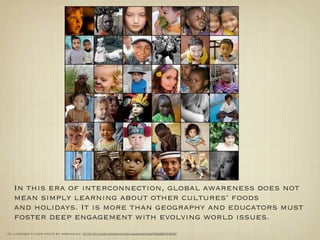
In this era of interconnection, global awareness does not
   mean simply learning about other cultures’ foods
   and holidays. It is more than geography and educators must
   foster deep engagement with evolving world issues.
cc licensed flickr photo by robynejay: http://flickr.com/photos/learnscope/3349972303/
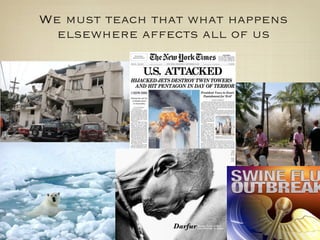
We must teach that what happens
  elsewhere affects all of us
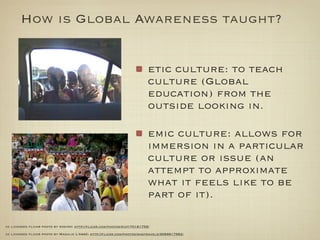
How is Global Awareness taught?


                                                                        etic culture: to teach
                                                                        culture (Global
                                                                        education) from the
                                                                        outside looking in.

                                                                        emic culture: allows for
                                                                        immersion in a particular
                                                                        culture or issue (an
                                                                        attempt to approximate
                                                                        what it feels like to be
                                                                        part of it).

cc licensed flickr photo by rogiro: http://flickr.com/photos/riot/70161759/

cc licensed flickr photo by Magalie L'Abbé: http://flickr.com/photos/magtravels/3099817962/
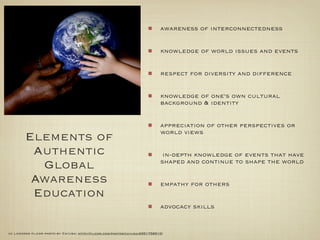
awareness of interconnectedness


                                                                           knowledge of world issues and events


                                                                           respect for diversity and difference


                                                                           knowledge of one's own cultural
                                                                           background & identity


                                                                           appreciation of other perspectives or
                                                                           world views
        Elements of
         Authentic                                                          in-depth knowledge of events that have
          Global                                                           shaped and continue to shape the world

         Awareness                                                         empathy for others
         Education
                                                                           advocacy skills


cc licensed flickr photo by Cayusa: http://flickr.com/photos/cayusa/2051756510/
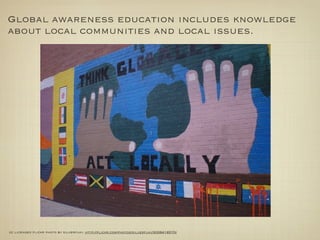
Global awareness education includes knowledge
about local communities and local issues.


cc licensed flickr photo by silverfuki: http://flickr.com/photos/silverfuki/3008418570/
Diversity and global awareness
                                             can be promoted through
                                             formal virtual classrooms.
                                                    web-based programs are designed to increase
                                                  students’ knowledge and understanding of world
                                                   issues. They allow classrooms to collaborative
                                                   beyond geographical borders, and help connect
                                                          educators and students globally.


http://www.flickr.com/photos/virtualdesignoffice/
       219954613/in/set-72057594066255493/


     Associated Schools project of UNESCO http://www.unesco.ca/en/interdisciplinary/aspnet/default.aspx

     iEARN                                              http://www.iearn-canada.org/index.htm

     Butterfly208 (CIDA)                                 http://r4r.ca/en/resource/butterfly-208

     Global Classroom Initiative (CIDA)                 http://www.acdi-cida.gc.ca/gci

     Global Virtual Classroom                           http://www.virtualclassroom.org/

     CAP (Community access program)                     http://www.ic.gc.ca/eic/site/cap-pac.nsf/eng/home
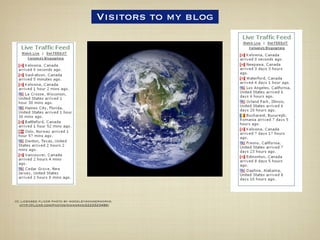
Visitors to my blog


cc licensed flickr photo by woodleywonderworks:
  http://flickr.com/photos/wwworks/2222523486/
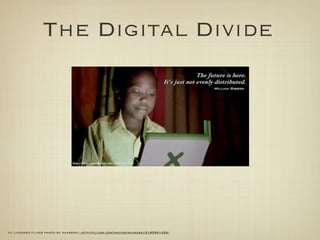
The Digital Divide


cc licensed flickr photo by shareski: http://flickr.com/photos/shareski/3165691434/
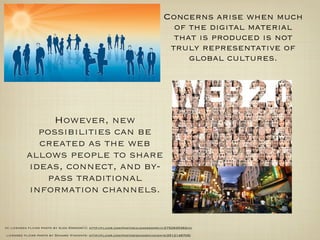
Concerns arise when much
                                                                                 of the digital material
                                                                                 that is produced is not
                                                                                truly representative of
                                                                                    global cultures.


              However, new
            possibilities can be
            created as the web
          allows people to share
          ideas, connect, and by-
             pass traditional
          information channels.


cc licensed flickr photo by Ajda Gregorčič: http://flickr.com/photos/ajdagregorcic/2752835362/cc

licensed flickr photo by Danard Vincente: http://flickr.com/photos/danardvincente/2512148705/
Information in this presentation
               is from
Chapter 4 “Transformative Frameworks
       for Promoting Diversity”
  Teaching for Diversity in Canadian
      Schools by Benedicta Egbo
                ©2009

Global Awareness

  • 1.
    Global Awareness acomponent of non-negotiable knowledge Created by Anne-Marie holmwood As part of a group presentation for EDUC. 526 Feb. 2010 cc licensed flickr photo by _fLeMmA__: http://flickr.com/photos/mirkogarufi/514406103/
  • 2.
    We are allinterconnected cc licensed flickr photo by Erica_Marshall: http://flickr.com/photos/erica_marshall/2885783824/
  • 3.
    In this eraof interconnection, global awareness does not mean simply learning about other cultures’ foods and holidays. It is more than geography and educators must foster deep engagement with evolving world issues. cc licensed flickr photo by robynejay: http://flickr.com/photos/learnscope/3349972303/
  • 4.
    We must teachthat what happens elsewhere affects all of us
  • 5.
    How is GlobalAwareness taught? etic culture: to teach culture (Global education) from the outside looking in. emic culture: allows for immersion in a particular culture or issue (an attempt to approximate what it feels like to be part of it). cc licensed flickr photo by rogiro: http://flickr.com/photos/riot/70161759/ cc licensed flickr photo by Magalie L'Abbé: http://flickr.com/photos/magtravels/3099817962/
  • 6.
    awareness of interconnectedness knowledge of world issues and events respect for diversity and difference knowledge of one's own cultural background & identity appreciation of other perspectives or world views Elements of Authentic in-depth knowledge of events that have Global shaped and continue to shape the world Awareness empathy for others Education advocacy skills cc licensed flickr photo by Cayusa: http://flickr.com/photos/cayusa/2051756510/
  • 7.
    Global awareness educationincludes knowledge about local communities and local issues. cc licensed flickr photo by silverfuki: http://flickr.com/photos/silverfuki/3008418570/
  • 8.
    Diversity and globalawareness can be promoted through formal virtual classrooms. web-based programs are designed to increase students’ knowledge and understanding of world issues. They allow classrooms to collaborative beyond geographical borders, and help connect educators and students globally. http://www.flickr.com/photos/virtualdesignoffice/ 219954613/in/set-72057594066255493/ Associated Schools project of UNESCO http://www.unesco.ca/en/interdisciplinary/aspnet/default.aspx iEARN http://www.iearn-canada.org/index.htm Butterfly208 (CIDA) http://r4r.ca/en/resource/butterfly-208 Global Classroom Initiative (CIDA) http://www.acdi-cida.gc.ca/gci Global Virtual Classroom http://www.virtualclassroom.org/ CAP (Community access program) http://www.ic.gc.ca/eic/site/cap-pac.nsf/eng/home
  • 9.
    Visitors to myblog cc licensed flickr photo by woodleywonderworks: http://flickr.com/photos/wwworks/2222523486/
  • 10.
    The Digital Divide cclicensed flickr photo by shareski: http://flickr.com/photos/shareski/3165691434/
  • 11.
    Concerns arise whenmuch of the digital material that is produced is not truly representative of global cultures. However, new possibilities can be created as the web allows people to share ideas, connect, and by- pass traditional information channels. cc licensed flickr photo by Ajda Gregorčič: http://flickr.com/photos/ajdagregorcic/2752835362/cc licensed flickr photo by Danard Vincente: http://flickr.com/photos/danardvincente/2512148705/
  • 12.
    Information in thispresentation is from Chapter 4 “Transformative Frameworks for Promoting Diversity” Teaching for Diversity in Canadian Schools by Benedicta Egbo ©2009

Editor's Notes

  • #3 - all parts of world are interconnected - everyone is a stakeholder
  • #5 - What happens elsewhere affects us - Ex. Sept. 1th, Indonesian Tsunami, H1N1, Haiti...
  • #6 - Is global education a separate curriculum or program (Egbo - yes) Reality ??? - definition of global educ program - bottom of p. 100
  • #7 *Elements of authentic Global Awareness Education: - awareness of interconnectedness - knowledge of world issues and events - respect for diversity and difference - knowledge of one's own cultural background & identity - appreciation of other perspectives or worldviews - in-depth knowledge of events that have shaped and continue to shape the world - empathy for others - advocacy skills
  • #8 - includes local issues, but builds on them and connects them to larger world - "act locally, think globally"
  • #9 *Promoting Diversity and Global Awareness through Virtual Classrooms Web-based Can. and international global awareness programs (formal) - Associated Schools project of UNESCO http://www.unesco.ca/en/interdisciplinary/aspnet/default.aspx - iEARN http://www.iearn-canada.org/index.htm - Butterfly208 (CIDA)http://r4r.ca/en/resource/butterfly-208 - Global Classroom Initiative (CIDA)http://www.acdi-cida.gc.ca/gci - Global Virtual Classroomhttp://www.virtualclassroom.org/ - CAPhttp://www.ic.gc.ca/eic/site/cap-pac.nsf/eng/home
  • #11 Ethical issues arise - most notably, the digital divide - lack of access to technology (for a variety of reasons)
  • #12  - too often technology developed by the main culture (English, white culture) - however many, many examples of appropriation - whole point of web is grassroots