Ms. Bai Saguira Abdulah
SCE 204
Methods of Science Teaching
Meaning of Principles
• It has been adopted from the Latin word “princeps”
which means the beginning or the end of all thing.
• Fundamental laws for early Greeks.
• Principle is a comprehensive law or doctrine, from
which others are derived. (Webster)
• Principle is a rule for guiding the ship of education
and compass by which path of education is directed.
(Hopkins)
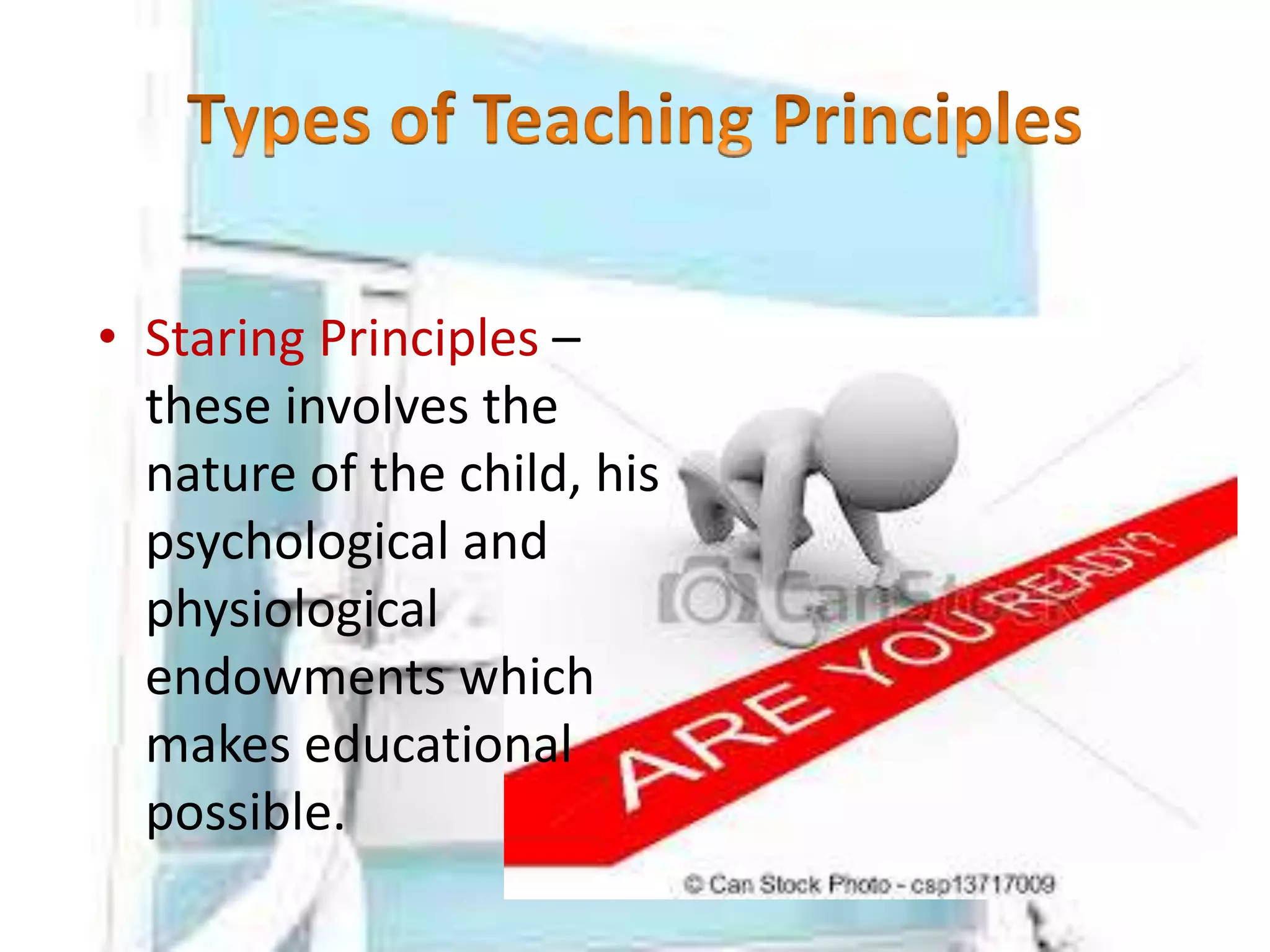
• Staring Principles –
these involves the
nature of the child, his
psychological and
physiological
endowments which
makes educational
possible.
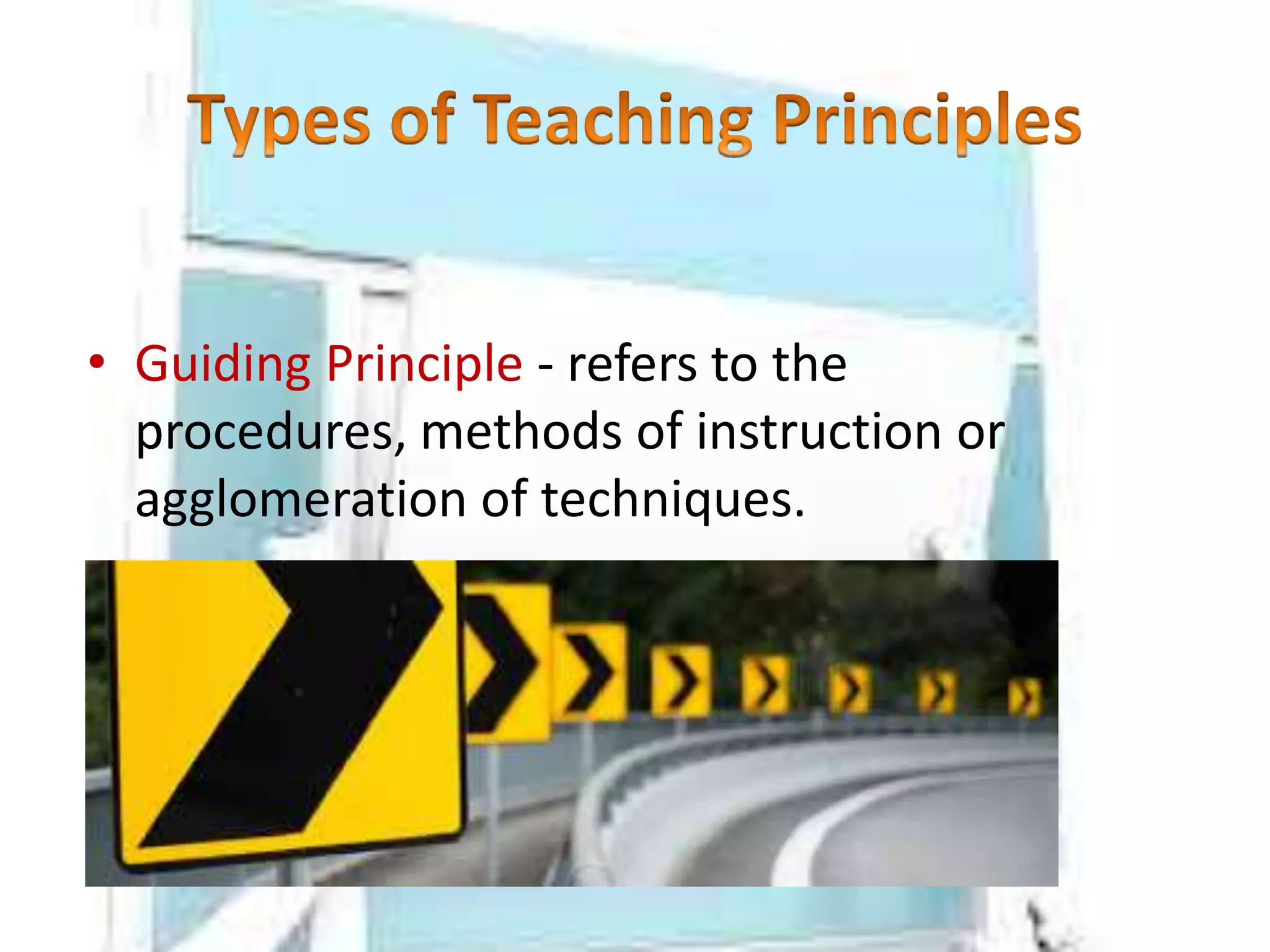
• Guiding Principle - refers to the
procedures, methods of instruction or
agglomeration of techniques.
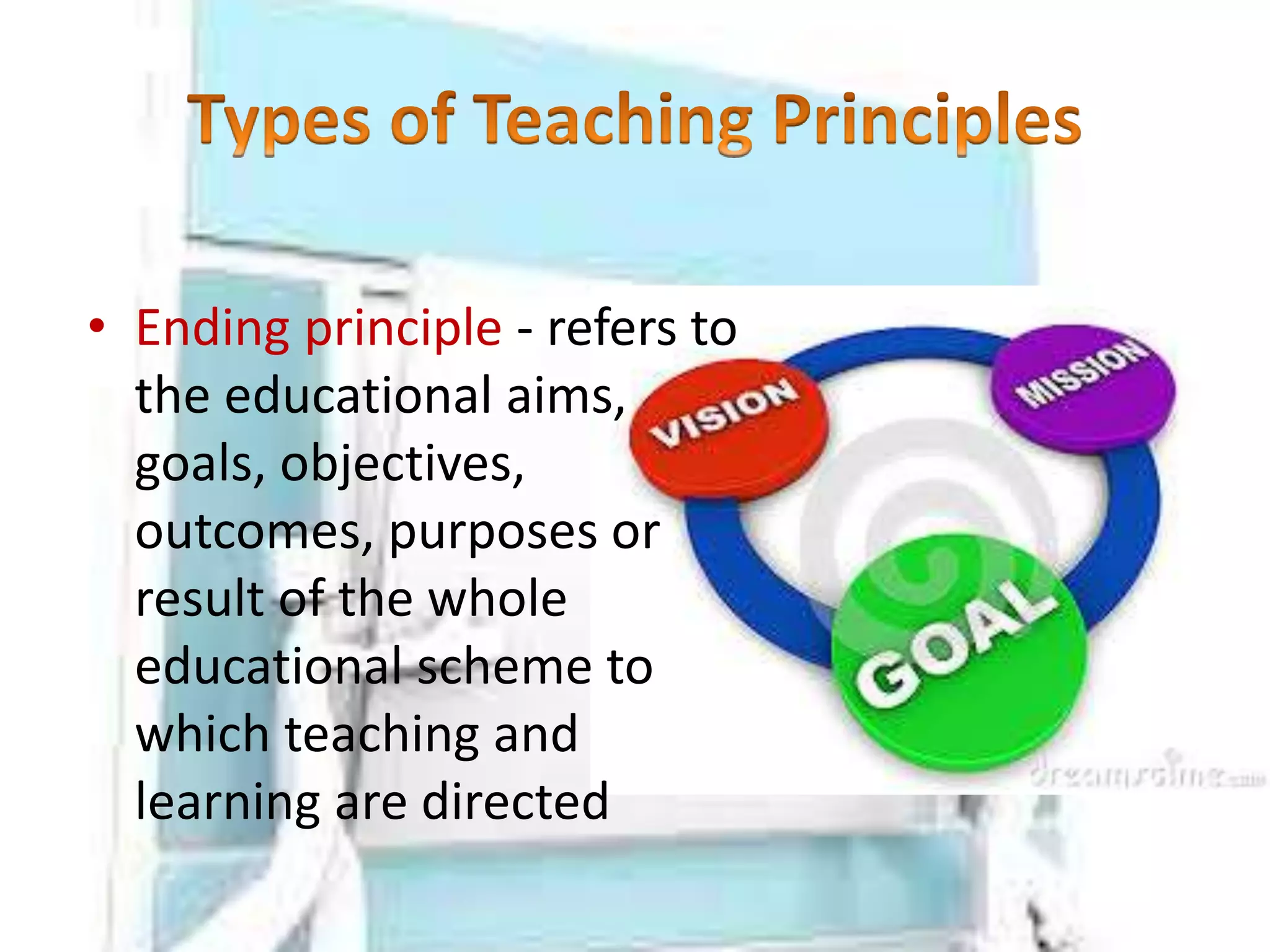
• Ending principle - refers to
the educational aims,
goals, objectives,
outcomes, purposes or
result of the whole
educational scheme to
which teaching and
learning are directed
• -the effectiveness of instruction and the
meaningfulness of learning depends largely on the
setting materials in which the process goes on.
• -having an organized focus leads to effective
instruction.
• -instruction becomes effective depending on
the social setting in which it is done.
-the effectiveness of instruction must progress
in terms of the learner’s own purposes,
aptitudes, abilities, and experimental
procedures.
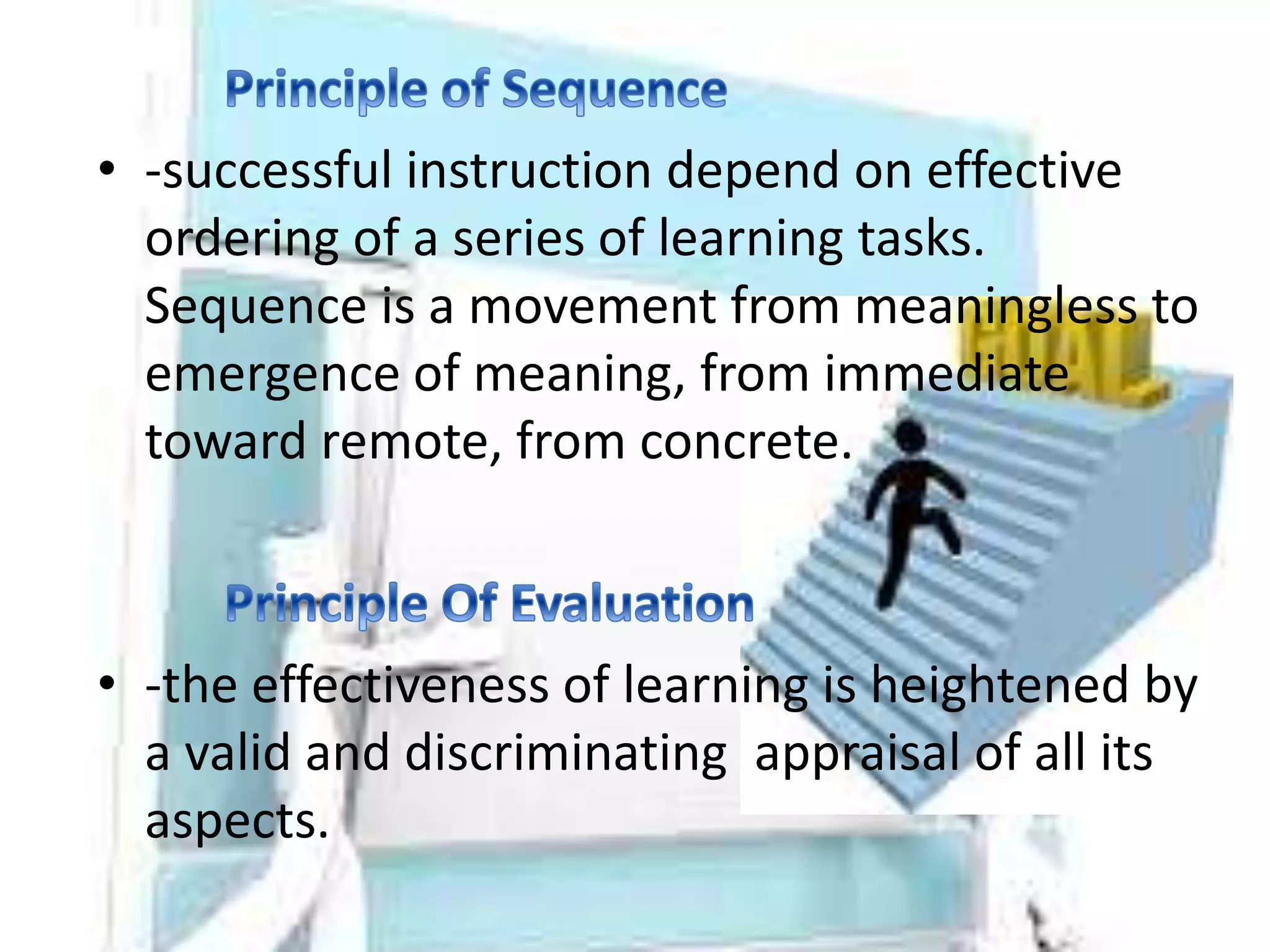
• -successful instruction depend on effective
ordering of a series of learning tasks.
Sequence is a movement from meaningless to
emergence of meaning, from immediate
toward remote, from concrete.
• -the effectiveness of learning is heightened by
a valid and discriminating appraisal of all its
aspects.
1. Begin with the end in mind
2. Share lesson objective with students
3. Lesson objectives must be in two or three
domains-cognitive, psychomotor and affective
4. Work on significant and relevant lesson
objectives
5. Lesson objective must be with the aims of
education as embodied in the Philippine
Constitution and other laws and on the vision-
mission statements of the educational institution of
which you are part.
6. For accountability of learning, lesson objectives
must be SMART
7. Aim at the development of critical and creative
thinking
1. Learning is an active process.
2. The more senses that are involved in learning,
the more and the better the learning. Contribution of
senses to learning.docx
3. A non-threatening atmosphere enhances
learning.
4. Emotion has the power to increase retention
and learning.
5. Learning is meaningful when it is connected to
students’ everyday life.
6. Good teaching goes beyond recall of
information
7. Good teaching considers learners’ varied
learning styles and learners’ multiple intelligences
• Principles are the chief guides to make
teaching and learning effectives and
productive.
• Principles are importance for the governing of
actions and to operation of technique in any
field of education.
References
• Gregorio, H.C. (1976) Principles and Method of Teaching
(Revised Edition) Quezon City, Philippines. Garotech Publishing
• Corpuz, B.B. and Salandanan, G.G. (2003) Principles and
Strategies of Teaching, Quezon City, Philippes, Lorimar
Publishing Co., Inc
• Corpuz, B.B , et. Al (2006) Principle of Teaching 2, Quezon City,
Philippines: Lorimar Publishing, Inc
• Acero, V.O., et. Al (2007) Principles of Teaching 1 (First Edition)
Queon City, Phjlippines: Rex Book Store, Inc
• Lardizabal, A. S., (1995) Principles and Method of Teaching,
Quezon City, Philippines: Phoenix Publishing House, Inc

Principle of teaching and learning review

  • 1.
    Ms. Bai SaguiraAbdulah SCE 204 Methods of Science Teaching
  • 2.
    Meaning of Principles •It has been adopted from the Latin word “princeps” which means the beginning or the end of all thing. • Fundamental laws for early Greeks. • Principle is a comprehensive law or doctrine, from which others are derived. (Webster) • Principle is a rule for guiding the ship of education and compass by which path of education is directed. (Hopkins)
  • 3.
    • Staring Principles– these involves the nature of the child, his psychological and physiological endowments which makes educational possible.
  • 4.
    • Guiding Principle- refers to the procedures, methods of instruction or agglomeration of techniques.
  • 5.
    • Ending principle- refers to the educational aims, goals, objectives, outcomes, purposes or result of the whole educational scheme to which teaching and learning are directed
  • 6.
    • -the effectivenessof instruction and the meaningfulness of learning depends largely on the setting materials in which the process goes on. • -having an organized focus leads to effective instruction.
  • 7.
    • -instruction becomeseffective depending on the social setting in which it is done. -the effectiveness of instruction must progress in terms of the learner’s own purposes, aptitudes, abilities, and experimental procedures.
  • 8.
    • -successful instructiondepend on effective ordering of a series of learning tasks. Sequence is a movement from meaningless to emergence of meaning, from immediate toward remote, from concrete. • -the effectiveness of learning is heightened by a valid and discriminating appraisal of all its aspects.
  • 9.
    1. Begin withthe end in mind 2. Share lesson objective with students 3. Lesson objectives must be in two or three domains-cognitive, psychomotor and affective 4. Work on significant and relevant lesson objectives
  • 10.
    5. Lesson objectivemust be with the aims of education as embodied in the Philippine Constitution and other laws and on the vision- mission statements of the educational institution of which you are part. 6. For accountability of learning, lesson objectives must be SMART 7. Aim at the development of critical and creative thinking
  • 11.
    1. Learning isan active process. 2. The more senses that are involved in learning, the more and the better the learning. Contribution of senses to learning.docx 3. A non-threatening atmosphere enhances learning.
  • 12.
    4. Emotion hasthe power to increase retention and learning. 5. Learning is meaningful when it is connected to students’ everyday life. 6. Good teaching goes beyond recall of information 7. Good teaching considers learners’ varied learning styles and learners’ multiple intelligences
  • 13.
    • Principles arethe chief guides to make teaching and learning effectives and productive. • Principles are importance for the governing of actions and to operation of technique in any field of education.
  • 14.
    References • Gregorio, H.C.(1976) Principles and Method of Teaching (Revised Edition) Quezon City, Philippines. Garotech Publishing • Corpuz, B.B. and Salandanan, G.G. (2003) Principles and Strategies of Teaching, Quezon City, Philippes, Lorimar Publishing Co., Inc • Corpuz, B.B , et. Al (2006) Principle of Teaching 2, Quezon City, Philippines: Lorimar Publishing, Inc • Acero, V.O., et. Al (2007) Principles of Teaching 1 (First Edition) Queon City, Phjlippines: Rex Book Store, Inc • Lardizabal, A. S., (1995) Principles and Method of Teaching, Quezon City, Philippines: Phoenix Publishing House, Inc