Global Competitiveness in the
21st Century


               Rachel Hall

               EDU 274

               February 10, 2012
Global Education

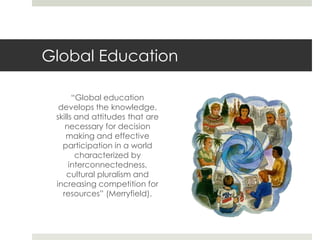
       “Global education
  develops the knowledge,
 skills and attitudes that are
    necessary for decision
    making and effective
   participation in a world
        characterized by
      interconnectedness,
     cultural pluralism and
 increasing competition for
   resources” (Merryfield).
Higher Achieving Countries…


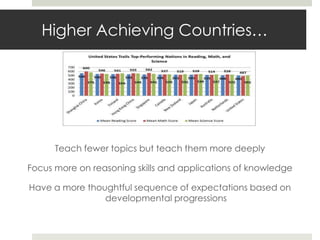
      Teach fewer topics but teach them more deeply

Focus more on reasoning skills and applications of knowledge

Have a more thoughtful sequence of expectations based on
                developmental progressions
In Order to Succeed…

 Americans need the ability
  to find, analyze and use
  information to solve real
  problems

 Americans need to write
  well and speak clearly and
  persuasively

 Americans need to defend
  ideas

 Americans need to design
  and manage projects
Skills Needed

   Active participation and
    practicing

   Critical thinking

   Collaborative exploration

   Searching and processing
    information

   Acquisition of new knowledge

   Problem solving

   Communication

   Collaboration
Change in Curriculum
    choose curriculum that is relevant to modern society


Need to know more                  Need to…
about…
                                      go beyond the current focus on the
 science and technology               basics and develop deeper knowledge
                                       in math, science and technology;
 different cultures
                                      redesign highs schools and create
 foreign languages                    graduation requirements to motivate
                                       higher achievement and promote
                                       important international knowledge and
 world geography                      key skills

 current events                      move from a subject based curriculum
                                       to a broad knowledge base
 international trade and global
  economy                             Create an elementary school immersion
                                       program
 history
                                      Emphasize independent research
                                       courses to give students the tools to
                                       address global issues
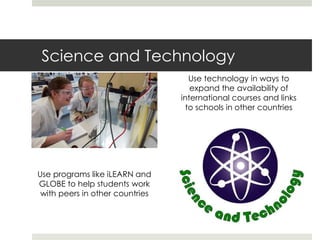
Science and Technology
                                    Use technology in ways to
                                    expand the availability of
                                 international courses and links
                                   to schools in other countries


Use programs like iLEARN and
GLOBE to help students work
 with peers in other countries
Knowledge about other Cultures

How                                               Why
   Use student faculty exchangeprograms the       To be able market products
                                                    around the world
   Add international dimension to all subjects

   Encourage students to reach out to peers in    To be able to work effectively
    other countries                                 with foreign employees
   Expand teacher training in world
    history, cultures, economics, world            To help students understand and
    geography and global challenges                 respect other countries
   Develop language pipelines from primary
    through college                                To promote effective leadership
                                                    abroad
   Introduce international studies requirement
    for graduation
                                                   To enable collaboration with
                                                    people all over the world
Assessments
   Use open ended items that require
    analysis, application of knowledge
    and how to write extensively

   Emphasize project-based, inquiry
    oriented learning

   Influence day to day teaching and
    learning

   Focus on the development of higher
    order skills

   Focus on the use of knowledge to
    solve problems

   Guide and encourage students own
    reflection and self assessment

    Use open ended authentic tasks so
    students can demonstrate content
    knowledge and analytic skills
Assignments

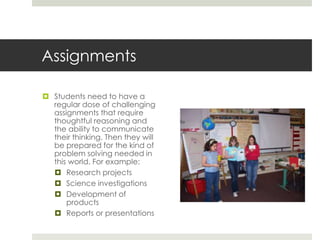
 Students need to have a
  regular dose of challenging
  assignments that require
  thoughtful reasoning and
  the ability to communicate
  their thinking. Then they will
  be prepared for the kind of
  problem solving needed in
  this world. For example:
   Research projects
   Science investigations
   Development of
      products
   Reports or presentations
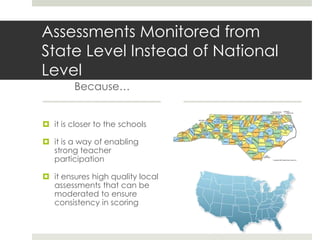
Assessments Monitored from
State Level Instead of National
Level
        Because…


 it is closer to the schools

 it is a way of enabling
  strong teacher
  participation

 it ensures high quality local
  assessments that can be
  moderated to ensure
  consistency in scoring
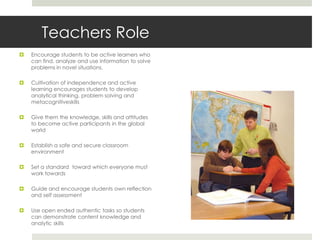
Teachers Role
   Encourage students to be active learners who
    can find, analyze and use information to solve
    problems in novel situations.

   Cultivation of independence and active
    learning encourages students to develop
    analytical thinking, problem solving and
    metacognitiveskills

   Give them the knowledge, skills and attitudes
    to become active participants in the global
    world

   Establish a safe and secure classroom
    environment

   Set a standard toward which everyone must
    work towards

   Guide and encourage students own reflection
    and self assessment

   Use open ended authentic tasks so students
    can demonstrate content knowledge and
    analytic skills
Models of Global Education

Hanvey                                   Merryfield
   Perspective consciousness:              Human beliefs and values
    awareness of and appreciation for
    other viewpoints of the world           Global systems

   State of planet                         Global issues and problems
    awareness, emphasizing global
    issues and events                       Global history

   Cross cultural awareness;               Cross cultural understanding and interaction
    understanding of world cultures
                                            Awareness of human choices
   Systemic awareness; deals with the
    nature of global systems                Development of analytical and evaluative
                                             skills

   Options for participation, like
                                            Strategies for participation and involvement
    model UN, etc
Bibliography

 Brown, Susan, and Marcella Kysilka. What Every Teacher
  Should Know About Multicultural and Global Education. 1-
  17. Web.

 Darling-Hammond, Linda, and Laura McCloskey. "What
  Would it Mean to be Internationally Competitive?."
  Assessment for Learning Around the World. 90.04 (2008): 263-
  272. Print.

 Mazurek, Kas, and Margret Winzer. Schooling Around the
  World. Boston: Pearson Education, 2006. 72-77. Print.

 Stewart, Vivien. "Becoming Citizens of the World." Prepared
  Graduate. 64.7 (2007): 8-14. Print.
Pictures

 2009PISAGraph.jpg              exam.JPG

 Science-students-001.jpg       Picture clipping.pictClipping

 secondary-school-career.jpg    student presentation.jpg

 GlobalEducationDelaney.png     north-carolina-county-map.gif

 success.jpg

 collaboration.jpg

 science and tech logo.jpg

 people.jpg

Passport #1

  • 1.
    Global Competitiveness inthe 21st Century Rachel Hall EDU 274 February 10, 2012
  • 2.
    Global Education “Global education develops the knowledge, skills and attitudes that are necessary for decision making and effective participation in a world characterized by interconnectedness, cultural pluralism and increasing competition for resources” (Merryfield).
  • 3.
    Higher Achieving Countries… Teach fewer topics but teach them more deeply Focus more on reasoning skills and applications of knowledge Have a more thoughtful sequence of expectations based on developmental progressions
  • 4.
    In Order toSucceed…  Americans need the ability to find, analyze and use information to solve real problems  Americans need to write well and speak clearly and persuasively  Americans need to defend ideas  Americans need to design and manage projects
  • 5.
    Skills Needed  Active participation and practicing  Critical thinking  Collaborative exploration  Searching and processing information  Acquisition of new knowledge  Problem solving  Communication  Collaboration
  • 6.
    Change in Curriculum choose curriculum that is relevant to modern society Need to know more Need to… about…  go beyond the current focus on the  science and technology basics and develop deeper knowledge in math, science and technology;  different cultures  redesign highs schools and create  foreign languages graduation requirements to motivate higher achievement and promote important international knowledge and  world geography key skills  current events  move from a subject based curriculum to a broad knowledge base  international trade and global economy  Create an elementary school immersion program  history  Emphasize independent research courses to give students the tools to address global issues
  • 7.
    Science and Technology Use technology in ways to expand the availability of international courses and links to schools in other countries Use programs like iLEARN and GLOBE to help students work with peers in other countries
  • 8.
    Knowledge about otherCultures How Why  Use student faculty exchangeprograms the  To be able market products around the world  Add international dimension to all subjects  Encourage students to reach out to peers in  To be able to work effectively other countries with foreign employees  Expand teacher training in world history, cultures, economics, world  To help students understand and geography and global challenges respect other countries  Develop language pipelines from primary through college  To promote effective leadership abroad  Introduce international studies requirement for graduation  To enable collaboration with people all over the world
  • 9.
    Assessments  Use open ended items that require analysis, application of knowledge and how to write extensively  Emphasize project-based, inquiry oriented learning  Influence day to day teaching and learning  Focus on the development of higher order skills  Focus on the use of knowledge to solve problems  Guide and encourage students own reflection and self assessment  Use open ended authentic tasks so students can demonstrate content knowledge and analytic skills
  • 10.
    Assignments  Students needto have a regular dose of challenging assignments that require thoughtful reasoning and the ability to communicate their thinking. Then they will be prepared for the kind of problem solving needed in this world. For example:  Research projects  Science investigations  Development of products  Reports or presentations
  • 11.
    Assessments Monitored from StateLevel Instead of National Level Because…  it is closer to the schools  it is a way of enabling strong teacher participation  it ensures high quality local assessments that can be moderated to ensure consistency in scoring
  • 12.
    Teachers Role  Encourage students to be active learners who can find, analyze and use information to solve problems in novel situations.  Cultivation of independence and active learning encourages students to develop analytical thinking, problem solving and metacognitiveskills  Give them the knowledge, skills and attitudes to become active participants in the global world  Establish a safe and secure classroom environment  Set a standard toward which everyone must work towards  Guide and encourage students own reflection and self assessment  Use open ended authentic tasks so students can demonstrate content knowledge and analytic skills
  • 13.
    Models of GlobalEducation Hanvey Merryfield  Perspective consciousness:  Human beliefs and values awareness of and appreciation for other viewpoints of the world  Global systems  State of planet  Global issues and problems awareness, emphasizing global issues and events  Global history  Cross cultural awareness;  Cross cultural understanding and interaction understanding of world cultures  Awareness of human choices  Systemic awareness; deals with the nature of global systems  Development of analytical and evaluative skills  Options for participation, like  Strategies for participation and involvement model UN, etc
  • 14.
    Bibliography  Brown, Susan,and Marcella Kysilka. What Every Teacher Should Know About Multicultural and Global Education. 1- 17. Web.  Darling-Hammond, Linda, and Laura McCloskey. "What Would it Mean to be Internationally Competitive?." Assessment for Learning Around the World. 90.04 (2008): 263- 272. Print.  Mazurek, Kas, and Margret Winzer. Schooling Around the World. Boston: Pearson Education, 2006. 72-77. Print.  Stewart, Vivien. "Becoming Citizens of the World." Prepared Graduate. 64.7 (2007): 8-14. Print.
  • 15.
    Pictures  2009PISAGraph.jpg  exam.JPG  Science-students-001.jpg  Picture clipping.pictClipping  secondary-school-career.jpg  student presentation.jpg  GlobalEducationDelaney.png  north-carolina-county-map.gif  success.jpg  collaboration.jpg  science and tech logo.jpg  people.jpg