Kurdistan Board GEH/GIT Surgery J Club 2022
Supervised by Professor Dr. Mohamed Alshekhani.
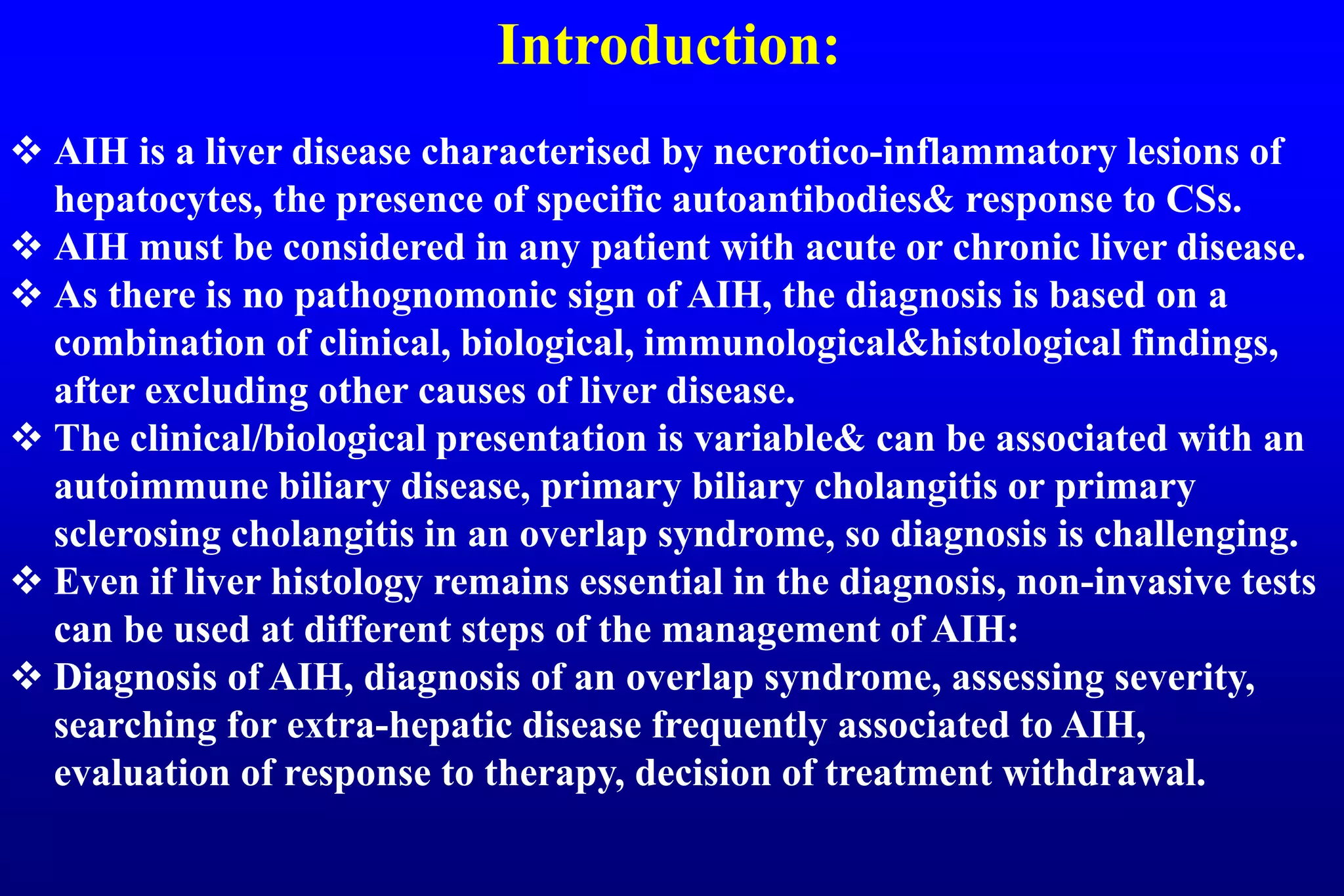
Introduction:
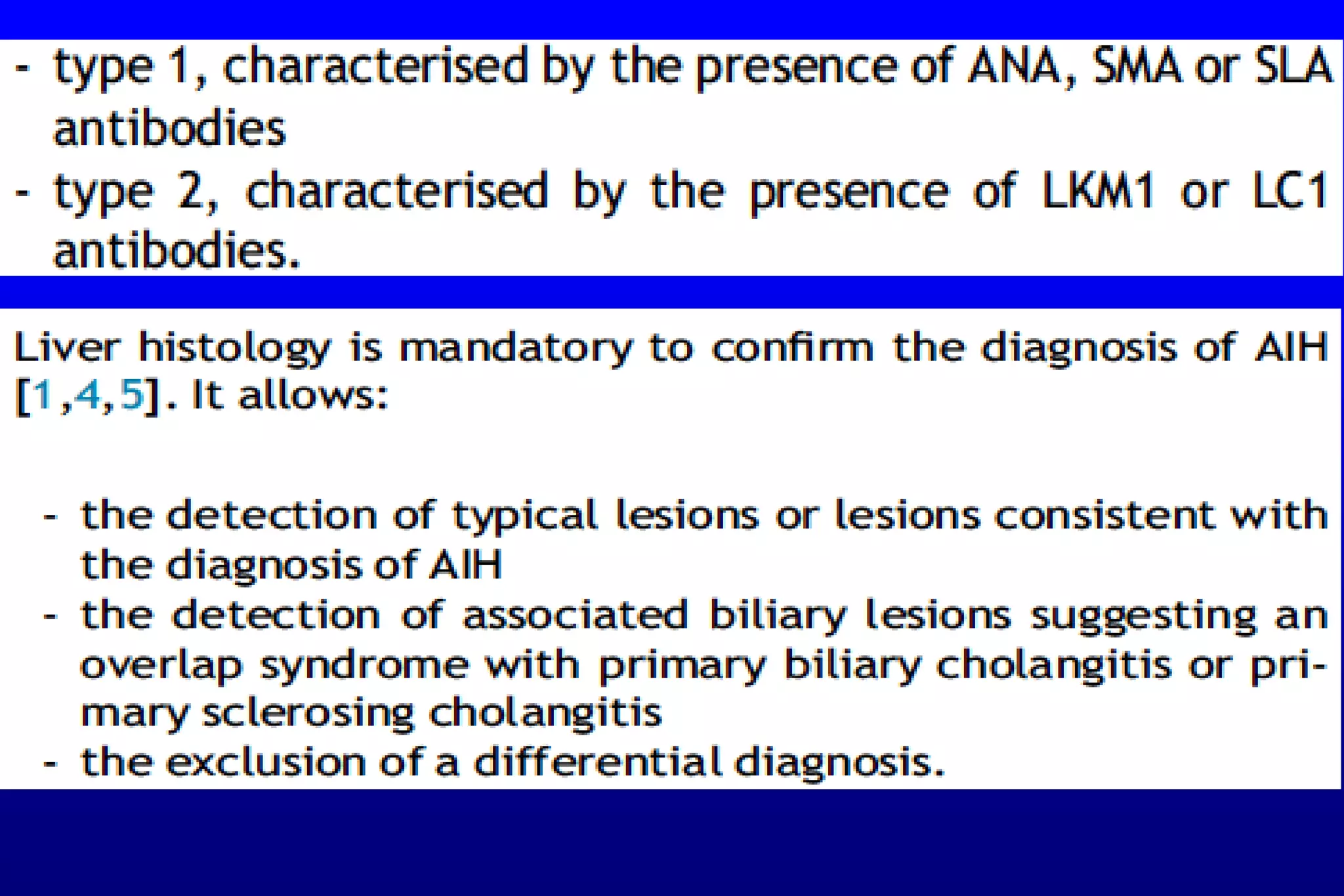
 AIH is a liver disease characterised by necrotico-inflammatory lesions of
hepatocytes, the presence of specific autoantibodies& response to CSs.
 AIH must be considered in any patient with acute or chronic liver disease.
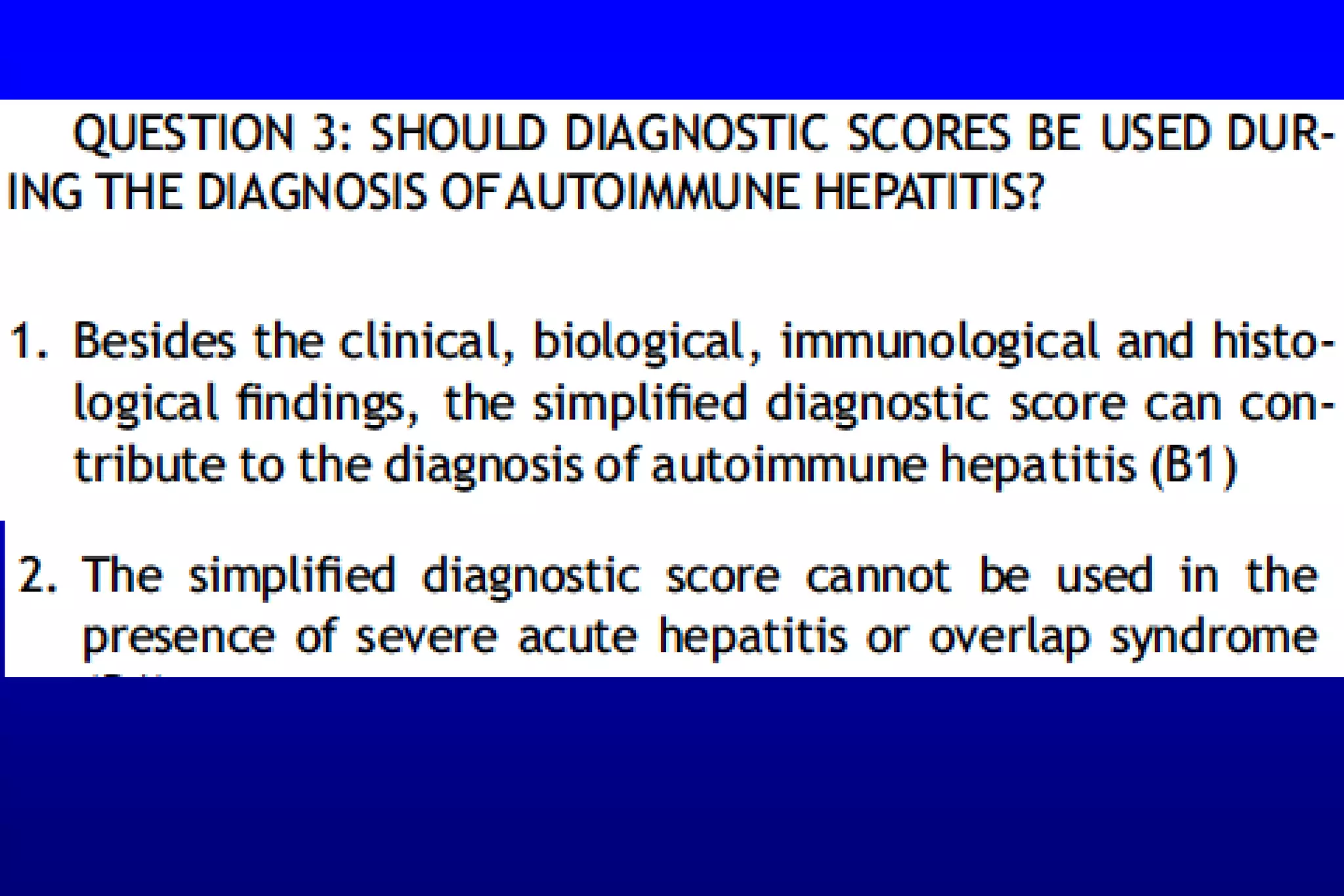
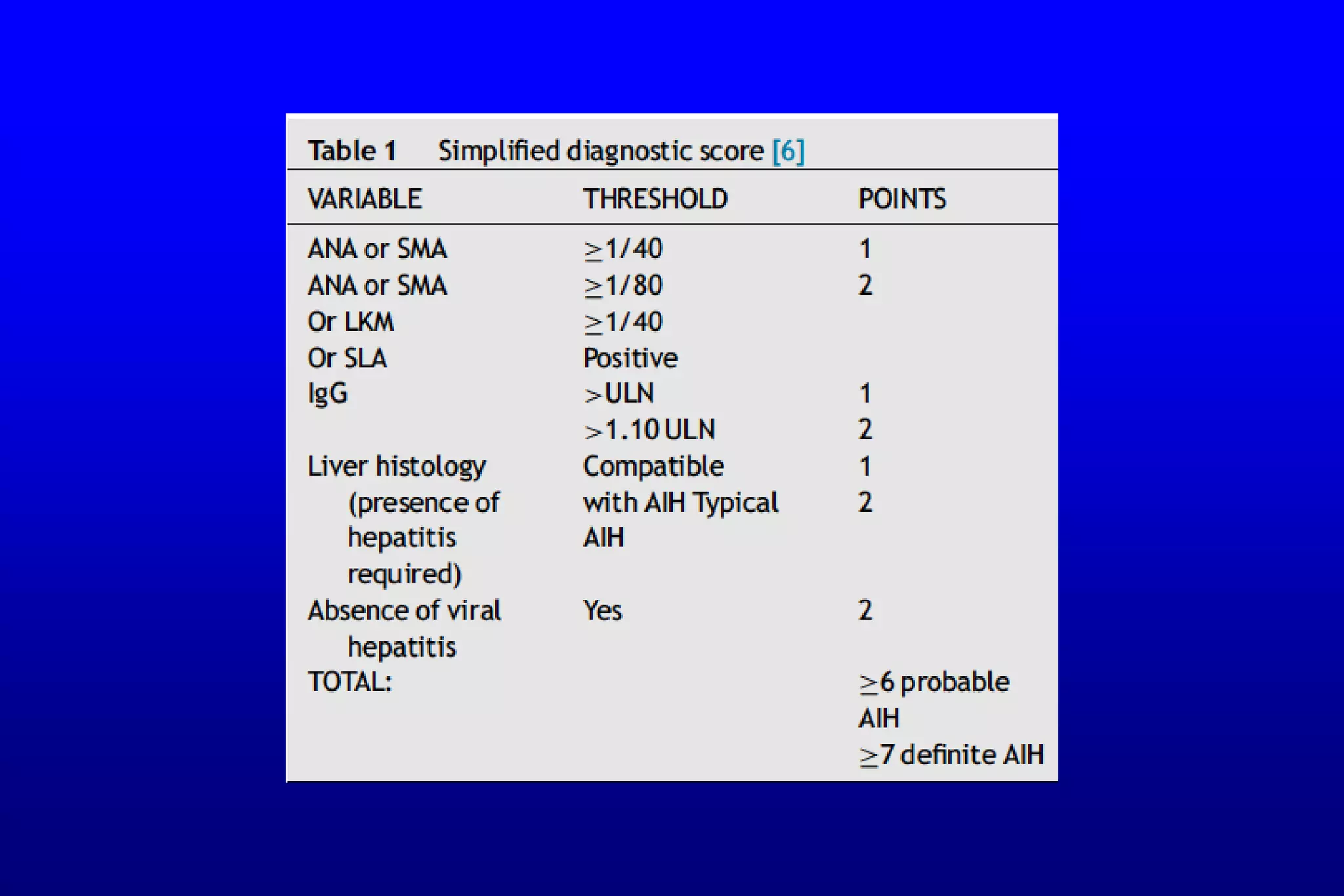
 As there is no pathognomonic sign of AIH, the diagnosis is based on a
combination of clinical, biological, immunological&histological findings,
after excluding other causes of liver disease.
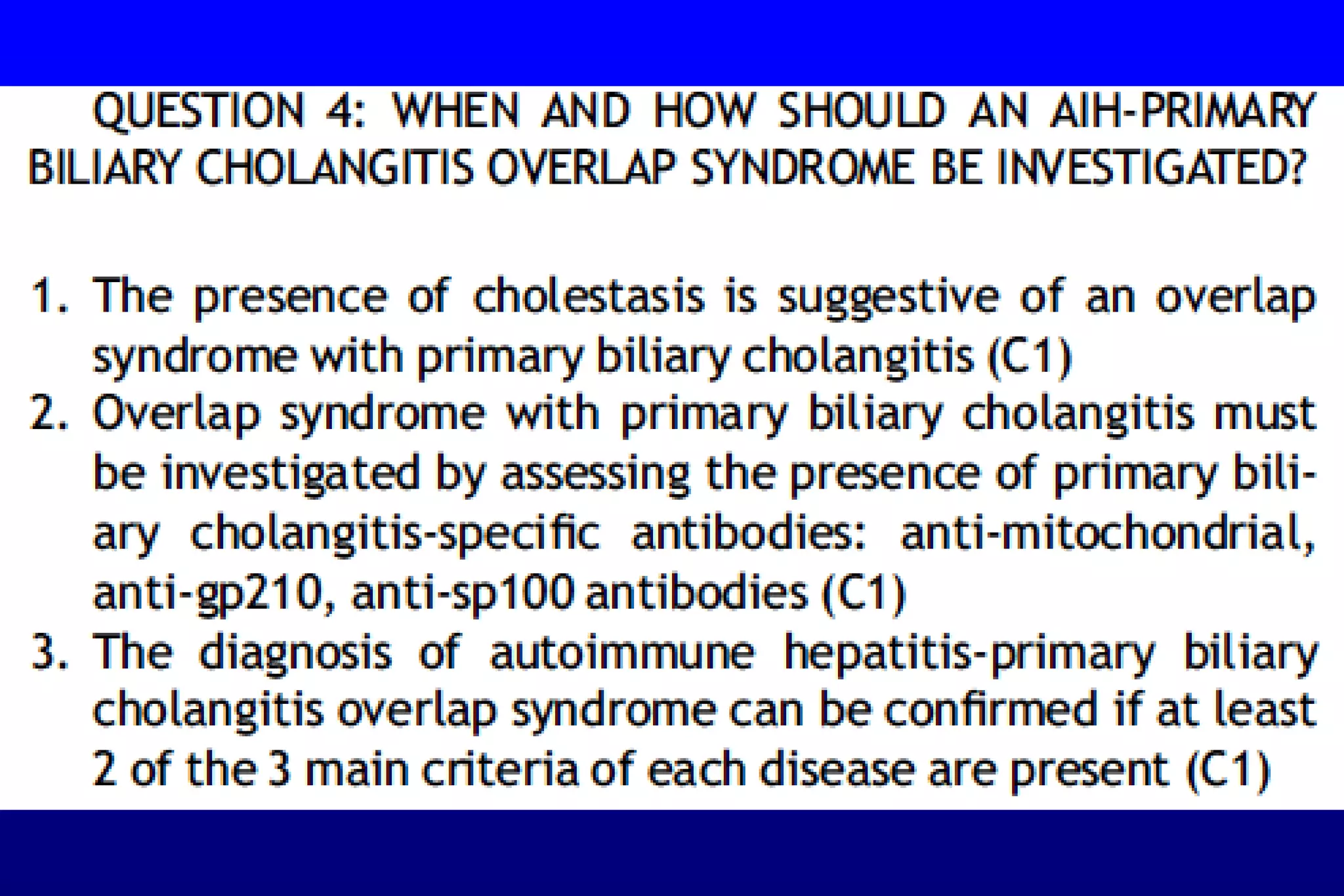
 The clinical/biological presentation is variable& can be associated with an
autoimmune biliary disease, primary biliary cholangitis or primary
sclerosing cholangitis in an overlap syndrome, so diagnosis is challenging.
 Even if liver histology remains essential in the diagnosis, non-invasive tests
can be used at different steps of the management of AIH:
 Diagnosis of AIH, diagnosis of an overlap syndrome, assessing severity,
searching for extra-hepatic disease frequently associated to AIH,
evaluation of response to therapy, decision of treatment withdrawal.
Git j club aih guidelines22

Git j club aih guidelines22

  • 1.
    Kurdistan Board GEH/GITSurgery J Club 2022 Supervised by Professor Dr. Mohamed Alshekhani.
  • 2.
    Introduction:  AIH isa liver disease characterised by necrotico-inflammatory lesions of hepatocytes, the presence of specific autoantibodies& response to CSs.  AIH must be considered in any patient with acute or chronic liver disease.  As there is no pathognomonic sign of AIH, the diagnosis is based on a combination of clinical, biological, immunological&histological findings, after excluding other causes of liver disease.  The clinical/biological presentation is variable& can be associated with an autoimmune biliary disease, primary biliary cholangitis or primary sclerosing cholangitis in an overlap syndrome, so diagnosis is challenging.  Even if liver histology remains essential in the diagnosis, non-invasive tests can be used at different steps of the management of AIH:  Diagnosis of AIH, diagnosis of an overlap syndrome, assessing severity, searching for extra-hepatic disease frequently associated to AIH, evaluation of response to therapy, decision of treatment withdrawal.