The ability of a computer to scan, store, and recognize human
gestures as the mode of interaction with machines.
A gesture is a form of non-verbal communication in which
visible bodily actions communicate particular messages, either
in place of speech or together and in parallel with words.
Gestures include movement of the hands, face, or other parts of
the body.
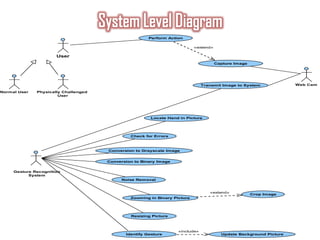
User
Normal User Physically Challenged
User
Perform Action
Gesture Recognition
System
Check for Errors
Conversion to Binary Image
Noise Removal
Resizing Picture
Conversion to Grayscale Image
Identify Gesture
Zooming in Binary Picture
Crop Image
«extend»
Update Background Picture
«include»
Web Cam
Capture Image
Transmit Image to System
«extend»
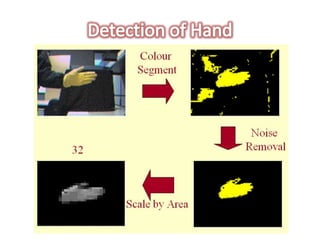
Locate Hand in Picture
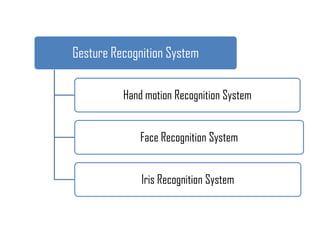
Gesture Recognition System
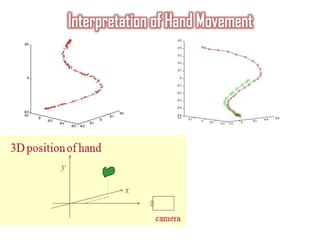
Hand motion Recognition System
Face Recognition System
Iris Recognition System
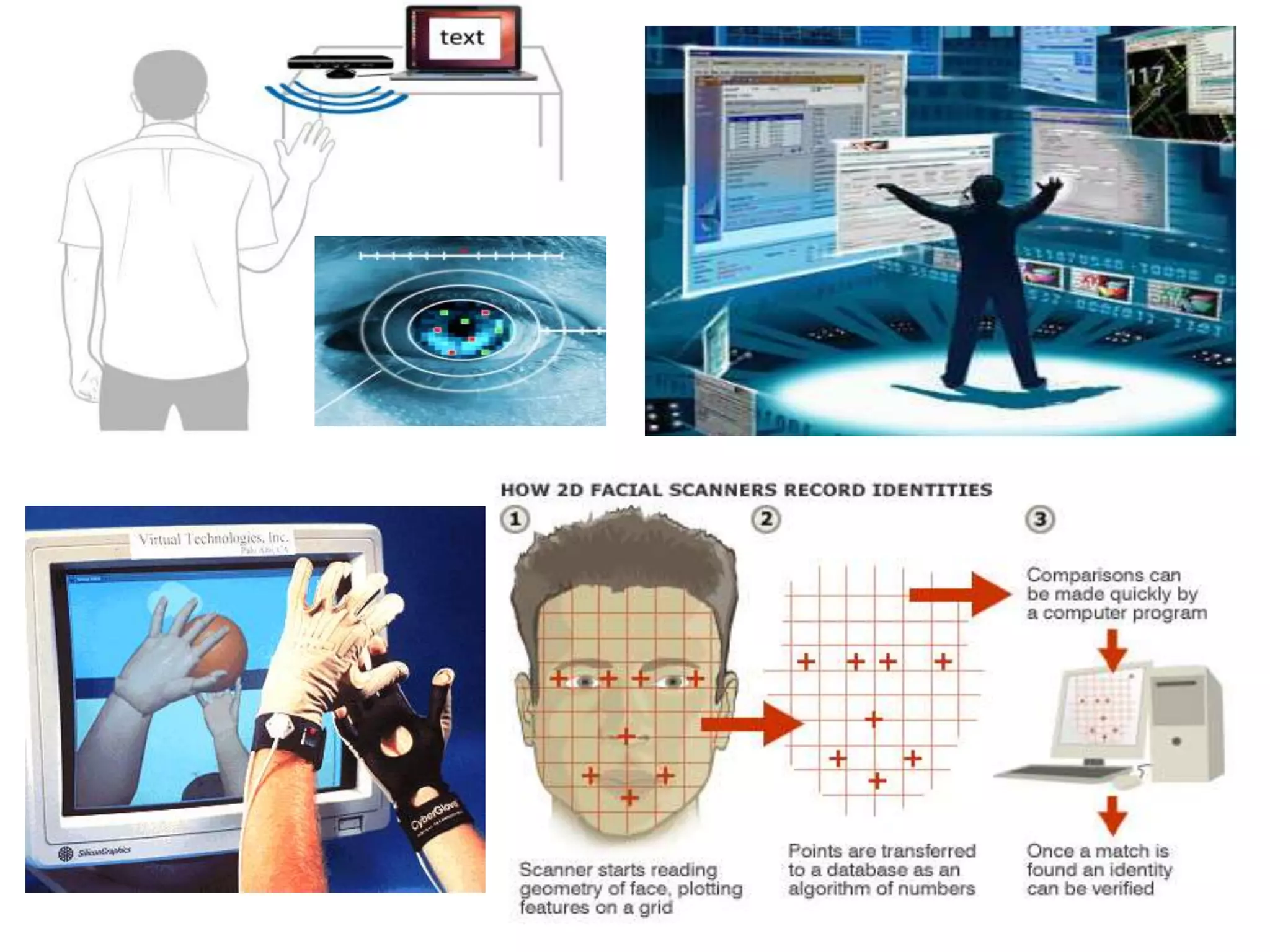
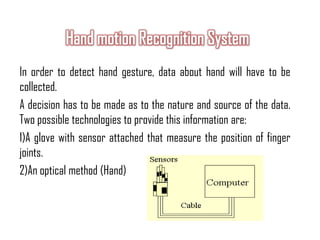
In order to detect hand gesture, data about hand will have to be
collected.
A decision has to be made as to the nature and source of the data.
Two possible technologies to provide this information are:
1)A glove with sensor attached that measure the position of finger
joints.
2)An optical method (Hand)
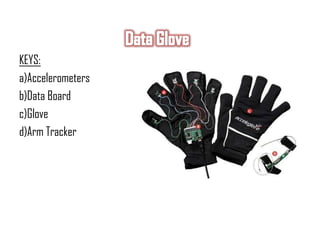
KEYS:
a)Accelerometers
b)Data Board
c)Glove
d)Arm Tracker
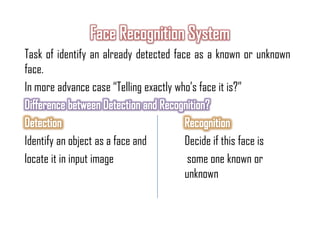
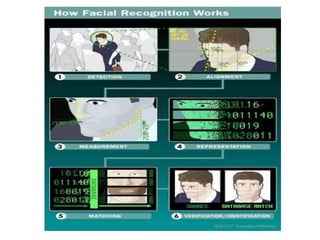
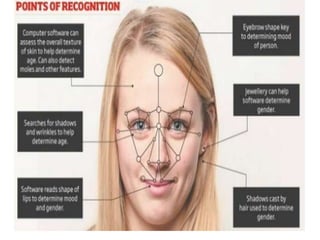
Task of identify an already detected face as a known or unknown
face.
In more advance case “Telling exactly who’s face it is?”
Identify an object as a face and Decide if this face is
locate it in input image some one known or
unknown
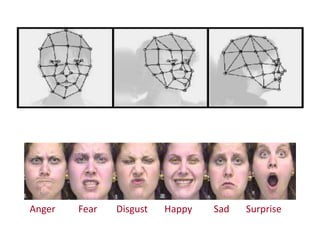
Anger Fear Disgust Happy Sad Surprise
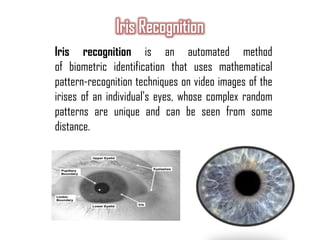
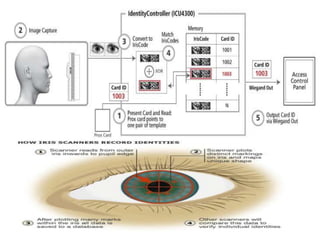
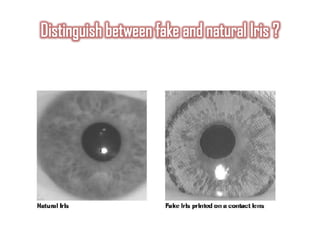
Iris recognition is an automated method
of biometric identification that uses mathematical
pattern-recognition techniques on video images of the
irises of an individual's eyes, whose complex random
patterns are unique and can be seen from some
distance.
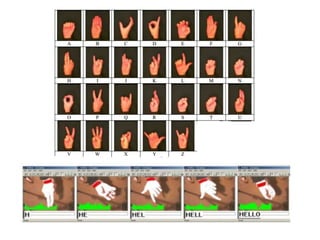
1. Sign language recognition
2. Directional indication through pointing.
3. Control through facial gestures
4. Immersive game technology
5. Affective computing.
6. Remote control.
7. Alternative computer interfaces
• The cost of implementation
• Such systems are difficult to develop as each
gesture is assigned a specific control
command, this system is not platform
independent since certain control commands
vary as the operating system varies.
• Control of consumer electronics
• Computer games
• Security System
• Television
• In ATM’s
Gesture recognition1

Gesture recognition1

  • 2.
    The ability ofa computer to scan, store, and recognize human gestures as the mode of interaction with machines. A gesture is a form of non-verbal communication in which visible bodily actions communicate particular messages, either in place of speech or together and in parallel with words. Gestures include movement of the hands, face, or other parts of the body.
  • 4.
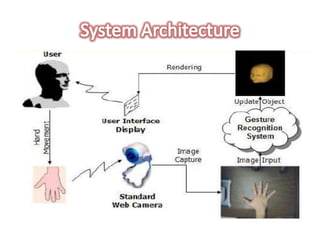
    User Normal User PhysicallyChallenged User Perform Action Gesture Recognition System Check for Errors Conversion to Binary Image Noise Removal Resizing Picture Conversion to Grayscale Image Identify Gesture Zooming in Binary Picture Crop Image «extend» Update Background Picture «include» Web Cam Capture Image Transmit Image to System «extend» Locate Hand in Picture
  • 5.
    Gesture Recognition System Handmotion Recognition System Face Recognition System Iris Recognition System
  • 6.
    In order todetect hand gesture, data about hand will have to be collected. A decision has to be made as to the nature and source of the data. Two possible technologies to provide this information are: 1)A glove with sensor attached that measure the position of finger joints. 2)An optical method (Hand)
  • 7.
  • 13.
    Task of identifyan already detected face as a known or unknown face. In more advance case “Telling exactly who’s face it is?” Identify an object as a face and Decide if this face is locate it in input image some one known or unknown
  • 16.
    Anger Fear DisgustHappy Sad Surprise
  • 17.
    Iris recognition isan automated method of biometric identification that uses mathematical pattern-recognition techniques on video images of the irises of an individual's eyes, whose complex random patterns are unique and can be seen from some distance.
  • 21.
    1. Sign languagerecognition 2. Directional indication through pointing. 3. Control through facial gestures 4. Immersive game technology 5. Affective computing. 6. Remote control. 7. Alternative computer interfaces
  • 22.
    • The costof implementation • Such systems are difficult to develop as each gesture is assigned a specific control command, this system is not platform independent since certain control commands vary as the operating system varies.
  • 23.
    • Control ofconsumer electronics • Computer games • Security System • Television • In ATM’s