Sept 2012
Germplasm Maintenance
Maintenance of germplasm
includes
Monitoring seed viability
™™ Seed viability of conserved germplasm
is tested at regular intervals, five years
for medium-term storage and ten years
for long-term storage
Monitoring seed quantity
™™ Seed quantity in medium-term store is
recorded every year
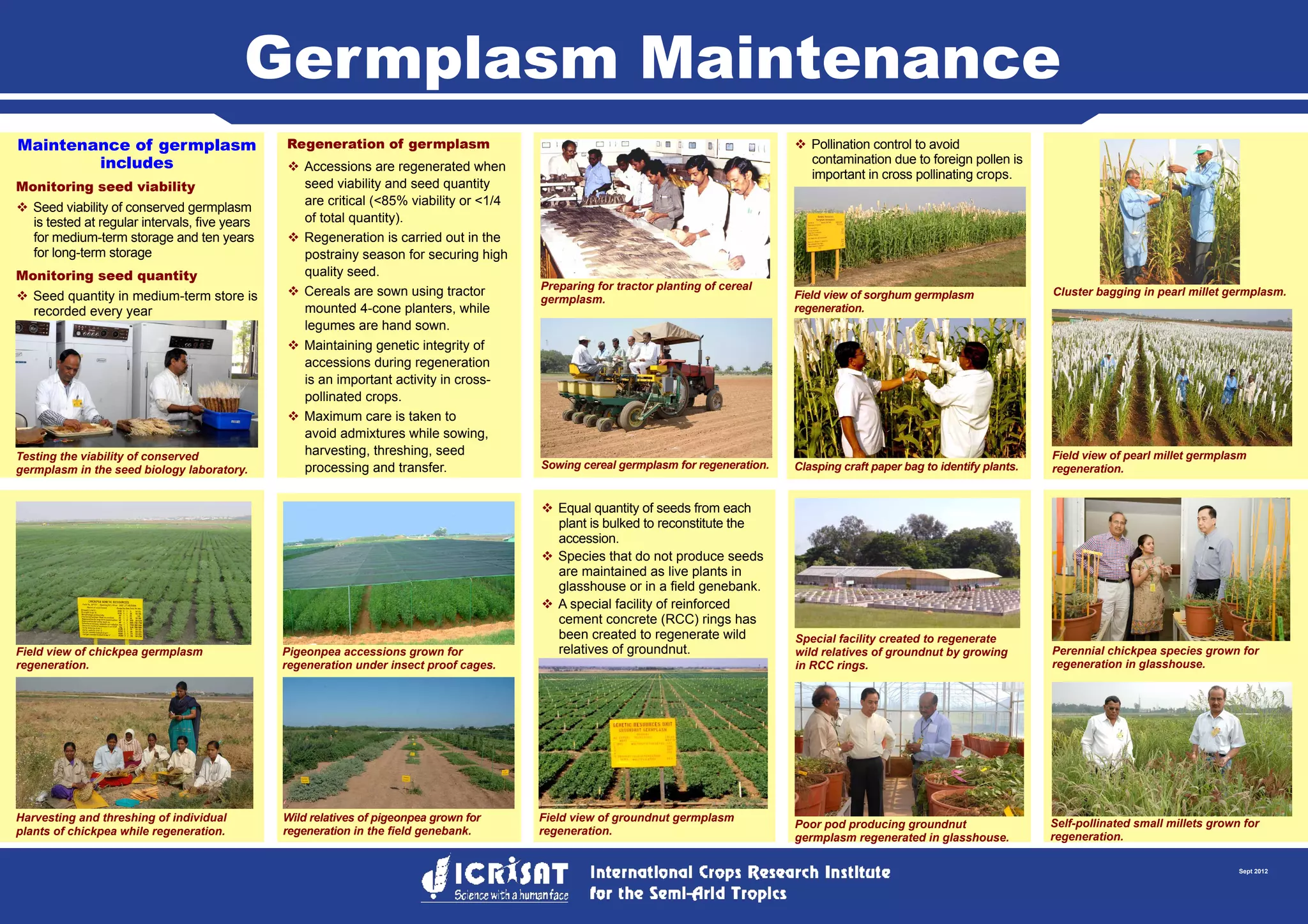
Testing the viability of conserved
germplasm in the seed biology laboratory.
Regeneration of germplasm
™™ Accessions are regenerated when
seed viability and seed quantity
are critical (<85% viability or <1/4
of total quantity).
™™ Regeneration is carried out in the
postrainy season for securing high
quality seed.
™™ Cereals are sown using tractor
mounted 4-cone planters, while
legumes are hand sown.
™™ Maintaining genetic integrity of
accessions during regeneration
is an important activity in cross-
pollinated crops.
™™ Maximum care is taken to
avoid admixtures while sowing,
harvesting, threshing, seed
processing and transfer. Sowing cereal germplasm for regeneration.
Preparing for tractor planting of cereal
germplasm. Field view of sorghum germplasm
regeneration.
Clasping craft paper bag to identify plants.
Field view of pearl millet germplasm
regeneration.
Field view of chickpea germplasm
regeneration.
Harvesting and threshing of individual
plants of chickpea while regeneration.
Perennial chickpea species grown for
regeneration in glasshouse.
Pigeonpea accessions grown for
regeneration under insect proof cages.
Wild relatives of pigeonpea grown for
regeneration in the field genebank.
Field view of groundnut germplasm
regeneration.
Poor pod producing groundnut
germplasm regenerated in glasshouse.
Self-pollinated small millets grown for
regeneration.
Special facility created to regenerate
wild relatives of groundnut by growing
in RCC rings.
™™ Pollination control to avoid
contamination due to foreign pollen is
important in cross pollinating crops.
™™ Equal quantity of seeds from each
plant is bulked to reconstitute the
accession.
™™ Species that do not produce seeds
are maintained as live plants in
glasshouse or in a field genebank.
™™ A special facility of reinforced
cement concrete (RCC) rings has
been created to regenerate wild
relatives of groundnut.
Cluster bagging in pearl millet germplasm.

Germplasm maintenance

  • 1.
    Sept 2012 Germplasm Maintenance Maintenanceof germplasm includes Monitoring seed viability ™™ Seed viability of conserved germplasm is tested at regular intervals, five years for medium-term storage and ten years for long-term storage Monitoring seed quantity ™™ Seed quantity in medium-term store is recorded every year Testing the viability of conserved germplasm in the seed biology laboratory. Regeneration of germplasm ™™ Accessions are regenerated when seed viability and seed quantity are critical (<85% viability or <1/4 of total quantity). ™™ Regeneration is carried out in the postrainy season for securing high quality seed. ™™ Cereals are sown using tractor mounted 4-cone planters, while legumes are hand sown. ™™ Maintaining genetic integrity of accessions during regeneration is an important activity in cross- pollinated crops. ™™ Maximum care is taken to avoid admixtures while sowing, harvesting, threshing, seed processing and transfer. Sowing cereal germplasm for regeneration. Preparing for tractor planting of cereal germplasm. Field view of sorghum germplasm regeneration. Clasping craft paper bag to identify plants. Field view of pearl millet germplasm regeneration. Field view of chickpea germplasm regeneration. Harvesting and threshing of individual plants of chickpea while regeneration. Perennial chickpea species grown for regeneration in glasshouse. Pigeonpea accessions grown for regeneration under insect proof cages. Wild relatives of pigeonpea grown for regeneration in the field genebank. Field view of groundnut germplasm regeneration. Poor pod producing groundnut germplasm regenerated in glasshouse. Self-pollinated small millets grown for regeneration. Special facility created to regenerate wild relatives of groundnut by growing in RCC rings. ™™ Pollination control to avoid contamination due to foreign pollen is important in cross pollinating crops. ™™ Equal quantity of seeds from each plant is bulked to reconstitute the accession. ™™ Species that do not produce seeds are maintained as live plants in glasshouse or in a field genebank. ™™ A special facility of reinforced cement concrete (RCC) rings has been created to regenerate wild relatives of groundnut. Cluster bagging in pearl millet germplasm.