
Seed Saving and Testing 
By Abram Bicksler, Ph.D. 
International Sustainable Development Studies Institute 
ECHO Asia Impact Center
Why Save Seeds? 
Cost Effective 
Promotes and Retains Biodiversity 
to give away 
to empower others 
Because it can be fun 
No other option
Some Simple Seed SavingTechniques 
Open pollinated-‘heirloom,’ ‘traditional,’ ‘indigenous’ 
plants that have been domesticated over time and produce ‘true to type’ seeds 
traits relatively stable; can be saved 
hybrids 
created from the cross of 2 parent plants and backcrossed multiple times to make the cross stable 
do not produce ‘true to type’ seeds 
loose ‘hybrid vigor’ 
saving seeds is not recommended and often illegal
Some Simple Seed SavingTechniques 
Things to think about: 
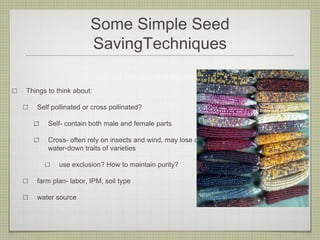
Self pollinated or cross pollinated? 
Self-contain both male and female parts 
Cross-often rely on insects and wind, may lose or water-down traits of varieties 
use exclusion? How to maintain purity? 
farm plan-labor, IPM, soil type 
water source
Some simple seed saving techniques: farmer selection 
can be as simple as farmers taking notice of valuable traits and tagging plants to harvest from later 
can be by cross-pollinating plants with valuable traits 
can be bagging fertilized flowers to prevent cross pollination 
thousands of varieties of plants have come about this way
Some simple seed saving techniques: harvesting 
often a compromise between moisture and seed loss 
harvest when fully mature and moisture content is low 
harvest before seeds potentially shatter (fall off plant) or rot 
harvest before bad weather, pestilence, etc. 
can hand pick or cut 
in most cases, want to remove seeds from pods (beans), fleshy ovaries (vegetables), inflorescences (grains) before cleaning/processing
Seed Storage 
Seed storage behavior 
orthodox vs recalcitrant seeds 
Orthodox or “normal” seeds slowly loose viability over time 
cereals 
many kinds of vegetables 
recalcitrant seeds quickly loose viability 
onions, mango, avocado, neem 
remember that seeds are living organisms and can die in storage
Some simple seed saving techniques: cleaning 
many dry seeds from pods or inflorescences can easily be winnowed 
some pulpy fruits (tomatoes, eggplants, squash) need to be fermented for 2-7 days 
promptly remove any damaged or diseased seeds
Some simple seed saving techniques: drying 
the ideal seed moisture content for storage is 3-8% 
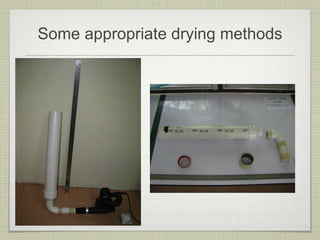
can dry in the sun, or using any method to recirculate, heat, or remove the moisture from air 
be sure the temperature does not exceed 41C (105F) for tree or high-oil seeds and 54C (130F) for most other orthodox seeds
Some appropriate drying methods
Storing Seeds 
The most important thing for the long-term storage of seeds is the amount of humidity (ambient moisture) seeds are exposed to in storage 
temperature used to be thought most important 
you spent great effort cleaning and drying seeds to 3-8% humidity 
don’t let them be exposed to high humidity again! 
we are finding refrigeration not ideal: too humid
Storing seeds 
rule of 100: 
the combination of the temperature (F) plus the relative humidity (%) of the ambient environment where seeds are being stored should not be greater than 100 
how to overcome? 
climate controlled environment 
desiccant 
airtight containers 
vacuum sealing
Some Appropriate storage methods
Some appropriate storage methods
Testing seed viability 
testing viability 
why? 
to determine what % of your stored seeds have survived 
to determine how many seeds you need to plant 
how? 
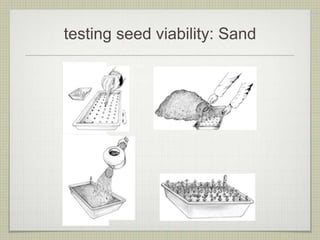
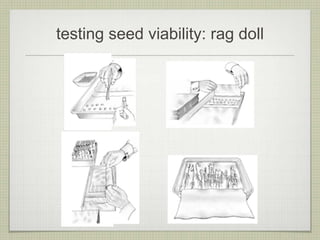
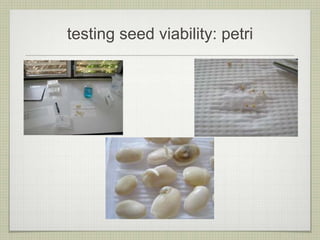
by using a germination test 
petri 
ragdoll
testing seed viability 
aseptic technique 
most important aspect of seed viability testing 
attempts to minimize contamination from fungi, molds, bacteria, etc 
key ways to overcome: 
clean all tools, surfaces, and hands thoroughly with alcohol or bleach 
sterilize seeds before testing
testing seed viability: Sand
testing seed viability: rag doll
testing seed viability: petri
testing seed viability
some useful resources 
the seed saver’s handbook. 2001. m. and J. Fanton 
Seed to seed: saving and growing techniques for vegetable gardeners. 2002. s. Ashworth 
IPGRI Genebank Resources (Biodiversity international). www.biodiversityinternational.org 
farmer’s seed production: new approaches and practices. 1999. C.J.M. Almekinders and N. Louwaars
some useful resources 
“building the bank” 
ECHO Asia Seedbank brief #2: “aseptic technique” 
echo asia notes: “testing seed viability” from upcoming EAN, october 2011. 
ECHO asia notes: “build your own seed germination cabinet for testing seed viability,” january 2011. 
echo technical note: “seed saving tips and technologies,” 2010.

Seed Saving and Testing

  • 1.
    Seed Saving andTesting By Abram Bicksler, Ph.D. International Sustainable Development Studies Institute ECHO Asia Impact Center
  • 2.
    Why Save Seeds? Cost Effective Promotes and Retains Biodiversity to give away to empower others Because it can be fun No other option
  • 3.
    Some Simple SeedSavingTechniques Open pollinated-‘heirloom,’ ‘traditional,’ ‘indigenous’ plants that have been domesticated over time and produce ‘true to type’ seeds traits relatively stable; can be saved hybrids created from the cross of 2 parent plants and backcrossed multiple times to make the cross stable do not produce ‘true to type’ seeds loose ‘hybrid vigor’ saving seeds is not recommended and often illegal
  • 4.
    Some Simple SeedSavingTechniques Things to think about: Self pollinated or cross pollinated? Self-contain both male and female parts Cross-often rely on insects and wind, may lose or water-down traits of varieties use exclusion? How to maintain purity? farm plan-labor, IPM, soil type water source
  • 5.
    Some simple seedsaving techniques: farmer selection can be as simple as farmers taking notice of valuable traits and tagging plants to harvest from later can be by cross-pollinating plants with valuable traits can be bagging fertilized flowers to prevent cross pollination thousands of varieties of plants have come about this way
  • 6.
    Some simple seedsaving techniques: harvesting often a compromise between moisture and seed loss harvest when fully mature and moisture content is low harvest before seeds potentially shatter (fall off plant) or rot harvest before bad weather, pestilence, etc. can hand pick or cut in most cases, want to remove seeds from pods (beans), fleshy ovaries (vegetables), inflorescences (grains) before cleaning/processing
  • 7.
    Seed Storage Seedstorage behavior orthodox vs recalcitrant seeds Orthodox or “normal” seeds slowly loose viability over time cereals many kinds of vegetables recalcitrant seeds quickly loose viability onions, mango, avocado, neem remember that seeds are living organisms and can die in storage
  • 8.
    Some simple seedsaving techniques: cleaning many dry seeds from pods or inflorescences can easily be winnowed some pulpy fruits (tomatoes, eggplants, squash) need to be fermented for 2-7 days promptly remove any damaged or diseased seeds
  • 9.
    Some simple seedsaving techniques: drying the ideal seed moisture content for storage is 3-8% can dry in the sun, or using any method to recirculate, heat, or remove the moisture from air be sure the temperature does not exceed 41C (105F) for tree or high-oil seeds and 54C (130F) for most other orthodox seeds
  • 10.
  • 11.
  • 12.
  • 13.
    Storing Seeds Themost important thing for the long-term storage of seeds is the amount of humidity (ambient moisture) seeds are exposed to in storage temperature used to be thought most important you spent great effort cleaning and drying seeds to 3-8% humidity don’t let them be exposed to high humidity again! we are finding refrigeration not ideal: too humid
  • 14.
    Storing seeds ruleof 100: the combination of the temperature (F) plus the relative humidity (%) of the ambient environment where seeds are being stored should not be greater than 100 how to overcome? climate controlled environment desiccant airtight containers vacuum sealing
  • 15.
  • 16.
  • 17.
  • 18.
    Testing seed viability testing viability why? to determine what % of your stored seeds have survived to determine how many seeds you need to plant how? by using a germination test petri ragdoll
  • 19.
    testing seed viability aseptic technique most important aspect of seed viability testing attempts to minimize contamination from fungi, molds, bacteria, etc key ways to overcome: clean all tools, surfaces, and hands thoroughly with alcohol or bleach sterilize seeds before testing
  • 20.
  • 21.
  • 22.
  • 23.
  • 24.
  • 25.
  • 26.
  • 27.
    some useful resources the seed saver’s handbook. 2001. m. and J. Fanton Seed to seed: saving and growing techniques for vegetable gardeners. 2002. s. Ashworth IPGRI Genebank Resources (Biodiversity international). www.biodiversityinternational.org farmer’s seed production: new approaches and practices. 1999. C.J.M. Almekinders and N. Louwaars
  • 28.
    some useful resources “building the bank” ECHO Asia Seedbank brief #2: “aseptic technique” echo asia notes: “testing seed viability” from upcoming EAN, october 2011. ECHO asia notes: “build your own seed germination cabinet for testing seed viability,” january 2011. echo technical note: “seed saving tips and technologies,” 2010.