Saving Seeds for a
Food-Secure Future
Heidi Kratsch
Area Horticulture Specialist
What is a Seed?
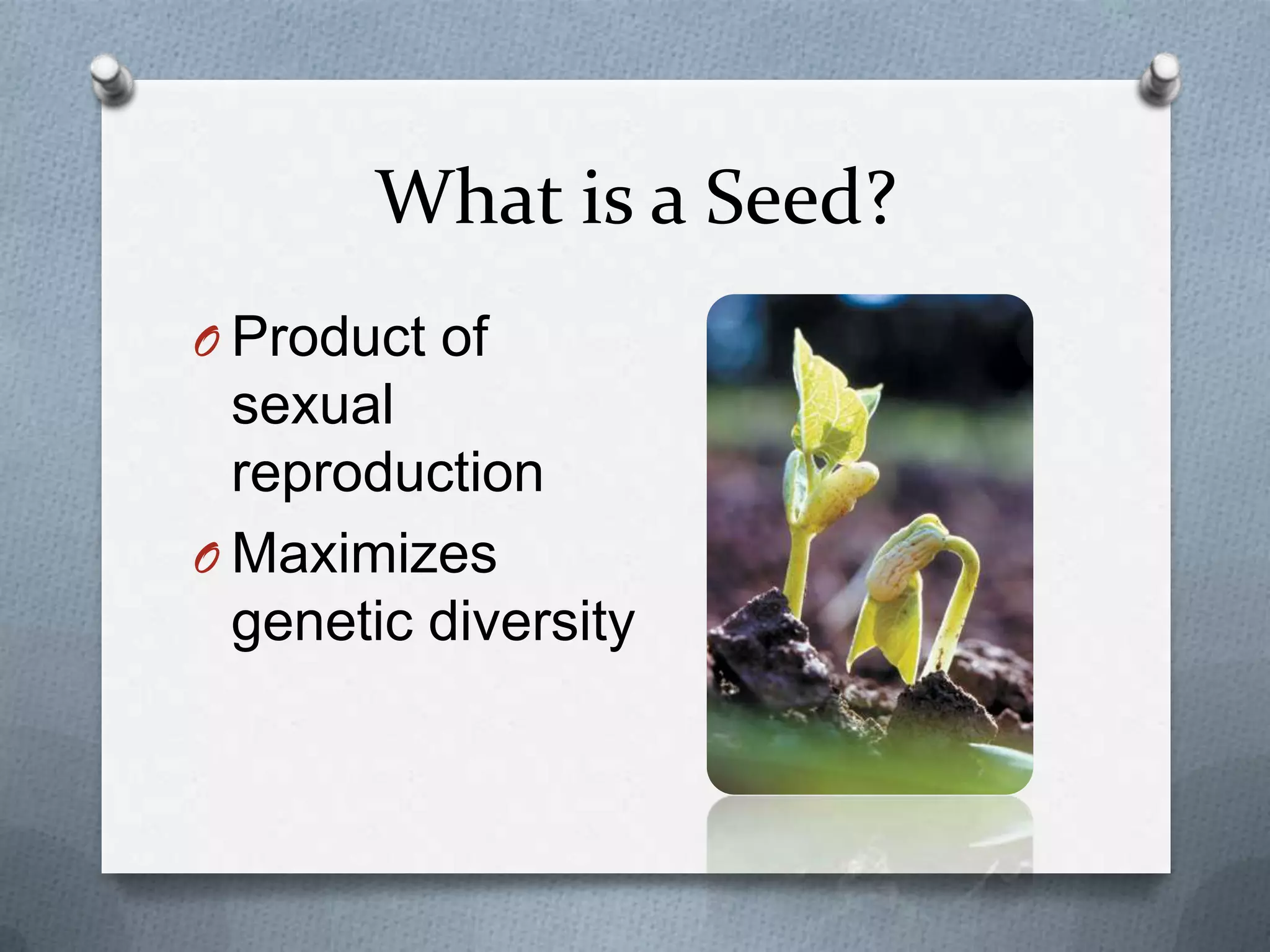
O Product of
  sexual
  reproduction
O Maximizes
  genetic diversity
Genetic diversity is decreasing
 O 95% of human food needs now
   provided by just 4 crops: rice,
   wheat, corn, potatoes.
 O Industrial agriculture focuses on
   only a handful of cultivars.
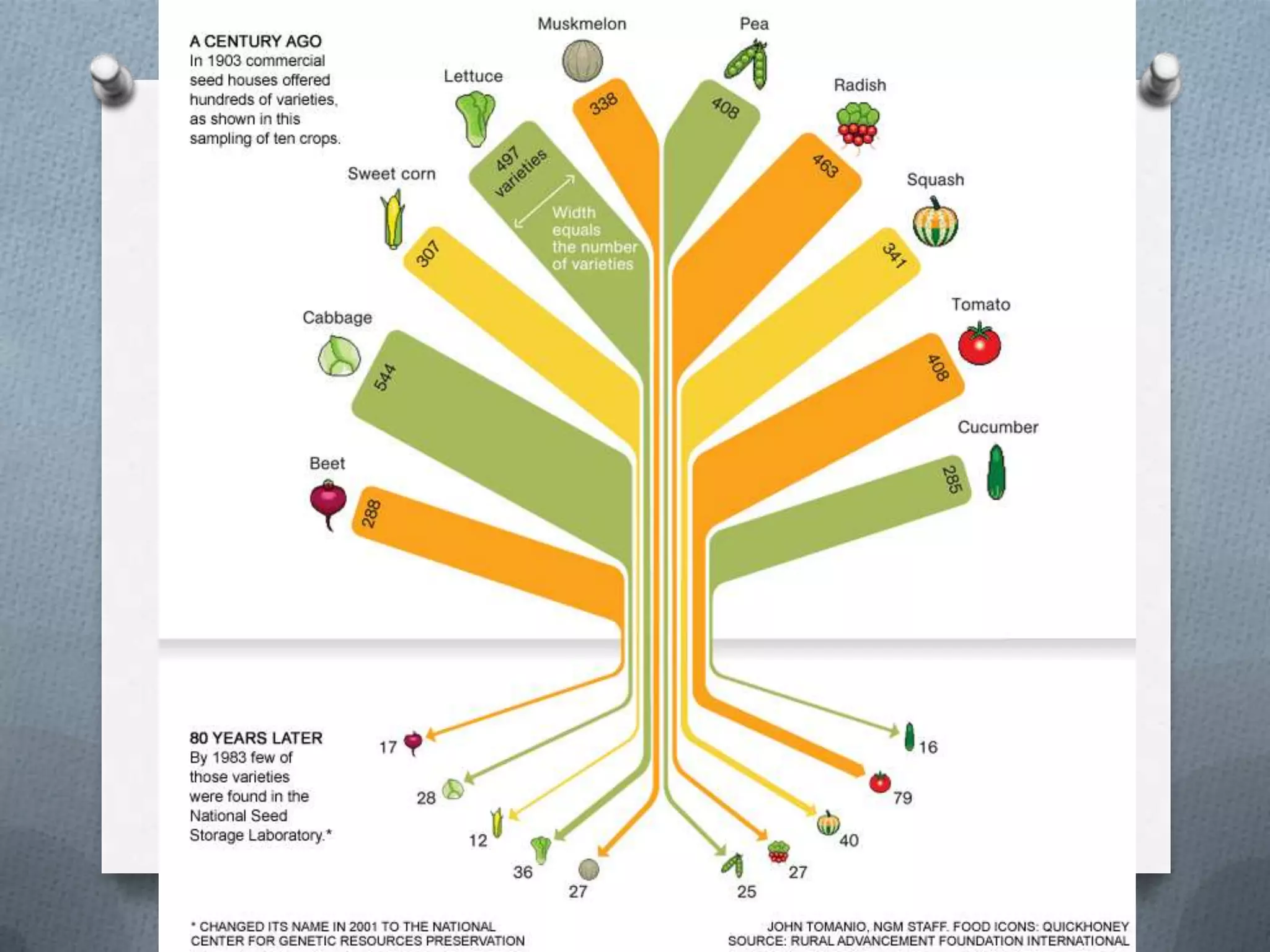
 O 75% of agricultural genetic
   diversity disappeared in the last
   century.
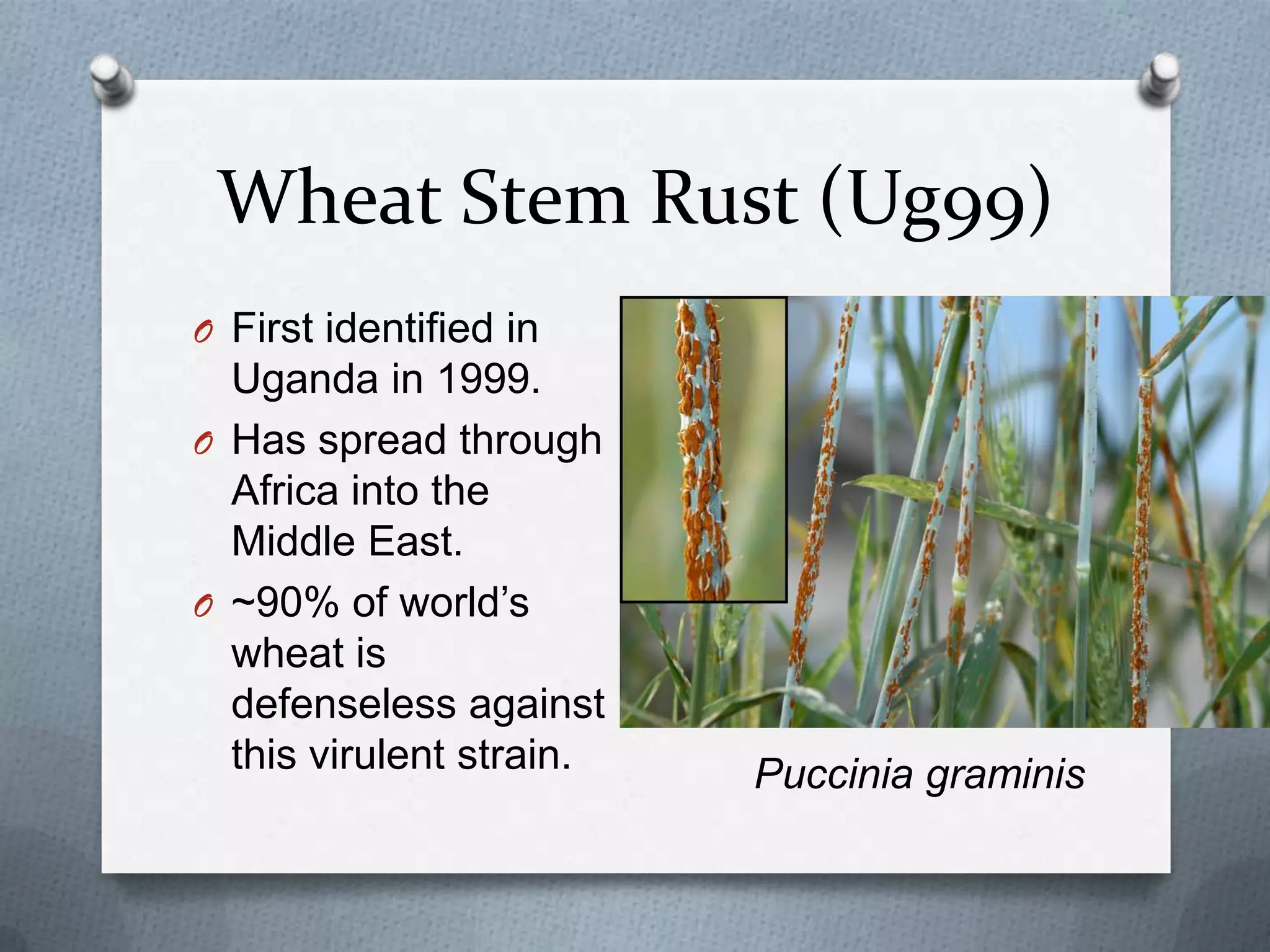
Wheat Stem Rust (Ug99)
O First identified in
  Uganda in 1999.
O Has spread through
  Africa into the
  Middle East.
O ~90% of world‟s
  wheat is
  defenseless against
  this virulent strain.   Puccinia graminis
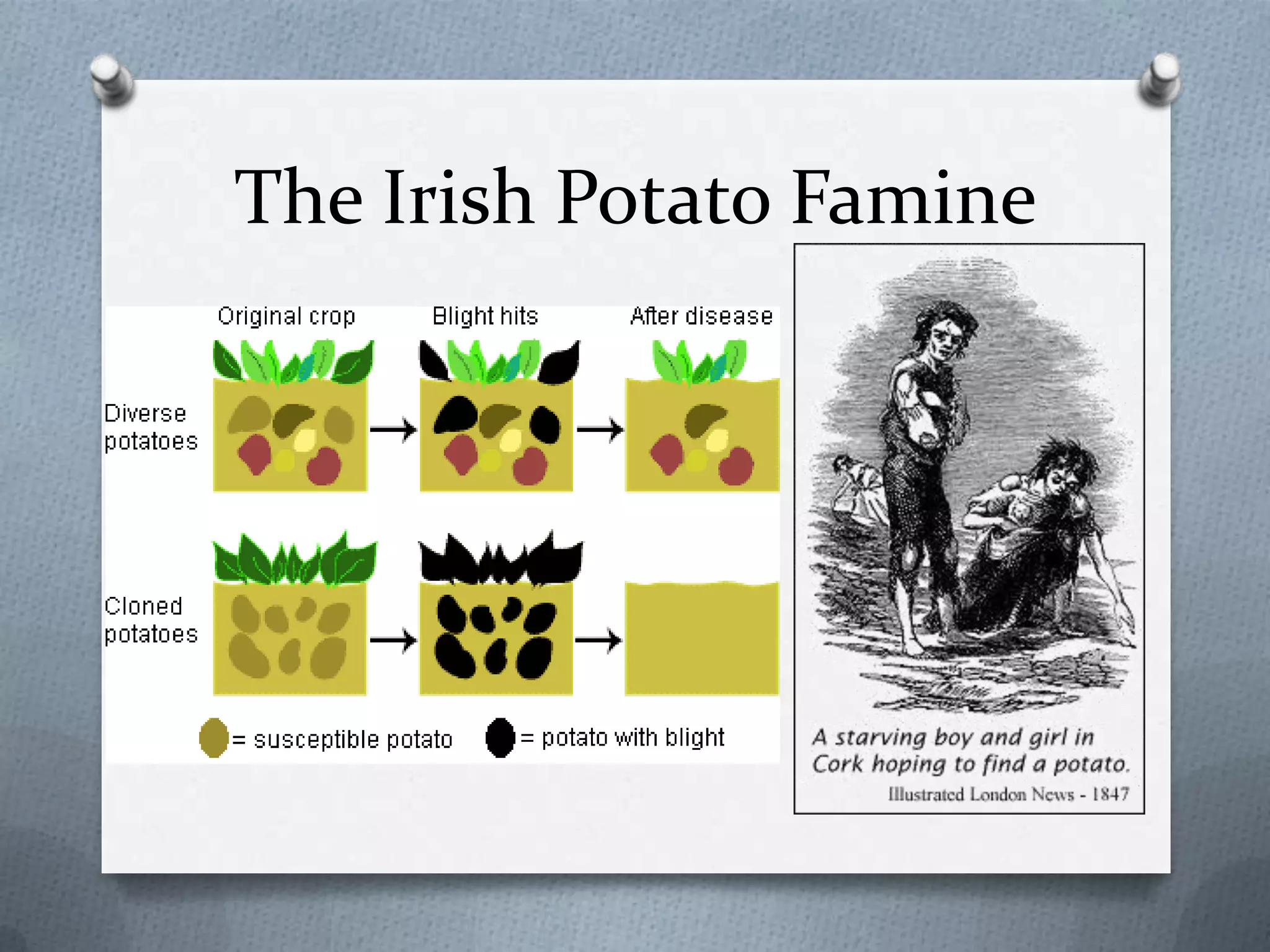
The Irish Potato Famine
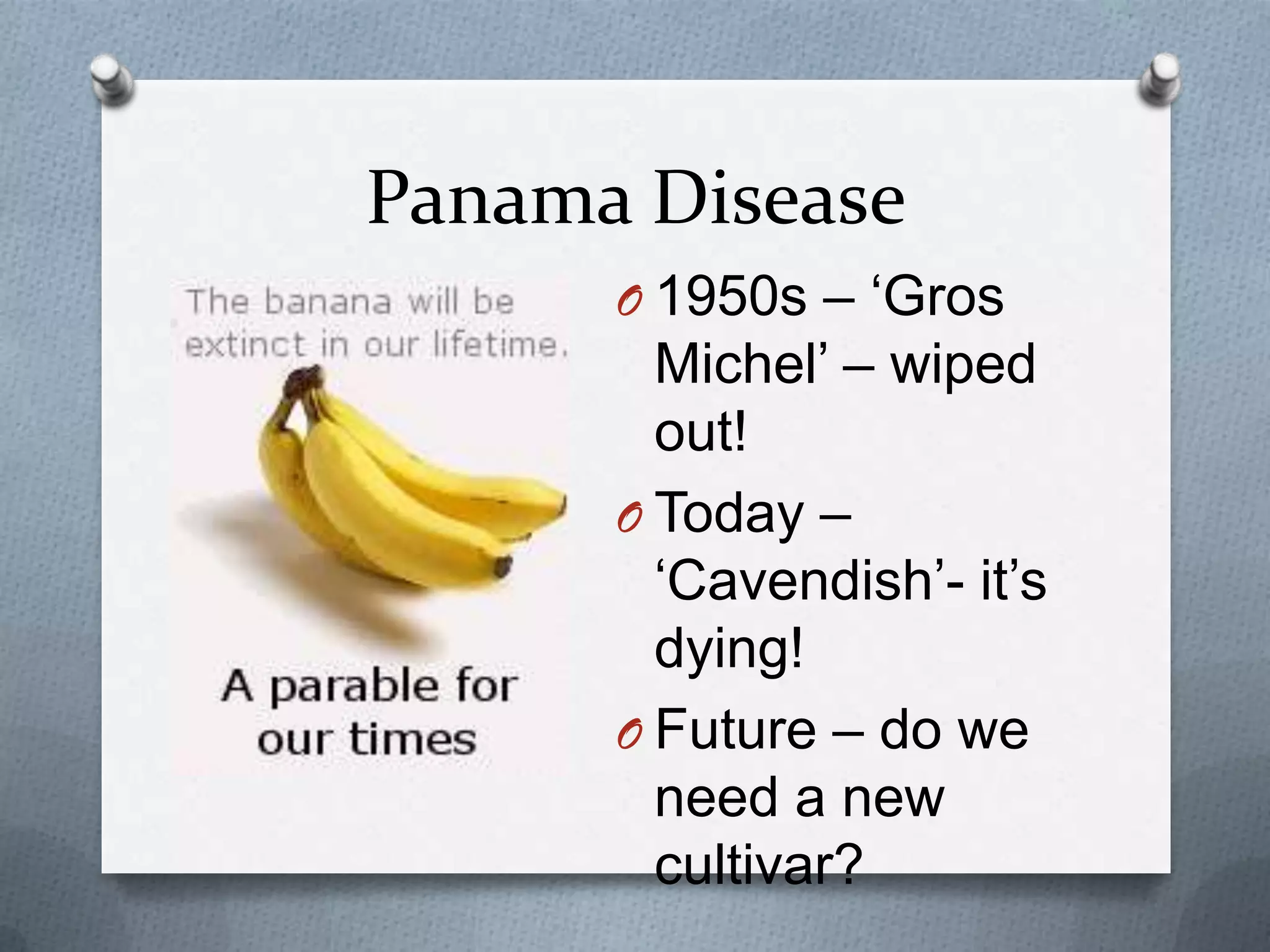
Panama Disease
      O 1950s – „Gros
        Michel‟ – wiped
        out!
      O Today –
        „Cavendish‟- it‟s
        dying!
      O Future – do we
        need a new
        cultivar?
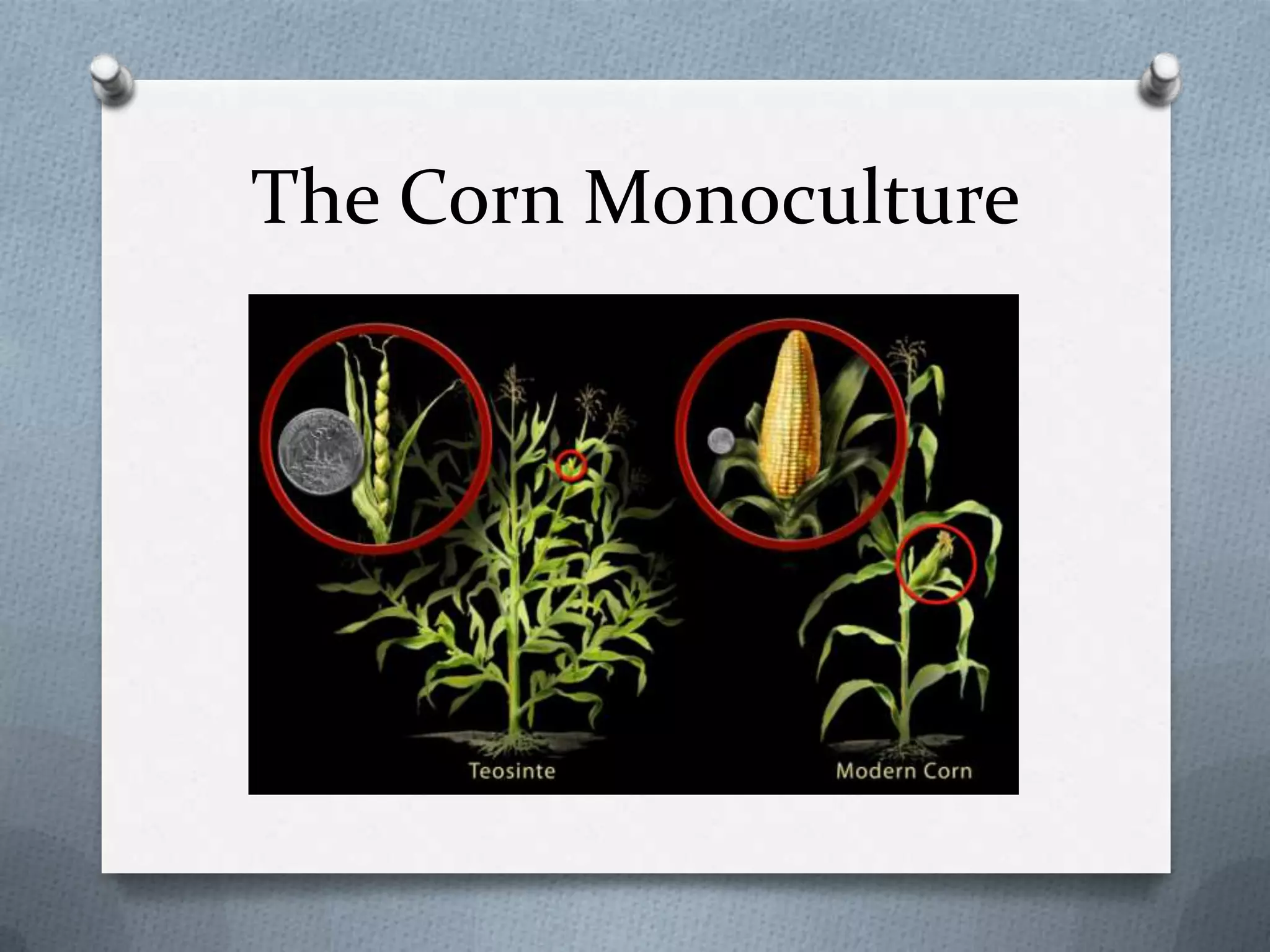
The Corn Monoculture
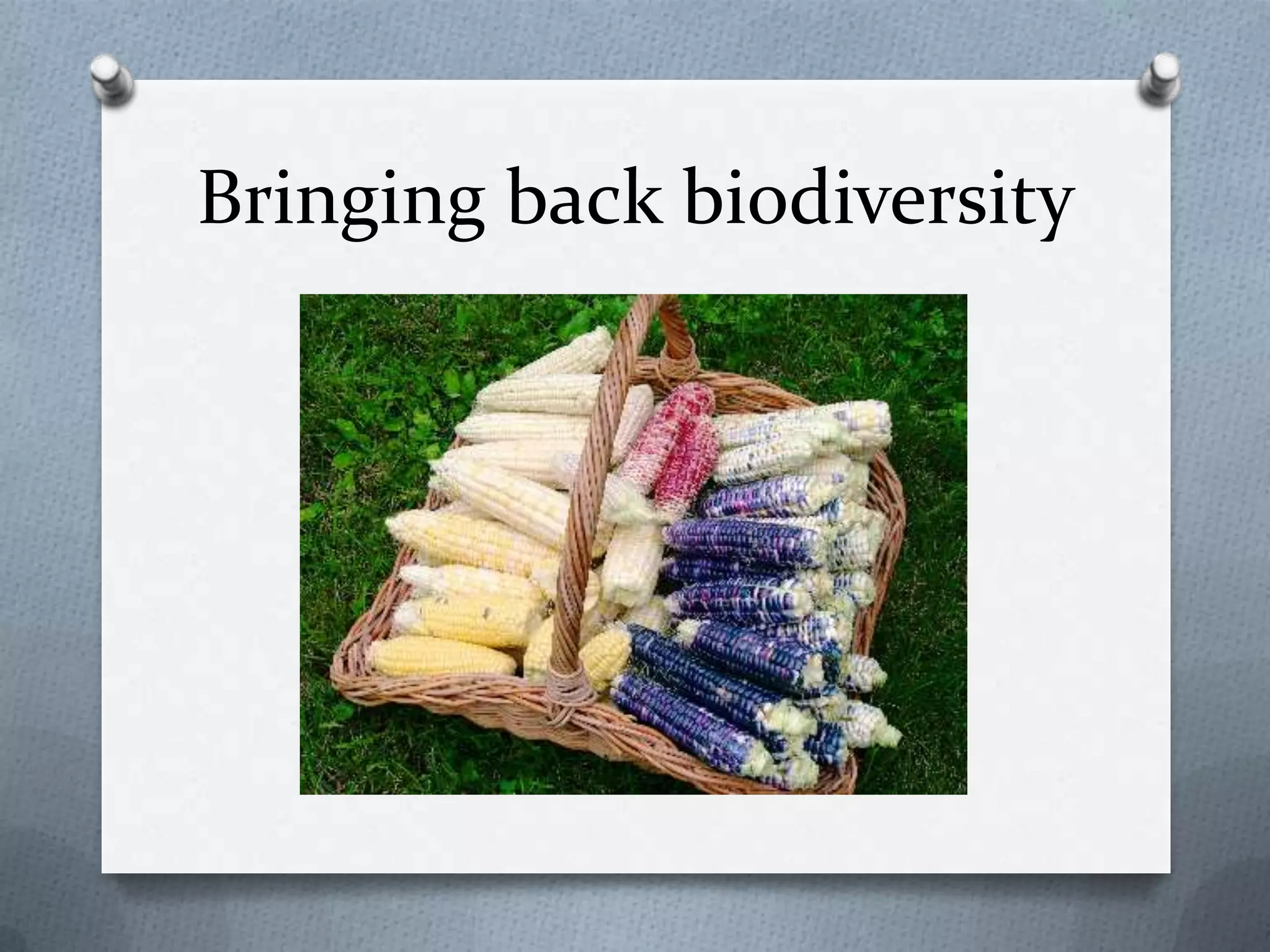
Bringing back biodiversity
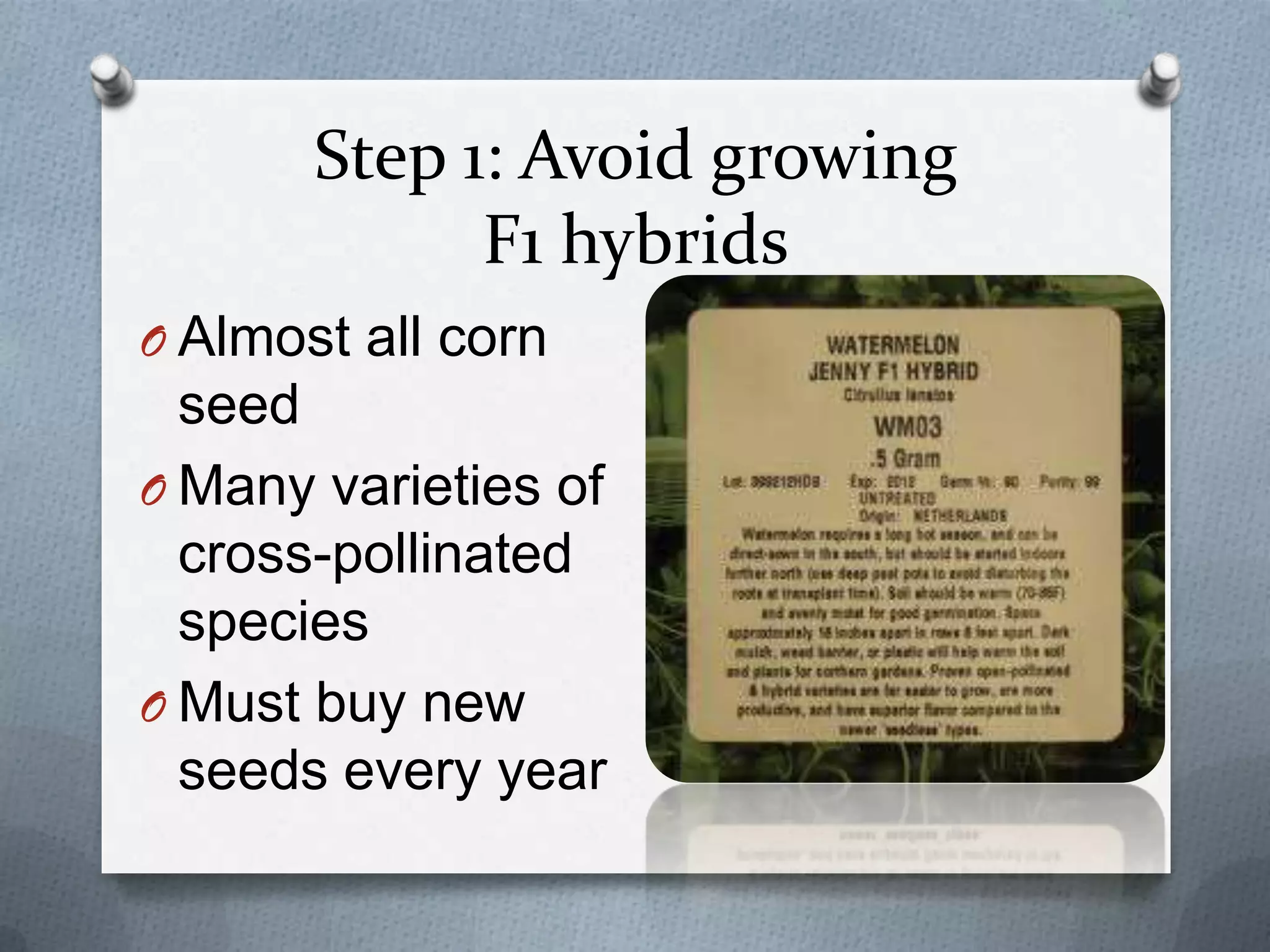
Step 1: Avoid growing
             F1 hybrids
O Almost all corn
  seed
O Many varieties of
  cross-pollinated
  species
O Must buy new
  seeds every year
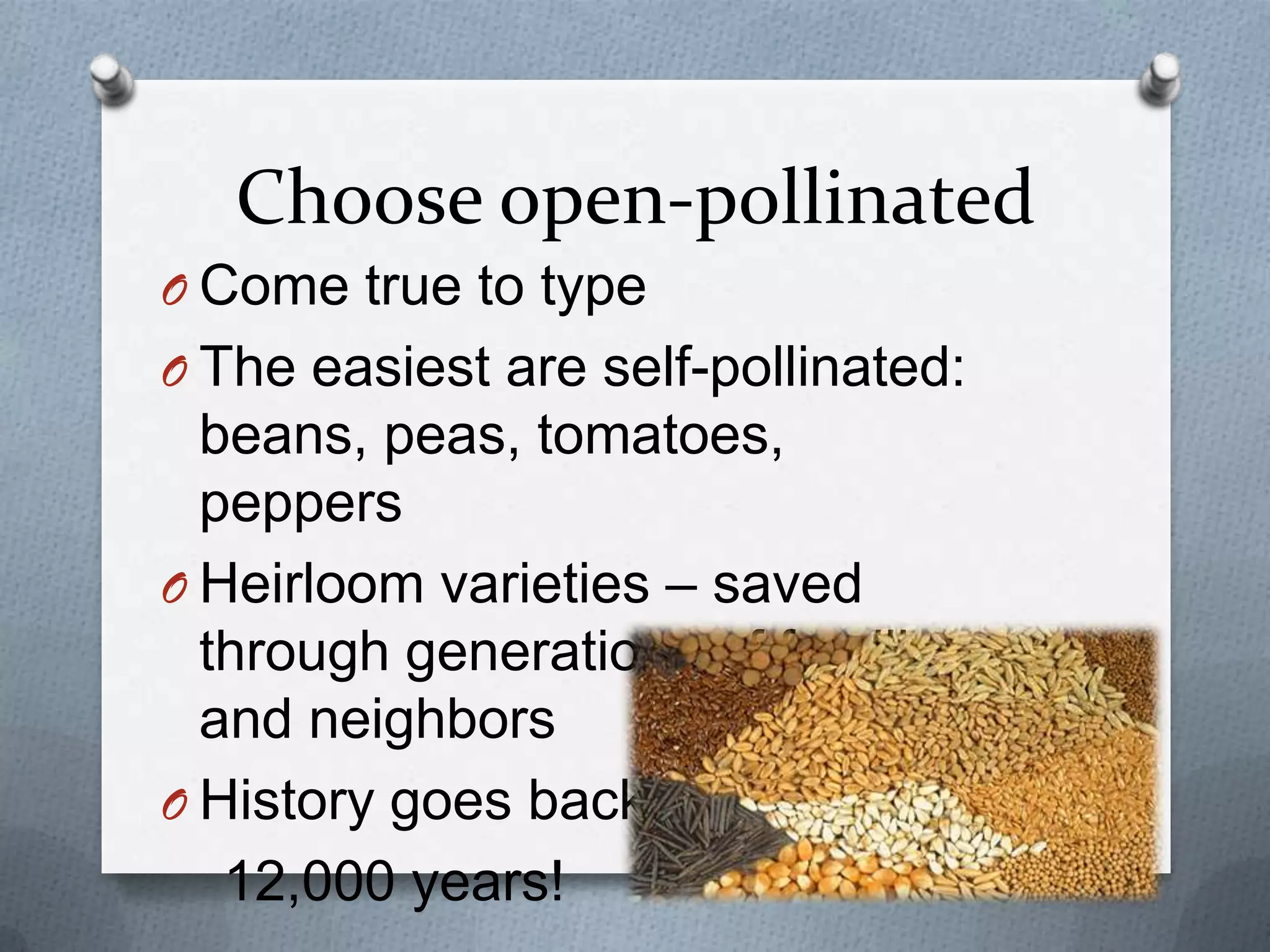
Choose open-pollinated
O Come true to type
O The easiest are self-pollinated:
  beans, peas, tomatoes,
  peppers
O Heirloom varieties – saved
  through generations of families
  and neighbors
O History goes back
   12,000 years!
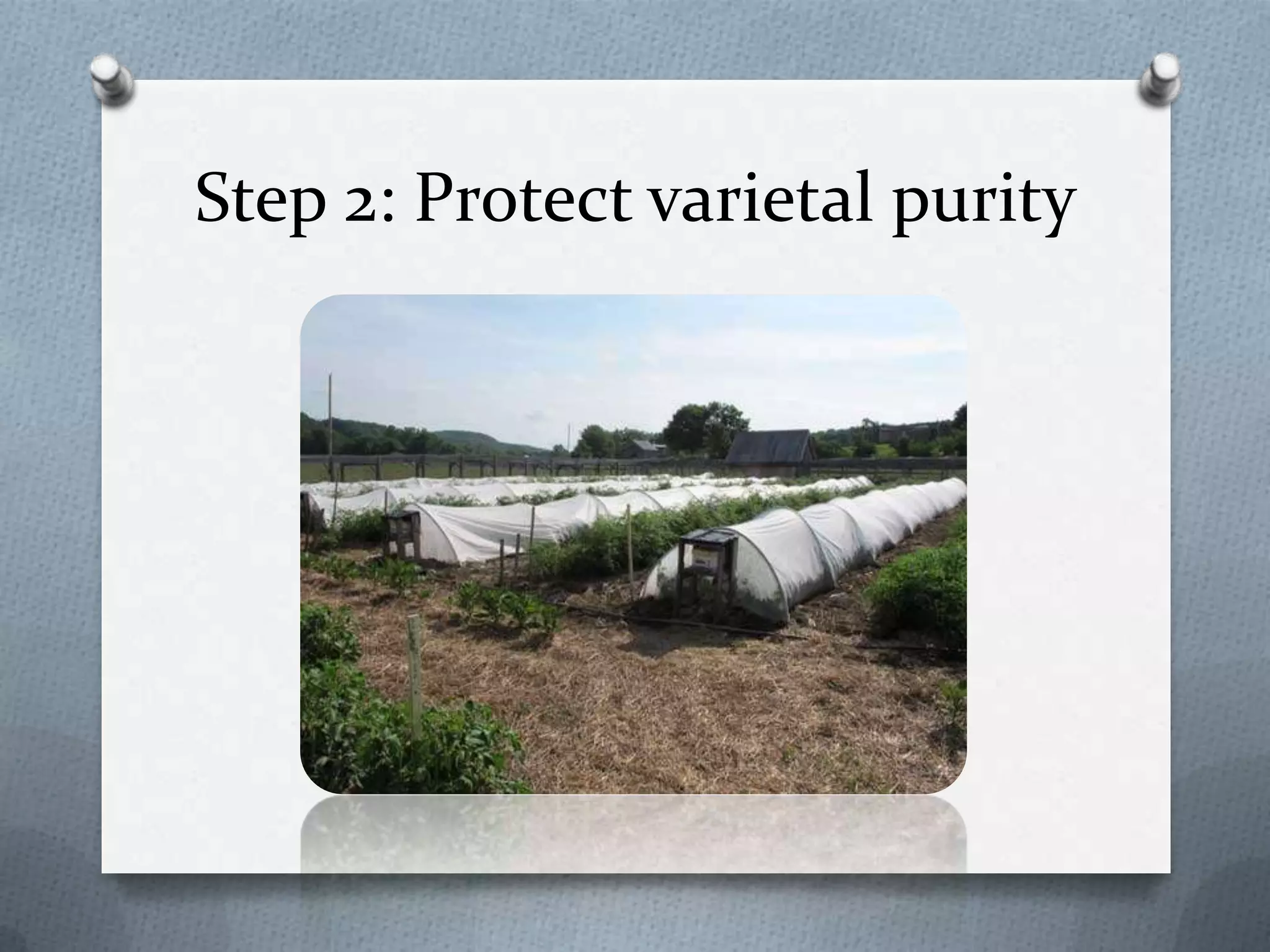
Step 2: Protect varietal purity
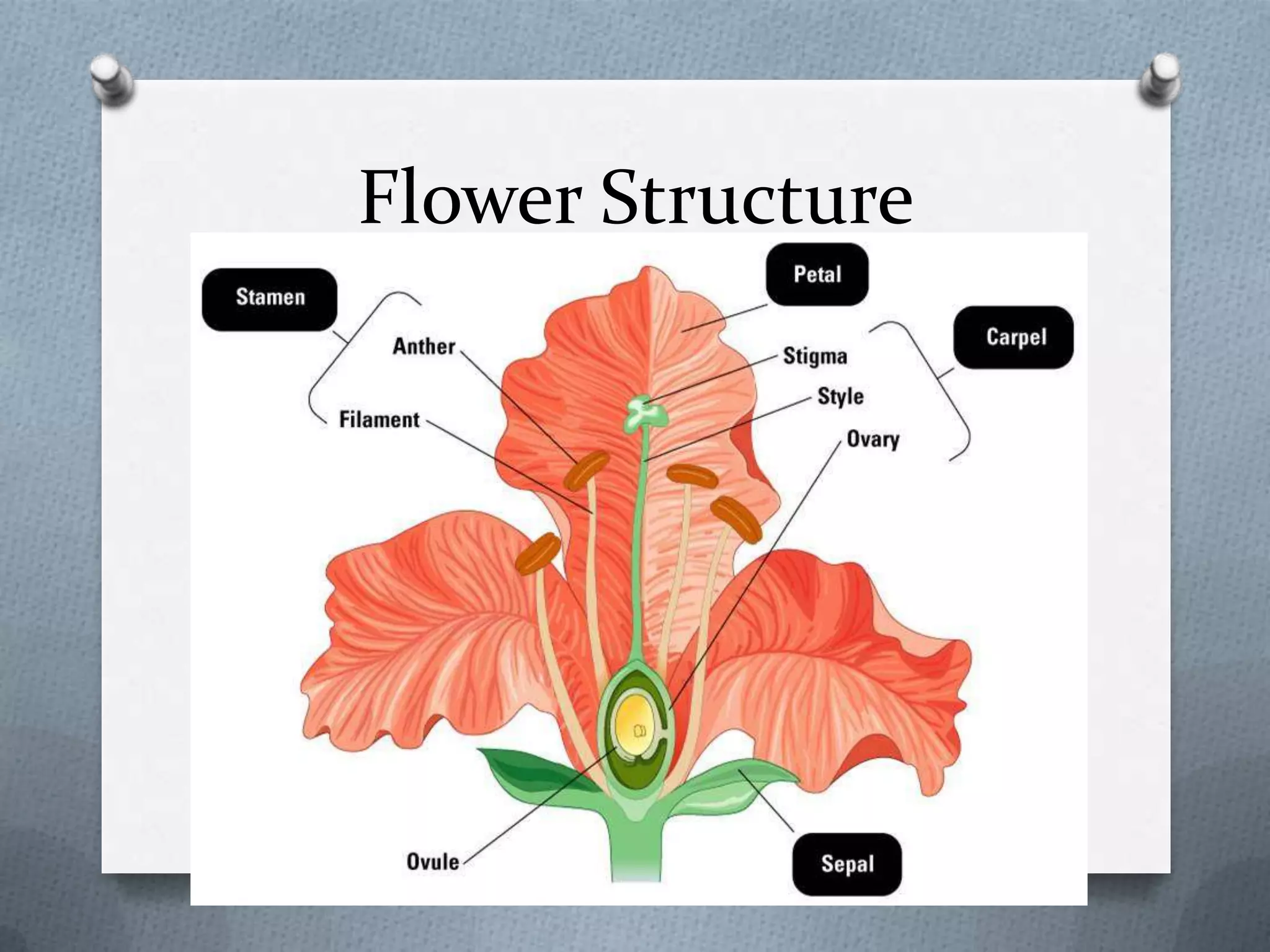
Flower Structure
Definition of Terms
O Annual, biennial, perennial
O Perfect flower
O Self-incompatible
O Imperfect flowers
O Monoecious (single house)
  plants
O Dioecious (two houses) plants
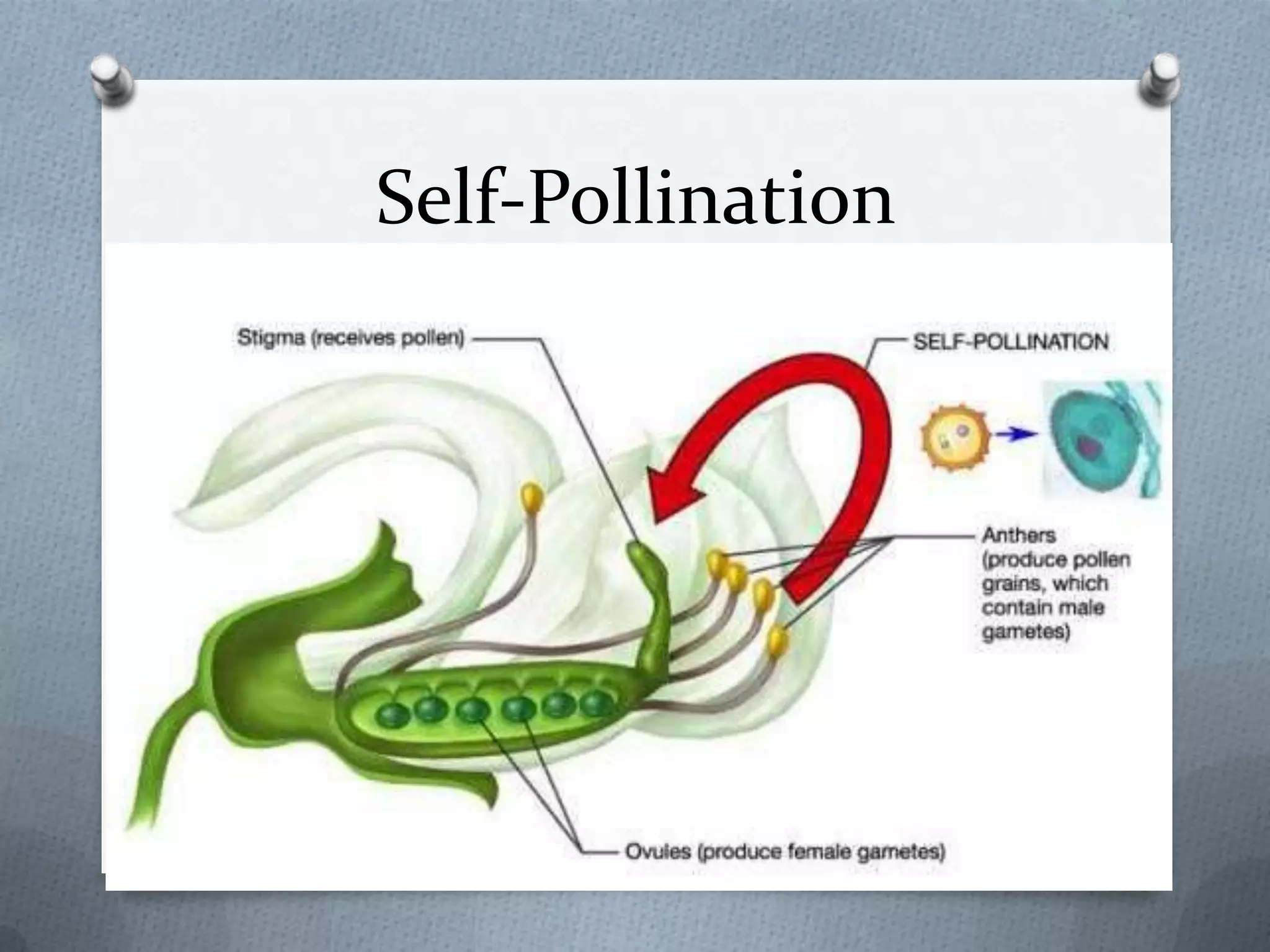
Self-Pollination
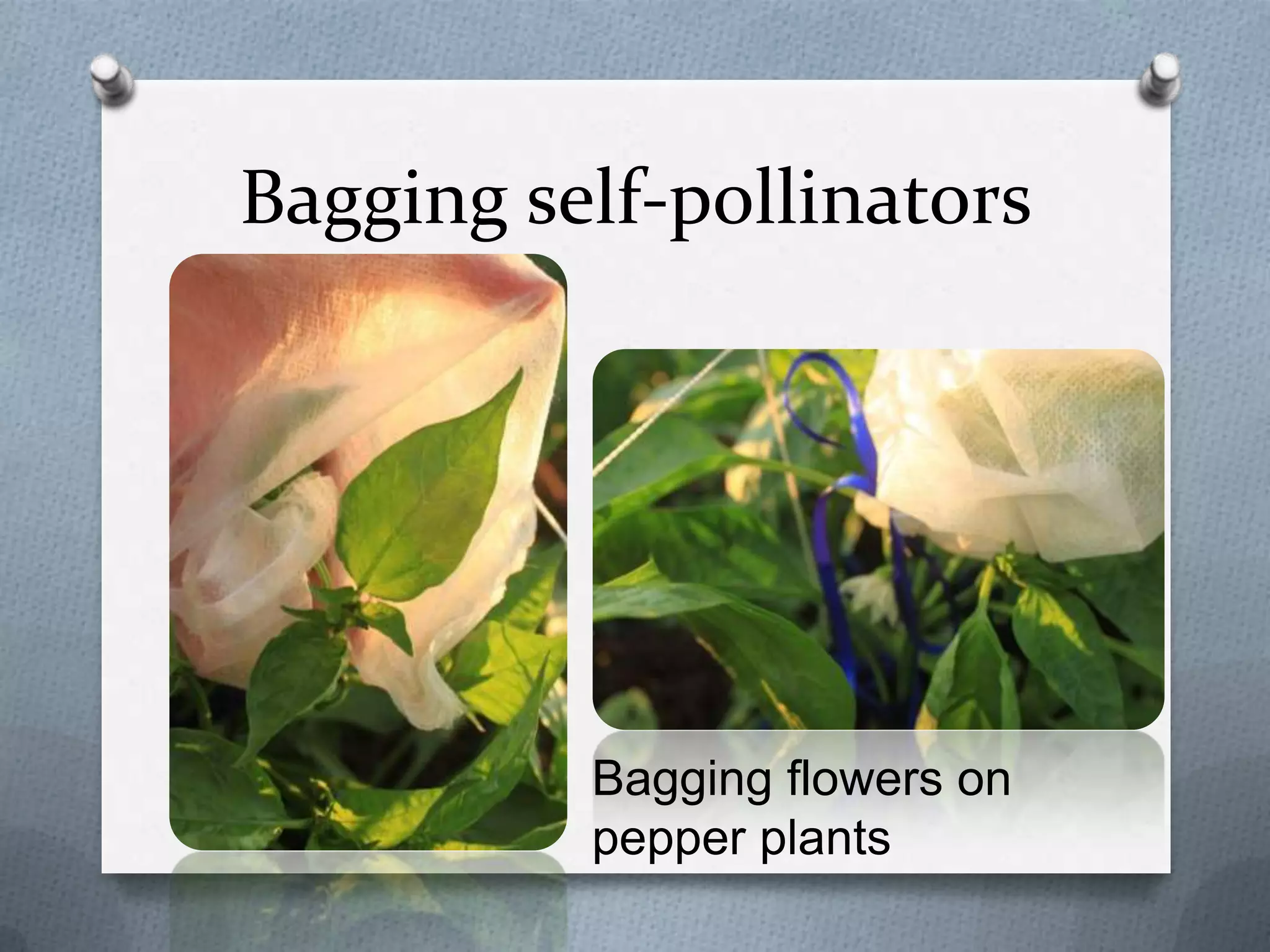
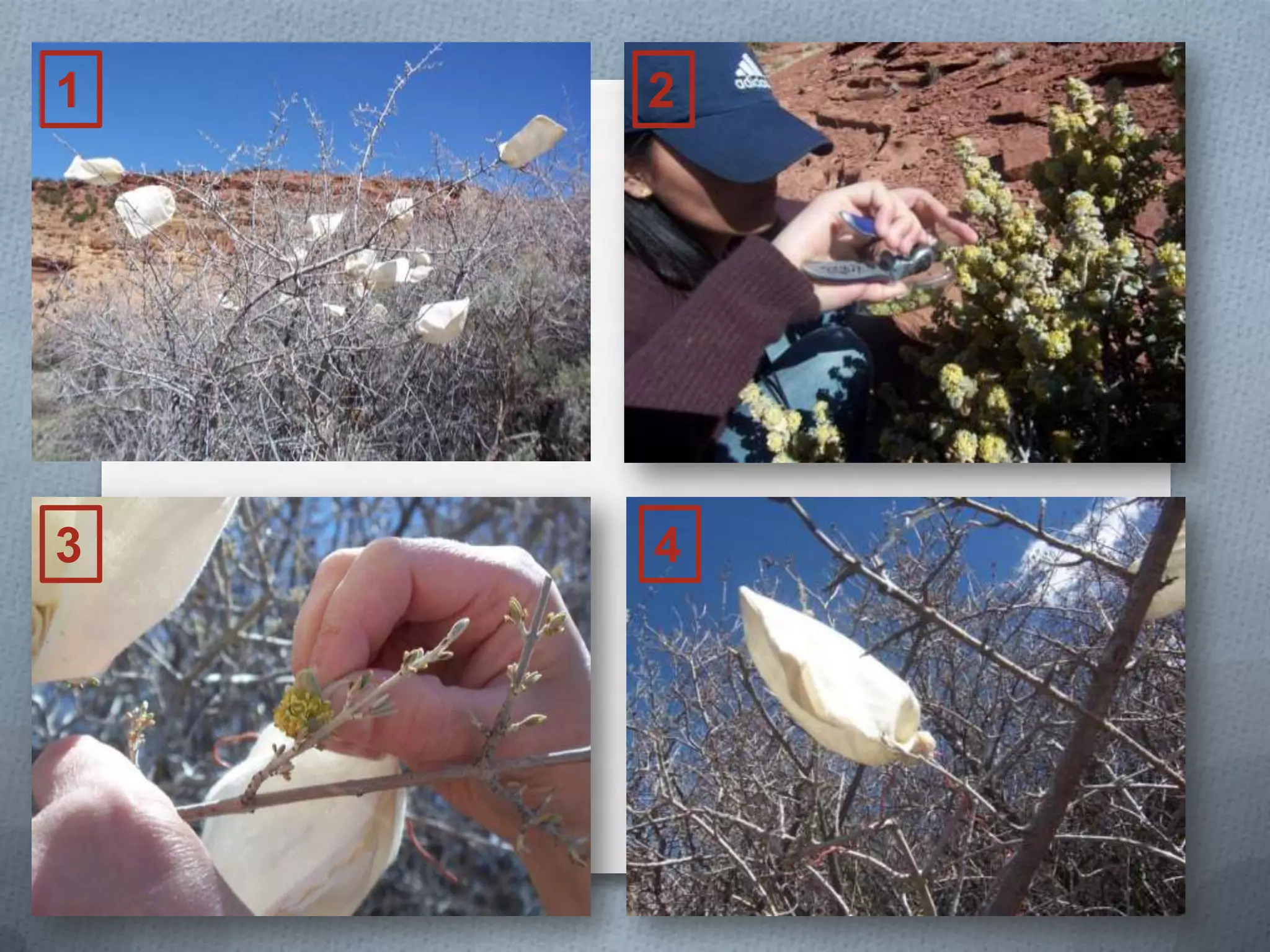
Bagging self-pollinators


          Bagging flowers on
          pepper plants
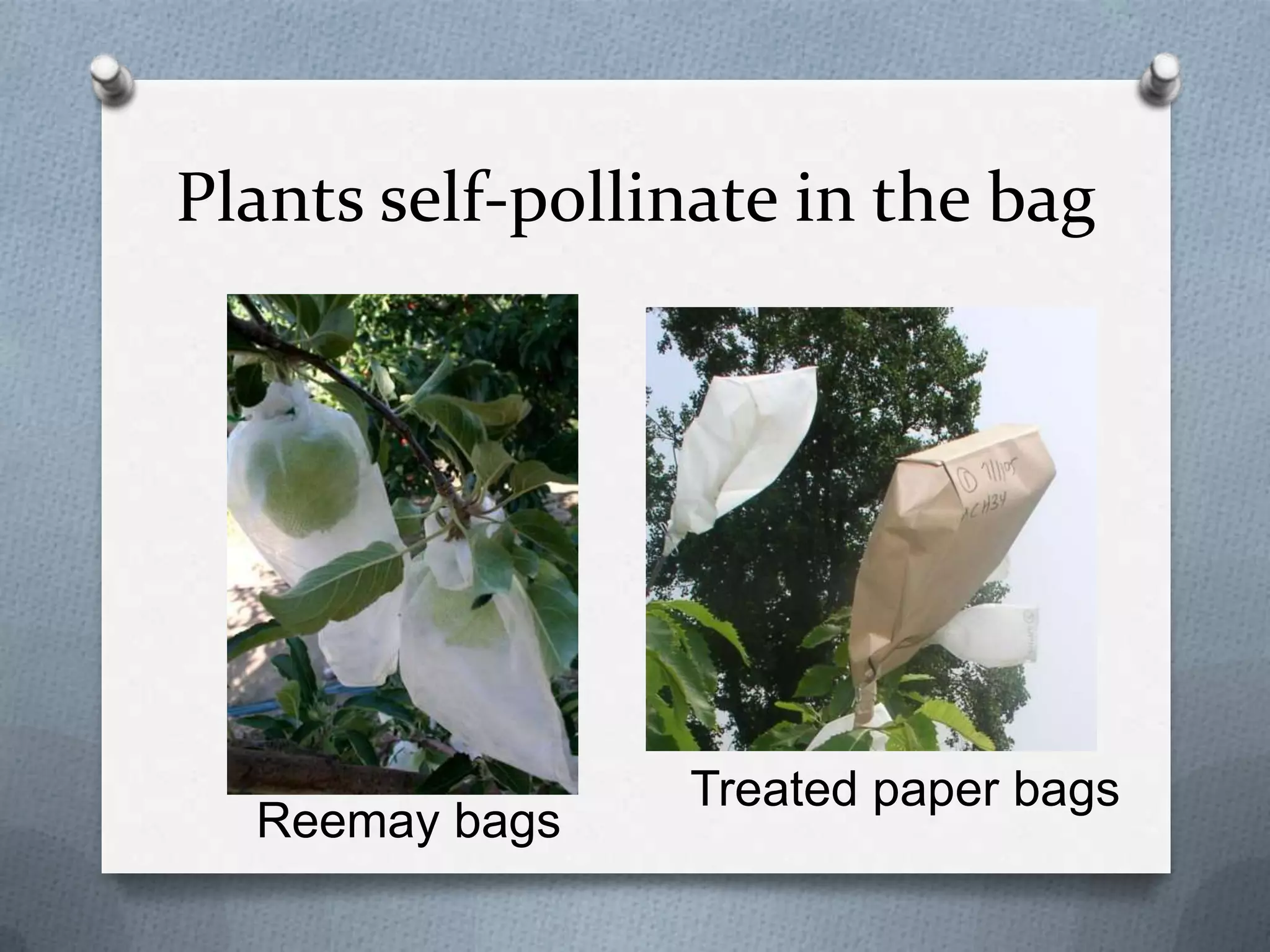
Plants self-pollinate in the bag


                 Treated paper bags
  Reemay bags
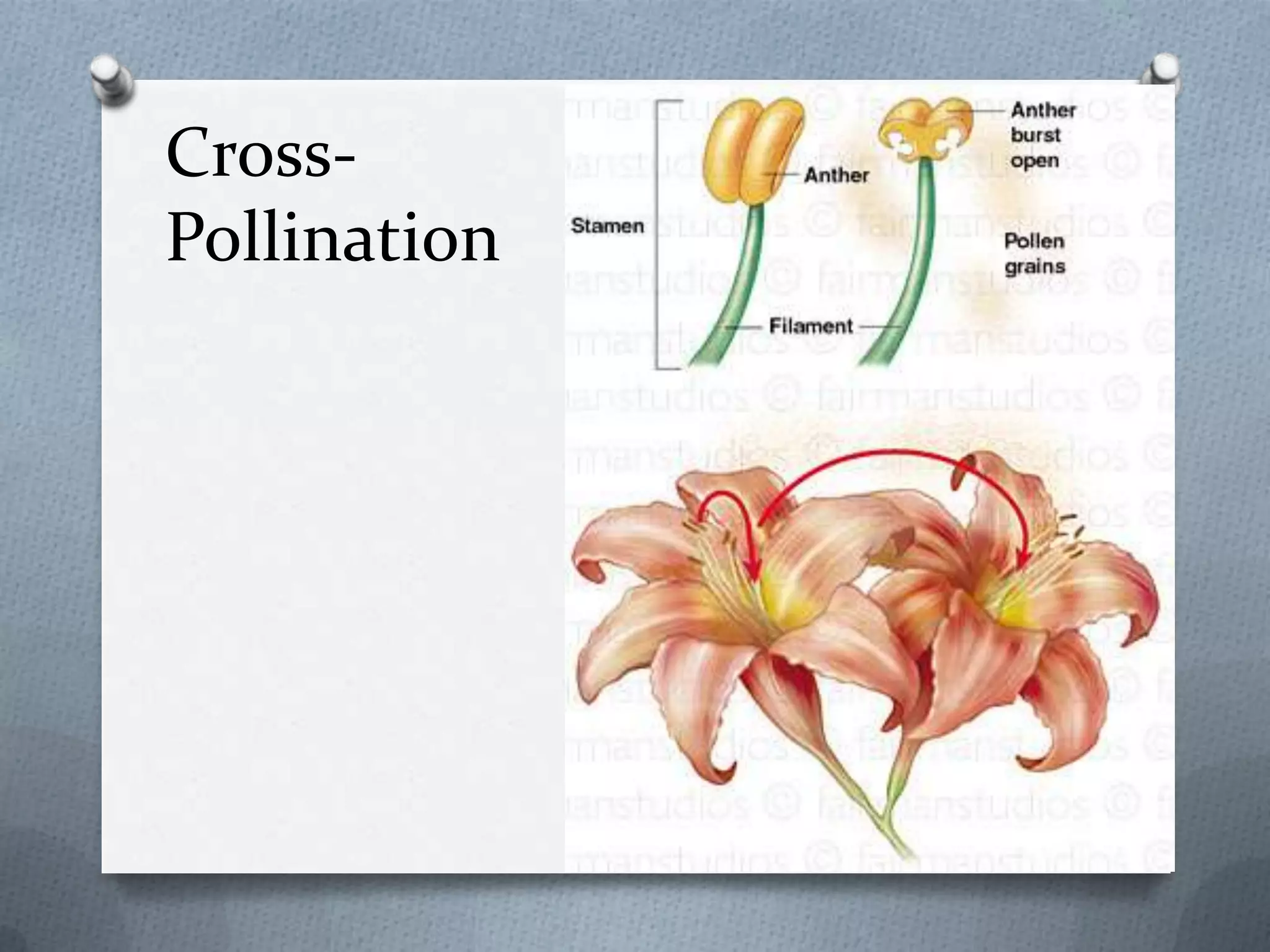
Cross-
Pollination
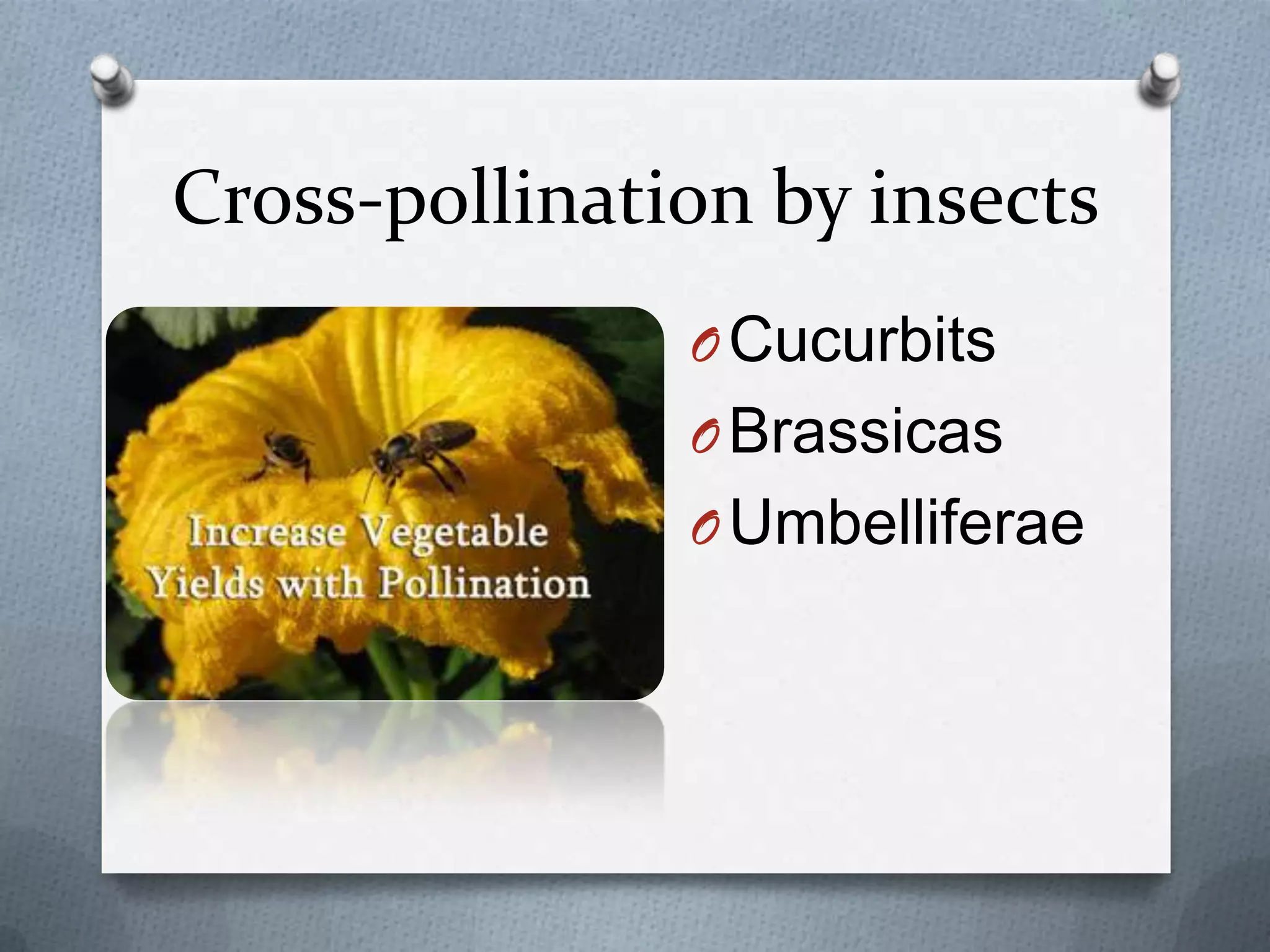
Cross-pollination by insects
               O Cucurbits
               O Brassicas
               O Umbelliferae
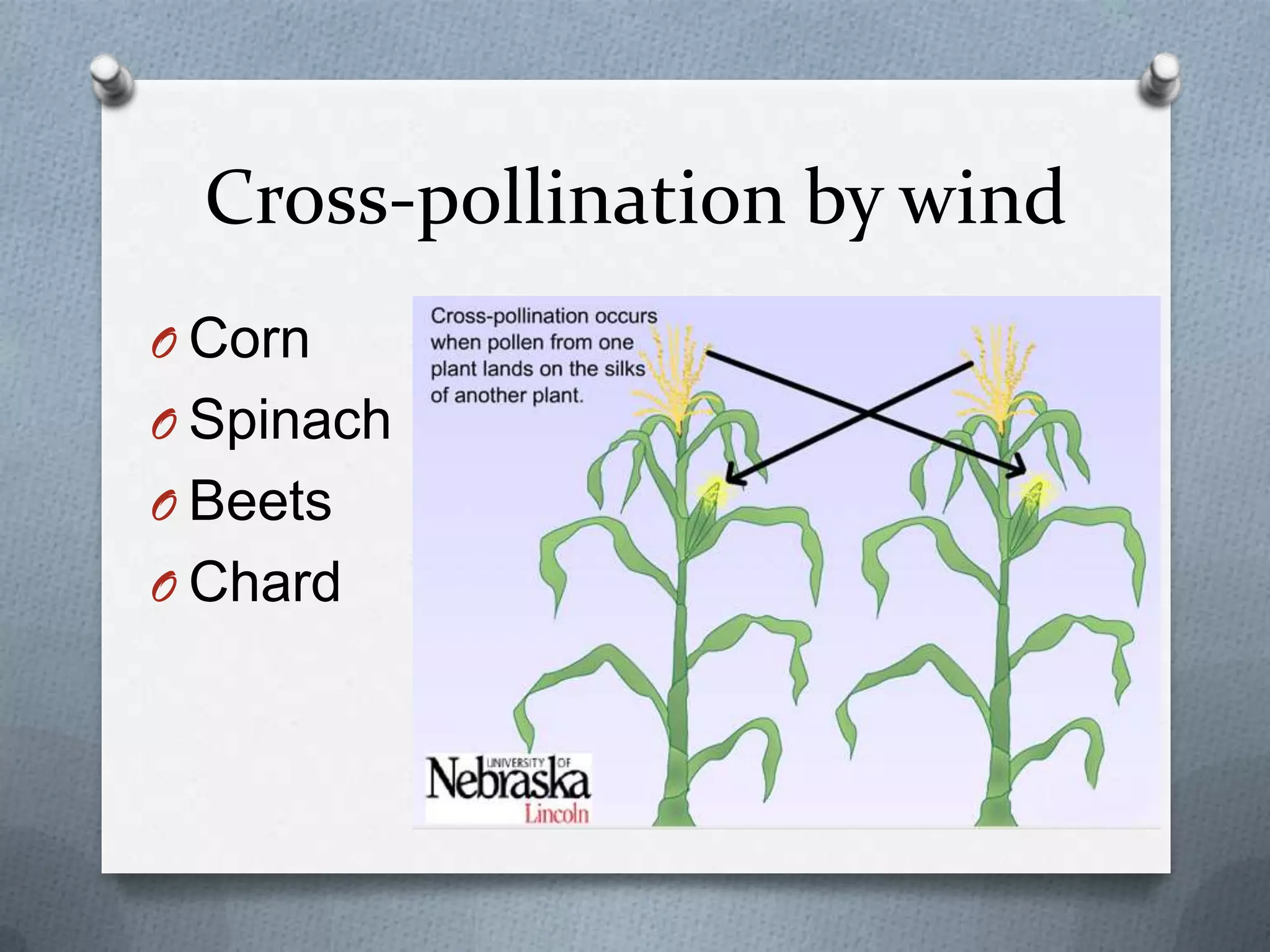
Cross-pollination by wind
O Corn
O Spinach
O Beets
O Chard
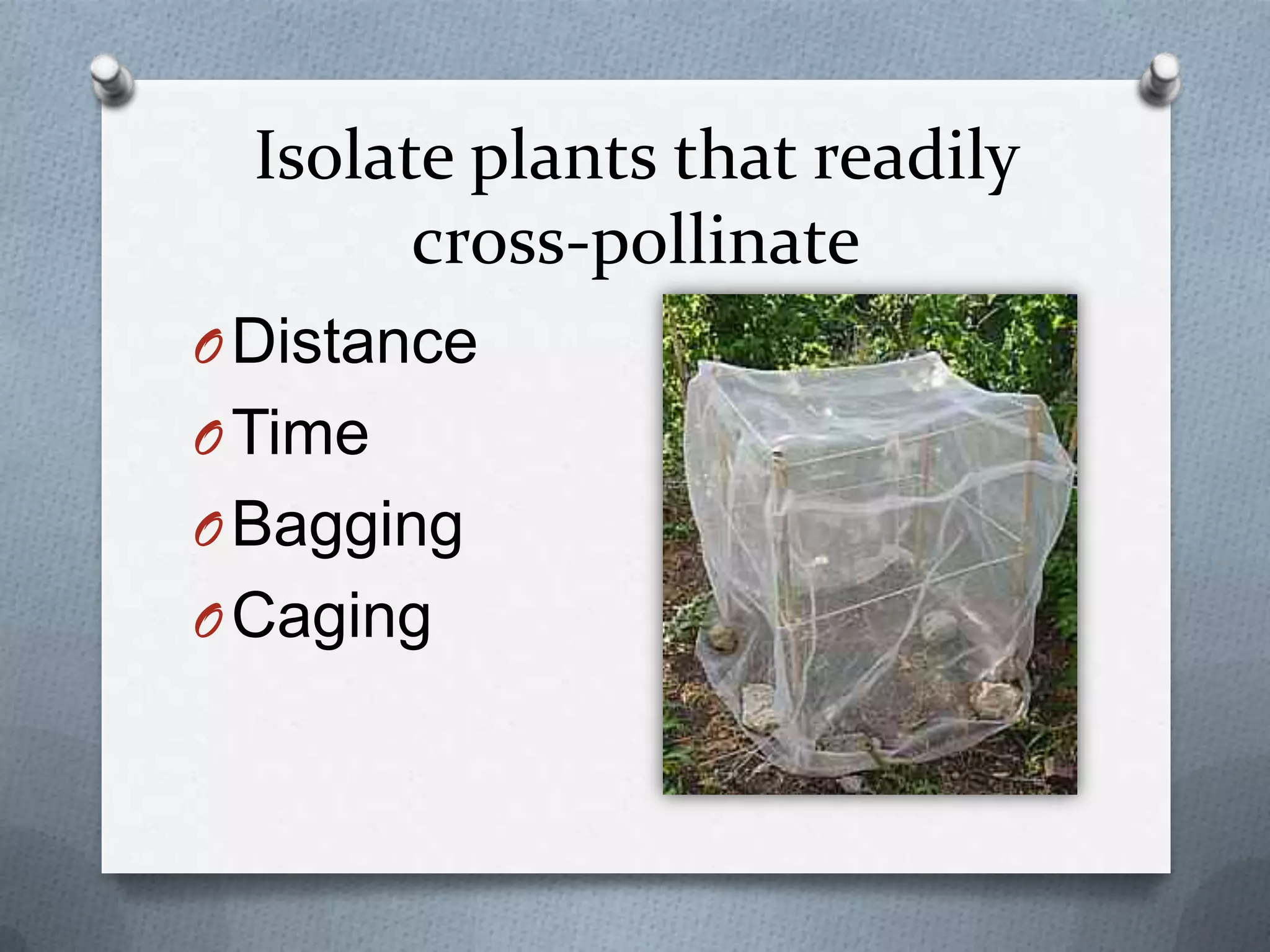
Isolate plants that readily
        cross-pollinate
O Distance
O Time
O Bagging
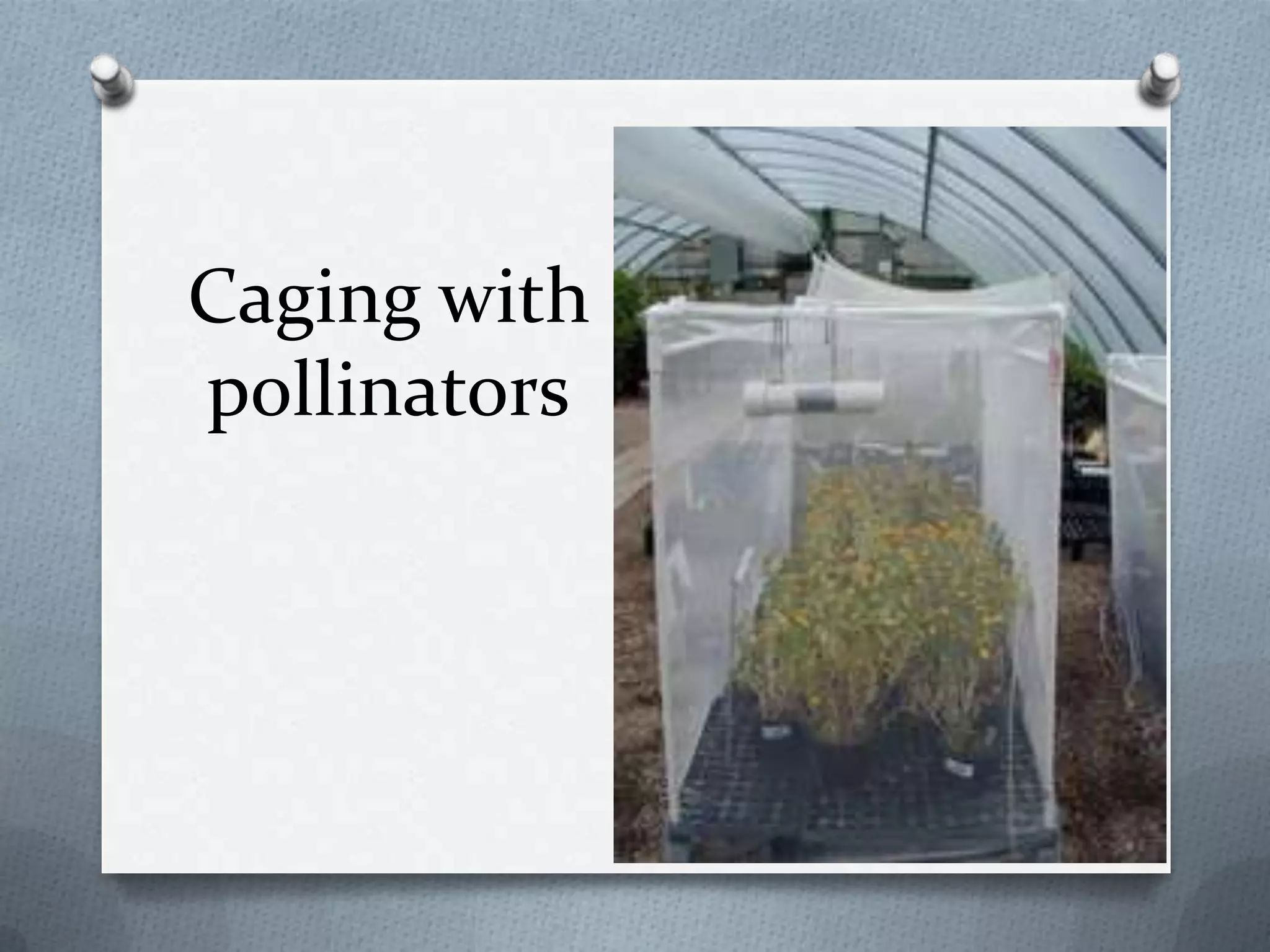
O Caging
Pollination Cages
O Frame:          O Covered with:
 O Wood            O Spun
 O Wire              polyester cloth
 O Plastic pipe
                     (Reemay)
                   O Window
 O Metal tubing
                     screen
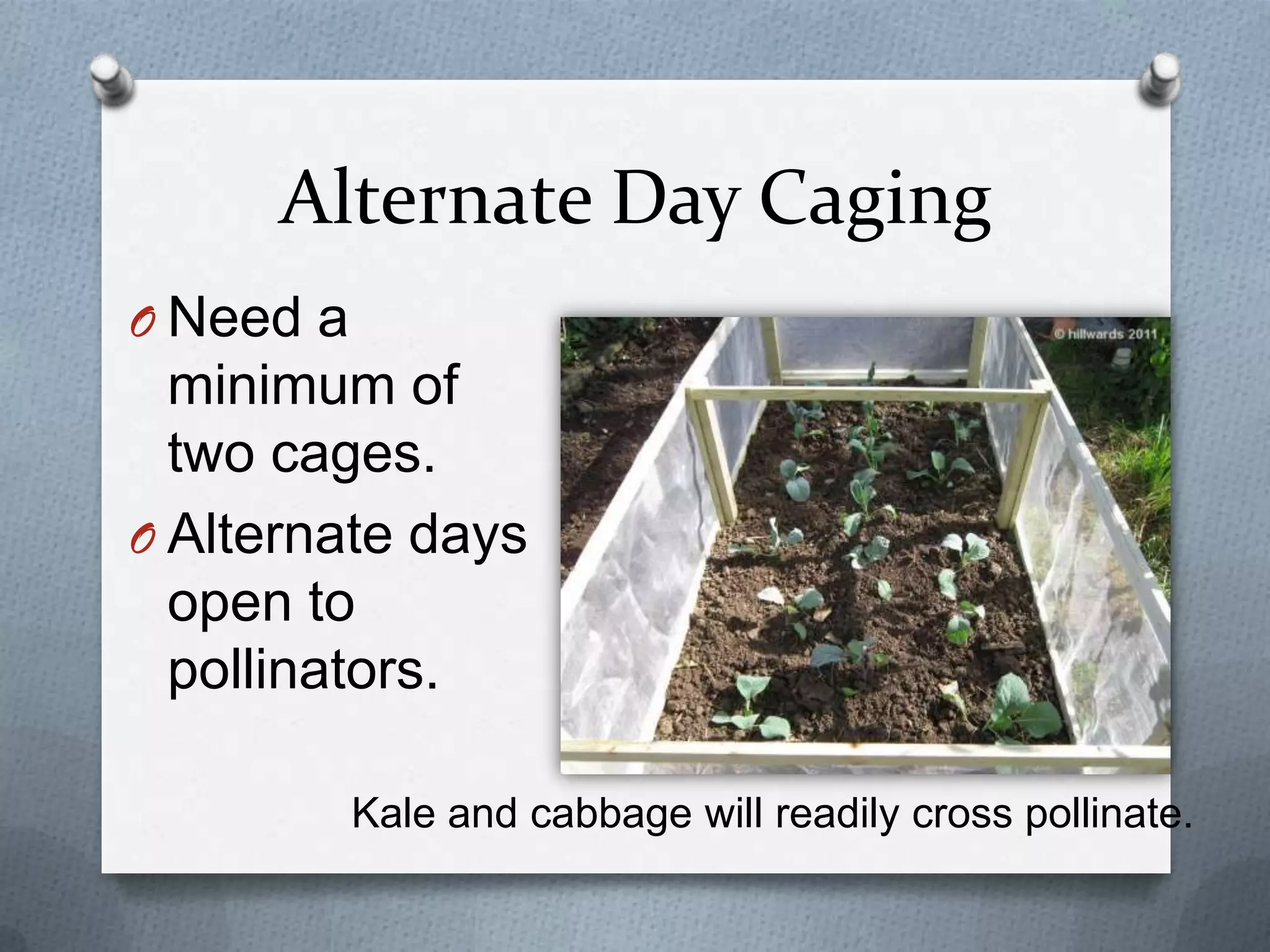
Alternate Day Caging
O Need a
  minimum of
  two cages.
O Alternate days
  open to
  pollinators.

           Kale and cabbage will readily cross pollinate.
Caging with
pollinators
1   2


3   4
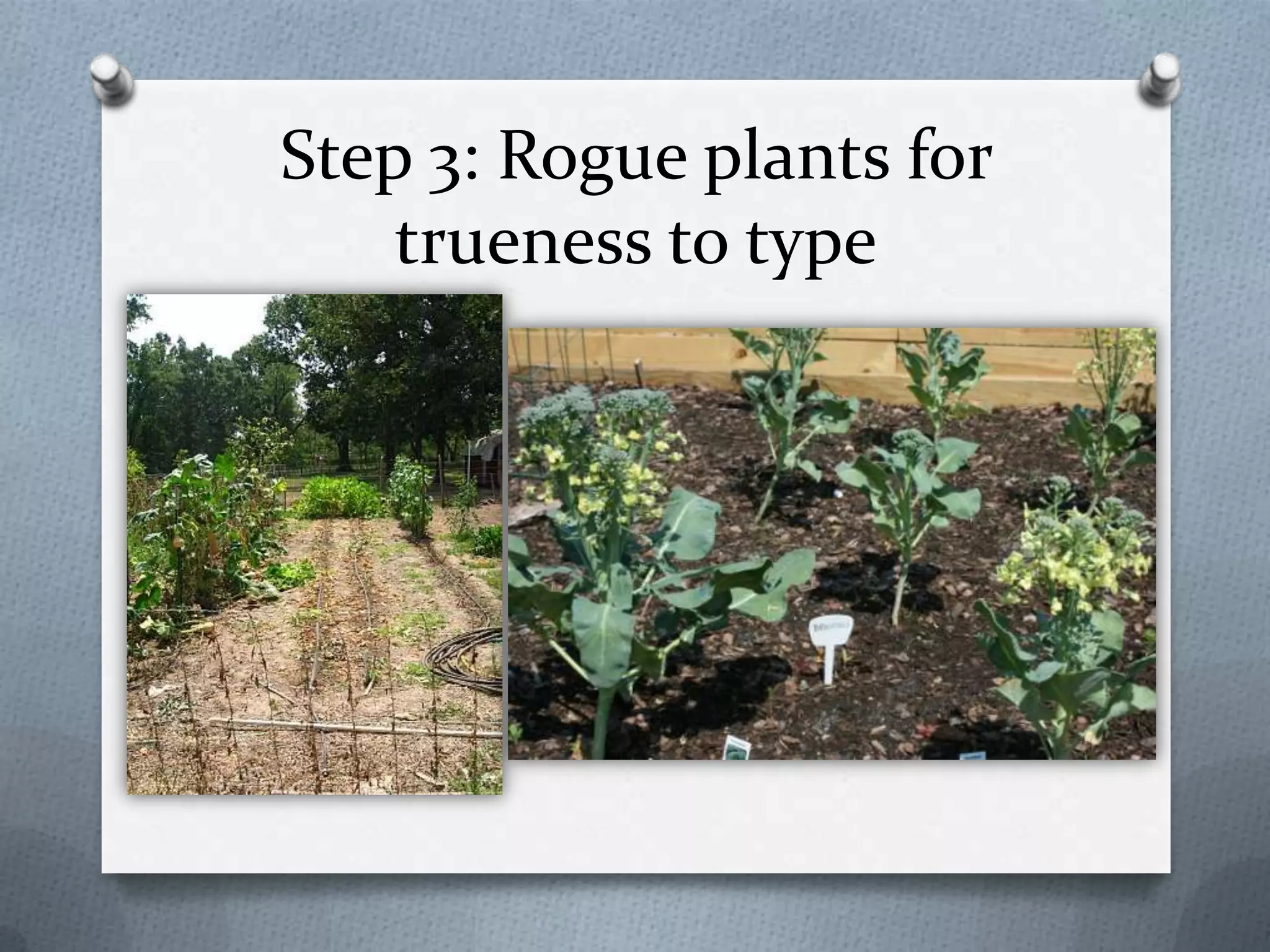
Step 3: Rogue plants for
    trueness to type
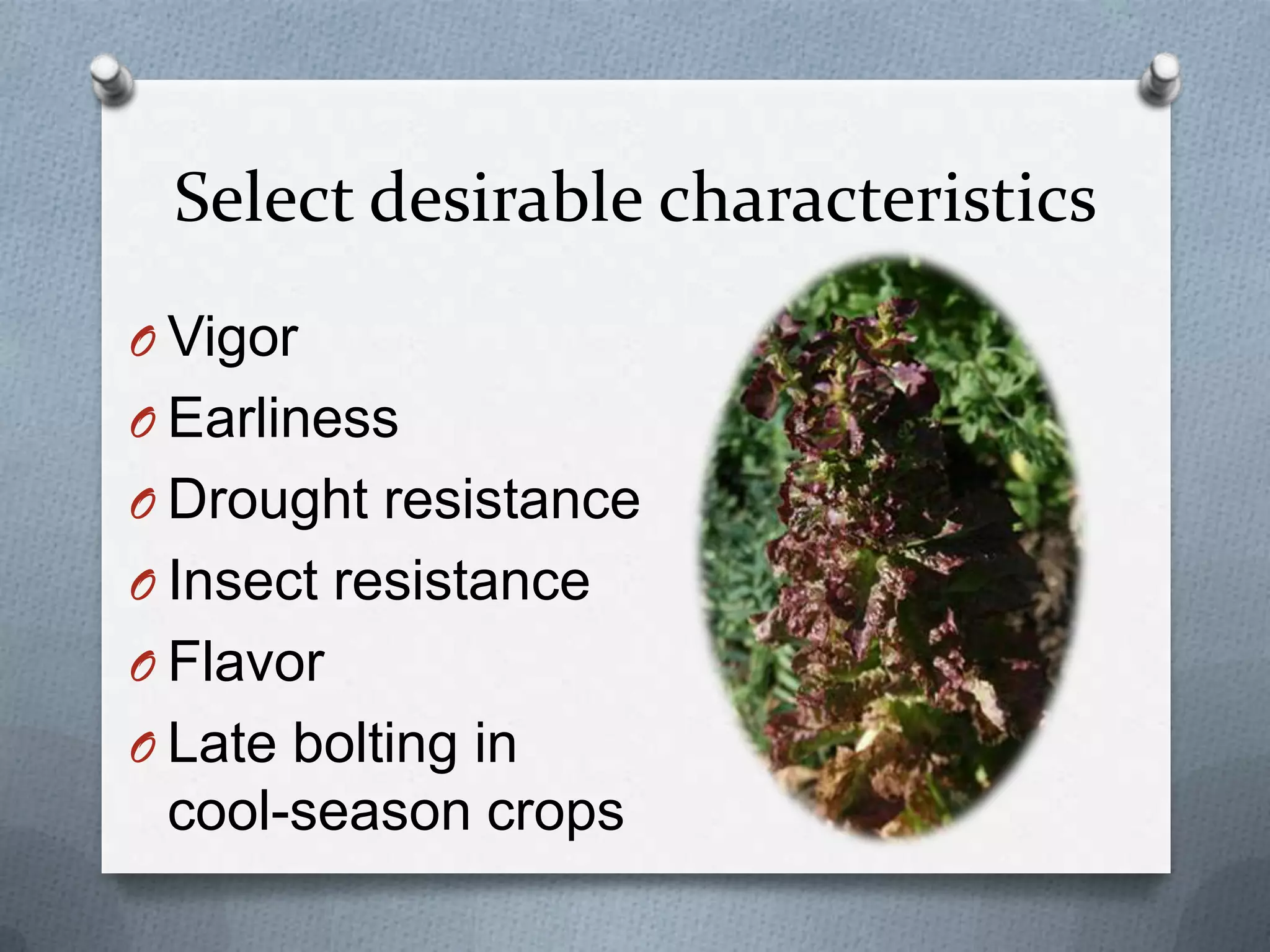
Select desirable characteristics
O Vigor
O Earliness
O Drought resistance
O Insect resistance
O Flavor
O Late bolting in
 cool-season crops
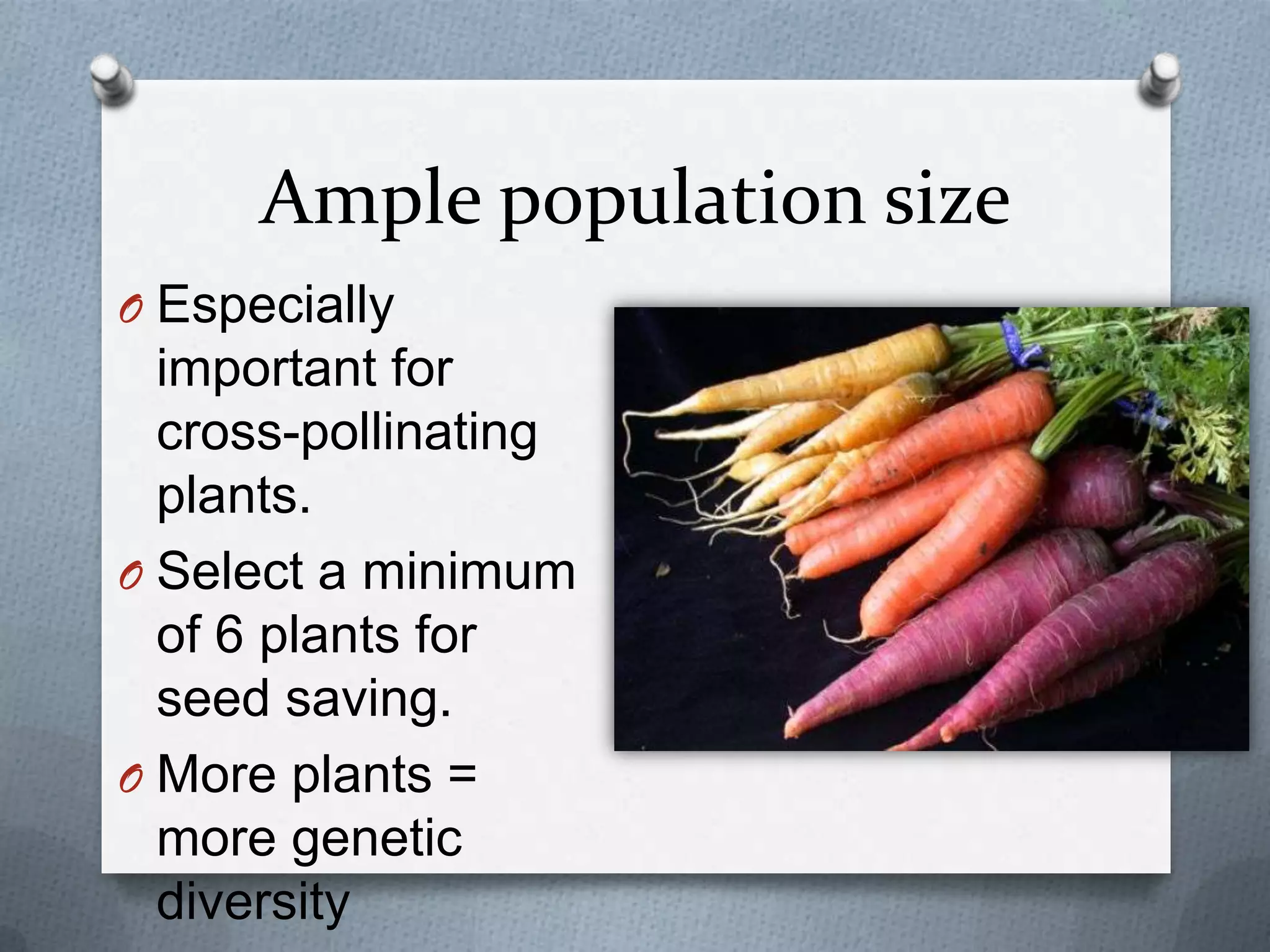
Ample population size
O Especially
  important for
  cross-pollinating
  plants.
O Select a minimum
  of 6 plants for
  seed saving.
O More plants =
  more genetic
  diversity
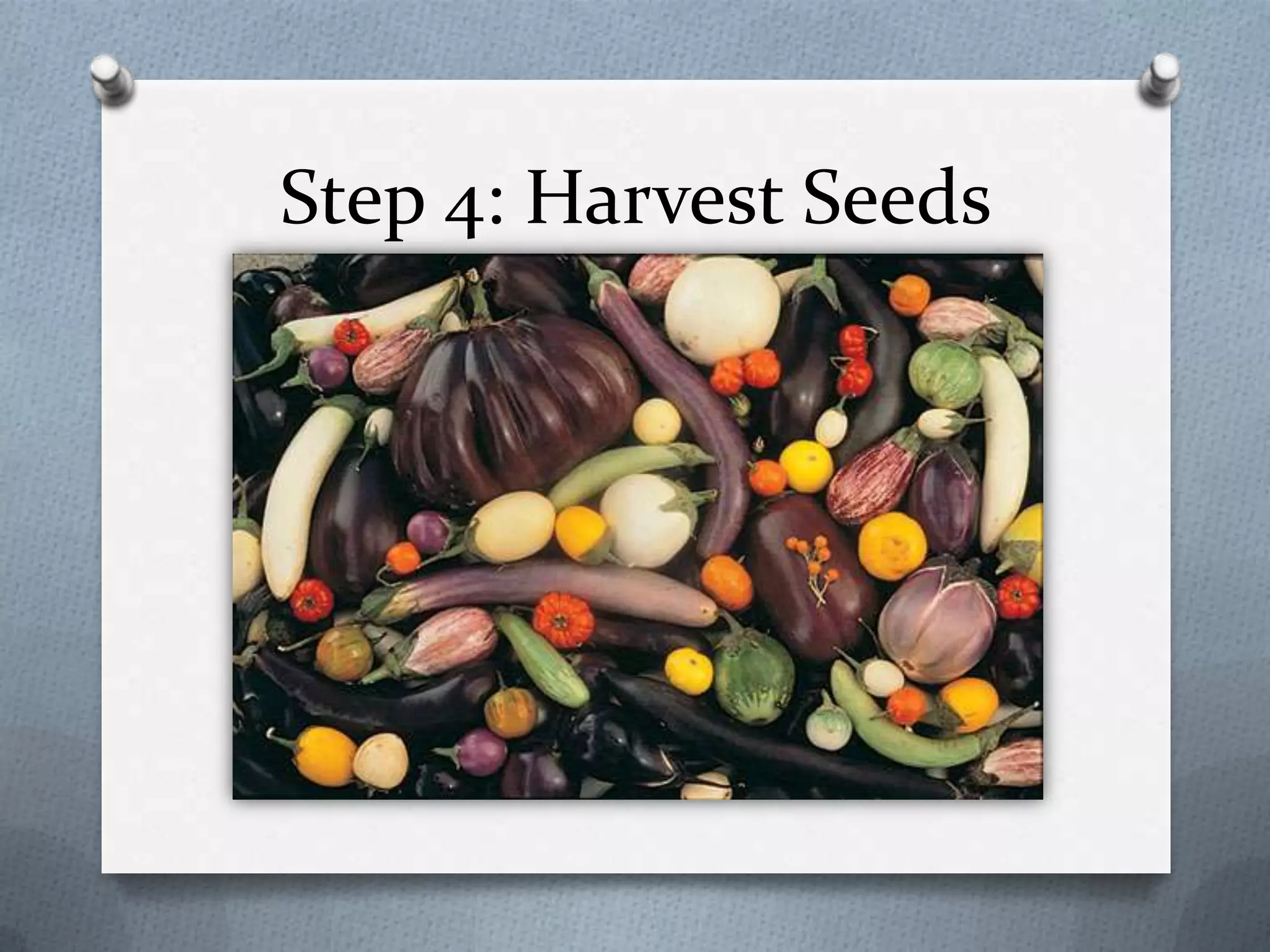
Step 4: Harvest Seeds
Overwintering Biennials
O Biennials include:
  O Carrot, celery,   O Seed-to-seed method
    parsley
                           vs.
  O Beet, chard
  O Leek, onion       O Seed-to-root-to-seed
  O Rutabaga, turnip,   method
    parsnip
  O Broccoli, kale,
    brussels sprouts
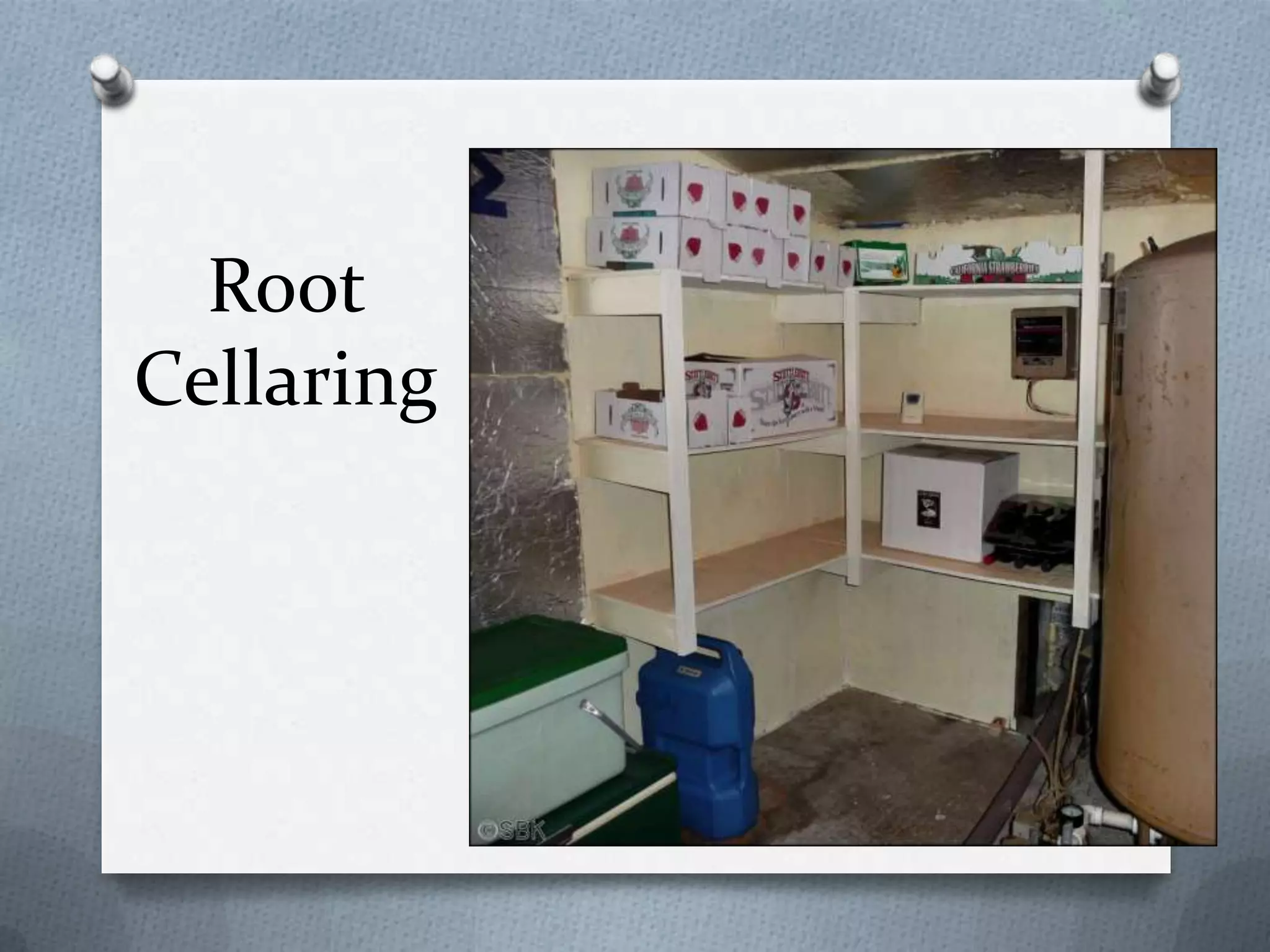
Root
Cellaring
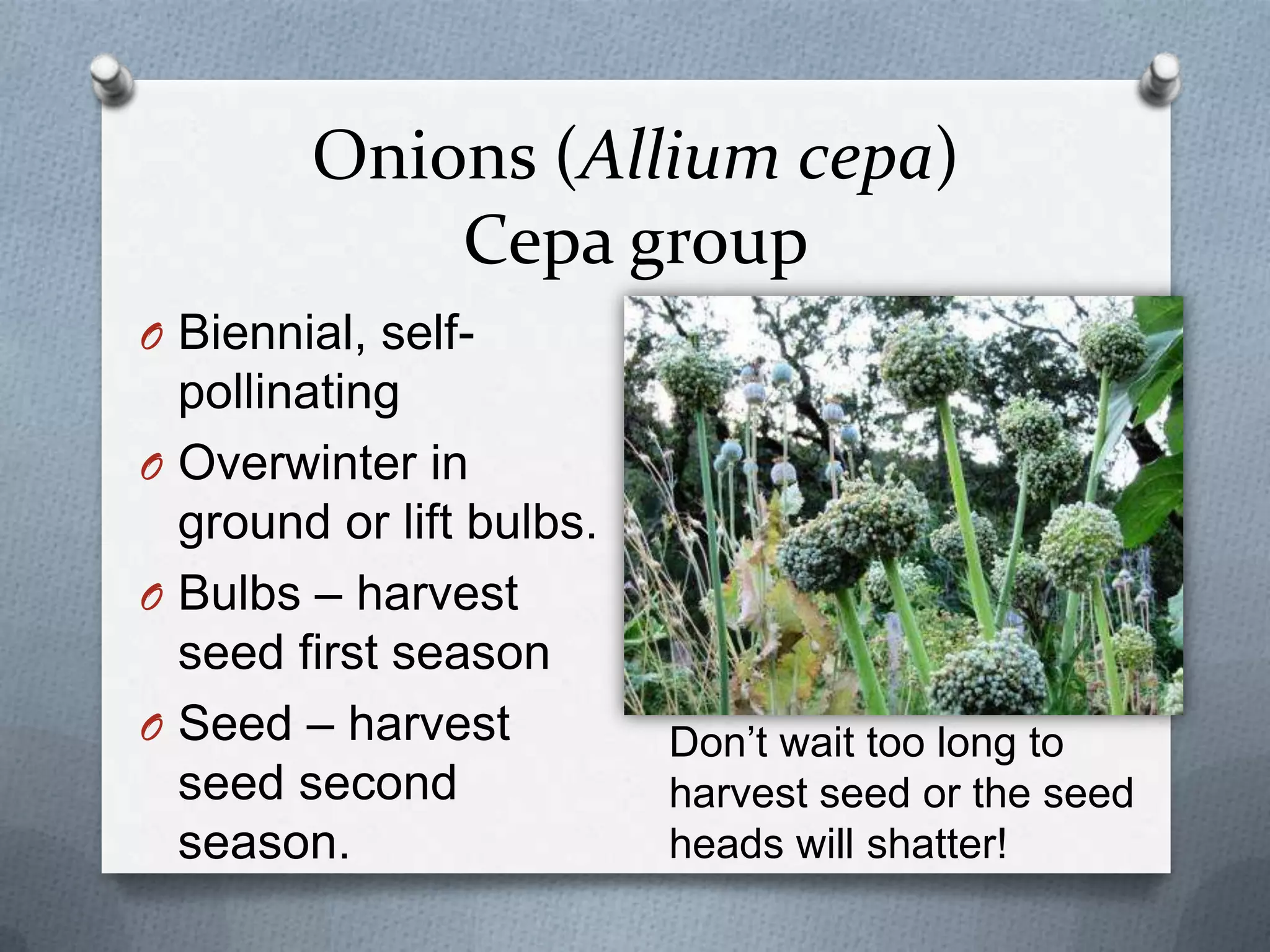
Onions (Allium cepa)
            Cepa group
O Biennial, self-
  pollinating
O Overwinter in
  ground or lift bulbs.
O Bulbs – harvest
  seed first season
O Seed – harvest          Don‟t wait too long to
  seed second             harvest seed or the seed
  season.                 heads will shatter!
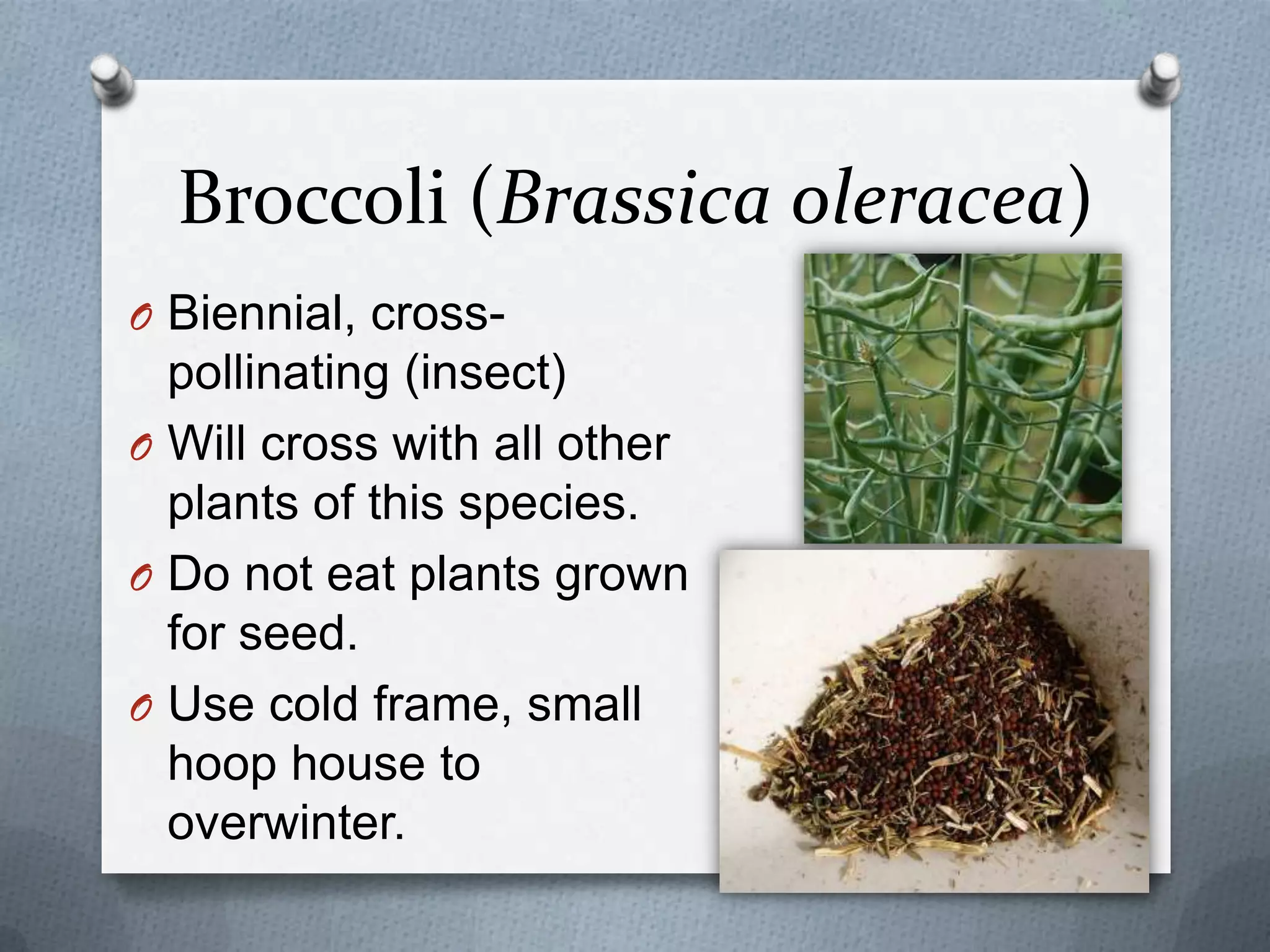
Broccoli (Brassica oleracea)
O Biennial, cross-
  pollinating (insect)
O Will cross with all other
  plants of this species.
O Do not eat plants grown
  for seed.
O Use cold frame, small
  hoop house to
  overwinter.
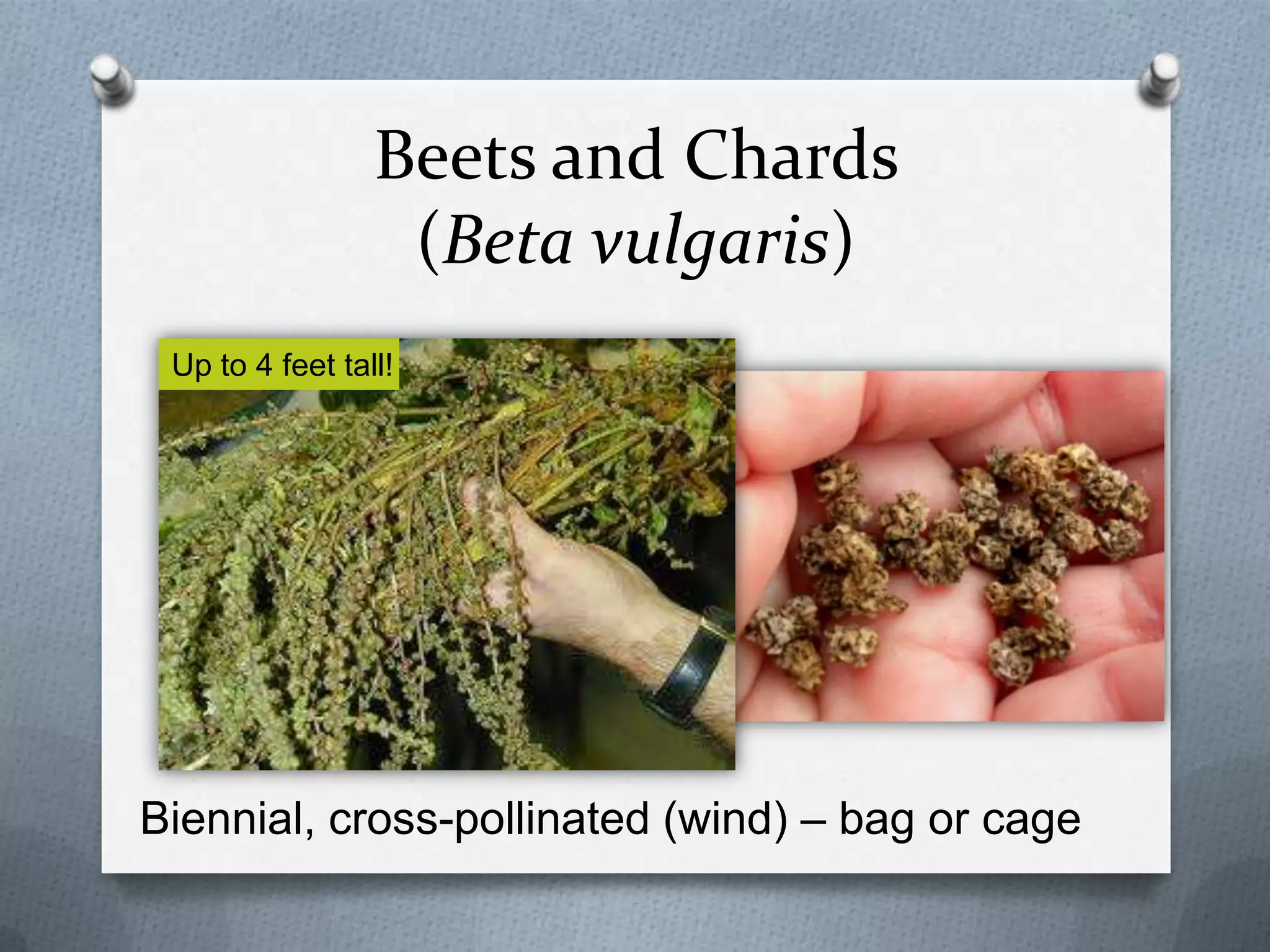
Beets and Chards
                  (Beta vulgaris)
 Up to 4 feet tall!


Biennial, cross-pollinated (wind) – bag or cage
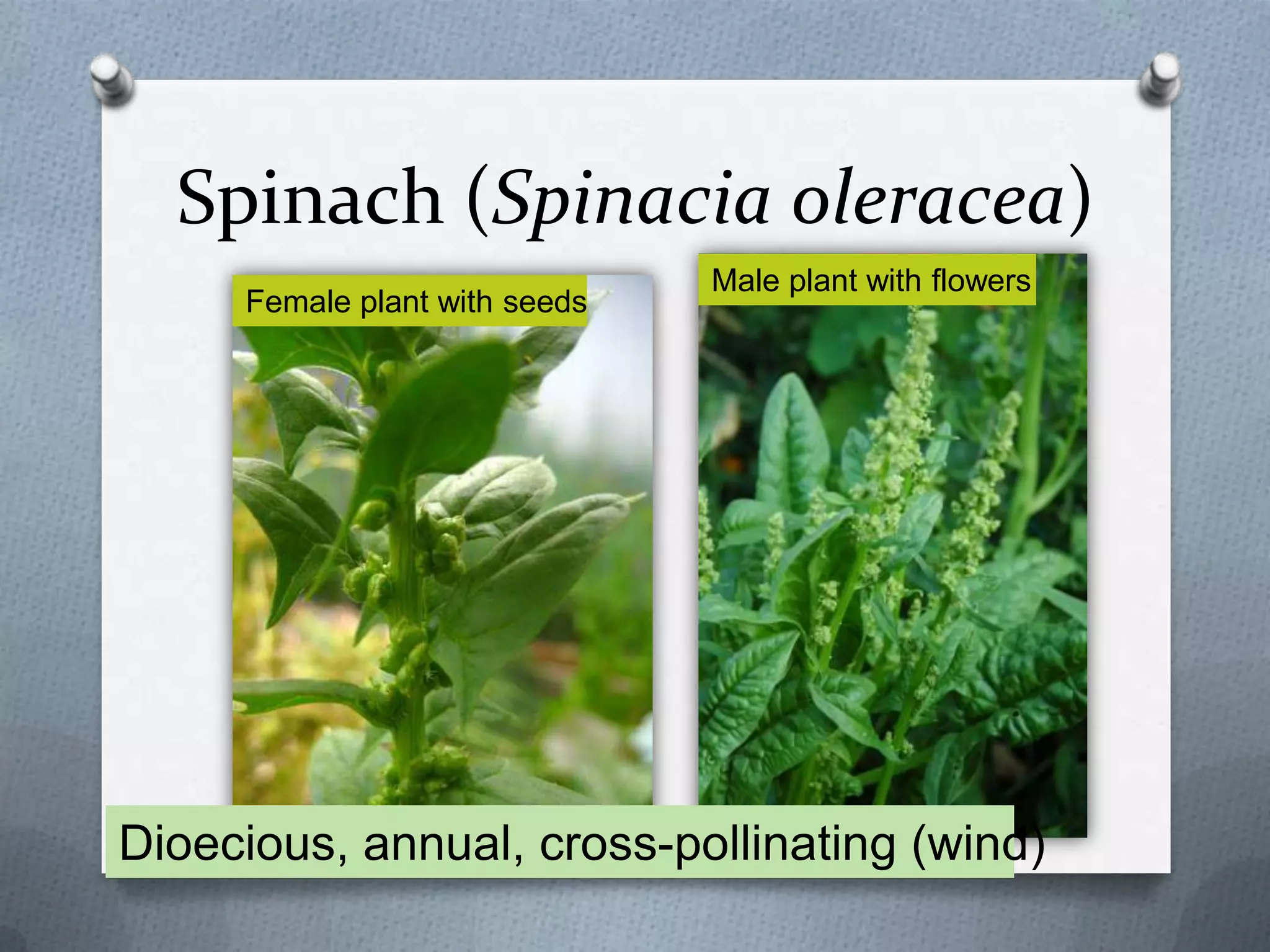
Spinach (Spinacia oleracea)
                               Male plant with flowers
     Female plant with seeds


Dioecious, annual, cross-pollinating (wind)
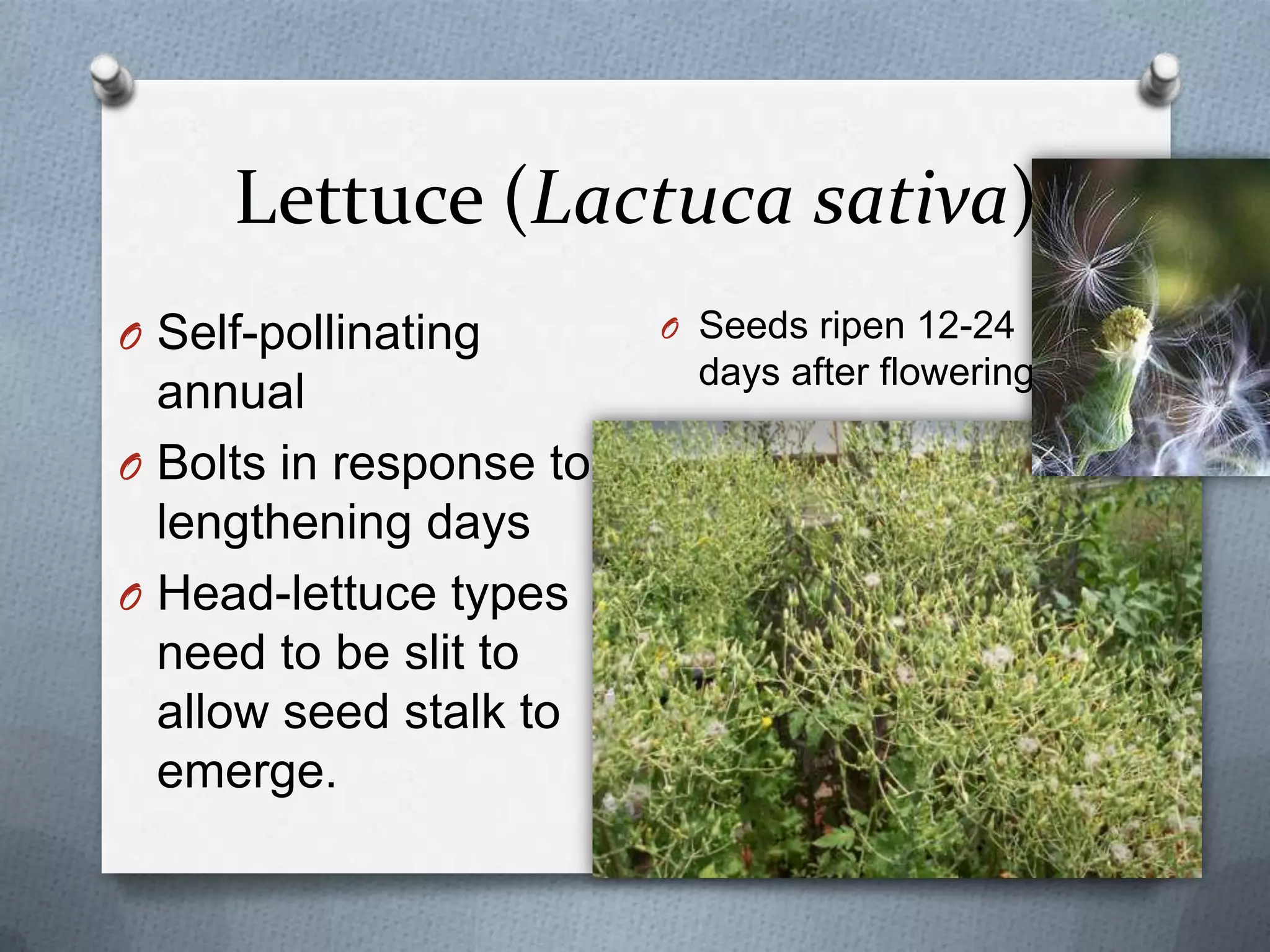
Lettuce (Lactuca sativa)
O Self-pollinating       O Seeds ripen 12-24
                           days after flowering
  annual
O Bolts in response to
  lengthening days
O Head-lettuce types
  need to be slit to
  allow seed stalk to
  emerge.
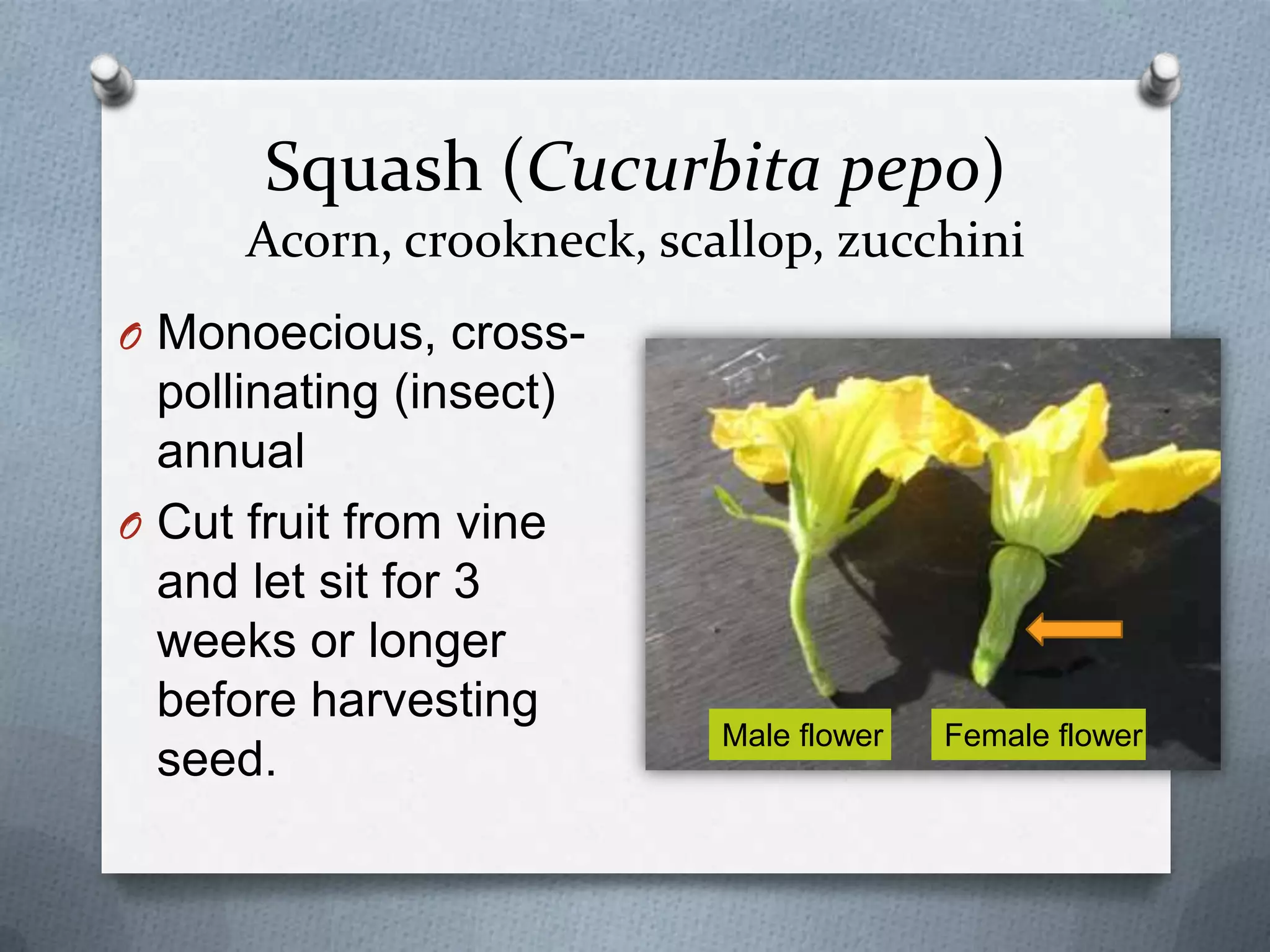
Squash (Cucurbita pepo)
      Acorn, crookneck, scallop, zucchini
O Monoecious, cross-
  pollinating (insect)
  annual
O Cut fruit from vine
  and let sit for 3
  weeks or longer
  before harvesting
                           Male flower   Female flower
  seed.
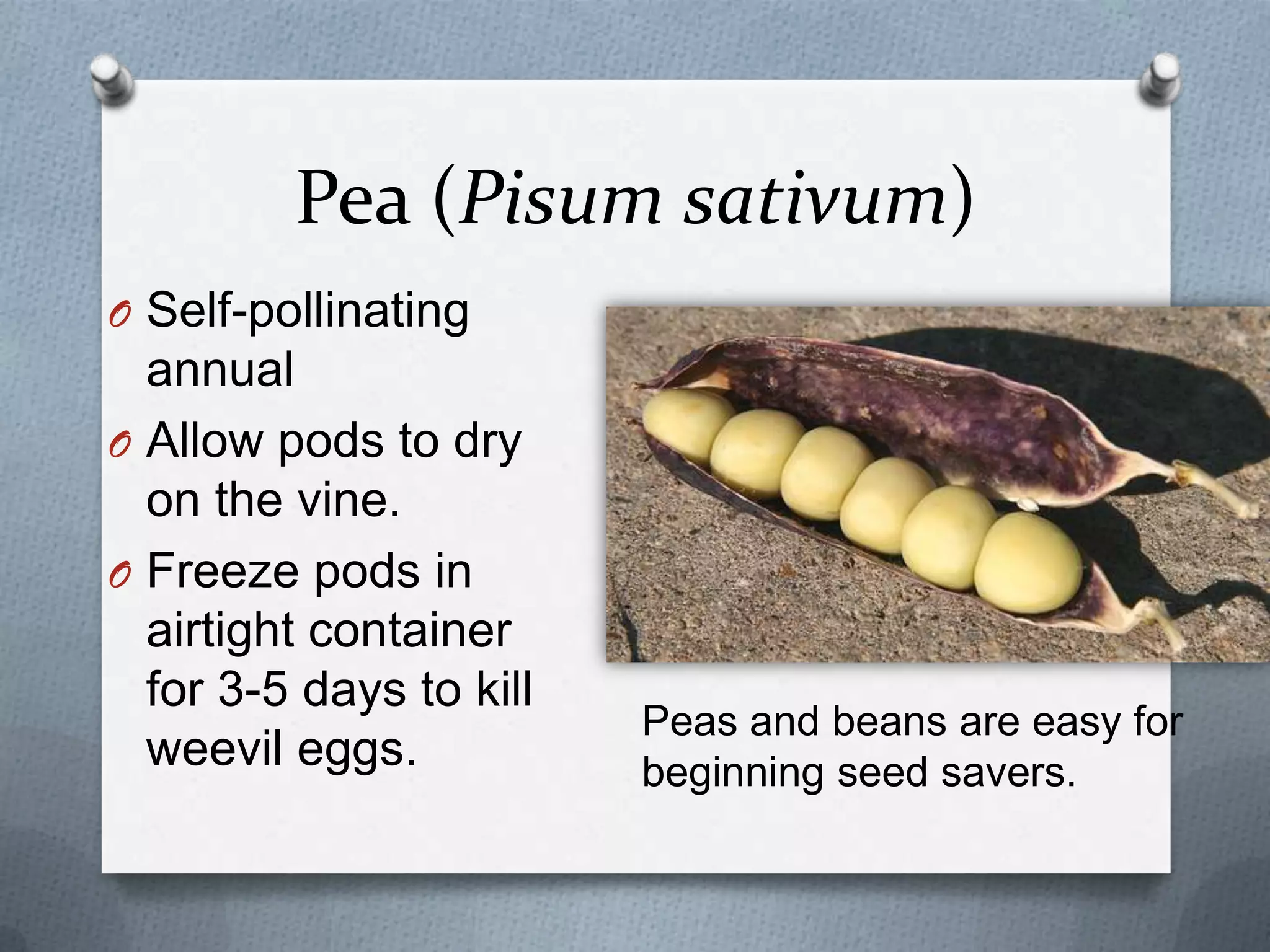
Pea (Pisum sativum)
O Self-pollinating
  annual
O Allow pods to dry
  on the vine.
O Freeze pods in
  airtight container
  for 3-5 days to kill
                         Peas and beans are easy for
  weevil eggs.           beginning seed savers.
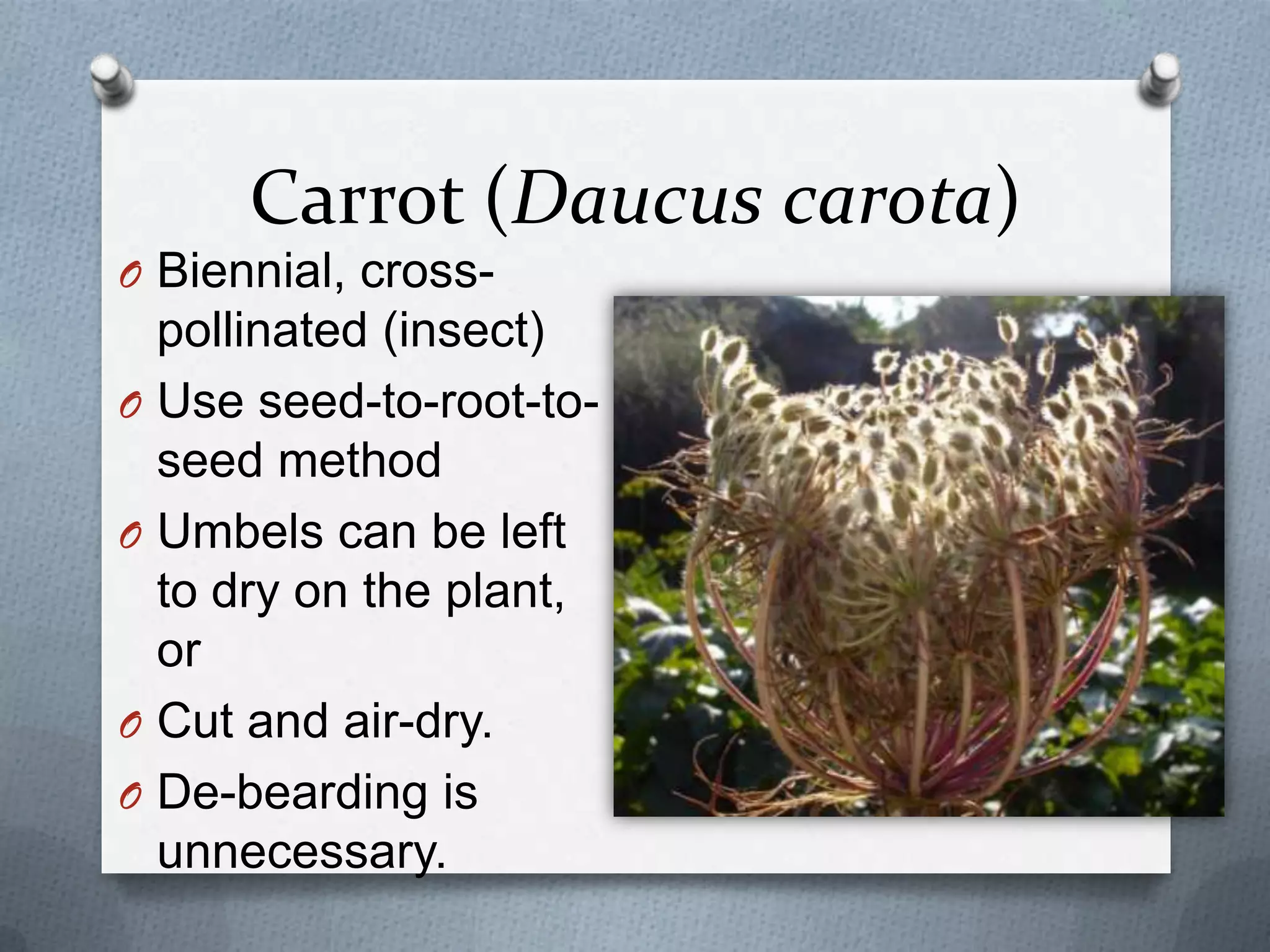
Carrot (Daucus carota)
O Biennial, cross-
  pollinated (insect)
O Use seed-to-root-to-
  seed method
O Umbels can be left
  to dry on the plant,
  or
O Cut and air-dry.
O De-bearding is
  unnecessary.
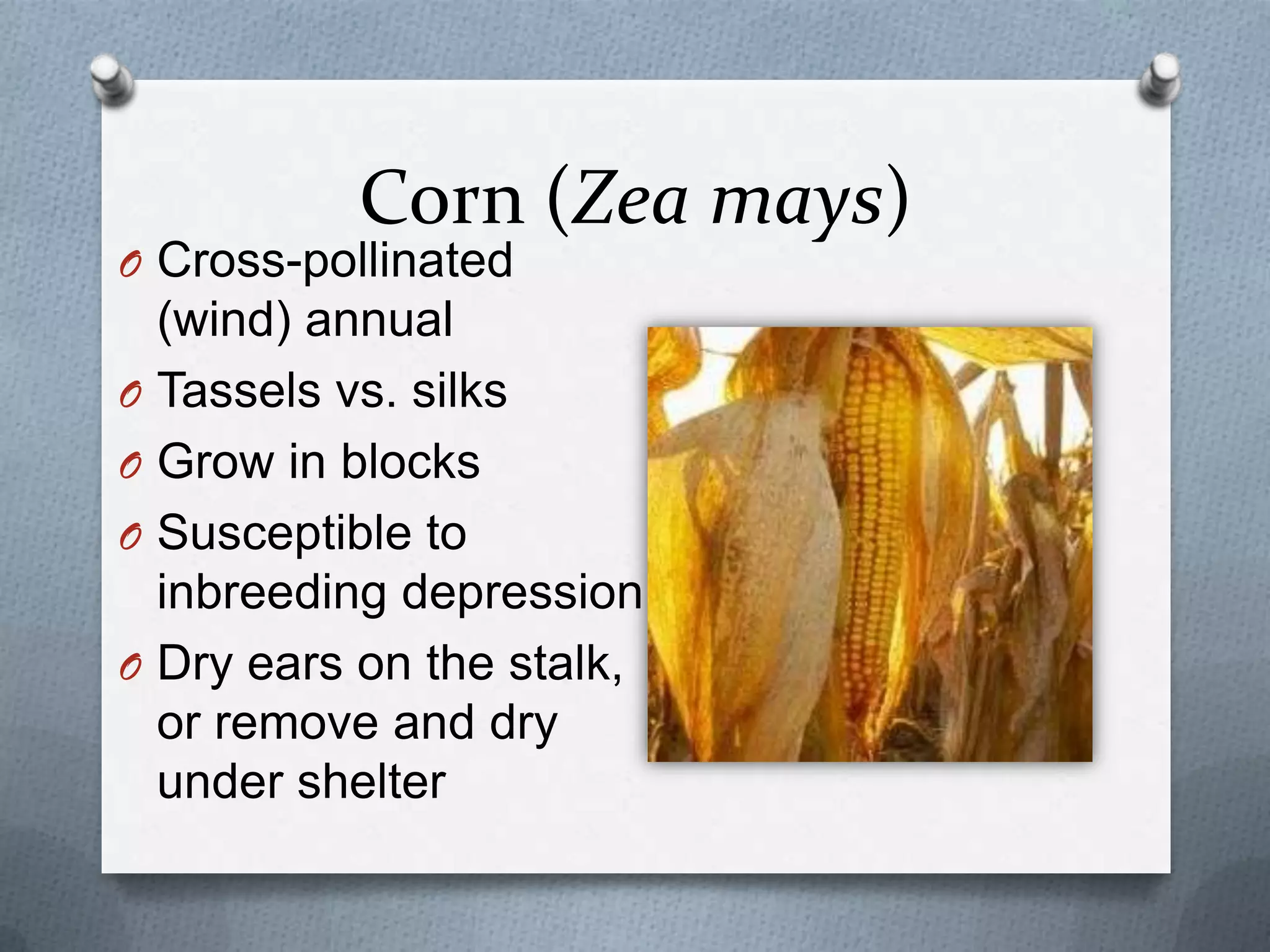
Corn (Zea mays)
O Cross-pollinated
  (wind) annual
O Tassels vs. silks
O Grow in blocks
O Susceptible to
  inbreeding depression
O Dry ears on the stalk,
  or remove and dry
  under shelter
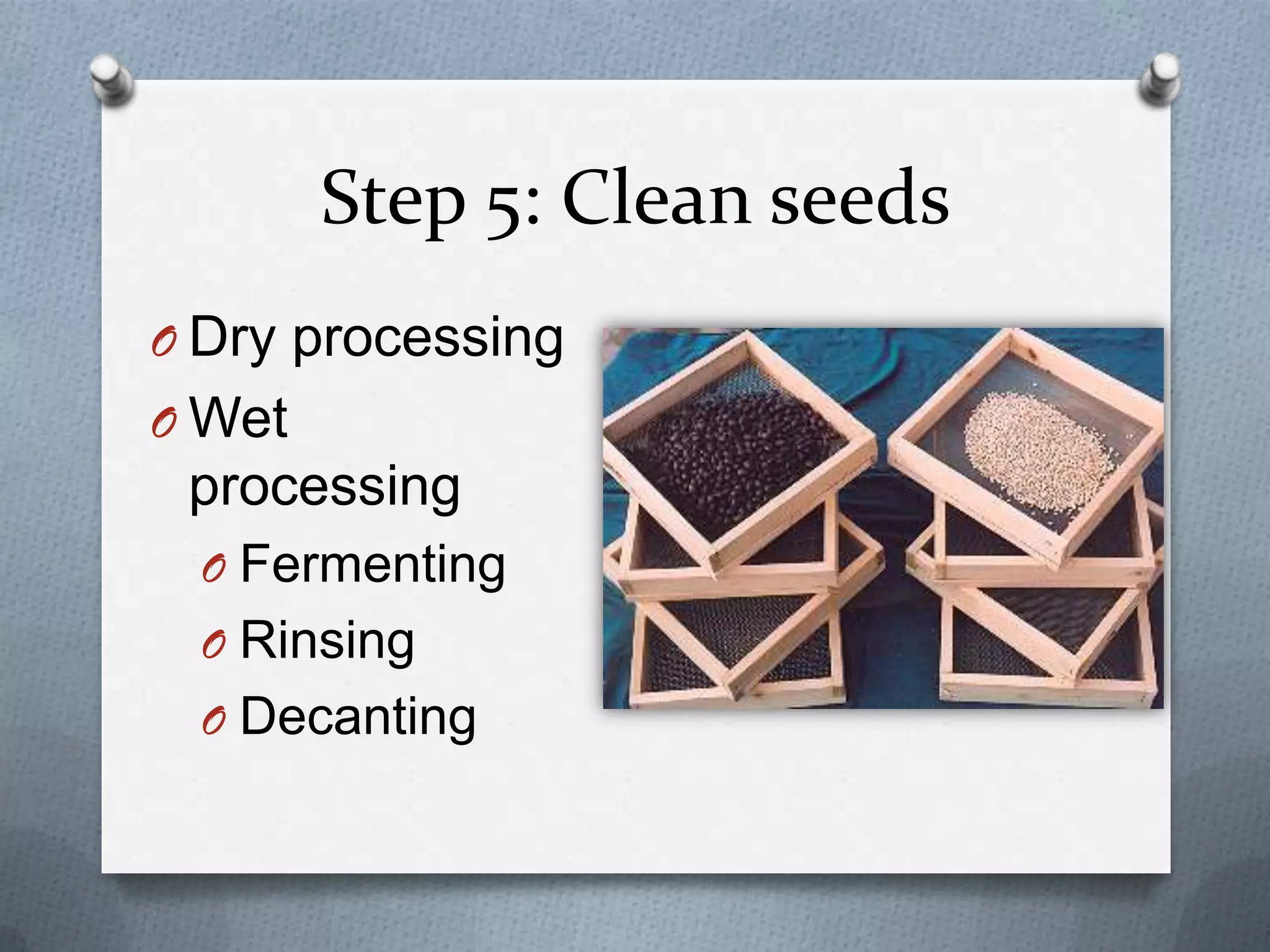
Step 5: Clean seeds
O Dry processing
O Wet
 processing
 O Fermenting
 O Rinsing
 O Decanting
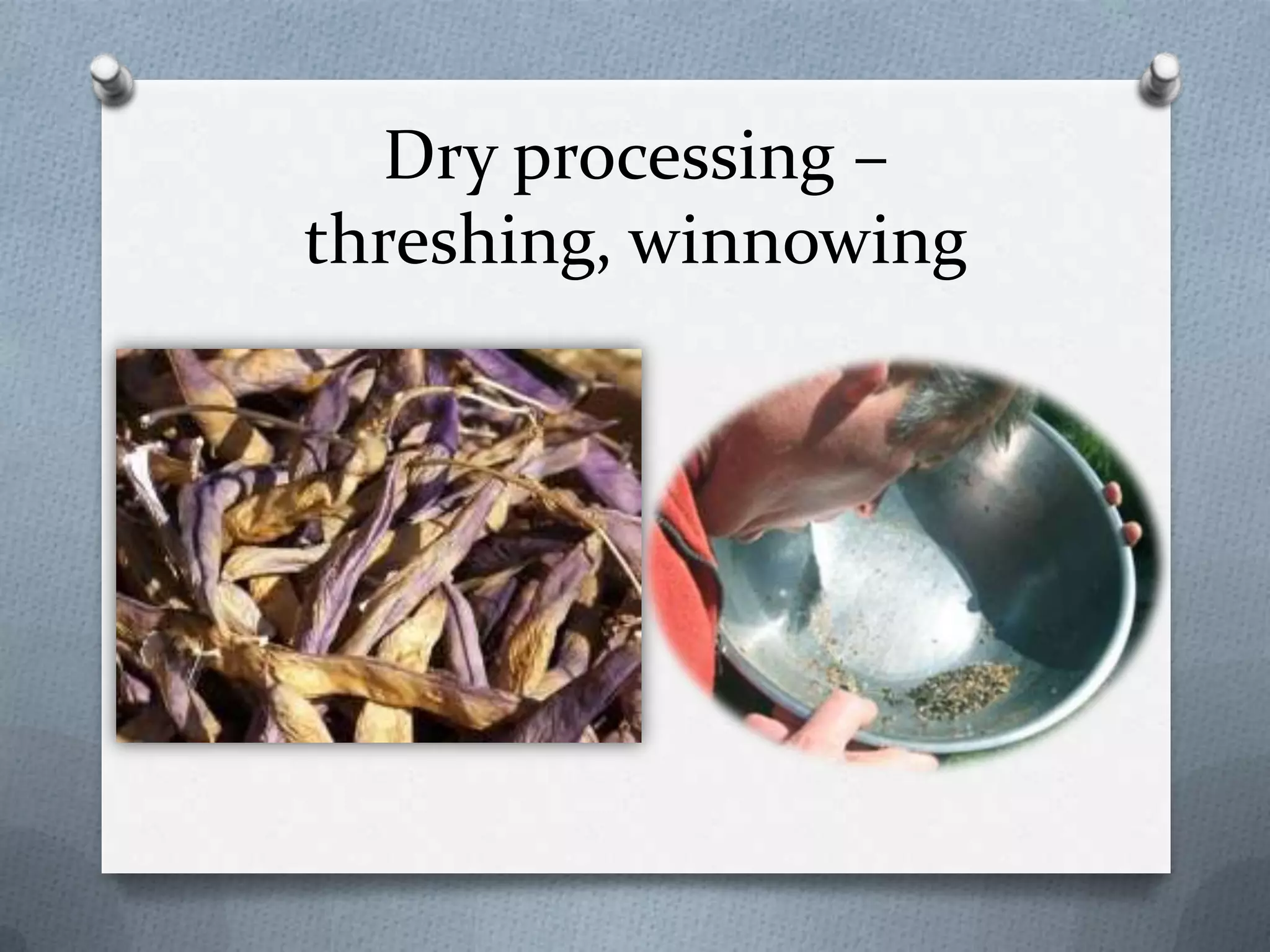
Dry processing –
threshing, winnowing
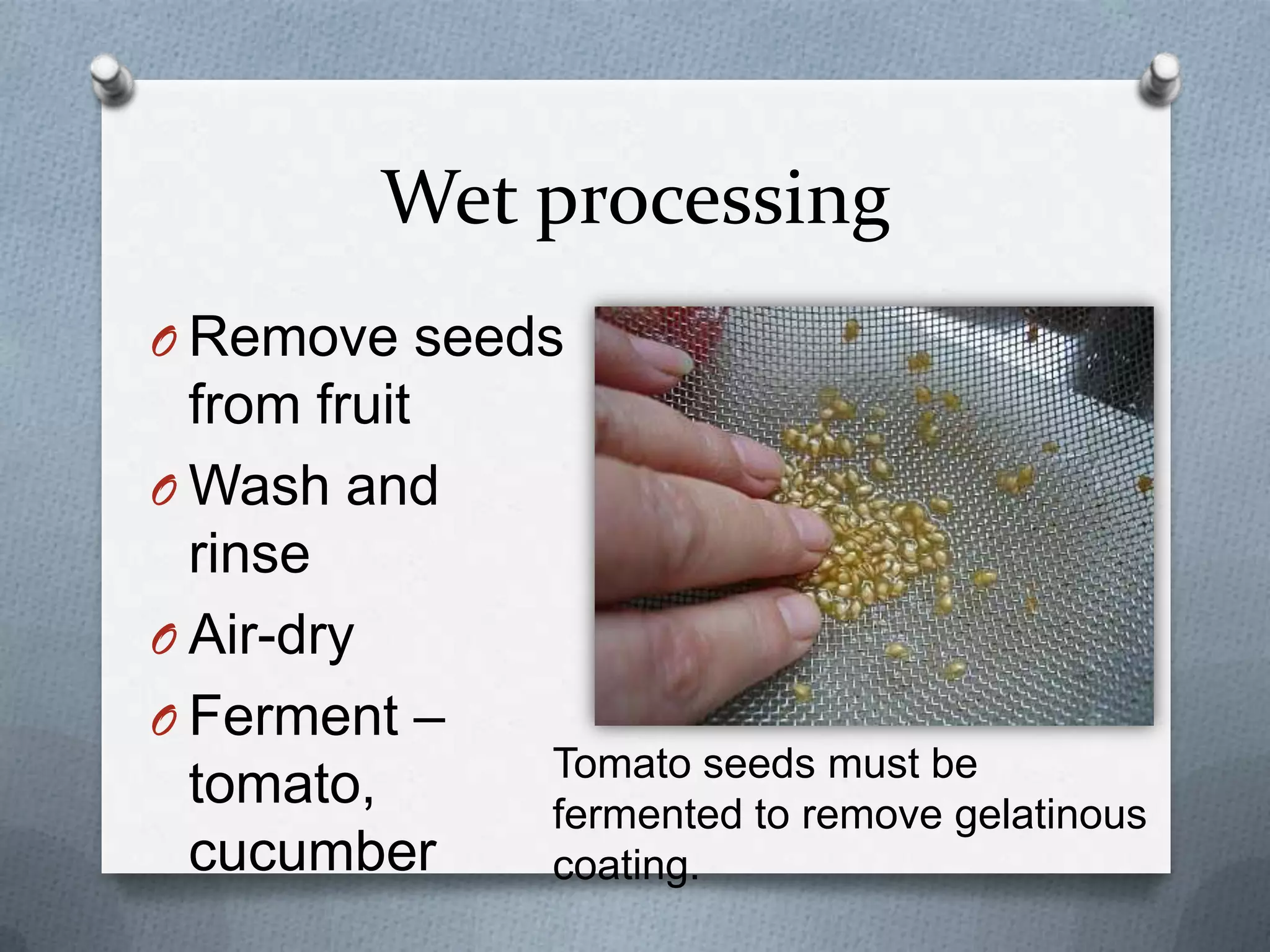
Wet processing
O Remove seeds
  from fruit
O Wash and
  rinse
O Air-dry
O Ferment –
               Tomato seeds must be
  tomato,      fermented to remove gelatinous
  cucumber     coating.
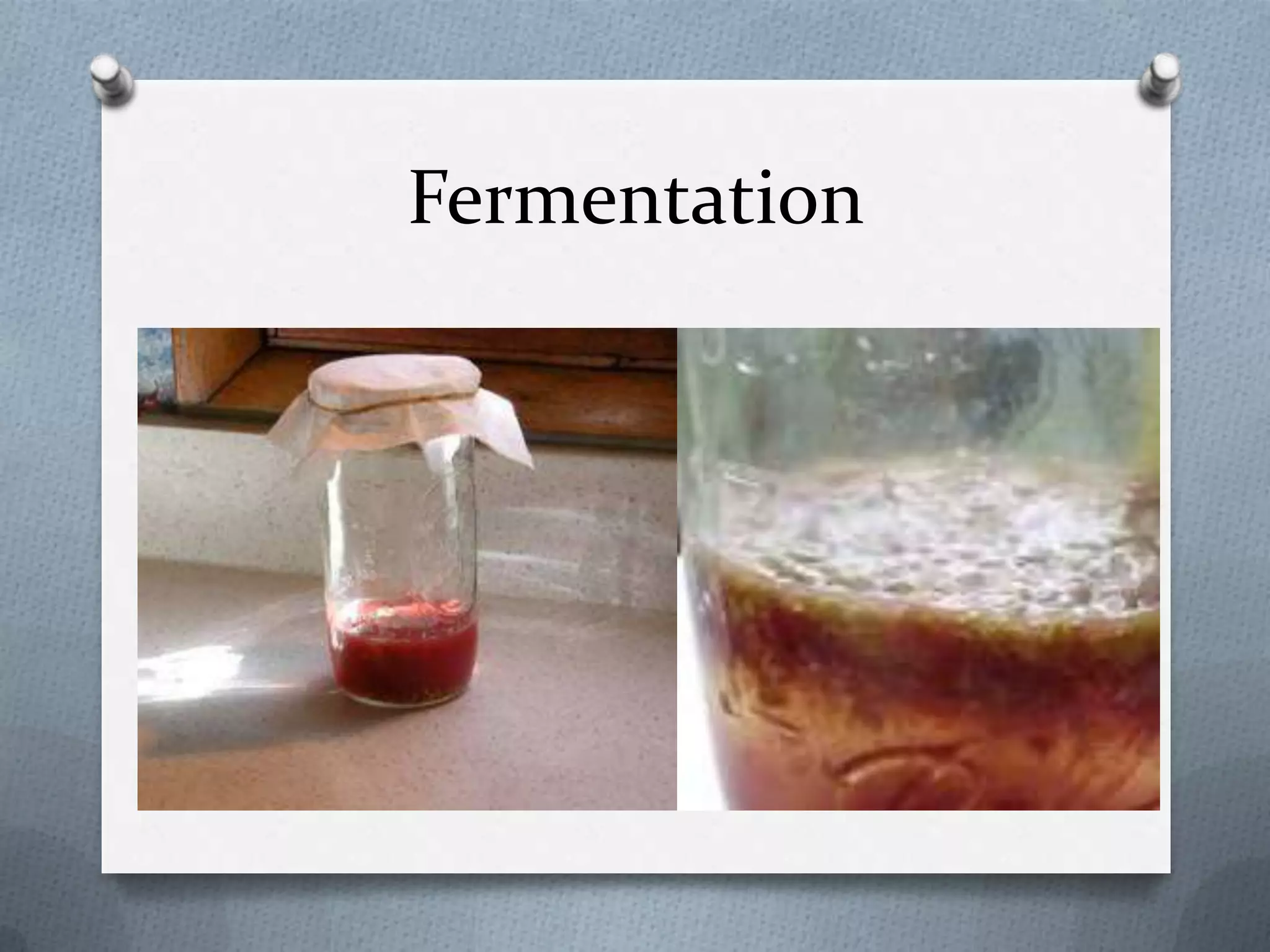
Fermentation
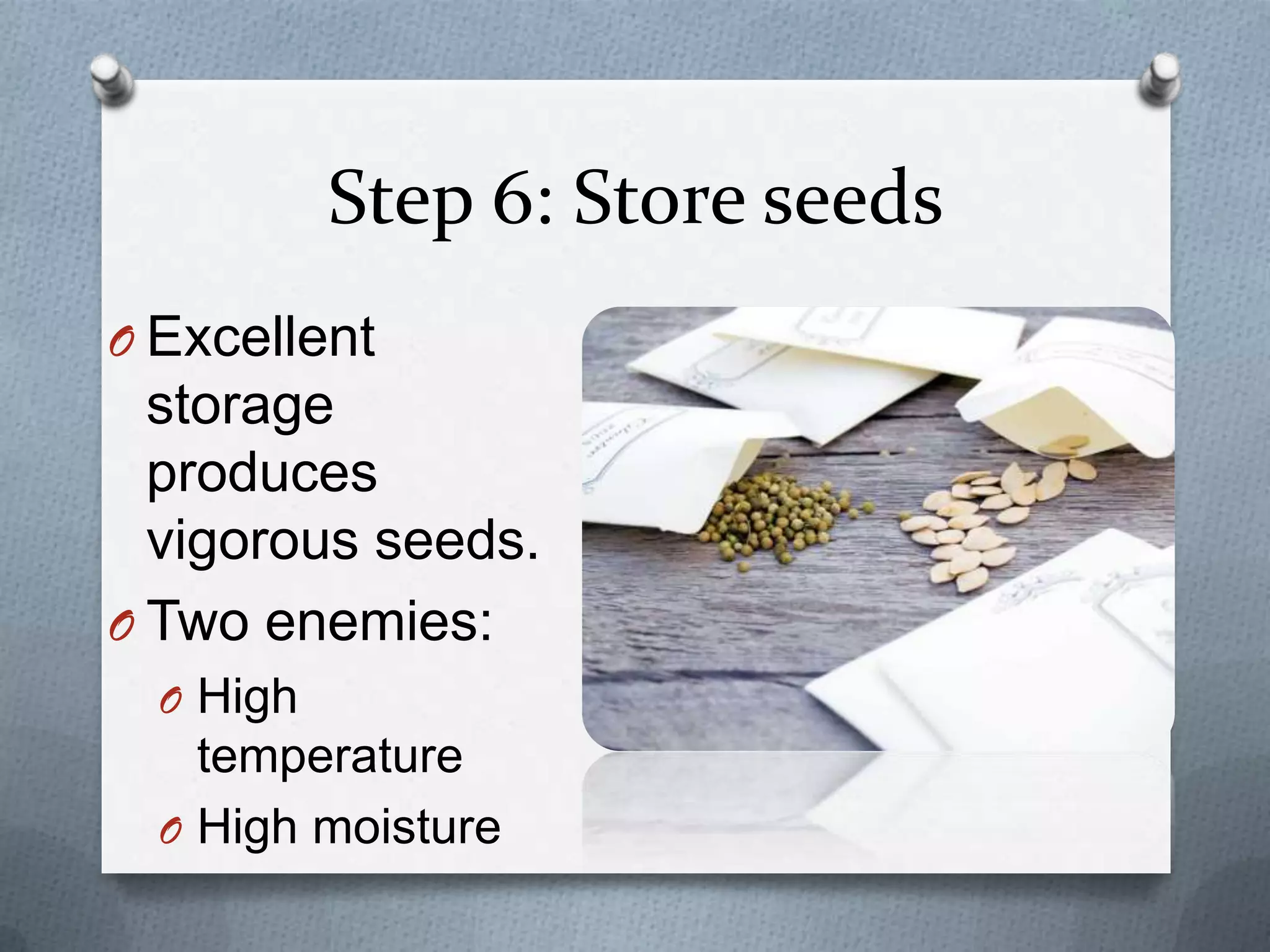
Step 6: Store seeds
O Excellent
  storage
  produces
  vigorous seeds.
O Two enemies:
  O High
    temperature
  O High moisture
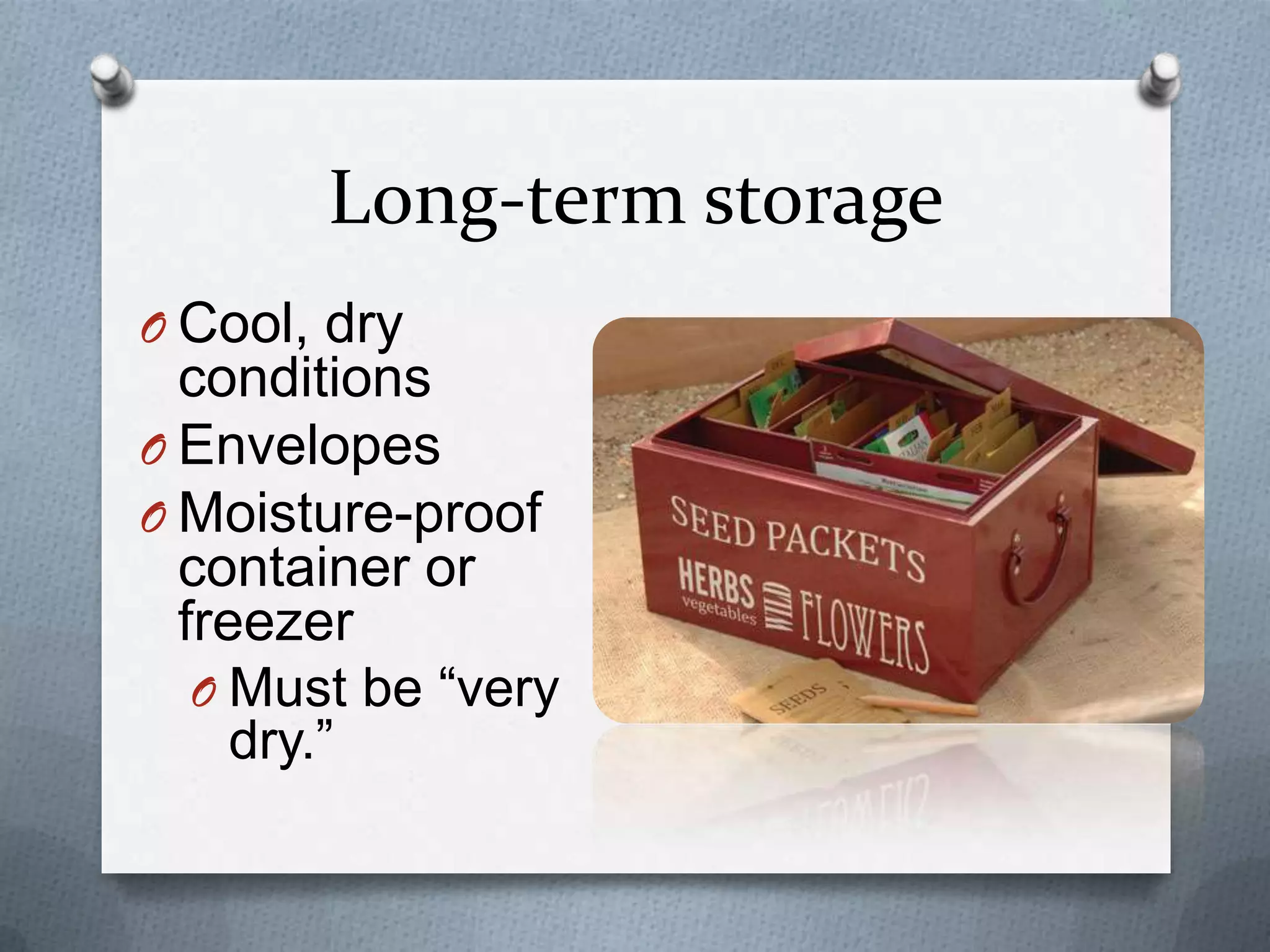
Long-term storage
O Cool, dry
  conditions
O Envelopes
O Moisture-proof
  container or
  freezer
   O Must be “very
     dry.”
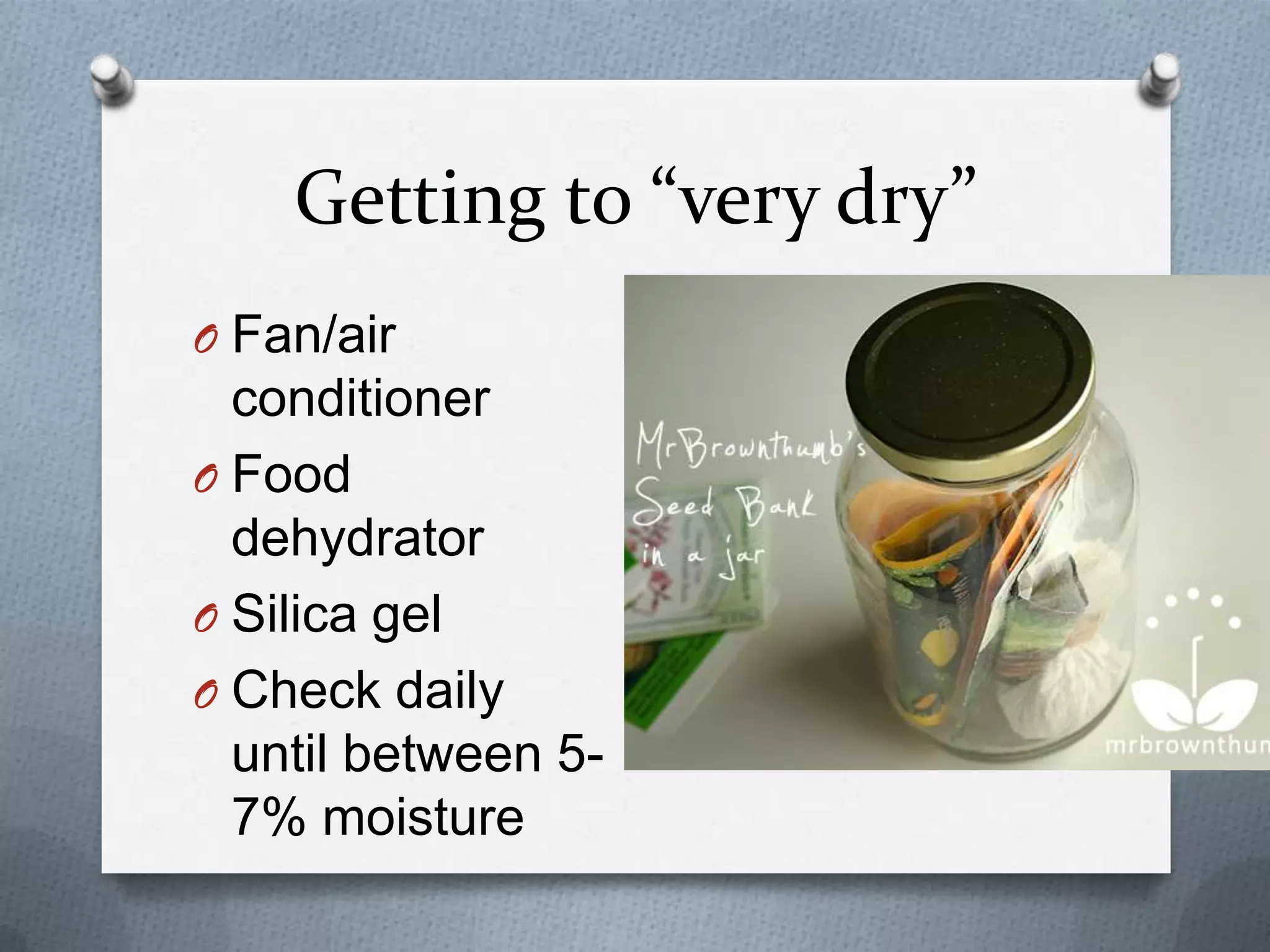
Getting to “very dry”
O Fan/air
  conditioner
O Food
  dehydrator
O Silica gel
O Check daily
  until between 5-
  7% moisture
Testing for Dryness
O Weigh before and after drying
  slowly in an oven at low
  temperature.
O Seed moisture content (%) =
  fresh seed weight – dry seed
  weight ÷ dry seed weight ×
  100%
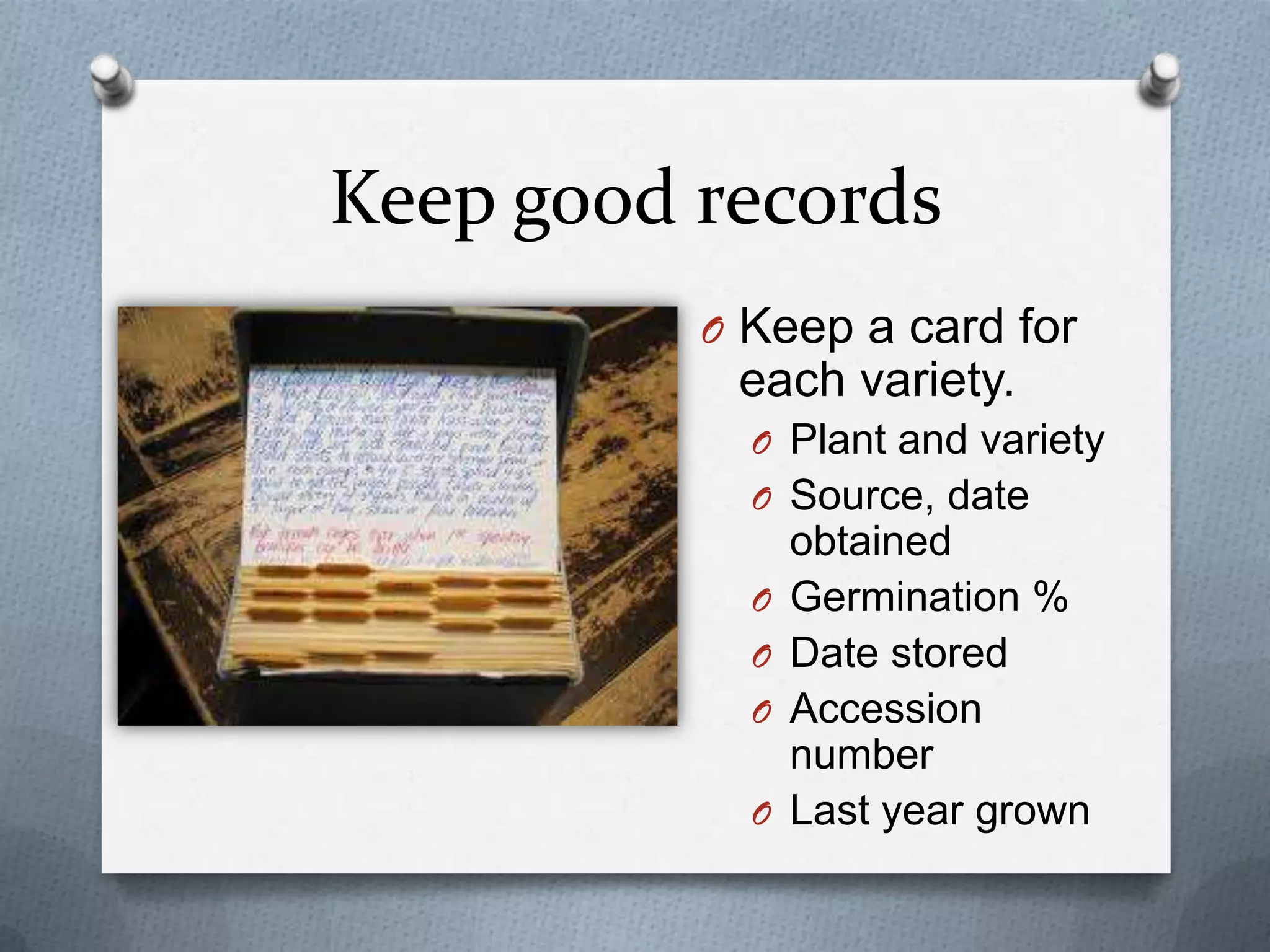
Long-term storage
O Frozen seeds last     Supplies:
  up to 10 times        O Seed Savers
  longer                  Exchange –
O Store in paper        www.seedsavers.org
  envelopes with
  silica gel
  “dessicant” for one
  week.
O Allow frozen sealed
  jar to reach room
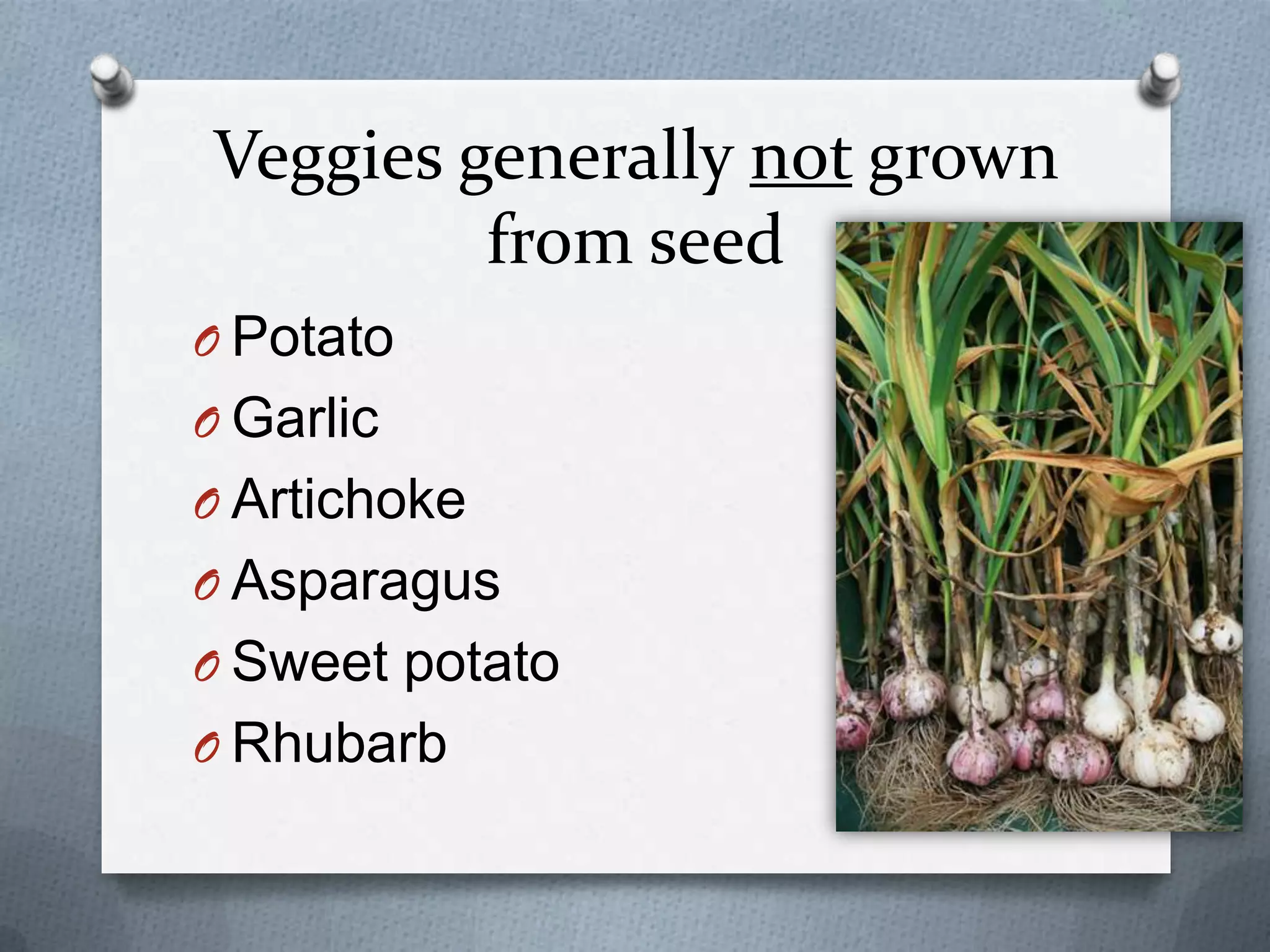
Keep good records
          O Keep a card for
           each variety.
            O Plant and variety
            O Source, date
                obtained
            O   Germination %
            O   Date stored
            O   Accession
                number
            O   Last year grown
Veggies generally not grown
         from seed
O Potato
O Garlic
O Artichoke
O Asparagus
O Sweet potato
O Rhubarb
Questions?

Grow Your Own, Nevada! Spring 2012: Saving seeds from your garden

  • 1.
    Saving Seeds fora Food-Secure Future Heidi Kratsch Area Horticulture Specialist
  • 2.
    What is aSeed? O Product of sexual reproduction O Maximizes genetic diversity
  • 3.
    Genetic diversity isdecreasing O 95% of human food needs now provided by just 4 crops: rice, wheat, corn, potatoes. O Industrial agriculture focuses on only a handful of cultivars. O 75% of agricultural genetic diversity disappeared in the last century.
  • 5.
    Wheat Stem Rust(Ug99) O First identified in Uganda in 1999. O Has spread through Africa into the Middle East. O ~90% of world‟s wheat is defenseless against this virulent strain. Puccinia graminis
  • 6.
  • 7.
    Panama Disease O 1950s – „Gros Michel‟ – wiped out! O Today – „Cavendish‟- it‟s dying! O Future – do we need a new cultivar?
  • 8.
  • 9.
  • 11.
    Step 1: Avoidgrowing F1 hybrids O Almost all corn seed O Many varieties of cross-pollinated species O Must buy new seeds every year
  • 12.
    Choose open-pollinated O Cometrue to type O The easiest are self-pollinated: beans, peas, tomatoes, peppers O Heirloom varieties – saved through generations of families and neighbors O History goes back 12,000 years!
  • 13.
    Step 2: Protectvarietal purity
  • 14.
  • 15.
    Definition of Terms OAnnual, biennial, perennial O Perfect flower O Self-incompatible O Imperfect flowers O Monoecious (single house) plants O Dioecious (two houses) plants
  • 16.
  • 17.
    Bagging self-pollinators Bagging flowers on pepper plants
  • 18.
    Plants self-pollinate inthe bag Treated paper bags Reemay bags
  • 19.
  • 20.
    Cross-pollination by insects O Cucurbits O Brassicas O Umbelliferae
  • 21.
    Cross-pollination by wind OCorn O Spinach O Beets O Chard
  • 22.
    Isolate plants thatreadily cross-pollinate O Distance O Time O Bagging O Caging
  • 23.
    Pollination Cages O Frame: O Covered with: O Wood O Spun O Wire polyester cloth O Plastic pipe (Reemay) O Window O Metal tubing screen
  • 24.
    Alternate Day Caging ONeed a minimum of two cages. O Alternate days open to pollinators. Kale and cabbage will readily cross pollinate.
  • 25.
  • 26.
    1 2 3 4
  • 27.
    Step 3: Rogueplants for trueness to type
  • 28.
    Select desirable characteristics OVigor O Earliness O Drought resistance O Insect resistance O Flavor O Late bolting in cool-season crops
  • 29.
    Ample population size OEspecially important for cross-pollinating plants. O Select a minimum of 6 plants for seed saving. O More plants = more genetic diversity
  • 30.
  • 31.
    Overwintering Biennials O Biennialsinclude: O Carrot, celery, O Seed-to-seed method parsley vs. O Beet, chard O Leek, onion O Seed-to-root-to-seed O Rutabaga, turnip, method parsnip O Broccoli, kale, brussels sprouts
  • 32.
  • 33.
    Onions (Allium cepa) Cepa group O Biennial, self- pollinating O Overwinter in ground or lift bulbs. O Bulbs – harvest seed first season O Seed – harvest Don‟t wait too long to seed second harvest seed or the seed season. heads will shatter!
  • 34.
    Broccoli (Brassica oleracea) OBiennial, cross- pollinating (insect) O Will cross with all other plants of this species. O Do not eat plants grown for seed. O Use cold frame, small hoop house to overwinter.
  • 35.
    Beets and Chards (Beta vulgaris) Up to 4 feet tall! Biennial, cross-pollinated (wind) – bag or cage
  • 36.
    Spinach (Spinacia oleracea) Male plant with flowers Female plant with seeds Dioecious, annual, cross-pollinating (wind)
  • 37.
    Lettuce (Lactuca sativa) OSelf-pollinating O Seeds ripen 12-24 days after flowering annual O Bolts in response to lengthening days O Head-lettuce types need to be slit to allow seed stalk to emerge.
  • 38.
    Squash (Cucurbita pepo) Acorn, crookneck, scallop, zucchini O Monoecious, cross- pollinating (insect) annual O Cut fruit from vine and let sit for 3 weeks or longer before harvesting Male flower Female flower seed.
  • 39.
    Pea (Pisum sativum) OSelf-pollinating annual O Allow pods to dry on the vine. O Freeze pods in airtight container for 3-5 days to kill Peas and beans are easy for weevil eggs. beginning seed savers.
  • 40.
    Carrot (Daucus carota) OBiennial, cross- pollinated (insect) O Use seed-to-root-to- seed method O Umbels can be left to dry on the plant, or O Cut and air-dry. O De-bearding is unnecessary.
  • 41.
    Corn (Zea mays) OCross-pollinated (wind) annual O Tassels vs. silks O Grow in blocks O Susceptible to inbreeding depression O Dry ears on the stalk, or remove and dry under shelter
  • 42.
    Step 5: Cleanseeds O Dry processing O Wet processing O Fermenting O Rinsing O Decanting
  • 43.
  • 44.
    Wet processing O Removeseeds from fruit O Wash and rinse O Air-dry O Ferment – Tomato seeds must be tomato, fermented to remove gelatinous cucumber coating.
  • 45.
  • 46.
    Step 6: Storeseeds O Excellent storage produces vigorous seeds. O Two enemies: O High temperature O High moisture
  • 47.
    Long-term storage O Cool,dry conditions O Envelopes O Moisture-proof container or freezer O Must be “very dry.”
  • 48.
    Getting to “verydry” O Fan/air conditioner O Food dehydrator O Silica gel O Check daily until between 5- 7% moisture
  • 49.
    Testing for Dryness OWeigh before and after drying slowly in an oven at low temperature. O Seed moisture content (%) = fresh seed weight – dry seed weight ÷ dry seed weight × 100%
  • 50.
    Long-term storage O Frozenseeds last Supplies: up to 10 times O Seed Savers longer Exchange – O Store in paper www.seedsavers.org envelopes with silica gel “dessicant” for one week. O Allow frozen sealed jar to reach room
  • 51.
    Keep good records O Keep a card for each variety. O Plant and variety O Source, date obtained O Germination % O Date stored O Accession number O Last year grown
  • 52.
    Veggies generally notgrown from seed O Potato O Garlic O Artichoke O Asparagus O Sweet potato O Rhubarb
  • 53.

Editor's Notes

  • #6 Why is this a problem? Because if disease or future climate change decimates one of the handful of plants and animals we've come to depend on to feed our growing planet, we might desperately need one of those varieties we've let go extinct. The precipitous loss of the world's wheat diversity is a particular cause for concern. One of wheat's oldest adversaries, Pucciniagraminis, a fungus known as stem rust, is spreading across the globe. The pestilence's current incarnation is a virulent and fast-mutating strain dubbed Ug99 because it was first identified in Uganda in 1999. It then spread to Kenya, Ethiopia, Sudan, and Yemen. By 2007 it had jumped the Persian Gulf into Iran. Scientists predict that Ug99 will soon make its way into the breadbaskets of India and Pakistan, then infiltrate Russia, China, and—with a mere hitch of a spore on an airplane passenger's shoe—our hemisphere as well.Roughly 90 percent of the world's wheat is defenseless against Ug99. Were the fungus to come to the U.S., an estimated one billion dollars' worth of wheat would be at risk. Scientists project that in Asia and Africa alone the portion of wheat in imminent danger would leave one billion people without their primary food source. A significant humanitarian crisis is inevitable, according to Rick Ward of the Durable Rust Resistance in Wheat project at Cornell University.
  • #7 ‘Lumpers’ Phytophthorainfestans
  • #8 Fusarium wilt
  • #9 1970s – southern corn leaf blight – 15% of nation’s crop wiped out. Currently, 43% corn acreage planted to varieties derived from 6 inbred lines.
  • #10 Mexico is considered the center of corn biodiversity.
  • #17 Tomatoes, beans, peas, lettuces, peppers
  • #18 Insects sometimes cross-pollinate self-pollinating plants. Except for corn, bagging is used to prevent cross-pollination of self-pollinating plants. Does not work for spinach – wind pollinated and pollen fine enough to pass through the bag.
  • #19 Treated paper bags available from the Lawson Bag Company. Do not use glassine envelopes or plastic bags! Reemay is spun polyester cloth.
  • #23 Annual varieties can be isolated by time. When the first crop is beginning to flower, sow the second variety. (corn, sunflowers, lettuce). Works best with varieties that have different maturity dates – otherwise, season may be too short to allow both to produce.
  • #25 Need at least 2 cages – one for cabbage, one for kale crop. Remove cage from one group in the morning, replace at night. Remove cage from the 2nd group the next morning, replace at night. The process can be stopped when a sufficient number of seed pods have formed. To ensure seed purity, leave cages on both plant groups until all flowering has stopped.
  • #27 The mechanics of plant breeding are not difficult. For cross-pollination, flowers are bagged before they open to prevent uncontrolled pollination or selfing. For perfect flowers, the petals and anthers of the flower to be pollinated should be removed before bagging. Next pollen from the male parent is gently brushed over the stigma of the female. The female is then rebagged to prevent further uncontrolled pollination. The seeds produced from the cross can be collected from the bag. Mature seeds must be cleaned and stored after they are harvested. Cleaning involves removing the ovary tissue surrounding the seed. Seeds from fruit with a fleshy ovary must be allowed to dry before storage. Generally, seeds must be stored to maintain a constant relative humidity – glass jars or ziplock bags work well. Low humidity and refrigeration slows respiration and keeps the seed viable for a long time.
  • #34 Flowers are perfect – but unable to self pollinate. Insect pollinated. Inspect flowers – rogue for bolting or flowering in first season. Harvest as soon as heads are dry. Bend over a sack and cut from stalk to avoid losing seeds.
  • #35 Isolation distance of one mile. Beginners should allow only one variety of oleracea to flower in a season. Some short-season broccolis will flower and produce seed in one season, when planted early. Self-incompatible – insect pollinated. Hold no longer than 4 to 6 weeks before replanting. Store at 32 to 40 F and 80 to 90% humidity.
  • #36 Can plant as is or break apart with a rolling pin. Pollen can travel up to 5 miles. Can bag or cage. Dig root before the first killing frost.
  • #37 Cross-pollinating by wind. Pollen carried up to 10 miles! Fine – penetrates mesh screens. Maintain a ratio of one male to two females. Prickly and smooth seeded varieties – wear gloves. When dry, strip stems in an upward motion, allowing seed to fall into a bag.
  • #38 Heads of 10 to 25 florets. Bees and other hairy insects. All flowers on a head open in one day, close and never re-open.
  • #39 Squashes belong to one of six species. Pepo is most common. Must be bagged and hand-pollinated to ensure purity.
  • #49 Food dehydrator – 85F