GEOLOGICAL
HAZARD
LESSON 1 2ND SEMESTER - DRRR
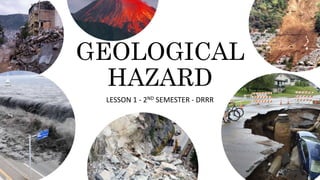
GEOLOGICAL
HAZARD
LESSON 1 - 2ND SEMESTER - DRRR
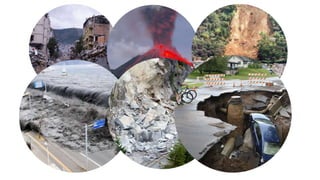
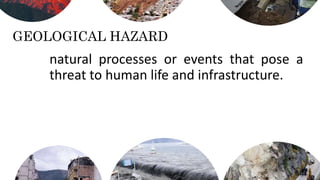
GEOLOGICAL HAZARD
natural processes or events that pose a
threat to human life and infrastructure.
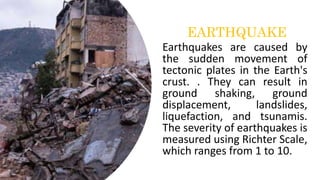
Earthquakes are caused by
the sudden movement of
tectonic plates in the Earth's
crust. . They can result in
ground shaking, ground
displacement, landslides,
liquefaction, and tsunamis.
The severity of earthquakes is
measured using Richter Scale,
which ranges from 1 to 10.
EARTHQUAKE
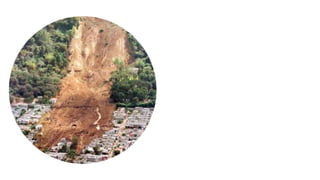
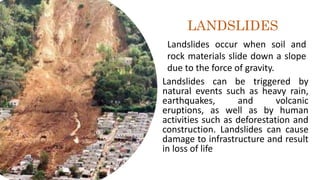
LANDSLIDES
Landslides occur when soil and
rock materials slide down a slope
due to the force of gravity.
Landslides can be triggered by
natural events such as heavy rain,
earthquakes, and volcanic
eruptions, as well as by human
activities such as deforestation and
construction. Landslides can cause
damage to infrastructure and result
in loss of life
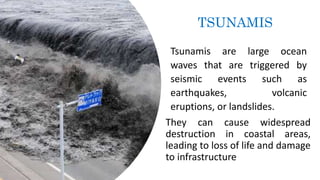
Tsunamis are large ocean
waves that are triggered by
seismic events such as
earthquakes, volcanic
eruptions, or landslides.
They can cause widespread
destruction in coastal areas,
leading to loss of life and damage
to infrastructure
TSUNAMIS
Sinkholes are depressions or
cavities in the ground that occur
when soil or rock collapses. They
can be caused by natural
processes such as erosion, or by
human activities such as mining
and groundwater pumping.
Sinkholes can result in damage to
infrastructure and loss of life.
SINKHOLES
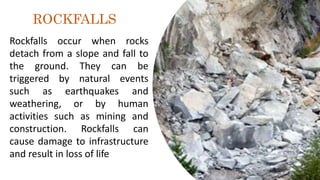
ROCKFALLS
Rockfalls occur when rocks
detach from a slope and fall to
the ground. They can be
triggered by natural events
such as earthquakes and
weathering, or by human
activities such as mining and
construction. Rockfalls can
cause damage to infrastructure
and result in loss of life
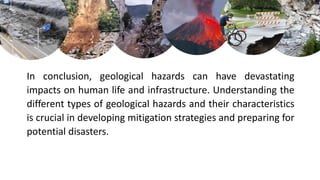
In conclusion, geological hazards can have devastating
impacts on human life and infrastructure. Understanding the
different types of geological hazards and their characteristics
is crucial in developing mitigation strategies and preparing for
potential disasters.
END
GEOLOGICAL HAZARD.pptx

GEOLOGICAL HAZARD.pptx

  • 1.
  • 2.
    GEOLOGICAL HAZARD LESSON 1 -2ND SEMESTER - DRRR
  • 3.
    GEOLOGICAL HAZARD natural processesor events that pose a threat to human life and infrastructure.
  • 5.
    Earthquakes are causedby the sudden movement of tectonic plates in the Earth's crust. . They can result in ground shaking, ground displacement, landslides, liquefaction, and tsunamis. The severity of earthquakes is measured using Richter Scale, which ranges from 1 to 10. EARTHQUAKE
  • 7.
    LANDSLIDES Landslides occur whensoil and rock materials slide down a slope due to the force of gravity. Landslides can be triggered by natural events such as heavy rain, earthquakes, and volcanic eruptions, as well as by human activities such as deforestation and construction. Landslides can cause damage to infrastructure and result in loss of life
  • 9.
    Tsunamis are largeocean waves that are triggered by seismic events such as earthquakes, volcanic eruptions, or landslides. They can cause widespread destruction in coastal areas, leading to loss of life and damage to infrastructure TSUNAMIS
  • 11.
    Sinkholes are depressionsor cavities in the ground that occur when soil or rock collapses. They can be caused by natural processes such as erosion, or by human activities such as mining and groundwater pumping. Sinkholes can result in damage to infrastructure and loss of life. SINKHOLES
  • 13.
    ROCKFALLS Rockfalls occur whenrocks detach from a slope and fall to the ground. They can be triggered by natural events such as earthquakes and weathering, or by human activities such as mining and construction. Rockfalls can cause damage to infrastructure and result in loss of life
  • 15.
    In conclusion, geologicalhazards can have devastating impacts on human life and infrastructure. Understanding the different types of geological hazards and their characteristics is crucial in developing mitigation strategies and preparing for potential disasters.
  • 16.