Objectives
Students willbe able to describe the key types of
geological processes.
Will be able to locate and interpret hazard-prone
regions using maps of fault lines, volcanoes, and
landslide susceptibility.
3.
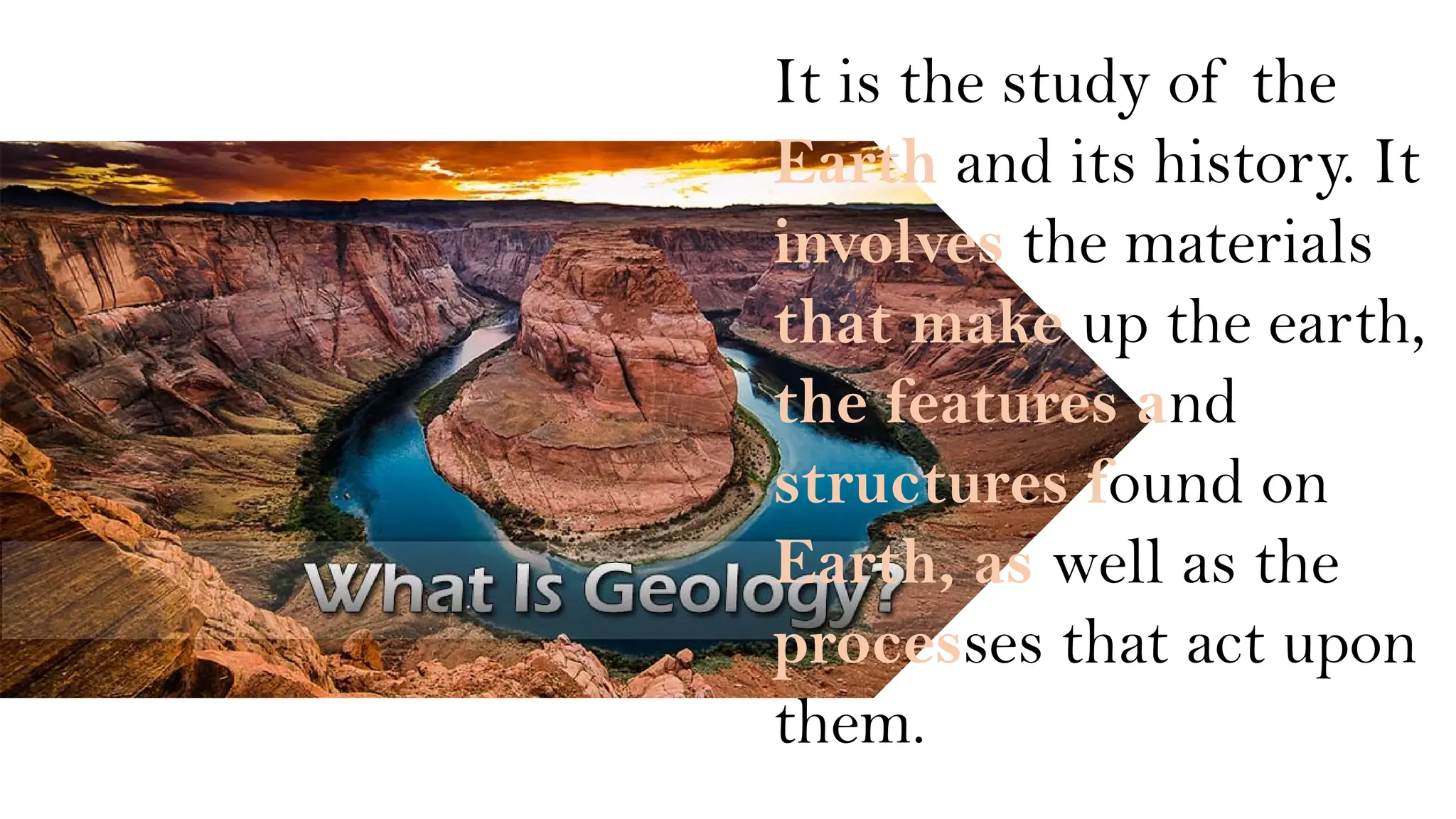
It is thestudy of the
Earth and its history. It
involves the materials
that make up the earth,
the features and
structures found on
Earth, as well as the
processes that act upon
them.
4.
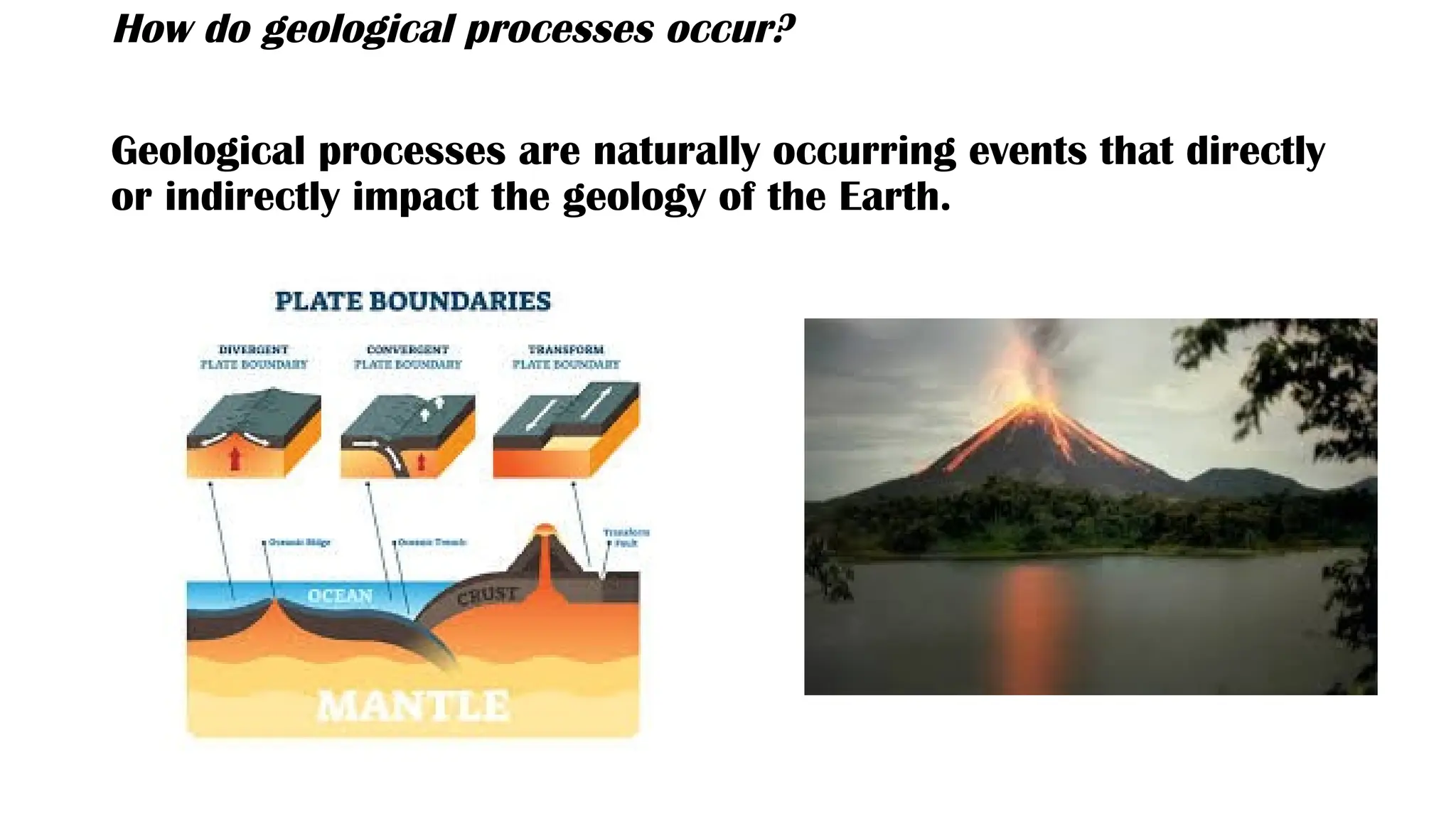
How do geologicalprocesses occur?
Geological processes are naturally occurring events that directly
or indirectly impact the geology of the Earth.
5.
Geological Hazard?
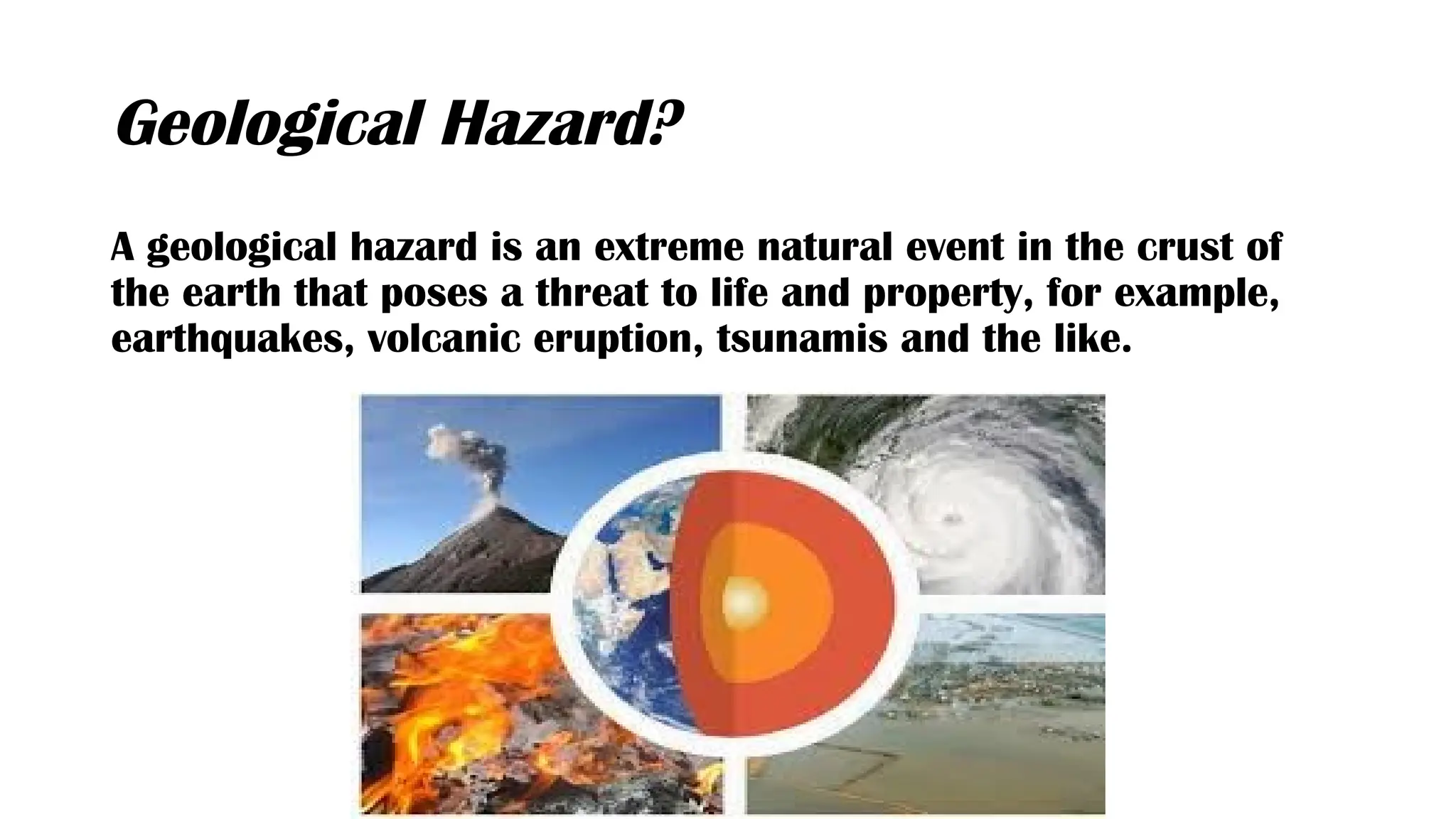
A geologicalhazard is an extreme natural event in the crust of
the earth that poses a threat to life and property, for example,
earthquakes, volcanic eruption, tsunamis and the like.
7.
Earthquakes
One of themost violent natural phenomena.
Earthquakes and volcanic eruptions can trigger landslides, specially in areas with water
saturated soils.
Probably, you will feel the shaking of your body, and even the entire surroundings which
causes the ground shaking.
Earthquakes also happen under the ocean and can cause tsunamis.
9.
Ground Shaking
Is oneof the hazards resulting from earthquakes, volcanic
eruptions, and landslides. Ground shaking is both a hazard
created by earthquakes and the trigger for other hazards such
as liquefaction and landslides. Ground shaking describes the
vibrations of the ground during an earthquake.
10.
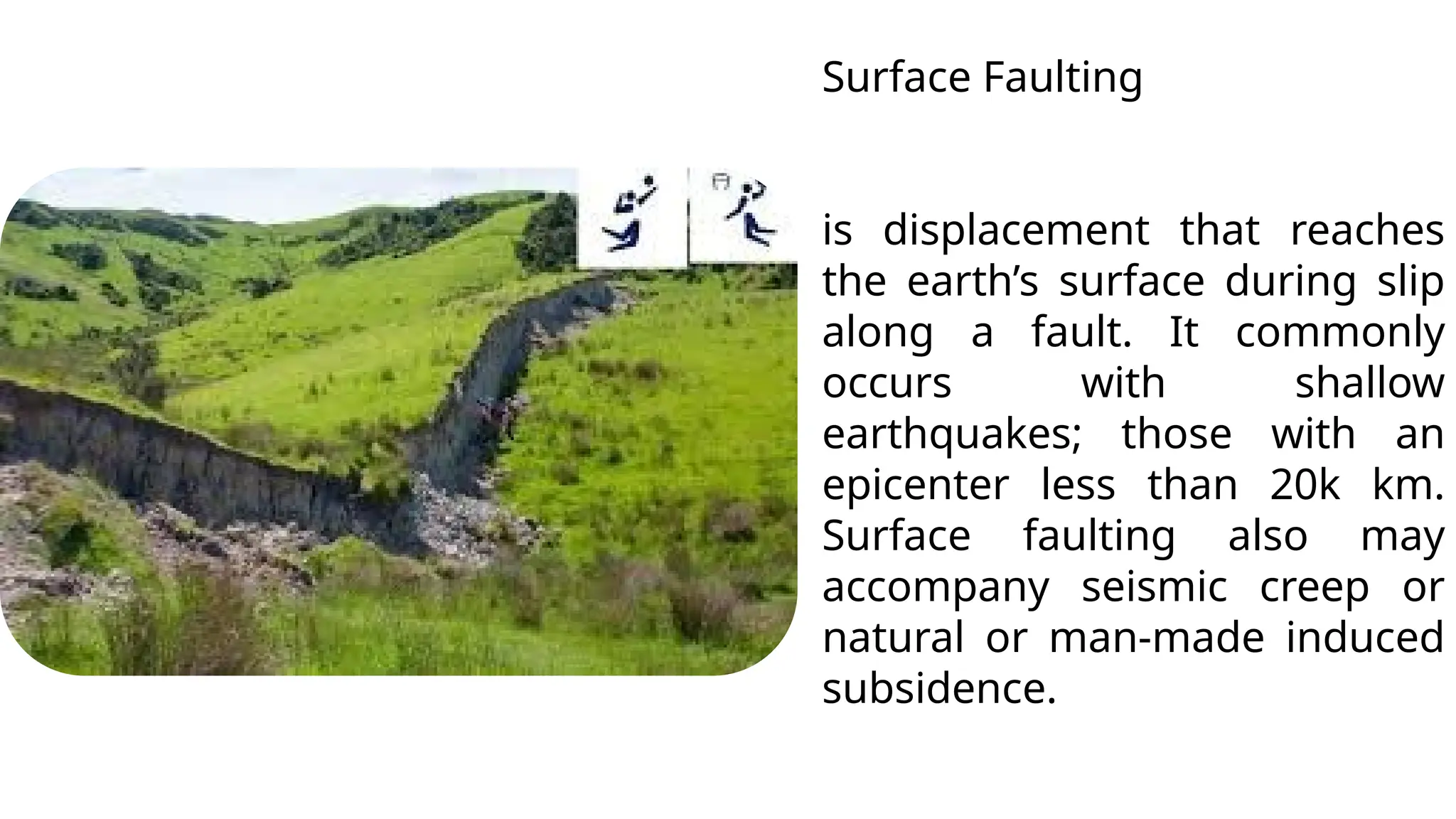
Surface Faulting
is displacementthat reaches
the earth’s surface during slip
along a fault. It commonly
occurs with shallow
earthquakes; those with an
epicenter less than 20k km.
Surface faulting also may
accompany seismic creep or
natural or man-made induced
subsidence.
11.
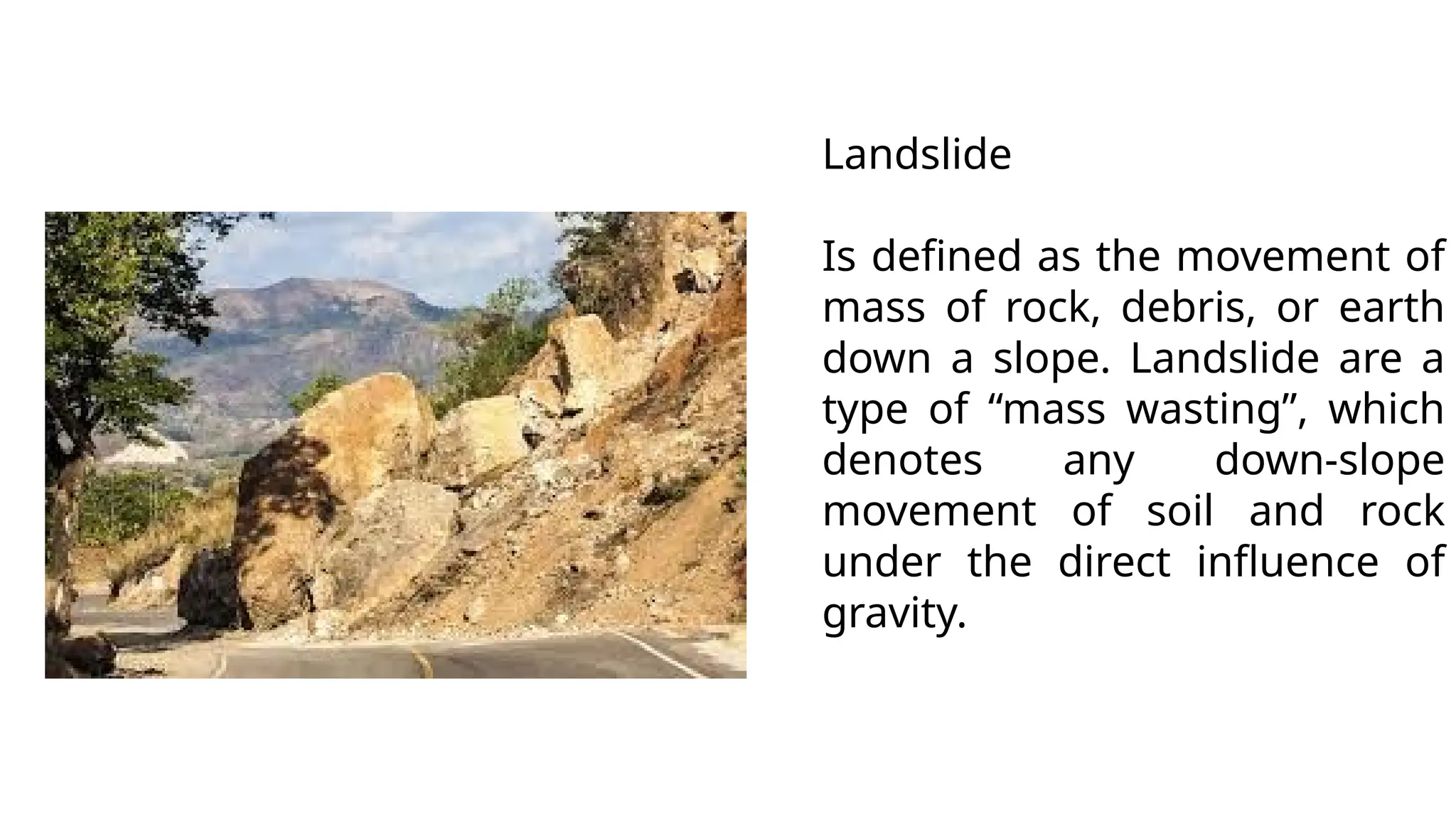
Landslide
Is defined asthe movement of
mass of rock, debris, or earth
down a slope. Landslide are a
type of “mass wasting”, which
denotes any down-slope
movement of soil and rock
under the direct influence of
gravity.
12.
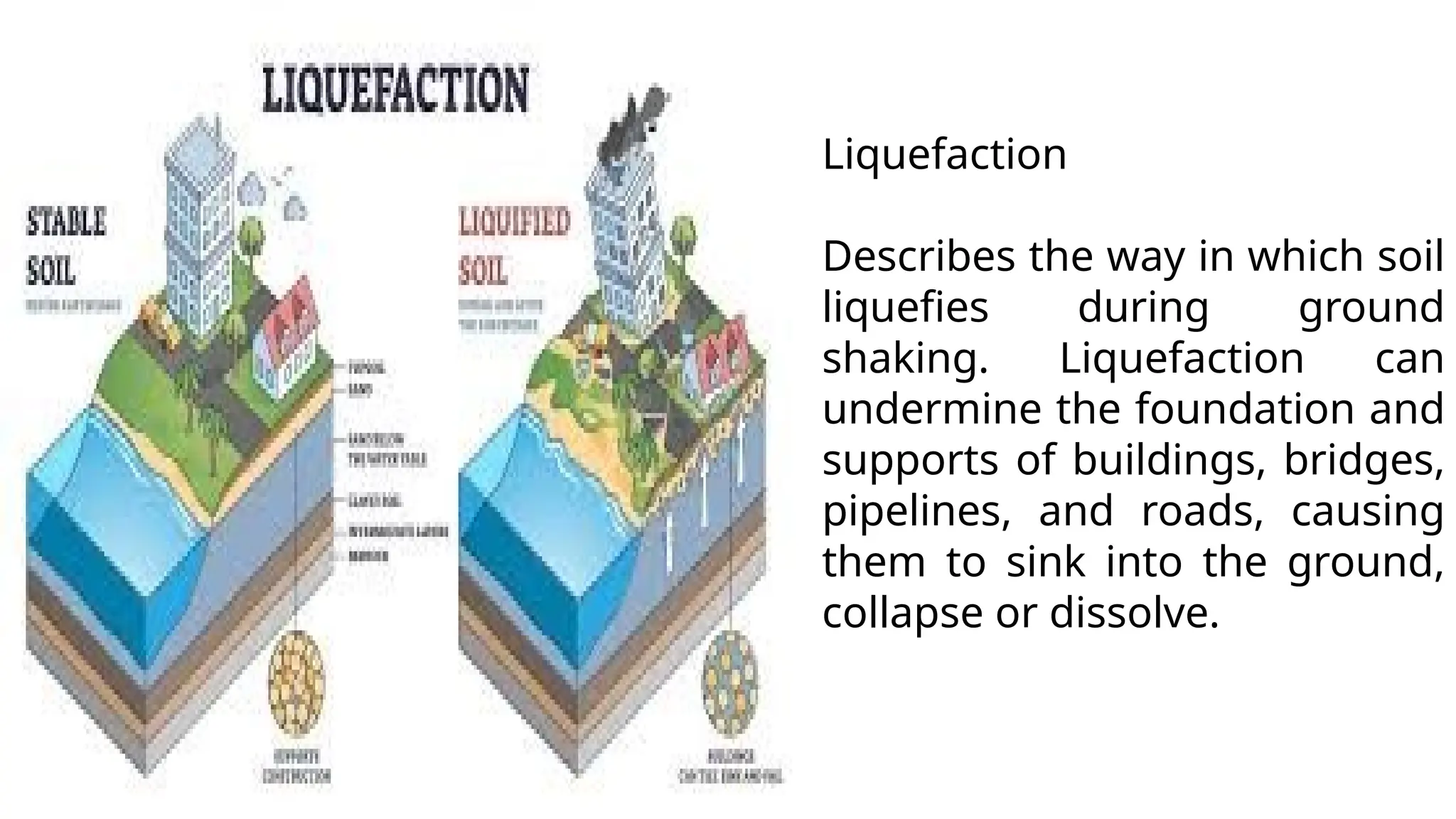
Liquefaction
Describes the wayin which soil
liquefies during ground
shaking. Liquefaction can
undermine the foundation and
supports of buildings, bridges,
pipelines, and roads, causing
them to sink into the ground,
collapse or dissolve.
13.
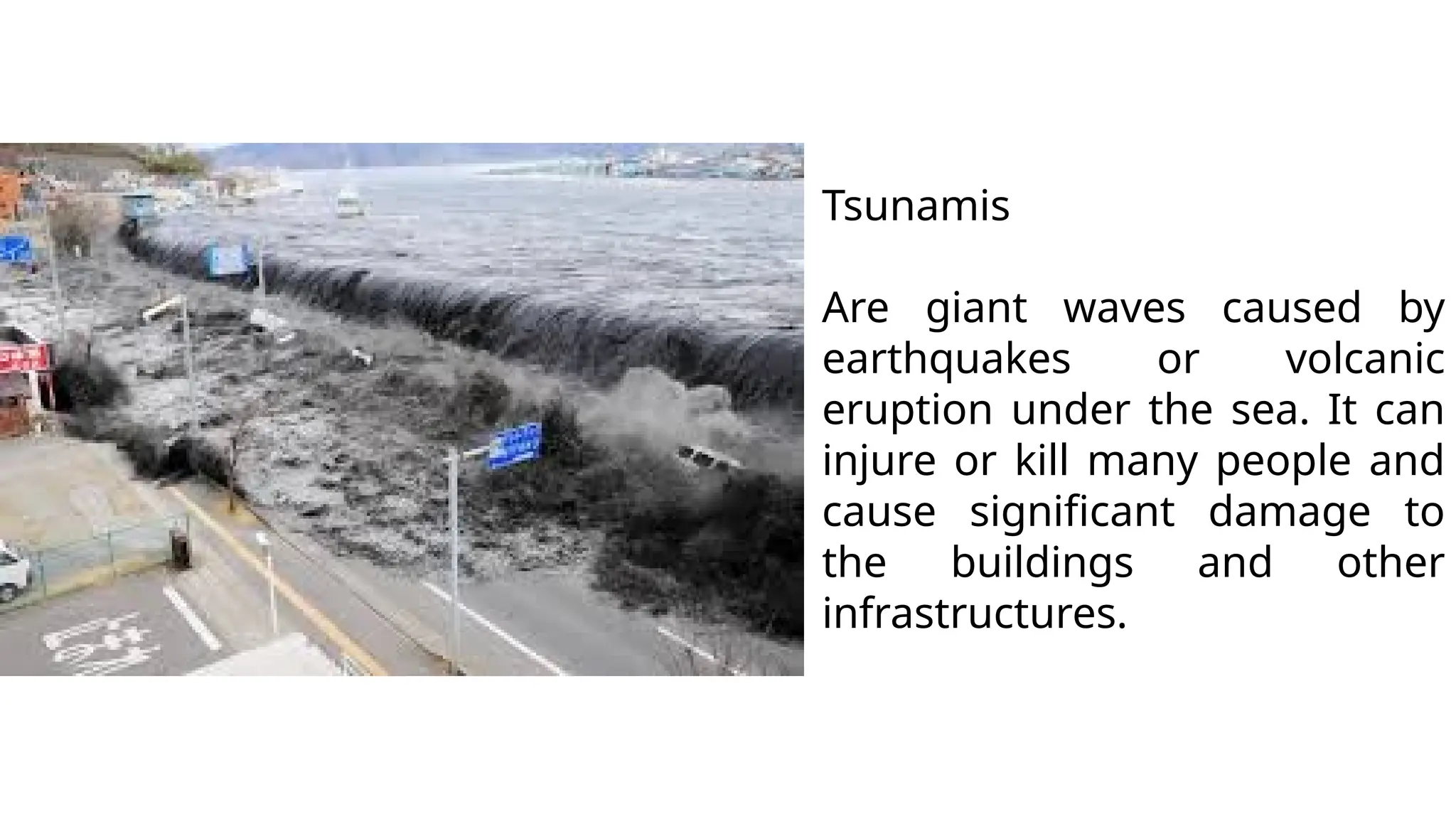
Tsunamis
Are giant wavescaused by
earthquakes or volcanic
eruption under the sea. It can
injure or kill many people and
cause significant damage to
the buildings and other
infrastructures.
15.
Volcanic Eruptions
Occurs whenmagma is released from a volcano.
Volcanic eruptions are major natural hazards on
Earth and can have devastating effect on people and
environment.
16.
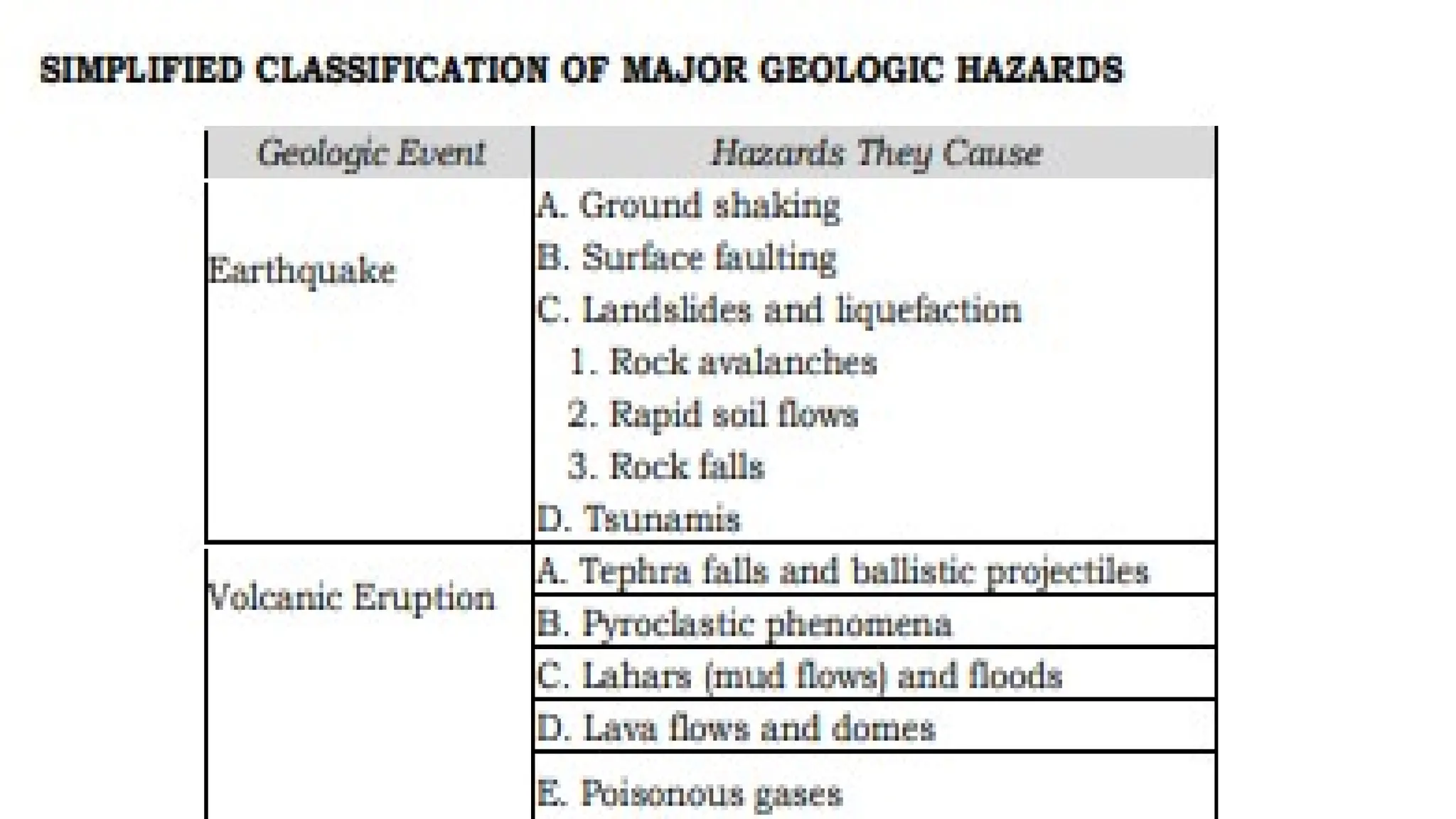
Hazards cause byvolcanic eruptions
A.Tephra
B.Pyroclastic flow
C.Lahar
D.Flood
E. Lava domes
F. Poisonous Gases
17.
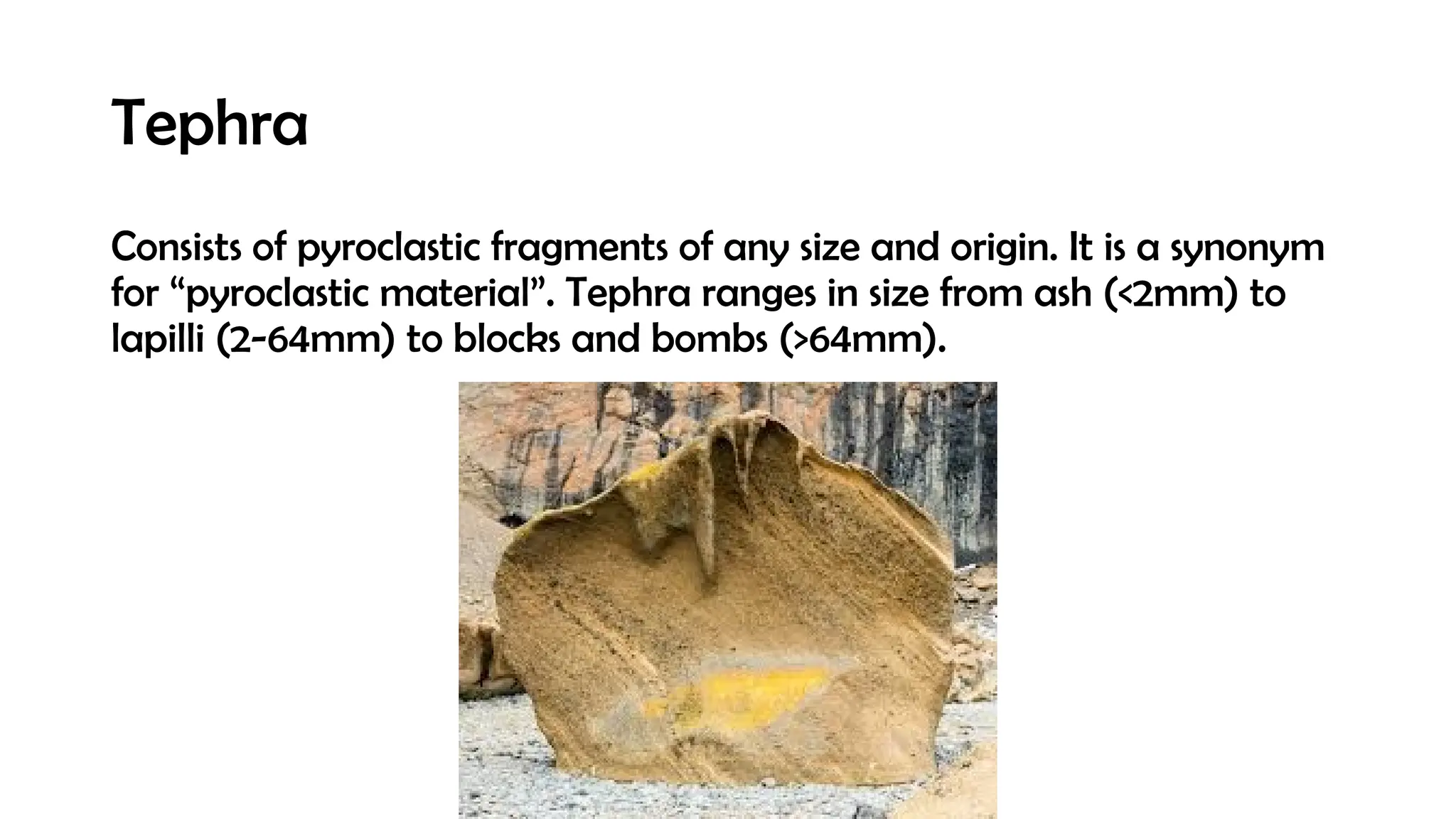
Tephra
Consists of pyroclasticfragments of any size and origin. It is a synonym
for “pyroclastic material”. Tephra ranges in size from ash (<2mm) to
lapilli (2-64mm) to blocks and bombs (>64mm).
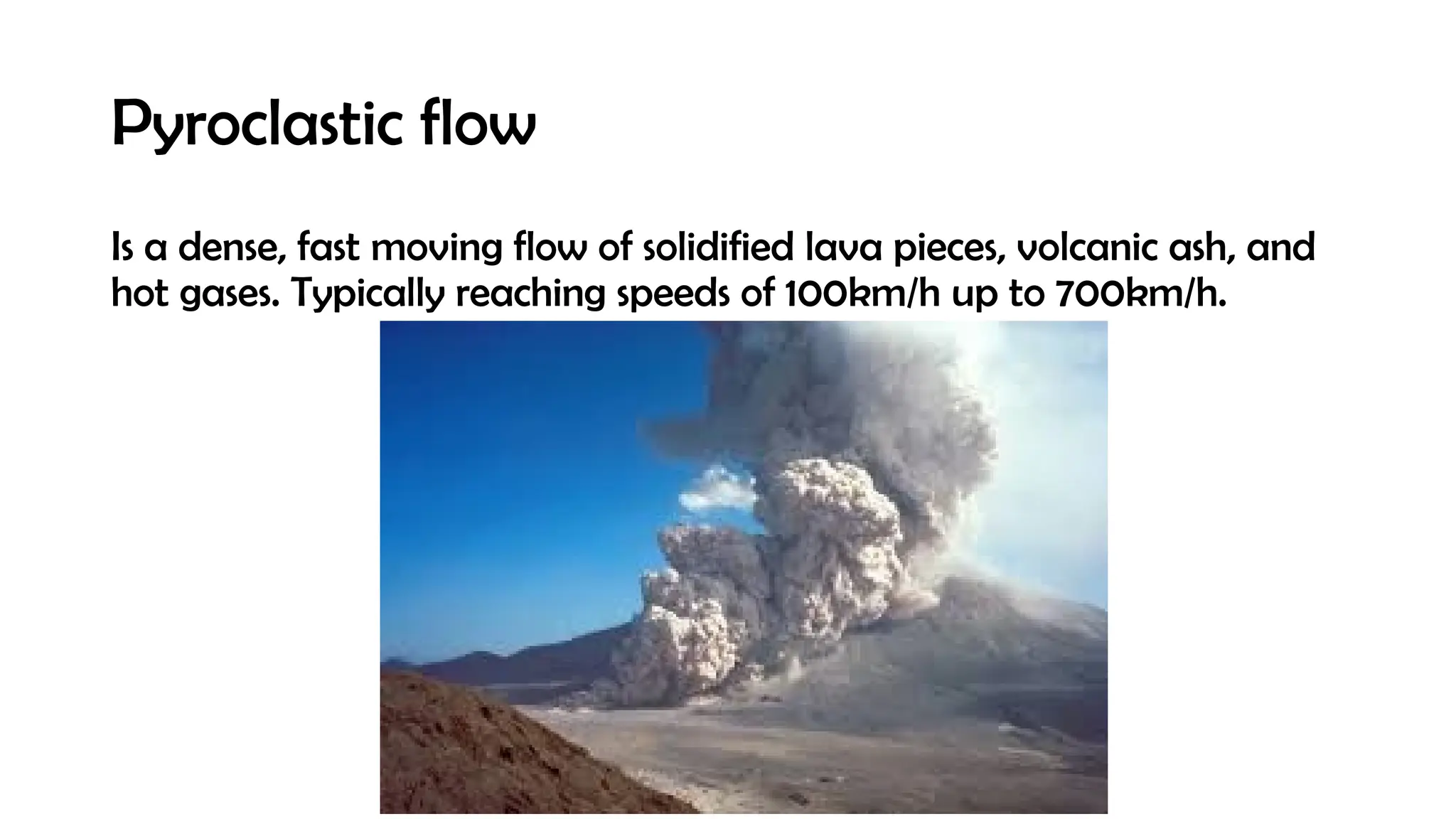
18.
Pyroclastic flow
Is adense, fast moving flow of solidified lava pieces, volcanic ash, and
hot gases. Typically reaching speeds of 100km/h up to 700km/h.
19.
Lahar
Indonesian term thatdescribes a hot or cold mixture. Lahars are
extremely dangerous especially to those living in valley areas near
volcano. Lahars can destroy manmade structures including roads and
bridges.
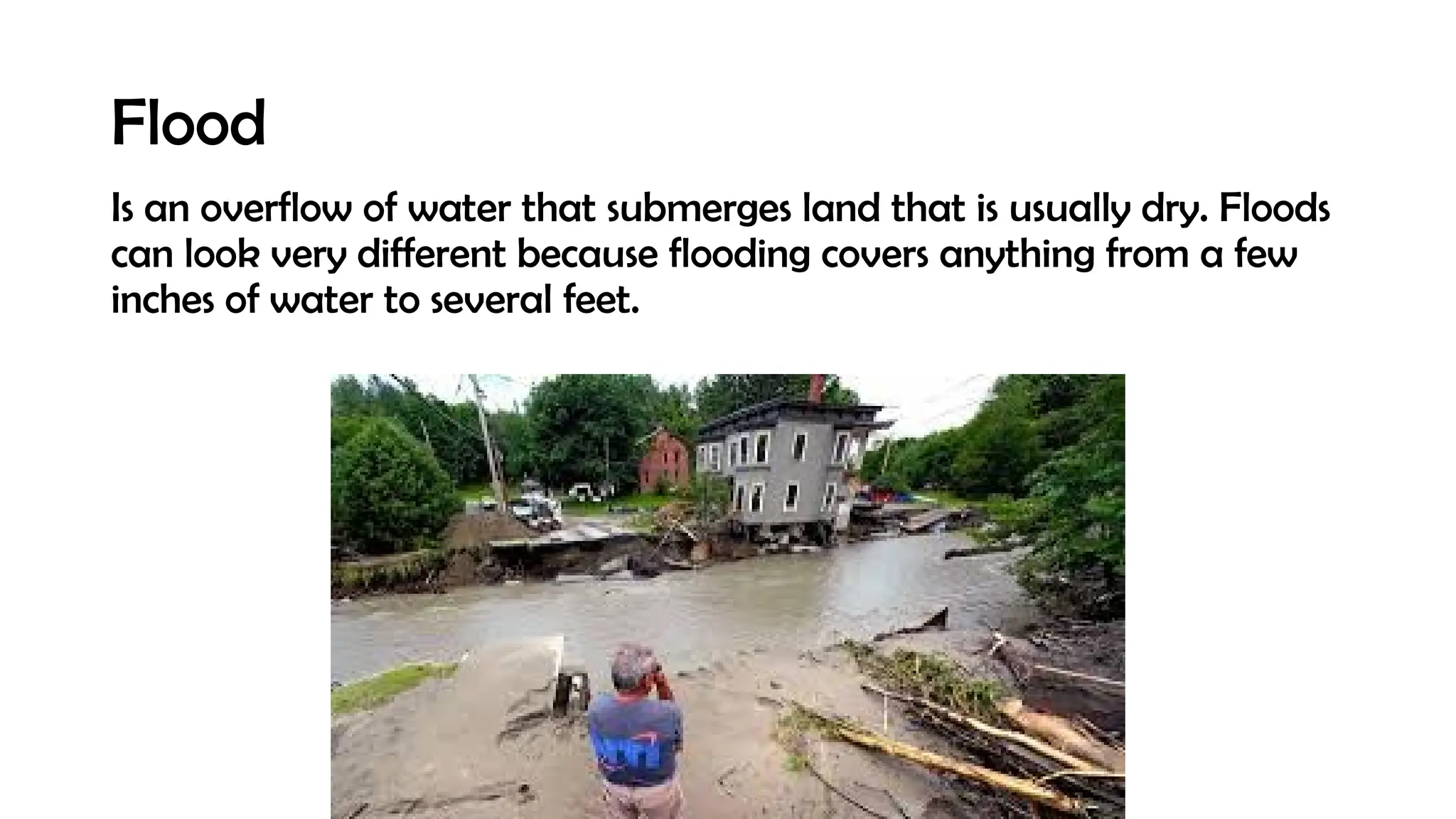
20.
Flood
Is an overflowof water that submerges land that is usually dry. Floods
can look very different because flooding covers anything from a few
inches of water to several feet.
21.
Lava Domes
Formed byviscous magma being erupted effusively onto the surface
and then piling up around the vent.
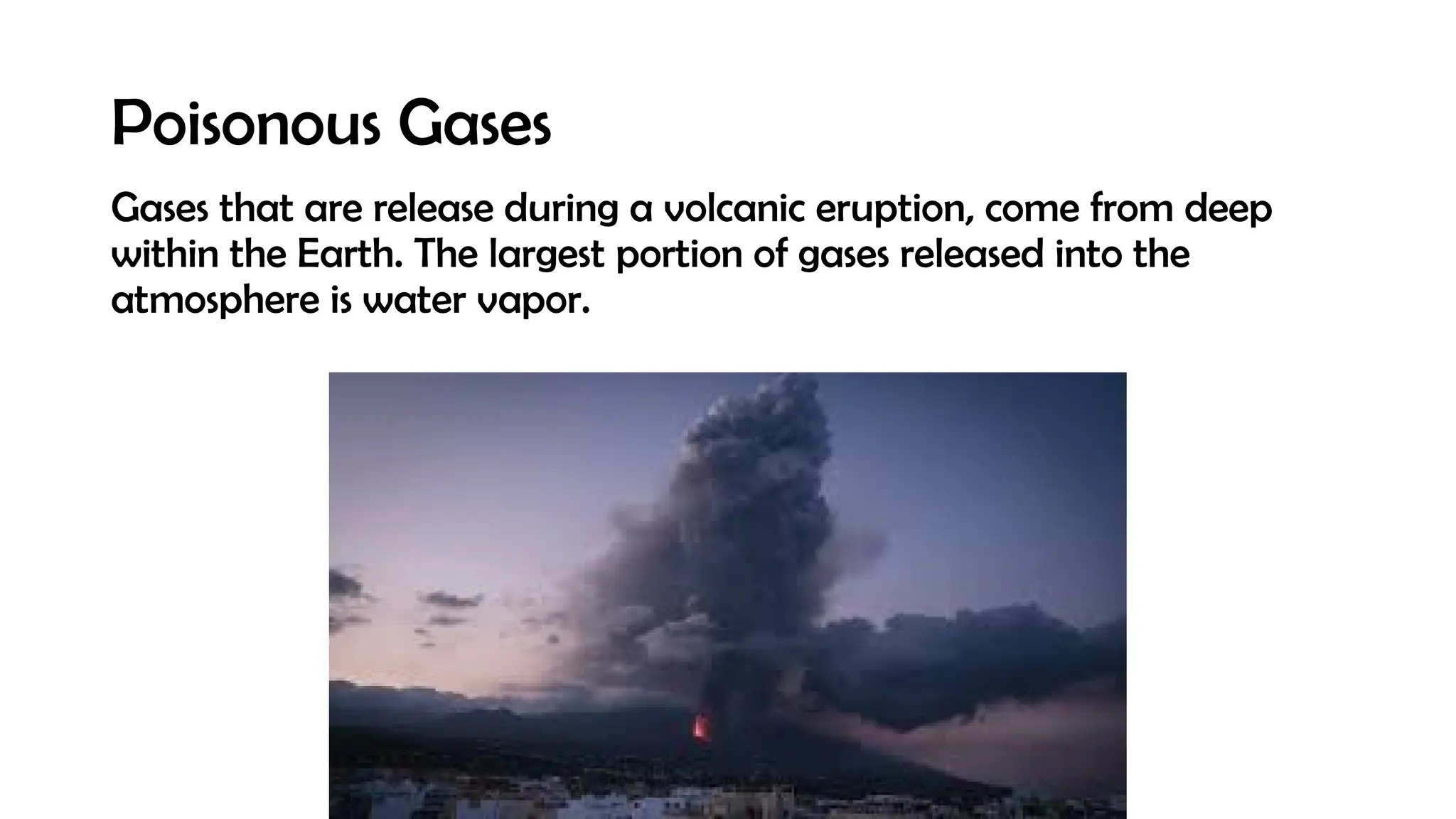
22.
Poisonous Gases
Gases thatare release during a volcanic eruption, come from deep
within the Earth. The largest portion of gases released into the
atmosphere is water vapor.




![GEOLOGICAL HAZARDS [Autosaved].pptx](https://cdn.slidesharecdn.com/ss_thumbnails/geologicalhazardsautosaved-240128120931-9c982cee-thumbnail.jpg?width=640&height=640&fit=bounds)


