EARTH &
LIFE
SCIENCE
Module 1 & 2
ORIGIN AND STRUCTURE OF
EARTH
(The Planet Earth & It’s Subsystem)
Prepared By:
EUGENE BERT D. SANTIAGO
Special Science Teacher I | Subject Teacher
LESSON 1
Module 1
ORIGIN AND STRUCTURE OF
THE EARTH
(The Planet Earth)
EARTH & LIFE SCIENCE
It presents the history of the Earth through
geologic time. It discusses the Earth's
structure, composition, and processes.
Issues, concerns, and problems pertaining
to natural hazards are also included. It
also deals with the basic principles and
processes in the study of biology.
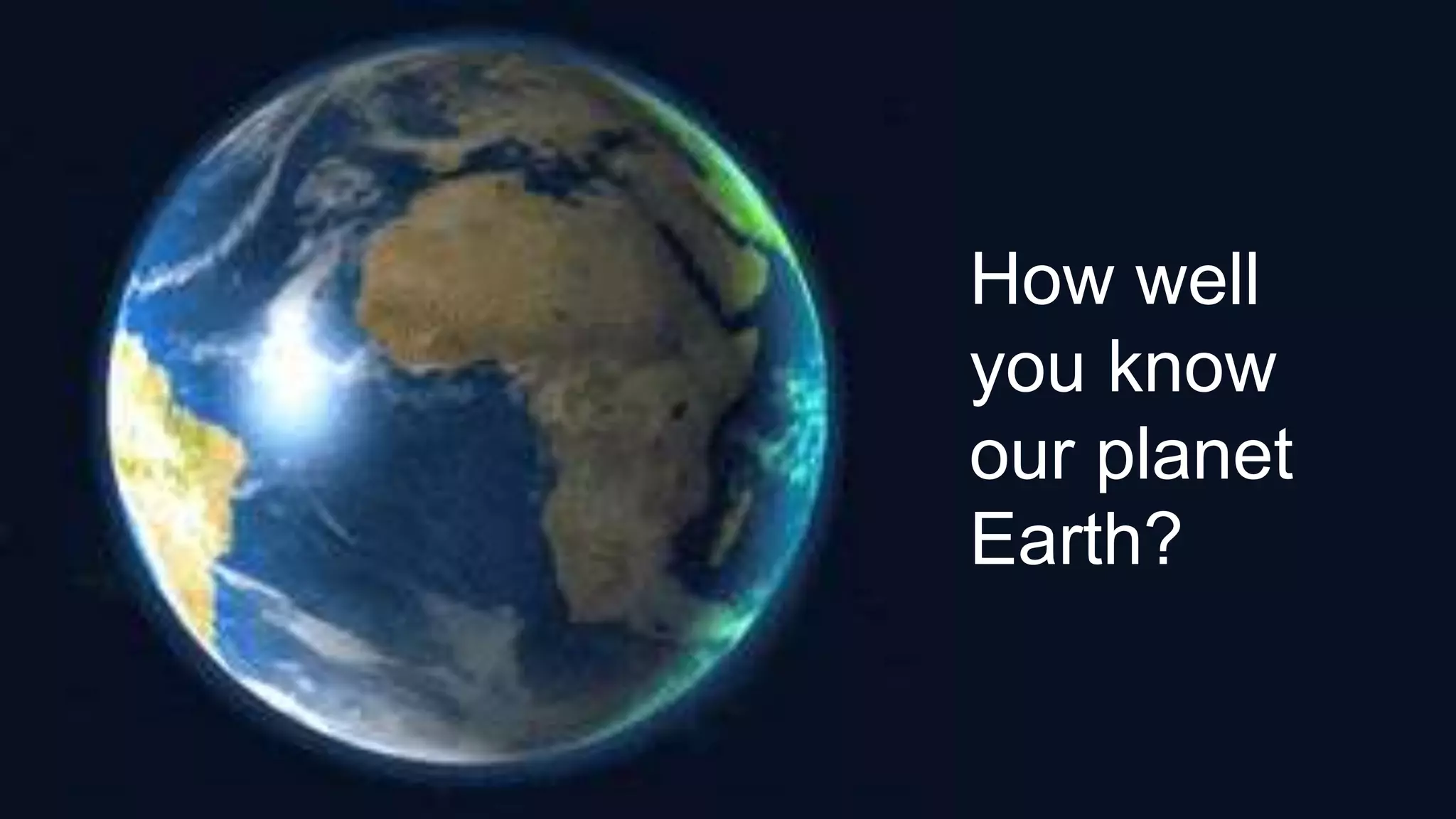
How well
you know
our planet
Earth?
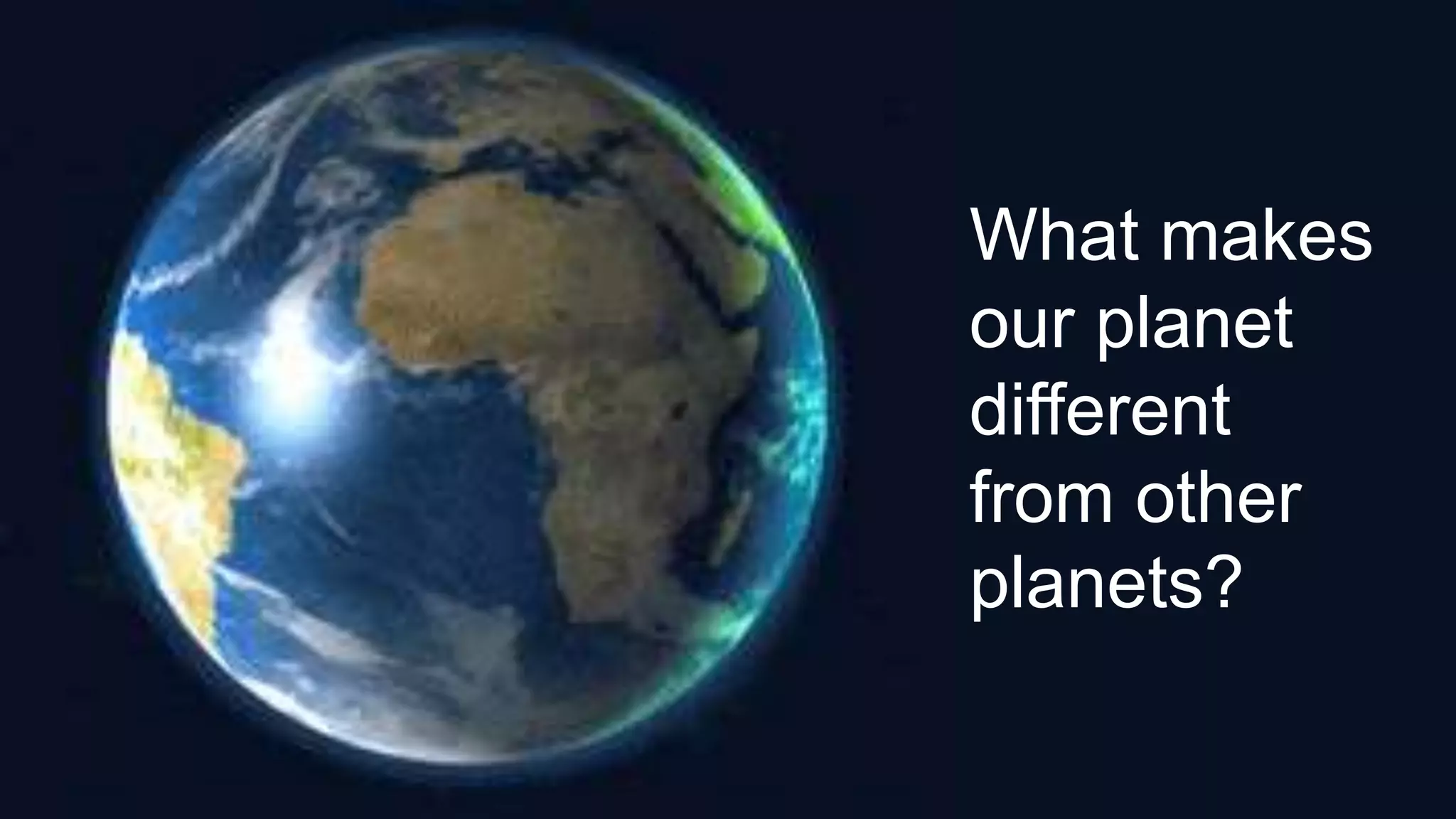
What makes
our planet
different
from other
planets?
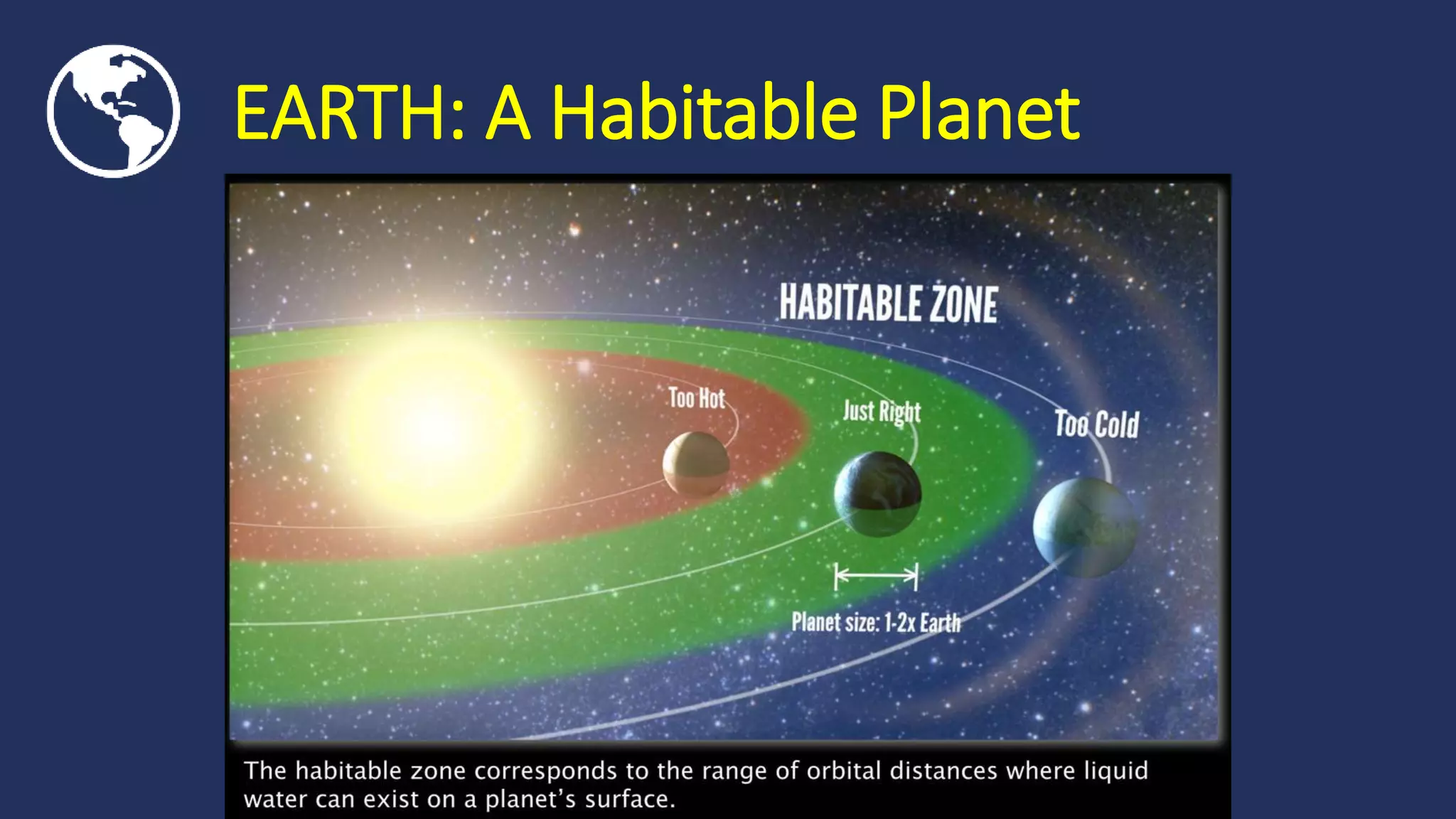
EARTH: A Habitable Planet
FACTORS THAT MAKES A PLANET HABITABLE
1.Temperature
2.Water
3.Atmosphere
4.Energy
5.Nutrients
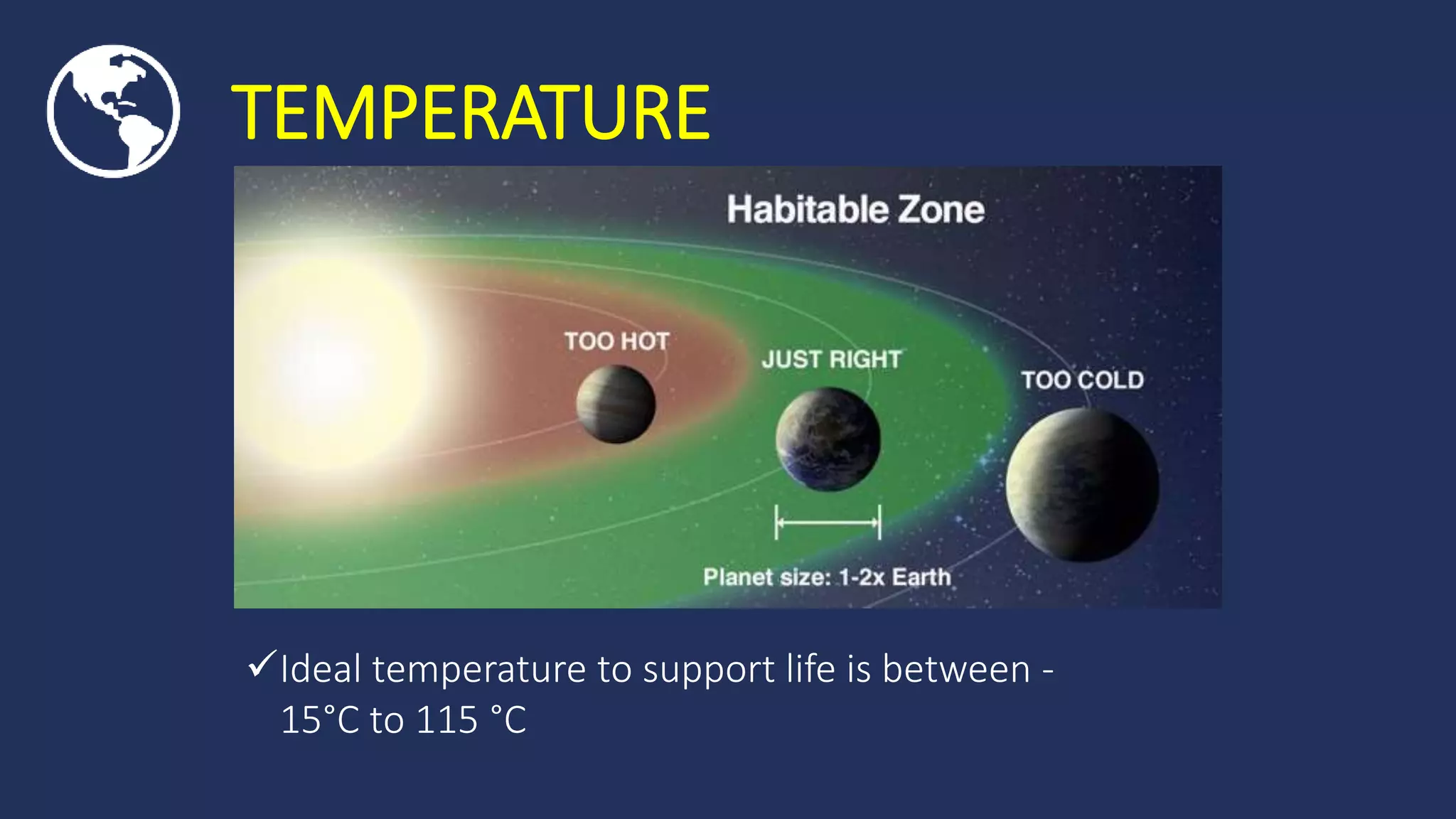
TEMPERATURE
Ideal temperature to support life is between -
15°C to 115 °C
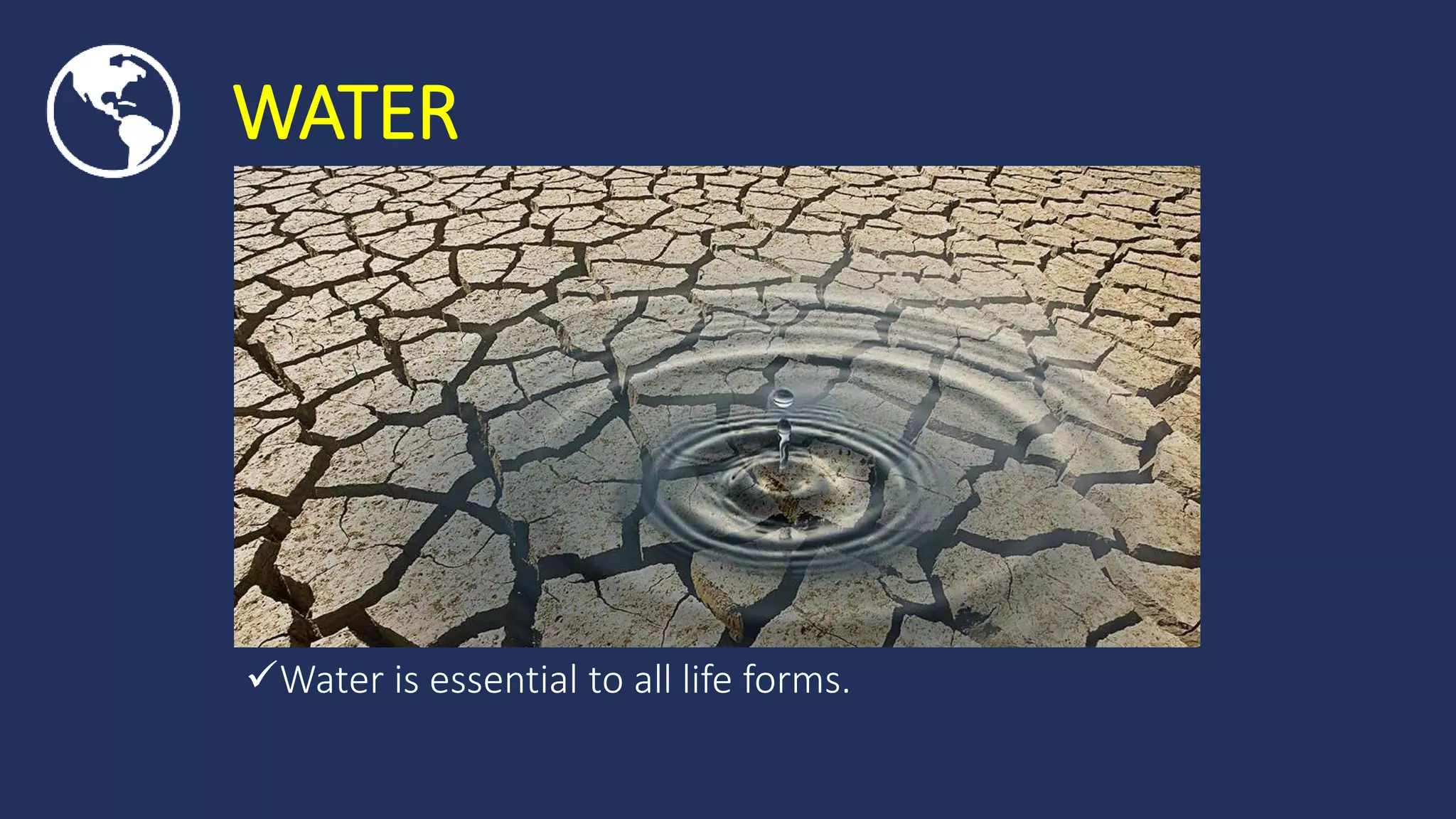
WATER
Water is essential to all life forms.
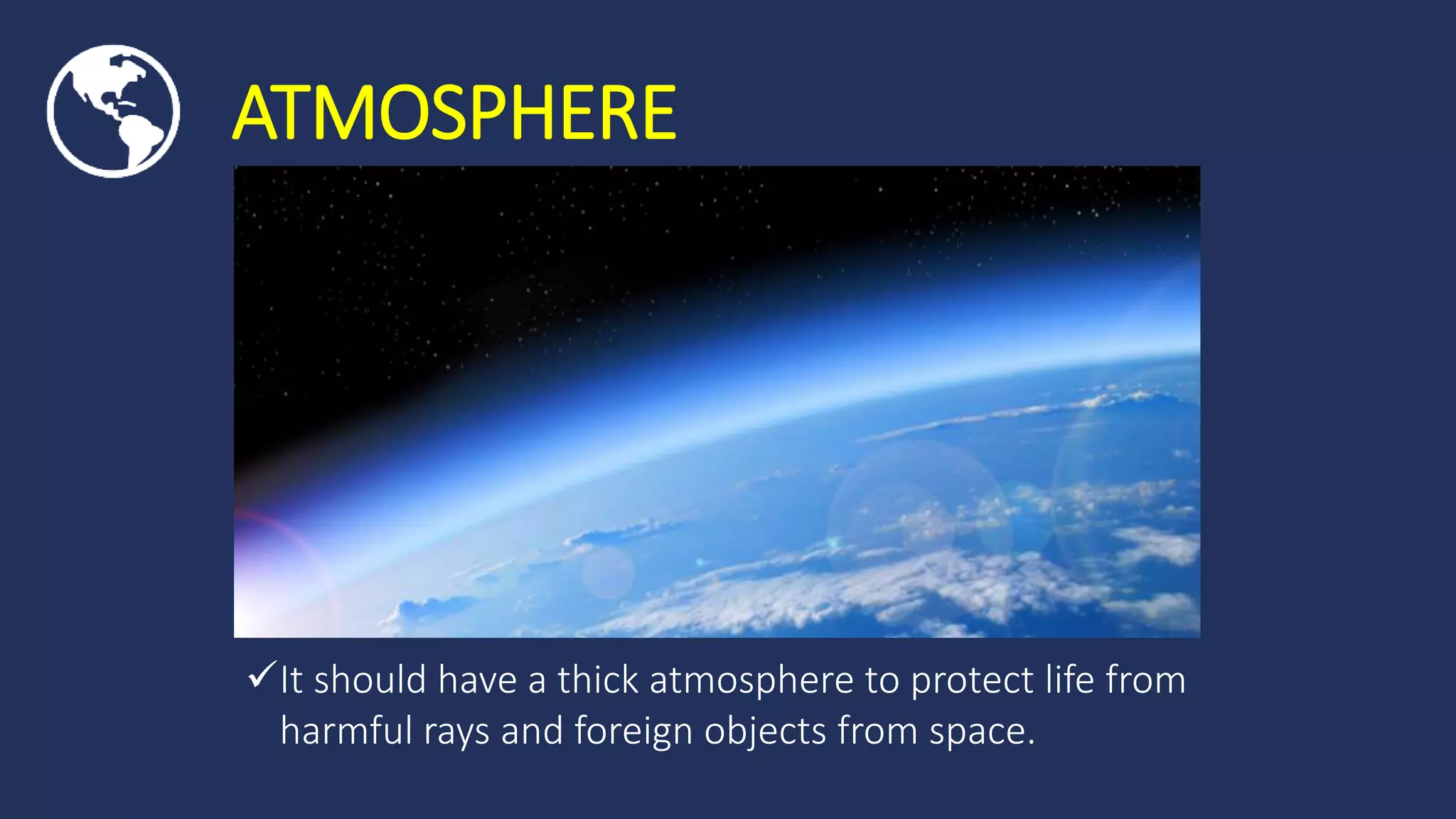
ATMOSPHERE
It should have a thick atmosphere to protect life from
harmful rays and foreign objects from space.
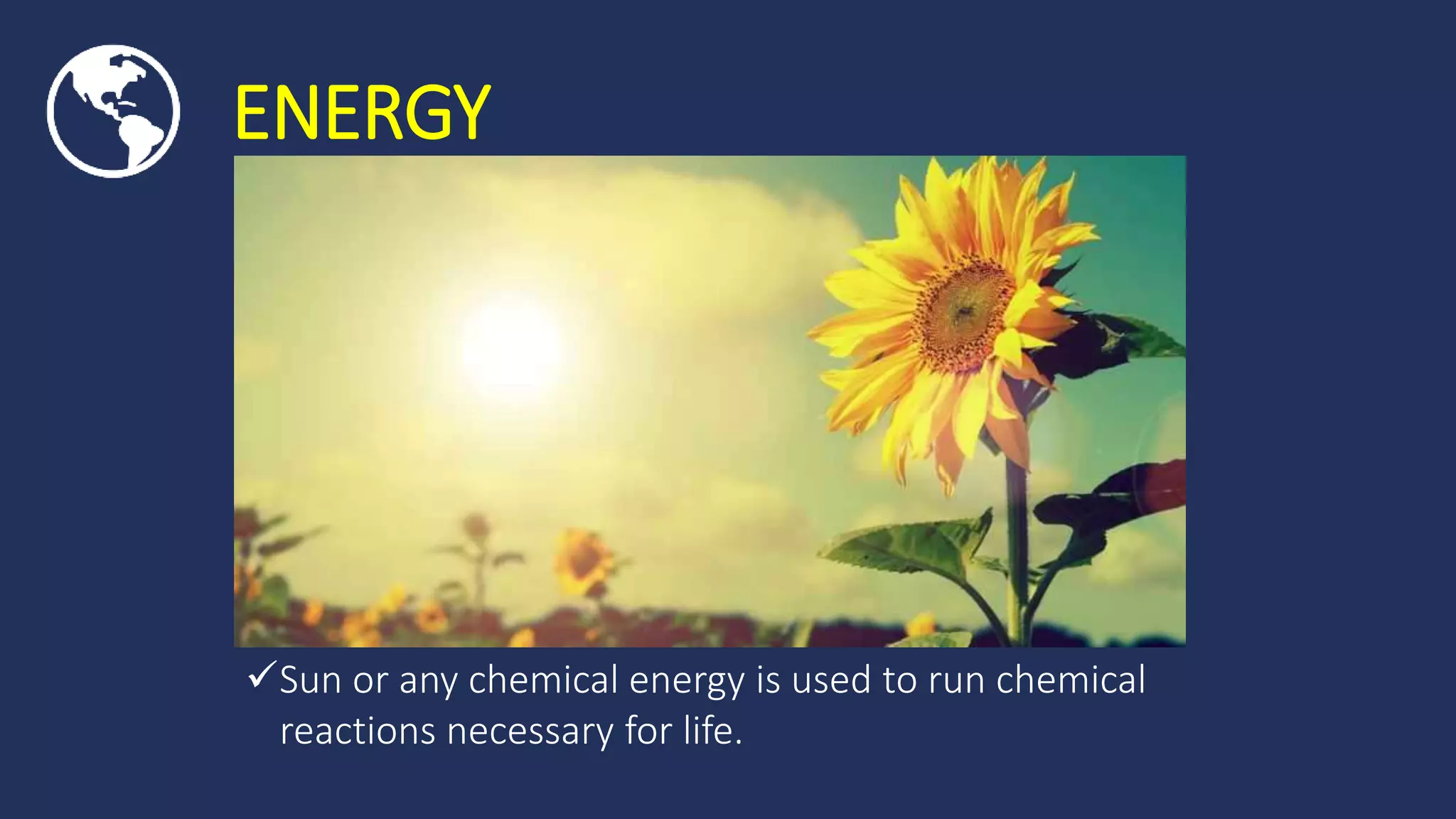
ENERGY
Sun or any chemical energy is used to run chemical
reactions necessary for life.
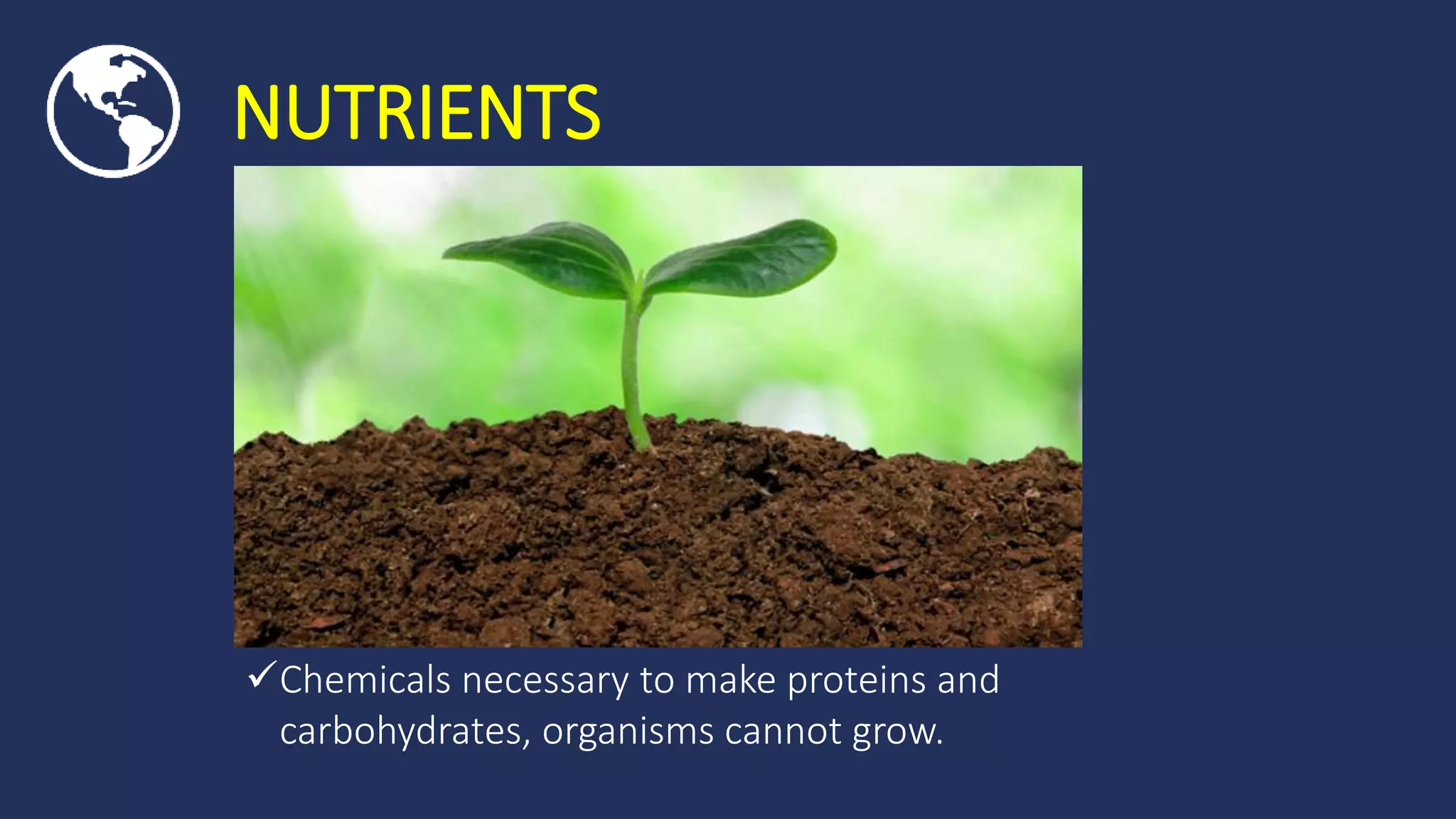
NUTRIENTS
Chemicals necessary to make proteins and
carbohydrates, organisms cannot grow.
LESSON 2
Module 2
ORIGIN AND STRUCTURE OF
THE EARTH
(The Subsystem)
EARTH’S SUBSYSTEMS
There are four (4) subsystems:
1. Atmosphere (air)
2. Geosphere (earth/land)
3. Hydrosphere (water)
4. Biosphere (life)
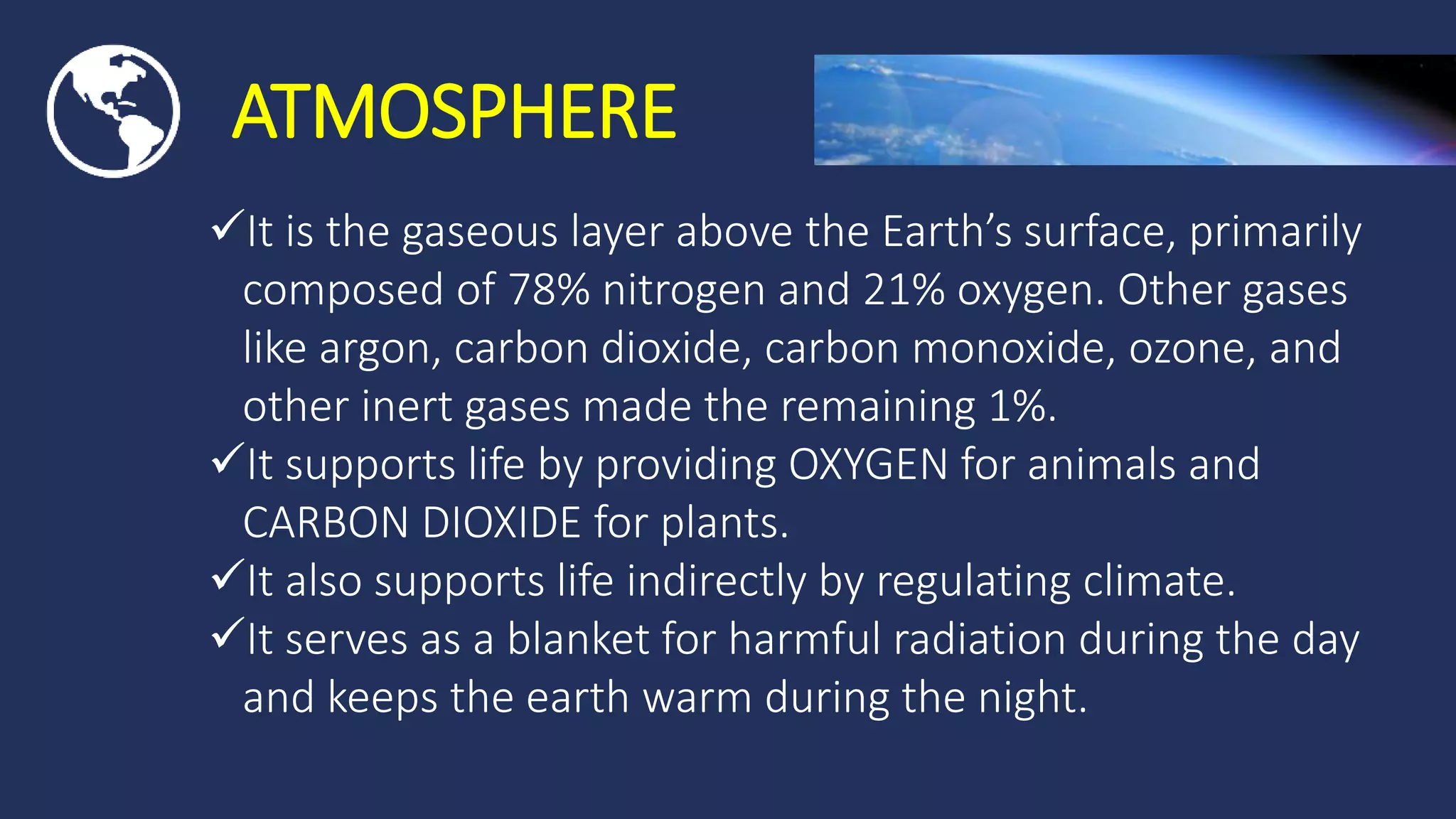
ATMOSPHERE
It is the gaseous layer above the Earth’s surface, primarily
composed of 78% nitrogen and 21% oxygen. Other gases
like argon, carbon dioxide, carbon monoxide, ozone, and
other inert gases made the remaining 1%.
It supports life by providing OXYGEN for animals and
CARBON DIOXIDE for plants.
It also supports life indirectly by regulating climate.
It serves as a blanket for harmful radiation during the day
and keeps the earth warm during the night.
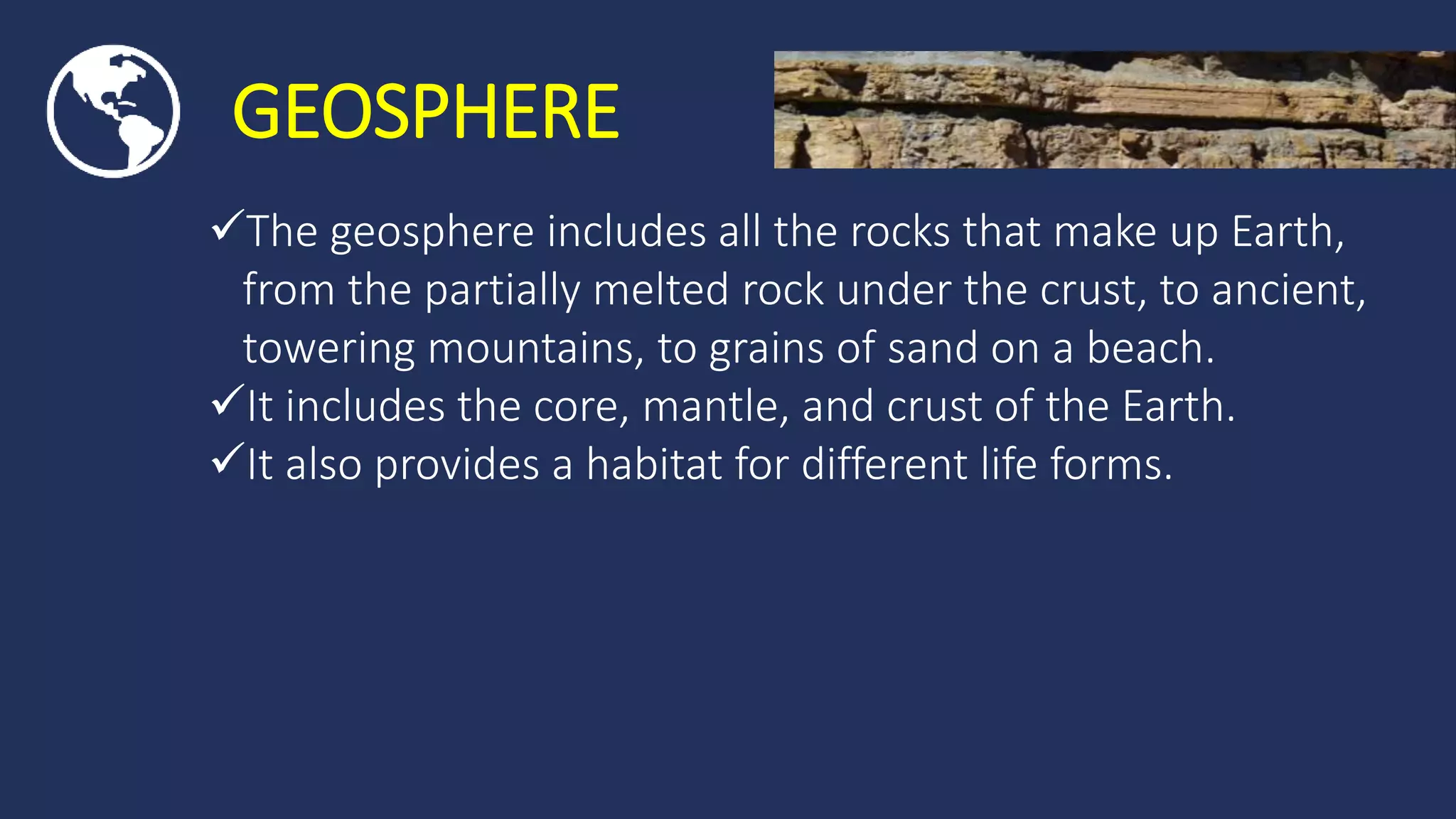
GEOSPHERE
The geosphere includes all the rocks that make up Earth,
from the partially melted rock under the crust, to ancient,
towering mountains, to grains of sand on a beach.
It includes the core, mantle, and crust of the Earth.
It also provides a habitat for different life forms.
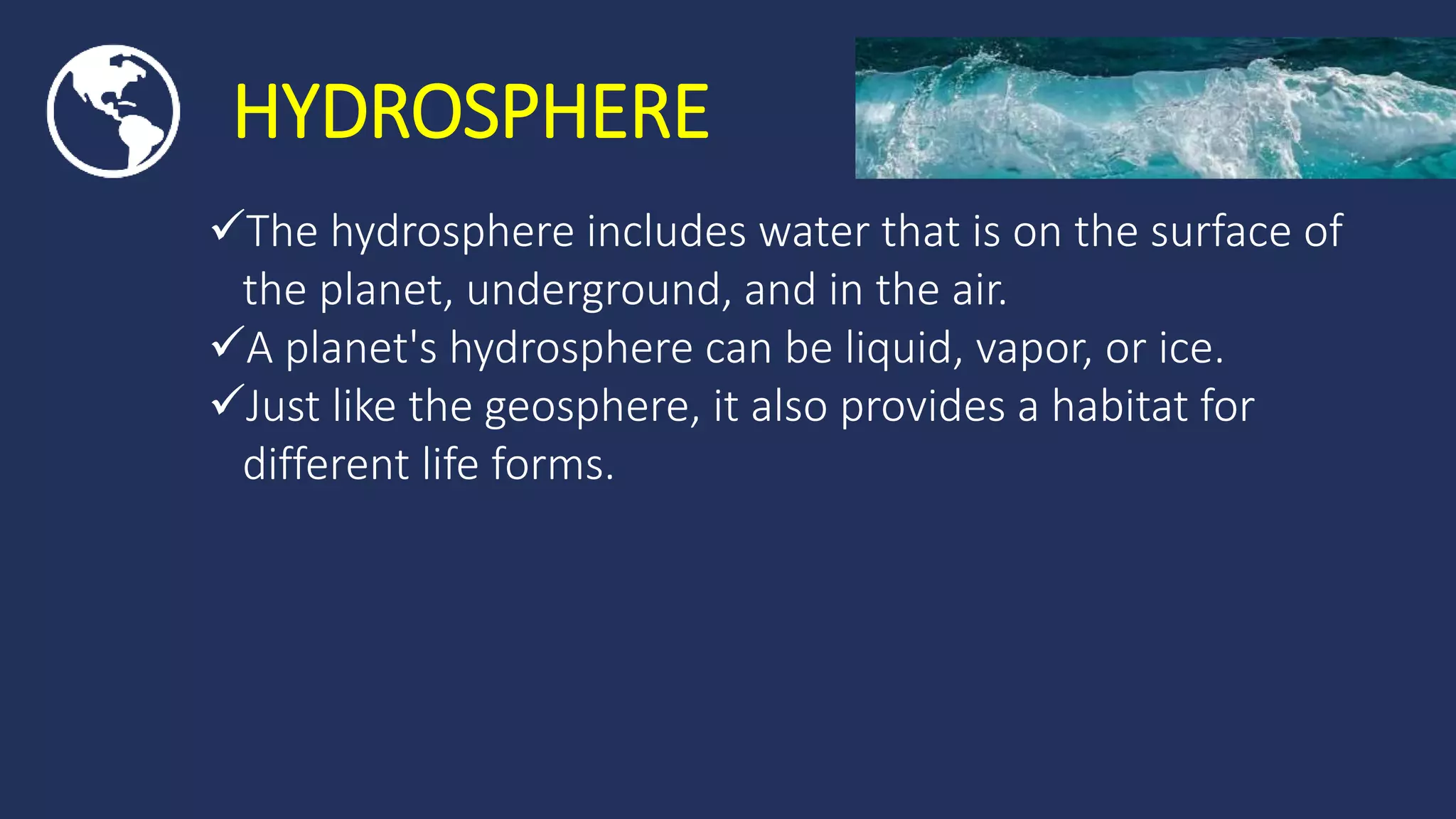
HYDROSPHERE
The hydrosphere includes water that is on the surface of
the planet, underground, and in the air.
A planet's hydrosphere can be liquid, vapor, or ice.
Just like the geosphere, it also provides a habitat for
different life forms.
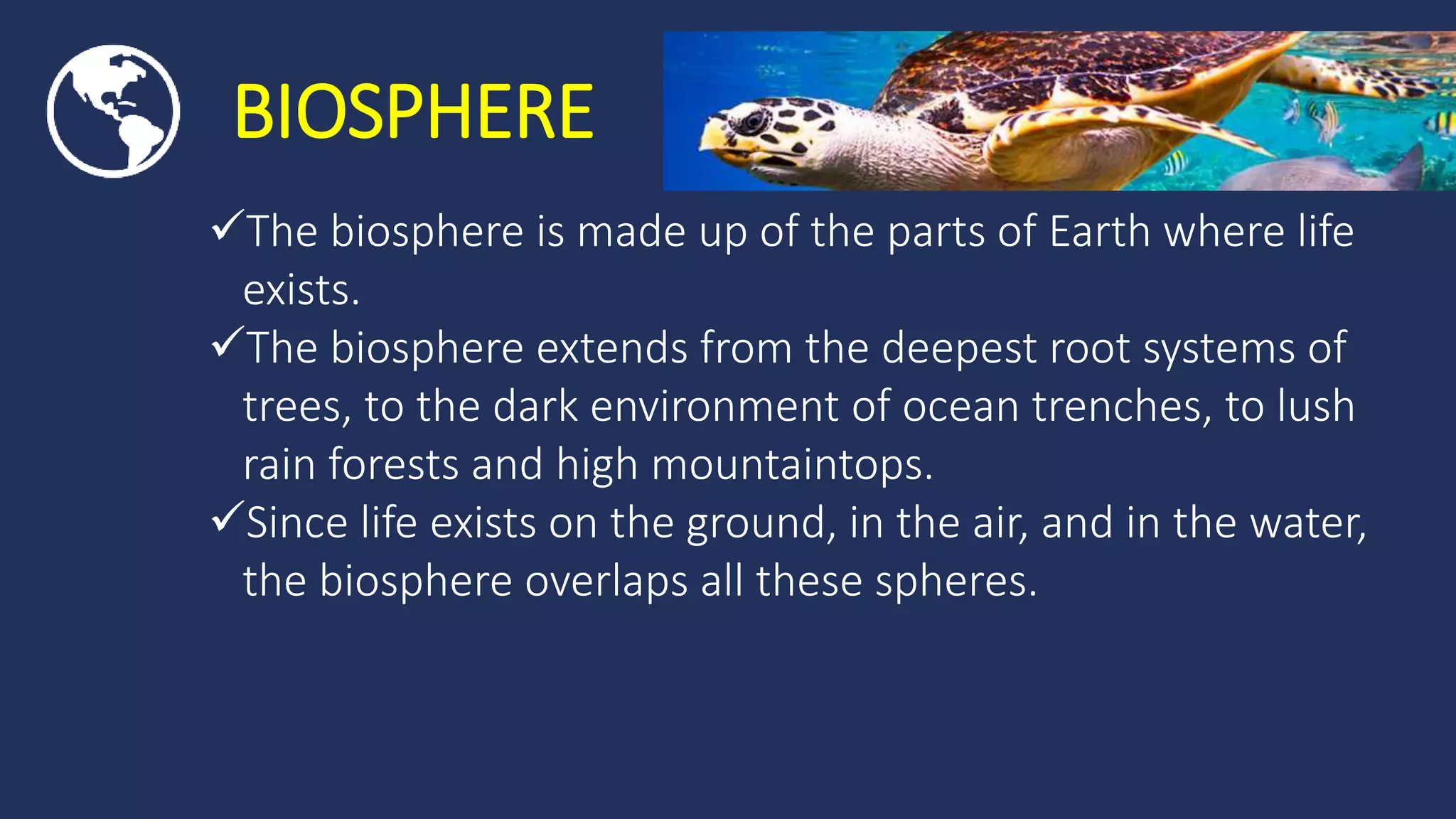
BIOSPHERE
The biosphere is made up of the parts of Earth where life
exists.
The biosphere extends from the deepest root systems of
trees, to the dark environment of ocean trenches, to lush
rain forests and high mountaintops.
Since life exists on the ground, in the air, and in the water,
the biosphere overlaps all these spheres.
ACTIVITIES
FOR THE WEEK
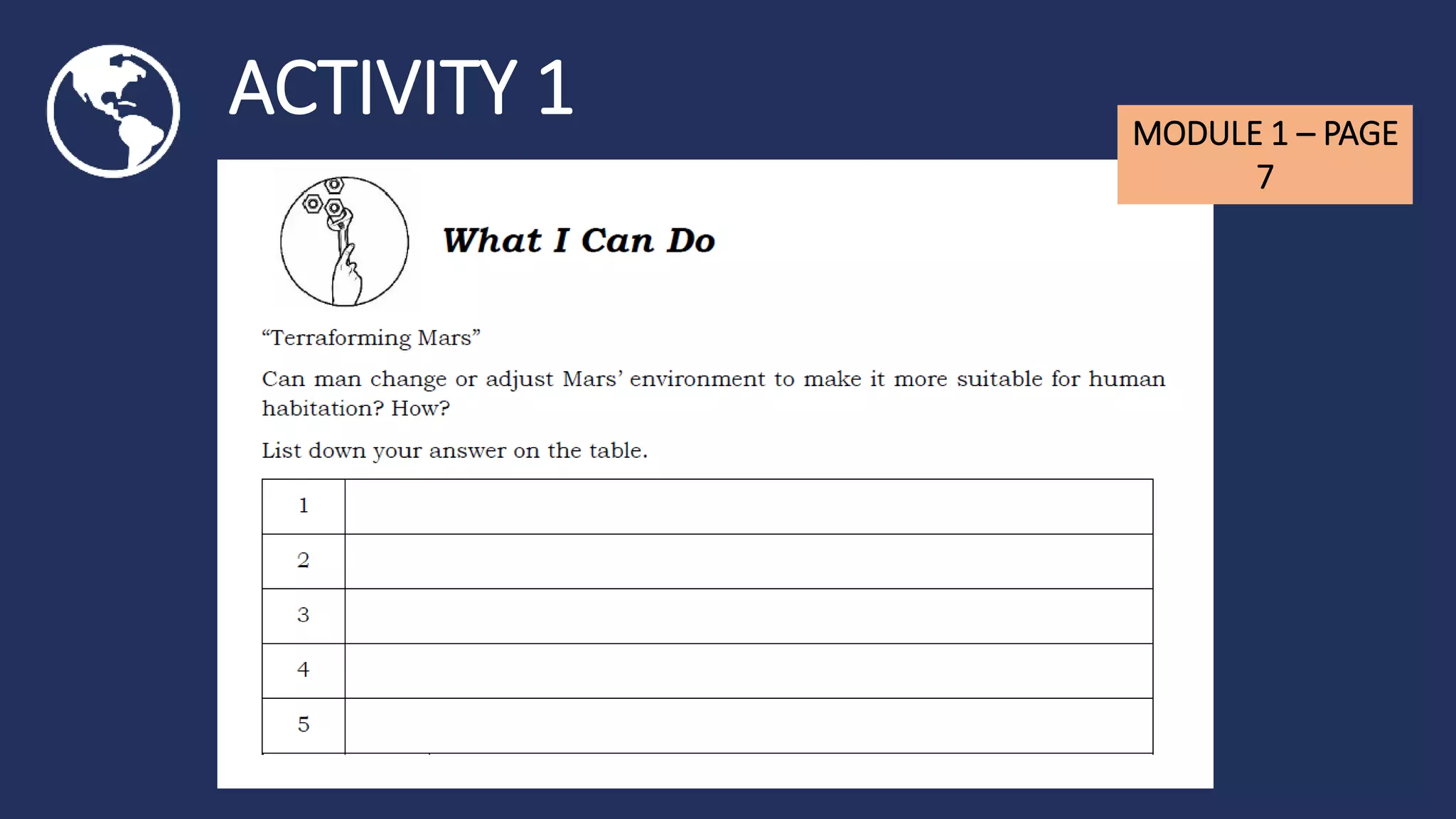
ACTIVITY 1 MODULE 1 – PAGE
7
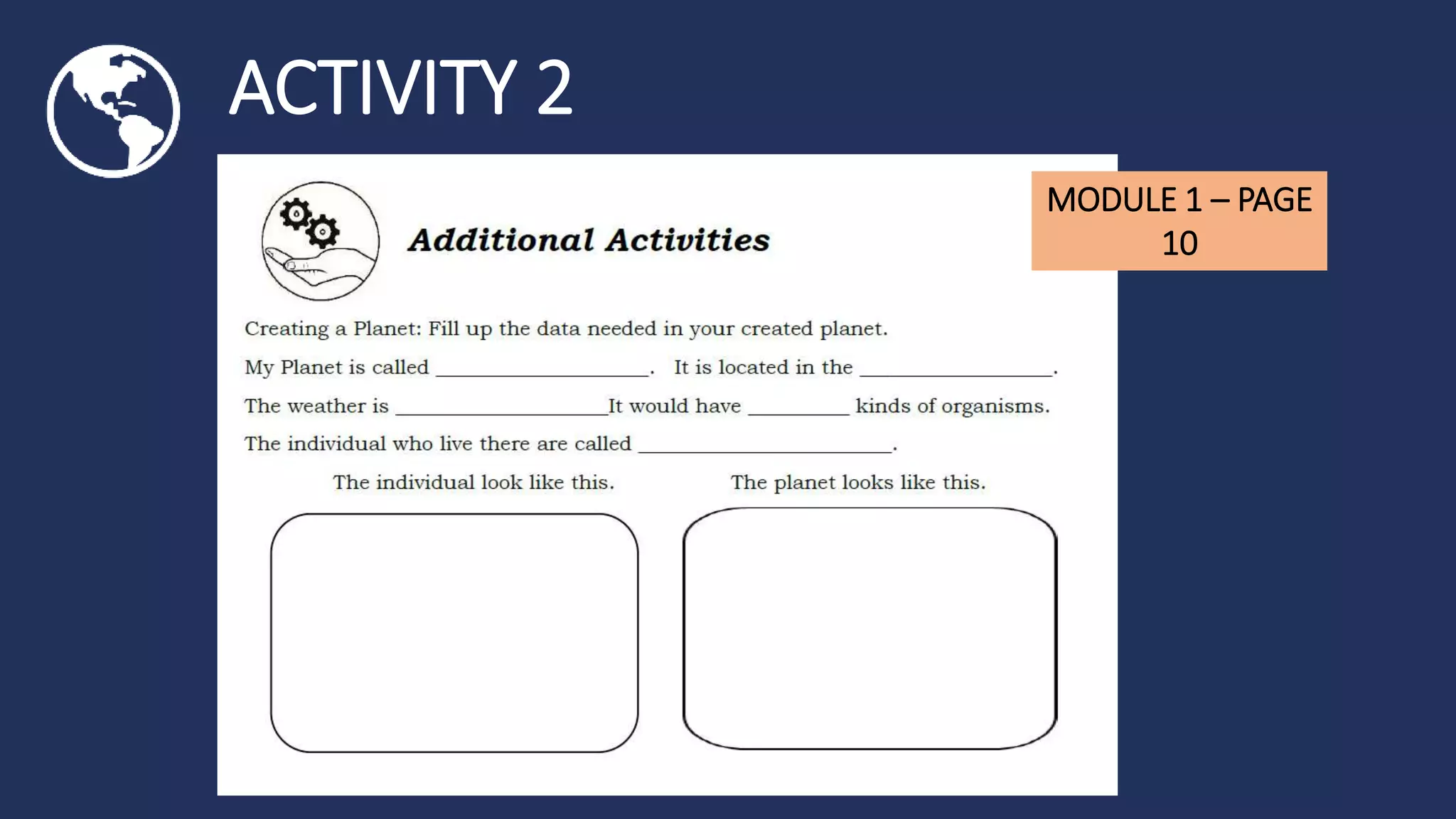
MODULE 1 – PAGE
10
ACTIVITY 2
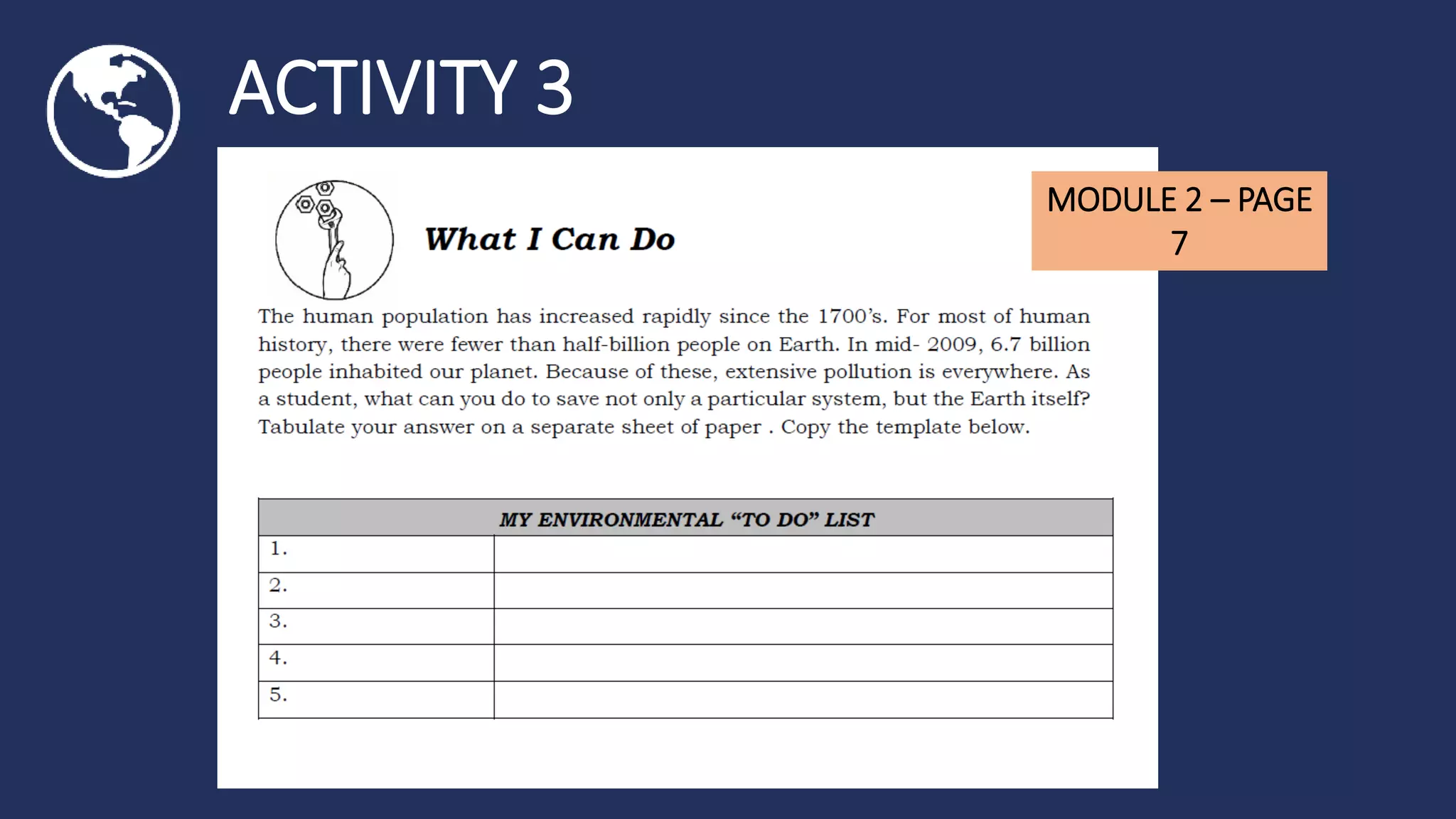
ACTIVITY 3
MODULE 2 – PAGE
7
WEEKLY LESSON REFLECTION
Give your self-reflection of what
have you learned from our
weekly lesson. (100 words)

01 Earth and Life Science - Module 1 & 2.pptx

  • 1.
    EARTH & LIFE SCIENCE Module 1& 2 ORIGIN AND STRUCTURE OF EARTH (The Planet Earth & It’s Subsystem) Prepared By: EUGENE BERT D. SANTIAGO Special Science Teacher I | Subject Teacher
  • 2.
    LESSON 1 Module 1 ORIGINAND STRUCTURE OF THE EARTH (The Planet Earth)
  • 3.
    EARTH & LIFESCIENCE It presents the history of the Earth through geologic time. It discusses the Earth's structure, composition, and processes. Issues, concerns, and problems pertaining to natural hazards are also included. It also deals with the basic principles and processes in the study of biology.
  • 4.
    How well you know ourplanet Earth?
  • 5.
  • 6.
  • 7.
    FACTORS THAT MAKESA PLANET HABITABLE 1.Temperature 2.Water 3.Atmosphere 4.Energy 5.Nutrients
  • 8.
    TEMPERATURE Ideal temperature tosupport life is between - 15°C to 115 °C
  • 9.
    WATER Water is essentialto all life forms.
  • 10.
    ATMOSPHERE It should havea thick atmosphere to protect life from harmful rays and foreign objects from space.
  • 11.
    ENERGY Sun or anychemical energy is used to run chemical reactions necessary for life.
  • 12.
    NUTRIENTS Chemicals necessary tomake proteins and carbohydrates, organisms cannot grow.
  • 13.
    LESSON 2 Module 2 ORIGINAND STRUCTURE OF THE EARTH (The Subsystem)
  • 14.
    EARTH’S SUBSYSTEMS There arefour (4) subsystems: 1. Atmosphere (air) 2. Geosphere (earth/land) 3. Hydrosphere (water) 4. Biosphere (life)
  • 15.
    ATMOSPHERE It is thegaseous layer above the Earth’s surface, primarily composed of 78% nitrogen and 21% oxygen. Other gases like argon, carbon dioxide, carbon monoxide, ozone, and other inert gases made the remaining 1%. It supports life by providing OXYGEN for animals and CARBON DIOXIDE for plants. It also supports life indirectly by regulating climate. It serves as a blanket for harmful radiation during the day and keeps the earth warm during the night.
  • 16.
    GEOSPHERE The geosphere includesall the rocks that make up Earth, from the partially melted rock under the crust, to ancient, towering mountains, to grains of sand on a beach. It includes the core, mantle, and crust of the Earth. It also provides a habitat for different life forms.
  • 17.
    HYDROSPHERE The hydrosphere includeswater that is on the surface of the planet, underground, and in the air. A planet's hydrosphere can be liquid, vapor, or ice. Just like the geosphere, it also provides a habitat for different life forms.
  • 18.
    BIOSPHERE The biosphere ismade up of the parts of Earth where life exists. The biosphere extends from the deepest root systems of trees, to the dark environment of ocean trenches, to lush rain forests and high mountaintops. Since life exists on the ground, in the air, and in the water, the biosphere overlaps all these spheres.
  • 19.
  • 20.
    ACTIVITY 1 MODULE1 – PAGE 7
  • 21.
    MODULE 1 –PAGE 10 ACTIVITY 2
  • 22.
  • 23.
    WEEKLY LESSON REFLECTION Giveyour self-reflection of what have you learned from our weekly lesson. (100 words)