Landforms
Formed by
Running Water (River)
Objectives:
1. To know the significance of geomorphic
processes.
2. Understand formation of different types of
landforms formed by rivers.
3. Difference between erosional and
depositional landforms formed by river.
4. Identification and understanding of
landforms of their nearby areas.
Prior knowledge:
1.What are the geomorphic agents.
2. Knowledge of Weathering and
erosion
3. Knowledge about rocks. (Their
hardness and softness)
Geomorphic Agents:
1.River
2.Air
3. Glacier
4.Sea Waves etc
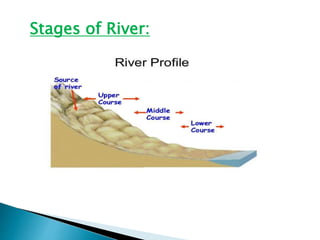
Stages of River:
Landforms formed by Rivers
Erosional Landforms:
1. V-shaped valley
2. Gorges
3. Water fall
4. Rapids
5. Potholes
6. Meander
7. Ox-bow lakes
Depositional landforms:
1. Alluvial Fans and cones
2. Natural Levees
3. Delta
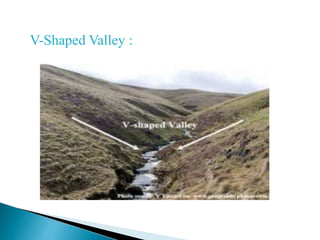
V-Shaped Valley :
A V-valley is formed by vertical erosion of river or
stream over time.
It is called a V-valley as the shape of the valley is
the same as the letter “V”. V-shaped Valley.
It form in the youth stage of river
Both the valley sides meet together at the valley
floor..
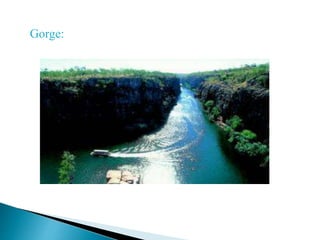
Gorge:
A gorge is a narrow valley with steep, rocky walls
located between hills or mountains.
The term comes from the French word gorge, which
means throat or neck.
Gorges are generally formed in areas of low rainfall
and porous rocks.
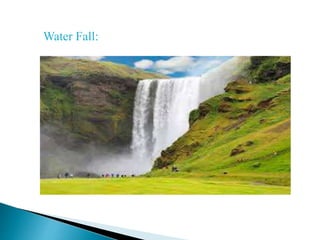
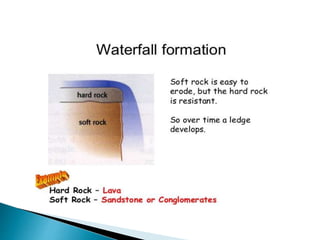
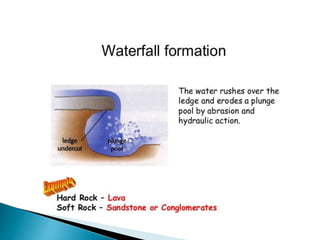
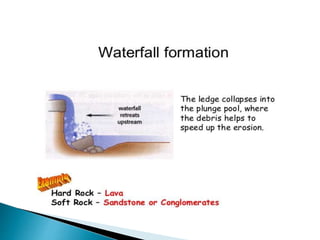
Water Fall:
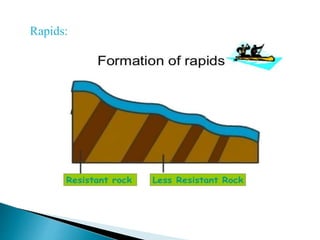
Rapids:
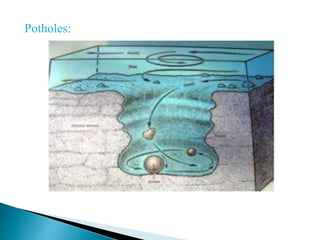
Potholes:
They are formed when sediment carried by
a river scours the bed.
Where depressions exist in the channel floor
turbulent flow can cause pebbles to spin around
and erode hollows through corraision.
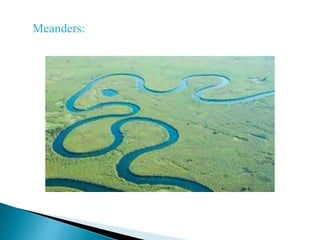
Meanders:
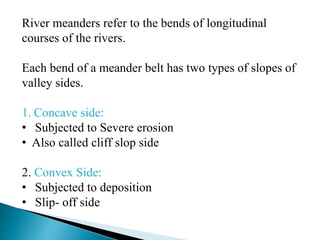
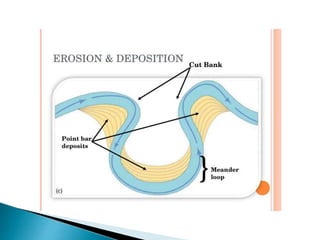
River meanders refer to the bends of longitudinal
courses of the rivers.
Each bend of a meander belt has two types of slopes of
valley sides.
1. Concave side:
• Subjected to Severe erosion
• Also called cliff slop side
2. Convex Side:
• Subjected to deposition
• Slip- off side
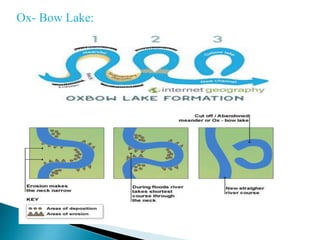
Ox- Bow Lake:
1.Which one of the following is not erosional landform of
the river.
a. Delta b. Potholes
c. Waterfall d. Gorge
2. Which geomorphic agent responsible for the
formation of Natural Levees.
a. Glacier b. Sea waves
c. River d. Ground Water
3. In which of the following stage of landform
development, downward cutting is dominated?
a. Youth Stage b. Early Mature stage
c. Late Mature Stage d. Old Stage
Home Work:
What are the favourable conditions for the formation
of waterfall.
What is the difference between V shaped valley and
Gorge.
Write short notes on erosional features of formed by
river.
Thank
You

11 Land forms and their evolution (K K Sharma).pptx

  • 2.
  • 4.
    Objectives: 1. To knowthe significance of geomorphic processes. 2. Understand formation of different types of landforms formed by rivers. 3. Difference between erosional and depositional landforms formed by river. 4. Identification and understanding of landforms of their nearby areas.
  • 5.
    Prior knowledge: 1.What arethe geomorphic agents. 2. Knowledge of Weathering and erosion 3. Knowledge about rocks. (Their hardness and softness)
  • 6.
  • 7.
  • 8.
    Landforms formed byRivers Erosional Landforms: 1. V-shaped valley 2. Gorges 3. Water fall 4. Rapids 5. Potholes 6. Meander 7. Ox-bow lakes
  • 9.
    Depositional landforms: 1. AlluvialFans and cones 2. Natural Levees 3. Delta
  • 10.
  • 11.
    A V-valley isformed by vertical erosion of river or stream over time. It is called a V-valley as the shape of the valley is the same as the letter “V”. V-shaped Valley. It form in the youth stage of river Both the valley sides meet together at the valley floor..
  • 12.
  • 13.
    A gorge isa narrow valley with steep, rocky walls located between hills or mountains. The term comes from the French word gorge, which means throat or neck. Gorges are generally formed in areas of low rainfall and porous rocks.
  • 14.
  • 18.
  • 19.
  • 20.
    They are formedwhen sediment carried by a river scours the bed. Where depressions exist in the channel floor turbulent flow can cause pebbles to spin around and erode hollows through corraision.
  • 21.
  • 22.
    River meanders referto the bends of longitudinal courses of the rivers. Each bend of a meander belt has two types of slopes of valley sides. 1. Concave side: • Subjected to Severe erosion • Also called cliff slop side 2. Convex Side: • Subjected to deposition • Slip- off side
  • 24.
  • 25.
    1.Which one ofthe following is not erosional landform of the river. a. Delta b. Potholes c. Waterfall d. Gorge 2. Which geomorphic agent responsible for the formation of Natural Levees. a. Glacier b. Sea waves c. River d. Ground Water 3. In which of the following stage of landform development, downward cutting is dominated? a. Youth Stage b. Early Mature stage c. Late Mature Stage d. Old Stage
  • 26.
    Home Work: What arethe favourable conditions for the formation of waterfall. What is the difference between V shaped valley and Gorge. Write short notes on erosional features of formed by river.
  • 27.