Jatin Madan Roll No : 11 Class : 11 - A
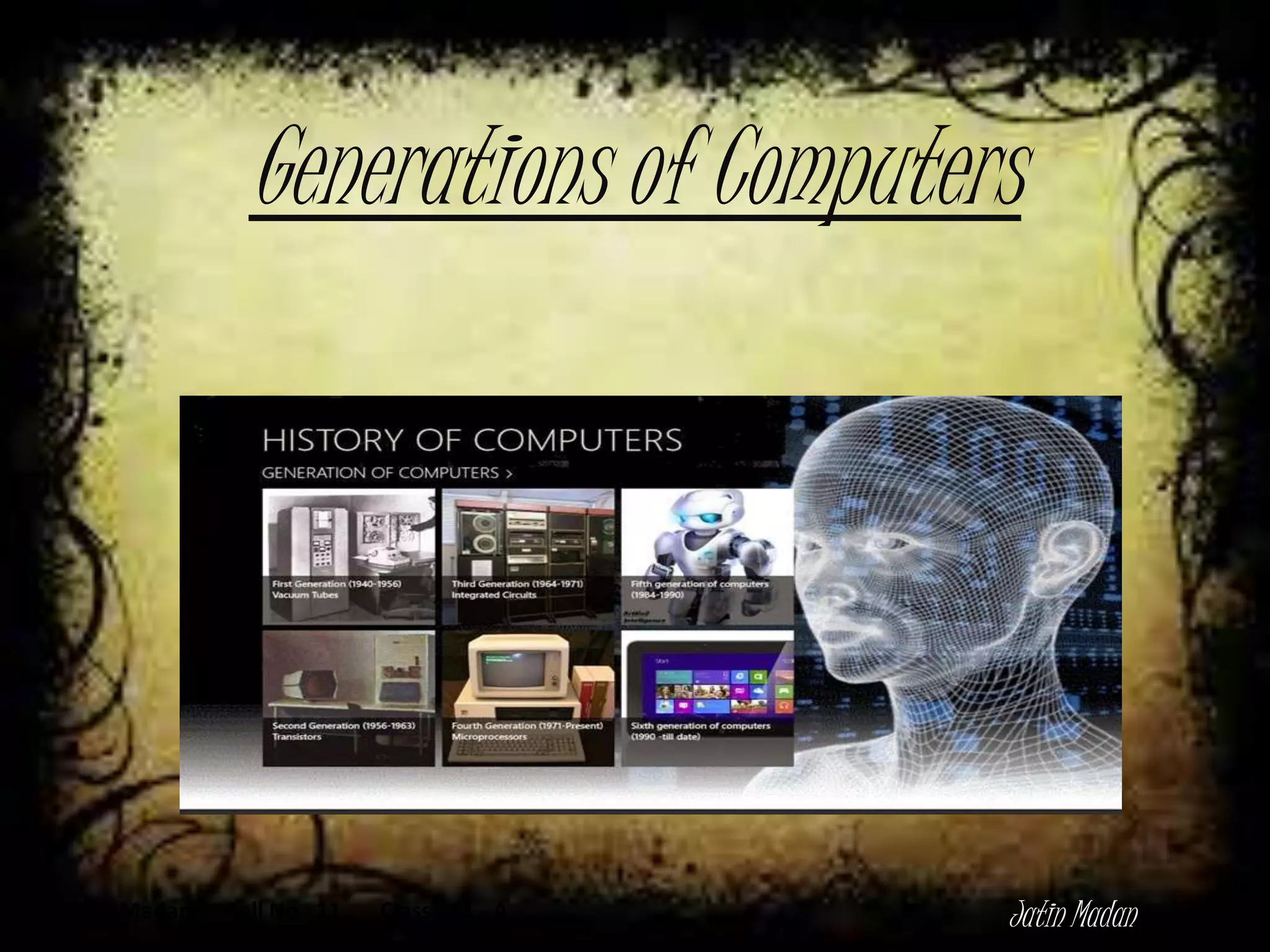
Generations of Computers
Jatin Madan
BIBLIOGRAPHY
Jatin Madan Roll No. = 11 Class = 11th - A
 Topics taken from :-
• Sumita Arora
• Wikipedia
 Source of Information :-
• http://en.wikipedia.org/wiki/Computer
• *Wikipedia
• *Sumita Arora (C++)
 Source of Images :-
• https://www.google.co.in/search?q=generations+of+computer&espv
=2&source=lnms&tbm=isch&sa=X&ei=a0KoU9D9NMq9uAT264CADg&ved=0C
AYQ_AUoAQ&biw=1364&bih=707
Jatin Madan Roll No : 11 Class : 11 - A
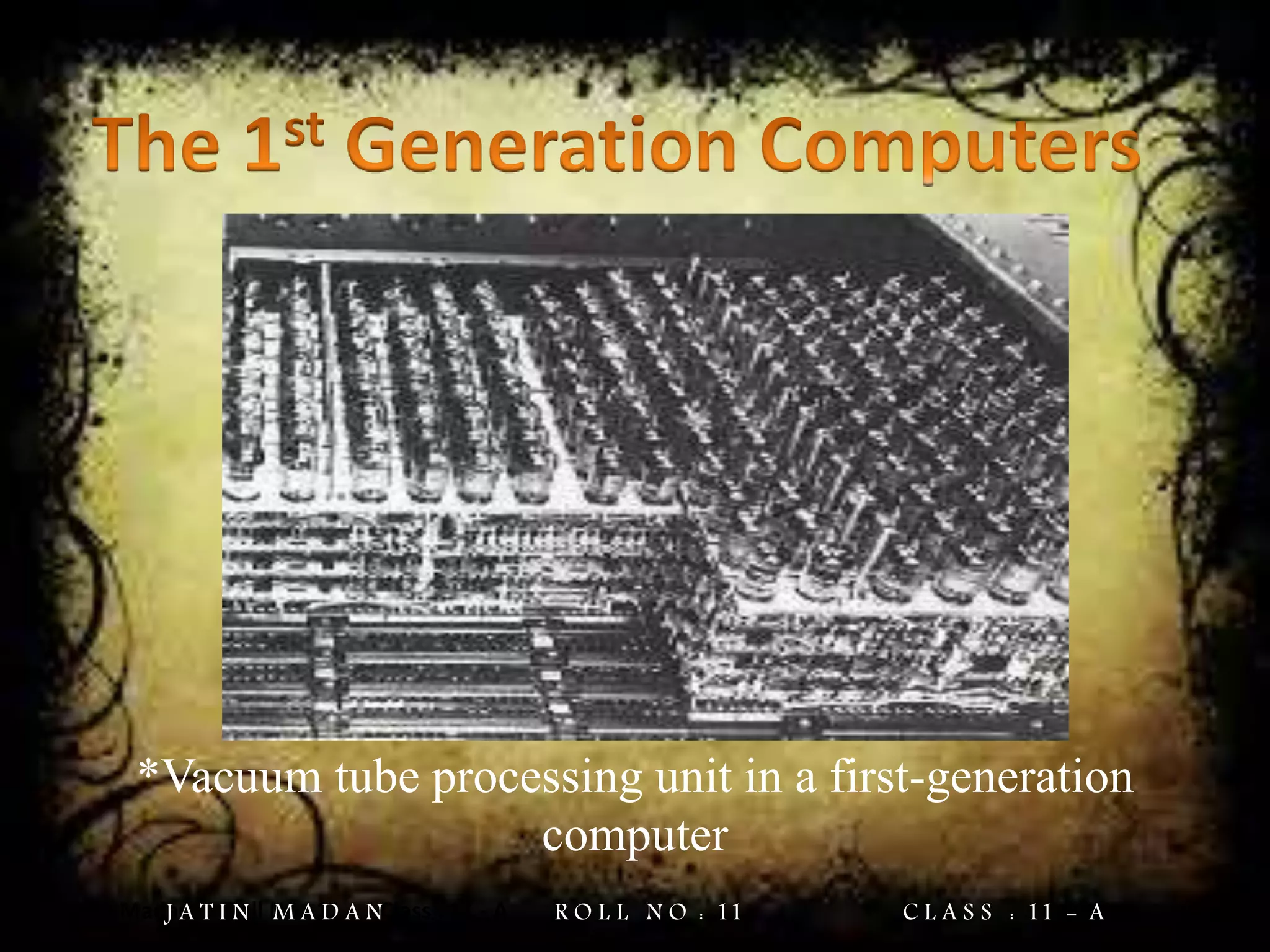
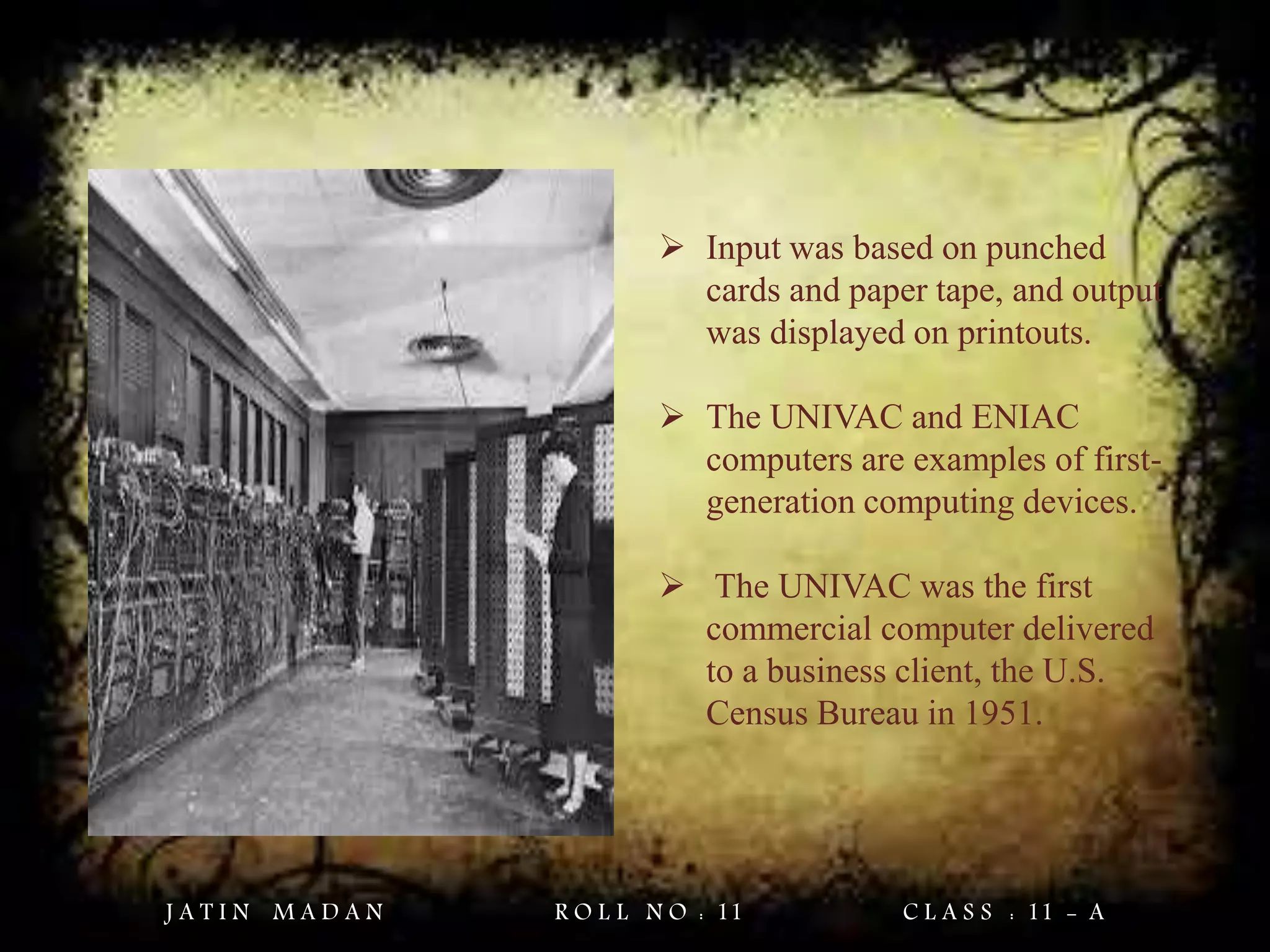
*Vacuum tube processing unit in a first-generation
computer
J A T I N M A D A N R O L L N O : 11 C L A S S : 11 - A
Jatin Madan Roll No : 11 Class : 11 - A
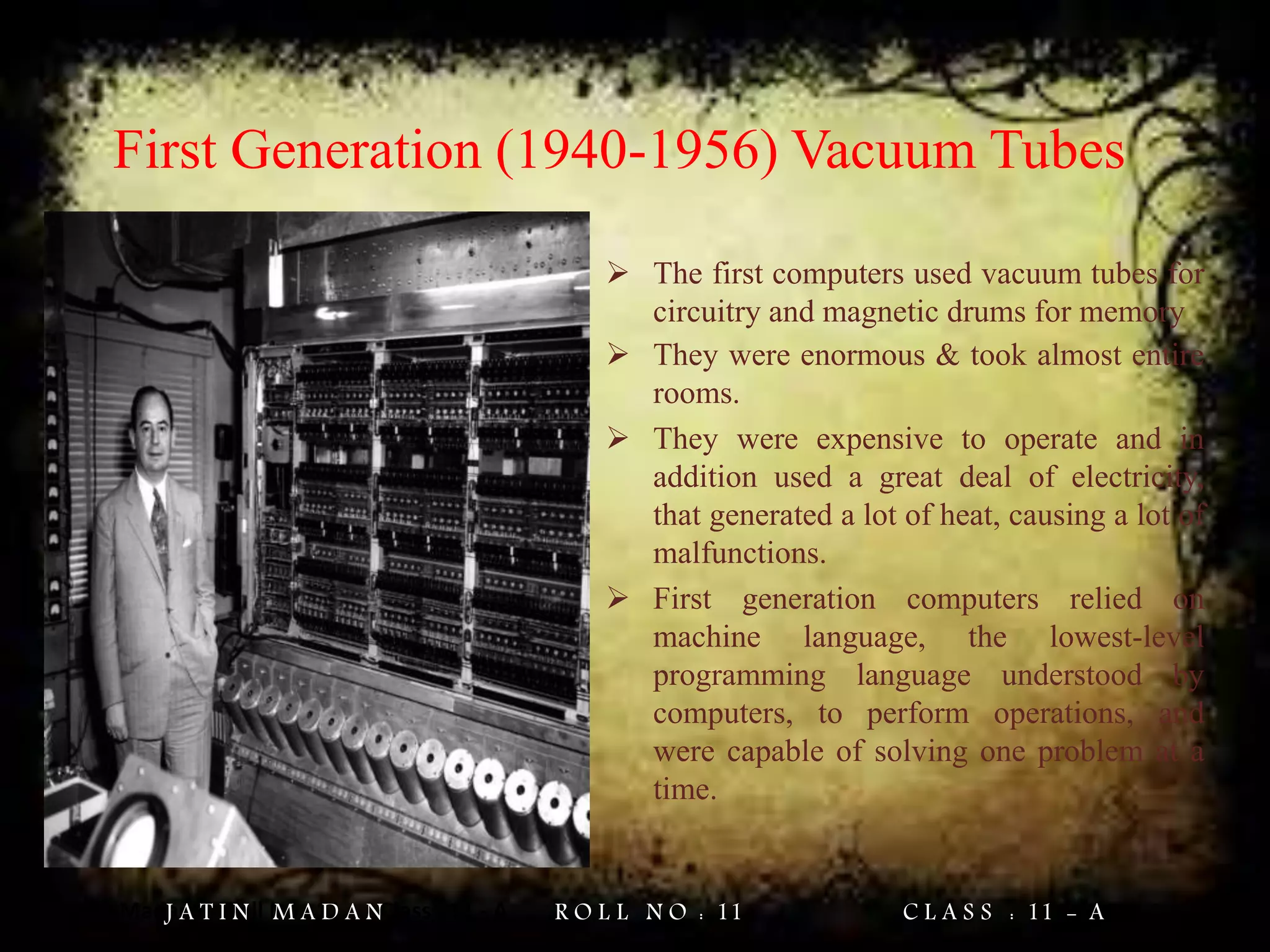
First Generation (1940-1956) Vacuum Tubes
 The first computers used vacuum tubes for
circuitry and magnetic drums for memory
 They were enormous & took almost entire
rooms.
 They were expensive to operate and in
addition used a great deal of electricity,
that generated a lot of heat, causing a lot of
malfunctions.
 First generation computers relied on
machine language, the lowest-level
programming language understood by
computers, to perform operations, and
were capable of solving one problem at a
time.
J A T I N M A D A N R O L L N O : 11 C L A S S : 11 - A
 Input was based on punched
cards and paper tape, and output
was displayed on printouts.
 The UNIVAC and ENIAC
computers are examples of first-
generation computing devices.
 The UNIVAC was the first
commercial computer delivered
to a business client, the U.S.
Census Bureau in 1951.
J A T I N M A D A N R O L L N O : 11 C L A S S : 11 - A
Jatin Madan Roll No : 11 Class : 11 - A
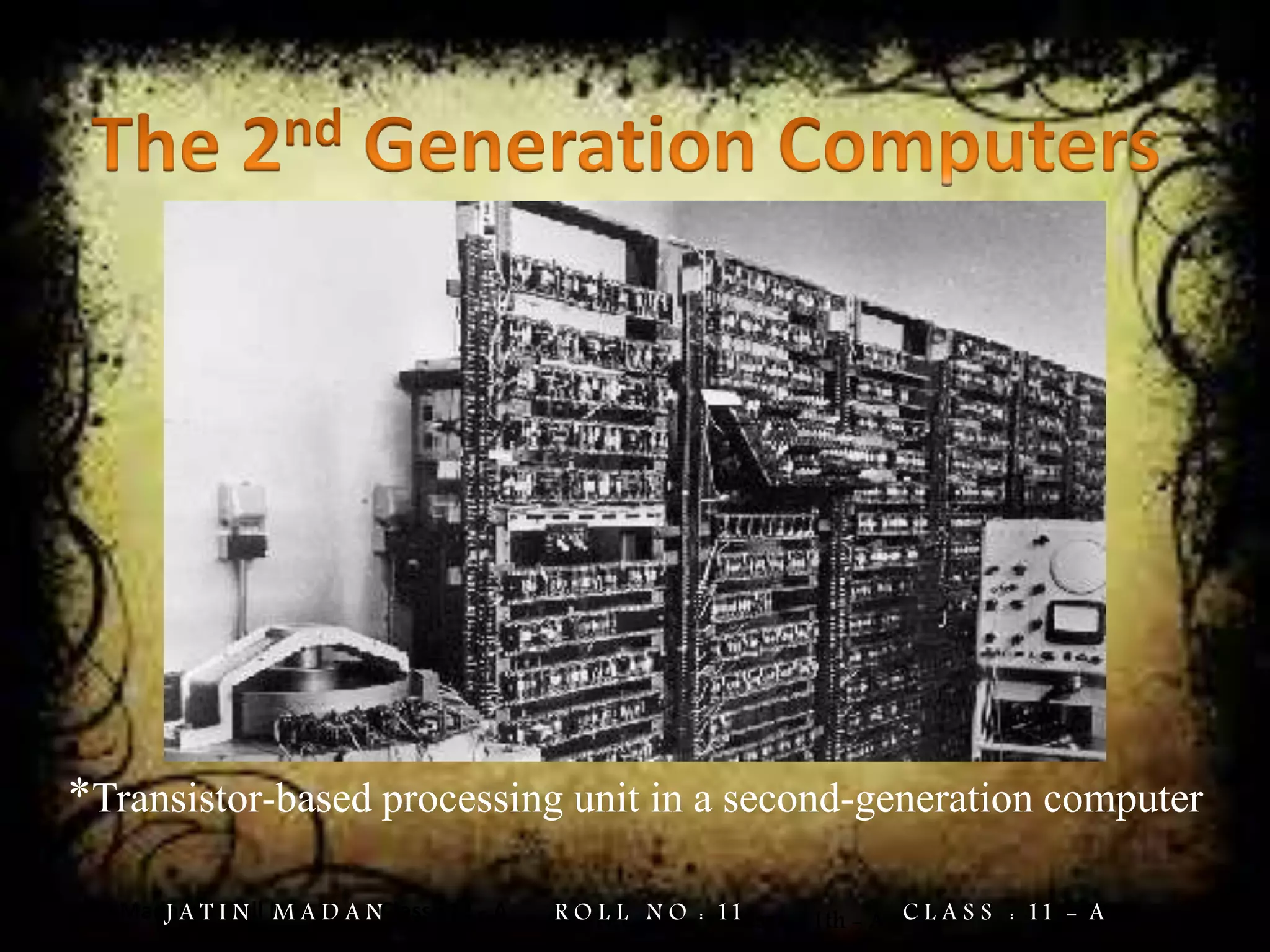
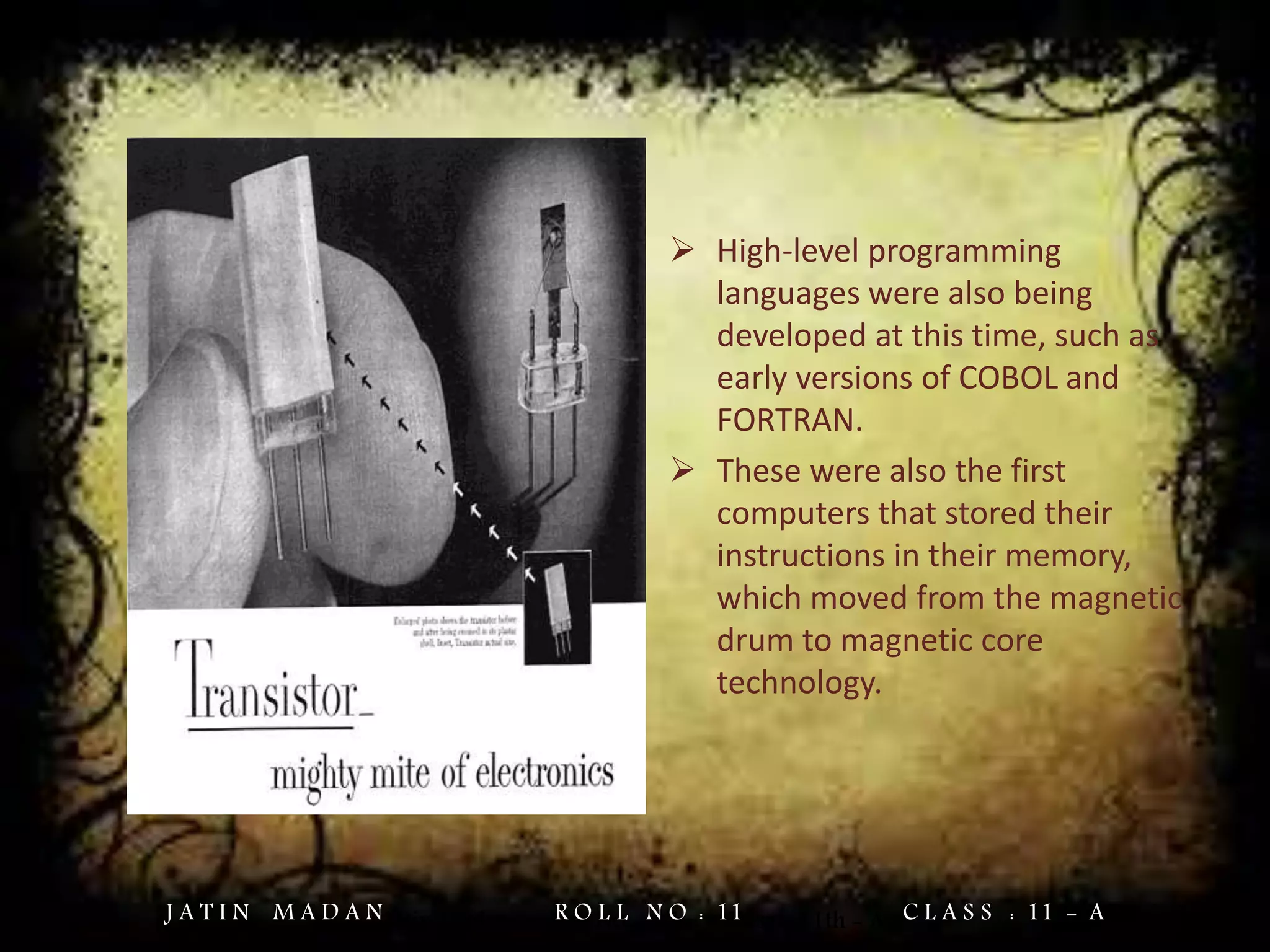
*Transistor-based processing unit in a second-generation computer
Jatin Madan Roll No. = 11 Class = 11th - AJ A T I N M A D A N R O L L N O : 11 C L A S S : 11 - A
Jatin Madan Roll No : 11 Class : 11 - A
Second Generation (1956-1963) Transistors
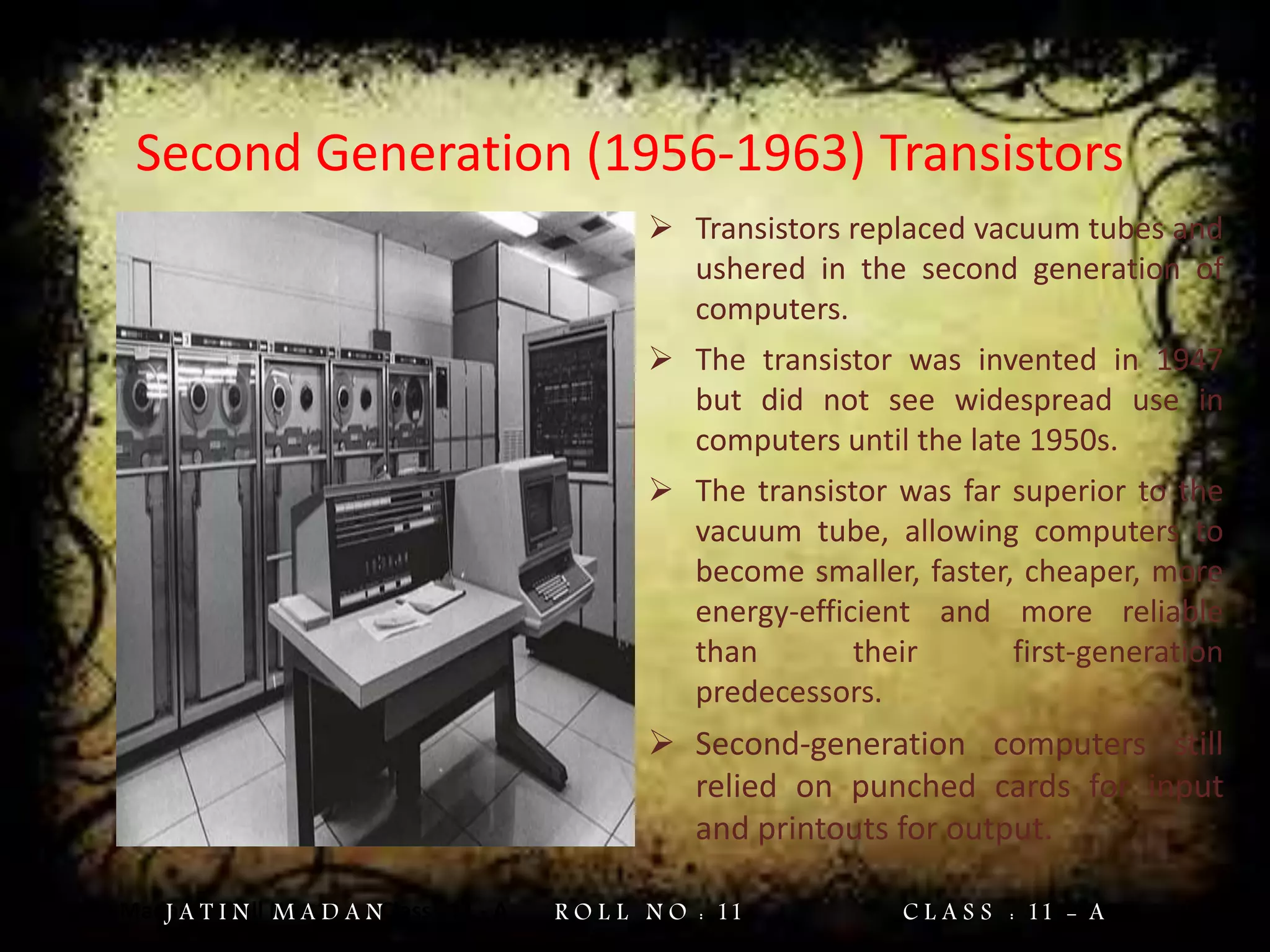
 Transistors replaced vacuum tubes and
ushered in the second generation of
computers.
 The transistor was invented in 1947
but did not see widespread use in
computers until the late 1950s.
 The transistor was far superior to the
vacuum tube, allowing computers to
become smaller, faster, cheaper, more
energy-efficient and more reliable
than their first-generation
predecessors.
 Second-generation computers still
relied on punched cards for input
and printouts for output.
J A T I N M A D A N R O L L N O : 11 C L A S S : 11 - A
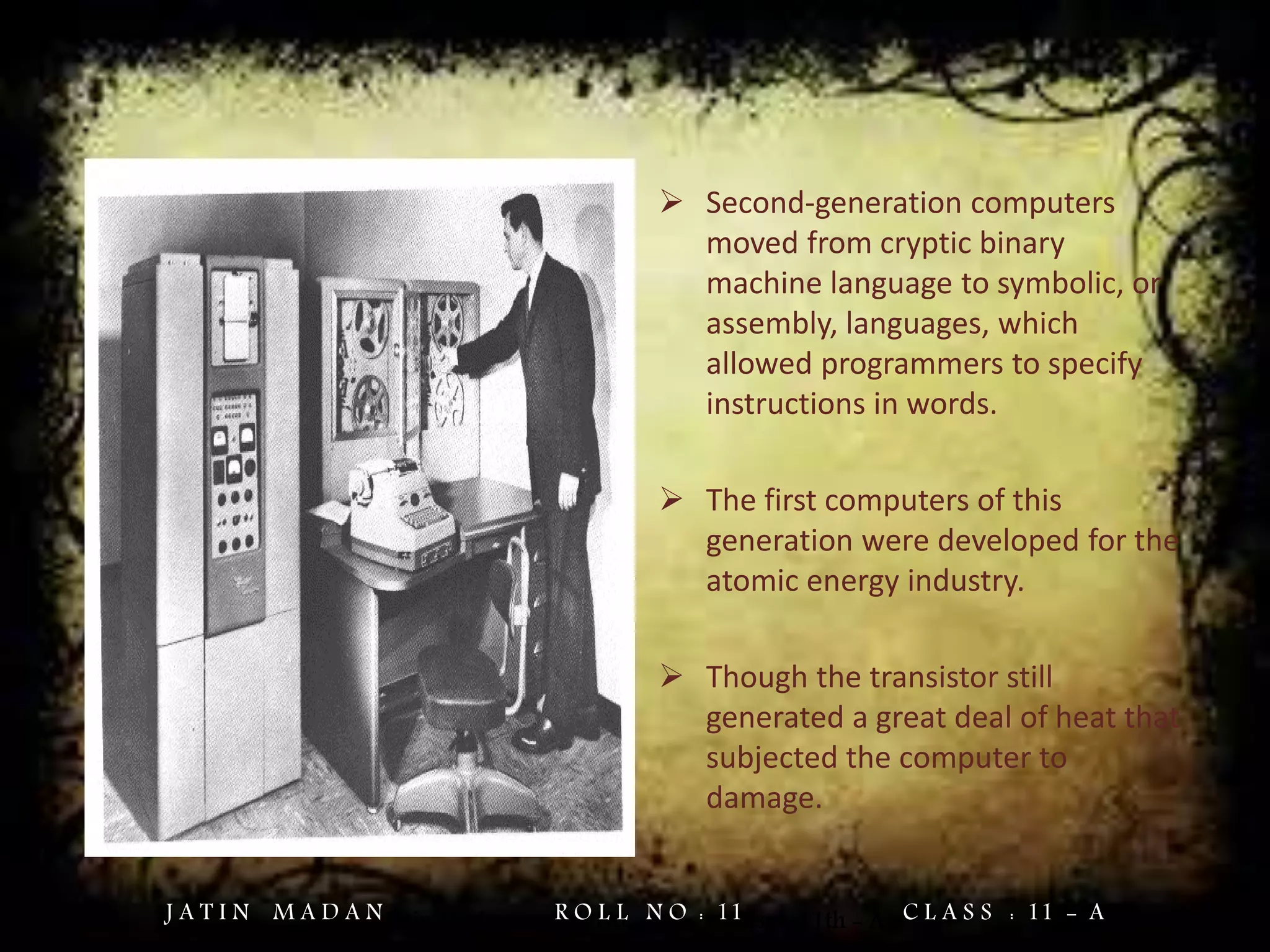
 Second-generation computers
moved from cryptic binary
machine language to symbolic, or
assembly, languages, which
allowed programmers to specify
instructions in words.
 The first computers of this
generation were developed for the
atomic energy industry.
 Though the transistor still
generated a great deal of heat that
subjected the computer to
damage.
Jatin Madan Roll No. = 11 Class = 11th - AJ A T I N M A D A N R O L L N O : 11 C L A S S : 11 - A
 High-level programming
languages were also being
developed at this time, such as
early versions of COBOL and
FORTRAN.
 These were also the first
computers that stored their
instructions in their memory,
which moved from the magnetic
drum to magnetic core
technology.
Jatin Madan Roll No. = 11 Class = 11th - AJ A T I N M A D A N R O L L N O : 11 C L A S S : 11 - A
Jatin Madan Roll No : 11 Class : 11 - A
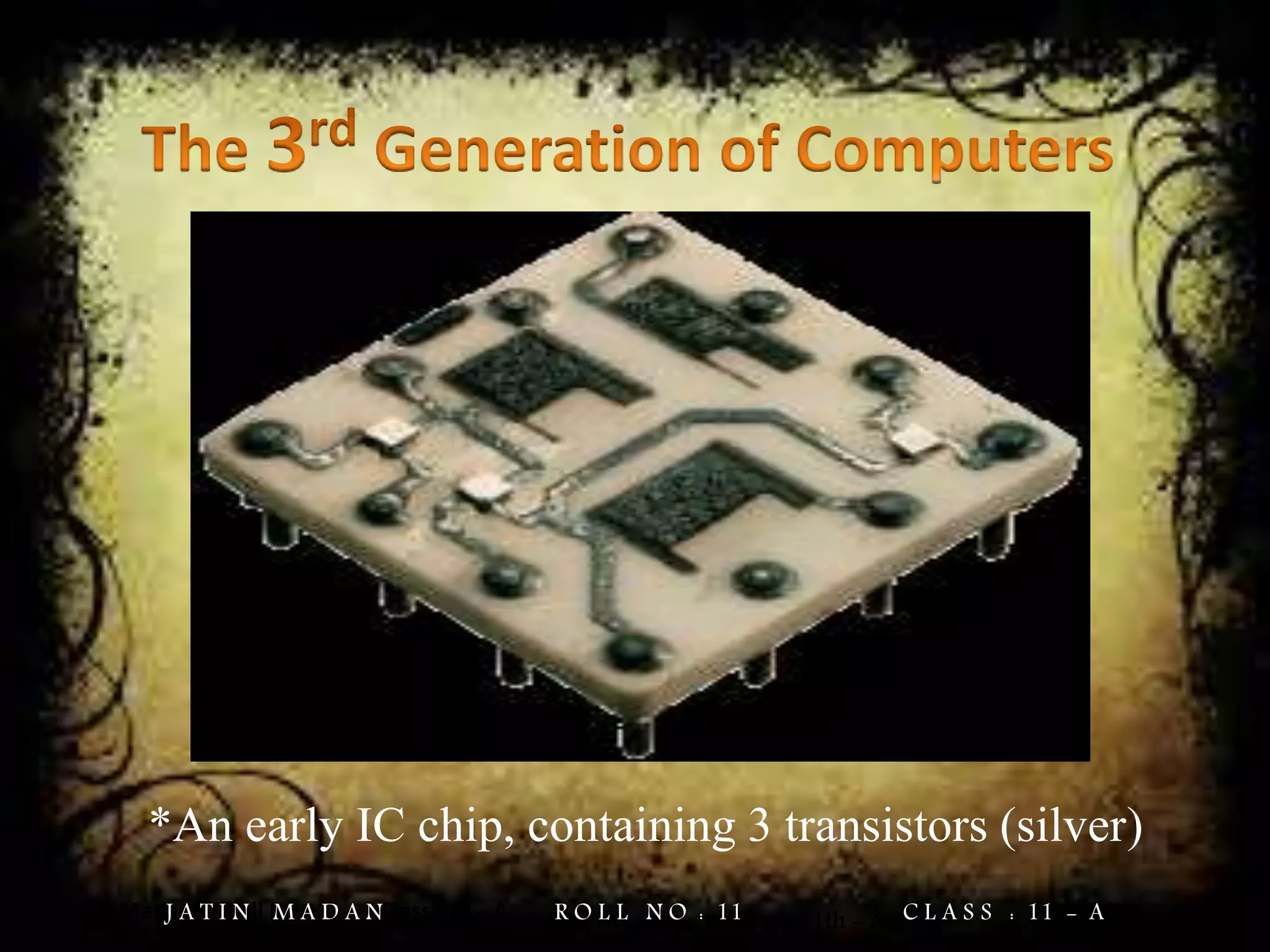
*An early IC chip, containing 3 transistors (silver)
Jatin Madan Roll No. = 11 Class = 11th - AJ A T I N M A D A N R O L L N O : 11 C L A S S : 11 - A
Jatin Madan Roll No : 11 Class : 11 - A
Third Generation (1964-1971)
Integrated Circuits
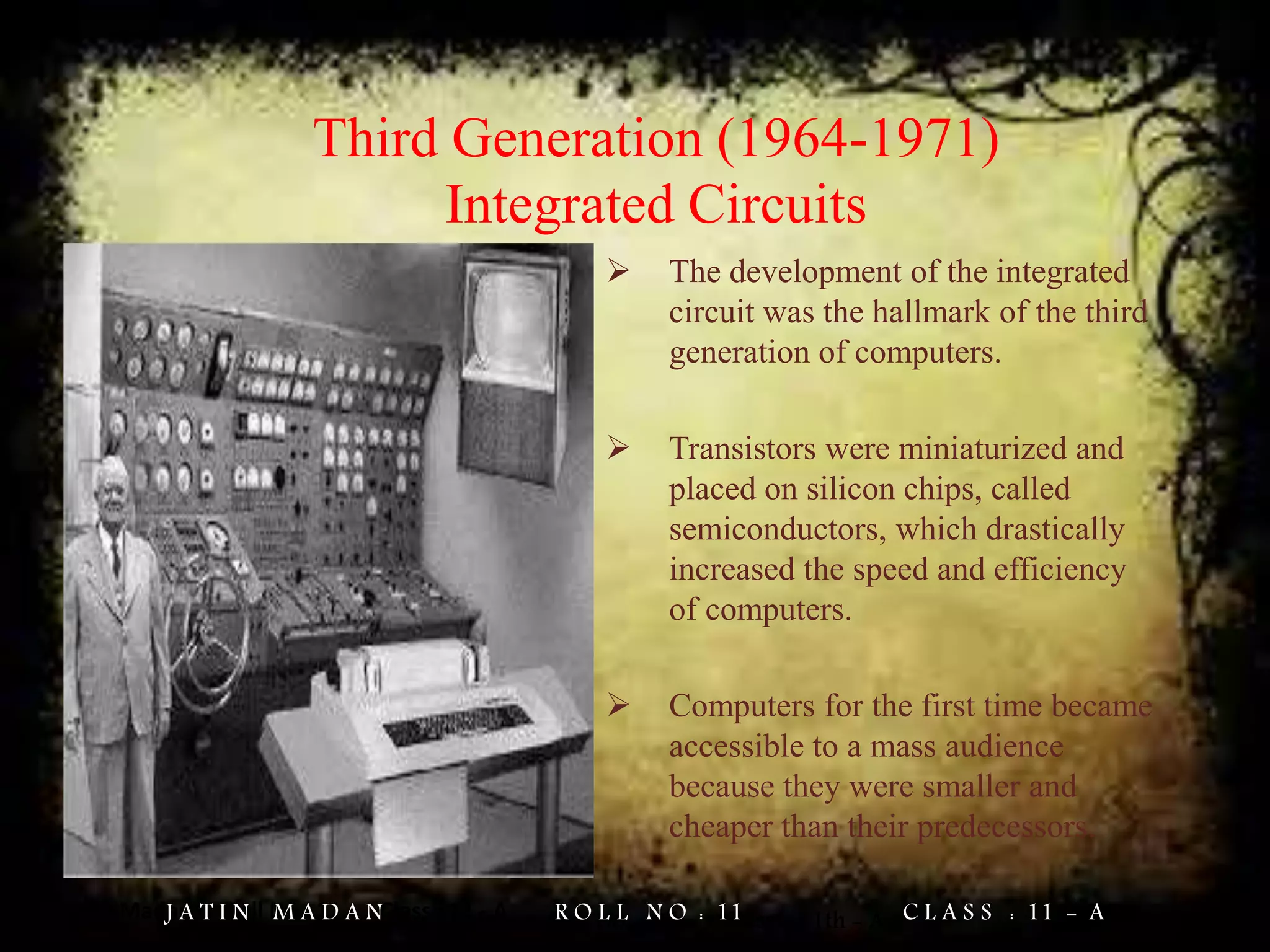
 The development of the integrated
circuit was the hallmark of the third
generation of computers.
 Transistors were miniaturized and
placed on silicon chips, called
semiconductors, which drastically
increased the speed and efficiency
of computers.
 Computers for the first time became
accessible to a mass audience
because they were smaller and
cheaper than their predecessors.
Jatin Madan Roll No. = 11 Class = 11th - AJ A T I N M A D A N R O L L N O : 11 C L A S S : 11 - A
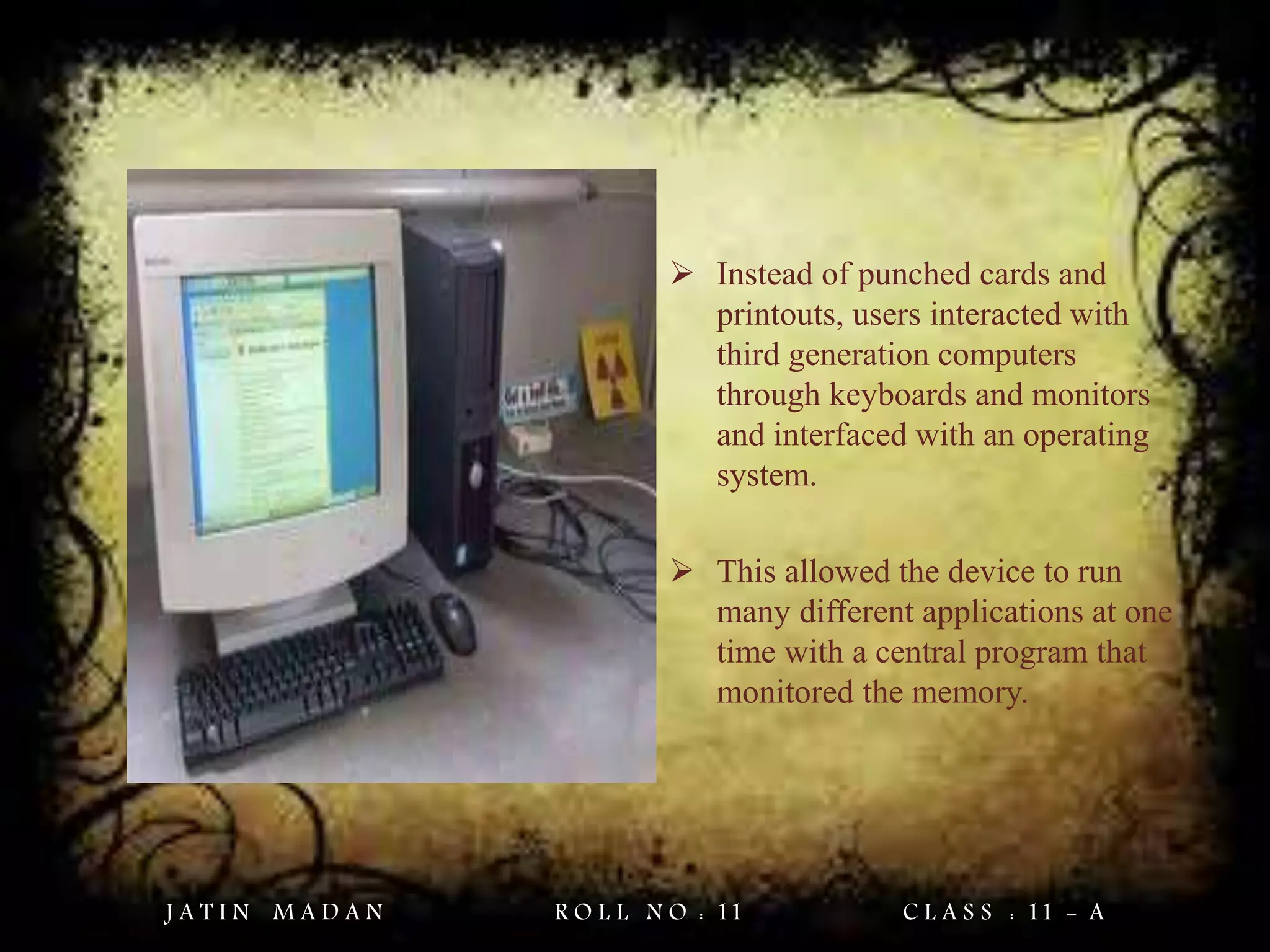
 Instead of punched cards and
printouts, users interacted with
third generation computers
through keyboards and monitors
and interfaced with an operating
system.
 This allowed the device to run
many different applications at one
time with a central program that
monitored the memory.
J A T I N M A D A N R O L L N O : 11 C L A S S : 11 - A
Jatin Madan Roll No : 11 Class : 11 - A
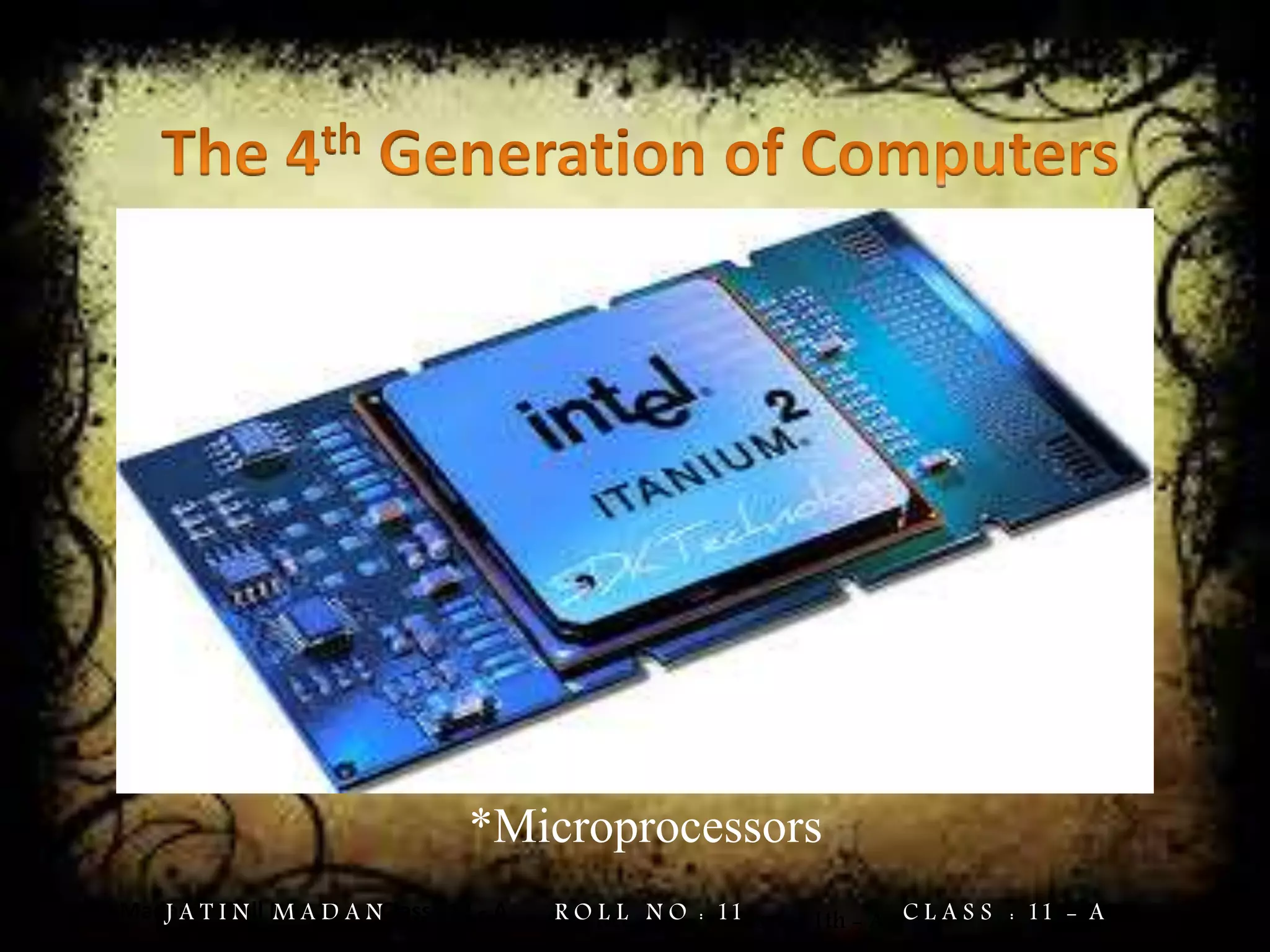
*Microprocessors
Jatin Madan Roll No. = 11 Class = 11th - AJ A T I N M A D A N R O L L N O : 11 C L A S S : 11 - A
Jatin Madan Roll No : 11 Class : 11 - A
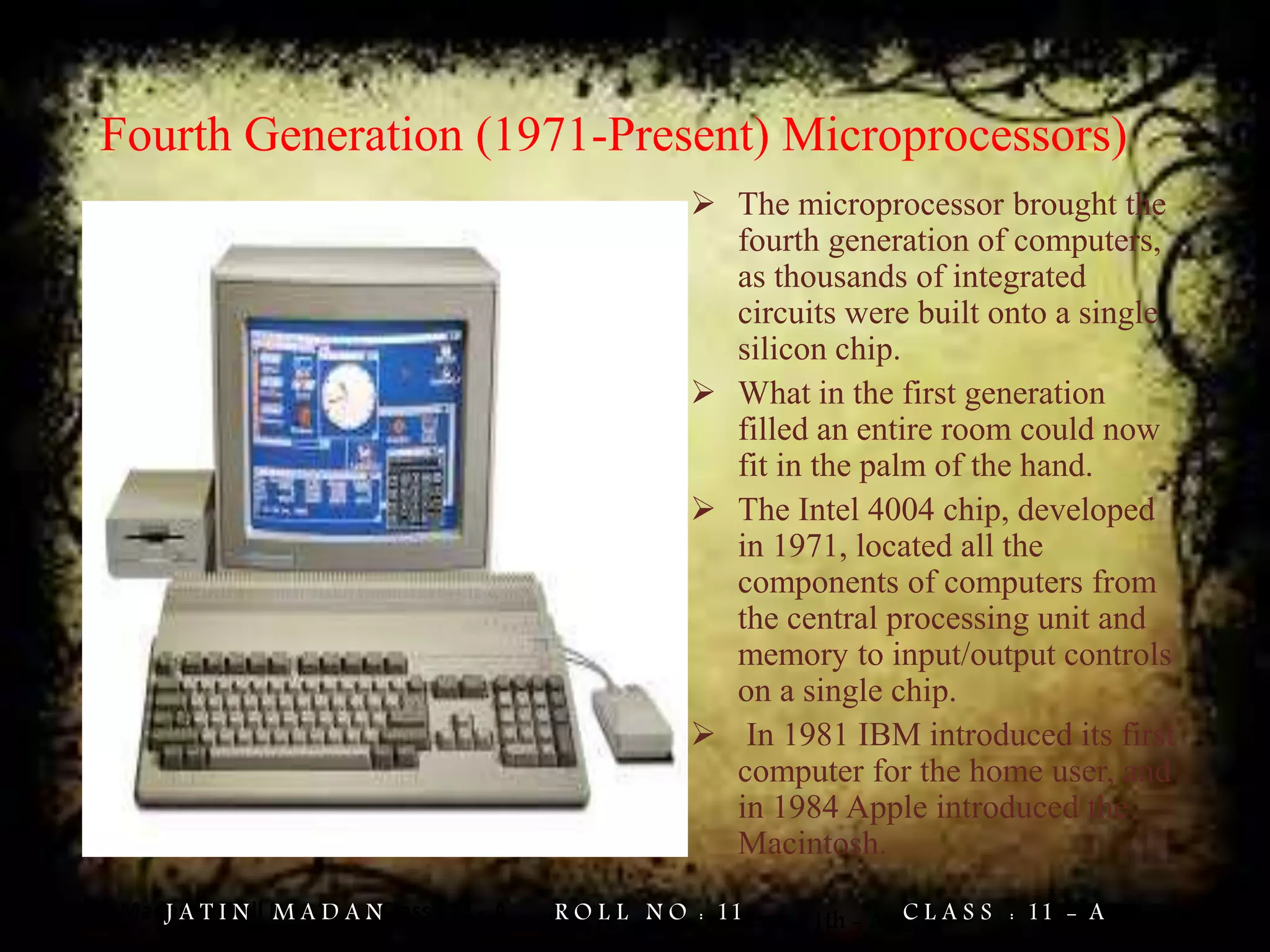
Fourth Generation (1971-Present) Microprocessors)
 The microprocessor brought the
fourth generation of computers,
as thousands of integrated
circuits were built onto a single
silicon chip.
 What in the first generation
filled an entire room could now
fit in the palm of the hand.
 The Intel 4004 chip, developed
in 1971, located all the
components of computers from
the central processing unit and
memory to input/output controls
on a single chip.
 In 1981 IBM introduced its first
computer for the home user, and
in 1984 Apple introduced the
Macintosh.
Jatin Madan Roll No. = 11 Class = 11th - AJ A T I N M A D A N R O L L N O : 11 C L A S S : 11 - A
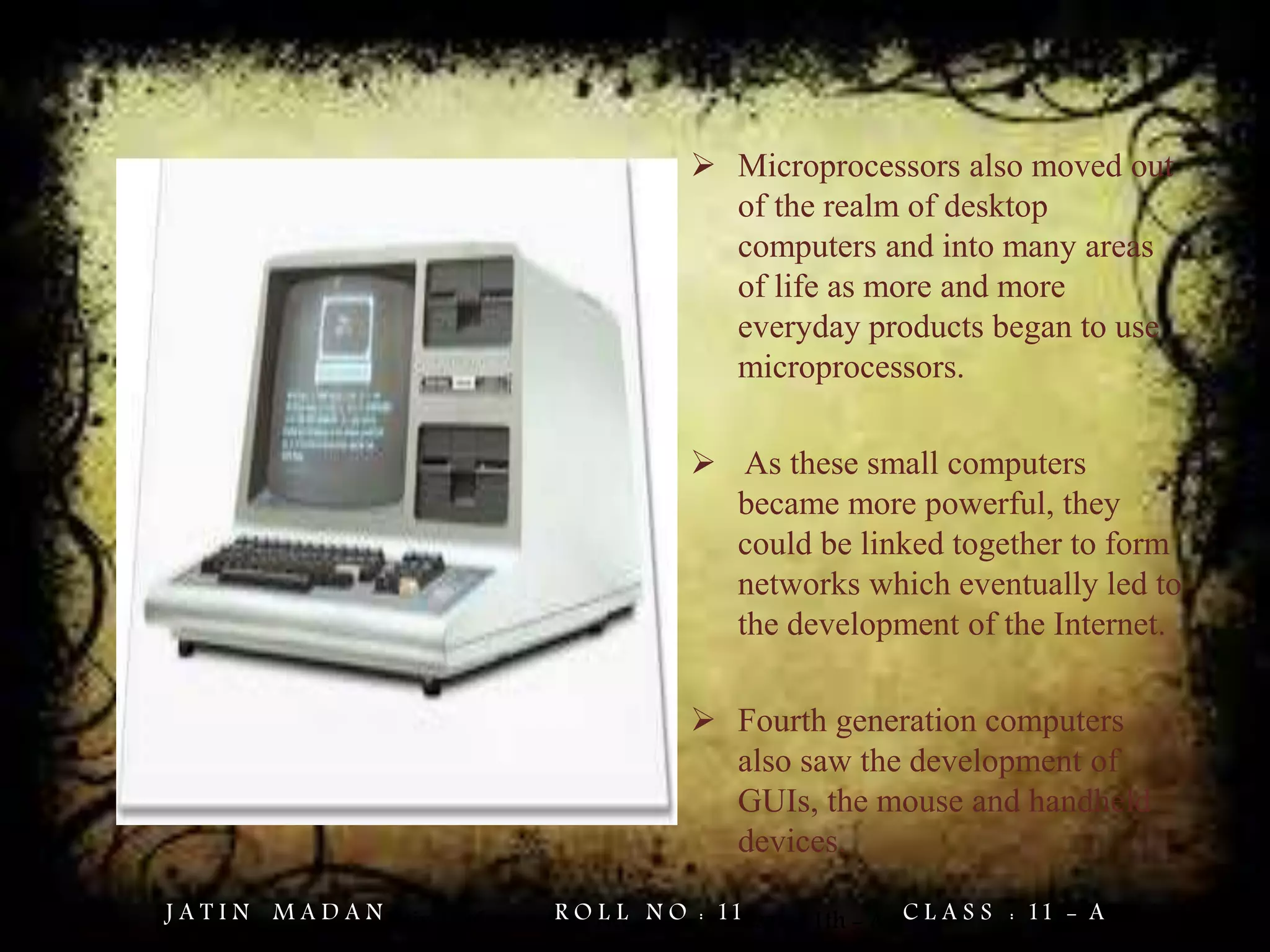
 Microprocessors also moved out
of the realm of desktop
computers and into many areas
of life as more and more
everyday products began to use
microprocessors.
 As these small computers
became more powerful, they
could be linked together to form
networks which eventually led to
the development of the Internet.
 Fourth generation computers
also saw the development of
GUIs, the mouse and handheld
devices.
Jatin Madan Roll No. = 11 Class = 11th - AJ A T I N M A D A N R O L L N O : 11 C L A S S : 11 - A
Jatin Madan Roll No : 11 Class : 11 - AJatin Madan Roll No. = 11 Class = 11th - AJ A T I N M A D A N R O L L N O : 11 C L A S S : 11 - A
Jatin Madan Roll No : 11 Class : 11 - A
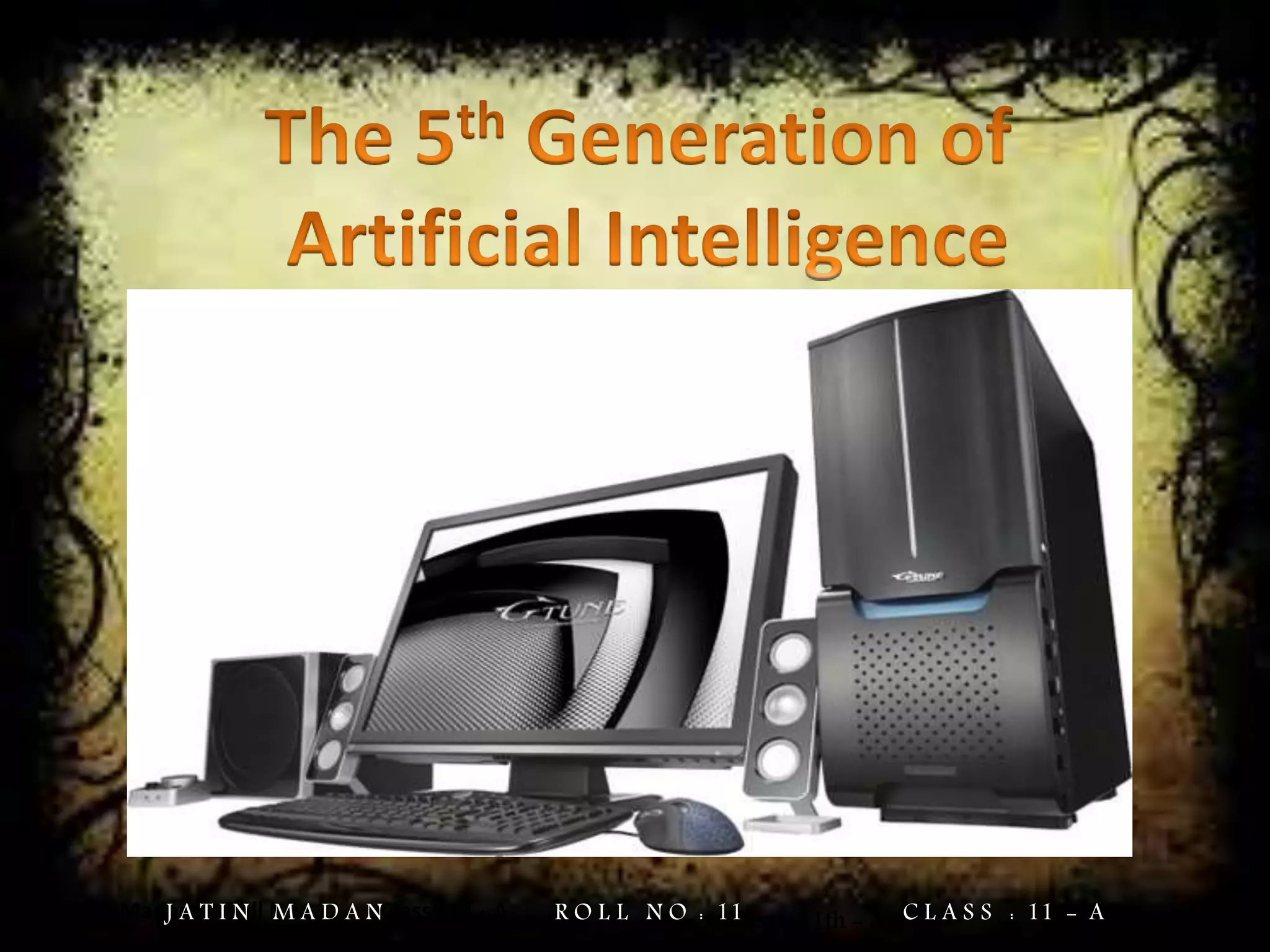
Fifth Generation (Present and Beyond
Artificial Intelligence)
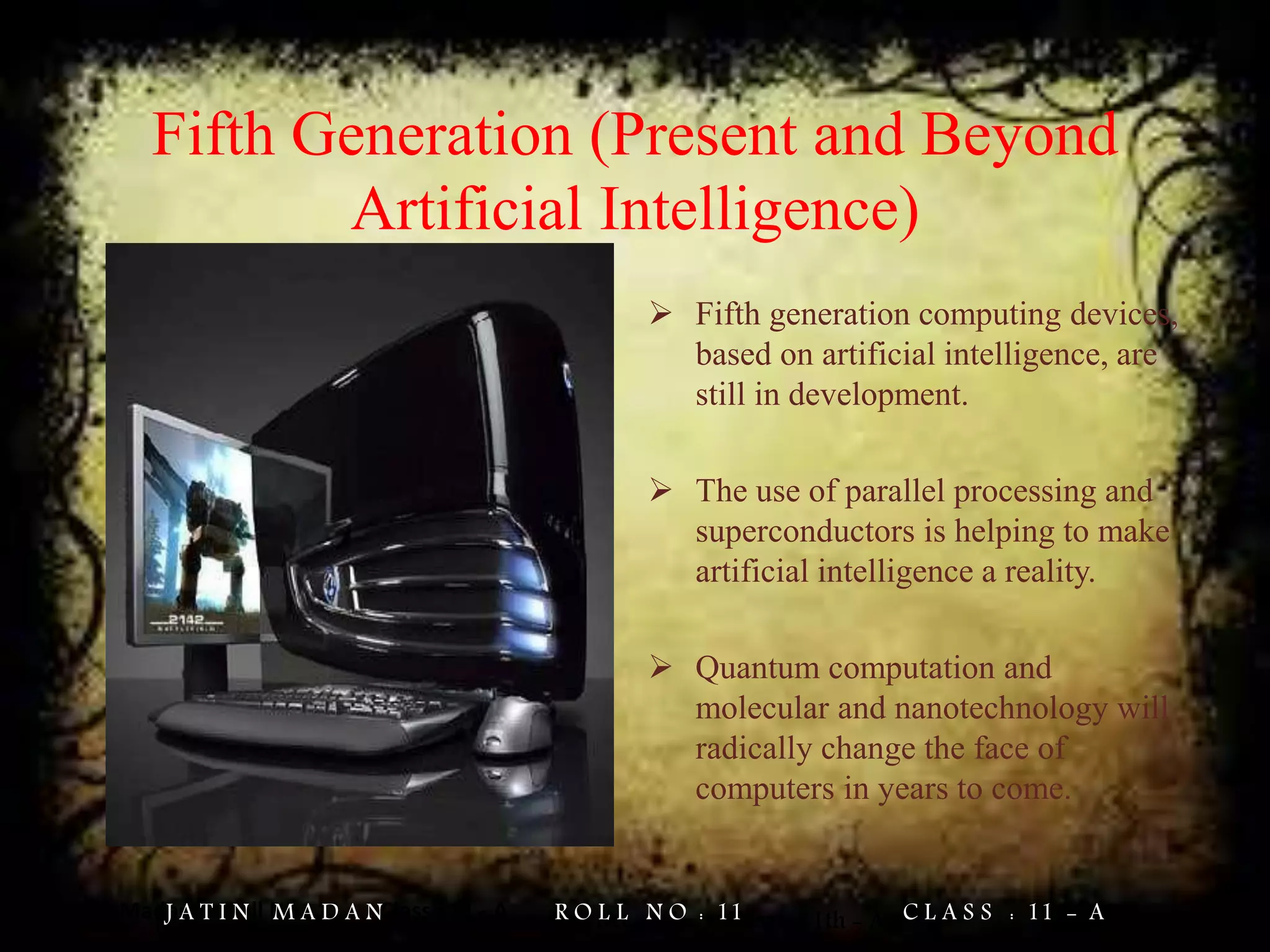
 Fifth generation computing devices,
based on artificial intelligence, are
still in development.
 The use of parallel processing and
superconductors is helping to make
artificial intelligence a reality.
 Quantum computation and
molecular and nanotechnology will
radically change the face of
computers in years to come.
Jatin Madan Roll No. = 11 Class = 11th - AJ A T I N M A D A N R O L L N O : 11 C L A S S : 11 - A
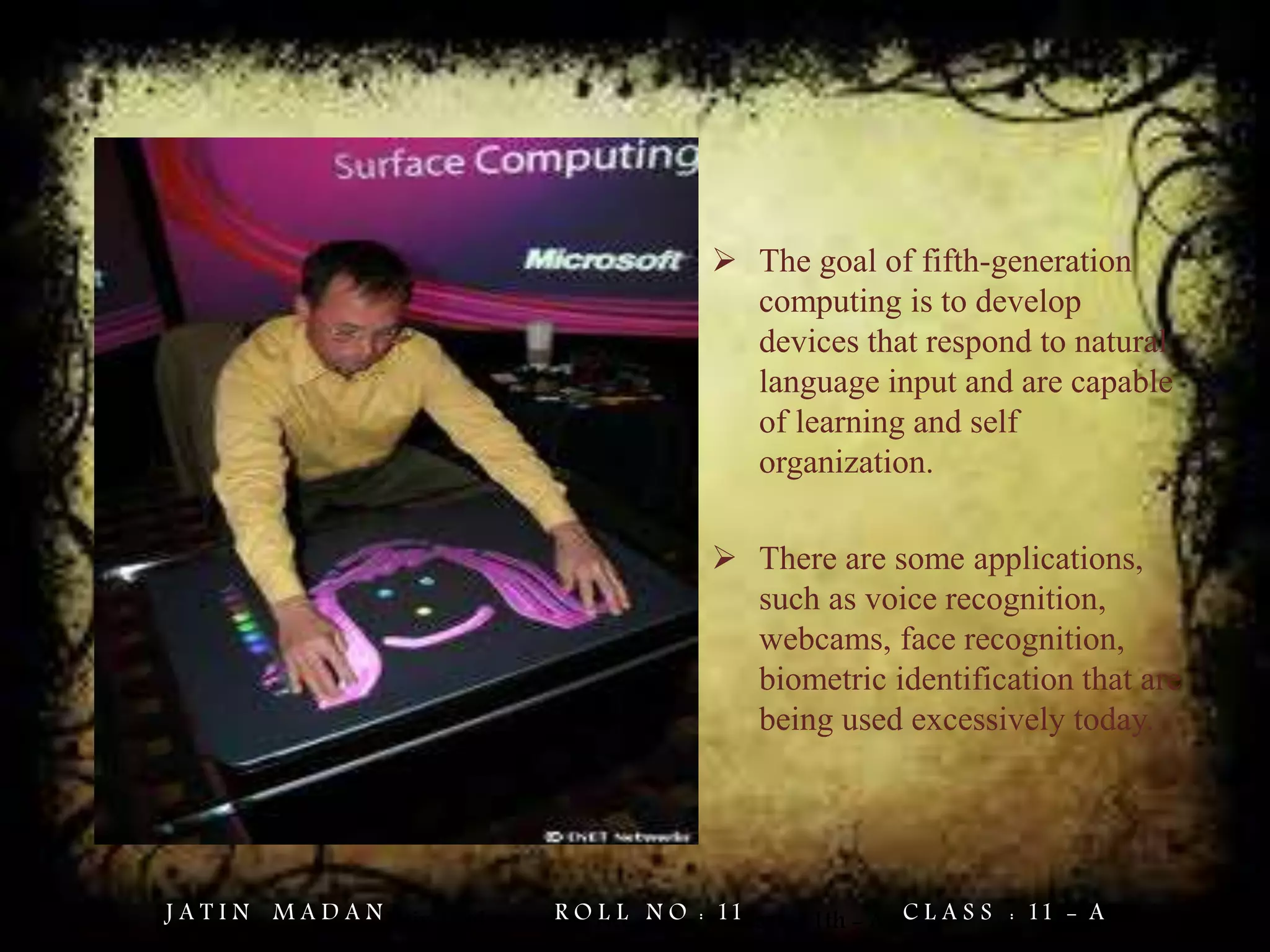
 The goal of fifth-generation
computing is to develop
devices that respond to natural
language input and are capable
of learning and self
organization.
 There are some applications,
such as voice recognition,
webcams, face recognition,
biometric identification that are
being used excessively today.
Jatin Madan Roll No. = 11 Class = 11th - AJ A T I N M A D A N R O L L N O : 11 C L A S S : 11 - A

Generations of computers

  • 1.
    Jatin Madan RollNo : 11 Class : 11 - A Generations of Computers Jatin Madan
  • 2.
    BIBLIOGRAPHY Jatin Madan RollNo. = 11 Class = 11th - A  Topics taken from :- • Sumita Arora • Wikipedia  Source of Information :- • http://en.wikipedia.org/wiki/Computer • *Wikipedia • *Sumita Arora (C++)  Source of Images :- • https://www.google.co.in/search?q=generations+of+computer&espv =2&source=lnms&tbm=isch&sa=X&ei=a0KoU9D9NMq9uAT264CADg&ved=0C AYQ_AUoAQ&biw=1364&bih=707
  • 3.
    Jatin Madan RollNo : 11 Class : 11 - A *Vacuum tube processing unit in a first-generation computer J A T I N M A D A N R O L L N O : 11 C L A S S : 11 - A
  • 4.
    Jatin Madan RollNo : 11 Class : 11 - A First Generation (1940-1956) Vacuum Tubes  The first computers used vacuum tubes for circuitry and magnetic drums for memory  They were enormous & took almost entire rooms.  They were expensive to operate and in addition used a great deal of electricity, that generated a lot of heat, causing a lot of malfunctions.  First generation computers relied on machine language, the lowest-level programming language understood by computers, to perform operations, and were capable of solving one problem at a time. J A T I N M A D A N R O L L N O : 11 C L A S S : 11 - A
  • 5.
     Input wasbased on punched cards and paper tape, and output was displayed on printouts.  The UNIVAC and ENIAC computers are examples of first- generation computing devices.  The UNIVAC was the first commercial computer delivered to a business client, the U.S. Census Bureau in 1951. J A T I N M A D A N R O L L N O : 11 C L A S S : 11 - A
  • 6.
    Jatin Madan RollNo : 11 Class : 11 - A *Transistor-based processing unit in a second-generation computer Jatin Madan Roll No. = 11 Class = 11th - AJ A T I N M A D A N R O L L N O : 11 C L A S S : 11 - A
  • 7.
    Jatin Madan RollNo : 11 Class : 11 - A Second Generation (1956-1963) Transistors  Transistors replaced vacuum tubes and ushered in the second generation of computers.  The transistor was invented in 1947 but did not see widespread use in computers until the late 1950s.  The transistor was far superior to the vacuum tube, allowing computers to become smaller, faster, cheaper, more energy-efficient and more reliable than their first-generation predecessors.  Second-generation computers still relied on punched cards for input and printouts for output. J A T I N M A D A N R O L L N O : 11 C L A S S : 11 - A
  • 8.
     Second-generation computers movedfrom cryptic binary machine language to symbolic, or assembly, languages, which allowed programmers to specify instructions in words.  The first computers of this generation were developed for the atomic energy industry.  Though the transistor still generated a great deal of heat that subjected the computer to damage. Jatin Madan Roll No. = 11 Class = 11th - AJ A T I N M A D A N R O L L N O : 11 C L A S S : 11 - A
  • 9.
     High-level programming languageswere also being developed at this time, such as early versions of COBOL and FORTRAN.  These were also the first computers that stored their instructions in their memory, which moved from the magnetic drum to magnetic core technology. Jatin Madan Roll No. = 11 Class = 11th - AJ A T I N M A D A N R O L L N O : 11 C L A S S : 11 - A
  • 10.
    Jatin Madan RollNo : 11 Class : 11 - A *An early IC chip, containing 3 transistors (silver) Jatin Madan Roll No. = 11 Class = 11th - AJ A T I N M A D A N R O L L N O : 11 C L A S S : 11 - A
  • 11.
    Jatin Madan RollNo : 11 Class : 11 - A Third Generation (1964-1971) Integrated Circuits  The development of the integrated circuit was the hallmark of the third generation of computers.  Transistors were miniaturized and placed on silicon chips, called semiconductors, which drastically increased the speed and efficiency of computers.  Computers for the first time became accessible to a mass audience because they were smaller and cheaper than their predecessors. Jatin Madan Roll No. = 11 Class = 11th - AJ A T I N M A D A N R O L L N O : 11 C L A S S : 11 - A
  • 12.
     Instead ofpunched cards and printouts, users interacted with third generation computers through keyboards and monitors and interfaced with an operating system.  This allowed the device to run many different applications at one time with a central program that monitored the memory. J A T I N M A D A N R O L L N O : 11 C L A S S : 11 - A
  • 13.
    Jatin Madan RollNo : 11 Class : 11 - A *Microprocessors Jatin Madan Roll No. = 11 Class = 11th - AJ A T I N M A D A N R O L L N O : 11 C L A S S : 11 - A
  • 14.
    Jatin Madan RollNo : 11 Class : 11 - A Fourth Generation (1971-Present) Microprocessors)  The microprocessor brought the fourth generation of computers, as thousands of integrated circuits were built onto a single silicon chip.  What in the first generation filled an entire room could now fit in the palm of the hand.  The Intel 4004 chip, developed in 1971, located all the components of computers from the central processing unit and memory to input/output controls on a single chip.  In 1981 IBM introduced its first computer for the home user, and in 1984 Apple introduced the Macintosh. Jatin Madan Roll No. = 11 Class = 11th - AJ A T I N M A D A N R O L L N O : 11 C L A S S : 11 - A
  • 15.
     Microprocessors alsomoved out of the realm of desktop computers and into many areas of life as more and more everyday products began to use microprocessors.  As these small computers became more powerful, they could be linked together to form networks which eventually led to the development of the Internet.  Fourth generation computers also saw the development of GUIs, the mouse and handheld devices. Jatin Madan Roll No. = 11 Class = 11th - AJ A T I N M A D A N R O L L N O : 11 C L A S S : 11 - A
  • 16.
    Jatin Madan RollNo : 11 Class : 11 - AJatin Madan Roll No. = 11 Class = 11th - AJ A T I N M A D A N R O L L N O : 11 C L A S S : 11 - A
  • 17.
    Jatin Madan RollNo : 11 Class : 11 - A Fifth Generation (Present and Beyond Artificial Intelligence)  Fifth generation computing devices, based on artificial intelligence, are still in development.  The use of parallel processing and superconductors is helping to make artificial intelligence a reality.  Quantum computation and molecular and nanotechnology will radically change the face of computers in years to come. Jatin Madan Roll No. = 11 Class = 11th - AJ A T I N M A D A N R O L L N O : 11 C L A S S : 11 - A
  • 18.
     The goalof fifth-generation computing is to develop devices that respond to natural language input and are capable of learning and self organization.  There are some applications, such as voice recognition, webcams, face recognition, biometric identification that are being used excessively today. Jatin Madan Roll No. = 11 Class = 11th - AJ A T I N M A D A N R O L L N O : 11 C L A S S : 11 - A
  • 19.
    Jatin Madan RollNo. = 11 Class = 11th - AJ A T I N M A D A N R O L L N O : 11 C L A S S : 11 - A