DEVTECH FINANCE
GENERAL INSURANCE MODULE
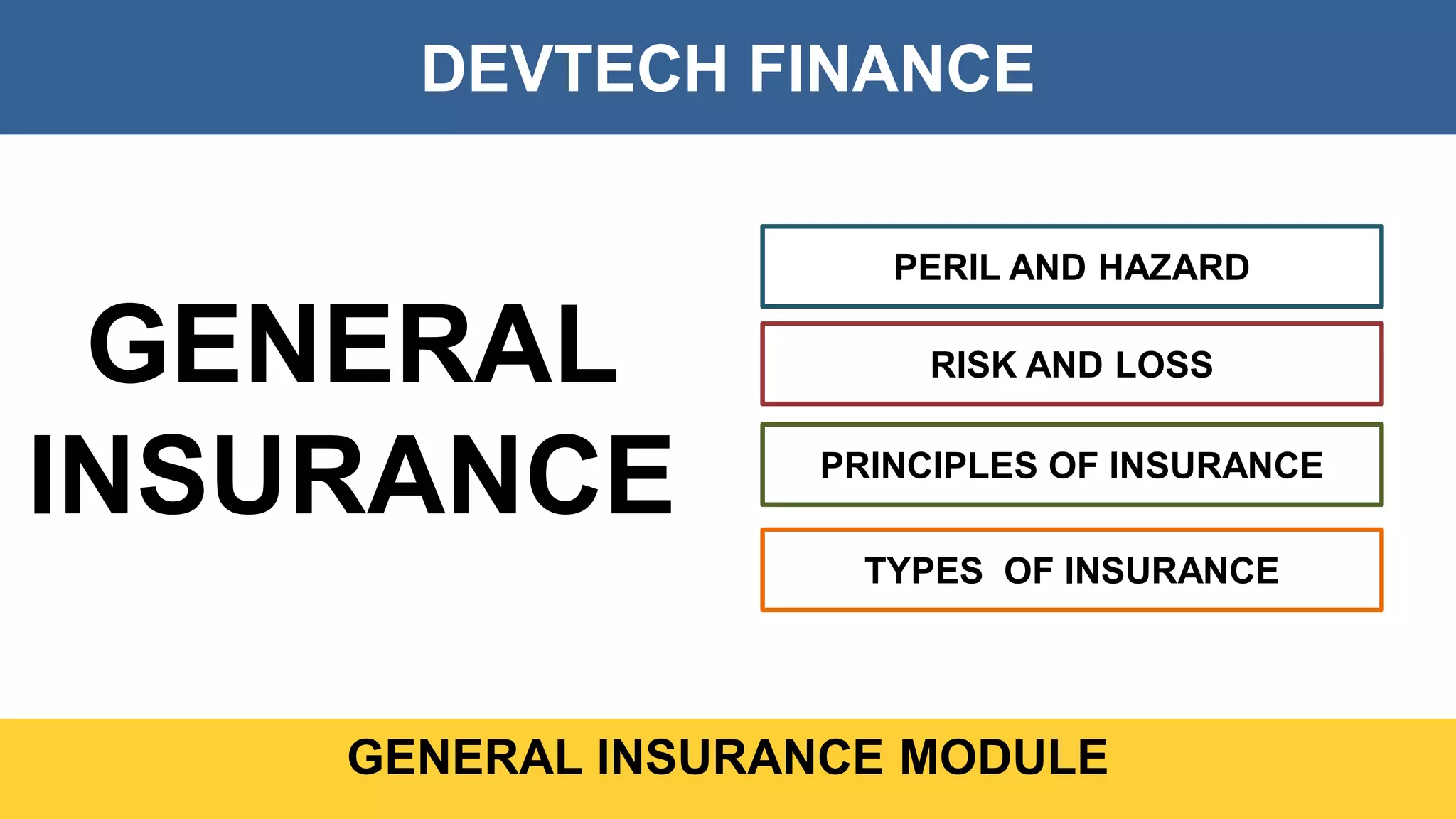
GENERAL
INSURANCE
PERIL AND HAZARD
RISK AND LOSS
PRINCIPLES OF INSURANCE
TYPES OF INSURANCE
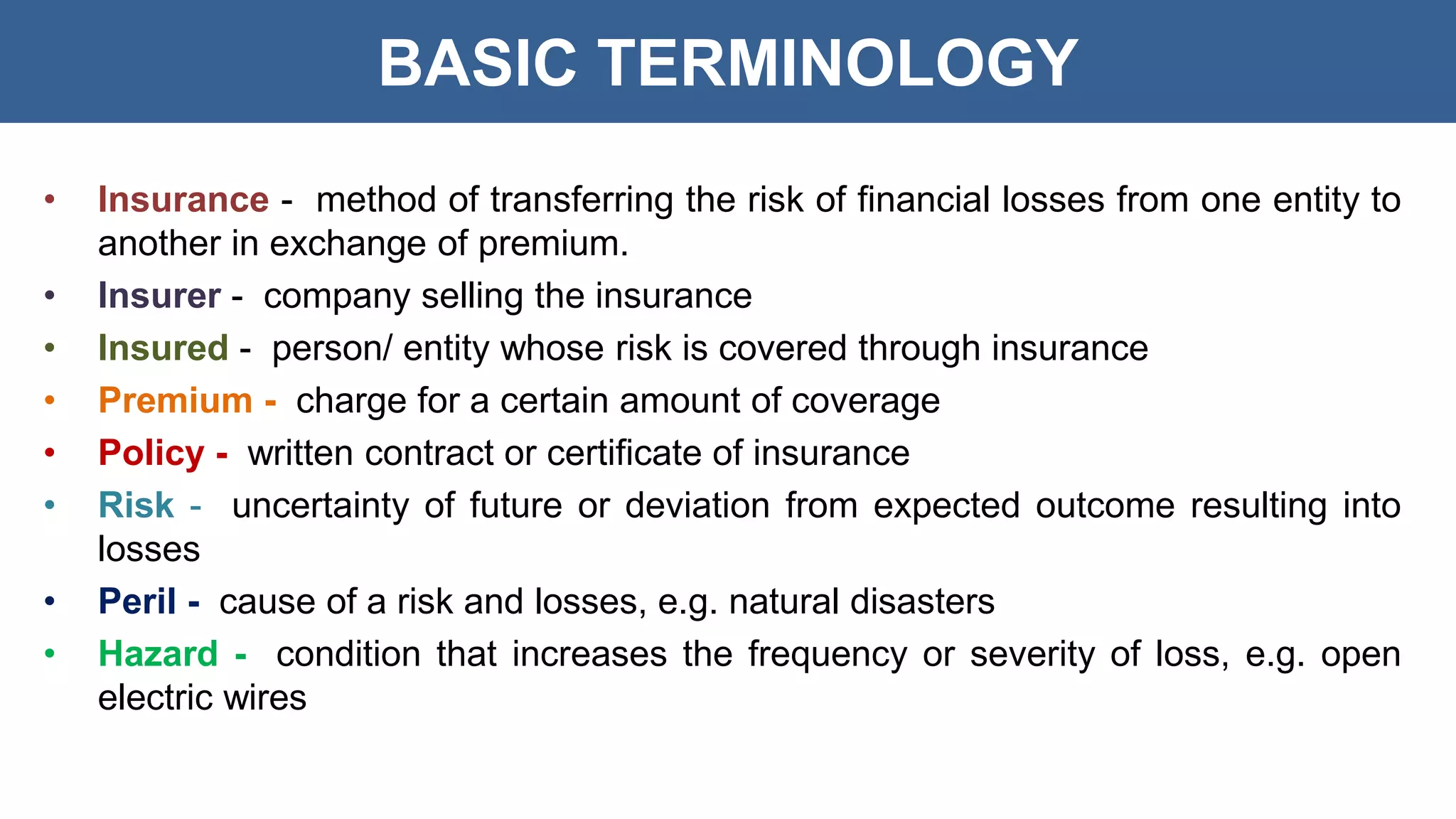
BASIC TERMINOLOGY
• Insurance - method of transferring the risk of financial losses from one entity to
another in exchange of premium.
• Insurer - company selling the insurance
• Insured - person/ entity whose risk is covered through insurance
• Premium - charge for a certain amount of coverage
• Policy - written contract or certificate of insurance
• Risk - uncertainty of future or deviation from expected outcome resulting into
losses
• Peril - cause of a risk and losses, e.g. natural disasters
• Hazard - condition that increases the frequency or severity of loss, e.g. open
electric wires
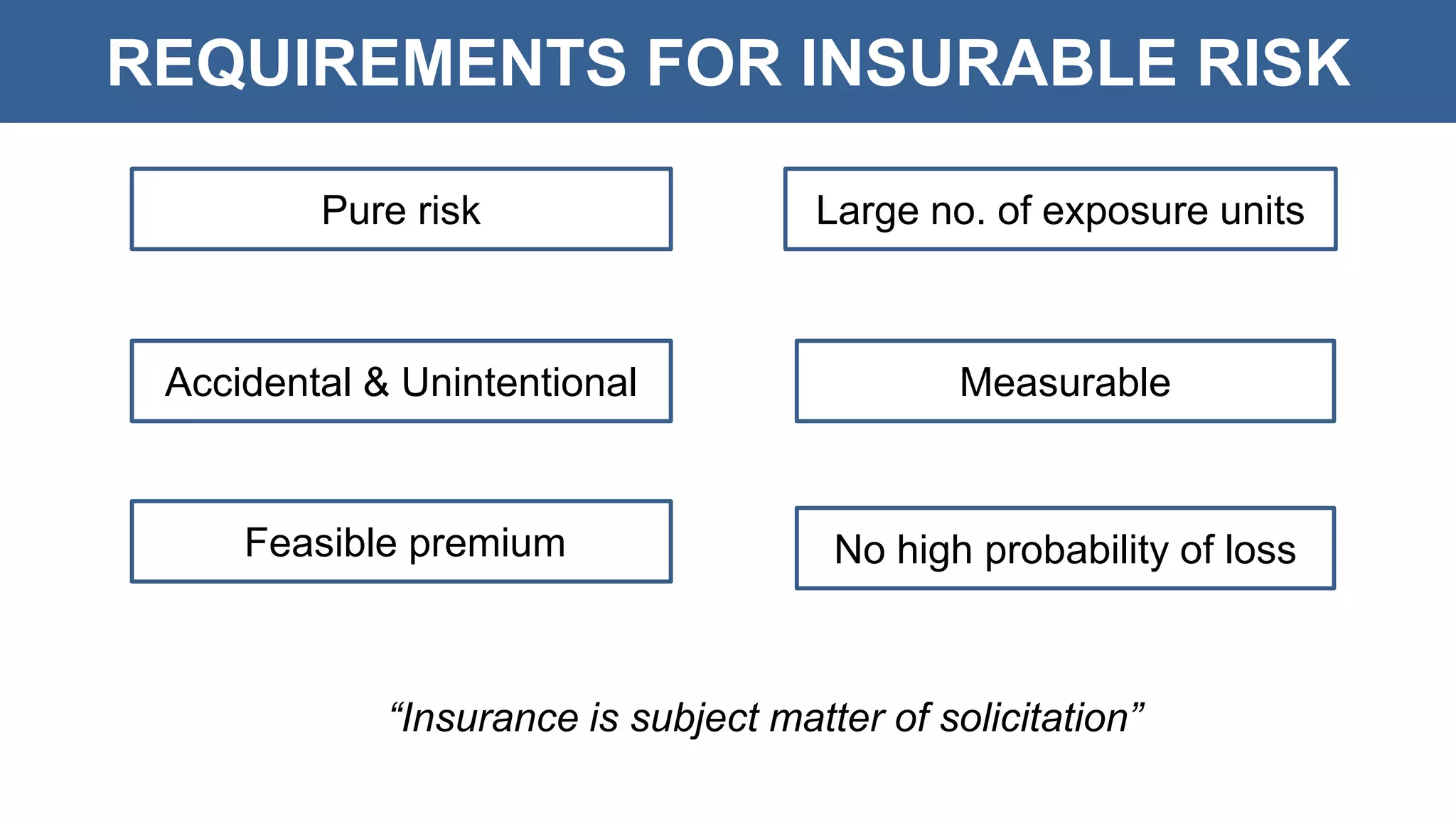
REQUIREMENTS FOR INSURABLE RISK
Pure risk Large no. of exposure units
Accidental & Unintentional Measurable
Feasible premium No high probability of loss
“Insurance is subject matter of solicitation”
PRINCIPLES OF INSURANCE
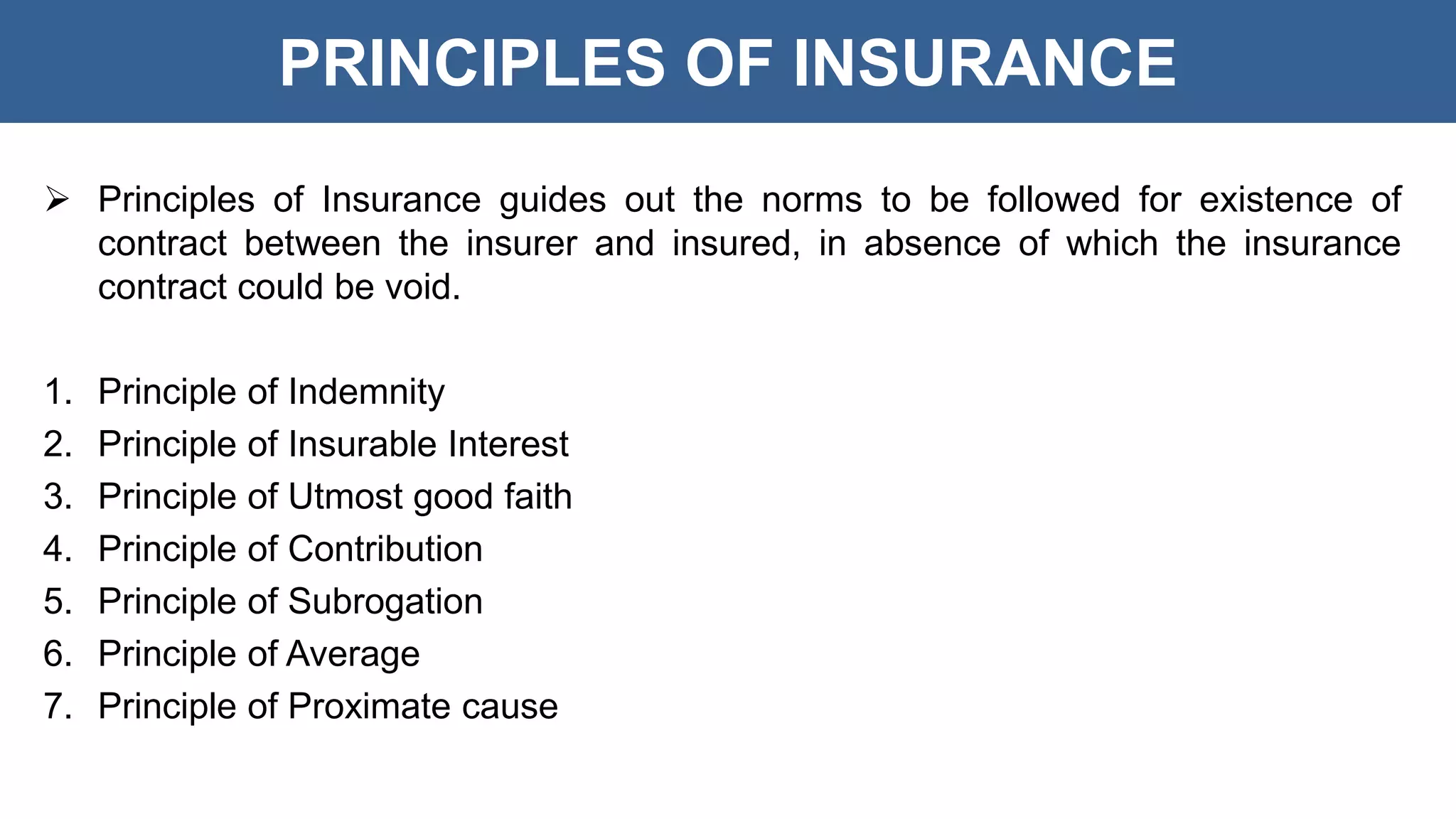
 Principles of Insurance guides out the norms to be followed for existence of
contract between the insurer and insured, in absence of which the insurance
contract could be void.
1. Principle of Indemnity
2. Principle of Insurable Interest
3. Principle of Utmost good faith
4. Principle of Contribution
5. Principle of Subrogation
6. Principle of Average
7. Principle of Proximate cause
PRINCIPLES OF INSURANCE
1. Principle of Indemnity – It states that the insurer will compensate only the loss
amount and not provide any sort of profit. It ensures to provide guaranteed
coverage that would be enough to put the insured back to the financial position
prior to loss.
2. Principle of Insurable Interest – It states that the insured must hold significant
interest in the subject matter of insurance i.e. should be the owner. It should be
evidenced that the insured is interested in preservation of thing, life or health
insured and would suffer loss in case of damage.
3. Principle of Utmost good faith – According to this principle, both the parties to
the insurance contract must disclose all fact material to the risk, voluntarily to
each other.
PRINCIPLES OF INSURANCE
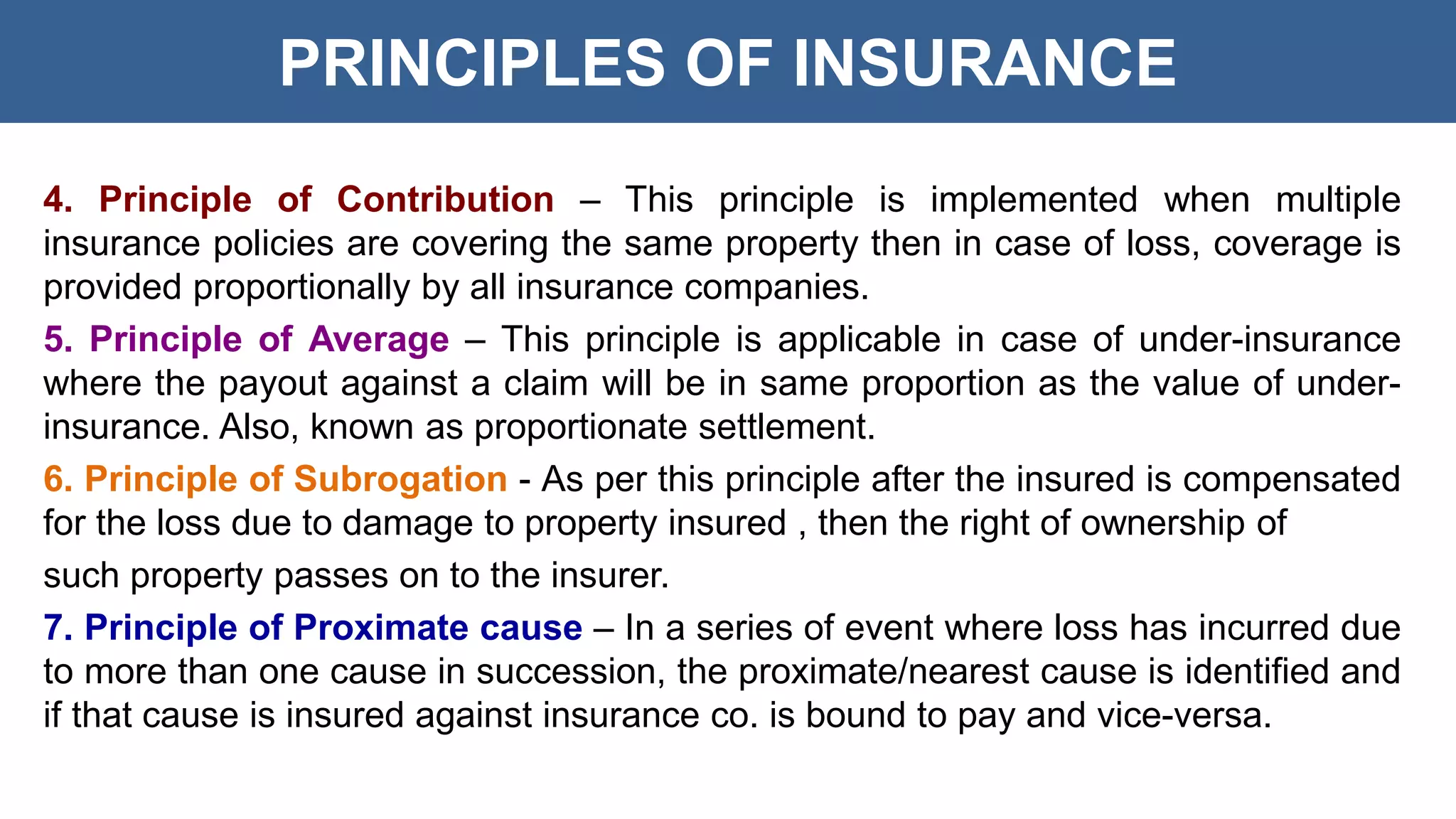
4. Principle of Contribution – This principle is implemented when multiple
insurance policies are covering the same property then in case of loss, coverage is
provided proportionally by all insurance companies.
5. Principle of Average – This principle is applicable in case of under-insurance
where the payout against a claim will be in same proportion as the value of under-
insurance. Also, known as proportionate settlement.
6. Principle of Subrogation - As per this principle after the insured is compensated
for the loss due to damage to property insured , then the right of ownership of
such property passes on to the insurer.
7. Principle of Proximate cause – In a series of event where loss has incurred due
to more than one cause in succession, the proximate/nearest cause is identified and
if that cause is insured against insurance co. is bound to pay and vice-versa.
TYPES OF INSURANCE
INSURANCE
LIFE
INSURANCE
GENERAL
INSURANCE
FIRE
INSURANCE
HEALTH
INSURANCE
MOTOR
INSURANCE
MARINE
INSURANCE
THANK YOU FOR WATCHING
DEVTECH
FINANCE

General Insurance

  • 1.
    DEVTECH FINANCE GENERAL INSURANCEMODULE GENERAL INSURANCE PERIL AND HAZARD RISK AND LOSS PRINCIPLES OF INSURANCE TYPES OF INSURANCE
  • 2.
    BASIC TERMINOLOGY • Insurance- method of transferring the risk of financial losses from one entity to another in exchange of premium. • Insurer - company selling the insurance • Insured - person/ entity whose risk is covered through insurance • Premium - charge for a certain amount of coverage • Policy - written contract or certificate of insurance • Risk - uncertainty of future or deviation from expected outcome resulting into losses • Peril - cause of a risk and losses, e.g. natural disasters • Hazard - condition that increases the frequency or severity of loss, e.g. open electric wires
  • 3.
    REQUIREMENTS FOR INSURABLERISK Pure risk Large no. of exposure units Accidental & Unintentional Measurable Feasible premium No high probability of loss “Insurance is subject matter of solicitation”
  • 4.
    PRINCIPLES OF INSURANCE Principles of Insurance guides out the norms to be followed for existence of contract between the insurer and insured, in absence of which the insurance contract could be void. 1. Principle of Indemnity 2. Principle of Insurable Interest 3. Principle of Utmost good faith 4. Principle of Contribution 5. Principle of Subrogation 6. Principle of Average 7. Principle of Proximate cause
  • 5.
    PRINCIPLES OF INSURANCE 1.Principle of Indemnity – It states that the insurer will compensate only the loss amount and not provide any sort of profit. It ensures to provide guaranteed coverage that would be enough to put the insured back to the financial position prior to loss. 2. Principle of Insurable Interest – It states that the insured must hold significant interest in the subject matter of insurance i.e. should be the owner. It should be evidenced that the insured is interested in preservation of thing, life or health insured and would suffer loss in case of damage. 3. Principle of Utmost good faith – According to this principle, both the parties to the insurance contract must disclose all fact material to the risk, voluntarily to each other.
  • 6.
    PRINCIPLES OF INSURANCE 4.Principle of Contribution – This principle is implemented when multiple insurance policies are covering the same property then in case of loss, coverage is provided proportionally by all insurance companies. 5. Principle of Average – This principle is applicable in case of under-insurance where the payout against a claim will be in same proportion as the value of under- insurance. Also, known as proportionate settlement. 6. Principle of Subrogation - As per this principle after the insured is compensated for the loss due to damage to property insured , then the right of ownership of such property passes on to the insurer. 7. Principle of Proximate cause – In a series of event where loss has incurred due to more than one cause in succession, the proximate/nearest cause is identified and if that cause is insured against insurance co. is bound to pay and vice-versa.
  • 7.
  • 8.
    THANK YOU FORWATCHING DEVTECH FINANCE