L E A R N I N G O U T C O M E S :
1 . D I S T I N G U I S H C L E A R L Y T H E V A R I O U S
P R I N C I P L E S I N I N S U R A N C E R E L A T E D
A R E A
UNDERWRITING
1
P5125/underwriting/Haniza
What is underwriting?
A process of assessing and selecting
risks, and determining the
premium, terms and conditions
2
P5125/underwriting/Haniza
What is the purpose of underwriting?
 To guard against anti-selection
- an applicant who has a very high probability of loss,
submits a proposal for insurance
 To charge a premium that is commensurate with the
risk transferred
- higher premium charged to those with higher
probability of loss
3
P5125/underwriting/Haniza
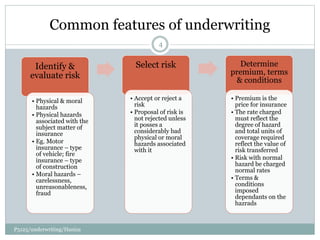
Common features of underwriting
Identify &
evaluate risk
• Physical & moral
hazards
• Physical hazards
associated with the
subject matter of
insurance
• Eg. Motor
insurance – type
of vehicle; fire
insurance – type
of construction
• Moral hazards –
carelessness,
unreasonableness,
fraud
Select risk
• Accept or reject a
risk
• Proposal of risk is
not rejected unless
it posses a
considerably bad
physical or moral
hazards associated
with it
Determine
premium, terms
& conditions
• Premium is the
price for insurance
• The rate charged
must reflect the
degree of hazard
and total units of
coverage required
reflect the value of
risk transferred
• Risk with normal
hazard be charged
normal rates
• Terms &
conditions
imposed
dependants on the
hazrads
4
P5125/underwriting/Haniza
Risk with abnormal hazards
 These risks are acceptable subject to the following
underwriting measures :
i. Risk improvement
ii. Warranties
iii. Exclusions
iv. Restricted cover
v. Excess
vi. Franchise
5
P5125/underwriting/Haniza
Risk improvement
 It requires the proposer to undertake certain
improvements on the risk before risk is acceptable to
the underwriter
 Install fire alarm, automatic sprinkler water
6
P5125/underwriting/Haniza
Warranties
 Is imposed to control hazard
 To ensure no additional hazards introduced during
the policy period; and
 Insurer’s recommendations are carried out
7
P5125/underwriting/Haniza
Exclusions
 Inserting a clause to exclude the insurer’s liability
from certain losses
8
P5125/underwriting/Haniza
Restricted cover
 Offer a narrower insurance coverage than originally
proposed by the insured
 Eg proposer proposed for a comprehensive motor
policy, instead offered for third party policy
9
P5125/underwriting/Haniza
Excess
 The insured is required to bear a specified amount of
every losses
 Eg. losses of less than RM400, cannot be claimed
10
P5125/underwriting/Haniza
Franchise
 Insured is entitled to make a claim if loss exceeds a
specified amount
11
P5125/underwriting/Haniza
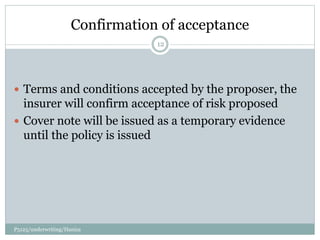
Confirmation of acceptance
 Terms and conditions accepted by the proposer, the
insurer will confirm acceptance of risk proposed
 Cover note will be issued as a temporary evidence
until the policy is issued
12
P5125/underwriting/Haniza
Re-insurance & Co-insurance
 Re-insurance
- The insurer reinsures (cedes) the part of the risk
which is in excess of his retention, to the reinsurer
 Co-insurance
- Two or more insurers share the original risk and each
of them is directly responsible for that proportion of
risk
13
P5125/underwriting/Haniza
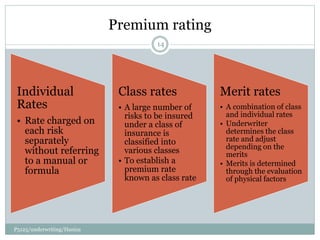
Premium rating
Individual
Rates
• Rate charged on
each risk
separately
without referring
to a manual or
formula
Class rates
• A large number of
risks to be insured
under a class of
insurance is
classified into
various classes
• To establish a
premium rate
known as class rate
Merit rates
• A combination of class
and individual rates
• Underwriter
determines the class
rate and adjust
depending on the
merits
• Merits is determined
through the evaluation
of physical factors
14
P5125/underwriting/Haniza
Gross premium rate
P5125/underwriting/Haniza
15
 Is made up of :
i. Pure premium rate
- Premium rate calculated based on the expected
claims cost
i. Expenses and commissions margins
ii. Contingency margins
iii. Profit margins
P5125/underwriting/Haniza
16
Minimun
premium
• To cover
administrative
expenses
incurred in
issuing a general
insurance policy
Minimum sum
insured
• To cover
administrative
expenses
incurred in
issuing a life
insurance policy
Refund of premium
P5125/underwriting/Haniza
17
 Premium is refundable for failure of consideration or
through a provision in the policy
 Failure of consideration arises when the liability
which the insurer assumed has not attached or
commenced
 Total failure of consideration exists under the
following situations :
i. A vessel is insured for 12 months from a date and
becomes a total loss before that date
ii. A cargo policy has been issued but the contract of
sale is cancelled and no shipment takes place
Short Period Premium Rates
P5125/underwriting/Haniza
18
 Is charged when insurance is effected for less than
12 months

Chap 8 -_underwriting

  • 1.
    L E AR N I N G O U T C O M E S : 1 . D I S T I N G U I S H C L E A R L Y T H E V A R I O U S P R I N C I P L E S I N I N S U R A N C E R E L A T E D A R E A UNDERWRITING 1 P5125/underwriting/Haniza
  • 2.
    What is underwriting? Aprocess of assessing and selecting risks, and determining the premium, terms and conditions 2 P5125/underwriting/Haniza
  • 3.
    What is thepurpose of underwriting?  To guard against anti-selection - an applicant who has a very high probability of loss, submits a proposal for insurance  To charge a premium that is commensurate with the risk transferred - higher premium charged to those with higher probability of loss 3 P5125/underwriting/Haniza
  • 4.
    Common features ofunderwriting Identify & evaluate risk • Physical & moral hazards • Physical hazards associated with the subject matter of insurance • Eg. Motor insurance – type of vehicle; fire insurance – type of construction • Moral hazards – carelessness, unreasonableness, fraud Select risk • Accept or reject a risk • Proposal of risk is not rejected unless it posses a considerably bad physical or moral hazards associated with it Determine premium, terms & conditions • Premium is the price for insurance • The rate charged must reflect the degree of hazard and total units of coverage required reflect the value of risk transferred • Risk with normal hazard be charged normal rates • Terms & conditions imposed dependants on the hazrads 4 P5125/underwriting/Haniza
  • 5.
    Risk with abnormalhazards  These risks are acceptable subject to the following underwriting measures : i. Risk improvement ii. Warranties iii. Exclusions iv. Restricted cover v. Excess vi. Franchise 5 P5125/underwriting/Haniza
  • 6.
    Risk improvement  Itrequires the proposer to undertake certain improvements on the risk before risk is acceptable to the underwriter  Install fire alarm, automatic sprinkler water 6 P5125/underwriting/Haniza
  • 7.
    Warranties  Is imposedto control hazard  To ensure no additional hazards introduced during the policy period; and  Insurer’s recommendations are carried out 7 P5125/underwriting/Haniza
  • 8.
    Exclusions  Inserting aclause to exclude the insurer’s liability from certain losses 8 P5125/underwriting/Haniza
  • 9.
    Restricted cover  Offera narrower insurance coverage than originally proposed by the insured  Eg proposer proposed for a comprehensive motor policy, instead offered for third party policy 9 P5125/underwriting/Haniza
  • 10.
    Excess  The insuredis required to bear a specified amount of every losses  Eg. losses of less than RM400, cannot be claimed 10 P5125/underwriting/Haniza
  • 11.
    Franchise  Insured isentitled to make a claim if loss exceeds a specified amount 11 P5125/underwriting/Haniza
  • 12.
    Confirmation of acceptance Terms and conditions accepted by the proposer, the insurer will confirm acceptance of risk proposed  Cover note will be issued as a temporary evidence until the policy is issued 12 P5125/underwriting/Haniza
  • 13.
    Re-insurance & Co-insurance Re-insurance - The insurer reinsures (cedes) the part of the risk which is in excess of his retention, to the reinsurer  Co-insurance - Two or more insurers share the original risk and each of them is directly responsible for that proportion of risk 13 P5125/underwriting/Haniza
  • 14.
    Premium rating Individual Rates • Ratecharged on each risk separately without referring to a manual or formula Class rates • A large number of risks to be insured under a class of insurance is classified into various classes • To establish a premium rate known as class rate Merit rates • A combination of class and individual rates • Underwriter determines the class rate and adjust depending on the merits • Merits is determined through the evaluation of physical factors 14 P5125/underwriting/Haniza
  • 15.
    Gross premium rate P5125/underwriting/Haniza 15 Is made up of : i. Pure premium rate - Premium rate calculated based on the expected claims cost i. Expenses and commissions margins ii. Contingency margins iii. Profit margins
  • 16.
    P5125/underwriting/Haniza 16 Minimun premium • To cover administrative expenses incurredin issuing a general insurance policy Minimum sum insured • To cover administrative expenses incurred in issuing a life insurance policy
  • 17.
    Refund of premium P5125/underwriting/Haniza 17 Premium is refundable for failure of consideration or through a provision in the policy  Failure of consideration arises when the liability which the insurer assumed has not attached or commenced  Total failure of consideration exists under the following situations : i. A vessel is insured for 12 months from a date and becomes a total loss before that date ii. A cargo policy has been issued but the contract of sale is cancelled and no shipment takes place
  • 18.
    Short Period PremiumRates P5125/underwriting/Haniza 18  Is charged when insurance is effected for less than 12 months