GENERAL ADAPTATION
SYNDROME(SEYLE MODEL)
BY,
B. KAAVYA
HOLY CROSS COLLEGE, TRICHY 2
• Dr. Hans seyle defined stess as the non specific response of the body to any demand
made on it.
• Meaning of Stress: Stress is a general term applied to various psychologic and
physiologic pressure experienced or felt by people throughout their lives.
• Definition of Stress: A state of psychological and pysiological imbalance resulting
from the disparity between situational demand and the individuals ability and
motivation to meet those needs.
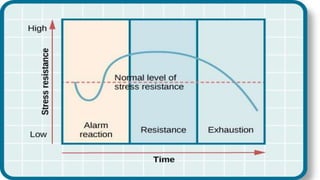
• Three stages:
1. Alarm stage
2. Resistance stage
3.Exhaution stage
ALARM STAGE
• The body’s first response to a stressor
• Adrenal cortex releases hormones called glucocorticoids,
• It also activates the sympathetic nervous system.
• These hormones brings about flight or fight response.
• This response is characterized by :
1. An increase in heart rate
2. High blood pressure
3. Increase in blood glucose levels
4. Dilation of pupil
RESISTANCE STAGE
• During this stage adrenal cortex continues to release the glucocorticoids to help
the body resist stressors.
• The length of the resistance stage depends both on the strength or intensity of the
stressor and on the body’s power to adapt.
• The affected person tries to adapt to the stressor.
• So one might experience symptoms such as:
1. Fatigue
2. Irritability
3. Loss of concentration
4. Lethargy
EXHAUSTION STAGE
• This stage is the result of prolonged or chronic stress.
• Chronic stress can have an adverse effect on the immune system,digestive
system, circulatory system,etc.
• All energies are depleted and disintegrated and death follow.
• Hence the body fails in its efforts to resist the stressor.
• Symptoms:
1. Reduce tolerance to stress.
2. Extreme mental and physical exhaustion.
3. Susceptibility to disease of adaptation.
CONCLUSION
• The response to stress can vary depending on personality of individual
perception of the stressor.
• Chronic stress is extremely deterimental to one’s physical and emotional well
being.
• It can lead to the suppression of HPA system, and leads to disease.
• Therefore every individual must ensure that stress is dealt with adequately so as
to prevent the stage of exhaustion from setting in.

General adaptation syndrome (syle model)

  • 1.
    GENERAL ADAPTATION SYNDROME(SEYLE MODEL) BY, B.KAAVYA HOLY CROSS COLLEGE, TRICHY 2
  • 2.
    • Dr. Hansseyle defined stess as the non specific response of the body to any demand made on it. • Meaning of Stress: Stress is a general term applied to various psychologic and physiologic pressure experienced or felt by people throughout their lives. • Definition of Stress: A state of psychological and pysiological imbalance resulting from the disparity between situational demand and the individuals ability and motivation to meet those needs. • Three stages: 1. Alarm stage 2. Resistance stage 3.Exhaution stage
  • 3.
    ALARM STAGE • Thebody’s first response to a stressor • Adrenal cortex releases hormones called glucocorticoids, • It also activates the sympathetic nervous system. • These hormones brings about flight or fight response. • This response is characterized by : 1. An increase in heart rate 2. High blood pressure 3. Increase in blood glucose levels 4. Dilation of pupil
  • 4.
    RESISTANCE STAGE • Duringthis stage adrenal cortex continues to release the glucocorticoids to help the body resist stressors. • The length of the resistance stage depends both on the strength or intensity of the stressor and on the body’s power to adapt. • The affected person tries to adapt to the stressor. • So one might experience symptoms such as: 1. Fatigue 2. Irritability 3. Loss of concentration 4. Lethargy
  • 5.
    EXHAUSTION STAGE • Thisstage is the result of prolonged or chronic stress. • Chronic stress can have an adverse effect on the immune system,digestive system, circulatory system,etc. • All energies are depleted and disintegrated and death follow. • Hence the body fails in its efforts to resist the stressor. • Symptoms: 1. Reduce tolerance to stress. 2. Extreme mental and physical exhaustion. 3. Susceptibility to disease of adaptation.
  • 7.
    CONCLUSION • The responseto stress can vary depending on personality of individual perception of the stressor. • Chronic stress is extremely deterimental to one’s physical and emotional well being. • It can lead to the suppression of HPA system, and leads to disease. • Therefore every individual must ensure that stress is dealt with adequately so as to prevent the stage of exhaustion from setting in.