Gastrointestinal Pharmacotherapy Sarah Nelson, Pharm.D. March 3, 2009
Objectives Discuss the process of acid secretion in the gastrointestinal tract Differentiate medications used to suppress gastric acid secretion Explain the role of gastrointestinal motility in disease states Differentiate medications used to account for impaired gastrointestinal motility
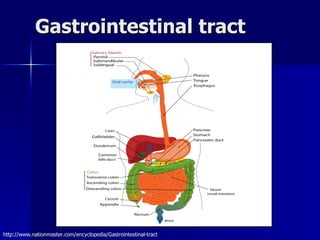
Gastrointestinal tract http://www.nationmaster.com/encyclopedia/Gastrointestinal-tract
Disorders of the Esophagus and Stomach Gastroesophageal Reflux Disease (GERD) Dyspepsia/Non-erosive reflux disease (NERD) Esophagitis (erosive) Peptic ulceration H. pylori associated peptic ulcers Ali, T. Miner, P. New Developments in gastroesophageal reflux disease diagnosis and therapy.  Curr Opin in Gastroenterology.  2008;24:502-508
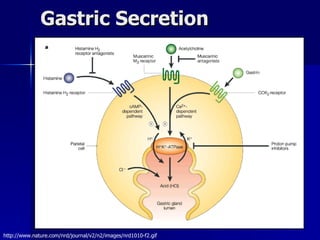
Gastric Secretion http://www.nature.com/nrd/journal/v2/n2/images/nrd1010-f2.gif
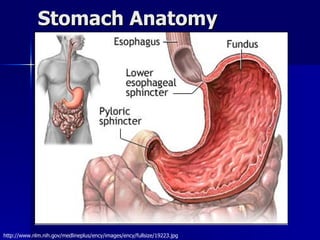
Stomach Anatomy http://www.nlm.nih.gov/medlineplus/ency/images/ency/fullsize/19223.jpg
Defense Mechanisms Lower esophageal sphincter Secretion of gastric mucus Stimulated by prostaglandin E 2  and I 2 Secretion of bicarbonate ions Brunton, Laurence.  Goodman & Gillman’s The Pharmacological Basis of Therapeutics .  11 th  Edition. USA; McGraw-Hill Company, 2006.
GERD Definition: when the reflux of stomach contents causes troublesome symptoms or complications Diagnosis: Presence of symptoms Demonstration of reflux Identification of existing damage from reflux Ali, T. Miner, P. New Developments in gastroesophageal reflux disease diagnosis and therapy.  Curr Opin in Gastroenterology.  2008;24:502-508
Epidemiology 44% of adults in the US experience heartburn  ≥ 1 time/month Up to 15-18% of adults in the US experience heartburn weekly Heartburn or substernal burning is the most commonly recognized manifestation of GERD Shaheen, N., Ransohoff, D.F. Gastroesophageal Reflux, Barrett Esophagus, and Esophageal Cancer: Scientific Review.  J AMA . 2002;287(15):1972-1981
Risk Factors for GERD Obesity Food (spicy, chocolate, peppermint) Age Smoking Caffeine Alcohol Pregnancy Dipiro, Joseph et al.  Pharmacotherapy: A Pathophysiologic Approach . 6 th  Edition. USA; McGraw-Hill Company, 2005.
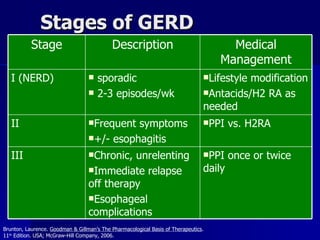
Stages of GERD Brunton, Laurence.  Goodman & Gillman’s The Pharmacological Basis of Therapeutics .  11 th  Edition. USA; McGraw-Hill Company, 2006. PPI once or twice daily Chronic, unrelenting Immediate relapse off therapy Esophageal complications III PPI vs. H2RA Frequent symptoms +/- esophagitis II  Lifestyle modification Antacids/H2 RA as needed sporadic 2-3 episodes/wk I (NERD) Medical Management Description Stage
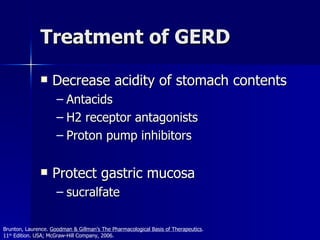
Treatment of GERD Decrease acidity of stomach contents Antacids H2 receptor antagonists Proton pump inhibitors Protect gastric mucosa sucralfate Brunton, Laurence.  Goodman & Gillman’s The Pharmacological Basis of Therapeutics .  11 th  Edition. USA; McGraw-Hill Company, 2006.
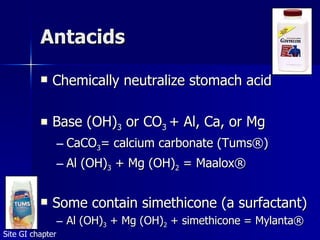
Antacids Chemically neutralize stomach acid Base (OH) 3  or CO 3  + Al, Ca, or Mg CaCO 3 = calcium carbonate (Tums ®) Al  (OH) 3  + Mg (OH) 2  = Maalox ® Some contain simethicone (a surfactant) Al  (OH) 3  + Mg (OH) 2  + simethicone = Mylanta ® Site GI chapter
Antacids Mechanism of Action: Antacid + HCl    salt + water Examples Al(OH) 3  + 3 HCl    AlCl 3  + 3H 2 O CaCO 3  + 2 HCl  CaCl 2  + 2H 2 0 + CO 2 Site GI chapter
Antacids Side Effects Constipation (Al containing products) Diarrhea (Mg containing products) Electrolyte imbalances Decreases absorption of other drugs Place in Therapy Minor, infrequent dyspepsia With other acid suppressants on an as needed basis Calcium supplementation Site GI chapter
H 2 -Receptor Antagonists Block histamine from binding to H 2  receptors on parietal cell Decrease rate of activation by  histamine  decreased acid secretion Blocks basal and bolus acid secretion Basal: continuous acid secretion Bolus: secretion in response to stimuli (food, etc) Brunton, Laurence.  Goodman & Gillman’s The Pharmacological Basis of Therapeutics .  11 th  Edition. USA; McGraw-Hill Company, 2006.
H 2 -Receptor Antagonists Cimetidine (Tagamet ® ) Not used often due to drug interactions Ranitidine (Zantac ® ) 150-300mg by mouth twice daily Famotidine (Pepcid ® ) 20-40mg by mouth twice daily Nizatidine (Axid ® ) 150-300mg by mouth twice daily Brunton, Laurence.  Goodman & Gillman’s The Pharmacological Basis of Therapeutics .  11 th  Edition. USA; McGraw-Hill Company, 2006.
H 2 -Receptor Antagonists Side Effects Well tolerated Many drug interactions, esp. with HIV medication Tolerance can develop with long term use Place in Therapy As needed for minor dyspepsia Daily to control frequent symptoms Low dose for symptoms w/o esophagitis High dose for symptoms w/ esophagitis Brunton, Laurence.  Goodman & Gillman’s The Pharmacological Basis of Therapeutics .  11 th  Edition. USA; McGraw-Hill Company, 2006.
Proton Pump Inhibitors Most potent inhibitors of acid secretion Decrease daily acid secretion 80-95% Require activation by acid in stomach Irreversibly binds and inactivates the  H + /K + -ATPase  H + /K + -ATPase is the pump molecule that secretes acid from the parietal cell into the lumen of the stomach Brunton, Laurence.  Goodman & Gillman’s The Pharmacological Basis of Therapeutics .  11 th  Edition. USA; McGraw-Hill Company, 2006.
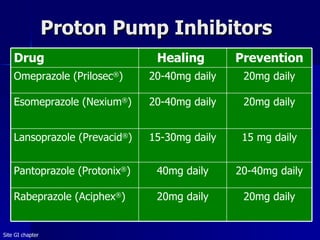
Proton Pump Inhibitors Site GI chapter 20mg daily 20mg daily Rabeprazole (Aciphex ® ) 20-40mg daily 40mg daily Pantoprazole (Protonix ® ) 15 mg daily 15-30mg daily Lansoprazole (Prevacid ® ) 20mg daily 20-40mg daily Esomeprazole (Nexium ® ) 20mg daily 20-40mg daily Omeprazole (Prilosec ® ) Prevention Healing  Drug
Proton Pump Inhibitors Side Effects Well tolerated Takes multiple doses to get full effect Place in Therapy Symptomatic GERD with esophagitis Promote healing of gastric ulcers Hypersecretory conditions Prevent NSAID-associated gastric ulcers Brunton, Laurence.  Goodman & Gillman’s The Pharmacological Basis of Therapeutics .  11 th  Edition. USA; McGraw-Hill Company, 2006.
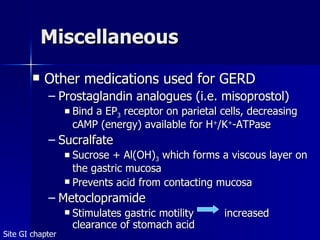
Miscellaneous Other medications used for GERD Prostaglandin analogues (i.e. misoprostol) Bind a EP 3  receptor on parietal cells, decreasing cAMP (energy) available for H + /K + -ATPase  Sucralfate Sucrose + Al(OH) 3  which forms a viscous layer on the gastric mucosa Prevents acid from contacting mucosa Metoclopramide Stimulates gastric motility increased clearance of stomach acid Site GI chapter
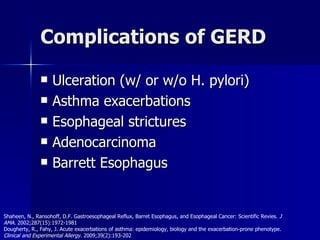
Complications of GERD Ulceration (w/ or w/o H. pylori) Asthma exacerbations Esophageal strictures Adenocarcinoma Barrett Esophagus Shaheen, N., Ransohoff, D.F. Gastroesophageal Reflux, Barret Esophagus, and Esophageal Cancer: Scientific Revies.  J AMA . 2002;287(15):1972-1981 Dougherty, R., Fahy, J. Acute exacerbations of asthma: epidemiology, biology and the exacerbation-prone phenotype.  Clinical and Experimental Allergy.  2009;39(2):193-202
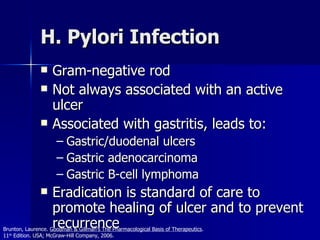
H. Pylori Infection Gram-negative rod Not always associated with an active ulcer Associated with gastritis, leads to: Gastric/duodenal ulcers Gastric adenocarcinoma Gastric B-cell lymphoma Eradication is standard of care to promote healing of ulcer and to prevent recurrence Brunton, Laurence.  Goodman & Gillman’s The Pharmacological Basis of Therapeutics .  11 th  Edition. USA; McGraw-Hill Company, 2006.
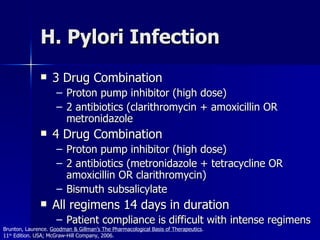
H. Pylori Infection 3 Drug Combination Proton pump inhibitor (high dose) 2 antibiotics (clarithromycin + amoxicillin OR metronidazole 4 Drug Combination Proton pump inhibitor (high dose) 2 antibiotics (metronidazole + tetracycline OR amoxicillin OR clarithromycin) Bismuth subsalicylate All regimens 14 days in duration Patient compliance is difficult with intense regimens Brunton, Laurence.  Goodman & Gillman’s The Pharmacological Basis of Therapeutics .  11 th  Edition. USA; McGraw-Hill Company, 2006.
Acid-rebound Phenomenon Chronic suppression of acid secretion leads to hypergastrinemia Gastrin stimulates ECL cells to release histamine   increased acid secretion from activation of histamine receptor on parietal cell Brunton, Laurence.  Goodman & Gillman’s The Pharmacological Basis of Therapeutics .  11 th  Edition. USA; McGraw-Hill Company, 2006.
Disorders of the Lower GI Tract Constipation Diarrhea
Gastrointestinal Motility The GI tract is in a continuous contractile, absorptive, & secretory state Muscle, CNS, ENS (enteric nerve system), and humoral pathways control GI movement 4 phases to movement in the GI tract Peristalsis is most important, moves contents through GI tract Brunton, Laurence.  Goodman & Gillman’s The Pharmacological Basis of Therapeutics .  11 th  Edition. USA; McGraw-Hill Company, 2006.
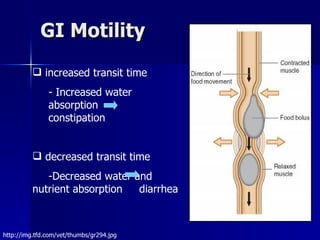
GI Motility http://img.tfd.com/vet/thumbs/gr294.jpg increased transit time - Increased water absorption  constipation decreased transit time -Decreased water and nutrient absorption  diarrhea
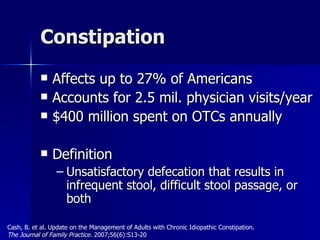
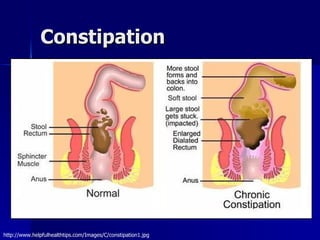
Constipation Affects up to 27% of Americans Accounts for 2.5 mil. physician visits/year $400 million spent on OTCs annually Definition Unsatisfactory defecation that results in infrequent stool, difficult stool passage, or both Cash, B. et al. Update on the Management of Adults with Chronic Idiopathic Constipation.  The Journal of Family Practice.  2007;56(6):S13-20
Constipation http://www.helpfulhealthtips.com/Images/C/constipation1.jpg
Causes of Constipation GI disorders Irritable bowel syndrome, hernia, anal fissures Metabolic disorders Diabetes with neuropathy, hypothyriodism Pregnancy Psychogenic disorders Medications Analgesics, antacids, iron preparations Dipiro, Joseph et al.  Pharmacotherapy: A Pathophysiologic Approach . 6 th  Edition. USA; McGraw-Hill Company, 2005.
Treatment of Constipation Lifestyle modifications Fiber-rich diet Adequate fluid intake Appropriate bowel habits and training Exercise Medications Bulk-forming laxatives Stimulant laxatives Hyperosmotic laxatives Stool softeners Brunton, Laurence.  Goodman & Gillman’s The Pharmacological Basis of Therapeutics .  11 th  Edition. USA; McGraw-Hill Company, 2006.
Bulk-Forming Laxatives 3 kinds Psyllium (Metamucil ® ) Methylcelluose (Citrucel ® ) Calcium polycarbophil (Fibercon ® ) Increases colonic mass which triggers peristalsis Increases water content of stool via hydrophilic forces Brunton, Laurence.  Goodman & Gillman’s The Pharmacological Basis of Therapeutics .  11 th  Edition. USA; McGraw-Hill Company, 2006.
Stimulant Laxatives Induce low-grade inflammation in the small and large intestine Promotes accumulation of water and stimulates motility Provides  soft or semifluid  stool in  6-12 hours Bisacodyl (Dulcolax ® ) 5-15 mg by mouth daily; 10mg rectally daily (rectal administration effective within 1 hour) Castor Oil Senna (Senokot ® ) 8.6mg sennosides 1-2 times per day (1-2 tablets once or twice daily) Brunton, Laurence.  Goodman & Gillman’s The Pharmacological Basis of Therapeutics .  11 th  Edition. USA; McGraw-Hill Company, 2006. Dipiro, Joseph et al.  Pharmacotherapy: A Pathophysiologic Approach . 6 th  Edition. USA; McGraw-Hill Company, 2005.
Hyperosmotic Laxatives Osmotically mediated water retention (via cations-Al, Mg, etc) which stimulates peristalsis Provides  watery  fecal evacuation in  1-6 hours Magnesium hydroxide (Milk of Mag) 5-15mL by mouth four times daily Polyethylene glycol (Miralax ® ) Dose used depends on level of evacuation Sodium phosphate (Fleets Phosphosoda ® ) Brunton, Laurence.  Goodman & Gillman’s The Pharmacological Basis of Therapeutics .  11 th  Edition. USA; McGraw-Hill Company, 2006. Dipiro, Joseph et al.  Pharmacotherapy: A Pathophysiologic Approach . 6 th  Edition. USA; McGraw-Hill Company, 2005.
Stool Softeners/Lubricants Docusate (Colace ® ) Stool softener Mixes aqueous and fatty material in the intestinal tract, leading to increase stool water content Used to prevent constipation or straining 1-2 capsules by mouth once or twice daily Mineral Oil (Nujol ® ) Lubricant Coats stool and allows for easier passage 15-30mL orally as needed Causes  softening and passage of stool  in  1-3 days Brunton, Laurence.  Goodman & Gillman’s The Pharmacological Basis of Therapeutics .  11 th  Edition. USA; McGraw-Hill Company, 2006.
Diarrhea  Prevalence of diarrhea varies in developed vs. non-developed countries 1.3 billion episodes/yr in developing countries 4 million deaths Can be associated with an infectious cause Shigella, Salmonella, E. Coli among most common Most diarrhea is self-limiting Defined as an increase in stool frequency or water content Dipiro, Joseph et al.  Pharmacotherapy: A Pathophysiologic Approach . 6 th  Edition. USA; McGraw-Hill Company, 2005.
Diarrhea http://www.ghi.com/WebMD/topics/diarrhea.jpg
Opioid Derivatives Bind the  µ -receptor on enteric nerves, epithelium, and muscle Decrease GI motility Increase absorption of water from the bowel Diphenoxylate (Lomotil ® ) 5mg by mouth 4 times daily (max 20mg/day) Loperamide (Immodium ® ) 4mg by mouth first, then 2mg by mouth after each loose stool (max 16mg/day) Site GI chapter Dipiro, Joseph et al.  Pharmacotherapy: A Pathophysiologic Approach . 6 th  Edition. USA; McGraw-Hill Company, 2005.
Adsorbents Non-selectively absorbs intestinal fluid Regulates stool texture and viscosity Bind bacterial toxins and bile salts Attapulgite (Kaopectate ® ) 30-120mL after each loose stool Can bind other medications, must space out from others by 2 to 3 hours Brunton, Laurence.  Goodman & Gillman’s The Pharmacological Basis of Therapeutics .  11 th  Edition. USA; McGraw-Hill Company, 2006.
Bismuth Salicylate Anti-secretory, anti-inflammatory, antimicrobial effects Used for the prevention and treatment of traveler’s diarrhea PeptoBismol ® 30mL (2 tabs) every hour as needed (up to 8 times/day) Excessive use can lead to salicylate poisioning Brunton, Laurence.  Goodman & Gillman’s The Pharmacological Basis of Therapeutics .  11 th  Edition. USA; McGraw-Hill Company, 2006.
Probiotics Replaces normal colonic microflora Restores intestinal function and suppresses the growth of pathogenic bacteria Lactobacillus acidophilus (Lactinex ® ) 2 tabs or 1 packet of granules 3-4 times daily Dairy Products 200-400 grams of lactose Special ‘lactobacillus’ containing yogurts Dipiro, Joseph et al.  Pharmacotherapy: A Pathophysiologic Approach . 6 th  Edition. USA; McGraw-Hill Company, 2005.
Conclusion Approximately 1/3 of your patients will be taking a medication for GERD Approximately ¼ of your patients will be taking a medication for constipation GERD, constipation, and diarrhea affect a patient’s quality of life
Questions?

Gastrointestinal Pharmacotherapy.Ppt Final

  • 1.
    Gastrointestinal Pharmacotherapy SarahNelson, Pharm.D. March 3, 2009
  • 2.
    Objectives Discuss theprocess of acid secretion in the gastrointestinal tract Differentiate medications used to suppress gastric acid secretion Explain the role of gastrointestinal motility in disease states Differentiate medications used to account for impaired gastrointestinal motility
  • 3.
  • 4.
    Disorders of theEsophagus and Stomach Gastroesophageal Reflux Disease (GERD) Dyspepsia/Non-erosive reflux disease (NERD) Esophagitis (erosive) Peptic ulceration H. pylori associated peptic ulcers Ali, T. Miner, P. New Developments in gastroesophageal reflux disease diagnosis and therapy. Curr Opin in Gastroenterology. 2008;24:502-508
  • 5.
  • 6.
  • 7.
    Defense Mechanisms Loweresophageal sphincter Secretion of gastric mucus Stimulated by prostaglandin E 2 and I 2 Secretion of bicarbonate ions Brunton, Laurence. Goodman & Gillman’s The Pharmacological Basis of Therapeutics . 11 th Edition. USA; McGraw-Hill Company, 2006.
  • 8.
    GERD Definition: whenthe reflux of stomach contents causes troublesome symptoms or complications Diagnosis: Presence of symptoms Demonstration of reflux Identification of existing damage from reflux Ali, T. Miner, P. New Developments in gastroesophageal reflux disease diagnosis and therapy. Curr Opin in Gastroenterology. 2008;24:502-508
  • 9.
    Epidemiology 44% ofadults in the US experience heartburn ≥ 1 time/month Up to 15-18% of adults in the US experience heartburn weekly Heartburn or substernal burning is the most commonly recognized manifestation of GERD Shaheen, N., Ransohoff, D.F. Gastroesophageal Reflux, Barrett Esophagus, and Esophageal Cancer: Scientific Review. J AMA . 2002;287(15):1972-1981
  • 10.
    Risk Factors forGERD Obesity Food (spicy, chocolate, peppermint) Age Smoking Caffeine Alcohol Pregnancy Dipiro, Joseph et al. Pharmacotherapy: A Pathophysiologic Approach . 6 th Edition. USA; McGraw-Hill Company, 2005.
  • 11.
    Stages of GERDBrunton, Laurence. Goodman & Gillman’s The Pharmacological Basis of Therapeutics . 11 th Edition. USA; McGraw-Hill Company, 2006. PPI once or twice daily Chronic, unrelenting Immediate relapse off therapy Esophageal complications III PPI vs. H2RA Frequent symptoms +/- esophagitis II Lifestyle modification Antacids/H2 RA as needed sporadic 2-3 episodes/wk I (NERD) Medical Management Description Stage
  • 12.
    Treatment of GERDDecrease acidity of stomach contents Antacids H2 receptor antagonists Proton pump inhibitors Protect gastric mucosa sucralfate Brunton, Laurence. Goodman & Gillman’s The Pharmacological Basis of Therapeutics . 11 th Edition. USA; McGraw-Hill Company, 2006.
  • 13.
    Antacids Chemically neutralizestomach acid Base (OH) 3 or CO 3 + Al, Ca, or Mg CaCO 3 = calcium carbonate (Tums ®) Al (OH) 3 + Mg (OH) 2 = Maalox ® Some contain simethicone (a surfactant) Al (OH) 3 + Mg (OH) 2 + simethicone = Mylanta ® Site GI chapter
  • 14.
    Antacids Mechanism ofAction: Antacid + HCl salt + water Examples Al(OH) 3 + 3 HCl AlCl 3 + 3H 2 O CaCO 3 + 2 HCl CaCl 2 + 2H 2 0 + CO 2 Site GI chapter
  • 15.
    Antacids Side EffectsConstipation (Al containing products) Diarrhea (Mg containing products) Electrolyte imbalances Decreases absorption of other drugs Place in Therapy Minor, infrequent dyspepsia With other acid suppressants on an as needed basis Calcium supplementation Site GI chapter
  • 16.
    H 2 -ReceptorAntagonists Block histamine from binding to H 2 receptors on parietal cell Decrease rate of activation by histamine decreased acid secretion Blocks basal and bolus acid secretion Basal: continuous acid secretion Bolus: secretion in response to stimuli (food, etc) Brunton, Laurence. Goodman & Gillman’s The Pharmacological Basis of Therapeutics . 11 th Edition. USA; McGraw-Hill Company, 2006.
  • 17.
    H 2 -ReceptorAntagonists Cimetidine (Tagamet ® ) Not used often due to drug interactions Ranitidine (Zantac ® ) 150-300mg by mouth twice daily Famotidine (Pepcid ® ) 20-40mg by mouth twice daily Nizatidine (Axid ® ) 150-300mg by mouth twice daily Brunton, Laurence. Goodman & Gillman’s The Pharmacological Basis of Therapeutics . 11 th Edition. USA; McGraw-Hill Company, 2006.
  • 18.
    H 2 -ReceptorAntagonists Side Effects Well tolerated Many drug interactions, esp. with HIV medication Tolerance can develop with long term use Place in Therapy As needed for minor dyspepsia Daily to control frequent symptoms Low dose for symptoms w/o esophagitis High dose for symptoms w/ esophagitis Brunton, Laurence. Goodman & Gillman’s The Pharmacological Basis of Therapeutics . 11 th Edition. USA; McGraw-Hill Company, 2006.
  • 19.
    Proton Pump InhibitorsMost potent inhibitors of acid secretion Decrease daily acid secretion 80-95% Require activation by acid in stomach Irreversibly binds and inactivates the H + /K + -ATPase H + /K + -ATPase is the pump molecule that secretes acid from the parietal cell into the lumen of the stomach Brunton, Laurence. Goodman & Gillman’s The Pharmacological Basis of Therapeutics . 11 th Edition. USA; McGraw-Hill Company, 2006.
  • 20.
    Proton Pump InhibitorsSite GI chapter 20mg daily 20mg daily Rabeprazole (Aciphex ® ) 20-40mg daily 40mg daily Pantoprazole (Protonix ® ) 15 mg daily 15-30mg daily Lansoprazole (Prevacid ® ) 20mg daily 20-40mg daily Esomeprazole (Nexium ® ) 20mg daily 20-40mg daily Omeprazole (Prilosec ® ) Prevention Healing Drug
  • 21.
    Proton Pump InhibitorsSide Effects Well tolerated Takes multiple doses to get full effect Place in Therapy Symptomatic GERD with esophagitis Promote healing of gastric ulcers Hypersecretory conditions Prevent NSAID-associated gastric ulcers Brunton, Laurence. Goodman & Gillman’s The Pharmacological Basis of Therapeutics . 11 th Edition. USA; McGraw-Hill Company, 2006.
  • 22.
    Miscellaneous Other medicationsused for GERD Prostaglandin analogues (i.e. misoprostol) Bind a EP 3 receptor on parietal cells, decreasing cAMP (energy) available for H + /K + -ATPase Sucralfate Sucrose + Al(OH) 3 which forms a viscous layer on the gastric mucosa Prevents acid from contacting mucosa Metoclopramide Stimulates gastric motility increased clearance of stomach acid Site GI chapter
  • 23.
    Complications of GERDUlceration (w/ or w/o H. pylori) Asthma exacerbations Esophageal strictures Adenocarcinoma Barrett Esophagus Shaheen, N., Ransohoff, D.F. Gastroesophageal Reflux, Barret Esophagus, and Esophageal Cancer: Scientific Revies. J AMA . 2002;287(15):1972-1981 Dougherty, R., Fahy, J. Acute exacerbations of asthma: epidemiology, biology and the exacerbation-prone phenotype. Clinical and Experimental Allergy. 2009;39(2):193-202
  • 24.
    H. Pylori InfectionGram-negative rod Not always associated with an active ulcer Associated with gastritis, leads to: Gastric/duodenal ulcers Gastric adenocarcinoma Gastric B-cell lymphoma Eradication is standard of care to promote healing of ulcer and to prevent recurrence Brunton, Laurence. Goodman & Gillman’s The Pharmacological Basis of Therapeutics . 11 th Edition. USA; McGraw-Hill Company, 2006.
  • 25.
    H. Pylori Infection3 Drug Combination Proton pump inhibitor (high dose) 2 antibiotics (clarithromycin + amoxicillin OR metronidazole 4 Drug Combination Proton pump inhibitor (high dose) 2 antibiotics (metronidazole + tetracycline OR amoxicillin OR clarithromycin) Bismuth subsalicylate All regimens 14 days in duration Patient compliance is difficult with intense regimens Brunton, Laurence. Goodman & Gillman’s The Pharmacological Basis of Therapeutics . 11 th Edition. USA; McGraw-Hill Company, 2006.
  • 26.
    Acid-rebound Phenomenon Chronicsuppression of acid secretion leads to hypergastrinemia Gastrin stimulates ECL cells to release histamine increased acid secretion from activation of histamine receptor on parietal cell Brunton, Laurence. Goodman & Gillman’s The Pharmacological Basis of Therapeutics . 11 th Edition. USA; McGraw-Hill Company, 2006.
  • 27.
    Disorders of theLower GI Tract Constipation Diarrhea
  • 28.
    Gastrointestinal Motility TheGI tract is in a continuous contractile, absorptive, & secretory state Muscle, CNS, ENS (enteric nerve system), and humoral pathways control GI movement 4 phases to movement in the GI tract Peristalsis is most important, moves contents through GI tract Brunton, Laurence. Goodman & Gillman’s The Pharmacological Basis of Therapeutics . 11 th Edition. USA; McGraw-Hill Company, 2006.
  • 29.
    GI Motility http://img.tfd.com/vet/thumbs/gr294.jpgincreased transit time - Increased water absorption constipation decreased transit time -Decreased water and nutrient absorption diarrhea
  • 30.
    Constipation Affects upto 27% of Americans Accounts for 2.5 mil. physician visits/year $400 million spent on OTCs annually Definition Unsatisfactory defecation that results in infrequent stool, difficult stool passage, or both Cash, B. et al. Update on the Management of Adults with Chronic Idiopathic Constipation. The Journal of Family Practice. 2007;56(6):S13-20
  • 31.
  • 32.
    Causes of ConstipationGI disorders Irritable bowel syndrome, hernia, anal fissures Metabolic disorders Diabetes with neuropathy, hypothyriodism Pregnancy Psychogenic disorders Medications Analgesics, antacids, iron preparations Dipiro, Joseph et al. Pharmacotherapy: A Pathophysiologic Approach . 6 th Edition. USA; McGraw-Hill Company, 2005.
  • 33.
    Treatment of ConstipationLifestyle modifications Fiber-rich diet Adequate fluid intake Appropriate bowel habits and training Exercise Medications Bulk-forming laxatives Stimulant laxatives Hyperosmotic laxatives Stool softeners Brunton, Laurence. Goodman & Gillman’s The Pharmacological Basis of Therapeutics . 11 th Edition. USA; McGraw-Hill Company, 2006.
  • 34.
    Bulk-Forming Laxatives 3kinds Psyllium (Metamucil ® ) Methylcelluose (Citrucel ® ) Calcium polycarbophil (Fibercon ® ) Increases colonic mass which triggers peristalsis Increases water content of stool via hydrophilic forces Brunton, Laurence. Goodman & Gillman’s The Pharmacological Basis of Therapeutics . 11 th Edition. USA; McGraw-Hill Company, 2006.
  • 35.
    Stimulant Laxatives Inducelow-grade inflammation in the small and large intestine Promotes accumulation of water and stimulates motility Provides soft or semifluid stool in 6-12 hours Bisacodyl (Dulcolax ® ) 5-15 mg by mouth daily; 10mg rectally daily (rectal administration effective within 1 hour) Castor Oil Senna (Senokot ® ) 8.6mg sennosides 1-2 times per day (1-2 tablets once or twice daily) Brunton, Laurence. Goodman & Gillman’s The Pharmacological Basis of Therapeutics . 11 th Edition. USA; McGraw-Hill Company, 2006. Dipiro, Joseph et al. Pharmacotherapy: A Pathophysiologic Approach . 6 th Edition. USA; McGraw-Hill Company, 2005.
  • 36.
    Hyperosmotic Laxatives Osmoticallymediated water retention (via cations-Al, Mg, etc) which stimulates peristalsis Provides watery fecal evacuation in 1-6 hours Magnesium hydroxide (Milk of Mag) 5-15mL by mouth four times daily Polyethylene glycol (Miralax ® ) Dose used depends on level of evacuation Sodium phosphate (Fleets Phosphosoda ® ) Brunton, Laurence. Goodman & Gillman’s The Pharmacological Basis of Therapeutics . 11 th Edition. USA; McGraw-Hill Company, 2006. Dipiro, Joseph et al. Pharmacotherapy: A Pathophysiologic Approach . 6 th Edition. USA; McGraw-Hill Company, 2005.
  • 37.
    Stool Softeners/Lubricants Docusate(Colace ® ) Stool softener Mixes aqueous and fatty material in the intestinal tract, leading to increase stool water content Used to prevent constipation or straining 1-2 capsules by mouth once or twice daily Mineral Oil (Nujol ® ) Lubricant Coats stool and allows for easier passage 15-30mL orally as needed Causes softening and passage of stool in 1-3 days Brunton, Laurence. Goodman & Gillman’s The Pharmacological Basis of Therapeutics . 11 th Edition. USA; McGraw-Hill Company, 2006.
  • 38.
    Diarrhea Prevalenceof diarrhea varies in developed vs. non-developed countries 1.3 billion episodes/yr in developing countries 4 million deaths Can be associated with an infectious cause Shigella, Salmonella, E. Coli among most common Most diarrhea is self-limiting Defined as an increase in stool frequency or water content Dipiro, Joseph et al. Pharmacotherapy: A Pathophysiologic Approach . 6 th Edition. USA; McGraw-Hill Company, 2005.
  • 39.
  • 40.
    Opioid Derivatives Bindthe µ -receptor on enteric nerves, epithelium, and muscle Decrease GI motility Increase absorption of water from the bowel Diphenoxylate (Lomotil ® ) 5mg by mouth 4 times daily (max 20mg/day) Loperamide (Immodium ® ) 4mg by mouth first, then 2mg by mouth after each loose stool (max 16mg/day) Site GI chapter Dipiro, Joseph et al. Pharmacotherapy: A Pathophysiologic Approach . 6 th Edition. USA; McGraw-Hill Company, 2005.
  • 41.
    Adsorbents Non-selectively absorbsintestinal fluid Regulates stool texture and viscosity Bind bacterial toxins and bile salts Attapulgite (Kaopectate ® ) 30-120mL after each loose stool Can bind other medications, must space out from others by 2 to 3 hours Brunton, Laurence. Goodman & Gillman’s The Pharmacological Basis of Therapeutics . 11 th Edition. USA; McGraw-Hill Company, 2006.
  • 42.
    Bismuth Salicylate Anti-secretory,anti-inflammatory, antimicrobial effects Used for the prevention and treatment of traveler’s diarrhea PeptoBismol ® 30mL (2 tabs) every hour as needed (up to 8 times/day) Excessive use can lead to salicylate poisioning Brunton, Laurence. Goodman & Gillman’s The Pharmacological Basis of Therapeutics . 11 th Edition. USA; McGraw-Hill Company, 2006.
  • 43.
    Probiotics Replaces normalcolonic microflora Restores intestinal function and suppresses the growth of pathogenic bacteria Lactobacillus acidophilus (Lactinex ® ) 2 tabs or 1 packet of granules 3-4 times daily Dairy Products 200-400 grams of lactose Special ‘lactobacillus’ containing yogurts Dipiro, Joseph et al. Pharmacotherapy: A Pathophysiologic Approach . 6 th Edition. USA; McGraw-Hill Company, 2005.
  • 44.
    Conclusion Approximately 1/3of your patients will be taking a medication for GERD Approximately ¼ of your patients will be taking a medication for constipation GERD, constipation, and diarrhea affect a patient’s quality of life
  • 45.

Editor's Notes

  • #2 Good afternoon, my name is Sarah, I am a pharmacy practice resident at VCU . . . I will be speaking about medications related to disorders of the GI tract. This is a very broad category, but we will be following the assigned chapter closely. I will talk more in depth about GERD (acid reflux), than I will about constipation or diarrhea, as determined by the prevalence of these disorders in the American patient population. Please feel free to interrupt me with questions at any time .
  • #3 We will focus first on the process of acid secretion in the GI tract, most notably the stomach. After we have an understanding of the cellular key players in acid secretion, we will discuss the various medications available and how each works. As this is the topic I would like to focus on today, we will talk about dosages of medications, as well as side effects and their place in treatment. We will also discuss complications of Gird We will then turn our attention to the lower GI tract and discuss the mechanism of motility, disorders of motility, and what treatment options we have for those patients.
  • #4 We will not be covering all diagnoses of the GI tract that require medication for management. We will focus on the most frequently diagnosed and utilized medications, including GERD/NERD, diarrhea and constipation, and a few miscellaneous items. POINT OUT UPPER GI AND LOWER GI TRACT DEVIATION
  • #5 Starting with the upper GI tract, there are 2 main categories of disease states related to acid secretion. The first is GERD, which can span a wide range of symptoms and complications. The first, dyspepsia, is also known as heartburn or NERD. This occurs with acid and stomach contents backs into the esophagus without major irritation or erosion of the esophageal lining. Repeated contact with an acidic substance eventually leads to erosion, creating an esophagitis. Esophagitis or inflammation of the stomach lining can lead to a full ulceration in the epithelial lining, which can be associated with a H. pylori bacterial infection. Pts that have H. pylori w/o and ulcer and H. pylori with an ulcer should both be treated, as H. pylori has been identified as a risk factor for forming an ulcer
  • #6 Gastric acid secretion is a continuous process in which multiple central and peripheral factors contribute to a common endpoint, secretion of hydrogen ions by parietal cells. Neuronal (acetylcholine), paracrine (histamine), and endocrine (gastrin) factors all regulate acid secretion. Receptors for Ach, histamine and gastrin are on the basolateral membrane of parietal cells in the body and fundus of the stomach. Ach: stimulates gastic acid secretion via response to sight, smell, taste, or anticipation of food. It also increases the release of histamine from the enterochromaffin-like (ECL) cells in the fundus of the stomach, and of gastrin in the gastric antrum. Histamine: ECL cells are close to parietal cells, histamine is released and diffuses to parietal cells, activating histamine receptors. Gastrin: most potent inducer of acid secretion. CNS activation, distention of stomach, and gastric contents stimulate gastrin release. Gastrin induces ECL cells to release histamine, and also (to a lesser extent), stimulates direct acid secretion.
  • #7 Point out fundus, antrum, and LES
  • #8 Defense mechanisms are required to protect the esophagus and stomach from the extremely high concentration of hydrogen ions LES: prevents the reflux of contents into the esophagus-talk about this causing dyspepsia, certain foods trigger relaxation of the LES Stimulated by prostaglandin E2 and I2, soluble gastric mucus is secreted and forms an insoluble gel on the mucosal surface of the stomach ASA, alcohol, and other drugs that inhibit prostaglandin secretion inhibit the secretion of this protective mucus Superficial gastric epithelial cells secrete bicarbonate ions, which neutralize the acid in the stomach, raising pH, and therefore preventing acid-mediated damage.
  • #9 The demonstrate reflux by determining pH level in esophagus
  • #10 Of the 20-40% of patients that experience heartburn, 30-80% of those patients will have esophagitis.
  • #14 Simethicone is an anti-foaming agent that decreases the surface tension of gas bubbles , causing them to combine into larger bubbles in the stomach that can be passed more easily by burping
  • #15 Notice that the aluminum containing antacid can neutralize 3 hydrochloric acid molecules at a time. There is also no carbon dioxide production Notice the calcium containing product forms carbon dioxide, this is what gives antacids the belching and gas sensation associated with them
  • #16 Excessive use of antacids coupled with impaired renal function can cause electrolyte imbalances. This can lead to high calcium concentrations, which can lead to kidney stones or calcium calcification in other areas of the body (heart). Increases in Al concentration leads to aluminum toxicity. Will talk about acid-rebound phenomenon at the end, as all acid suppressants can cause this.
  • #24 Incidence of GERD can label a patient with asthma as ‘exacerbation-prone’ due to the ensuing inflammation associated with acid reflux. Acidic irritation of the esophageal epithelium leads to a metaplastic change from a normal squamous type epithelium to an intestinal-type, columnar lining (Barrett’s)
  • #26 3 Drug combo: protonix 40 bid + clarithromycin 500mg BID + amoxicillin 1 gram Bid OR metronidazole 500mg BID)
  • #30 Fluid content is the principal determinant of stool volume and consistency Water accounts for 70-85% of stool weight The daily challenge for the gut is to extract water, minerals, and nutrients from the luminal contents, leaving enough liquid for proper expulsion of waste material via defecation. 2 types of movement: Propulsive: giant migrating contractions, propagate over extended lengths, evoke mass transfer of feces Non-propulsive (mixing) 8-9 liters of water enter the small bowel, 1-1.5 liters cross into the colon, but only 100mL of water is expelled via feces. 6
  • #32 Causes of constipation: Lack of dietary fiber Drugs Hormonal disturbances Neurogenic disorders
  • #33 Medications include opioids, NSAIDS, TCAs, anticholinergics (antihistamines, antiparkonsinisms, phenothiazines), CCBs, diuretics, clonidine
  • #34 Fiber rich diet : 20-30 grams daily
  • #35 Metamucil: 2.5-4 grams per dose (1-3 teaspoonfuls in 250mL juice), now in tablet form Methylcelluose and polycarbophil: 4-6 grams per day
  • #36 Bisacodyl: enteric coated tabs-takes 6 hours to work suppository for rectal administration, work within 30-60 minutes **should not be used for more than 10 days to avoid developing an atonic nonfunctioning colon Castor oil: the triglyceride is hydrolyzed in the small bowel by lipases into glycerol and ricinoleic acid (active), which stimulates the secretion of fluid and electrolytes and speeds transit time seldom recommended due to palatibility recommended dose: 15-60 mL for adults Senna: produce giant migrating colonic contractions and induce water and electrolyte secretion. laxative effect noted 6-12 hours after administration due to requiring activation in the colon
  • #37 DISCUSS ADVERSE EFFECTS Just like the antacids that contain Mg, accumulation of Mg and Phos can be symptomatic, even deadly in elderly patients with poor renal function Liquid: Magnesium hydroxide 400 mg/5 mL: 5-15 mL as needed up to 4 times/day  
  • #38 ADVERSE EFFECTS WITH MINERAL OIL: ASPIRATION PNA
  • #39 If diarrhea is occuring due to an infectious cause, must treat the underlying infection with antibiotics Most diarrhea is self-limiting, 72 hours in duration