Making development sustainable: the future of
disaster risk management
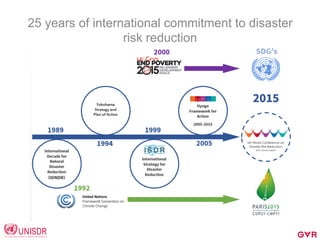
25 years of international commitment to disaster
risk reduction
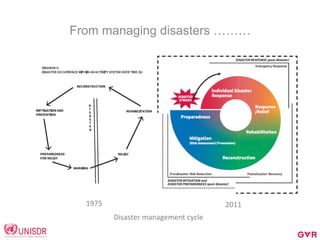
From managing disasters ………
	
  Disaster	
  management	
  cycle	
  
	
  1975	
   	
  2011	
  
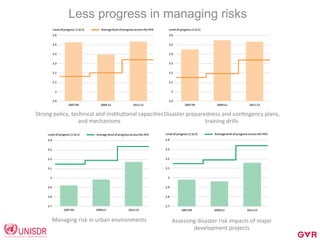
Less progress in managing risks
Assessing	
  disaster	
  risk	
  impacts	
  of	
  major	
  
development	
  projects	


Managing	
  risk	
  in	
  urban	
  environments	
  	
  
Strong	
  policy,	
  technical	
  and	
  insCtuConal	
  capaciCes	
  
and	
  mechanisms	
  
Disaster	
  preparedness	
  and	
  conCngency	
  plans,	
  
training	
  drills	
  
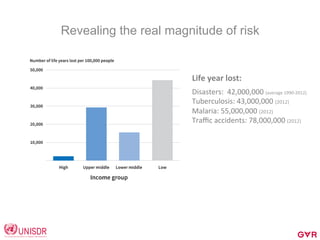
Revealing the real magnitude of risk
Disasters:	
  	
  42,000,000	
  (average	
  1990-­‐2012)	
  
Tuberculosis:	
  43,000,000	
  (2012)	
  
Malaria:	
  55,000,000	
  (2012)	
  
Traffic	
  accidents:	
  78,000,000	
  (2012)	


Life	
  year	
  lost:	


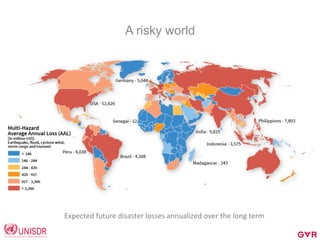
A risky world	
  
Expected	
  future	
  disaster	
  losses	
  annualized	
  over	
  the	
  long	
  term	
  
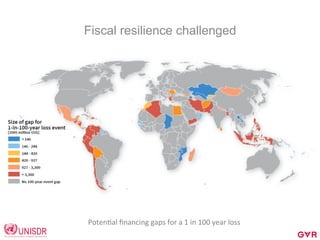
Fiscal resilience challenged
PotenCal	
  financing	
  gaps	
  for	
  a	
  1	
  in	
  100	
  year	
  loss	
  
5%	
  probability	
  	
  in	
  5	
  years	
  of	
  exceeding	
  a	
  loss	
  	
  
Flood Hazard - forthcoming
~	
  
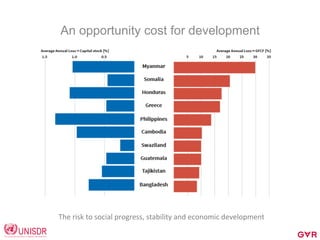
An opportunity cost for development
The	
  risk	
  to	
  social	
  progress,	
  stability	
  and	
  economic	
  development	


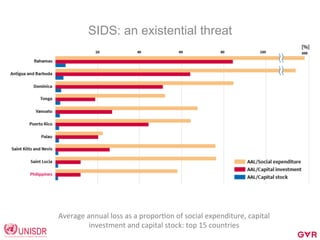
SIDS: an existential threat
Average	
  annual	
  loss	
  as	
  a	
  proporCon	
  of	
  social	
  expenditure,	
  capital	
  
investment	
  and	
  capital	
  stock:	
  top	
  15	
  countries	
  
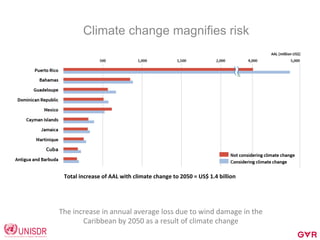
Climate change magnifies risk
The	
  increase	
  in	
  annual	
  average	
  loss	
  due	
  to	
  wind	
  damage	
  in	
  the	
  
Caribbean	
  by	
  2050	
  as	
  a	
  result	
  of	
  climate	
  change	
  
Total	
  increase	
  of	
  AAL	
  with	
  climate	
  change	
  to	
  2050	
  =	
  US$	
  1.4	
  billion	
  
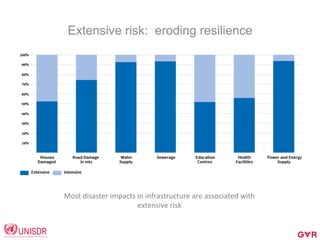
Extensive risk: eroding resilience
Most	
  disaster	
  impacts	
  in	
  infrastructure	
  are	
  associated	
  with	
  
extensive	
  risk	
  
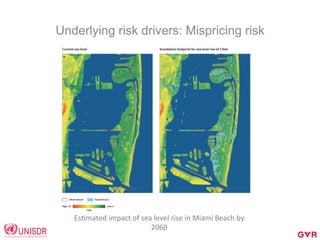
Underlying risk drivers: Mispricing risk
EsCmated	
  impact	
  of	
  sea	
  level	
  rise	
  in	
  Miami	
  Beach	
  by	
  
2060	
  
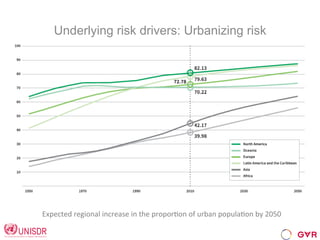
Underlying risk drivers: Urbanizing risk
Expected	
  regional	
  increase	
  in	
  the	
  proporCon	
  of	
  urban	
  populaCon	
  by	
  2050	
  
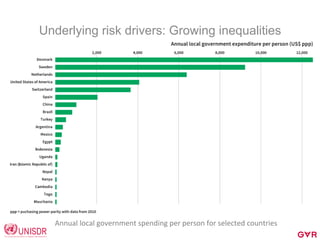
Underlying risk drivers: Growing inequalities
Annual	
  local	
  government	
  spending	
  per	
  person	
  for	
  selected	
  countries	
  
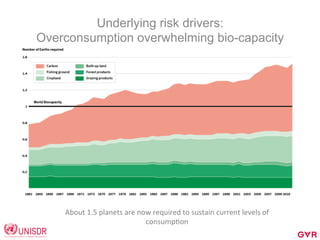
Underlying risk drivers:
Overconsumption overwhelming bio-capacity
About	
  1.5	
  planets	
  are	
  now	
  required	
  to	
  sustain	
  current	
  levels	
  of	
  
consumpCon	
  
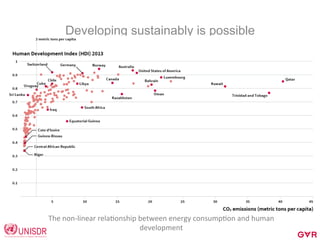
Developing sustainably is possible
The	
  non-­‐linear	
  relaConship	
  between	
  energy	
  consumpCon	
  and	
  human	
  
development	
  
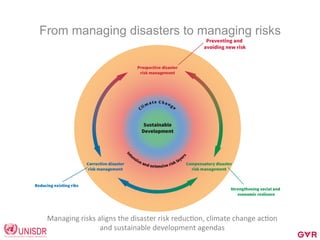
From managing disasters to managing risks
Managing	
  risks	
  aligns	
  the	
  disaster	
  risk	
  reducCon,	
  climate	
  change	
  acCon	
  
and	
  sustainable	
  development	
  agendas	
  
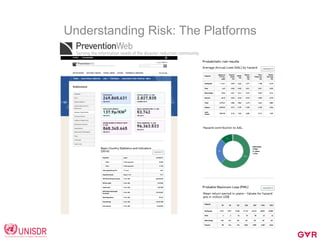
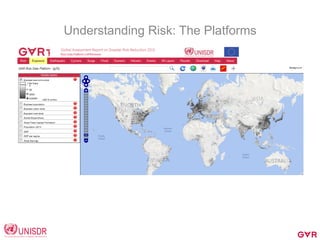
Understanding Risk: The Platforms
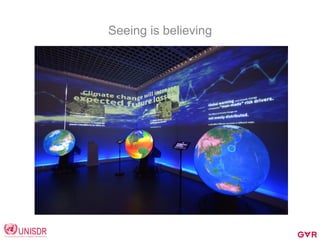
Seeing is believing
Thank	
  you	
  
#gar15	
  

Gar15 ppt chambery

  • 1.
    Making development sustainable:the future of disaster risk management
  • 2.
    25 years ofinternational commitment to disaster risk reduction
  • 3.
    From managing disasters………  Disaster  management  cycle    1975    2011  
  • 4.
    Less progress inmanaging risks Assessing  disaster  risk  impacts  of  major   development  projects     Managing  risk  in  urban  environments     Strong  policy,  technical  and  insCtuConal  capaciCes   and  mechanisms   Disaster  preparedness  and  conCngency  plans,   training  drills  
  • 5.
    Revealing the realmagnitude of risk Disasters:    42,000,000  (average  1990-­‐2012)   Tuberculosis:  43,000,000  (2012)   Malaria:  55,000,000  (2012)   Traffic  accidents:  78,000,000  (2012)     Life  year  lost:    
  • 6.
    A risky world   Expected  future  disaster  losses  annualized  over  the  long  term  
  • 7.
    Fiscal resilience challenged PotenCal  financing  gaps  for  a  1  in  100  year  loss   5%  probability    in  5  years  of  exceeding  a  loss     Flood Hazard - forthcoming ~  
  • 8.
    An opportunity costfor development The  risk  to  social  progress,  stability  and  economic  development      
  • 9.
    SIDS: an existentialthreat Average  annual  loss  as  a  proporCon  of  social  expenditure,  capital   investment  and  capital  stock:  top  15  countries  
  • 10.
    Climate change magnifiesrisk The  increase  in  annual  average  loss  due  to  wind  damage  in  the   Caribbean  by  2050  as  a  result  of  climate  change   Total  increase  of  AAL  with  climate  change  to  2050  =  US$  1.4  billion  
  • 11.
    Extensive risk: erodingresilience Most  disaster  impacts  in  infrastructure  are  associated  with   extensive  risk  
  • 12.
    Underlying risk drivers:Mispricing risk EsCmated  impact  of  sea  level  rise  in  Miami  Beach  by   2060  
  • 13.
    Underlying risk drivers:Urbanizing risk Expected  regional  increase  in  the  proporCon  of  urban  populaCon  by  2050  
  • 14.
    Underlying risk drivers:Growing inequalities Annual  local  government  spending  per  person  for  selected  countries  
  • 15.
    Underlying risk drivers: Overconsumptionoverwhelming bio-capacity About  1.5  planets  are  now  required  to  sustain  current  levels  of   consumpCon  
  • 16.
    Developing sustainably ispossible The  non-­‐linear  relaConship  between  energy  consumpCon  and  human   development  
  • 17.
    From managing disastersto managing risks Managing  risks  aligns  the  disaster  risk  reducCon,  climate  change  acCon   and  sustainable  development  agendas  
  • 18.
  • 19.
  • 20.
  • 21.