Disaster Management Concept
GENERAL DEFINITION OF DISASTER “ A disaster is any event, natural or man made, which threatens human lives, damages private and public property and infrastructure, and disrupts social and economic life”.
Definition in Bullets A sudden calamity Causing destruction or damage Disruption to normal pattern of life  Need help to redress the situation  Exceed the ability of the affected society and the government to cope
Hazards Threat to people, structures & assets  Cause of a disaster Future threats  Natural(geological, hydro meteorological and biological)  Man-made (environmental degradation and technical hazards)
Vulnerability The extent to which a community, structure, service, or geographic area is likely to be damaged by the impact of particular hazard  Proximity to hazard  Increasing the susceptibility of a community to the impact of hazards
What is risk? 4 components of risk: Probability Consequences Hazard Exposure (Source :Ropeik & Grey, 2002)
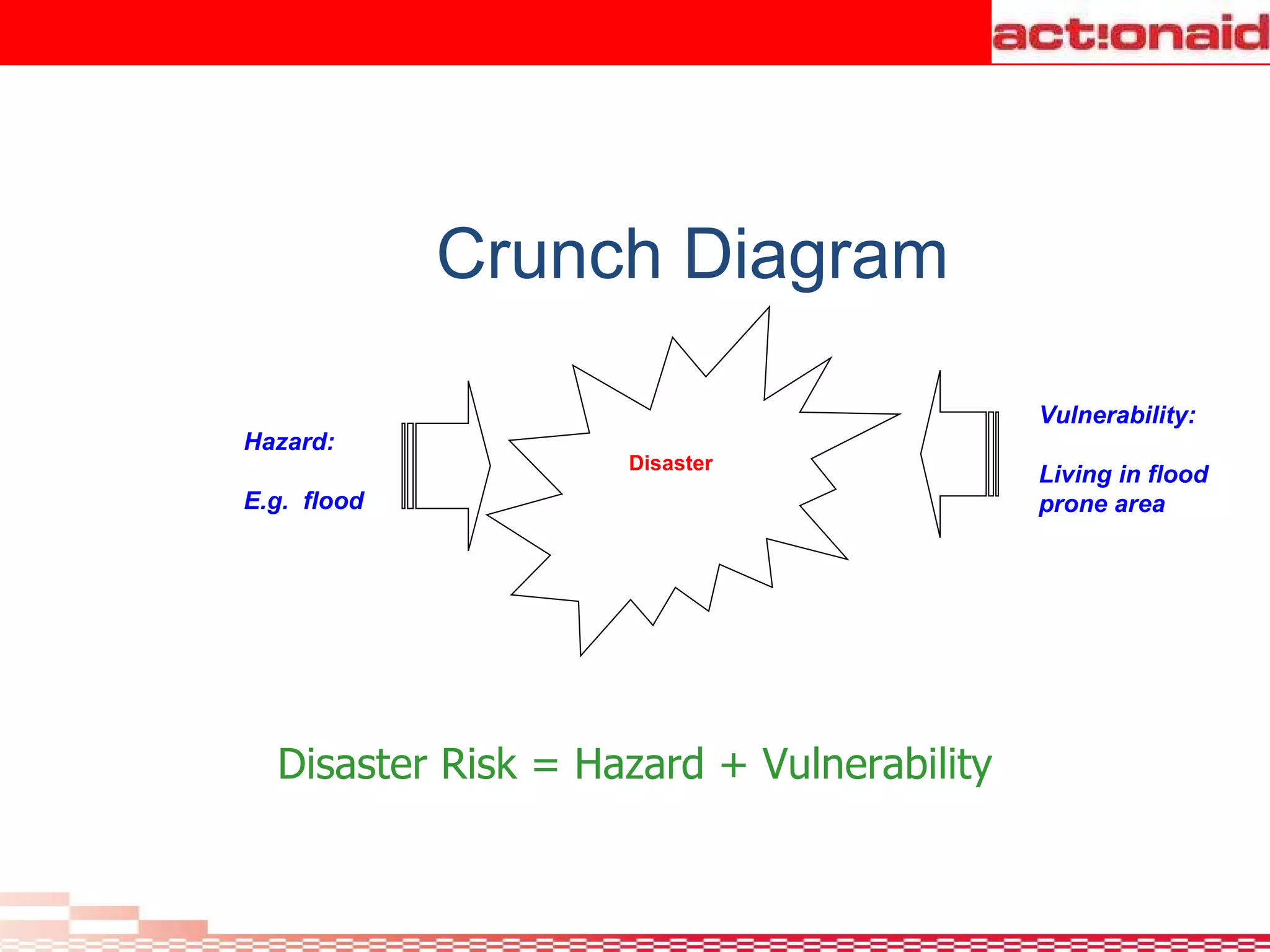
Disaster      Vulnerability: Living in flood  prone area   Crunch Diagram Disaster Risk = Hazard + Vulnerability     Hazard: E.g.  flood                                             
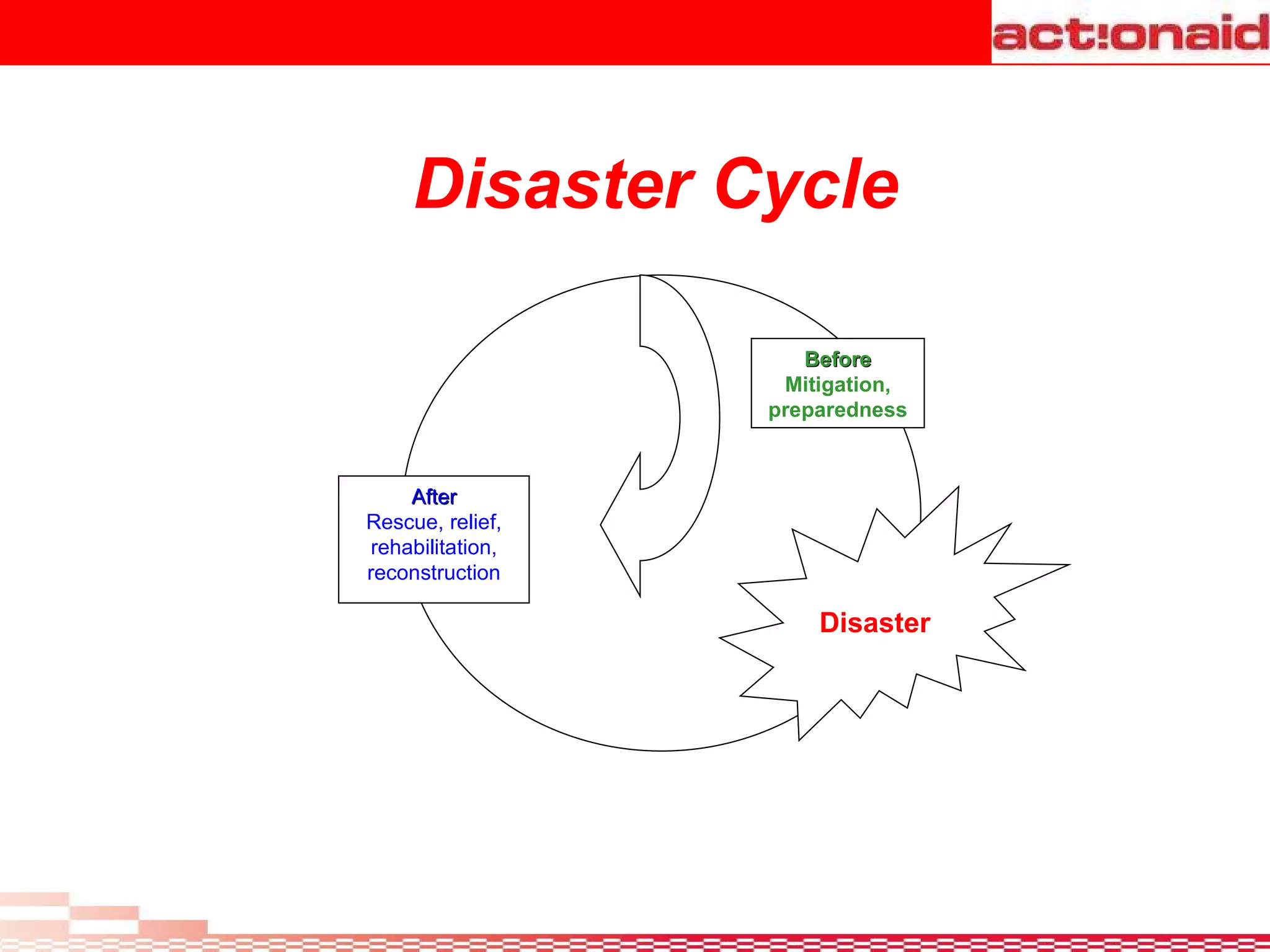
Before Mitigation, preparedness Disaster  After Rescue, relief, rehabilitation, reconstruction Disaster Cycle
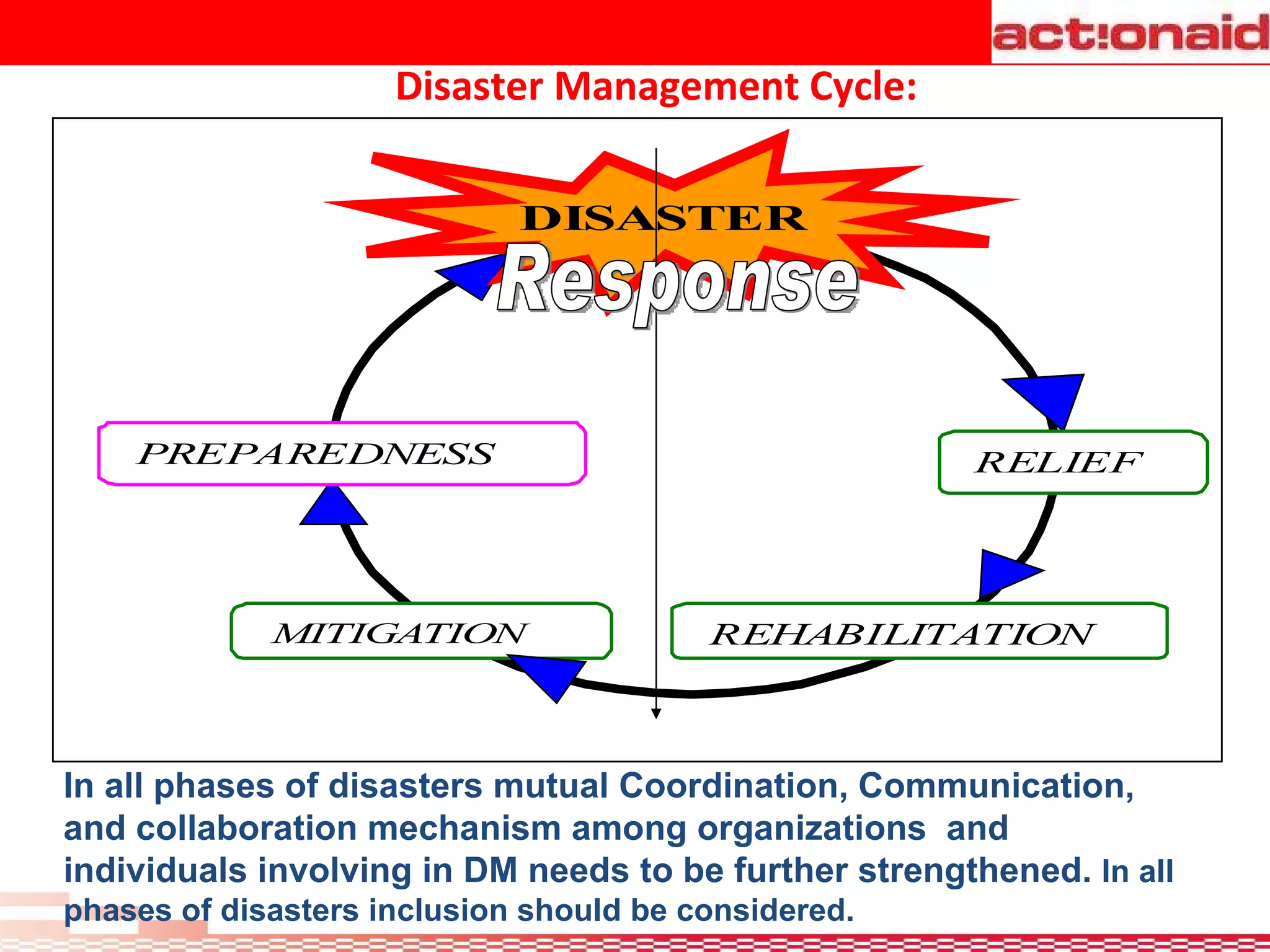
Disaster Management Cycle: In all phases of disasters mutual Coordination, Communication, and collaboration mechanism among organizations  and individuals involving in DM needs to be further strengthened.  In all phases of disasters inclusion should be considered. Response
 
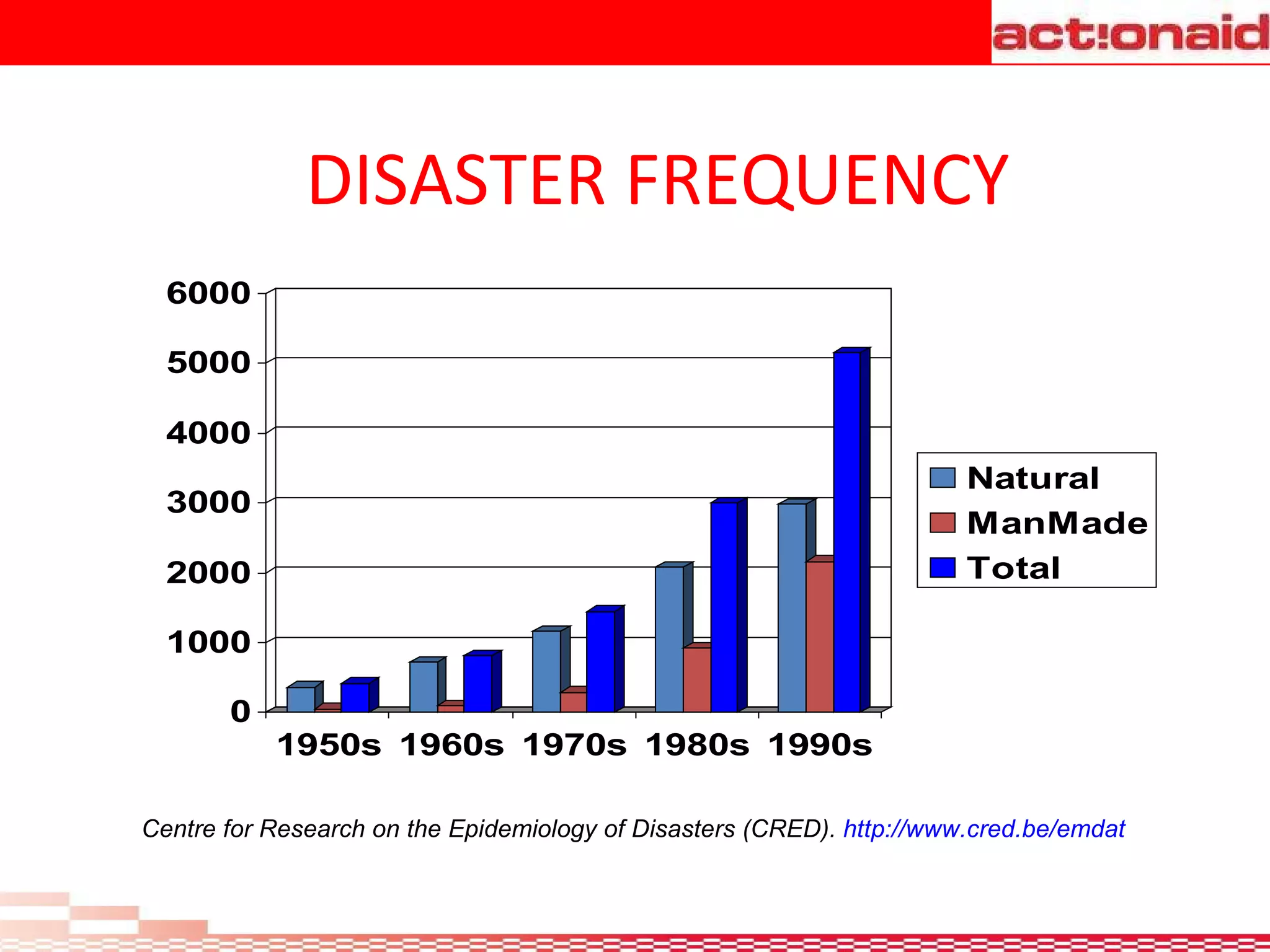
DISASTER FREQUENCY   Centre for Research on the Epidemiology of Disasters (CRED).  http://www.cred.be/emdat
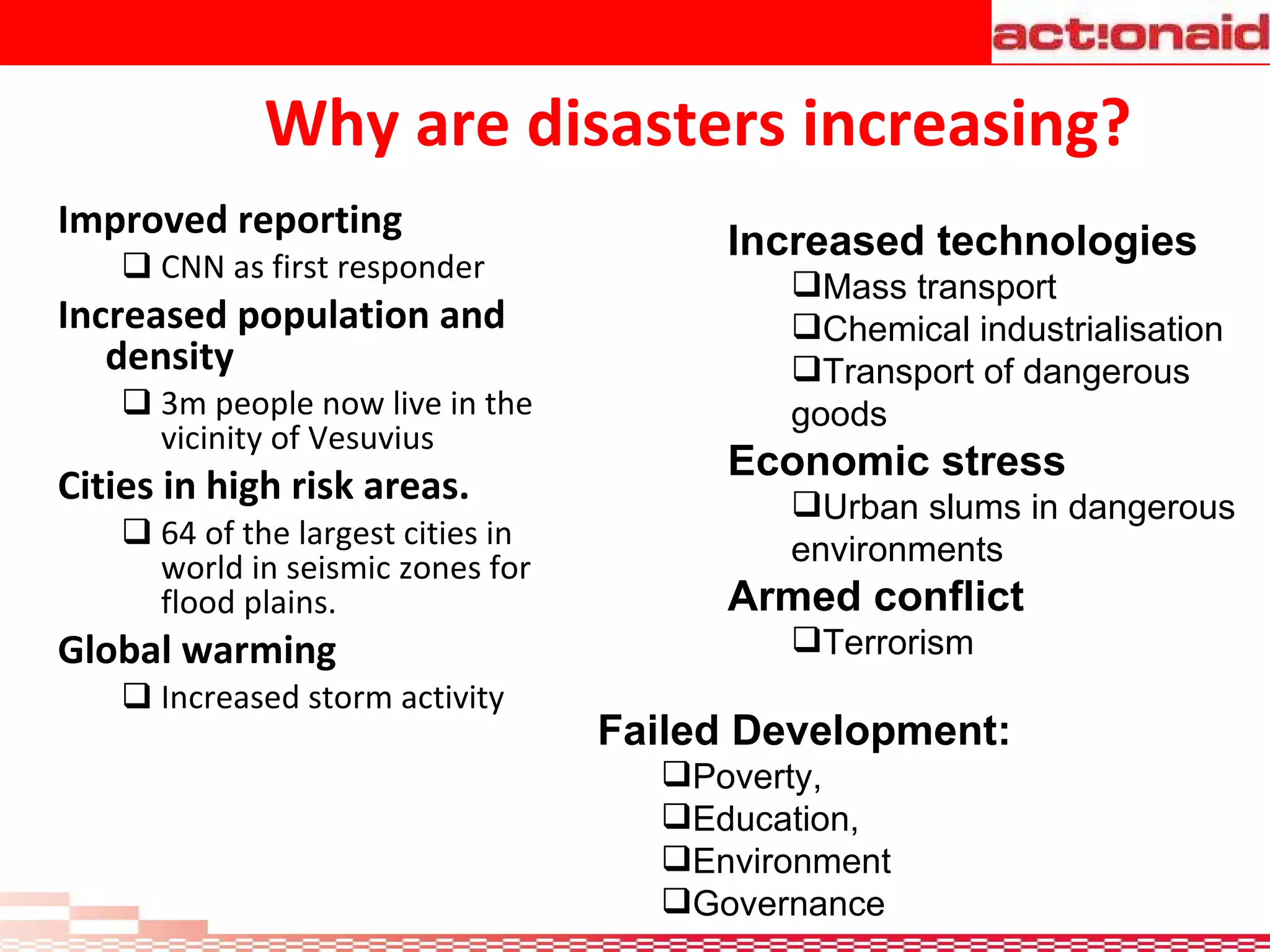
Why are disasters increasing? Improved reporting  CNN as first responder Increased population and density 3m people now live in the vicinity of Vesuvius Cities in high risk areas. 64 of the largest cities in world in seismic zones for flood plains. Global warming Increased storm activity Increased technologies Mass transport  Chemical industrialisation  Transport of dangerous goods Economic stress Urban slums in dangerous environments Armed conflict Terrorism Failed Development: Poverty,  Education, Environment Governance
What are the Problems ? Conflicting priorities/vested interest Complexity Diverse opinions Politics/confrontation (ruling party tries to create vote bank, oppositions try to undermine the govt., media try to find sensational news and so on) Irregularities
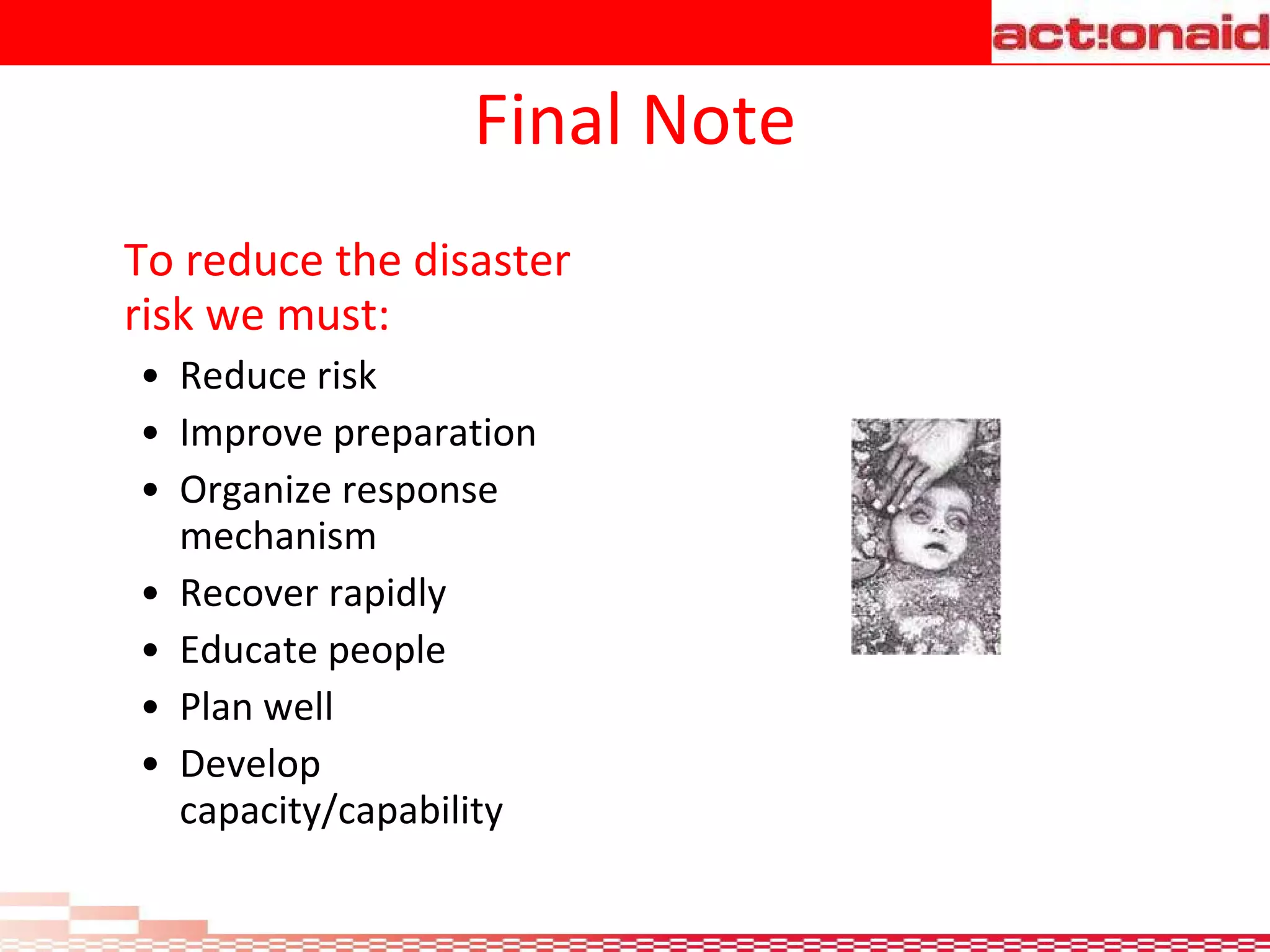
Final Note To reduce the disaster risk we must: Reduce risk Improve preparation Organize response mechanism Recover rapidly Educate people Plan well Develop capacity/capability
Thank You Very Much For Your Kind Attention !

0.01 concept of dm may 2011

  • 1.
  • 2.
    GENERAL DEFINITION OFDISASTER “ A disaster is any event, natural or man made, which threatens human lives, damages private and public property and infrastructure, and disrupts social and economic life”.
  • 3.
    Definition in BulletsA sudden calamity Causing destruction or damage Disruption to normal pattern of life Need help to redress the situation Exceed the ability of the affected society and the government to cope
  • 4.
    Hazards Threat topeople, structures & assets Cause of a disaster Future threats Natural(geological, hydro meteorological and biological) Man-made (environmental degradation and technical hazards)
  • 5.
    Vulnerability The extentto which a community, structure, service, or geographic area is likely to be damaged by the impact of particular hazard Proximity to hazard Increasing the susceptibility of a community to the impact of hazards
  • 6.
    What is risk?4 components of risk: Probability Consequences Hazard Exposure (Source :Ropeik & Grey, 2002)
  • 7.
    Disaster    Vulnerability: Living in flood prone area Crunch Diagram Disaster Risk = Hazard + Vulnerability     Hazard: E.g. flood                                            
  • 8.
    Before Mitigation, preparednessDisaster After Rescue, relief, rehabilitation, reconstruction Disaster Cycle
  • 9.
    Disaster Management Cycle:In all phases of disasters mutual Coordination, Communication, and collaboration mechanism among organizations and individuals involving in DM needs to be further strengthened. In all phases of disasters inclusion should be considered. Response
  • 10.
  • 11.
    DISASTER FREQUENCY Centre for Research on the Epidemiology of Disasters (CRED). http://www.cred.be/emdat
  • 12.
    Why are disastersincreasing? Improved reporting CNN as first responder Increased population and density 3m people now live in the vicinity of Vesuvius Cities in high risk areas. 64 of the largest cities in world in seismic zones for flood plains. Global warming Increased storm activity Increased technologies Mass transport Chemical industrialisation Transport of dangerous goods Economic stress Urban slums in dangerous environments Armed conflict Terrorism Failed Development: Poverty, Education, Environment Governance
  • 13.
    What are theProblems ? Conflicting priorities/vested interest Complexity Diverse opinions Politics/confrontation (ruling party tries to create vote bank, oppositions try to undermine the govt., media try to find sensational news and so on) Irregularities
  • 14.
    Final Note Toreduce the disaster risk we must: Reduce risk Improve preparation Organize response mechanism Recover rapidly Educate people Plan well Develop capacity/capability
  • 15.
    Thank You VeryMuch For Your Kind Attention !