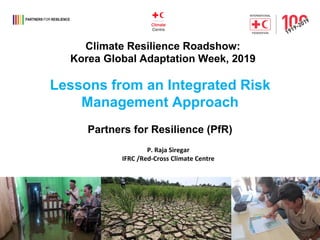
Climate Resilience Roadshow:
Korea Global Adaptation Week, 2019
Lessons from an Integrated Risk
Management Approach
Partners for Resilience (PfR)
P. Raja Siregar
IFRC /Red-Cross Climate Centre
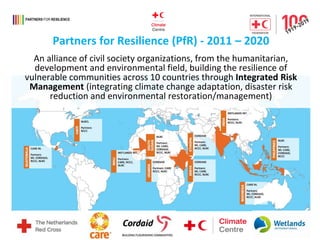
Partners for Resilience (PfR) - 2011 – 2020
An alliance of civil society organizations, from the humanitarian,
development and environmental field, building the resilience of
vulnerable communities across 10 countries through Integrated Risk
Management (integrating climate change adaptation, disaster risk
reduction and environmental restoration/management)
PfR Key Achievements
• Strengthened national, district and local level disaster management
policies and plans
• Improved gender sensitive village development plans
• Improved urban planning and water resources management
initiatives at multiple levels
• Capacity building of civil society organisations to engage with and
influence relevant policy and planning processes
• Mainstreaming of 2030 commitments (Sendai, SDG’s, Paris) into
national policies and policy coherence.
• National and global level mobilization of resources for integrated
risk management approaches
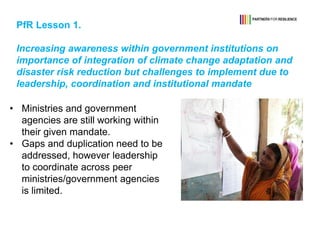
PfR Lesson 1.
Increasing awareness within government institutions on
importance of integration of climate change adaptation and
disaster risk reduction but challenges to implement due to
leadership, coordination and institutional mandate
• Ministries and government
agencies are still working within
their given mandate.
• Gaps and duplication need to be
addressed, however leadership
to coordinate across peer
ministries/government agencies
is limited.
PfR Lesson 2.
Decentralised governance structures provide greater
opportunity for integration of climate change, disaster risk
reduction and environmental management in policy and
practice.
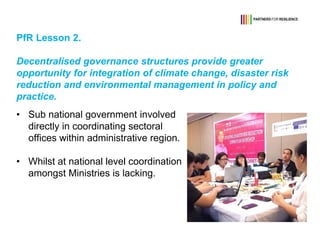
• Sub national government involved
directly in coordinating sectoral
offices within administrative region.
• Whilst at national level coordination
amongst Ministries is lacking.
PfR Lesson 3.
An overarching resilience framework could be a bridge for
integration of different processes (e.g. harmonizing indicators
for climate change resilience, disaster risk resilience and city
resilience)
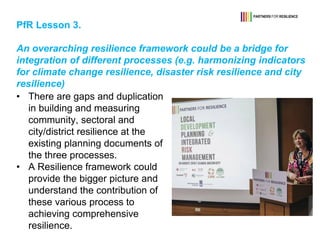
• There are gaps and duplication
in building and measuring
community, sectoral and
city/district resilience at the
existing planning documents of
the three processes.
• A Resilience framework could
provide the bigger picture and
understand the contribution of
these various process to
achieving comprehensive
resilience.
PfR Lesson 4.
Spatial planning which takes a landscape approach is critical
for integration of disaster risk reduction, climate change
adaptation, environmental management
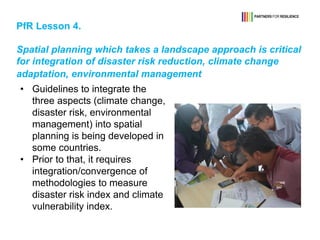
• Guidelines to integrate the
three aspects (climate change,
disaster risk, environmental
management) into spatial
planning is being developed in
some countries.
• Prior to that, it requires
integration/convergence of
methodologies to measure
disaster risk index and climate
vulnerability index.
Lesson 4:
Engagement of local actors is essential for effective policy
and legislation for adaptation and resilience
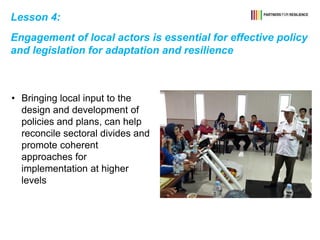
• Bringing local input to the
design and development of
policies and plans, can help
reconcile sectoral divides and
promote coherent
approaches for
implementation at higher
levels

11.2.4 Climate Resilience Roadshow

  • 1.
    Climate Resilience Roadshow: KoreaGlobal Adaptation Week, 2019 Lessons from an Integrated Risk Management Approach Partners for Resilience (PfR) P. Raja Siregar IFRC /Red-Cross Climate Centre
  • 2.
    Partners for Resilience(PfR) - 2011 – 2020 An alliance of civil society organizations, from the humanitarian, development and environmental field, building the resilience of vulnerable communities across 10 countries through Integrated Risk Management (integrating climate change adaptation, disaster risk reduction and environmental restoration/management)
  • 3.
    PfR Key Achievements •Strengthened national, district and local level disaster management policies and plans • Improved gender sensitive village development plans • Improved urban planning and water resources management initiatives at multiple levels • Capacity building of civil society organisations to engage with and influence relevant policy and planning processes • Mainstreaming of 2030 commitments (Sendai, SDG’s, Paris) into national policies and policy coherence. • National and global level mobilization of resources for integrated risk management approaches
  • 4.
    PfR Lesson 1. Increasingawareness within government institutions on importance of integration of climate change adaptation and disaster risk reduction but challenges to implement due to leadership, coordination and institutional mandate • Ministries and government agencies are still working within their given mandate. • Gaps and duplication need to be addressed, however leadership to coordinate across peer ministries/government agencies is limited.
  • 5.
    PfR Lesson 2. Decentralisedgovernance structures provide greater opportunity for integration of climate change, disaster risk reduction and environmental management in policy and practice. • Sub national government involved directly in coordinating sectoral offices within administrative region. • Whilst at national level coordination amongst Ministries is lacking.
  • 6.
    PfR Lesson 3. Anoverarching resilience framework could be a bridge for integration of different processes (e.g. harmonizing indicators for climate change resilience, disaster risk resilience and city resilience) • There are gaps and duplication in building and measuring community, sectoral and city/district resilience at the existing planning documents of the three processes. • A Resilience framework could provide the bigger picture and understand the contribution of these various process to achieving comprehensive resilience.
  • 7.
    PfR Lesson 4. Spatialplanning which takes a landscape approach is critical for integration of disaster risk reduction, climate change adaptation, environmental management • Guidelines to integrate the three aspects (climate change, disaster risk, environmental management) into spatial planning is being developed in some countries. • Prior to that, it requires integration/convergence of methodologies to measure disaster risk index and climate vulnerability index.
  • 8.
    Lesson 4: Engagement oflocal actors is essential for effective policy and legislation for adaptation and resilience • Bringing local input to the design and development of policies and plans, can help reconcile sectoral divides and promote coherent approaches for implementation at higher levels