MR B MABUMBA
BSC CM UNZASOM
DIP CM UNZASOM
 The word "gangrene" comes from the Greek
"ganggraina" denoting "an eating sore that ends
in mortification".
Gangrene: The death of body tissue due to the
loss of blood supply to that tissue, sometimes
permitting bacteria to invade it and accelerate
its decay.
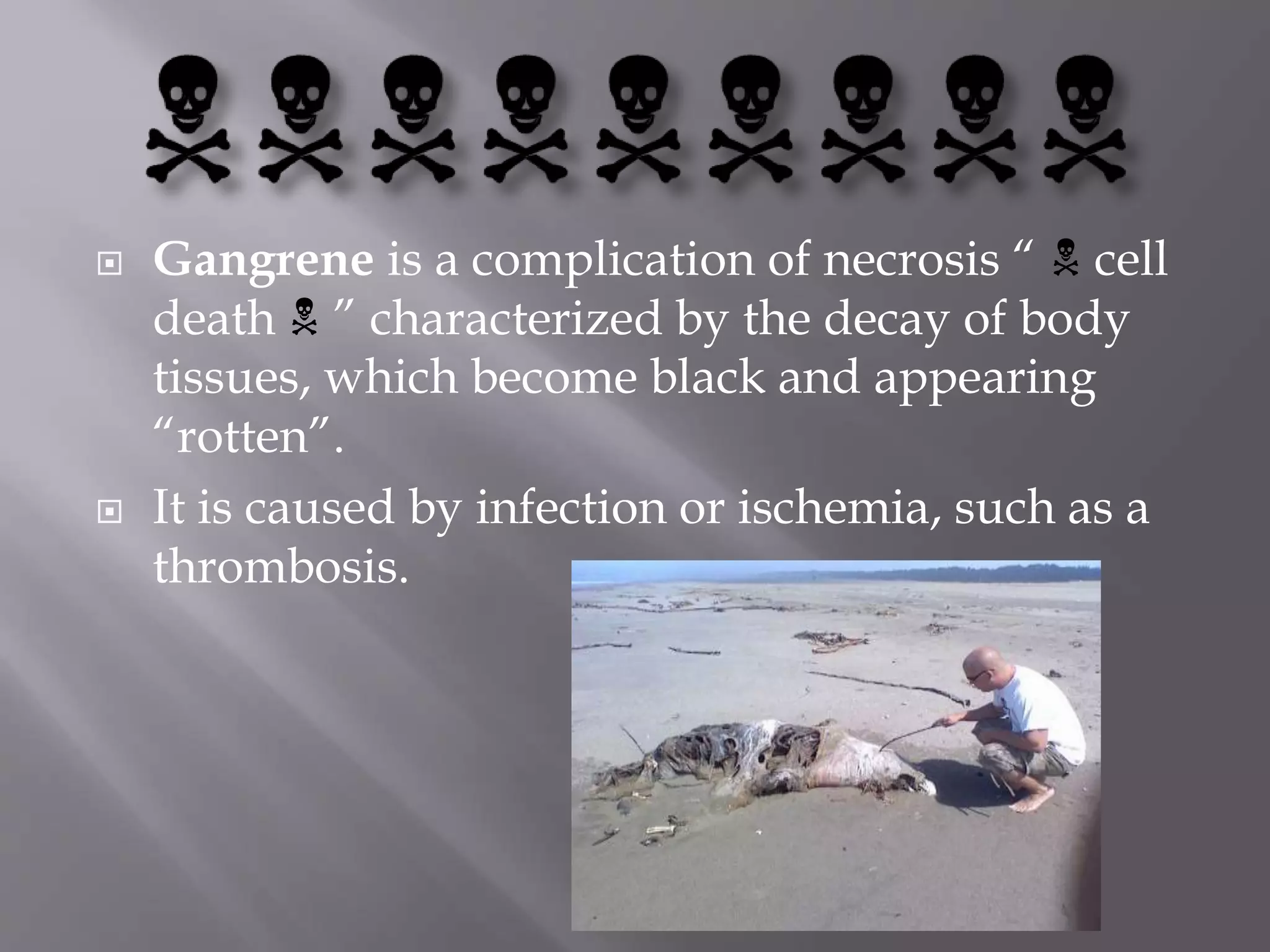
 Gangrene is a complication of necrosis “ N cell
death N ” characterized by the decay of body
tissues, which become black and appearing
“rotten”.
 It is caused by infection or ischemia, such as a
thrombosis.
 It is usually the result of critically insufficient
blood supply.
 Often associated with diabetes and long-term
smoking.
 Condition is most common in the lower
extremities.
 DRY GANGRENE
 WET GANGRENE
 GAS GANGRENE
 Dry gangrene begins at the distal part of the
limb due to ischemia and often occurs in the
toes and feet of elderly patients due to
arteriosclerosis.
 Dry gangrene spreads slowly until it reaches
the point where the blood supply is inadequate
to keep tissue viable.
 The affected part is dry, shrunken and dark
black, resembling mummified flesh.
 If the blood flow is interrupted for a reason
other than severe bacterial infection, the result
is a case of dry gangrene.
 People with impaired peripheral blood flow,
such as diabetics, are at greater risk of
contracting dry gangrene.
 The early signs are a dull ache and sensation of
coldness in the affected are.
 If caught early, the process can sometimes be
reversed by vascular surgery.
 If necrosis sets in, the affected tissue must be
removed and treated like a case of wet
gangrene.
YUCKY!!!
 Wet gangrene occurs in naturally moist tissue
and organs such as the mouth, bowel, lungs,
cervix, and vulva.
 Bedsores occurring on body parts such as the
sacrum, buttocks and heels (not in “moist”
areas) are also categorized as wet gangrene
infections.
 In wet gangrene, the tissue is infected by
microorganisms, which cause tissue to swell
and emit a fawol order.
 Wet gangrene usually develops rapidly due to
blockage of venous and/or arterial blood flow.
 The affected part is saturated with stagnant
blood which promotes the rapid growth of
bacteria.
 The toxic products formed by bacteria are
absorbed causing systemic manifestation of
bacteria and finally death.
 The affected part is soft, putrid, rotten
and dark.
 The darkness in wet gangrene occurs due to the
same mechanism as in dry gangrene.
 Gas gangrene is a bacterial infection that
produces gas within tissues.
 It is a N deadly N form of gangrene usually
caused by bacteria.
 Infection spreads rapidly as the gases produced
by bacteria expand and effect healthy tissue.
 Gas gangrene is caused by a environmental
bacteria.
 These Bacteria are mostly found in soil.
 These environmental bacteria enter the muscle
through a wound and cause necrotic tissue
and powerful toxins.
 These toxins destroy nearby tissue, generating
gas at the same time.
 Gas gangrene can cause necrosis, gas
production, and sepsis.
 Progression to toxemia and shock is often very
rapid.
 Because of its ability to quickly spread to
surrounding tissues, gas gangrene should be
treated as a medical emergency.
 Noma is a gangrene of the face.
 Necrotizing fasciitis affects the deeper layers of
the skin.
 Fournier gangrene usually affects the male
genitals.
Is a gangrenous disease leading to tissue
destruction of the face, especially the mouth
and cheek.
Risk factors include severe protein mal
nutrition and unsanitary conditions.
 Commonly known as flesh-eating disease or
flesh-eating bacteria.
 Rare infection of the deeper layers of skin and
easily spread within the subcutaneous tissue
 A type of necrotizing infection usually affecting
the male genitals.
 In the majority of cases it is a mixed infection
caused by both aerobic and anaerobic bacteria
OUCH!!!
 As early as 1028 fly maggots were commonly
used prevent or arrest necrotic spread.
 Some species of maggots consume only dead
flesh, leaving nearby living tissue unaffected.
 This practice largely died out after the
introduction of antibiotics.
 Maggot therapy has regained some credibility
and is sometimes employed with great efficacy
in cases of chronic tissue necrosis.
 Usually surgical with amputation necessary in
many cases.
 Antibiotics alone are not effective because they
do not penetrate ischemic muscles sufficiently.
 The best treatment for gangrene is
revascularization A.K.A. the restoration of
blood flow to the affected area.
 Can reverse some of the effects of necrosis and
allow healing.
 The method of treatment is generally
determined depending on location of affected
tissue and extent of tissue loss.
PEACE OUT!!!

Gangrene powerpoint-1.pptx

  • 1.
    MR B MABUMBA BSCCM UNZASOM DIP CM UNZASOM
  • 2.
     The word"gangrene" comes from the Greek "ganggraina" denoting "an eating sore that ends in mortification".
  • 3.
    Gangrene: The deathof body tissue due to the loss of blood supply to that tissue, sometimes permitting bacteria to invade it and accelerate its decay.
  • 4.
     Gangrene isa complication of necrosis “ N cell death N ” characterized by the decay of body tissues, which become black and appearing “rotten”.  It is caused by infection or ischemia, such as a thrombosis.
  • 5.
     It isusually the result of critically insufficient blood supply.  Often associated with diabetes and long-term smoking.  Condition is most common in the lower extremities.
  • 7.
     DRY GANGRENE WET GANGRENE  GAS GANGRENE
  • 8.
     Dry gangrenebegins at the distal part of the limb due to ischemia and often occurs in the toes and feet of elderly patients due to arteriosclerosis.  Dry gangrene spreads slowly until it reaches the point where the blood supply is inadequate to keep tissue viable.  The affected part is dry, shrunken and dark black, resembling mummified flesh.
  • 9.
     If theblood flow is interrupted for a reason other than severe bacterial infection, the result is a case of dry gangrene.  People with impaired peripheral blood flow, such as diabetics, are at greater risk of contracting dry gangrene.
  • 10.
     The earlysigns are a dull ache and sensation of coldness in the affected are.  If caught early, the process can sometimes be reversed by vascular surgery.  If necrosis sets in, the affected tissue must be removed and treated like a case of wet gangrene.
  • 13.
  • 14.
     Wet gangreneoccurs in naturally moist tissue and organs such as the mouth, bowel, lungs, cervix, and vulva.  Bedsores occurring on body parts such as the sacrum, buttocks and heels (not in “moist” areas) are also categorized as wet gangrene infections.
  • 15.
     In wetgangrene, the tissue is infected by microorganisms, which cause tissue to swell and emit a fawol order.  Wet gangrene usually develops rapidly due to blockage of venous and/or arterial blood flow.  The affected part is saturated with stagnant blood which promotes the rapid growth of bacteria.
  • 17.
     The toxicproducts formed by bacteria are absorbed causing systemic manifestation of bacteria and finally death.  The affected part is soft, putrid, rotten and dark.  The darkness in wet gangrene occurs due to the same mechanism as in dry gangrene.
  • 21.
     Gas gangreneis a bacterial infection that produces gas within tissues.  It is a N deadly N form of gangrene usually caused by bacteria.  Infection spreads rapidly as the gases produced by bacteria expand and effect healthy tissue.
  • 22.
     Gas gangreneis caused by a environmental bacteria.  These Bacteria are mostly found in soil.  These environmental bacteria enter the muscle through a wound and cause necrotic tissue and powerful toxins.
  • 23.
     These toxinsdestroy nearby tissue, generating gas at the same time.  Gas gangrene can cause necrosis, gas production, and sepsis.  Progression to toxemia and shock is often very rapid.  Because of its ability to quickly spread to surrounding tissues, gas gangrene should be treated as a medical emergency.
  • 28.
     Noma isa gangrene of the face.  Necrotizing fasciitis affects the deeper layers of the skin.  Fournier gangrene usually affects the male genitals.
  • 29.
    Is a gangrenousdisease leading to tissue destruction of the face, especially the mouth and cheek. Risk factors include severe protein mal nutrition and unsanitary conditions.
  • 32.
     Commonly knownas flesh-eating disease or flesh-eating bacteria.  Rare infection of the deeper layers of skin and easily spread within the subcutaneous tissue
  • 36.
     A typeof necrotizing infection usually affecting the male genitals.  In the majority of cases it is a mixed infection caused by both aerobic and anaerobic bacteria
  • 39.
  • 40.
     As earlyas 1028 fly maggots were commonly used prevent or arrest necrotic spread.  Some species of maggots consume only dead flesh, leaving nearby living tissue unaffected.  This practice largely died out after the introduction of antibiotics.  Maggot therapy has regained some credibility and is sometimes employed with great efficacy in cases of chronic tissue necrosis.
  • 43.
     Usually surgicalwith amputation necessary in many cases.  Antibiotics alone are not effective because they do not penetrate ischemic muscles sufficiently.
  • 44.
     The besttreatment for gangrene is revascularization A.K.A. the restoration of blood flow to the affected area.  Can reverse some of the effects of necrosis and allow healing.  The method of treatment is generally determined depending on location of affected tissue and extent of tissue loss.
  • 45.