B Y R A H U L R A M E S H
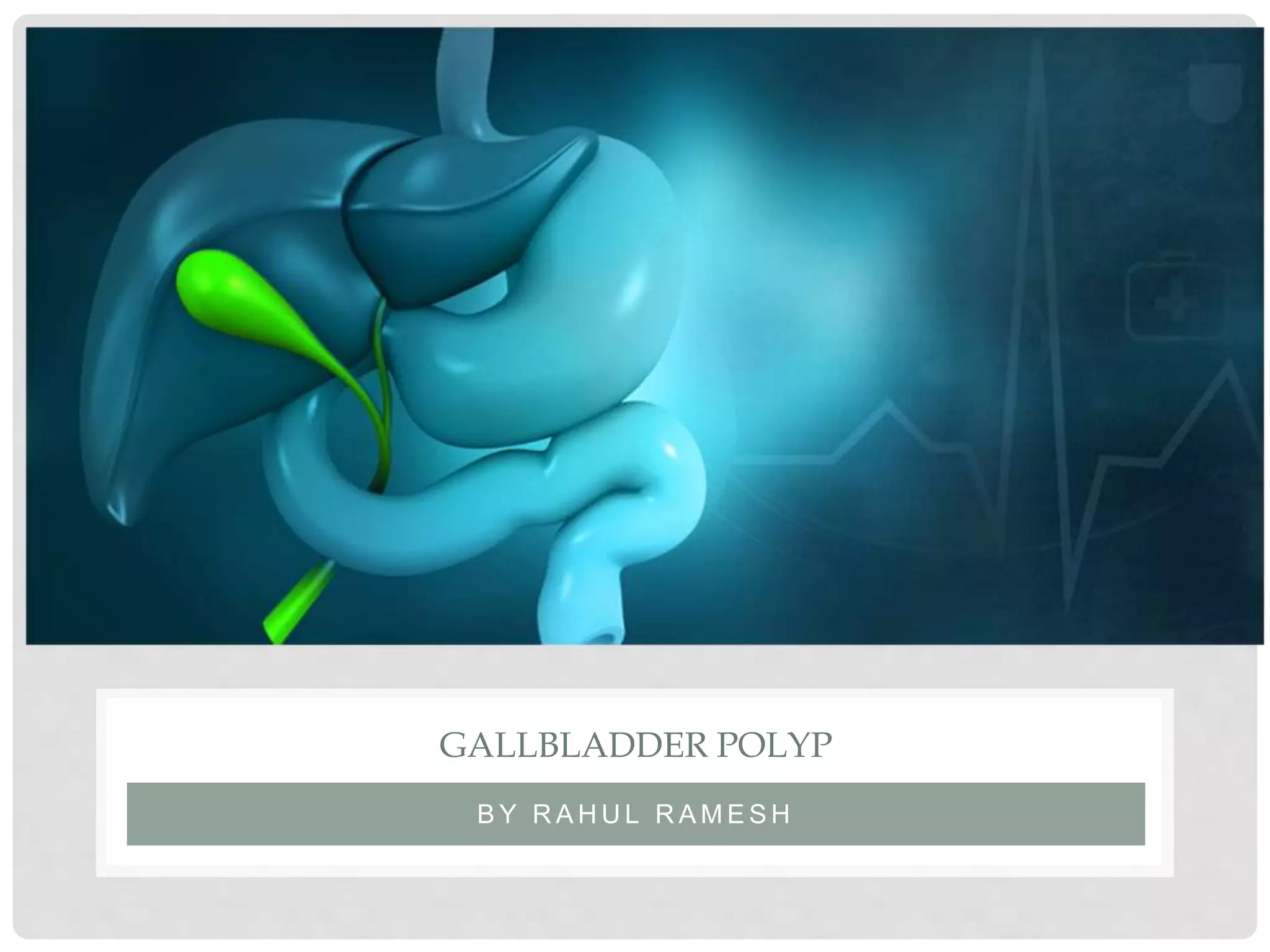
GALLBLADDER POLYP
INTRODUCTION
• Gallbladder is small sac beneath liver which is reservoir to
store bile made by the liver and release it into the
duodenum for fat digestion.
• Polyps are an abnormal growth of cells and tissues.
• Gallbladder polyps are growths or tumor like protrusion
from mucosal lining of the gallbladder. Gallbladder polyps is
present in 5% to 9% of people in the population.
• In majority of case, this polyps are gone undiagnoised
because of no symptom and found accidently while
scanning or surgerys like cholecystectomy.
• It can be malignant, but about 90% of polyps are benign
EPIDEMIOLOGY
• Gallbladder polyps are seen very frequently in present
world, we can see the case in 1 person on every 10
people.
• 90% of which is benign, and in that most of which are
cholesterol polyps.
• Very few of the case are true polyps case.
• Gallbladder polyps are mostly found by mistake during
cholecystetomy.
• Cholesterol polyps are less frequent in females and
patients of 35-50 years old.
CLASSIFICATION
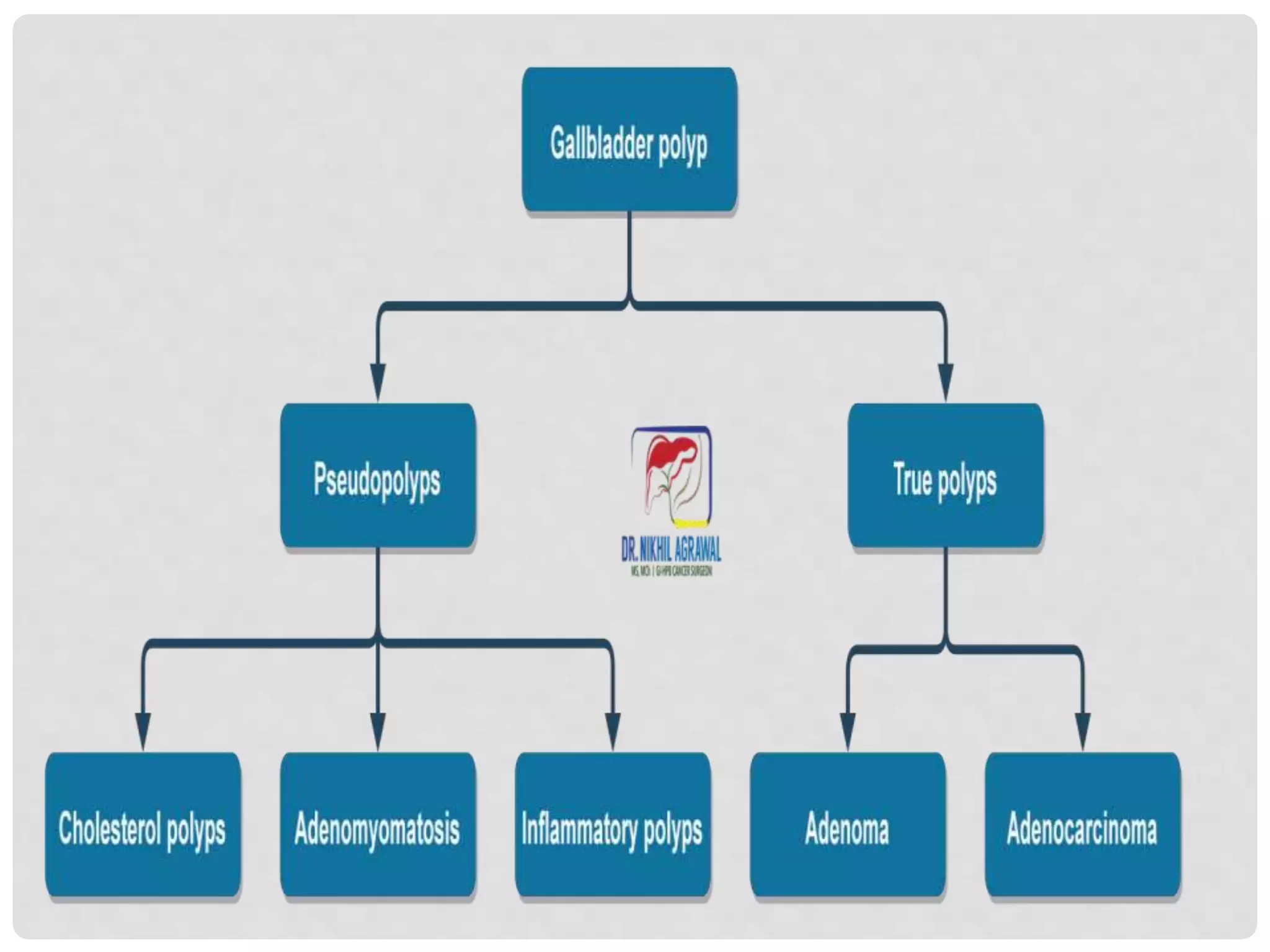
• We can classify gallbladder based on malignancy into 2
types
• Pseudopolyps/non-neoplastic
1. Inflammatory polyps
2. Cholesterol polyps
3. Adenomyomatosis
• True/neoplastic
1. Adenoma
2. adenocarcinoma
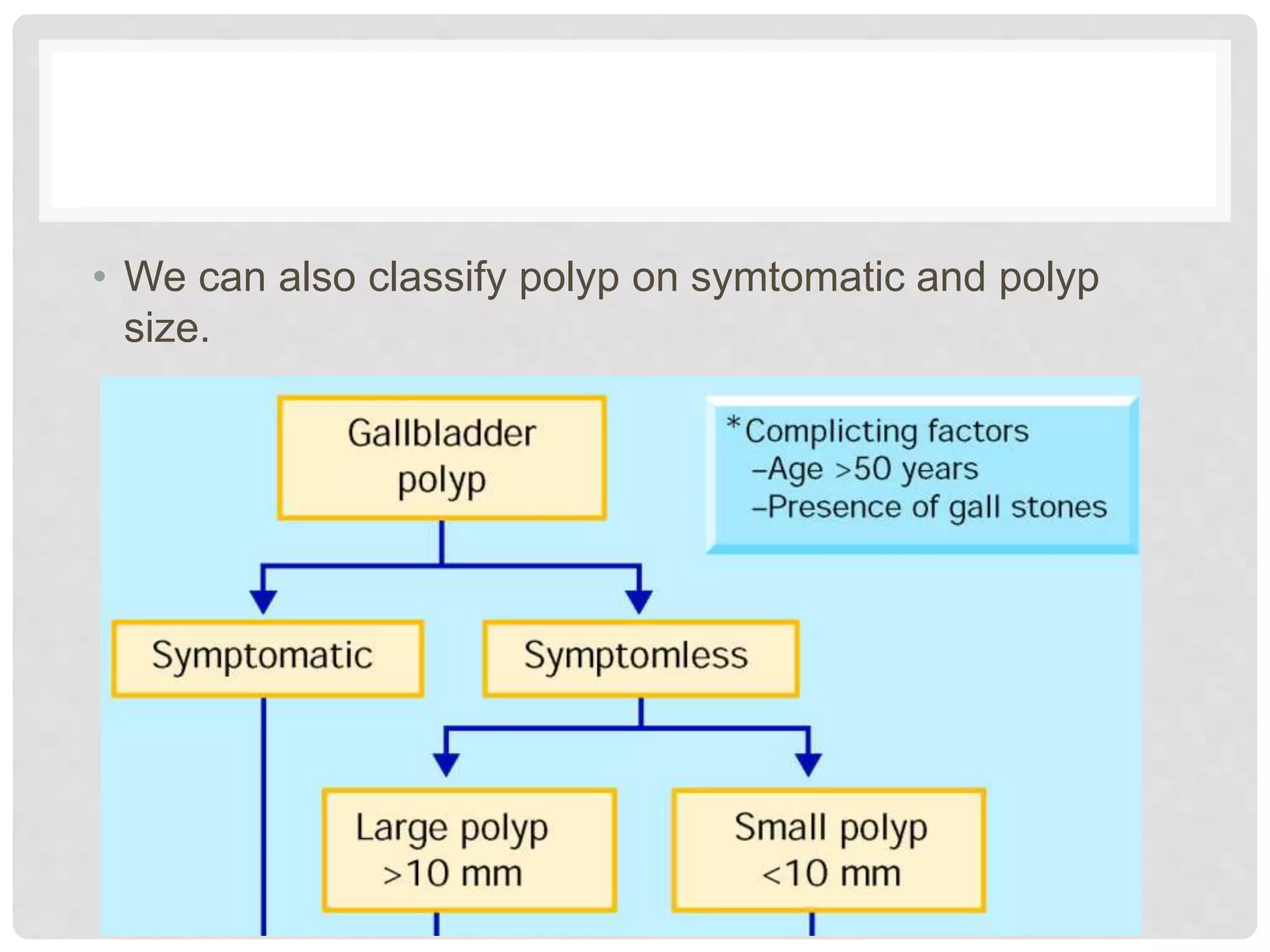
• We can also classify polyp on symtomatic and polyp
size.
PATHOPHYSIOLOGY
• Inflammatory polyps: a rare tumor-like polyp which
appeared to be enlargement and fusion of villi because
of inflammation
• Adenomyomatosis: it is gallbladder wall hyperplastic
cholecystosis which is cause of diffuse /focal gallbladder
wall thickening.
• Cholesterol polyps : most common gallbladder polyp.
They are deposits of bile salts because of condition
known as cholesterolosis. We can also call
pseudopolyps as indicate of gallbladder disorders.
CONTI….
• Adenomas: they are considered true polyp but it is
benign. This polyp rarely malignant and rarely seen
(4%–7%).
• Adenocarcinoma: gallbladder cancer, begin in
glandular cells that lines inner surface of gallbladder. 15-
25% will present as polyps.
HISTOPATHOLOGY
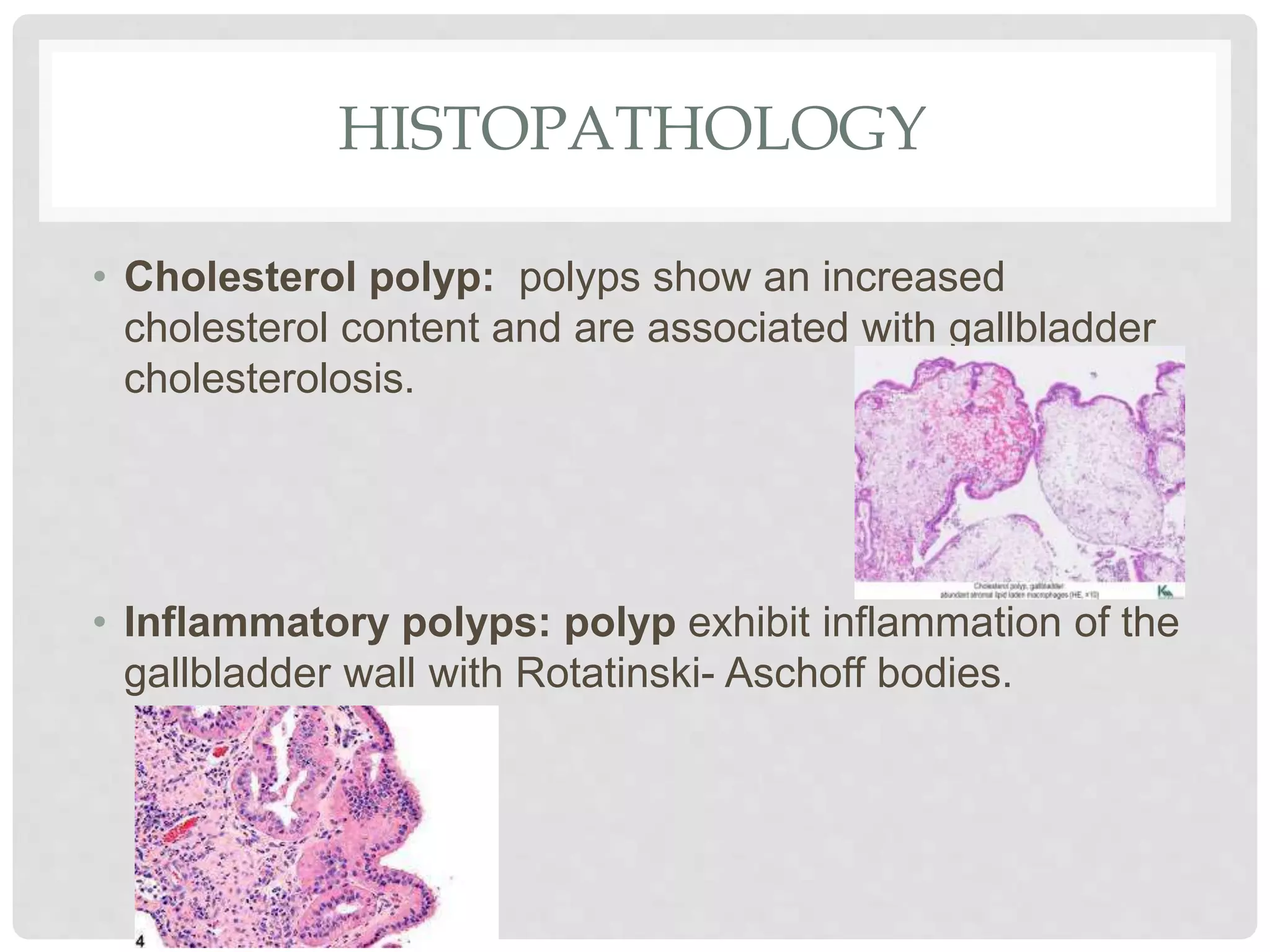
• Cholesterol polyp: polyps show an increased
cholesterol content and are associated with gallbladder
cholesterolosis.
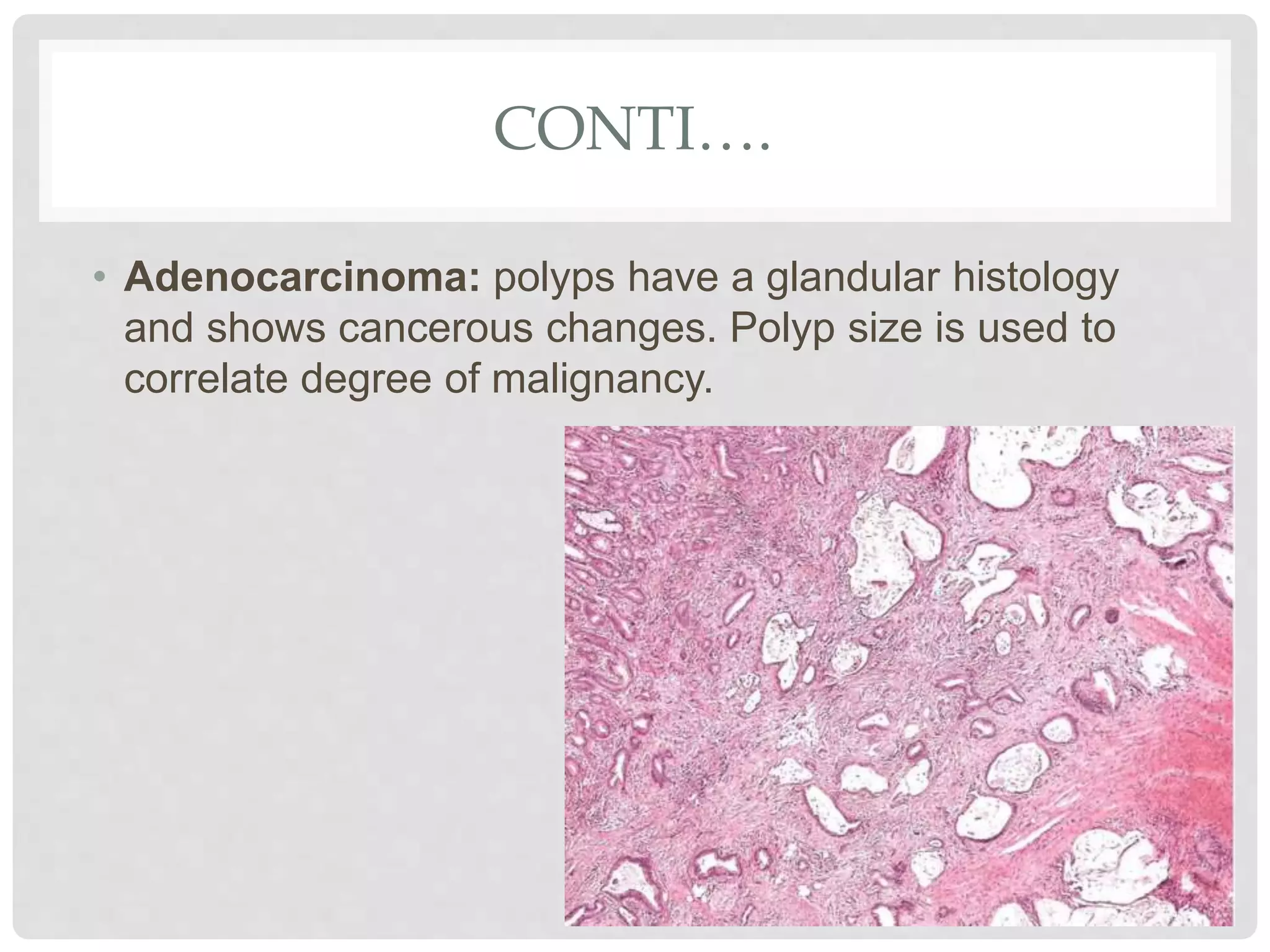
• Inflammatory polyps: polyp exhibit inflammation of the
gallbladder wall with Rotatinski- Aschoff bodies.
CONTI….
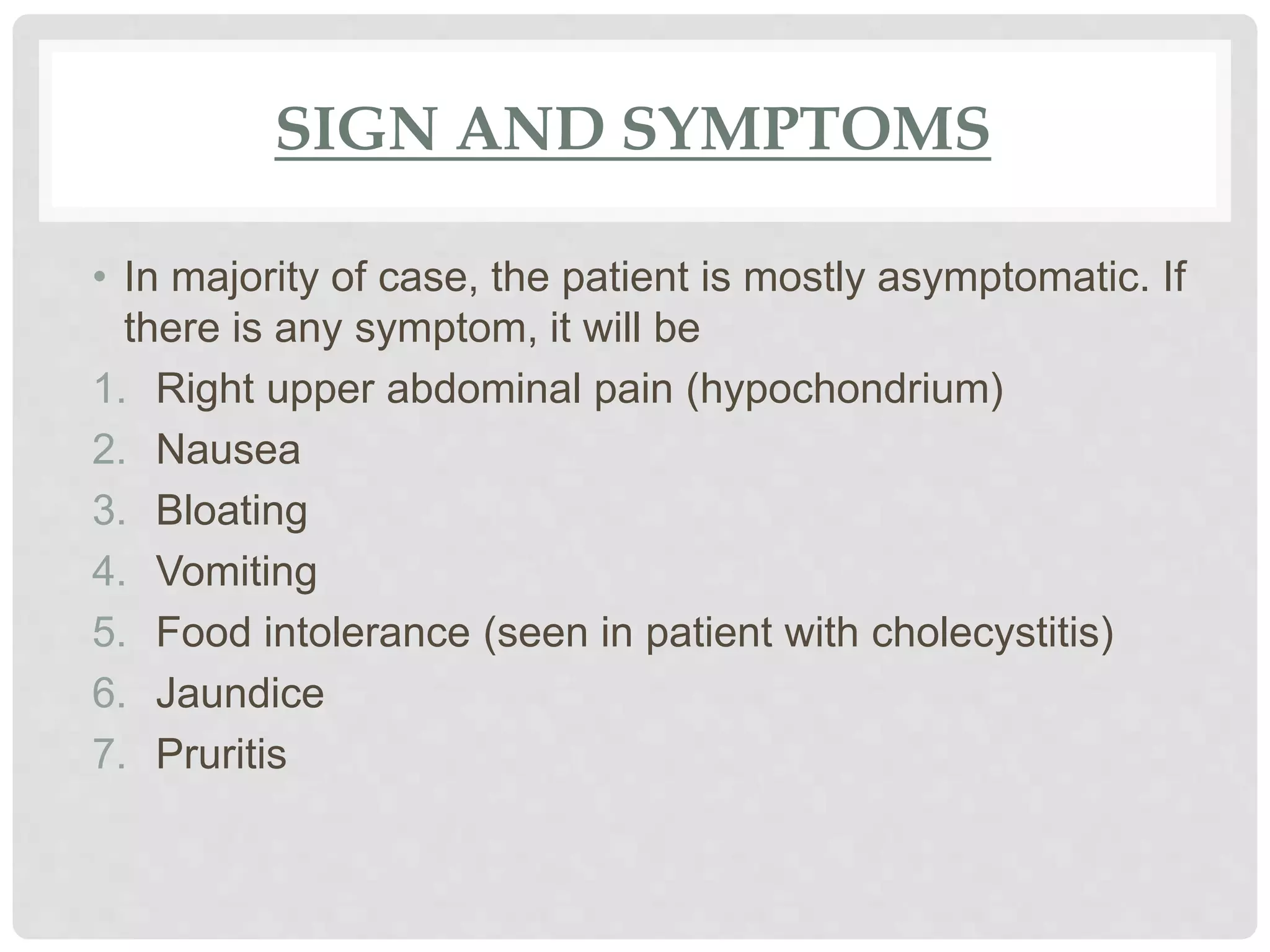
• Adenocarcinoma: polyps have a glandular histology
and shows cancerous changes. Polyp size is used to
correlate degree of malignancy.
SIGN AND SYMPTOMS
• In majority of case, the patient is mostly asymptomatic. If
there is any symptom, it will be
1. Right upper abdominal pain (hypochondrium)
2. Nausea
3. Bloating
4. Vomiting
5. Food intolerance (seen in patient with cholecystitis)
6. Jaundice
7. Pruritis
CAUSES AND RISKS
• Patients with familial histories of familial adenomatous
polyposis (FAP)
• Patient with chronic or acute hepatitis B
• Patient with family history of gardner syndrome, a type of
FAP
• Patient with genetic condition like Peutz- Jeghers
syndrome
• Primary sclerosing cholangitis
• Malignant polyps is high in age>50 years and indian
ethnicity.
MALIGNANCY
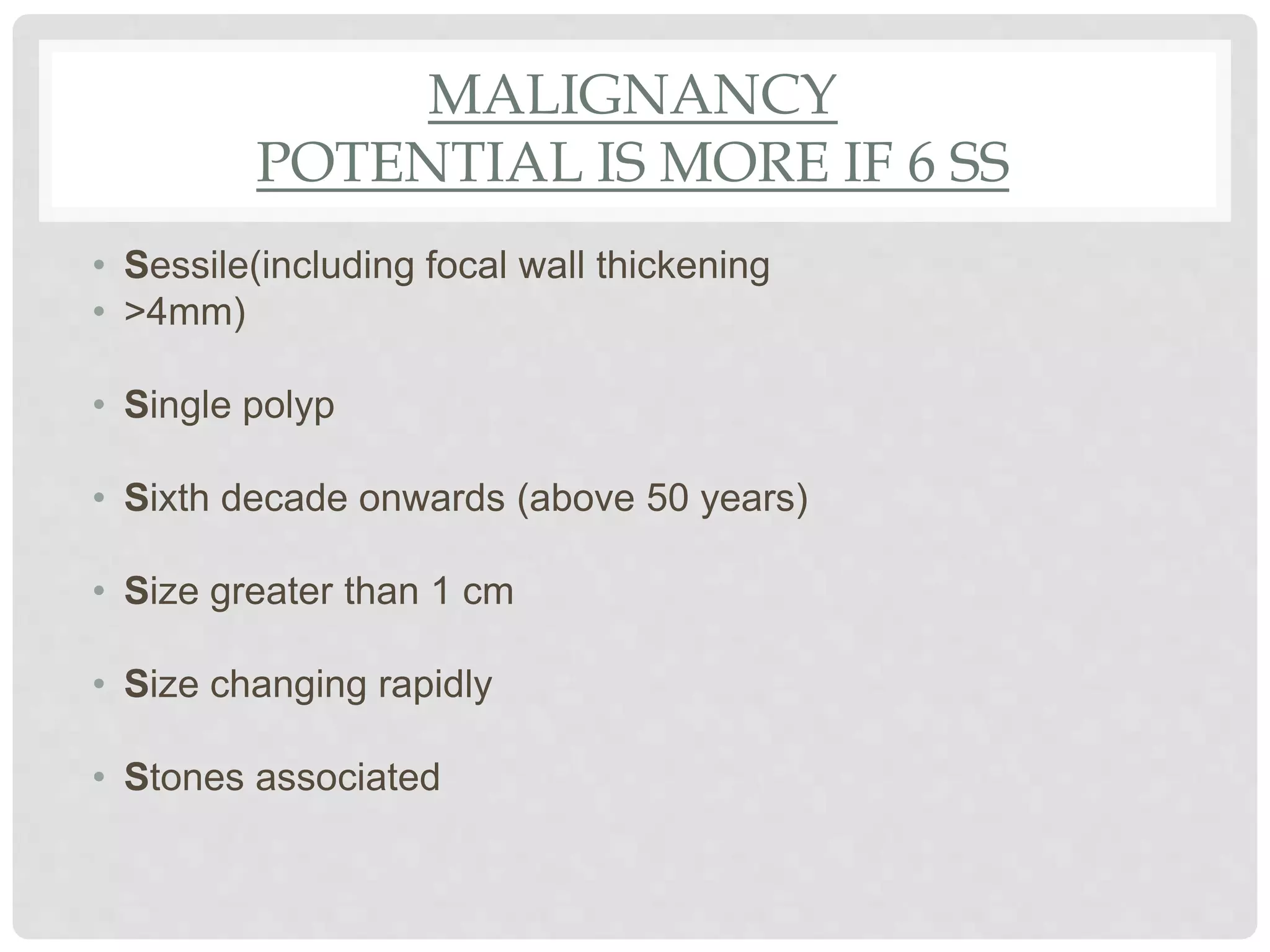
POTENTIAL IS MORE IF 6 SS
• Sessile(including focal wall thickening
• >4mm)
• Single polyp
• Sixth decade onwards (above 50 years)
• Size greater than 1 cm
• Size changing rapidly
• Stones associated
COMPLICATIONS OF GALLBLADDER
POLYP
• The most dreaded complication of gallbladder polyp is
cancer.
• They can cause swelling of the gallbladder (cholecystitis)
obstructing the cystic duct.
• They can also cause cholangitis (infection of the bile
duct) or pancreatitis (swelling of the pancreas) when
fragments of polyp pass into the bile duct.
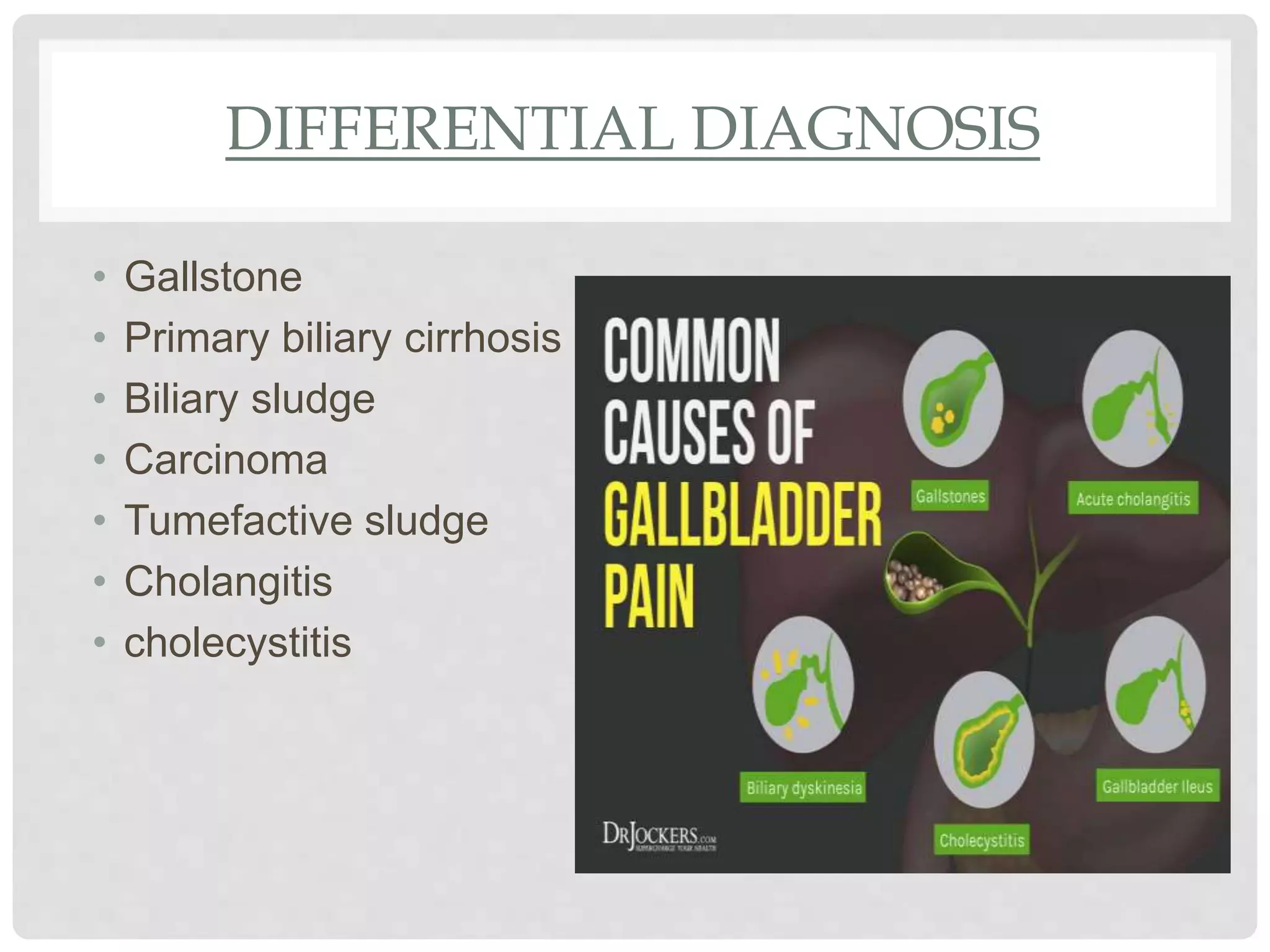
DIFFERENTIAL DIAGNOSIS
• Gallstone
• Primary biliary cirrhosis
• Biliary sludge
• Carcinoma
• Tumefactive sludge
• Cholangitis
• cholecystitis
DIAGNOSTIC EVALUATION
• Lab tests
1. CBC for any signs of infestion, inflammation or abscess
2. LFT to checl liver enzyme, albumin, bilirubin or alkaline
phosphatase.
3. CRP indicate inflamation
4. ESR same as CRP for inflammation.
CONTI….
• Scans
• Gallbladder polyps are incidently diagnoised while
scaning. We can use this scaning methods-
1. Ultrasound is the first choice for detecting polyp.
2. MRI detect scarring and inflammation
3. CT detect polyps and gallstone
4. Endoscopic retrograde cholangiopancreatography
used for the cases with difficult to diagnose the cause.
MANAGEMENT
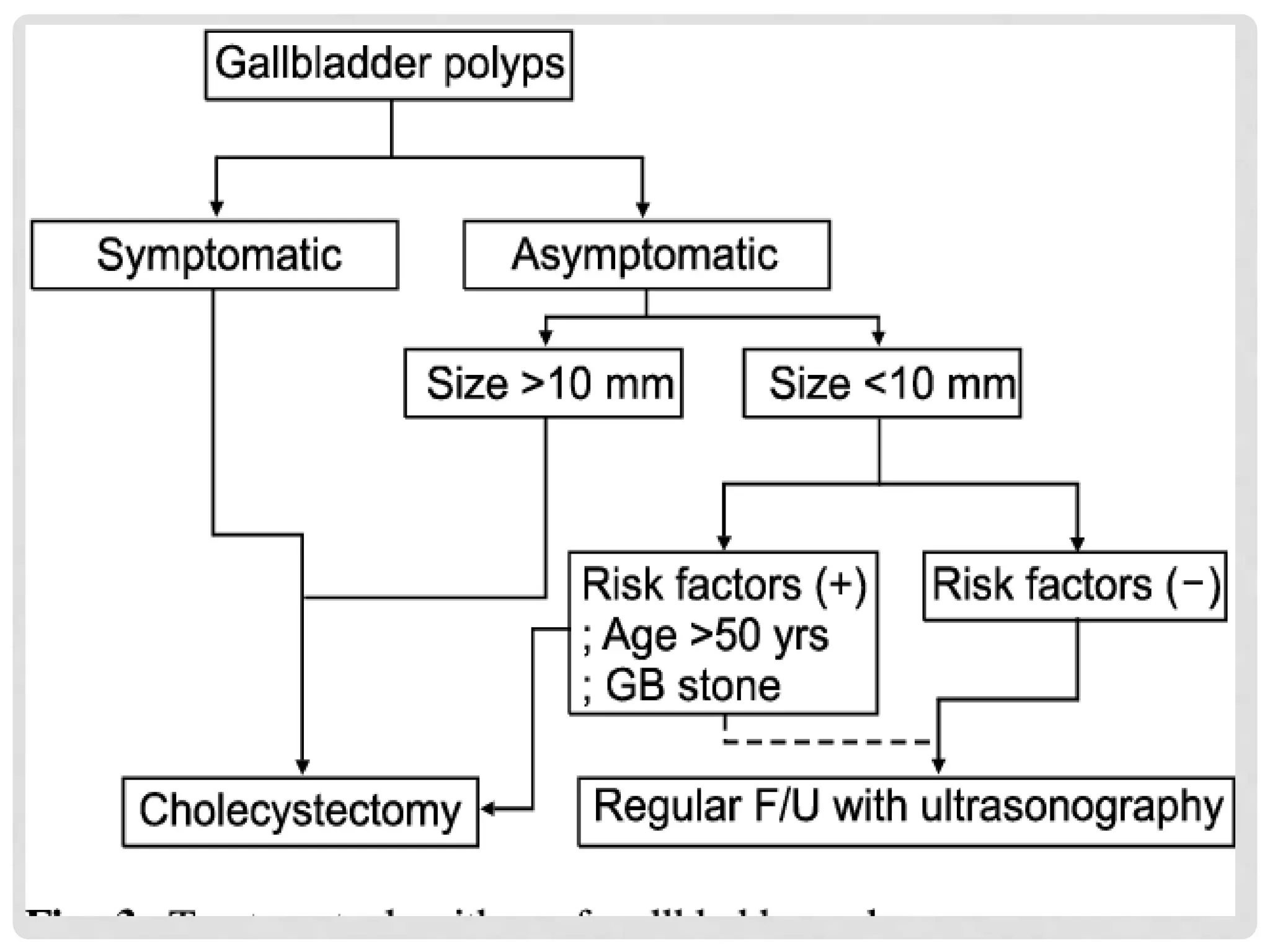
• We should decide treatment based on size of the polyp
and is polyp symptomatic or not.
• Polyps that smaller than 10mm are mostly benign and at
the moment no need of treatment but we should suggest
follow-up for any changes or indication of malignancy
• those of >18mm will have high risk of malignancy and
surgery is needed.
• For Pain, we should prescribe NSAIDS and analgesic.
CONTI…
• Prescribe antibiotic for infection and supportive for other
symptoms.
• Surgical treatment
i. Treatment of choice for gallbladder polyps are
cholecystectomy.
ii. We can do open cholecystectomy(OC) or laparoscopic
cholecystectomy(LC).
• Indication for cholecystectomy are
- Gallstone in bile duct or gallbladder
- Cholecystitis (inflammation of gallbladder)
- Large gallbladder polyp
- Pancreatitis due to gallstones
COMPLICATION OF LC
As every surgical treatment there are some small risk of
complication which includes:
• Infection
• Bleeding
• Bile leak
• Nearby structures like liver getting injured
• blood clots and pneumonia due to general anesthesia
gallbladder polyp.pptx

gallbladder polyp.pptx

  • 1.
    B Y RA H U L R A M E S H GALLBLADDER POLYP
  • 2.
    INTRODUCTION • Gallbladder issmall sac beneath liver which is reservoir to store bile made by the liver and release it into the duodenum for fat digestion. • Polyps are an abnormal growth of cells and tissues. • Gallbladder polyps are growths or tumor like protrusion from mucosal lining of the gallbladder. Gallbladder polyps is present in 5% to 9% of people in the population. • In majority of case, this polyps are gone undiagnoised because of no symptom and found accidently while scanning or surgerys like cholecystectomy. • It can be malignant, but about 90% of polyps are benign
  • 3.
    EPIDEMIOLOGY • Gallbladder polypsare seen very frequently in present world, we can see the case in 1 person on every 10 people. • 90% of which is benign, and in that most of which are cholesterol polyps. • Very few of the case are true polyps case. • Gallbladder polyps are mostly found by mistake during cholecystetomy. • Cholesterol polyps are less frequent in females and patients of 35-50 years old.
  • 4.
    CLASSIFICATION • We canclassify gallbladder based on malignancy into 2 types • Pseudopolyps/non-neoplastic 1. Inflammatory polyps 2. Cholesterol polyps 3. Adenomyomatosis • True/neoplastic 1. Adenoma 2. adenocarcinoma
  • 6.
    • We canalso classify polyp on symtomatic and polyp size.
  • 7.
    PATHOPHYSIOLOGY • Inflammatory polyps:a rare tumor-like polyp which appeared to be enlargement and fusion of villi because of inflammation • Adenomyomatosis: it is gallbladder wall hyperplastic cholecystosis which is cause of diffuse /focal gallbladder wall thickening. • Cholesterol polyps : most common gallbladder polyp. They are deposits of bile salts because of condition known as cholesterolosis. We can also call pseudopolyps as indicate of gallbladder disorders.
  • 8.
    CONTI…. • Adenomas: theyare considered true polyp but it is benign. This polyp rarely malignant and rarely seen (4%–7%). • Adenocarcinoma: gallbladder cancer, begin in glandular cells that lines inner surface of gallbladder. 15- 25% will present as polyps.
  • 9.
    HISTOPATHOLOGY • Cholesterol polyp:polyps show an increased cholesterol content and are associated with gallbladder cholesterolosis. • Inflammatory polyps: polyp exhibit inflammation of the gallbladder wall with Rotatinski- Aschoff bodies.
  • 10.
    CONTI…. • Adenocarcinoma: polypshave a glandular histology and shows cancerous changes. Polyp size is used to correlate degree of malignancy.
  • 11.
    SIGN AND SYMPTOMS •In majority of case, the patient is mostly asymptomatic. If there is any symptom, it will be 1. Right upper abdominal pain (hypochondrium) 2. Nausea 3. Bloating 4. Vomiting 5. Food intolerance (seen in patient with cholecystitis) 6. Jaundice 7. Pruritis
  • 12.
    CAUSES AND RISKS •Patients with familial histories of familial adenomatous polyposis (FAP) • Patient with chronic or acute hepatitis B • Patient with family history of gardner syndrome, a type of FAP • Patient with genetic condition like Peutz- Jeghers syndrome • Primary sclerosing cholangitis • Malignant polyps is high in age>50 years and indian ethnicity.
  • 13.
    MALIGNANCY POTENTIAL IS MOREIF 6 SS • Sessile(including focal wall thickening • >4mm) • Single polyp • Sixth decade onwards (above 50 years) • Size greater than 1 cm • Size changing rapidly • Stones associated
  • 14.
    COMPLICATIONS OF GALLBLADDER POLYP •The most dreaded complication of gallbladder polyp is cancer. • They can cause swelling of the gallbladder (cholecystitis) obstructing the cystic duct. • They can also cause cholangitis (infection of the bile duct) or pancreatitis (swelling of the pancreas) when fragments of polyp pass into the bile duct.
  • 15.
    DIFFERENTIAL DIAGNOSIS • Gallstone •Primary biliary cirrhosis • Biliary sludge • Carcinoma • Tumefactive sludge • Cholangitis • cholecystitis
  • 16.
    DIAGNOSTIC EVALUATION • Labtests 1. CBC for any signs of infestion, inflammation or abscess 2. LFT to checl liver enzyme, albumin, bilirubin or alkaline phosphatase. 3. CRP indicate inflamation 4. ESR same as CRP for inflammation.
  • 17.
    CONTI…. • Scans • Gallbladderpolyps are incidently diagnoised while scaning. We can use this scaning methods- 1. Ultrasound is the first choice for detecting polyp. 2. MRI detect scarring and inflammation 3. CT detect polyps and gallstone 4. Endoscopic retrograde cholangiopancreatography used for the cases with difficult to diagnose the cause.
  • 18.
    MANAGEMENT • We shoulddecide treatment based on size of the polyp and is polyp symptomatic or not. • Polyps that smaller than 10mm are mostly benign and at the moment no need of treatment but we should suggest follow-up for any changes or indication of malignancy • those of >18mm will have high risk of malignancy and surgery is needed. • For Pain, we should prescribe NSAIDS and analgesic.
  • 19.
    CONTI… • Prescribe antibioticfor infection and supportive for other symptoms. • Surgical treatment i. Treatment of choice for gallbladder polyps are cholecystectomy. ii. We can do open cholecystectomy(OC) or laparoscopic cholecystectomy(LC). • Indication for cholecystectomy are - Gallstone in bile duct or gallbladder - Cholecystitis (inflammation of gallbladder) - Large gallbladder polyp - Pancreatitis due to gallstones
  • 21.
    COMPLICATION OF LC Asevery surgical treatment there are some small risk of complication which includes: • Infection • Bleeding • Bile leak • Nearby structures like liver getting injured • blood clots and pneumonia due to general anesthesia