GALL BLADDER
&
BILE DUCTS
Dr. Chris Anthony
Senior Lecturer
AIMST University
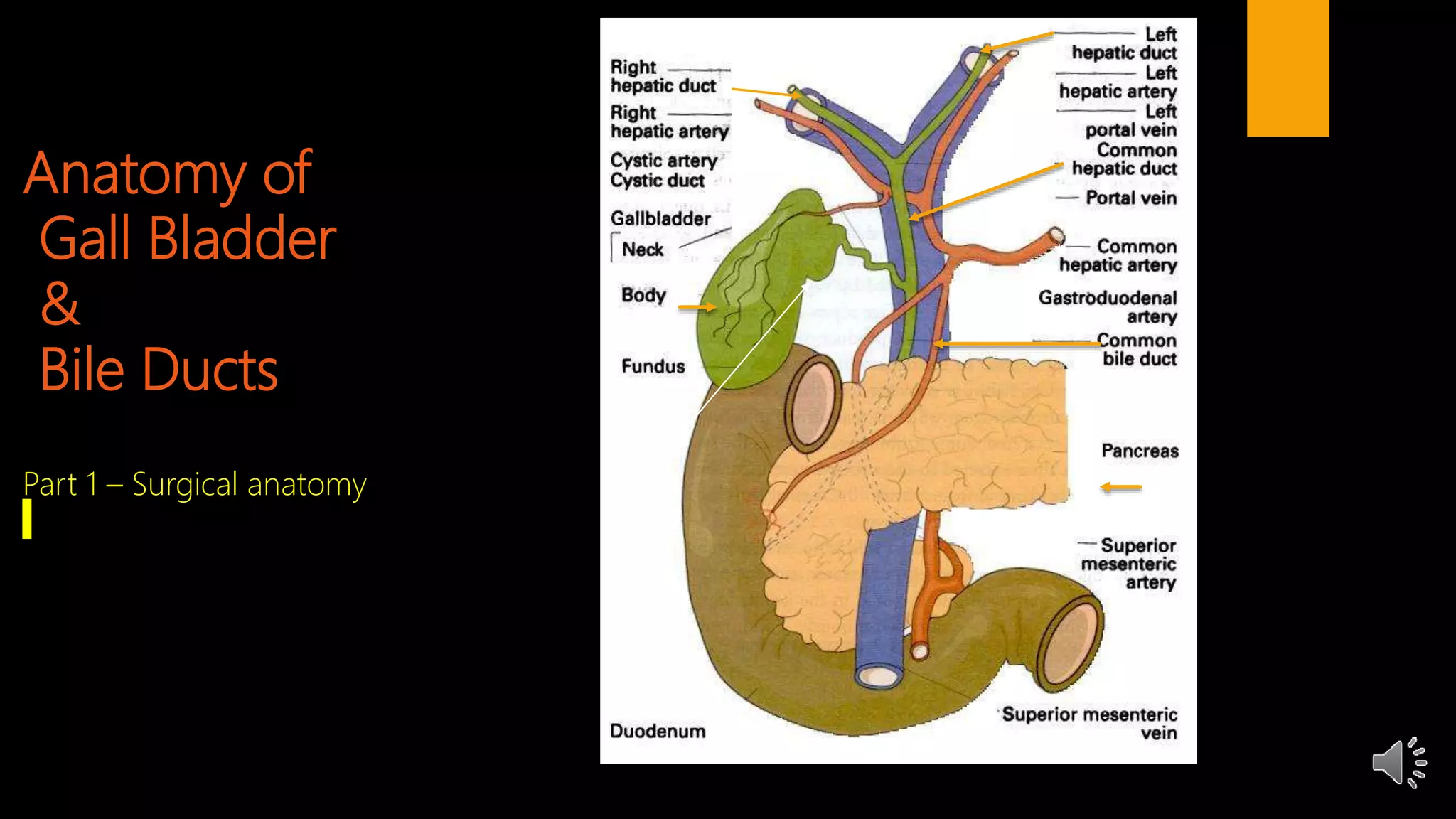
Anatomy of
Gall Bladder
&
Bile Ducts
Part 1 – Surgical anatomy
Surface Anatomy of Gall Bladder
 Right hypochondrium
 Transpyloric plane :
horizontal plane
at level of lower
border of L1
vertebral body
 Mid-clavicular line
 Angle between right
costal margin &
lateral border of
rectus abdominis
muscle
 Normally not palpable
Calot’s Triangle
 Boundaries :
Lateral : cystic duct, gall
bladder
Medial : common hepatic
duct
Above : inferior surface of
right lobe of liver
 Contents :
Right hepatic artery
Cystic artery
Cystic lymph node of
Lund
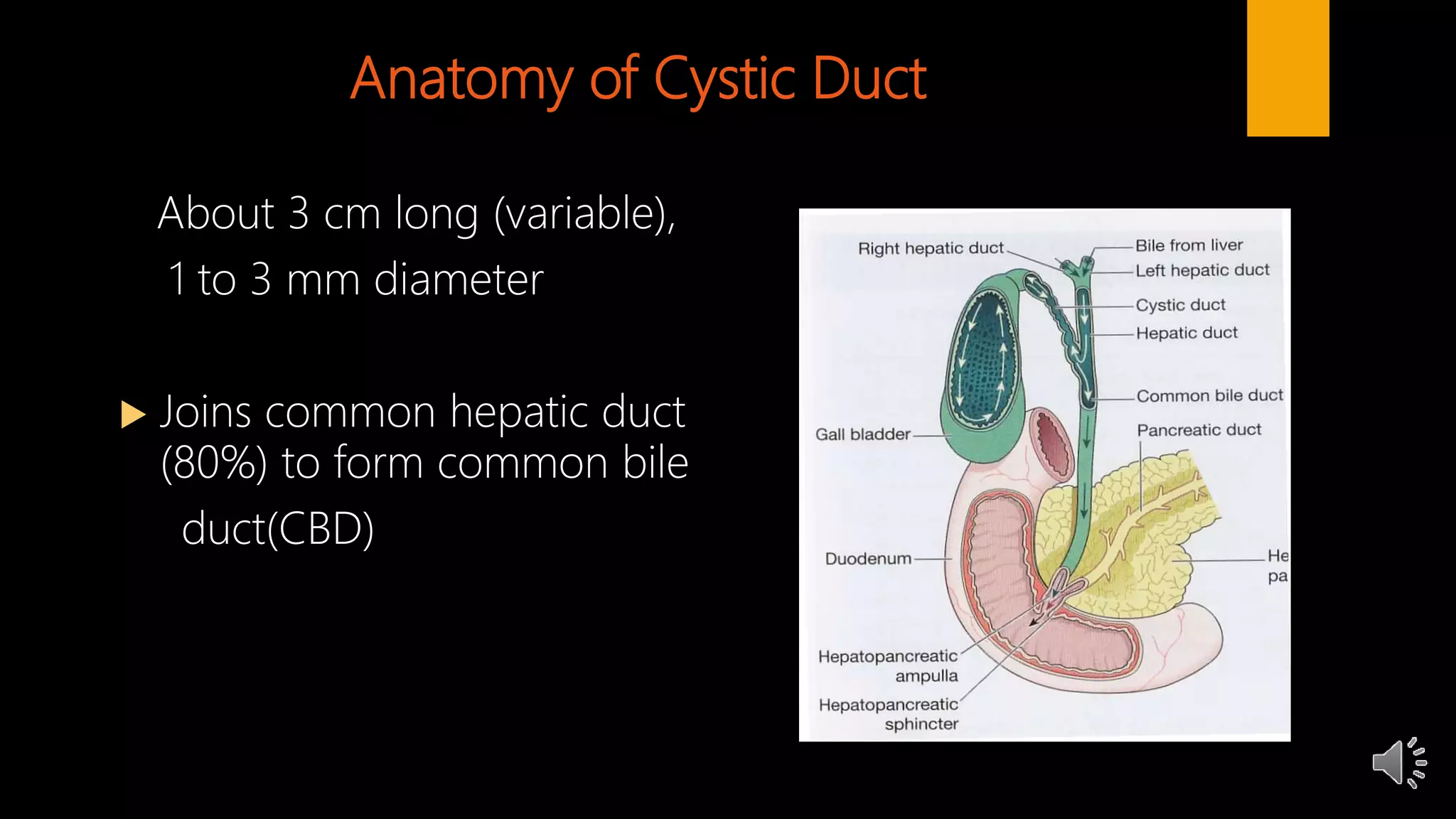
Anatomy of Cystic Duct
About 3 cm long (variable),
1 to 3 mm diameter
 Joins common hepatic duct
(80%) to form common bile
duct(CBD)
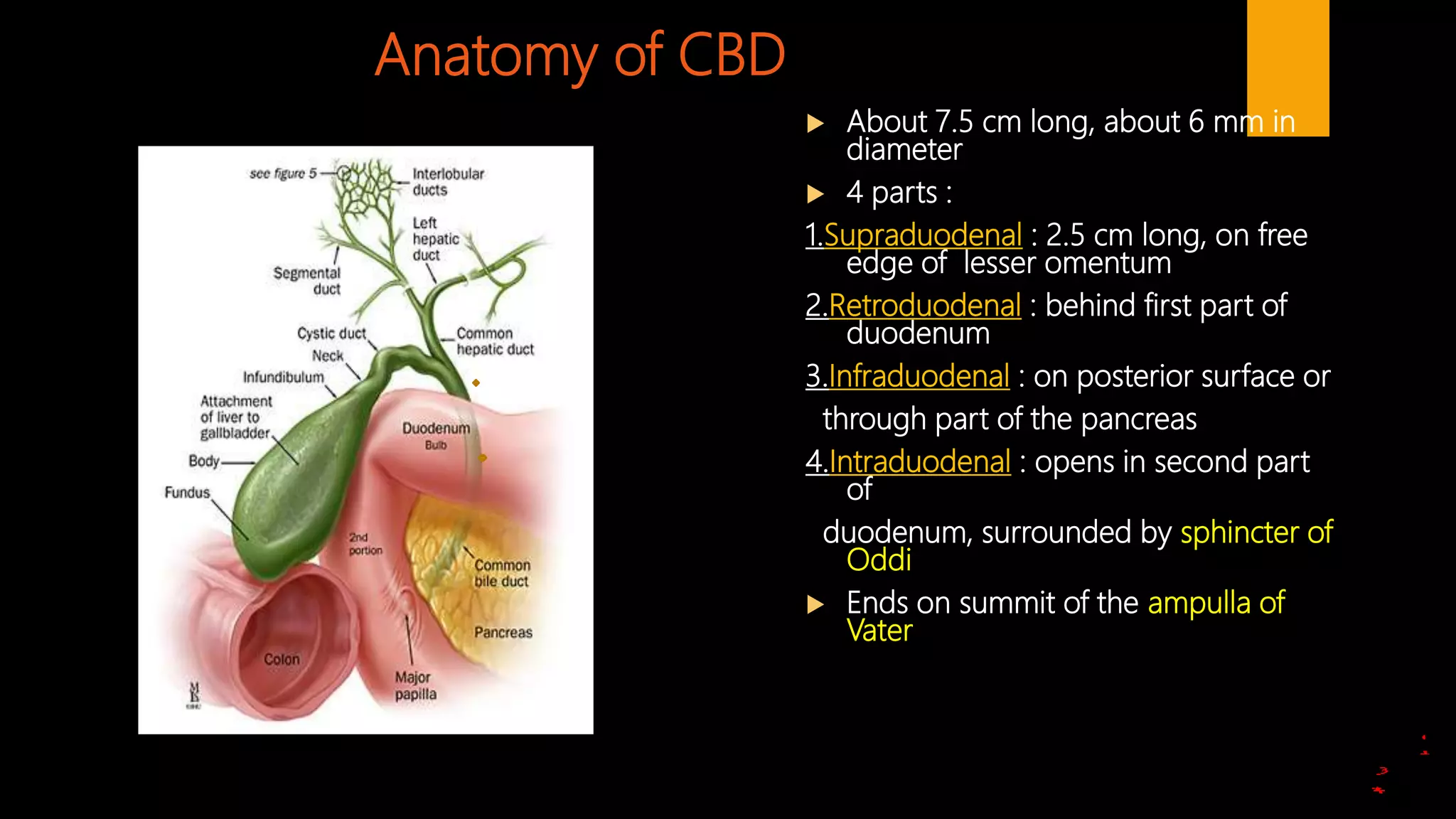
Anatomy of CBD
 About 7.5 cm long, about 6 mm in
diameter
 4 parts :
1.Supraduodenal : 2.5 cm long, on free
edge of lesser omentum
2.Retroduodenal : behind first part of
duodenum
3.Infraduodenal : on posterior surface or
through part of the pancreas
4.Intraduodenal : opens in second part
of
duodenum, surrounded by sphincter of
Oddi
 Ends on summit of the ampulla of
Vater
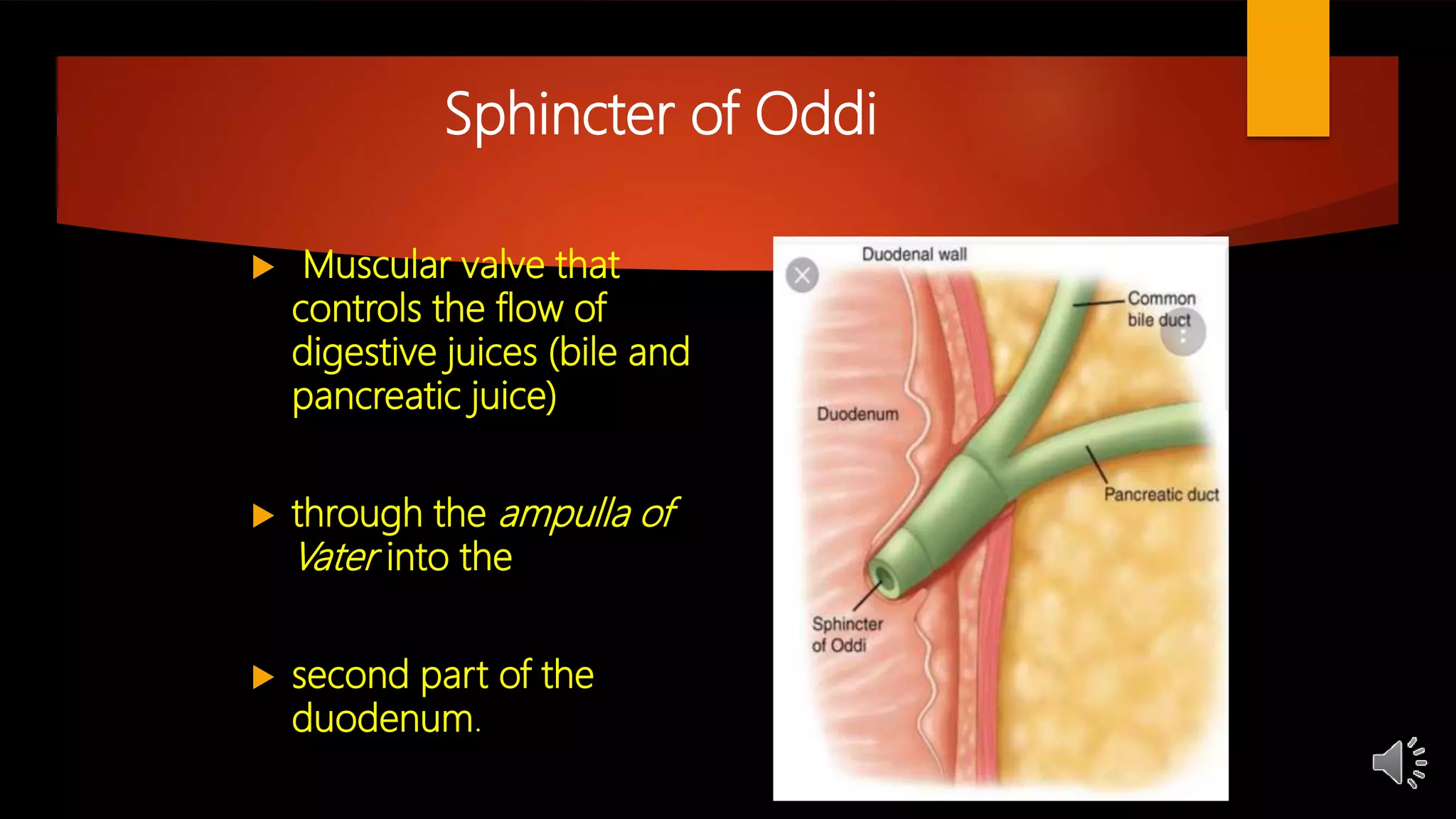
Sphincter of Oddi
 Muscular valve that
controls the flow of
digestive juices (bile and
pancreatic juice)
 through the ampulla of
Vater into the
 second part of the
duodenum.
Blood Supply of GB
 Cystic artery, a branch of right hepatic artery
 Rarely, cystic artery arise from common hepatic
artery
 Gall bladder may also get accessory artery from
gastro-duodenal artery
Lymphatic Drainage &
Nerve Innervation
 Lymph drains into cystic lymph node of Lund
in Calot’s triangle, from there it drains into
liver hilar lymph nodes & coeliac lymph nodes
 Parasympathetic from Vagus nerve (CN X)
- maintain tone & contractility
 Afferent sympathetic fibres mediate pain of
biliary colic
Physiology
At Liver :
 Bile production : 97% water, 1 to 2% bile salts,
1% bile pigments, cholesterol, calcium & fatty acids
 Excretion : about 40 mls/ hour (about 1 L/ 24 hours)
At Gall Bladder : 3 main functions
 Reservoir for bile : during fasting
 Concentration of bile : 5 to 10 times, by active
absorption of water
 Mucin secretion : about 20 ml/hr
 Vagus & Cholecystokinin (CCK) cause GB contraction,
sphincter of Oddi relaxation - bile excreted
Bilirubin Metabolism
Enterohepatic
Circulation of bile
Imaging of Gall Bladder
&
Bile Ducts
Imaging of Gall Bladder & Biliary Tree
 Plain Xray Abdomen
 Ultrasonography (USG)
 CT scan
 Endoscopic Retrograde Cholangio-Pancreaticogram
(ERCP)
 Magnetic Resonance Cholangio-Pancreaticography
(MRCP)
Others
Oral Cholecystogram; Intravenous Cholangiogram
 Percutaneous Transhepatic Cholangiogram (PTC)
 Peroperative Cholangiogram Xrays
 Radio-isotope scan
Plain Xray Abdomen :
 Only 10% of gall stones are radio-opaque
 Some gall bladders may be calcified (porcelain)
 Gas in bile ducts (aerobilia) – ERCP/infection
Ultrasonography (USG)
 Most important initial imaging
 Safe, painless, accurate, convenient,cost-effective & readily available
 Gallstones, gall bladder,thickness of gall bladder wall & surrounding
inflammation
 Biliary stones,size of ducts & sometimes
stones in common bile duct & growth in pancreas
CT & MRI Scans
Computed Tomography (CT) :
 Useful for detecting liver & pancreas lesion
 Staging of liver, bile duct, pancreatic cancers;
check for enlarged lymph nodes
 Only 75% gallstones seen on CT, not for screening
Magnetic Resonance Cholangio-Pancreaticogram
(MRCP) :
 Imaging of gall-bladder & bile ducts
 Can show bile duct obstruction, stricture &
other intraductal abnormalities
Endoscopic Retrograde
Cholangio-Pancreaticography
(ERCP)
Gallstone Disease
Diseases of GB & Bile ducts
Gallstones (Cholelithiasis)
 About 10 to 15% of adults have gallstones but
80% are asymptomatic; females 4 : 1 male
 Every year about 1 to 2% of asymptomatic cases
will develop symptoms requiring surgery
Classical teaching :
Fat
Fertile
Flatulent
Female of
Forty
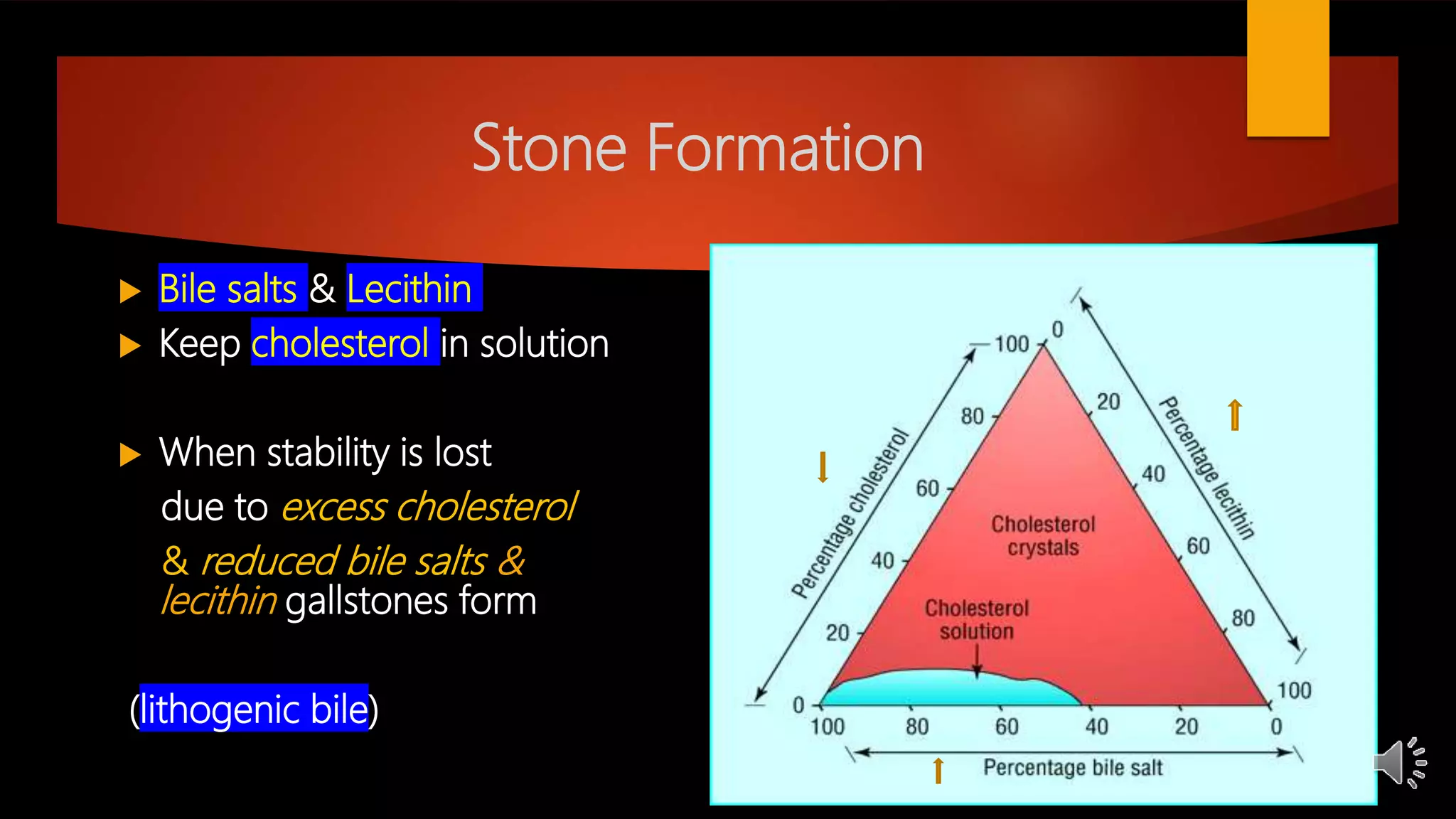
Stone Formation
 Bile salts & Lecithin
 Keep cholesterol in solution
 When stability is lost
due to excess cholesterol
& reduced bile salts &
lecithin gallstones form
(lithogenic bile)
Gallstones
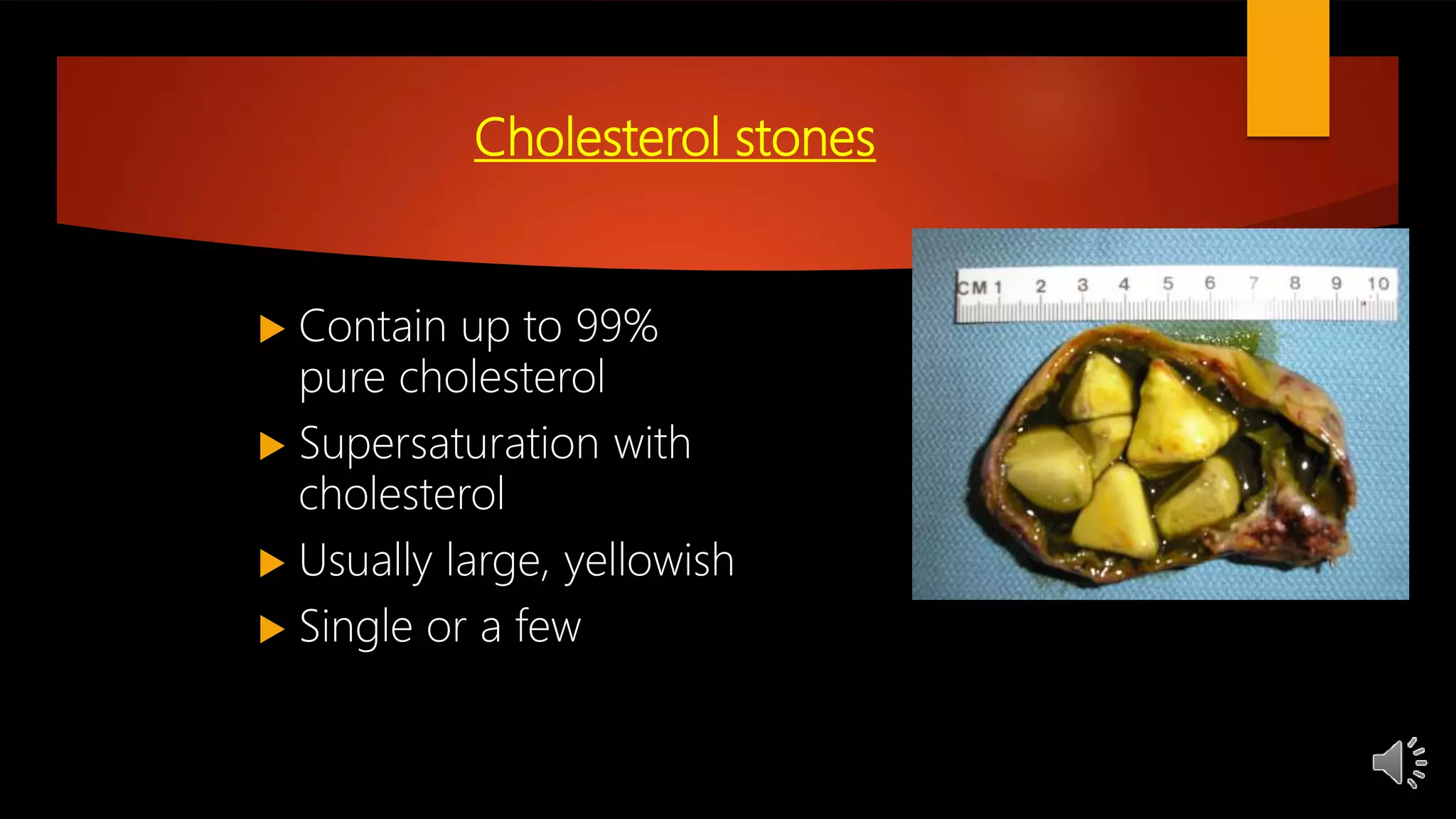
Cholesterol stones
 Contain up to 99%
pure cholesterol
 Supersaturation with
cholesterol
 Usually large, yellowish
 Single or a few
Pigment stones
 Stones having less than 30% cholesterol
 Two types : black & brown
Black pigment stones (20 to 30% of stones) :
 Associated with haemolysis, usually hereditary
spherocytosis or sickle cell disease & liver cirrhosis
Brown pigment stones
 Rare in gall bladder; form in bile ducts &
related to bile stasis & infected bile
 Also associated with foreign bodies within bile
ducts, eg. endoprosthesis (stents)
Complications of gallstones
 Biliary colic
 Acute cholecystitis
 Chronic cholecystitis
 Acute pancreatitis
 Mucocoele of GB
 Empyema of GB
 Perforation of GB
 Obstructive jaundice
 Acute cholangitis, liver abscess
 Mirizzi’s syndrome
 Intestinal obstruction (gallstone ileus)
 Carcinoma of gallbladder
Common Diseases of Gall bladder
&
Bile ducts
(Part 2)
Diseases of biliary system
Gallbladder
 Cholelithiasis
 Biliary colic
 Acute Cholecystitis
 Empyema
 Gangrene & perforation
 Chronic cholecystitis
 Gall bladder polyps
 Carcinoma GB
Bilary ducts
 Choledocholithiasis
 Cholangitis
 Striture CBD
 Biliary atresia
 Choledochal cyst
 Sclerosing cholangitis
 Ca head of pancreas
Cholangiocarcinoma
 Periampullary carcinoma
Symptoms
GB & Biliary disease
Specific
 Pain – RHC,fatty food,radiation to
back,breathless
 Onset - acute
 Jaundice,tea-coloured urine
 Pruritus/clay colored stools
Non-specific
 Nausea & vomiting
 Fever
 LOA
 Diarrhoea
 Lethargy/unwell
Signs of GB & Biliary disease
 Jaundice
 Fever
 Tenderness, guarding
 Murphy’s sign
 Palpable GB
 Hepatomegaly
 Charcot’s triad
 Courvoisier’s Law
1.Acute Cholecystitis & biliary colic
 Mostly associated with cholelithiasis
 95% gall stone found impacted in
Hartmann’s pouch or cystic duct
 Types of gall stones :
mixed stones – commonest,
multifaceted
pure cholesterol stones – round, single, large
pigment stones – black/ brown, irregular,
hard
 Bacteria : Usually Gram-negative aerobes,
eg. Escherichia coli, Klebsiella, Streptococcus
faecalis
 Rarely : Bacteroides & Clostridia (gas in
biliary tree)
Biliary colic
Chemical cholecystitis
Septic cholecystitis
Empyema GB
Gangrene
Perforation
• Obst. Cystic duct
• Distension GB
• Wall ischemia/oedema
• Inflamation
• Bacterial infection
Pathophysiology
 Stone obstruct bile outflow
 Distension & ischaemia of gall
bladder
 Mucosa damaged by lysolecithin
or trauma by stone
(chemical cholecystitis)
 Secondary bacterial infection
(septic Cholecystitis)
Sequelae :
 Stone slip back into gall bladder with
relief of obstruction & inflammation
subsides (Biliary colic)
 Empyema of gall bladder
 Gangrene & perforation of gall bladder
with localised abscess/ diffuse peritonitis
(mortality rate of 50%)
Clinical Features
 Sudden onset of right hypochondrial pain
 Fever, nausea, vomiting
 Tenderness & guarding over right hypochondrium
 Boas’s sign : area of hyperaesthesia between right
9th & 11th ribs posteriorly
 Murphy’s sign : sudden holding of breath on deep
palpation of right hypochondrium
Clinical Features
Investigations
 Plain Xray Chest (erect) & abdomen
 Ultrasonography of abdomen
 CT scan
 ECG.
 Urinalysis.
 Blood counts, liver & renal function tests,
amylase, cardiac enzymes
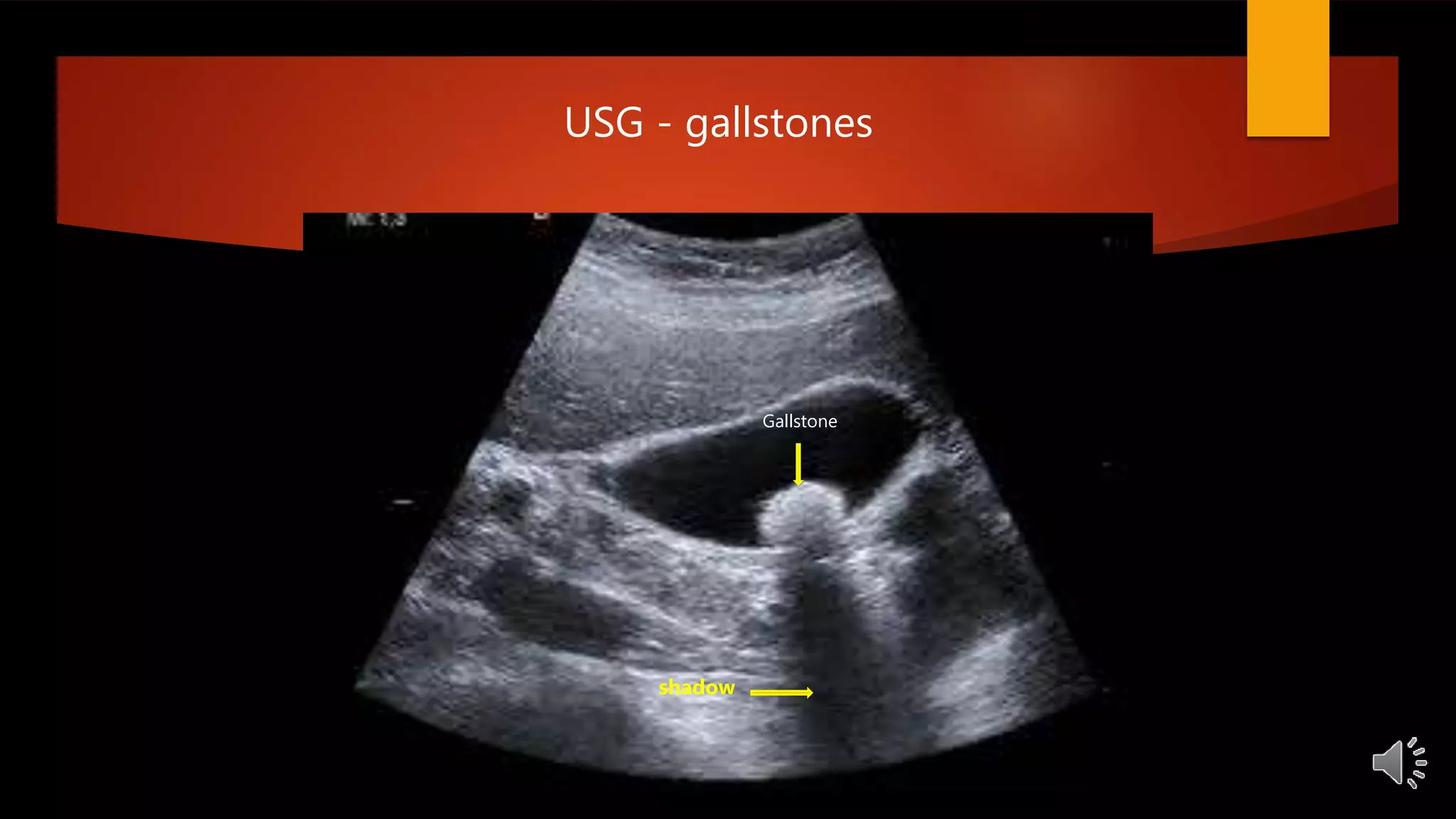
USG - gallstones
Gallstone
shadow
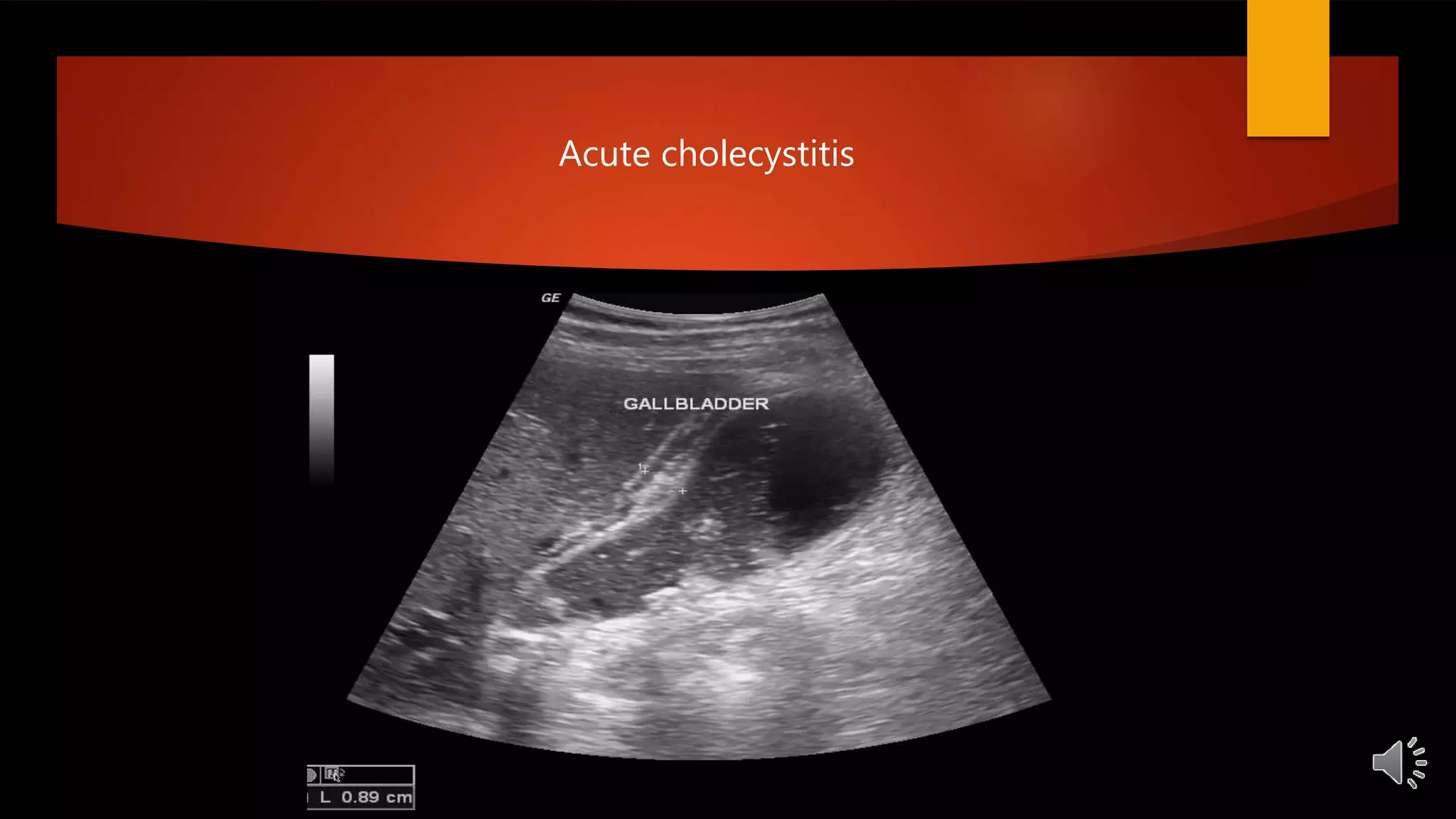
Acute Cholecystitis
Acute cholecystitis
Differential diagnosis of acute
cholecystitis
 Common
 Appendicitis
 Perforated peptic
ulcer
 Acute pancreatitis
 Rare
 Acute pyelonephritis
 Myocardial
infarction
 Pneumonia – right
lower lobe
Treatment
 Initially : conservative followed by
cholecystectomy
 Nil by mouth,Naso-gastric
aspiration,
 Analgesics, antibiotics,
intravenous fluids to replace &
correct electrolytes & fluids losses
 Cholecystectomy
 preferably laparoscopic done 2 to
3 days after initial treatment
(within 5 to 7 days of onset of
infection; otherwise delay 6
weeks)
2.Chronic Cholecystitis
 Shrunken, scarred, fibrotic with
thickened wall
 Adhesions to surrounding
structures
 Due to repeated inflammation &
mechanical irritations
Clinical features :
 Chronic recurrent right
hypochondrial pain;
 Nausea & vomiting, abdominal
fullness especially
precipitated by fatty foods
 Flatulent dyspepsia, belching &
heartburn
 Murphy’s sign may be positive
Management
Conservative
 Chemical dissolution of stones
using Chenodeoxycholic acid or
Ursodeoxycholic acid
can be tried in elderly patients
 Lithotripsy usually not done due
to poor success rate or
recurrence
Surgery - cholecystectomy
 Laparoscopic cholecystectomy
treatment of choice
 Open cholecystectomy through
Kocher’s (right hypochondrial)
incision
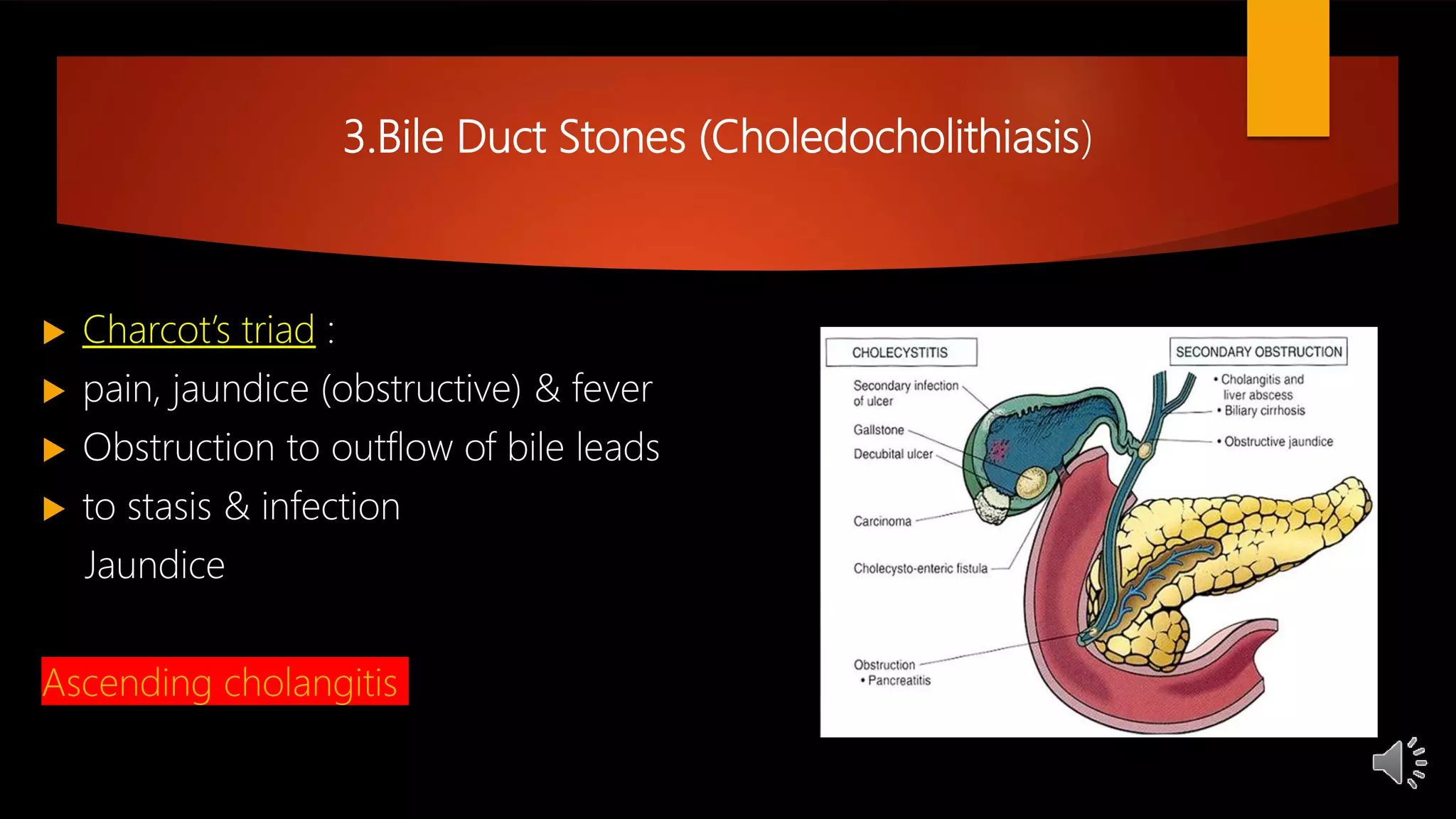
3.Bile Duct Stones (Choledocholithiasis)
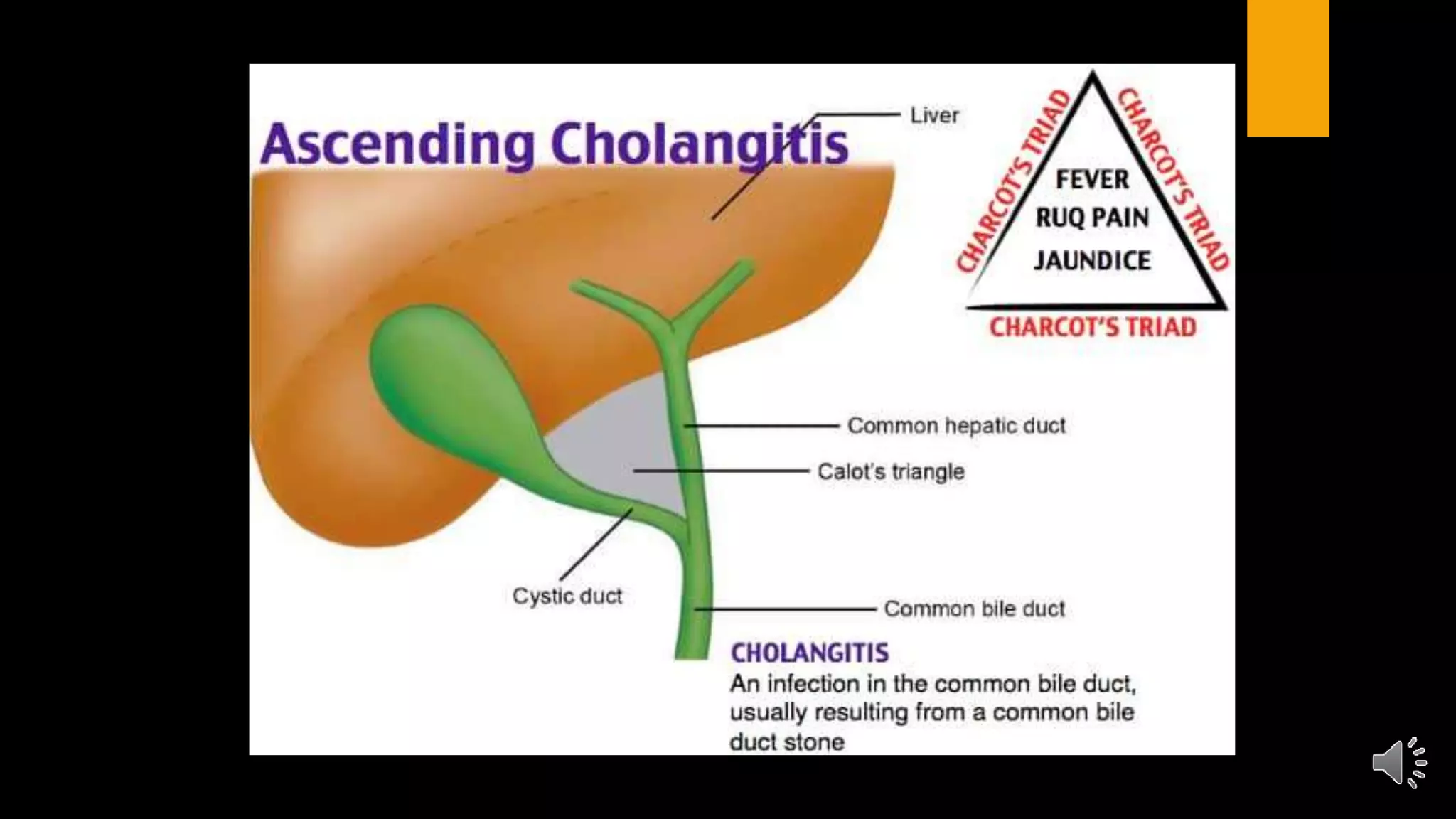
 Charcot’s triad :
 pain, jaundice (obstructive) & fever
 Obstruction to outflow of bile leads
 to stasis & infection
Jaundice
Ascending cholangitis
4.Bile Duct stricture
 Intrahepatic
 Extra-hepatic
 Benign & malignant
 Iatrogenic – post
cholecystectomy
5.GB Polyps
 A gallbladder polyp is a small,
abnormal growth of tissue with a
stalk protruding from the lining of
the inside of the gallbladder. They
are relatively common.
95% benign, rarely cancerous
Gallbladder polyp size is often an
indication of the presence of cancer:
 less than <10mm in diameter —
are typically benign don’t need
to be treated.
 larger than >10mm inch in
diameter have a greater
likelihood of being or becoming
malignant.
GB polyp
Gall bladder polyp treatment
 Asymtomatic
 RHC pain & tenderness
 Nausea
 Vomiting
 No treatment
 Regular follow up
 Cholecystectomy
 Symptoms  Treatment
6.Gallbladder cancer ●● Very rare
 Elderly women above 60 years
old
 ●● Similar presentation to
gallstones
 ●● Diagnosis by ultrasound, CT,
 ●● Most patients present with
advanced disease
 ●● Surgical resection in less than
10% palliative treatment
 ●● Prognosis is poor – median
survival approximately 6 months
 Cholecystectomy for any gall-
bladder polyp more
than 1 cm diam.



7.Cholangiocarcinoma
 Uncommon malignancy
 Elderly, more than 65 years old
 Adenocarcinoma from extrahepatic
 bile ducts
 Higher risk with primary sclerosing
 cholangitis, hepatolithiasis, hepatitis C,
ascending cholangitis,
choledochal cyst, Caroli’s disease
Locations :
 Intrahepatic : 10 to 20%
 Hilar cholangiocarcinoma or Klatskin tumours : 60%
 Distal bile duct : 20 to 30%
Klatskin 60%
10-25%
20-30%
Cholangiocarcinoma
Clinical features :
 Jaundice, abdominal pain, early satiety, cachexia
 Slow-growing, local invasion & lymphadenopathy
Treatment
 Mostly inoperable, 10 to 15% can have radical
resection & reconstruction of bile ducts
 Whipple’s operation for distal bile duct tumours
 Liver transplant
 Limited role of chemotherapy/ radiotherapy
“ Courvoisier’s Law”
“ In the presence of obstructive jaundice, a palpable
gall bladder is usually NOT due to gall stone
obstruction of common bile duct ”
 Most probably it is due to
 Ca head of pancreas
 Periampullary tumour
 Cholangiocarcinoma
Why?
 Gall bladder is usuallyfibrotic & contracted
in chronic cholecystitis with stones,
BUT there can be exceptions
Cholecystectomy
Cholecystectomy
Indications
 Acute cholecystitis
 Chronic Cholecystitis
 Empyema GB
 Perforation of GB
 Carcinoma GB
 Porcelain GB
 Asymptomatic gallstones/Diabetes/polyps
Cholecystectomy
Mobilizing the
gall bladder
Dissection of
cystic duct
Clips
applied
to cystic duct
Cystic
duct
cut
Cystic artery
being dissected
Galll bladder
dissected
from liver bed
Complications of Cholecystectomy
 Bleeding
 Infection, cholangitis, abscess,
septicaemia
 Bile duct injury, bile leakage, duct
stricture
 Retained stone
 Obstructive jaundice
 Acute pancreatitis
 After laparoscopic
cholecystectomy :
access complications during
creation of
pneumo-peritoneum:
puncture vessel, bowel, etc.
or bile duct injury
TOUCH creates a healing bond
in health care
The TOUCH provides the utmost needed by the sick
- Reassurance -
THANK YOU

Gall bladder & bile ducts with narration

  • 1.
    GALL BLADDER & BILE DUCTS Dr.Chris Anthony Senior Lecturer AIMST University
  • 2.
    Anatomy of Gall Bladder & BileDucts Part 1 – Surgical anatomy
  • 3.
    Surface Anatomy ofGall Bladder  Right hypochondrium  Transpyloric plane : horizontal plane at level of lower border of L1 vertebral body  Mid-clavicular line  Angle between right costal margin & lateral border of rectus abdominis muscle  Normally not palpable
  • 4.
    Calot’s Triangle  Boundaries: Lateral : cystic duct, gall bladder Medial : common hepatic duct Above : inferior surface of right lobe of liver  Contents : Right hepatic artery Cystic artery Cystic lymph node of Lund
  • 5.
    Anatomy of CysticDuct About 3 cm long (variable), 1 to 3 mm diameter  Joins common hepatic duct (80%) to form common bile duct(CBD)
  • 6.
    Anatomy of CBD About 7.5 cm long, about 6 mm in diameter  4 parts : 1.Supraduodenal : 2.5 cm long, on free edge of lesser omentum 2.Retroduodenal : behind first part of duodenum 3.Infraduodenal : on posterior surface or through part of the pancreas 4.Intraduodenal : opens in second part of duodenum, surrounded by sphincter of Oddi  Ends on summit of the ampulla of Vater
  • 7.
    Sphincter of Oddi Muscular valve that controls the flow of digestive juices (bile and pancreatic juice)  through the ampulla of Vater into the  second part of the duodenum.
  • 8.
    Blood Supply ofGB  Cystic artery, a branch of right hepatic artery  Rarely, cystic artery arise from common hepatic artery  Gall bladder may also get accessory artery from gastro-duodenal artery
  • 10.
    Lymphatic Drainage & NerveInnervation  Lymph drains into cystic lymph node of Lund in Calot’s triangle, from there it drains into liver hilar lymph nodes & coeliac lymph nodes  Parasympathetic from Vagus nerve (CN X) - maintain tone & contractility  Afferent sympathetic fibres mediate pain of biliary colic
  • 11.
  • 12.
    At Liver : Bile production : 97% water, 1 to 2% bile salts, 1% bile pigments, cholesterol, calcium & fatty acids  Excretion : about 40 mls/ hour (about 1 L/ 24 hours) At Gall Bladder : 3 main functions  Reservoir for bile : during fasting  Concentration of bile : 5 to 10 times, by active absorption of water  Mucin secretion : about 20 ml/hr  Vagus & Cholecystokinin (CCK) cause GB contraction, sphincter of Oddi relaxation - bile excreted
  • 13.
  • 14.
    Imaging of GallBladder & Bile Ducts
  • 15.
    Imaging of GallBladder & Biliary Tree  Plain Xray Abdomen  Ultrasonography (USG)  CT scan  Endoscopic Retrograde Cholangio-Pancreaticogram (ERCP)  Magnetic Resonance Cholangio-Pancreaticography (MRCP) Others Oral Cholecystogram; Intravenous Cholangiogram  Percutaneous Transhepatic Cholangiogram (PTC)  Peroperative Cholangiogram Xrays  Radio-isotope scan
  • 16.
    Plain Xray Abdomen:  Only 10% of gall stones are radio-opaque  Some gall bladders may be calcified (porcelain)  Gas in bile ducts (aerobilia) – ERCP/infection
  • 17.
    Ultrasonography (USG)  Mostimportant initial imaging  Safe, painless, accurate, convenient,cost-effective & readily available  Gallstones, gall bladder,thickness of gall bladder wall & surrounding inflammation  Biliary stones,size of ducts & sometimes stones in common bile duct & growth in pancreas
  • 18.
    CT & MRIScans Computed Tomography (CT) :  Useful for detecting liver & pancreas lesion  Staging of liver, bile duct, pancreatic cancers; check for enlarged lymph nodes  Only 75% gallstones seen on CT, not for screening Magnetic Resonance Cholangio-Pancreaticogram (MRCP) :  Imaging of gall-bladder & bile ducts  Can show bile duct obstruction, stricture & other intraductal abnormalities
  • 19.
  • 20.
  • 21.
    Gallstones (Cholelithiasis)  About10 to 15% of adults have gallstones but 80% are asymptomatic; females 4 : 1 male  Every year about 1 to 2% of asymptomatic cases will develop symptoms requiring surgery Classical teaching : Fat Fertile Flatulent Female of Forty
  • 22.
    Stone Formation  Bilesalts & Lecithin  Keep cholesterol in solution  When stability is lost due to excess cholesterol & reduced bile salts & lecithin gallstones form (lithogenic bile)
  • 23.
  • 24.
    Cholesterol stones  Containup to 99% pure cholesterol  Supersaturation with cholesterol  Usually large, yellowish  Single or a few
  • 25.
    Pigment stones  Stoneshaving less than 30% cholesterol  Two types : black & brown Black pigment stones (20 to 30% of stones) :  Associated with haemolysis, usually hereditary spherocytosis or sickle cell disease & liver cirrhosis
  • 26.
    Brown pigment stones Rare in gall bladder; form in bile ducts & related to bile stasis & infected bile  Also associated with foreign bodies within bile ducts, eg. endoprosthesis (stents)
  • 28.
    Complications of gallstones Biliary colic  Acute cholecystitis  Chronic cholecystitis  Acute pancreatitis  Mucocoele of GB  Empyema of GB  Perforation of GB  Obstructive jaundice  Acute cholangitis, liver abscess  Mirizzi’s syndrome  Intestinal obstruction (gallstone ileus)  Carcinoma of gallbladder
  • 29.
    Common Diseases ofGall bladder & Bile ducts (Part 2)
  • 30.
    Diseases of biliarysystem Gallbladder  Cholelithiasis  Biliary colic  Acute Cholecystitis  Empyema  Gangrene & perforation  Chronic cholecystitis  Gall bladder polyps  Carcinoma GB Bilary ducts  Choledocholithiasis  Cholangitis  Striture CBD  Biliary atresia  Choledochal cyst  Sclerosing cholangitis  Ca head of pancreas Cholangiocarcinoma  Periampullary carcinoma
  • 31.
    Symptoms GB & Biliarydisease Specific  Pain – RHC,fatty food,radiation to back,breathless  Onset - acute  Jaundice,tea-coloured urine  Pruritus/clay colored stools Non-specific  Nausea & vomiting  Fever  LOA  Diarrhoea  Lethargy/unwell
  • 32.
    Signs of GB& Biliary disease  Jaundice  Fever  Tenderness, guarding  Murphy’s sign  Palpable GB  Hepatomegaly  Charcot’s triad  Courvoisier’s Law
  • 33.
    1.Acute Cholecystitis &biliary colic  Mostly associated with cholelithiasis  95% gall stone found impacted in Hartmann’s pouch or cystic duct  Types of gall stones : mixed stones – commonest, multifaceted pure cholesterol stones – round, single, large pigment stones – black/ brown, irregular, hard  Bacteria : Usually Gram-negative aerobes, eg. Escherichia coli, Klebsiella, Streptococcus faecalis  Rarely : Bacteroides & Clostridia (gas in biliary tree)
  • 34.
    Biliary colic Chemical cholecystitis Septiccholecystitis Empyema GB Gangrene Perforation • Obst. Cystic duct • Distension GB • Wall ischemia/oedema • Inflamation • Bacterial infection
  • 35.
    Pathophysiology  Stone obstructbile outflow  Distension & ischaemia of gall bladder  Mucosa damaged by lysolecithin or trauma by stone (chemical cholecystitis)  Secondary bacterial infection (septic Cholecystitis) Sequelae :  Stone slip back into gall bladder with relief of obstruction & inflammation subsides (Biliary colic)  Empyema of gall bladder  Gangrene & perforation of gall bladder with localised abscess/ diffuse peritonitis (mortality rate of 50%)
  • 36.
    Clinical Features  Suddenonset of right hypochondrial pain  Fever, nausea, vomiting  Tenderness & guarding over right hypochondrium  Boas’s sign : area of hyperaesthesia between right 9th & 11th ribs posteriorly  Murphy’s sign : sudden holding of breath on deep palpation of right hypochondrium
  • 38.
  • 39.
    Investigations  Plain XrayChest (erect) & abdomen  Ultrasonography of abdomen  CT scan  ECG.  Urinalysis.  Blood counts, liver & renal function tests, amylase, cardiac enzymes
  • 40.
  • 41.
  • 42.
  • 43.
    Differential diagnosis ofacute cholecystitis  Common  Appendicitis  Perforated peptic ulcer  Acute pancreatitis  Rare  Acute pyelonephritis  Myocardial infarction  Pneumonia – right lower lobe
  • 44.
    Treatment  Initially :conservative followed by cholecystectomy  Nil by mouth,Naso-gastric aspiration,  Analgesics, antibiotics, intravenous fluids to replace & correct electrolytes & fluids losses  Cholecystectomy  preferably laparoscopic done 2 to 3 days after initial treatment (within 5 to 7 days of onset of infection; otherwise delay 6 weeks)
  • 45.
    2.Chronic Cholecystitis  Shrunken,scarred, fibrotic with thickened wall  Adhesions to surrounding structures  Due to repeated inflammation & mechanical irritations Clinical features :  Chronic recurrent right hypochondrial pain;  Nausea & vomiting, abdominal fullness especially precipitated by fatty foods  Flatulent dyspepsia, belching & heartburn  Murphy’s sign may be positive
  • 46.
    Management Conservative  Chemical dissolutionof stones using Chenodeoxycholic acid or Ursodeoxycholic acid can be tried in elderly patients  Lithotripsy usually not done due to poor success rate or recurrence Surgery - cholecystectomy  Laparoscopic cholecystectomy treatment of choice  Open cholecystectomy through Kocher’s (right hypochondrial) incision
  • 47.
    3.Bile Duct Stones(Choledocholithiasis)  Charcot’s triad :  pain, jaundice (obstructive) & fever  Obstruction to outflow of bile leads  to stasis & infection Jaundice Ascending cholangitis
  • 48.
    4.Bile Duct stricture Intrahepatic  Extra-hepatic  Benign & malignant  Iatrogenic – post cholecystectomy
  • 50.
    5.GB Polyps  Agallbladder polyp is a small, abnormal growth of tissue with a stalk protruding from the lining of the inside of the gallbladder. They are relatively common. 95% benign, rarely cancerous Gallbladder polyp size is often an indication of the presence of cancer:  less than <10mm in diameter — are typically benign don’t need to be treated.  larger than >10mm inch in diameter have a greater likelihood of being or becoming malignant.
  • 51.
  • 52.
    Gall bladder polyptreatment  Asymtomatic  RHC pain & tenderness  Nausea  Vomiting  No treatment  Regular follow up  Cholecystectomy  Symptoms  Treatment
  • 53.
    6.Gallbladder cancer ●●Very rare  Elderly women above 60 years old  ●● Similar presentation to gallstones  ●● Diagnosis by ultrasound, CT,  ●● Most patients present with advanced disease  ●● Surgical resection in less than 10% palliative treatment  ●● Prognosis is poor – median survival approximately 6 months  Cholecystectomy for any gall- bladder polyp more than 1 cm diam.   
  • 54.
    7.Cholangiocarcinoma  Uncommon malignancy Elderly, more than 65 years old  Adenocarcinoma from extrahepatic  bile ducts  Higher risk with primary sclerosing  cholangitis, hepatolithiasis, hepatitis C, ascending cholangitis, choledochal cyst, Caroli’s disease Locations :  Intrahepatic : 10 to 20%  Hilar cholangiocarcinoma or Klatskin tumours : 60%  Distal bile duct : 20 to 30% Klatskin 60% 10-25% 20-30%
  • 55.
    Cholangiocarcinoma Clinical features : Jaundice, abdominal pain, early satiety, cachexia  Slow-growing, local invasion & lymphadenopathy Treatment  Mostly inoperable, 10 to 15% can have radical resection & reconstruction of bile ducts  Whipple’s operation for distal bile duct tumours  Liver transplant  Limited role of chemotherapy/ radiotherapy
  • 56.
    “ Courvoisier’s Law” “In the presence of obstructive jaundice, a palpable gall bladder is usually NOT due to gall stone obstruction of common bile duct ”  Most probably it is due to  Ca head of pancreas  Periampullary tumour  Cholangiocarcinoma Why?  Gall bladder is usuallyfibrotic & contracted in chronic cholecystitis with stones, BUT there can be exceptions
  • 57.
  • 58.
    Cholecystectomy Indications  Acute cholecystitis Chronic Cholecystitis  Empyema GB  Perforation of GB  Carcinoma GB  Porcelain GB  Asymptomatic gallstones/Diabetes/polyps
  • 59.
  • 60.
    Mobilizing the gall bladder Dissectionof cystic duct Clips applied to cystic duct
  • 61.
  • 62.
    Complications of Cholecystectomy Bleeding  Infection, cholangitis, abscess, septicaemia  Bile duct injury, bile leakage, duct stricture  Retained stone  Obstructive jaundice  Acute pancreatitis  After laparoscopic cholecystectomy : access complications during creation of pneumo-peritoneum: puncture vessel, bowel, etc. or bile duct injury
  • 64.
    TOUCH creates ahealing bond in health care The TOUCH provides the utmost needed by the sick - Reassurance -
  • 65.