GROUP MEMBERS
CLARA LEE
LEE SHI YIN
NG PUI YAN
CHOW SU LING
SARAH ESA
CHIN MAN CHOONG
KENNETTH LIM
TAN WEI SHEN
KHOO YUNG KEAT
ADAM SONGAN
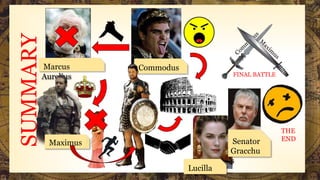
SUMMARY
Marcus
Aurelius
Maximus
Commodus
Lucilla
Senator
Gracchu
s
FINAL BATTLE
THE
END
INTRODUCTION In this slide, we will present the
following:
• Government
• Culture
• Religion
• Architecture & Art
• Technology
• Between the time period of 105BCE - 404CE
(Time Period of Romans Gladitorial Games)
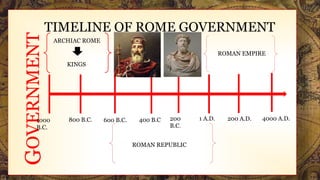
GOVERNMENTTIMELINE OF ROME GOVERNMENT
1000
B.C.
800 B.C. 600 B.C. 400 B.C 200
B.C.
1 A.D. 200 A.D. 4000 A.D.
ARCHIAC ROME
KINGS
ROMAN REPUBLIC
ROMAN EMPIRE
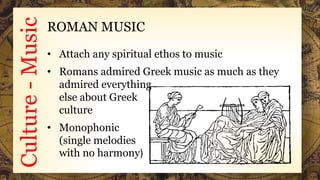
Culture-Music ROMAN MUSIC
• Attach any spiritual ethos to music
• Romans admired Greek music as much as they
admired everything
else about Greek
culture
• Monophonic
(single melodies
with no harmony)
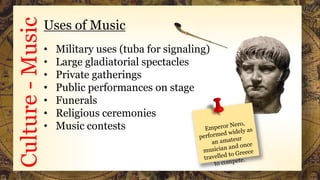
Culture-MusicUses of Music
• Military uses (tuba for signaling)
• Large gladiatorial spectacles
• Private gatherings
• Public performances on stage
• Funerals
• Religious ceremonies
• Music contests
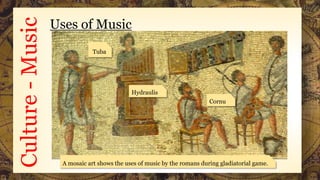
Culture-Music Uses of Music
A mosaic art shows the uses of music by the romans during gladiatorial game.
Tuba
Cornu
Hydraulis
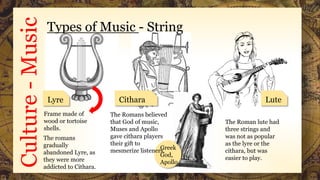
Culture-Music Types of Music - String
Lyre Cithara Lute
The Romans believed
that God of music,
Muses and Apollo
gave cithara players
their gift to
mesmerize listeners.Greek
God,
Apollo
Frame made of
wood or tortoise
shells.
The romans
gradually
abandoned Lyre, as
they were more
addicted to Cithara.
The Roman lute had
three strings and
was not as popular
as the lyre or the
cithara, but was
easier to play.
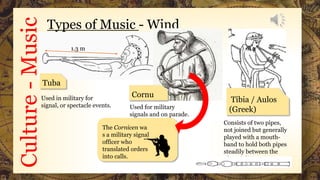
Culture-Music Types of Music - Wind
Used for military
signals and on parade.
Used in military for
signal, or spectacle events.
Consists of two pipes,
not joined but generally
played with a mouth-
band to hold both pipes
steadily between the
player's lips.
Tuba
1.3 m
The Cornicen wa
s a military signal
officer who
translated orders
into calls.
Tibia / Aulos
(Greek)
Cornu
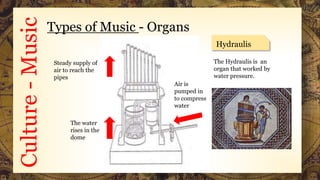
Culture-Music Types of Music - Organs
The Hydraulis is an
organ that worked by
water pressure.
Hydraulis
Air is
pumped in
to compress
water
The water
rises in the
dome
Steady supply of
air to reach the
pipes
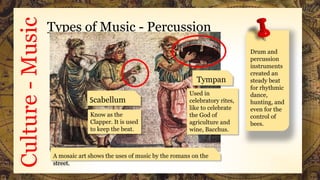
Culture-Music Types of Music - Percussion
Tympan
i
A mosaic art shows the uses of music by the romans on the
street.
Scabellum
Know as the
Clapper. It is used
to keep the beat.
Used in
celebratory rites,
like to celebrate
the God of
agriculture and
wine, Bacchus.
Drum and
percussion
instruments
created an
steady beat
for rhythmic
dance,
hunting, and
even for the
control of
bees.
Culture-Entertainment
GLADITORIAL GAME
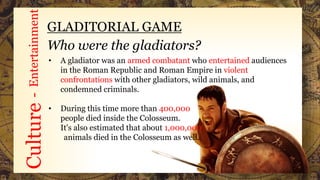
Who were the gladiators?
• A gladiator was an armed combatant who entertained audiences
in the Roman Republic and Roman Empire in violent
confrontations with other gladiators, wild animals, and
condemned criminals.
• During this time more than 400,000
people died inside the Colosseum.
It's also estimated that about 1,000,000
animals died in the Colosseum as well.
Culture-Entertainment
GLADITORIAL GAME - History
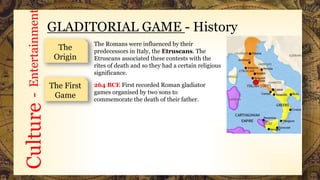
The
Origin
The Romans were influenced by their
predecessors in Italy, the Etruscans. The
Etruscans associated these contests with the
rites of death and so they had a certain religious
significance.
The First
Game
264 BCE First recorded Roman gladiator
games organised by two sons to
commemorate the death of their father.
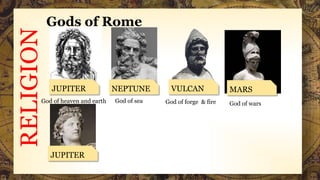
RELIGION Gods of Rome
God of heaven and earth
JUPITER NEPTUNE
God of sea
VULCAN
God of forge & fire
MARS
God of wars
JUPITER
REFRENCES
1. In this slide, we will present the following:
2. http://www.crystalinks.com/romemusic.html
3. http://landoftheart.blogspot.my/2014/08/about-music-of-ancient-rome.html
4. http://rome-music.weebly.com/musical-instruments.html
5. Between the time period of 105BCE - 404CE (Time Period of Romans Gladitorial Games)
Galdiator final

Galdiator final

  • 2.
    GROUP MEMBERS CLARA LEE LEESHI YIN NG PUI YAN CHOW SU LING SARAH ESA CHIN MAN CHOONG KENNETTH LIM TAN WEI SHEN KHOO YUNG KEAT ADAM SONGAN
  • 3.
  • 4.
    INTRODUCTION In thisslide, we will present the following: • Government • Culture • Religion • Architecture & Art • Technology • Between the time period of 105BCE - 404CE (Time Period of Romans Gladitorial Games)
  • 6.
    GOVERNMENTTIMELINE OF ROMEGOVERNMENT 1000 B.C. 800 B.C. 600 B.C. 400 B.C 200 B.C. 1 A.D. 200 A.D. 4000 A.D. ARCHIAC ROME KINGS ROMAN REPUBLIC ROMAN EMPIRE
  • 8.
    Culture-Music ROMAN MUSIC •Attach any spiritual ethos to music • Romans admired Greek music as much as they admired everything else about Greek culture • Monophonic (single melodies with no harmony)
  • 9.
    Culture-MusicUses of Music •Military uses (tuba for signaling) • Large gladiatorial spectacles • Private gatherings • Public performances on stage • Funerals • Religious ceremonies • Music contests
  • 10.
    Culture-Music Uses ofMusic A mosaic art shows the uses of music by the romans during gladiatorial game. Tuba Cornu Hydraulis
  • 11.
    Culture-Music Types ofMusic - String Lyre Cithara Lute The Romans believed that God of music, Muses and Apollo gave cithara players their gift to mesmerize listeners.Greek God, Apollo Frame made of wood or tortoise shells. The romans gradually abandoned Lyre, as they were more addicted to Cithara. The Roman lute had three strings and was not as popular as the lyre or the cithara, but was easier to play.
  • 12.
    Culture-Music Types ofMusic - Wind Used for military signals and on parade. Used in military for signal, or spectacle events. Consists of two pipes, not joined but generally played with a mouth- band to hold both pipes steadily between the player's lips. Tuba 1.3 m The Cornicen wa s a military signal officer who translated orders into calls. Tibia / Aulos (Greek) Cornu
  • 13.
    Culture-Music Types ofMusic - Organs The Hydraulis is an organ that worked by water pressure. Hydraulis Air is pumped in to compress water The water rises in the dome Steady supply of air to reach the pipes
  • 14.
    Culture-Music Types ofMusic - Percussion Tympan i A mosaic art shows the uses of music by the romans on the street. Scabellum Know as the Clapper. It is used to keep the beat. Used in celebratory rites, like to celebrate the God of agriculture and wine, Bacchus. Drum and percussion instruments created an steady beat for rhythmic dance, hunting, and even for the control of bees.
  • 15.
    Culture-Entertainment GLADITORIAL GAME Who werethe gladiators? • A gladiator was an armed combatant who entertained audiences in the Roman Republic and Roman Empire in violent confrontations with other gladiators, wild animals, and condemned criminals. • During this time more than 400,000 people died inside the Colosseum. It's also estimated that about 1,000,000 animals died in the Colosseum as well.
  • 16.
    Culture-Entertainment GLADITORIAL GAME -History The Origin The Romans were influenced by their predecessors in Italy, the Etruscans. The Etruscans associated these contests with the rites of death and so they had a certain religious significance. The First Game 264 BCE First recorded Roman gladiator games organised by two sons to commemorate the death of their father.
  • 18.
    RELIGION Gods ofRome God of heaven and earth JUPITER NEPTUNE God of sea VULCAN God of forge & fire MARS God of wars JUPITER
  • 19.
    REFRENCES 1. In thisslide, we will present the following: 2. http://www.crystalinks.com/romemusic.html 3. http://landoftheart.blogspot.my/2014/08/about-music-of-ancient-rome.html 4. http://rome-music.weebly.com/musical-instruments.html 5. Between the time period of 105BCE - 404CE (Time Period of Romans Gladitorial Games)