Terms Salon – A periodic gathering of people of social or intellectual distinction  Enlightened Despot - A with absolute rulers who use their power to help bring political and social change Novel – long works of prose fiction
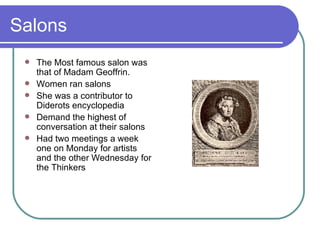
Salons The Most famous salon was that of Madam Geoffrin.  Women ran salons She was a contributor to Diderots encyclopedia Demand the highest of conversation at their salons Had two meetings a week one on Monday for artists and the other Wednesday for the Thinkers
Enlightened Despots Fredrick II of Prussia Saw himself as the “first servant of the state” Tolerated religious differences and welcomed those persecuted by religion Reformed law and civil service  Had made strides to help peasants Drained swamps for farm land Distributed seed and tools for farming
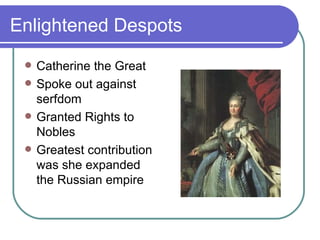
Enlightened Despots Catherine the Great Spoke out against serfdom Granted Rights to Nobles Greatest contribution was she expanded the Russian empire
Enlightened Despots Joseph II Holy Roman Emperor Called the Peasant Emperor Gave positions to talented middle class people rather than nobles Granted religious toleration to Jews, Protestants Ended Censorship Tried to run the church and sold church lands he saw as unproductive Built hospitals from land sales Abolished serfdom Reforms were undone after his death
Art and Literature Baroque – used exaggerated motion and clear, easily interpreted detail to produce emotion and grandeur in sculpture, painting, literature, and music. In Music, different voices and instruments echo each other but at different pitches
Art and Literature Rococo – a continuation of Baroque, it was characterized by a wealth, grace, playfulness, and lightness
Lives of the People Peasants lives were varied all across Europe West serfdom had almost entirely disappeared, most had there own patches of land or were tenants of a large landowner East serfdom was still in existence (Russia) Though life was better in the west peasants in some areas had to provide free labor This movement did spark interest of overthrowing the old order in many peasant villages Life remained the same in many respects despite the advances and changes of the Enlightenment

WAHG 2 Enlightenment

  • 1.
    Terms Salon –A periodic gathering of people of social or intellectual distinction Enlightened Despot - A with absolute rulers who use their power to help bring political and social change Novel – long works of prose fiction
  • 2.
    Salons The Mostfamous salon was that of Madam Geoffrin. Women ran salons She was a contributor to Diderots encyclopedia Demand the highest of conversation at their salons Had two meetings a week one on Monday for artists and the other Wednesday for the Thinkers
  • 3.
    Enlightened Despots FredrickII of Prussia Saw himself as the “first servant of the state” Tolerated religious differences and welcomed those persecuted by religion Reformed law and civil service Had made strides to help peasants Drained swamps for farm land Distributed seed and tools for farming
  • 4.
    Enlightened Despots Catherinethe Great Spoke out against serfdom Granted Rights to Nobles Greatest contribution was she expanded the Russian empire
  • 5.
    Enlightened Despots JosephII Holy Roman Emperor Called the Peasant Emperor Gave positions to talented middle class people rather than nobles Granted religious toleration to Jews, Protestants Ended Censorship Tried to run the church and sold church lands he saw as unproductive Built hospitals from land sales Abolished serfdom Reforms were undone after his death
  • 6.
    Art and LiteratureBaroque – used exaggerated motion and clear, easily interpreted detail to produce emotion and grandeur in sculpture, painting, literature, and music. In Music, different voices and instruments echo each other but at different pitches
  • 7.
    Art and LiteratureRococo – a continuation of Baroque, it was characterized by a wealth, grace, playfulness, and lightness
  • 8.
    Lives of thePeople Peasants lives were varied all across Europe West serfdom had almost entirely disappeared, most had there own patches of land or were tenants of a large landowner East serfdom was still in existence (Russia) Though life was better in the west peasants in some areas had to provide free labor This movement did spark interest of overthrowing the old order in many peasant villages Life remained the same in many respects despite the advances and changes of the Enlightenment