Good Citizenship

The Importance of Not Bullying,
Harassing, Teasing or Being Mean
What is Bullying?
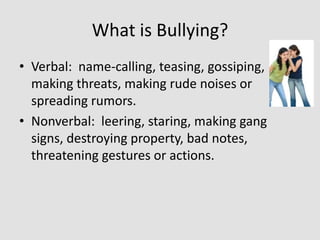
• Verbal: name-calling, teasing, gossiping,
making threats, making rude noises or
spreading rumors.
• Nonverbal: leering, staring, making gang
signs, destroying property, bad notes,
threatening gestures or actions.
• Physical: hitting, punching, pushing,
shoving, poking, kicking, tripping,
“pantsing,” pinching, spitting, fighting.
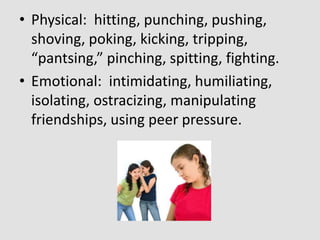
• Emotional: intimidating, humiliating,
isolating, ostracizing, manipulating
friendships, using peer pressure.
What should you do?
• Take responsibility for helping create a safe
school and classroom environment.
• Do not engage in or contribute to bullying.
• Treat everyone with respect.
• Report all incidents of teasing, bullying,
harassment, intimidation or other verbal or
physical abuse.
• Report bullying to a trusted adult.
• Never engage in retaliatory behavior.
• Be a good friend!
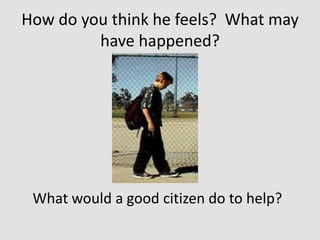
How do you think he feels? What may
have happened?

What would a good citizen do to help?
Fremont Unified School District
Board Policy 5131

Students are expected to take responsibility for helping create a safe school
environment.
You are not to engage in or contribute to bullying behaviors, actions, or words.
Students are expected to report all incidents of
teasing, bullying, harassment, intimidation, or other verbal or physical abuse.
Students are never to engage in retaliatory behavioral ask of, encourage, or
consent to anyone’s taking retaliatory actions on your behalf.
You should learn ways to protect yourself from bullying and how to help others
who have been bullied.
You are expected to treat everyone with respect and be sensitive to how others
might perceive your actions or words.
There will be serious consequences for students who commit acts of
bullying, including but not limited to suspension.

FUSD Grades 4-6 Bullying Presentation

  • 1.
    Good Citizenship The Importanceof Not Bullying, Harassing, Teasing or Being Mean
  • 2.
    What is Bullying? •Verbal: name-calling, teasing, gossiping, making threats, making rude noises or spreading rumors. • Nonverbal: leering, staring, making gang signs, destroying property, bad notes, threatening gestures or actions.
  • 3.
    • Physical: hitting,punching, pushing, shoving, poking, kicking, tripping, “pantsing,” pinching, spitting, fighting. • Emotional: intimidating, humiliating, isolating, ostracizing, manipulating friendships, using peer pressure.
  • 4.
    What should youdo? • Take responsibility for helping create a safe school and classroom environment. • Do not engage in or contribute to bullying. • Treat everyone with respect. • Report all incidents of teasing, bullying, harassment, intimidation or other verbal or physical abuse. • Report bullying to a trusted adult. • Never engage in retaliatory behavior. • Be a good friend!
  • 5.
    How do youthink he feels? What may have happened? What would a good citizen do to help?
  • 6.
    Fremont Unified SchoolDistrict Board Policy 5131 Students are expected to take responsibility for helping create a safe school environment. You are not to engage in or contribute to bullying behaviors, actions, or words. Students are expected to report all incidents of teasing, bullying, harassment, intimidation, or other verbal or physical abuse. Students are never to engage in retaliatory behavioral ask of, encourage, or consent to anyone’s taking retaliatory actions on your behalf. You should learn ways to protect yourself from bullying and how to help others who have been bullied. You are expected to treat everyone with respect and be sensitive to how others might perceive your actions or words. There will be serious consequences for students who commit acts of bullying, including but not limited to suspension.

Editor's Notes

  • #3 Talk about the meaning of some of the more challenging words.
  • #4 Discuss the picture and define challenging vocabulary words.
  • #5 Make sure to stop after each statement and talk about what that looks like.
  • #6 Stop and have a discussion.