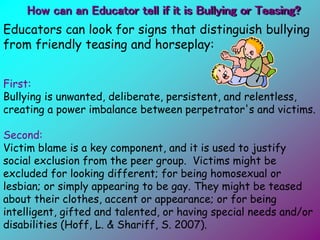
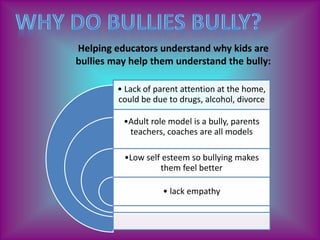
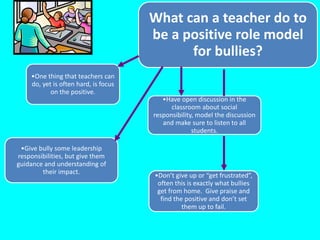
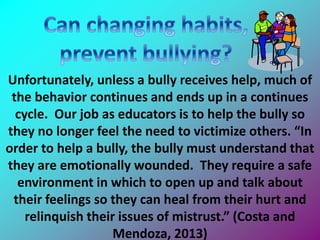
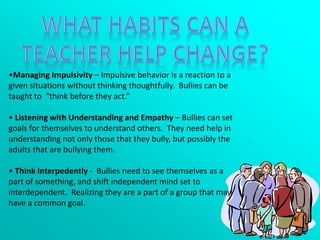
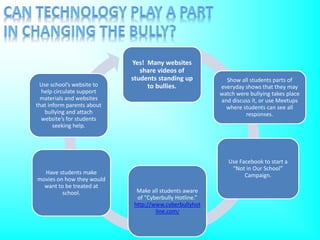
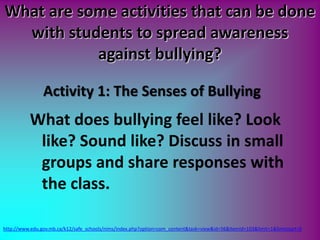
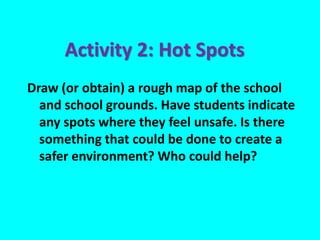
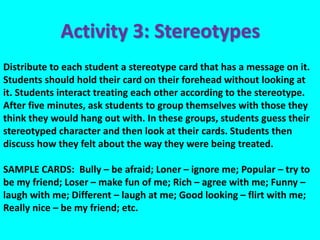
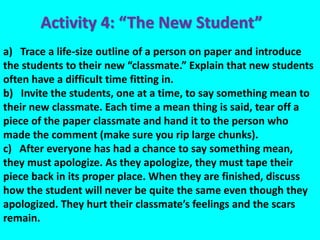
This document discusses strategies for educators to address bullying in schools. It begins by defining bullying as unwanted, deliberate, and persistent behavior that creates a power imbalance. Victims are often targeted for their appearance, intelligence, or disabilities. While bullies and victims are commonly stereotyped, research shows anyone can be a target or perpetrator. The most common types of bullying are verbal, physical, emotional, and electronic. When addressing bullying, educators should consider legal issues but also focus on prevention through modeling positive behavior, conflict resolution skills, and awareness activities with students. Overall, the goal is to help both bullies and victims in creating a safe, supportive environment.




![DCHS-bullying presentation[final]](https://cdn.slidesharecdn.com/ss_thumbnails/a6d77cf5-ab2a-46d9-ac6f-15a29075139f-150309214951-conversion-gate01-thumbnail.jpg?width=640&height=640&fit=bounds)


