How To Be a Bully Free School By: Susan Delahunt, LMHC and Priscilla Picardi-Haswell, LICSW,  School Adjustment Counselors   Waltham Public Schools
What is Bullying What is the definition of a bully? Where does it happen? Who bullies? How do kids bully?
What is Bullying/Relational Aggression? Definition: Bullying is the act of intentionally causing harm to others, through verbal or physical threats, or manipulating relationships. Bullying is not done in fun.  It is mean-spirited and cruel and it’s meant to hurt.
Bullying is Not a One Time Event Bullying is  repeated  acts of verbal or physical threats. Bullying is  repeated  acts of excluding, ignoring, non-verbal aggression. Bullying is  repeated  acts of using the internet, texting, cell phones, etc to hurt someone’s feelings.
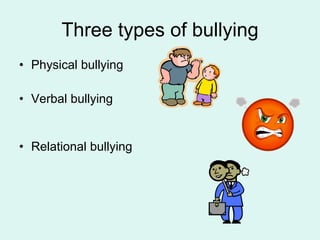
Three types of bullying Physical bullying Verbal bullying Relational bullying
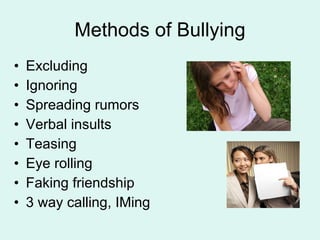
Methods of Bullying Excluding Ignoring Spreading rumors Verbal insults Teasing Eye rolling Faking friendship 3 way calling, IMing
Where Does Bullying Happen? It can happen anywhere in school but happens most often in: Recess Hallways Bathrooms School buses Changing classes Cafeteria During class group work
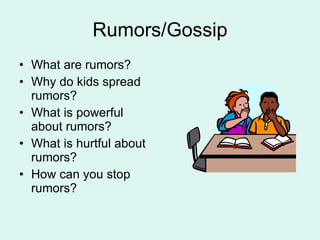
Rumors/Gossip What are rumors? Why do kids spread rumors? What is powerful about rumors? What is hurtful about rumors? How can you stop rumors?
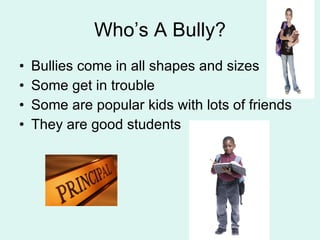
Who’s A Bully? Bullies come in all shapes and sizes Some get in trouble Some are popular kids with lots of friends They are good students
Why do bullies bully? Bullies feel insecure or bad about themselves, so they bully to make themselves feel better. Causes are: Problems at home or school Role models who bully and get what they want by pushing others around The person may be a target of bullying  Never learned another way to behave Exposure to violence in movies, TV and video games. Wanting to belong
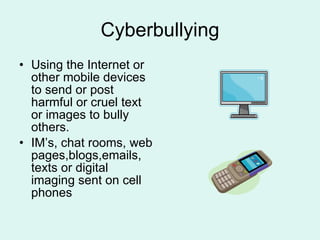
Cyberbullying Using the Internet or other mobile devices to send or post harmful or cruel text or images to bully others. IM’s, chat rooms, web pages,blogs,emails, texts or digital imaging sent on cell phones
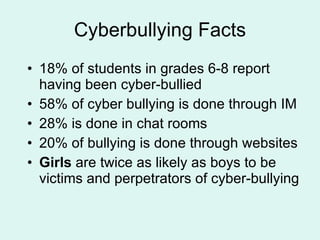
Cyberbullying Facts 18% of students in grades 6-8 report having been cyber-bullied 58% of cyber bullying is done through IM 28% is done in chat rooms 20% of bullying is done through websites Girls  are twice as likely as boys to be victims and perpetrators of cyber-bullying
AIM,Facebook, My Space,etc Some words of caution
How Can We Stop It?
Are you a bully? Does it make you feel better to hurt other people or take their things? Do you sometimes use your size and strength to get your way? Do you feel like you have to make up for having been bullied by doing the same to others? Do you avoid thinking about how other people might feel if you say or do hurtful things to them?
How can you stop being a bully? Apologize to people you’ve bullied and follow-up by being friendly towards them. If your having a hard time feeling good  about yourself, find ways to boost your self-esteem. If you feel like you’re having trouble controlling you feelings, especially anger, talk to an adult you trust.
What Can I Do to Stop Bullying? Refuse to be an audience for a bully Do not “follow the crowd” Do not laugh while someone is being picked on Do not participate in gossip Do not use the internet to hurt someone Walk away and go get help Know your own personal strength
Who is a target? Research shows that about 25% ( 1 out of 4 kids) of children experience bullying Kids who tend to be physically different Kids with disabilities Kids who upset easily Kids who don’t have a lot of friends  Kids who lack self confidence or look like they don’t have self confidence
If You Are a Target: Ignore the bully Pretend you don’t hear him/her Don’t cry, get angry or show you are upset. Respond firmly. If you can, turn a comment into a joke. Remove yourself from the situation.
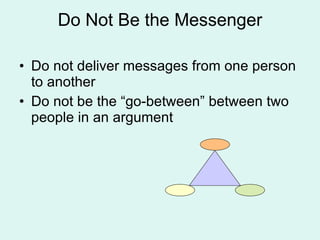
Do Not Be the Messenger Do not deliver messages from one person to another Do not be the “go-between” between two people in an argument
Reminder: If you are ever threatened with physical violence, get adult help immediately.
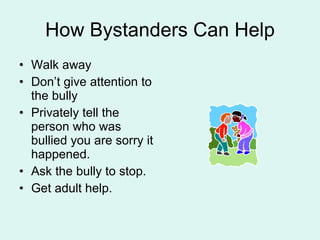
How Bystanders Can Help Walk away  Don’t give attention to the bully Privately tell the person who was bullied you are sorry it happened. Ask the bully to stop. Get adult help.
Hallway Heroes Statistics show that if just one person asks the bully to stop, they will stop 50% of the time.
Why Tell? Without cooperation between kids and grown-ups bullying can become a big problem that doesn’t get better.
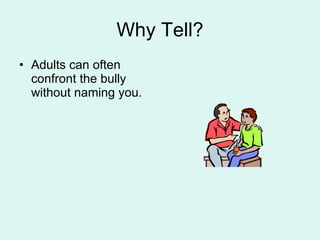
Why Tell? Adults can often confront the bully without naming you.
Why Tell? Adults and kids working together is the  best way  to stop bullying. Remember, you are reporting a dangerous act. You are not “tattling.”
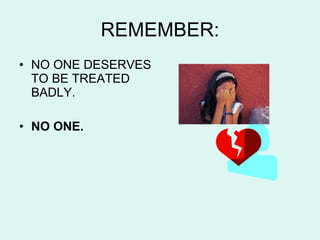
REMEMBER: NO ONE DESERVES TO BE TREATED BADLY. NO ONE.
VIDEO Courtesy of The Spirit Desk \\wanserver08\technology$\Shared_Lesson_Plans\Lesson_Plans\i-safe   Music by: Simple Plan,  “Welcome to My Life” Courtesy of Atlantic Records
RESOURCES The statistics in this presentation come from the “Mean Girls” workbook published by Youthlight, Inc. The Waltham Public Schools Website offers many websites for parents and children on bullying.  One for children is:  “ Kids Against Bullying ” from the National Center for Bullying Prevention.

How To Be a Bully Free School

  • 1.
    How To Bea Bully Free School By: Susan Delahunt, LMHC and Priscilla Picardi-Haswell, LICSW, School Adjustment Counselors Waltham Public Schools
  • 2.
    What is BullyingWhat is the definition of a bully? Where does it happen? Who bullies? How do kids bully?
  • 3.
    What is Bullying/RelationalAggression? Definition: Bullying is the act of intentionally causing harm to others, through verbal or physical threats, or manipulating relationships. Bullying is not done in fun. It is mean-spirited and cruel and it’s meant to hurt.
  • 4.
    Bullying is Nota One Time Event Bullying is repeated acts of verbal or physical threats. Bullying is repeated acts of excluding, ignoring, non-verbal aggression. Bullying is repeated acts of using the internet, texting, cell phones, etc to hurt someone’s feelings.
  • 5.
    Three types ofbullying Physical bullying Verbal bullying Relational bullying
  • 6.
    Methods of BullyingExcluding Ignoring Spreading rumors Verbal insults Teasing Eye rolling Faking friendship 3 way calling, IMing
  • 7.
    Where Does BullyingHappen? It can happen anywhere in school but happens most often in: Recess Hallways Bathrooms School buses Changing classes Cafeteria During class group work
  • 8.
    Rumors/Gossip What arerumors? Why do kids spread rumors? What is powerful about rumors? What is hurtful about rumors? How can you stop rumors?
  • 9.
    Who’s A Bully?Bullies come in all shapes and sizes Some get in trouble Some are popular kids with lots of friends They are good students
  • 10.
    Why do bulliesbully? Bullies feel insecure or bad about themselves, so they bully to make themselves feel better. Causes are: Problems at home or school Role models who bully and get what they want by pushing others around The person may be a target of bullying Never learned another way to behave Exposure to violence in movies, TV and video games. Wanting to belong
  • 11.
    Cyberbullying Using theInternet or other mobile devices to send or post harmful or cruel text or images to bully others. IM’s, chat rooms, web pages,blogs,emails, texts or digital imaging sent on cell phones
  • 12.
    Cyberbullying Facts 18%of students in grades 6-8 report having been cyber-bullied 58% of cyber bullying is done through IM 28% is done in chat rooms 20% of bullying is done through websites Girls are twice as likely as boys to be victims and perpetrators of cyber-bullying
  • 13.
    AIM,Facebook, My Space,etcSome words of caution
  • 14.
    How Can WeStop It?
  • 15.
    Are you abully? Does it make you feel better to hurt other people or take their things? Do you sometimes use your size and strength to get your way? Do you feel like you have to make up for having been bullied by doing the same to others? Do you avoid thinking about how other people might feel if you say or do hurtful things to them?
  • 16.
    How can youstop being a bully? Apologize to people you’ve bullied and follow-up by being friendly towards them. If your having a hard time feeling good about yourself, find ways to boost your self-esteem. If you feel like you’re having trouble controlling you feelings, especially anger, talk to an adult you trust.
  • 17.
    What Can IDo to Stop Bullying? Refuse to be an audience for a bully Do not “follow the crowd” Do not laugh while someone is being picked on Do not participate in gossip Do not use the internet to hurt someone Walk away and go get help Know your own personal strength
  • 18.
    Who is atarget? Research shows that about 25% ( 1 out of 4 kids) of children experience bullying Kids who tend to be physically different Kids with disabilities Kids who upset easily Kids who don’t have a lot of friends Kids who lack self confidence or look like they don’t have self confidence
  • 19.
    If You Area Target: Ignore the bully Pretend you don’t hear him/her Don’t cry, get angry or show you are upset. Respond firmly. If you can, turn a comment into a joke. Remove yourself from the situation.
  • 20.
    Do Not Bethe Messenger Do not deliver messages from one person to another Do not be the “go-between” between two people in an argument
  • 21.
    Reminder: If youare ever threatened with physical violence, get adult help immediately.
  • 22.
    How Bystanders CanHelp Walk away Don’t give attention to the bully Privately tell the person who was bullied you are sorry it happened. Ask the bully to stop. Get adult help.
  • 23.
    Hallway Heroes Statisticsshow that if just one person asks the bully to stop, they will stop 50% of the time.
  • 24.
    Why Tell? Withoutcooperation between kids and grown-ups bullying can become a big problem that doesn’t get better.
  • 25.
    Why Tell? Adultscan often confront the bully without naming you.
  • 26.
    Why Tell? Adultsand kids working together is the best way to stop bullying. Remember, you are reporting a dangerous act. You are not “tattling.”
  • 27.
    REMEMBER: NO ONEDESERVES TO BE TREATED BADLY. NO ONE.
  • 28.
    VIDEO Courtesy ofThe Spirit Desk \\wanserver08\technology$\Shared_Lesson_Plans\Lesson_Plans\i-safe Music by: Simple Plan, “Welcome to My Life” Courtesy of Atlantic Records
  • 29.
    RESOURCES The statisticsin this presentation come from the “Mean Girls” workbook published by Youthlight, Inc. The Waltham Public Schools Website offers many websites for parents and children on bullying. One for children is: “ Kids Against Bullying ” from the National Center for Bullying Prevention.