What is Bullying?

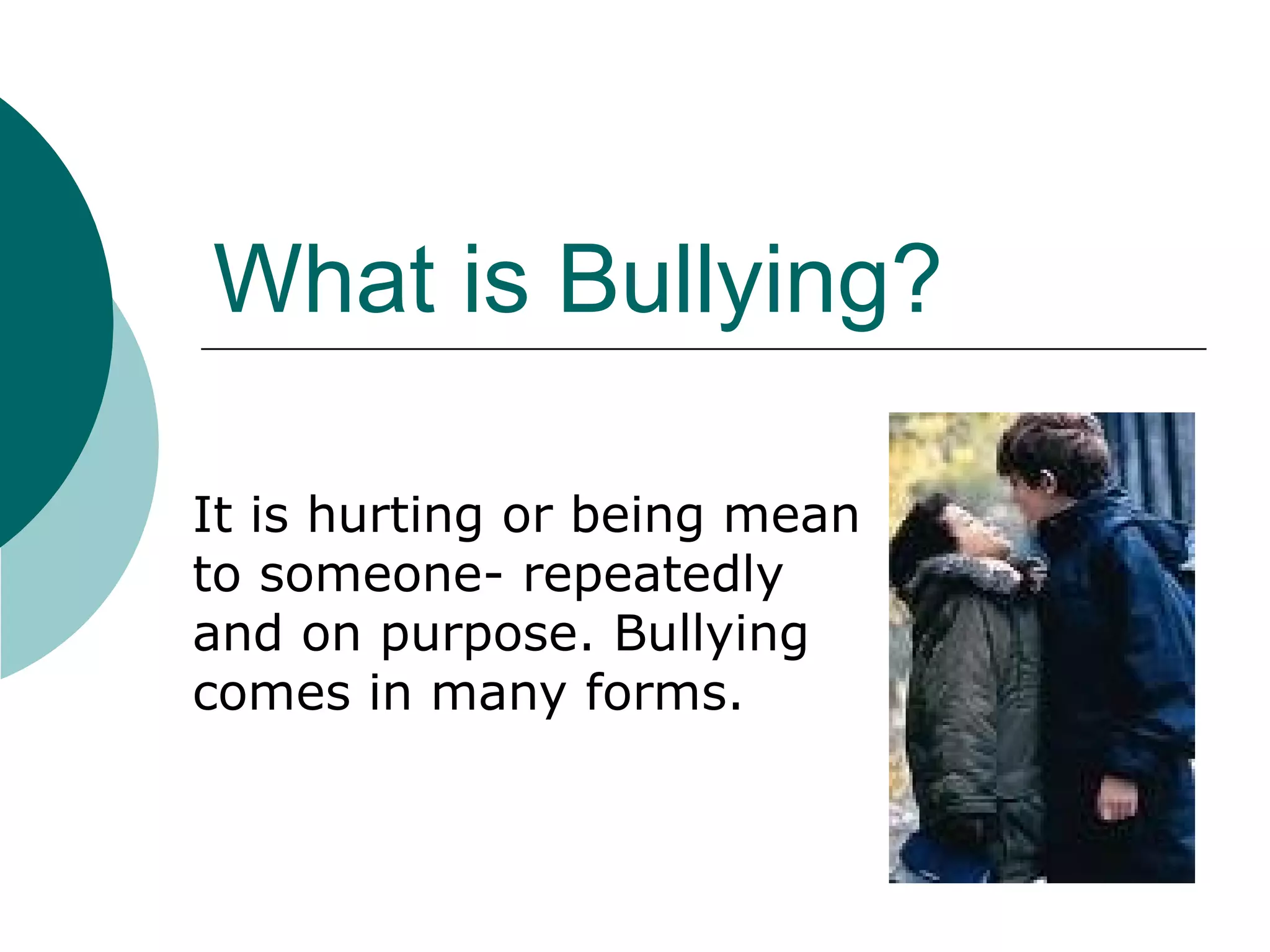
It is hurting or being mean
to someone- repeatedly
and on purpose. Bullying
comes in many forms.
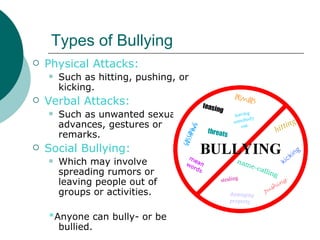
Types of Bullying
   Physical Attacks:
       Such as hitting, pushing, or
        kicking.
   Verbal Attacks:
       Such as unwanted sexual
        advances, gestures or
        remarks.
   Social Bullying:
       Which may involve
        spreading rumors or
        leaving people out of
        groups or activities.

    *Anyone can bully- or be
      bullied.
Why Should I learn about
Bullying?

Because it’s a serious problem. It can
lead to a lot of lasting pain and
unhappiness.
   People who are
    bullied:
       May feel bad about
        themselves, which can
        make it hard to
        concentrate and learn.
   People who bully:
     May grow up to have
      trouble in school, at
      work, and with the law
    *Young people need to
      know that adults are
      ready to help.
Some Facts about Bullying:
   People Who Bully:
       May do it because they are
          Angry
          Frustrated

   People Who Are Bulled:
       May keep to themselves, This makes them easier
        targets than people who are surrounded by friends.
       If people who bully think someone is weaker, they
        may target that person. Or, they may target someone
        they are jealous of.
   Bullying Can Happen:
       At   a school or on the school bus
       At   a park or playground
       At   home
       In   “cyberspace”
   Bullying Isn’t Just Part of Growing Up:
       There have always been people who bully. But that
        doesn’t make bullying OK. Bullying hurts everyone-
        including those who bully. And everyone can help stop
        the problem.
   Adults Can Help:
       It’s good to learn how to handle arguments and avoid
        fights on your own. But sometimes adults give you
        advice on how to handle a bullying situation.
   Fighting is Never the Answer:
       Don’t believe what you see on TV or in the movies.
        Fighting and violence lead to more pain and shame-
        and possibly serious injury. There are much better
        ways of dealing with bullying.
When Someone Bullies,
            Everyone Feels the Effects
   Fear:
       Bullying makes everyone
        afraid- even those who
        aren’t targets. No one
        knows who will be bullied
        next.
   Shame:
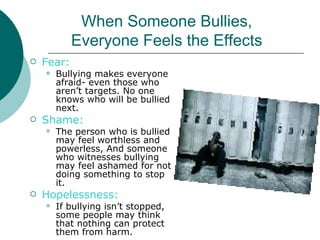
       The person who is bullied
        may feel worthless and
        powerless, And someone
        who witnesses bullying
        may feel ashamed for not
        doing something to stop
        it.
   Hopelessness:
       If bullying isn’t stopped,
        some people may think
        that nothing can protect
        them from harm.
Effects Continued
   Violence:
       Remember- violence is never a good way to deal with
        bullying. It can only make the problem worse. And
        carrying a weapon may lead to more trouble.
   Loss of Freedom:
       Fear of bullying may cause some people to avoid certain
        places or activities. Avoiding people who bully affect your
        success or the fun you have at school.
   Absence from School:
       Some people may become so frightened of bullying that
        they stop going to school altogether. In fact, fear of
        violence is a major reason for dropping out of school.

         *Don’t wait until bullying gets out of hand. Seek help
          right away!
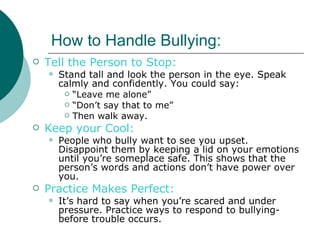
How to Handle Bullying:
   Tell the Person to Stop:
       Stand tall and look the person in the eye. Speak
        calmly and confidently. You could say:
          “Leave me alone”
          “Don’t say that to me”
          Then walk away.

   Keep your Cool:
       People who bully want to see you upset.
        Disappoint them by keeping a lid on your emotions
        until you’re someplace safe. This shows that the
        person’s words and actions don’t have power over
        you.
   Practice Makes Perfect:
       It’s hard to say when you’re scared and under
        pressure. Practice ways to respond to bullying-
        before trouble occurs.
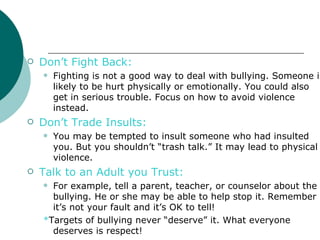
   Don’t Fight Back:
       Fighting is not a good way to deal with bullying. Someone is
        likely to be hurt physically or emotionally. You could also
        get in serious trouble. Focus on how to avoid violence
        instead.
   Don’t Trade Insults:
       You may be tempted to insult someone who had insulted
        you. But you shouldn’t “trash talk.” It may lead to physical
        violence.
   Talk to an Adult you Trust:
     For example, tell a parent, teacher, or counselor about the
      bullying. He or she may be able to help stop it. Remember
      it’s not your fault and it’s OK to tell!
    *Targets of bullying never “deserve” it. What everyone
      deserves is respect!
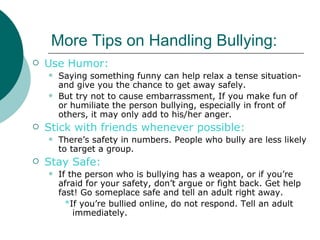
More Tips on Handling Bullying:
   Use Humor:
       Saying something funny can help relax a tense situation-
        and give you the chance to get away safely.
       But try not to cause embarrassment, If you make fun of
        or humiliate the person bullying, especially in front of
        others, it may only add to his/her anger.
   Stick with friends whenever possible:
       There’s safety in numbers. People who bully are less likely
        to target a group.
   Stay Safe:
       If the person who is bullying has a weapon, or if you’re
        afraid for your safety, don’t argue or fight back. Get help
        fast! Go someplace safe and tell an adult right away.
          *If you’re bullied online, do not respond. Tell an adult
            immediately.
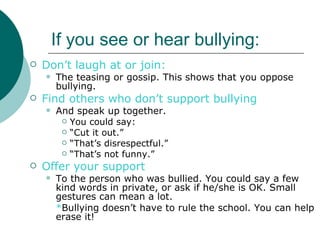
If you see or hear bullying:
   Don’t laugh at or join:
       The teasing or gossip. This shows that you oppose
        bullying.
   Find others who don’t support bullying
       And speak up together.
          You could say:
          “Cut it out.”
          “That’s disrespectful.”
          “That’s not funny.”

   Offer your support
       To the person who was bullied. You could say a few
        kind words in private, or ask if he/she is OK. Small
        gestures can mean a lot.
        *Bullying doesn’t have to rule the school. You can help
        erase it!
Being the Target of Bullying Isn’t easy
   Get Help:
       There’s nothing wrong with getting help with a
        serious problem. If you or someone you know is
        the target of bullying, tell a parent, a teacher, or
        other adult.
   Talk about your feelings:
       If you feel hopeless, depressed, or lonely, don’t
        keep those feelings bottled up. A parent, school
        counselor, or other trusted adult can help.
   Relieve Stress:
       Exercise is a good way to stay healthy and relieve
        stress. It can also help you feel better about
        yourself
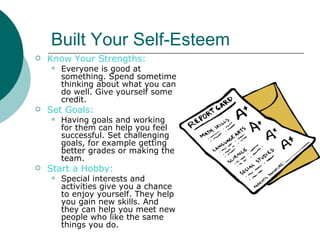
Built Your Self-Esteem
   Know Your Strengths:
       Everyone is good at
        something. Spend sometime
        thinking about what you can
        do well. Give yourself some
        credit.
   Set Goals:
       Having goals and working
        for them can help you feel
        successful. Set challenging
        goals, for example getting
        better grades or making the
        team.
   Start a Hobby:
       Special interests and
        activities give you a chance
        to enjoy yourself. They help
        you gain new skills. And
        they can help you meet new
        people who like the same
        things you do.
Where to get Help
   Community Youth Programs:
       Any program that helps build confidence and friendships will
        help make you a less likely target for bullies. Look into:
            Boys or girls clubs
            Religious Organizations
            Scouting programs
   Counseling:
       Remember, if you’re having trouble dealing with your
        feelings, ask for help. Counseling may be available from a:
            School counselor
            School support group
            Private therapist
            The Internet:
   Visit these helpful websites:
       www.StopBullyingNow.hrsa.gov
       www.GetNetWise.org
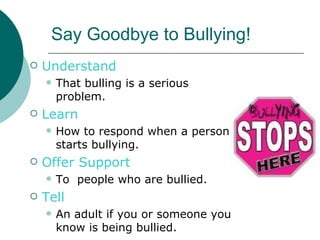
Say Goodbye to Bullying!
   Understand
       That bulling is a serious
        problem.
   Learn
       How to respond when a person
        starts bullying.
   Offer Support
       To people who are bullied.
   Tell
       An adult if you or someone you
        know is being bullied.

Bullying powerpoint

  • 1.
    What is Bullying? Itis hurting or being mean to someone- repeatedly and on purpose. Bullying comes in many forms.
  • 2.
    Types of Bullying  Physical Attacks:  Such as hitting, pushing, or kicking.  Verbal Attacks:  Such as unwanted sexual advances, gestures or remarks.  Social Bullying:  Which may involve spreading rumors or leaving people out of groups or activities. *Anyone can bully- or be bullied.
  • 3.
    Why Should Ilearn about Bullying? Because it’s a serious problem. It can lead to a lot of lasting pain and unhappiness.
  • 4.
    People who are bullied:  May feel bad about themselves, which can make it hard to concentrate and learn.  People who bully:  May grow up to have trouble in school, at work, and with the law *Young people need to know that adults are ready to help.
  • 5.
    Some Facts aboutBullying:  People Who Bully:  May do it because they are  Angry  Frustrated  People Who Are Bulled:  May keep to themselves, This makes them easier targets than people who are surrounded by friends.  If people who bully think someone is weaker, they may target that person. Or, they may target someone they are jealous of.  Bullying Can Happen:  At a school or on the school bus  At a park or playground  At home  In “cyberspace”
  • 6.
    Bullying Isn’t Just Part of Growing Up:  There have always been people who bully. But that doesn’t make bullying OK. Bullying hurts everyone- including those who bully. And everyone can help stop the problem.  Adults Can Help:  It’s good to learn how to handle arguments and avoid fights on your own. But sometimes adults give you advice on how to handle a bullying situation.  Fighting is Never the Answer:  Don’t believe what you see on TV or in the movies. Fighting and violence lead to more pain and shame- and possibly serious injury. There are much better ways of dealing with bullying.
  • 7.
    When Someone Bullies, Everyone Feels the Effects  Fear:  Bullying makes everyone afraid- even those who aren’t targets. No one knows who will be bullied next.  Shame:  The person who is bullied may feel worthless and powerless, And someone who witnesses bullying may feel ashamed for not doing something to stop it.  Hopelessness:  If bullying isn’t stopped, some people may think that nothing can protect them from harm.
  • 8.
    Effects Continued  Violence:  Remember- violence is never a good way to deal with bullying. It can only make the problem worse. And carrying a weapon may lead to more trouble.  Loss of Freedom:  Fear of bullying may cause some people to avoid certain places or activities. Avoiding people who bully affect your success or the fun you have at school.  Absence from School:  Some people may become so frightened of bullying that they stop going to school altogether. In fact, fear of violence is a major reason for dropping out of school. *Don’t wait until bullying gets out of hand. Seek help right away!
  • 9.
    How to HandleBullying:  Tell the Person to Stop:  Stand tall and look the person in the eye. Speak calmly and confidently. You could say:  “Leave me alone”  “Don’t say that to me”  Then walk away.  Keep your Cool:  People who bully want to see you upset. Disappoint them by keeping a lid on your emotions until you’re someplace safe. This shows that the person’s words and actions don’t have power over you.  Practice Makes Perfect:  It’s hard to say when you’re scared and under pressure. Practice ways to respond to bullying- before trouble occurs.
  • 10.
    Don’t Fight Back:  Fighting is not a good way to deal with bullying. Someone is likely to be hurt physically or emotionally. You could also get in serious trouble. Focus on how to avoid violence instead.  Don’t Trade Insults:  You may be tempted to insult someone who had insulted you. But you shouldn’t “trash talk.” It may lead to physical violence.  Talk to an Adult you Trust:  For example, tell a parent, teacher, or counselor about the bullying. He or she may be able to help stop it. Remember it’s not your fault and it’s OK to tell! *Targets of bullying never “deserve” it. What everyone deserves is respect!
  • 11.
    More Tips onHandling Bullying:  Use Humor:  Saying something funny can help relax a tense situation- and give you the chance to get away safely.  But try not to cause embarrassment, If you make fun of or humiliate the person bullying, especially in front of others, it may only add to his/her anger.  Stick with friends whenever possible:  There’s safety in numbers. People who bully are less likely to target a group.  Stay Safe:  If the person who is bullying has a weapon, or if you’re afraid for your safety, don’t argue or fight back. Get help fast! Go someplace safe and tell an adult right away. *If you’re bullied online, do not respond. Tell an adult immediately.
  • 12.
    If you seeor hear bullying:  Don’t laugh at or join:  The teasing or gossip. This shows that you oppose bullying.  Find others who don’t support bullying  And speak up together.  You could say:  “Cut it out.”  “That’s disrespectful.”  “That’s not funny.”  Offer your support  To the person who was bullied. You could say a few kind words in private, or ask if he/she is OK. Small gestures can mean a lot. *Bullying doesn’t have to rule the school. You can help erase it!
  • 13.
    Being the Targetof Bullying Isn’t easy  Get Help:  There’s nothing wrong with getting help with a serious problem. If you or someone you know is the target of bullying, tell a parent, a teacher, or other adult.  Talk about your feelings:  If you feel hopeless, depressed, or lonely, don’t keep those feelings bottled up. A parent, school counselor, or other trusted adult can help.  Relieve Stress:  Exercise is a good way to stay healthy and relieve stress. It can also help you feel better about yourself
  • 14.
    Built Your Self-Esteem  Know Your Strengths:  Everyone is good at something. Spend sometime thinking about what you can do well. Give yourself some credit.  Set Goals:  Having goals and working for them can help you feel successful. Set challenging goals, for example getting better grades or making the team.  Start a Hobby:  Special interests and activities give you a chance to enjoy yourself. They help you gain new skills. And they can help you meet new people who like the same things you do.
  • 15.
    Where to getHelp  Community Youth Programs:  Any program that helps build confidence and friendships will help make you a less likely target for bullies. Look into:  Boys or girls clubs  Religious Organizations  Scouting programs  Counseling:  Remember, if you’re having trouble dealing with your feelings, ask for help. Counseling may be available from a:  School counselor  School support group  Private therapist  The Internet:  Visit these helpful websites:  www.StopBullyingNow.hrsa.gov  www.GetNetWise.org
  • 16.
    Say Goodbye toBullying!  Understand  That bulling is a serious problem.  Learn  How to respond when a person starts bullying.  Offer Support  To people who are bullied.  Tell  An adult if you or someone you know is being bullied.