Fungi
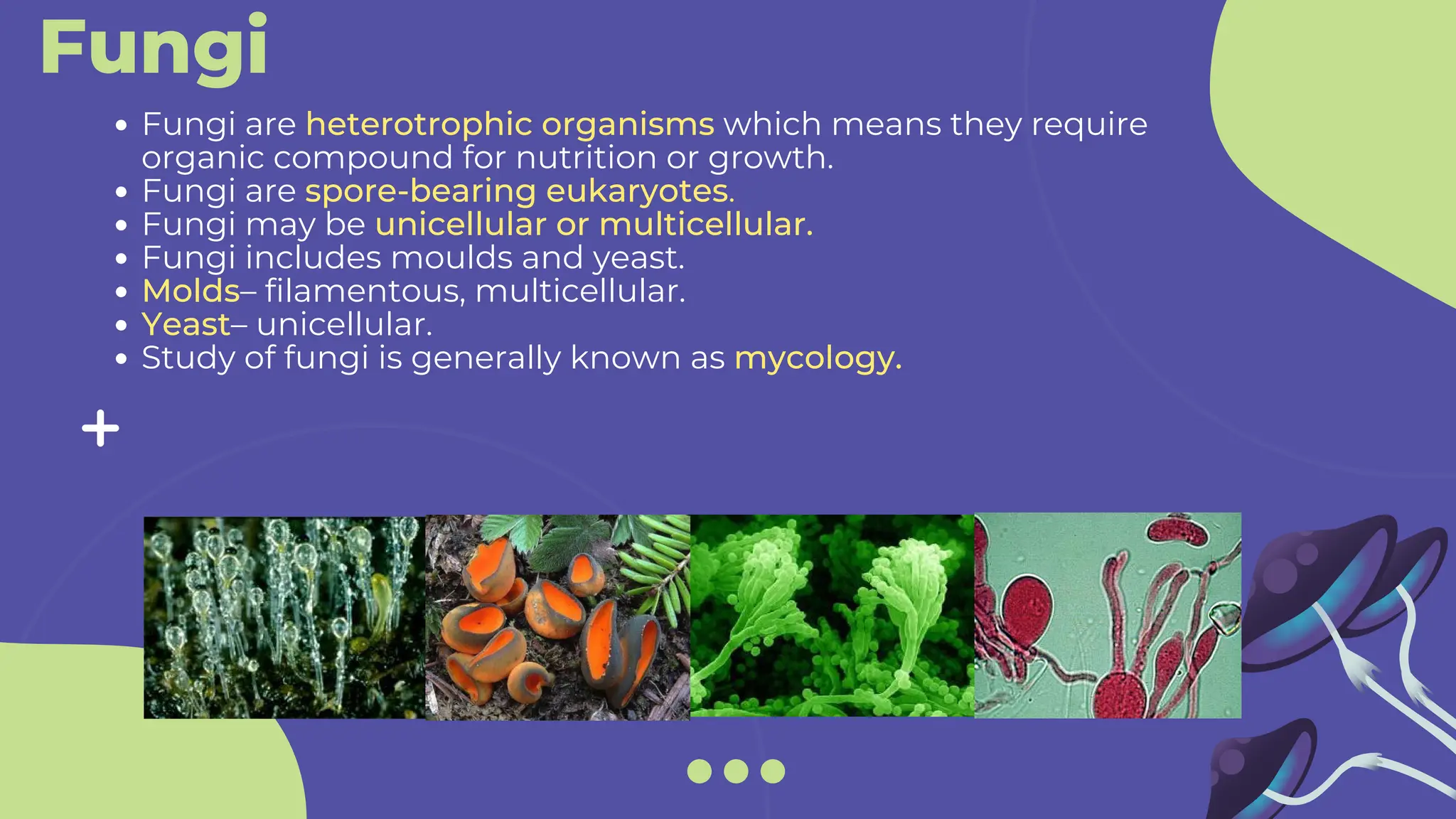
Fungi are heterotrophicorganisms which means they require
organic compound for nutrition or growth.
Fungi are spore-bearing eukaryotes.
Fungi may be unicellular or multicellular.
Fungi includes moulds and yeast.
Molds– filamentous, multicellular.
Yeast– unicellular.
Study of fungi is generally known as mycology.
3.
Significance of
Fungi
Key Decomposersin most environments.
majority of plants need mycorrhizal fungus to
flourish
MUSHROOMS contribute as human nourishment
fermentation agents in making bread, cheese,
alcoholic drinks and food products.
Fungi's second metabolites are utilized to make
drugs like antibiotics and blood thinners
4.
Morphologyof
Fungi
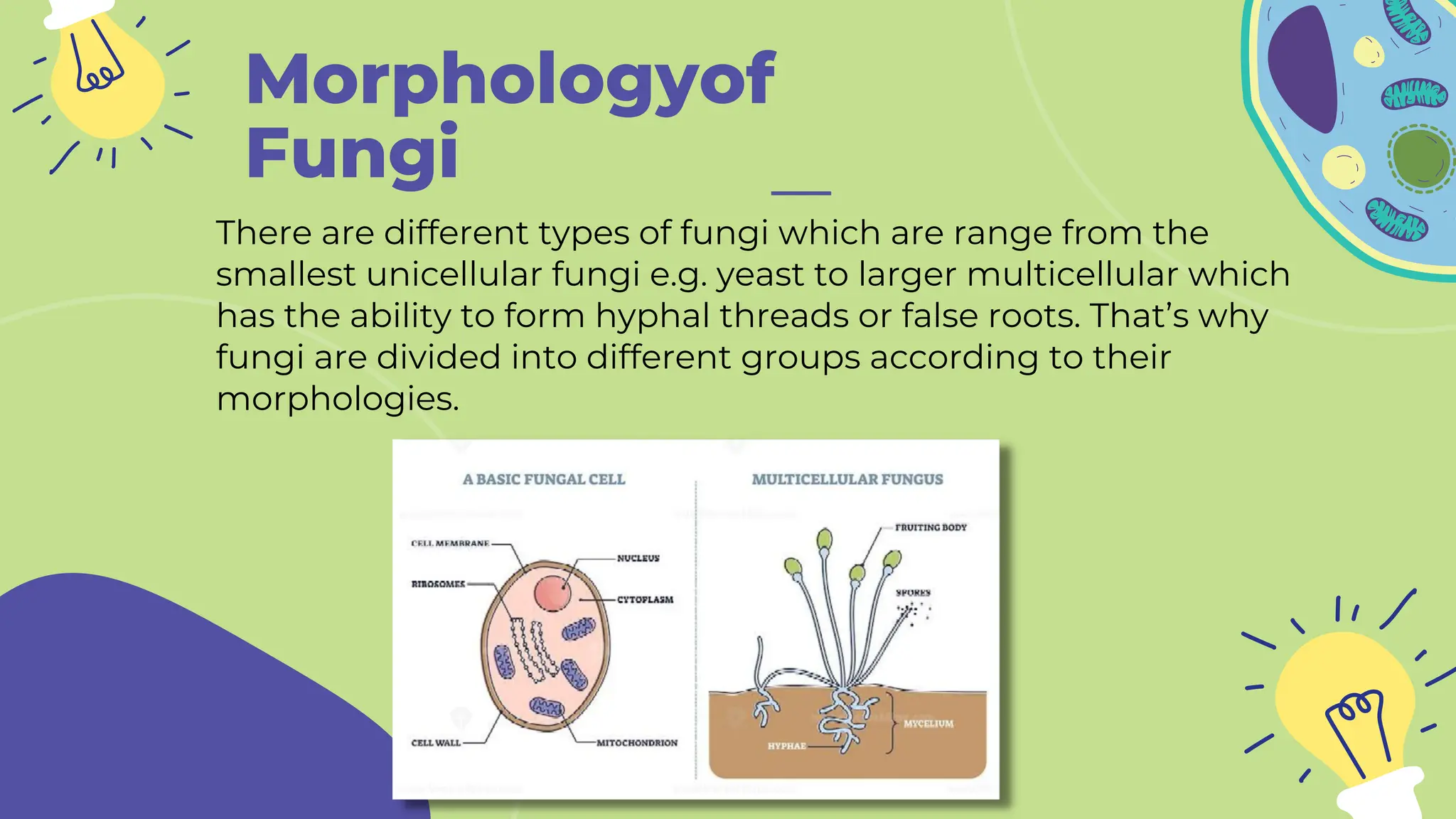
There are differenttypes of fungi which are range from the
smallest unicellular fungi e.g. yeast to larger multicellular which
has the ability to form hyphal threads or false roots. That’s why
fungi are divided into different groups according to their
morphologies.
5.
These are largerthan most bacteria. The size of yeast is
ranged from 1 to 5 um in width and from 5 to 30 um or
more in length.
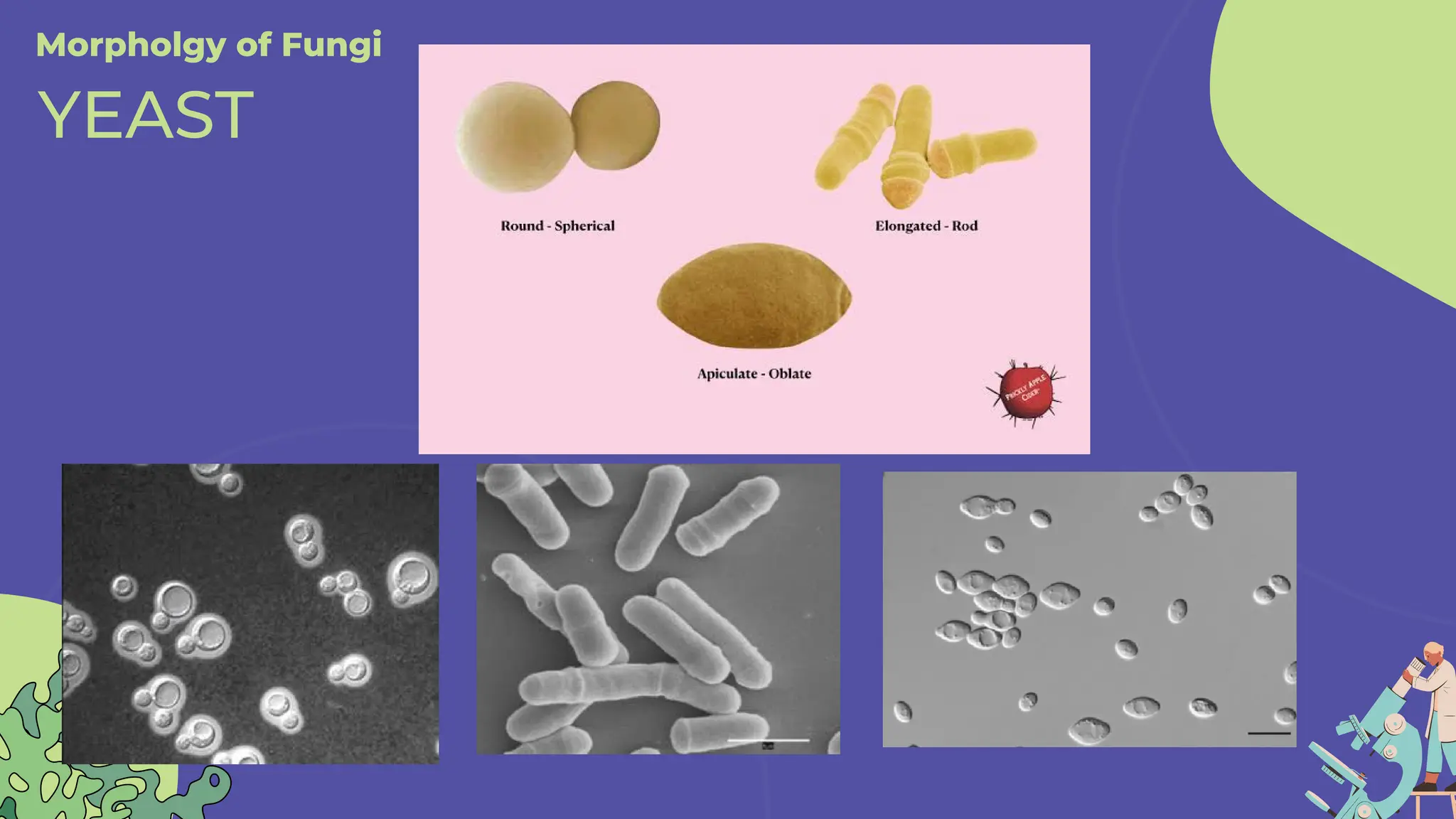
Yeast can be found in egg-shaped, elongated shapes and
some of them are also found in spherical shapes.
They lack flagella, which means they are nonmotile.
These are single celled fungi and can be found in soil,
plants, animals, and in aquatic environments.
Yeast is eukaryotic, which means they contain organelles
that are usually found in the cells of higher animals.
Morpholgy of Fungi
YEAST
Morpholgy of Fungi
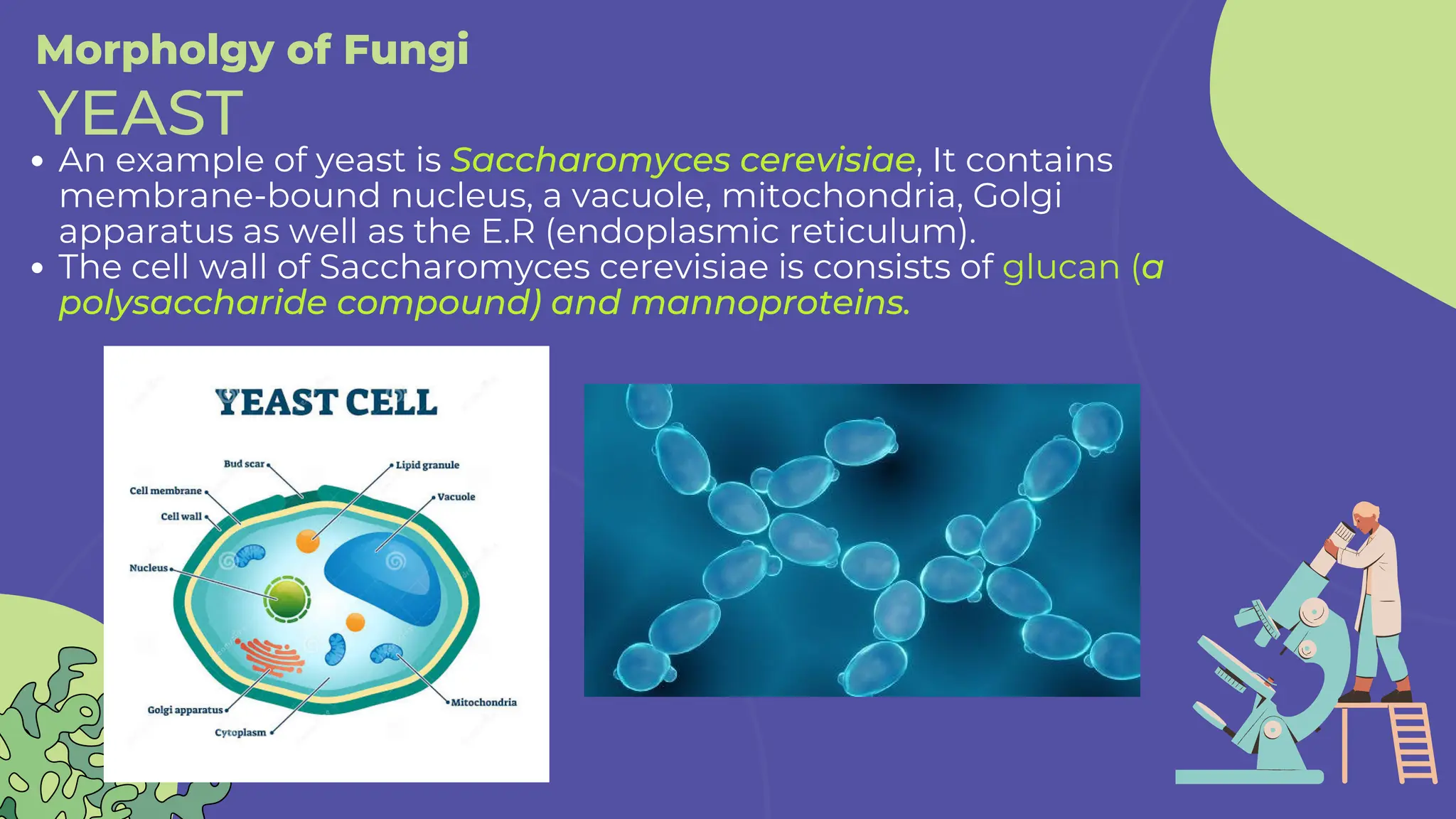
Anexample of yeast is Saccharomyces cerevisiae, It contains
membrane-bound nucleus, a vacuole, mitochondria, Golgi
apparatus as well as the E.R (endoplasmic reticulum).
The cell wall of Saccharomyces cerevisiae is consists of glucan (a
polysaccharide compound) and mannoproteins.
YEAST
8.
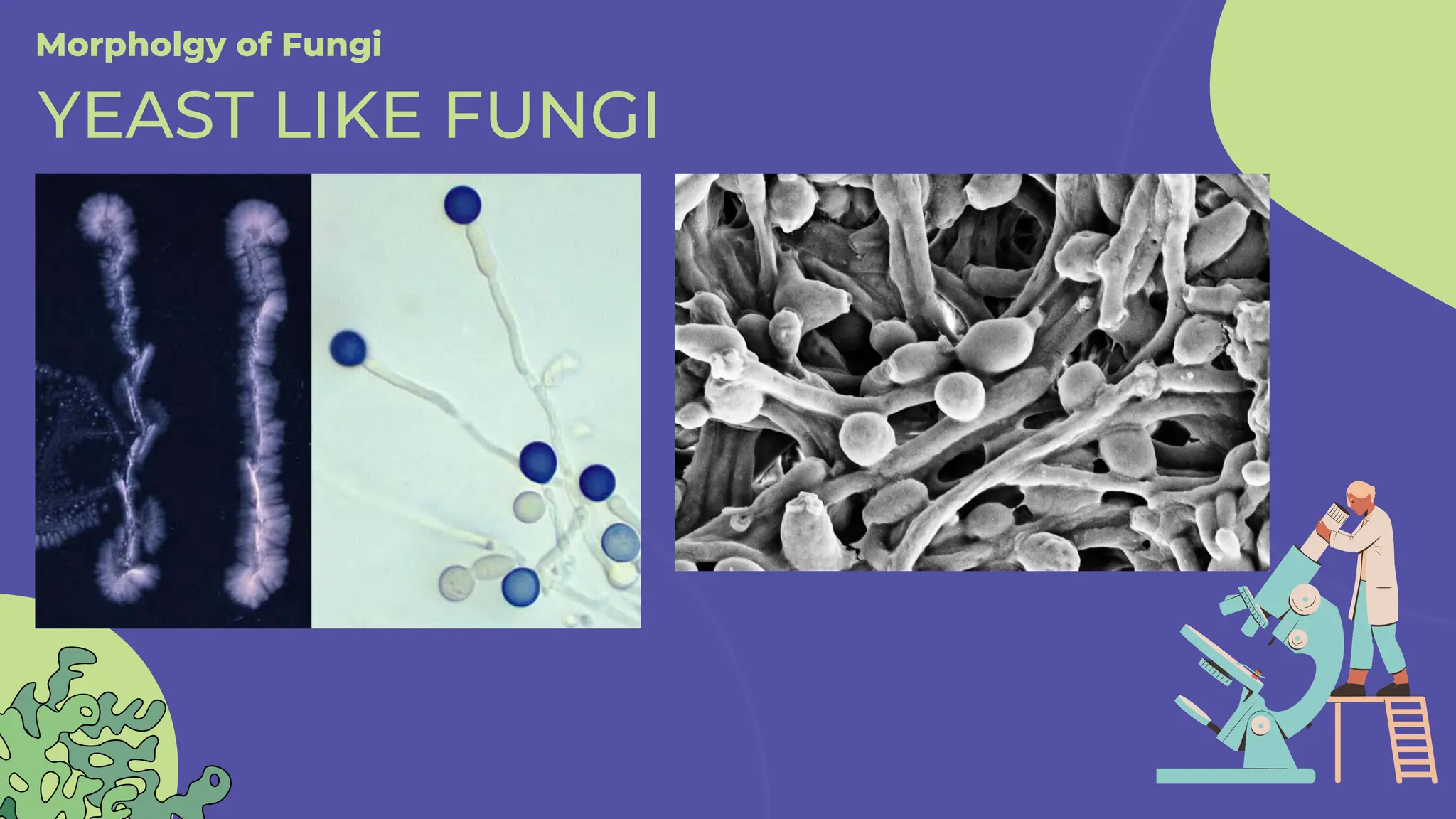
These are atypes of yeast that grow like normal yeast. The
individual cells of Yeast-like fungi aggregates and forms a
structure is known as pseudo hyphae (not a true hyphae).
Candida albicans,organism contain several layers which
make up the cell wall.
C. albicans appears in spherical or ovoid shape and size
ranges between 4 to 8 micrometers.
They have varying appearances when they are viewed
under the microscope. This depends on different
conditions such as the availability of nutrition, pH, and
temperature among others.
Morpholgy of Fungi
YEAST LIKE FUNGI
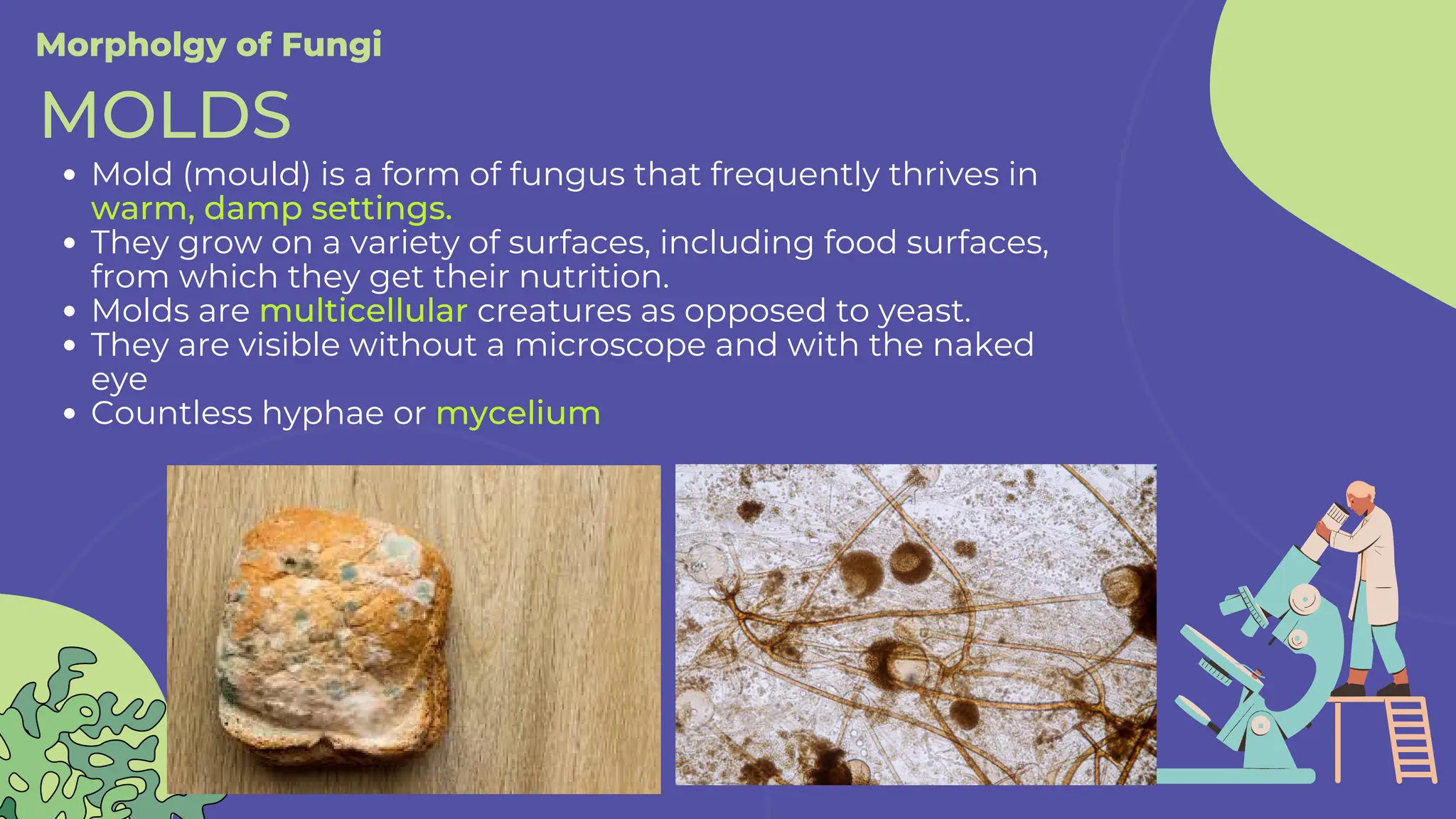
Mold (mould) isa form of fungus that frequently thrives in
warm, damp settings.
They grow on a variety of surfaces, including food surfaces,
from which they get their nutrition.
Molds are multicellular creatures as opposed to yeast.
They are visible without a microscope and with the naked
eye
Countless hyphae or mycelium
Morpholgy of Fungi
MOLDS
11.
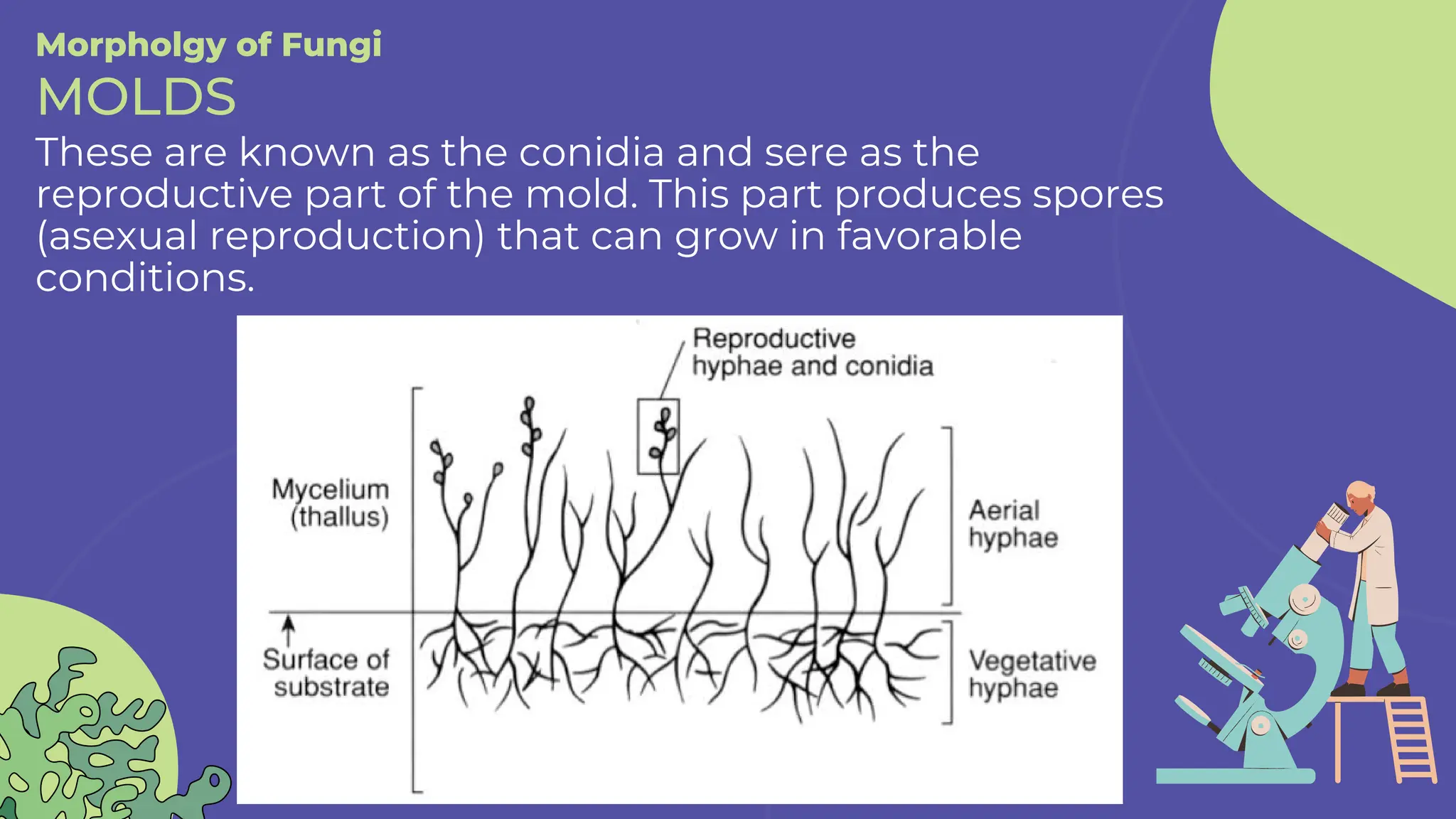
Two main typesof Mycelium
Vegetative mycelium - This type of mycelium enters within the
medium to get nutrients; soluble nutrients are received through
the walls. (Insoluble nutrients are first digested externally by
secreted enzymes.)
Aerial/ Reproductive mycelium - Aerial mycelium are the hyphae
that are located above the food substance. When viewed closely
under the microscope, aerial mycelium contain a spherical
structure at the top of the hyphae.
Morpholgy of Fungi
MOLDS
12.
These are knownas the conidia and sere as the
reproductive part of the mold. This part produces spores
(asexual reproduction) that can grow in favorable
conditions.
Morpholgy of Fungi
MOLDS
13.
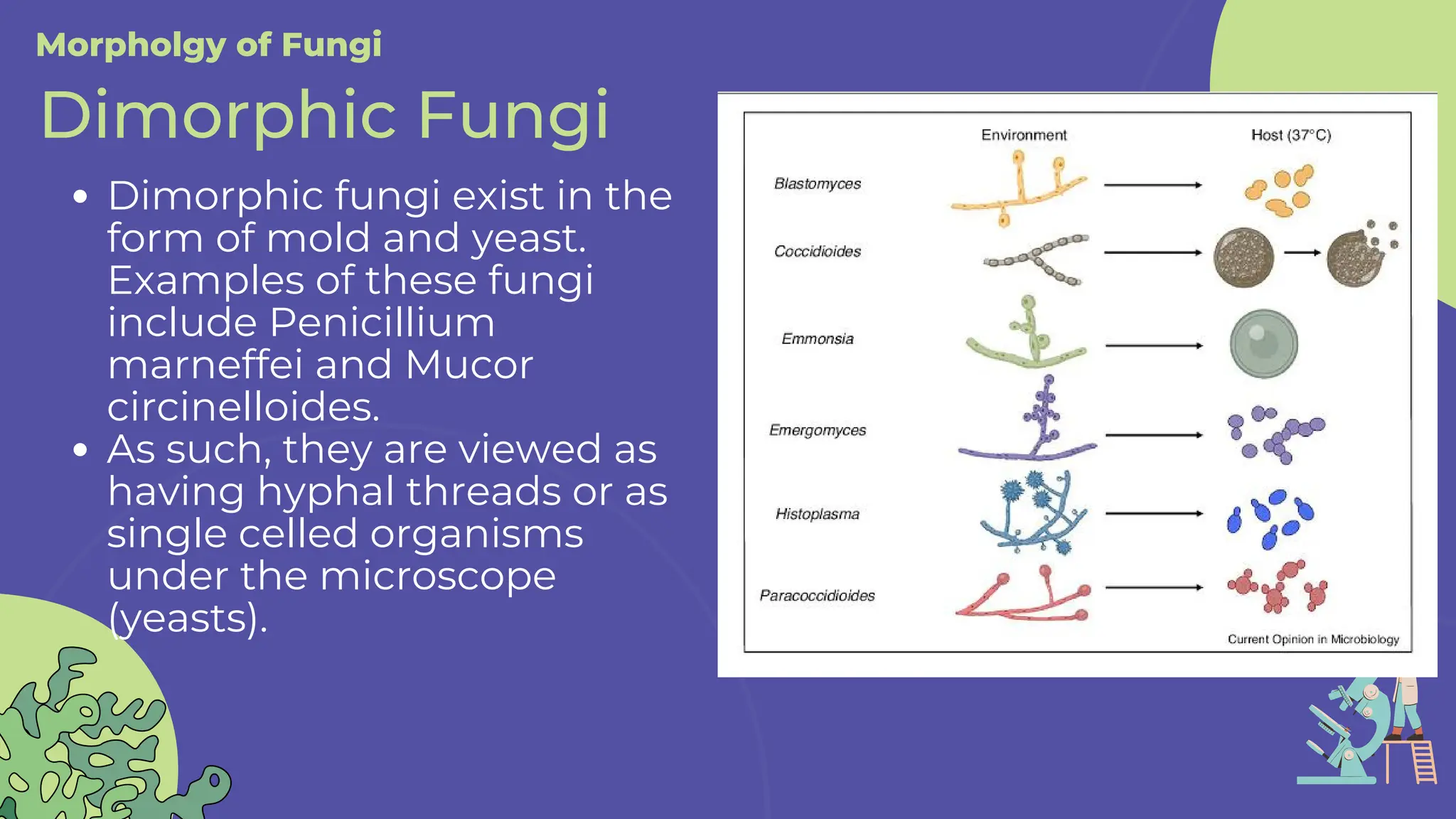
Dimorphic fungi existin the
form of mold and yeast.
Examples of these fungi
include Penicillium
marneffei and Mucor
circinelloides.
As such, they are viewed as
having hyphal threads or as
single celled organisms
under the microscope
(yeasts).
Morpholgy of Fungi
Dimorphic Fungi
14.
Nutrition
Fungi do notneed carbon dioxide or sunshine to
produce their nourishment, unlike plants.
fungi cling to the organic material and take up the
carbohydrates.
carbohydrates including glucose, fructose, xylose, and
sucrose
Fungi have the capacity to take in and break down
complex hydrocarbons like lignin as well as insoluble
carbohydrates like cellulose, hemicellulose, and starches
15.
Nutrition
Types of Nutritionin Fungi
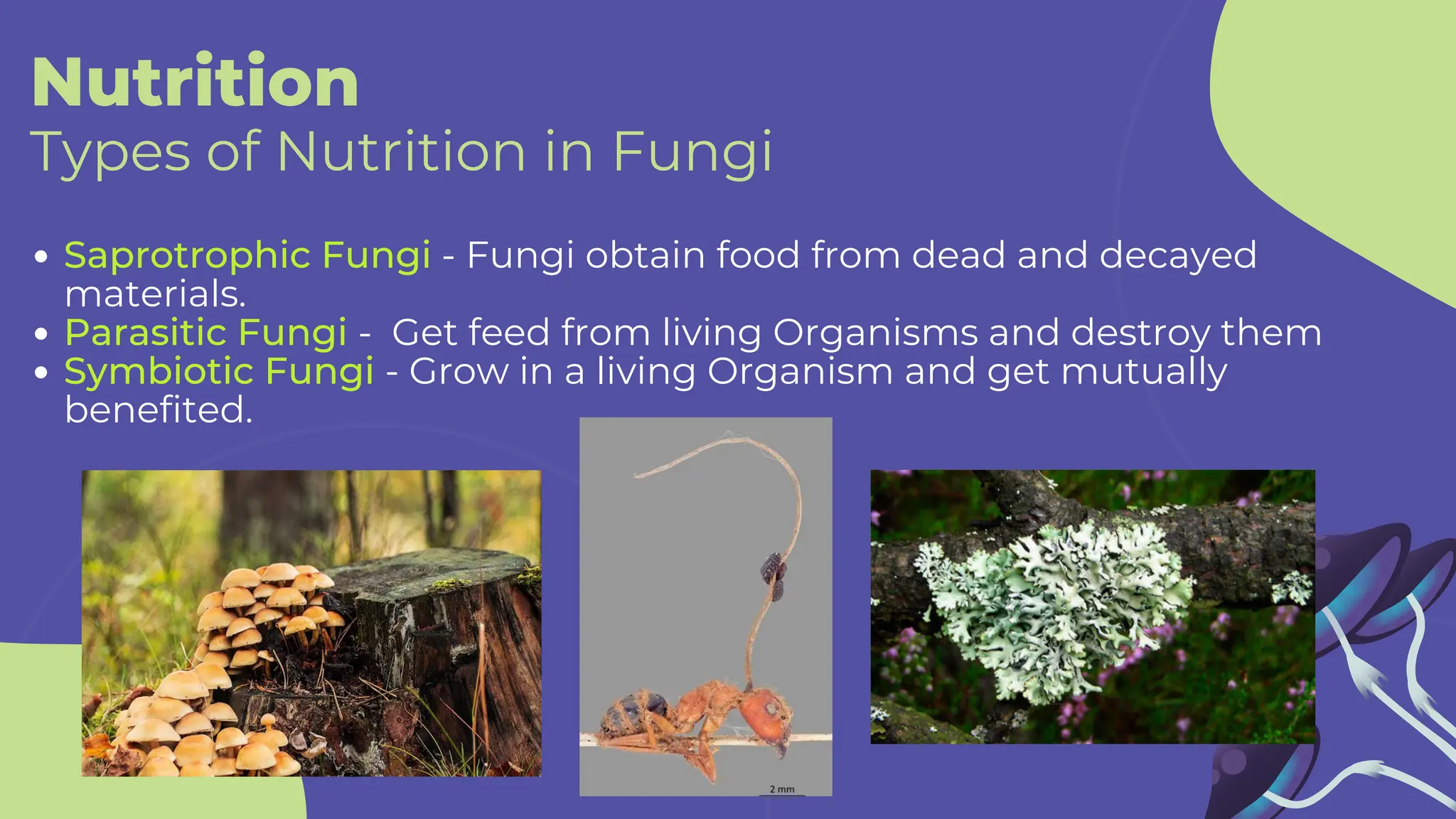
Saprotrophic Fungi - Fungi obtain food from dead and decayed
materials.
Parasitic Fungi - Get feed from living Organisms and destroy them
Symbiotic Fungi - Grow in a living Organism and get mutually
benefited.
16.
Distribution
of Fungi
The fungusoccurs in all possible habitats i.e. aquatic,
terrestrial (which grow in soil, on dead and decaying
material).
Some grow on plants and animals.
Fungi also present in the air.
In fungus chlorophyll are absent, so they depend on
other for food. That is why fungi may be saprophytes,
parasite or symbionts.
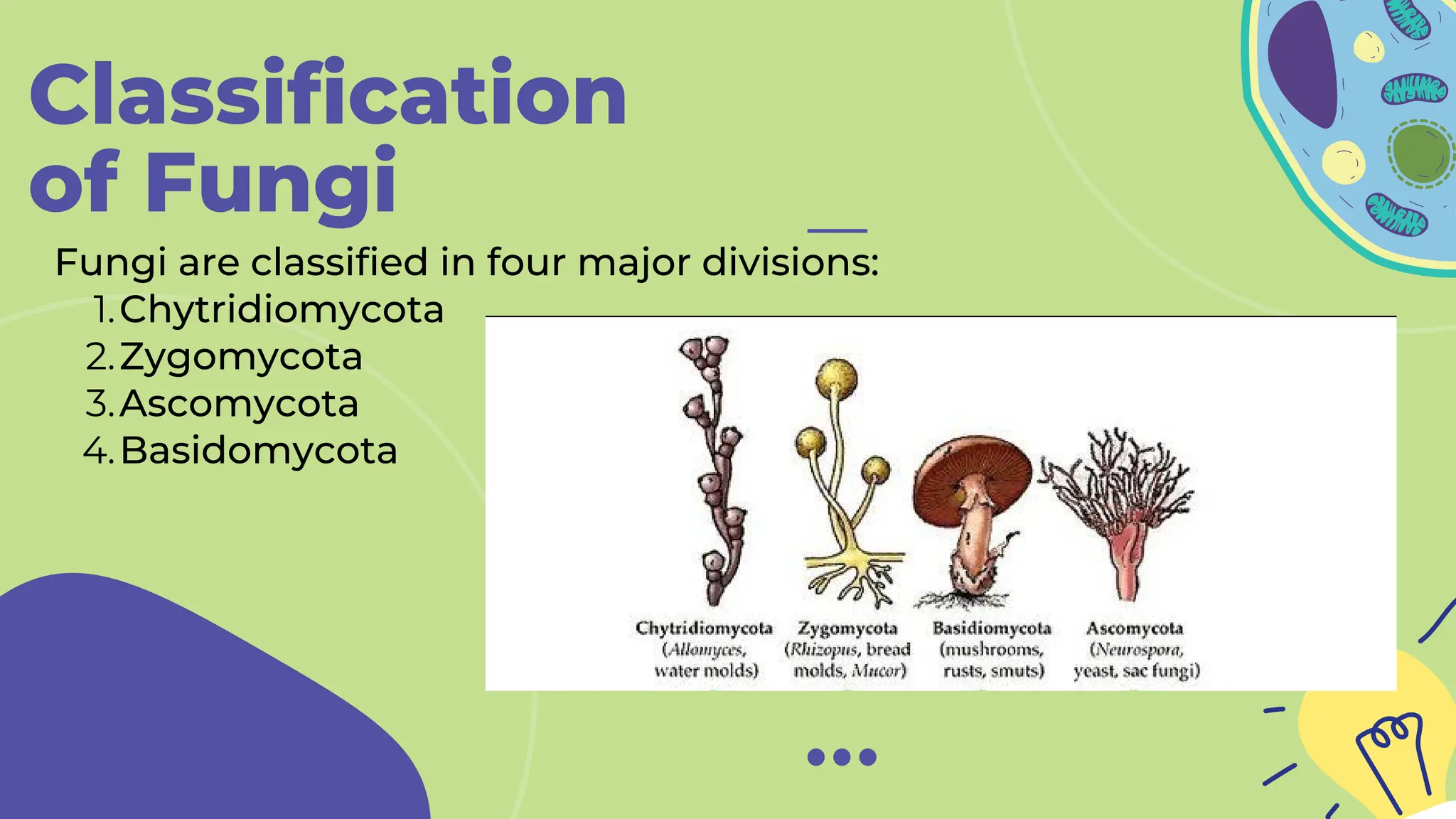
Classification of Fungi
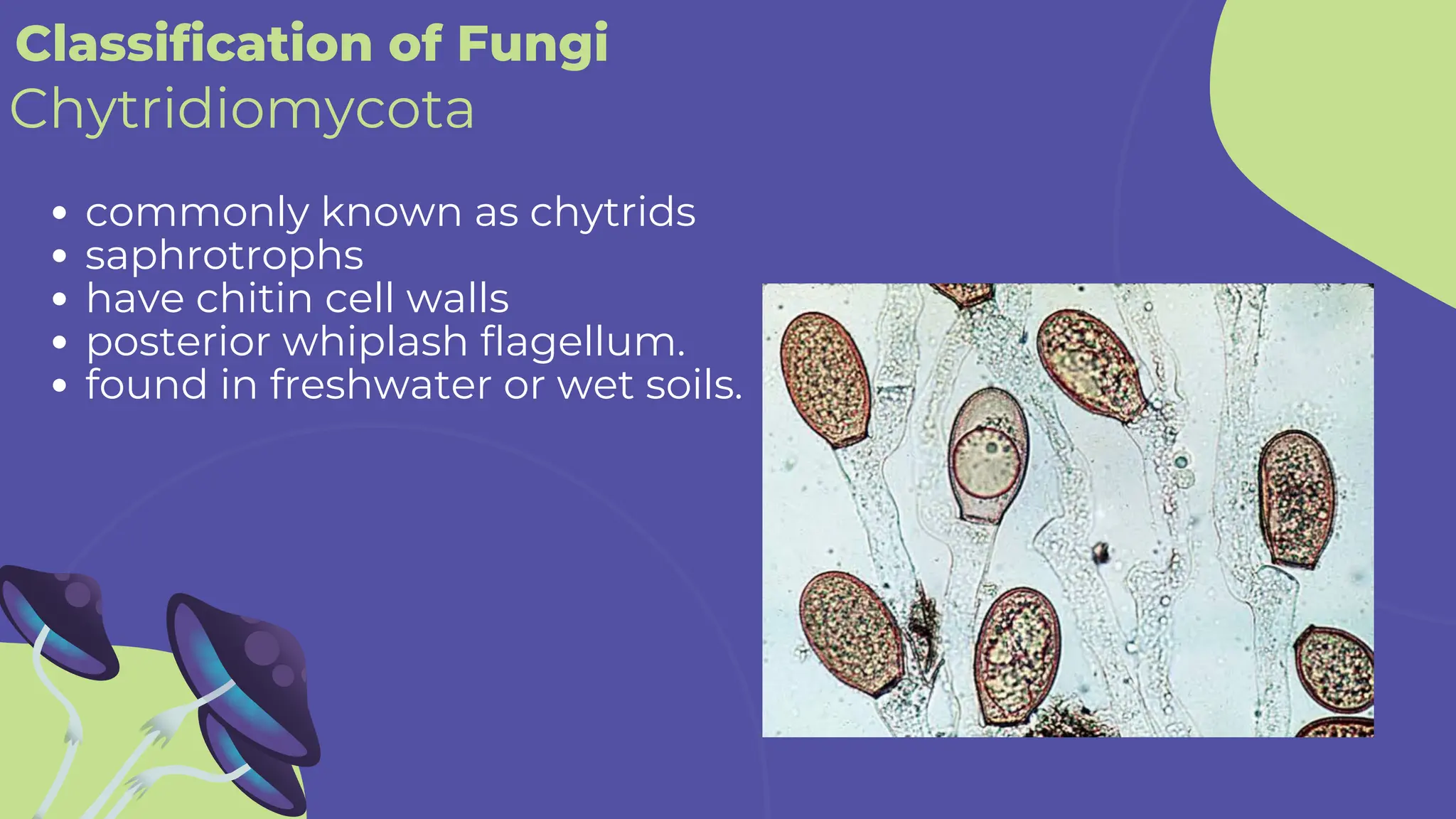
commonlyknown as chytrids
saphrotrophs
have chitin cell walls
posterior whiplash flagellum.
found in freshwater or wet soils.
Chytridiomycota
19.
Classification of Fungi
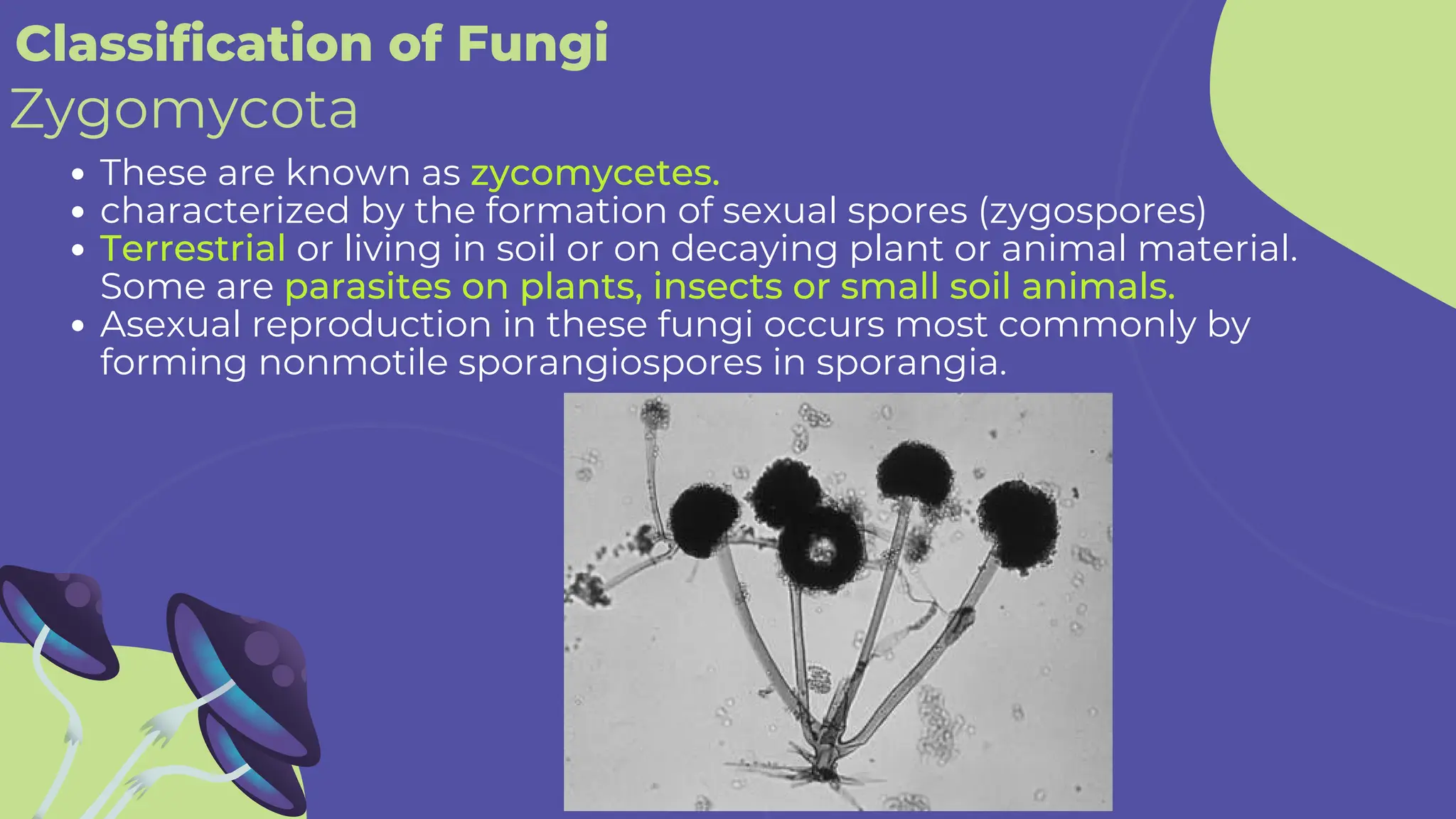
Theseare known as zycomycetes.
characterized by the formation of sexual spores (zygospores)
Terrestrial or living in soil or on decaying plant or animal material.
Some are parasites on plants, insects or small soil animals.
Asexual reproduction in these fungi occurs most commonly by
forming nonmotile sporangiospores in sporangia.
Zygomycota
20.
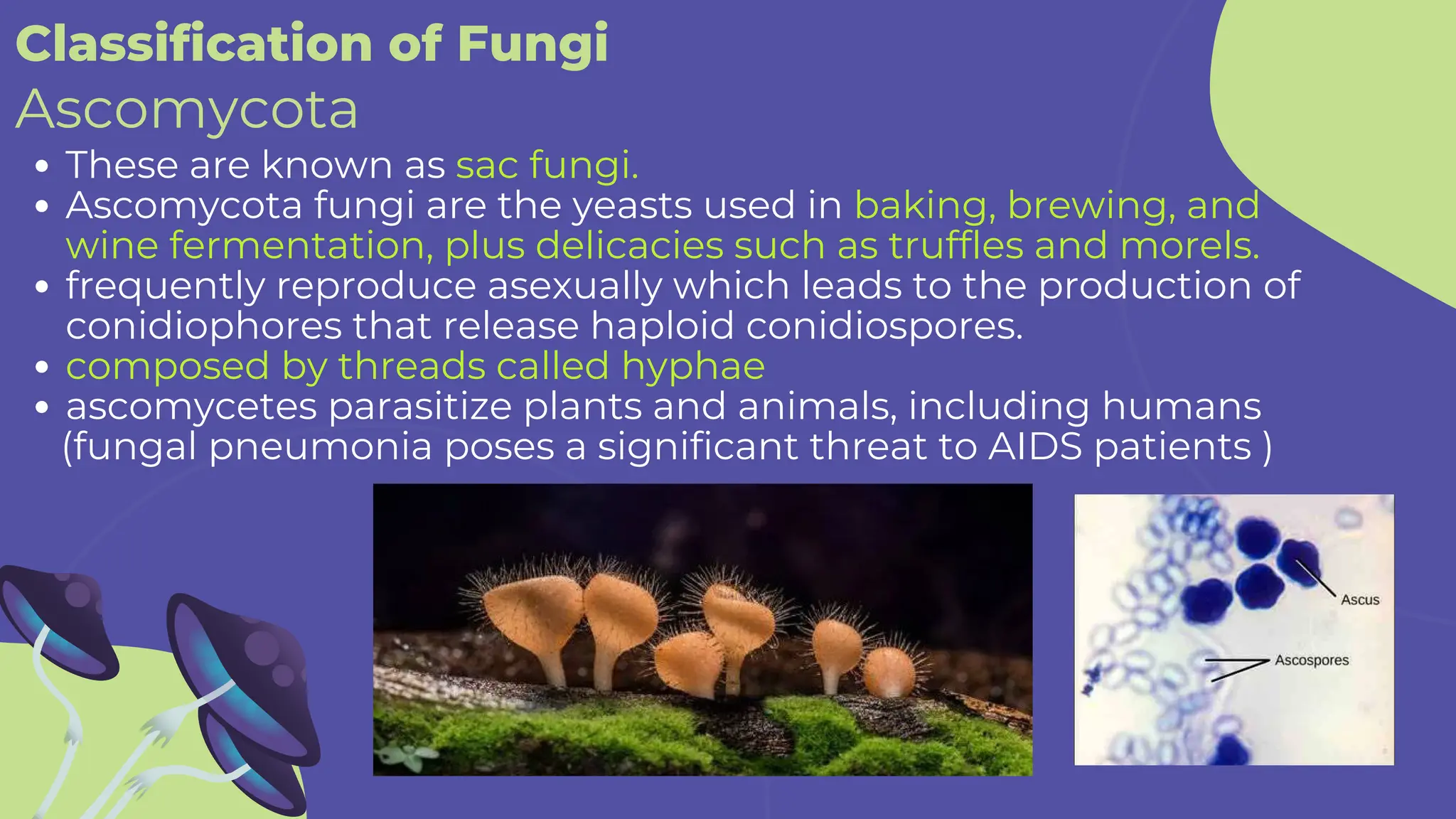
These are knownas sac fungi.
Ascomycota fungi are the yeasts used in baking, brewing, and
wine fermentation, plus delicacies such as truffles and morels.
frequently reproduce asexually which leads to the production of
conidiophores that release haploid conidiospores.
composed by threads called hyphae
ascomycetes parasitize plants and animals, including humans
(fungal pneumonia poses a significant threat to AIDS patients )
Classification of Fungi
Ascomycota
21.
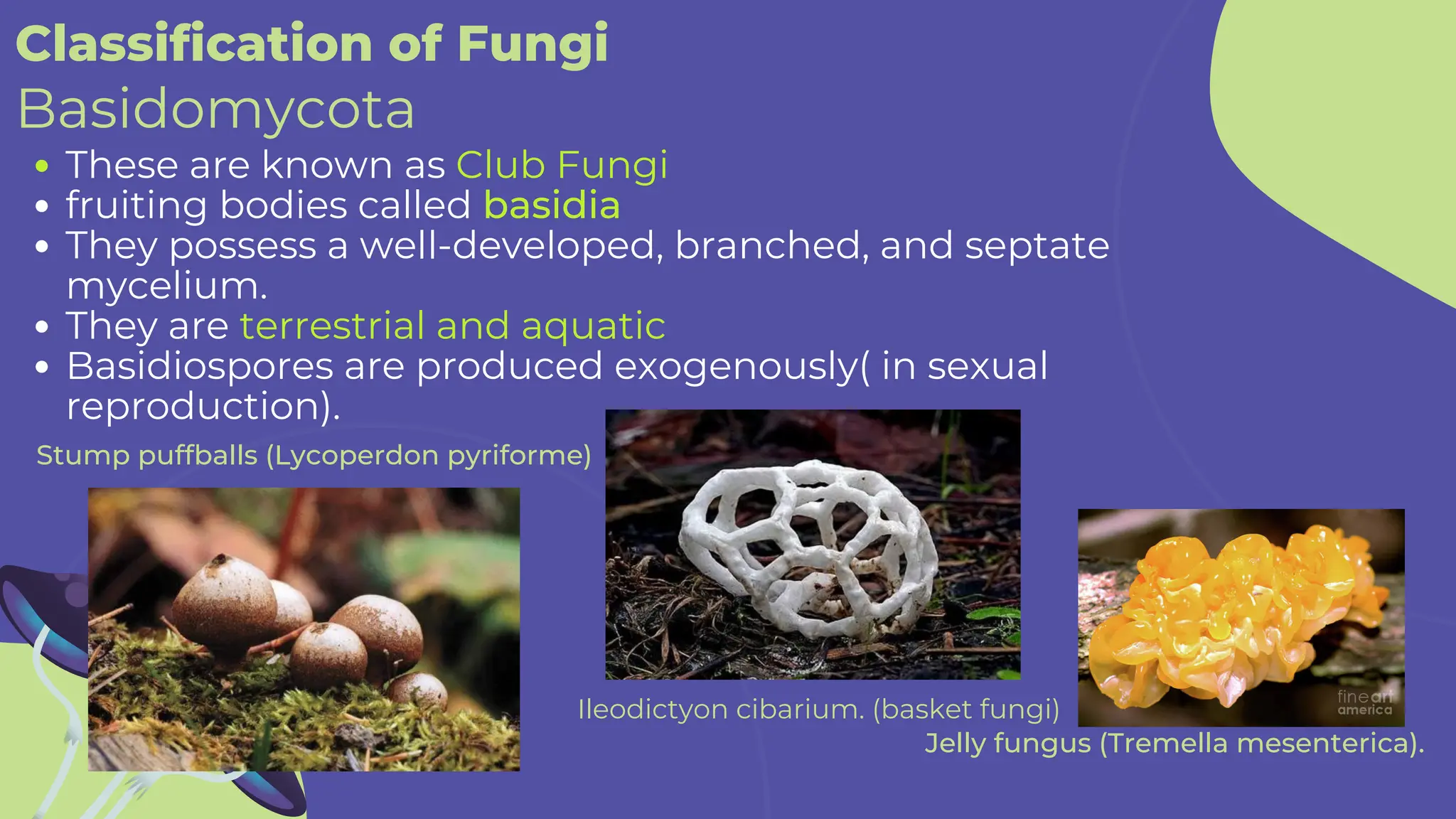
These are knownas Club Fungi
fruiting bodies called basidia
They possess a well-developed, branched, and septate
mycelium.
They are terrestrial and aquatic
Basidiospores are produced exogenously( in sexual
reproduction).
Classification of Fungi
Basidomycota
Ileodictyon cibarium. (basket fungi)
Jelly fungus (Tremella mesenterica).
Stump puffballs (Lycoperdon pyriforme)
22.
Reproduction
of Fungi
Fungi reproducesexually and/or asexually. Perfect fungi
reproduce both sexually and asexually, while Imperfect
fungi reproduce only asexually (by mitosis).
In both sexual and asexual reproduction, fungi produce
spores that disperse from the parent organism by either
floating on the wind or hitching a ride on an animal.
23.
Asexual
Reproduction
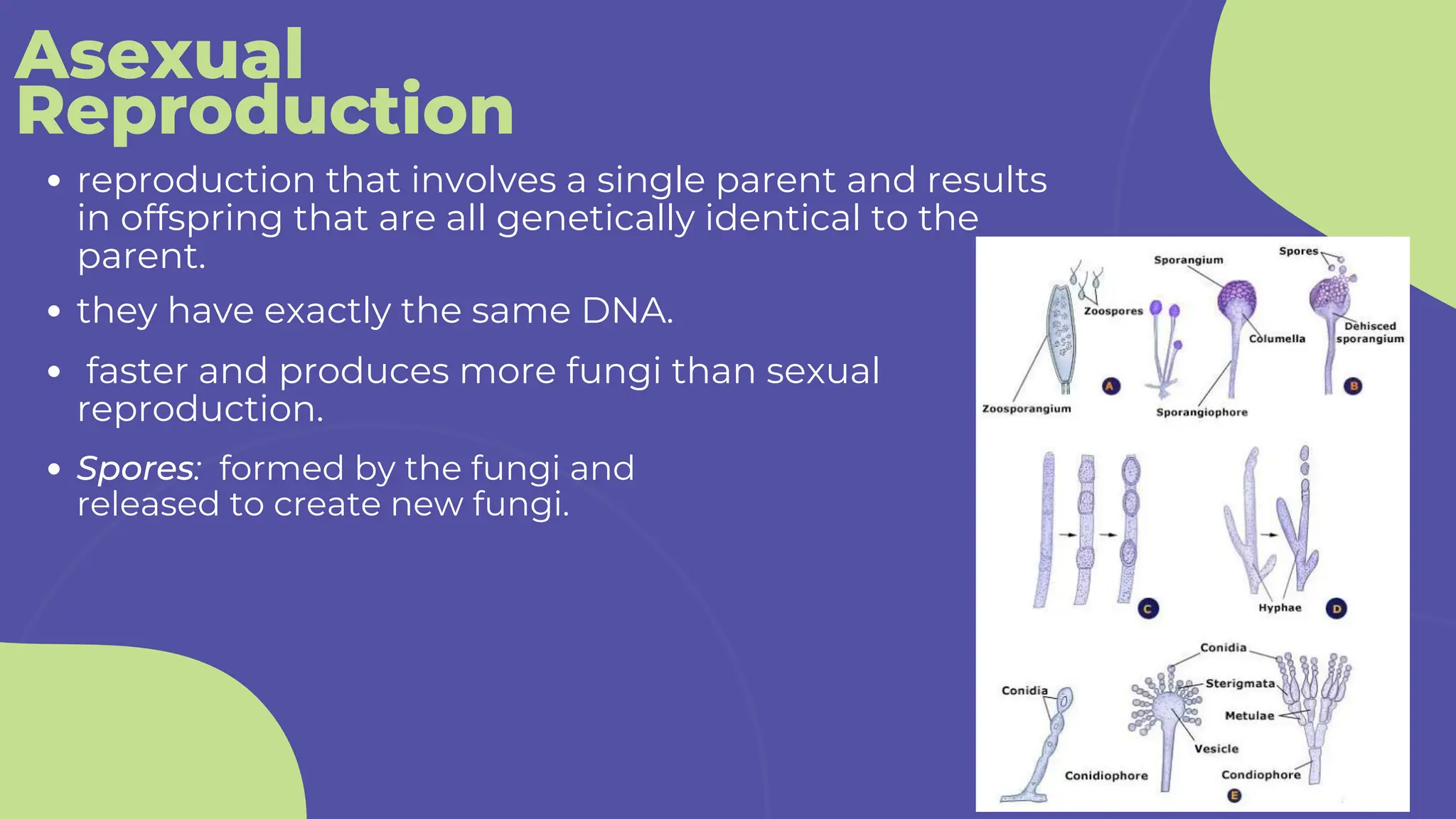
reproduction that involvesa single parent and results
in offspring that are all genetically identical to the
parent.
Spores: formed by the fungi and
released to create new fungi.
they have exactly the same DNA.
faster and produces more fungi than sexual
reproduction.
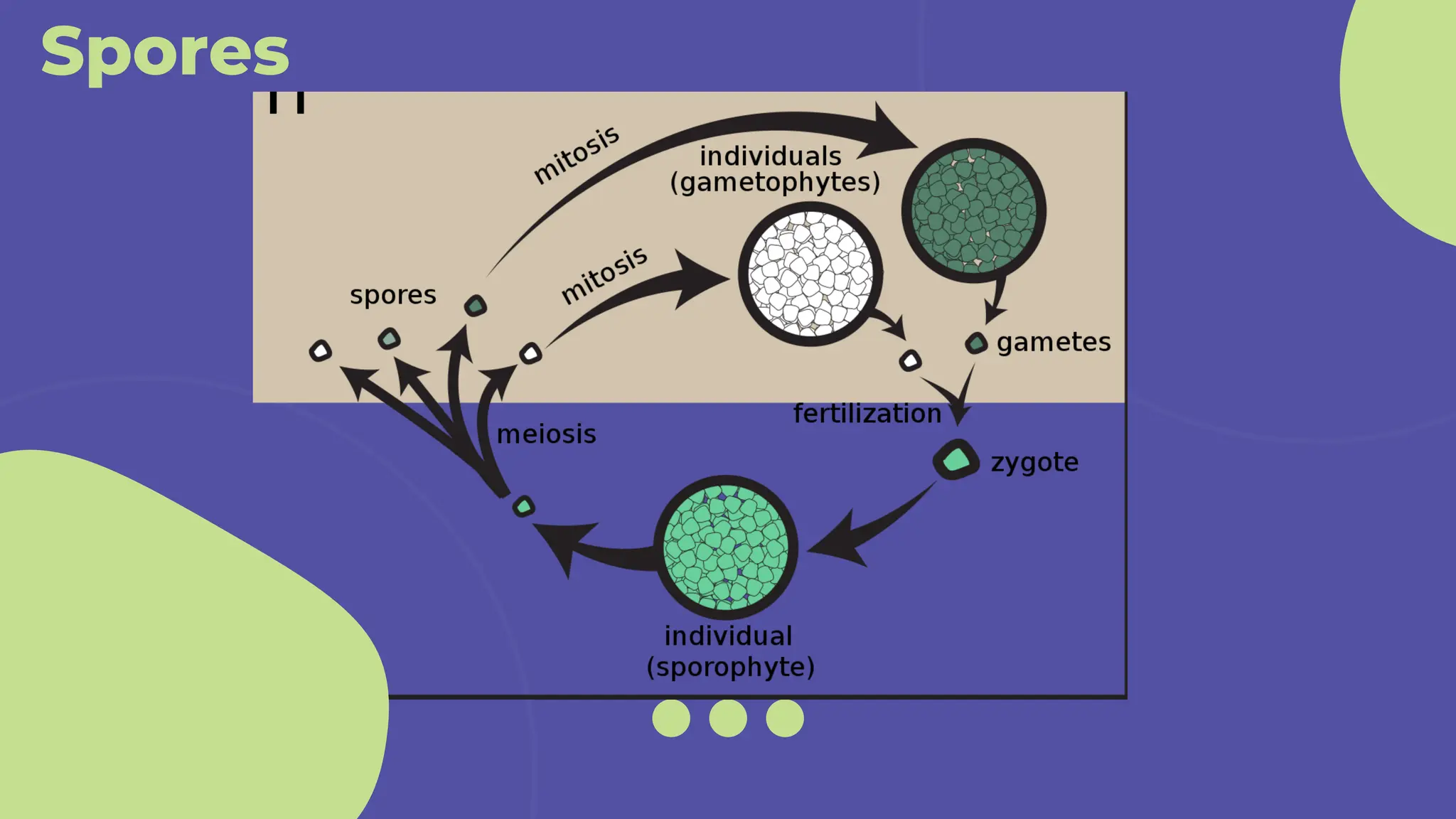
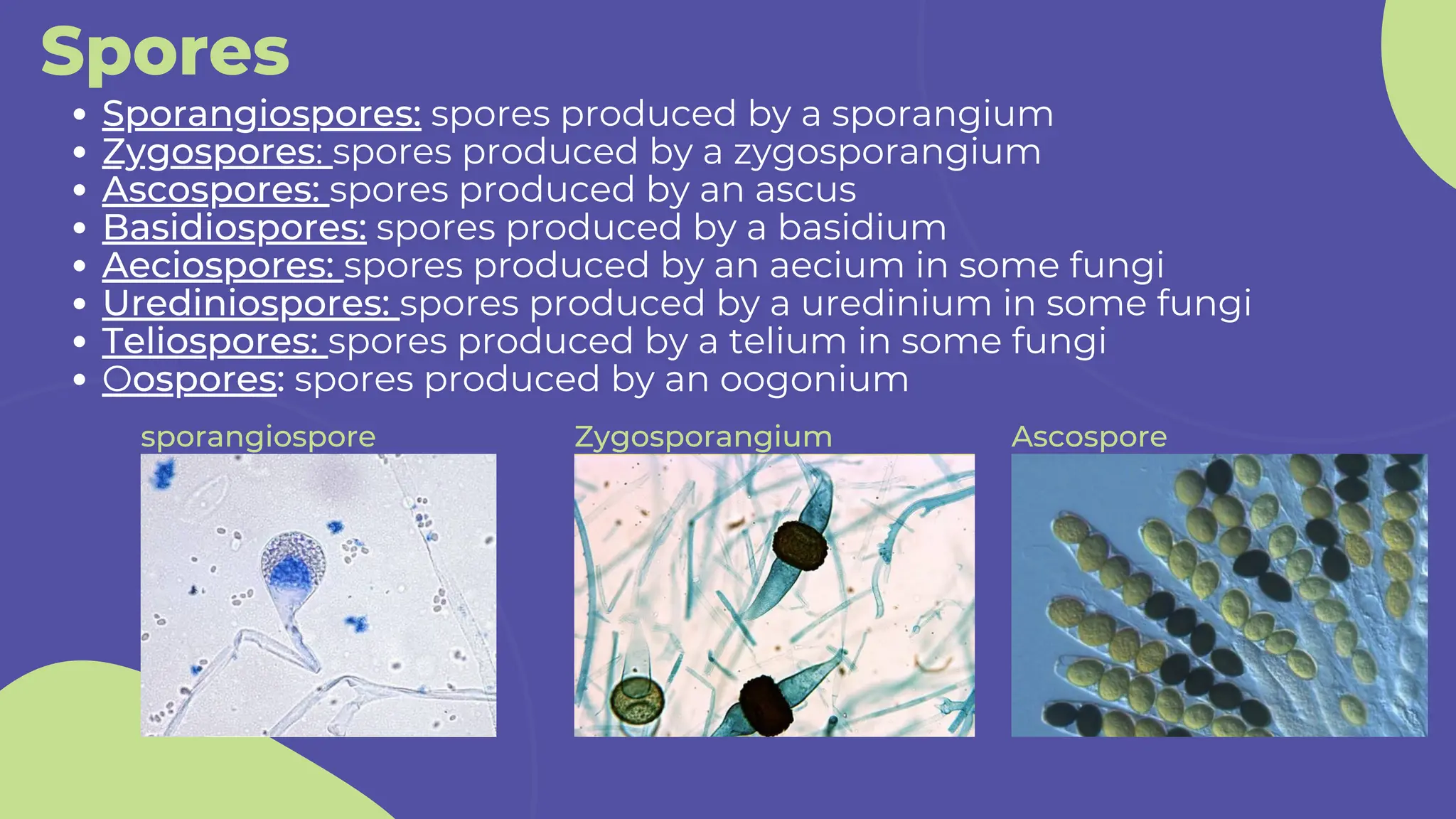
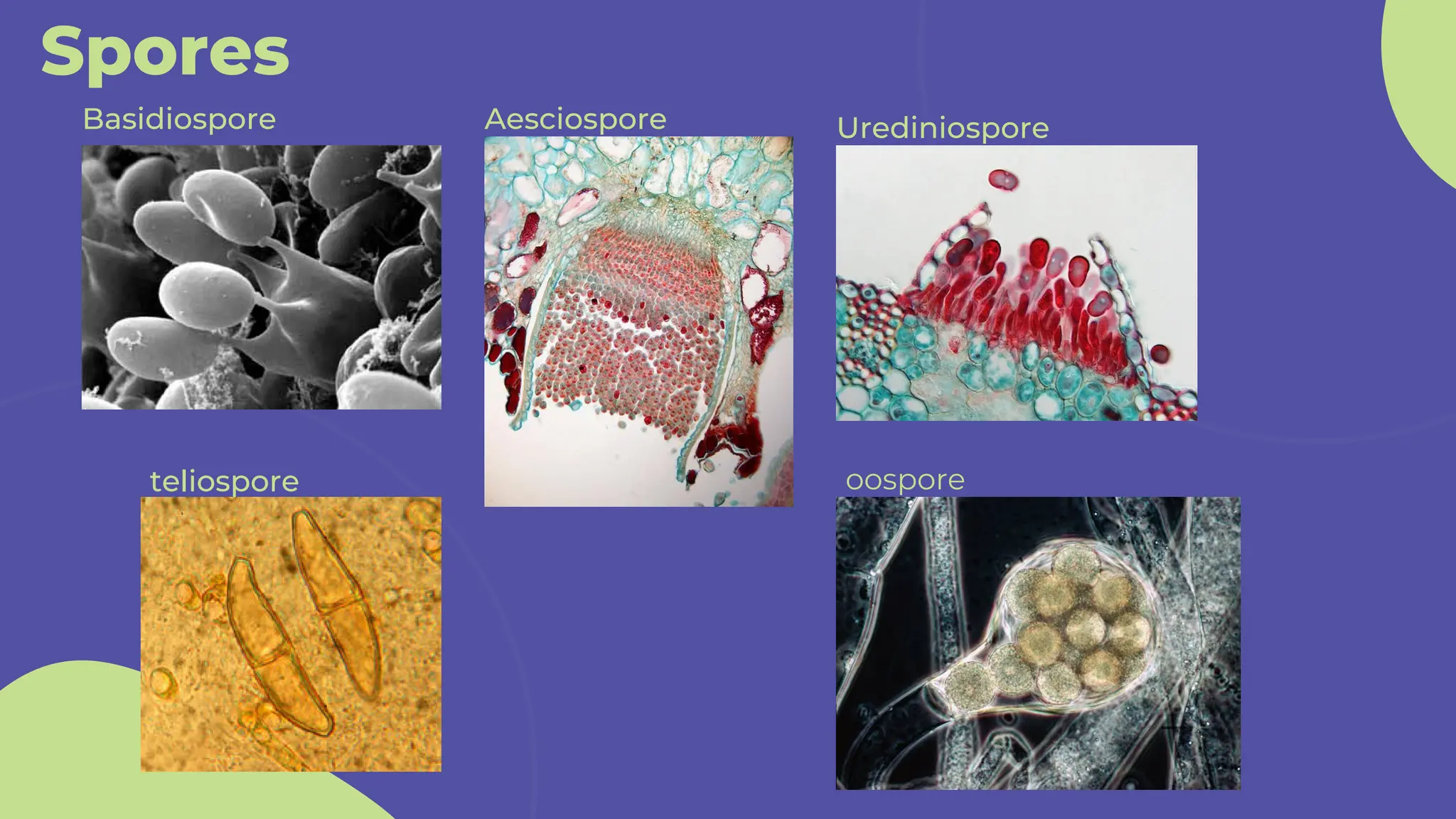
Spores
Sporangiospores: spores producedby a sporangium
Zygospores: spores produced by a zygosporangium
Ascospores: spores produced by an ascus
Basidiospores: spores produced by a basidium
Aeciospores: spores produced by an aecium in some fungi
Urediniospores: spores produced by a uredinium in some fungi
Teliospores: spores produced by a telium in some fungi
Oospores: spores produced by an oogonium
sporangiospore Zygosporangium Ascospore
Vagetative
Reproduction
in fungi mayoccur by the following methods:
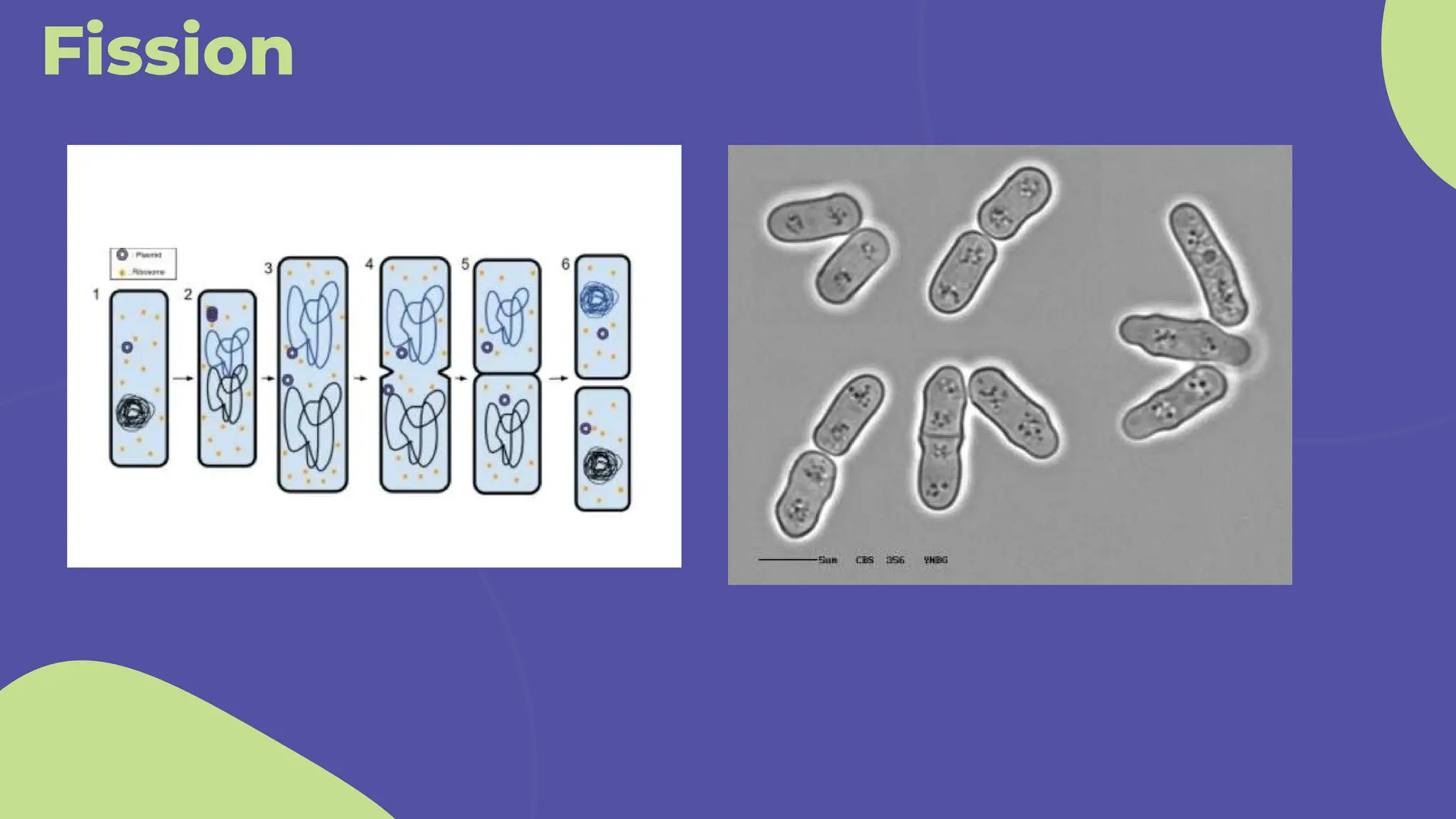
Fission: It is a method in which an organism divides into two or
more parts that grow to form new individualsi.
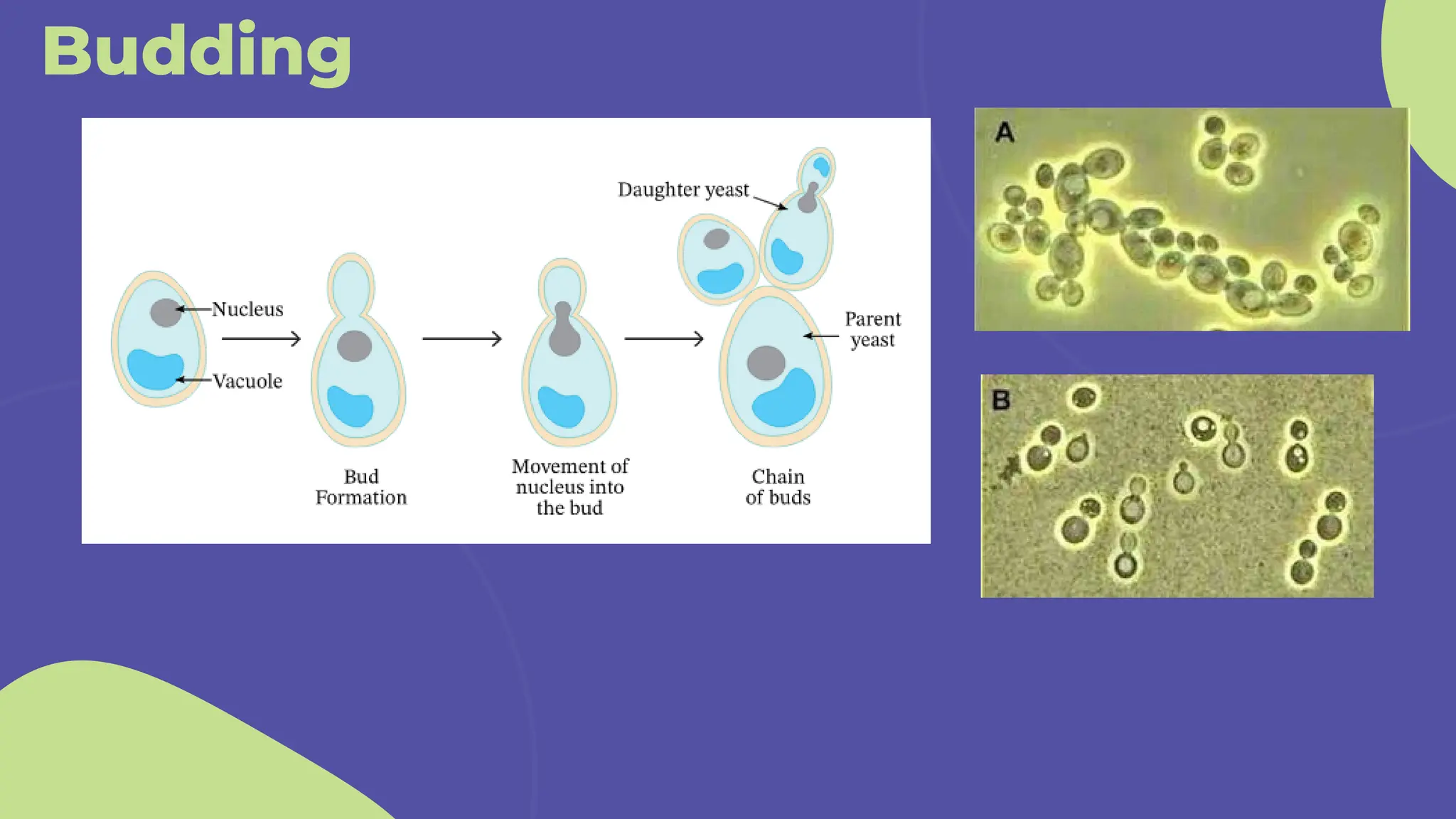
Budding: The fungus grows a new part of its body, which
eventually breaks off. The broken-off piece becomes a “new”
organism
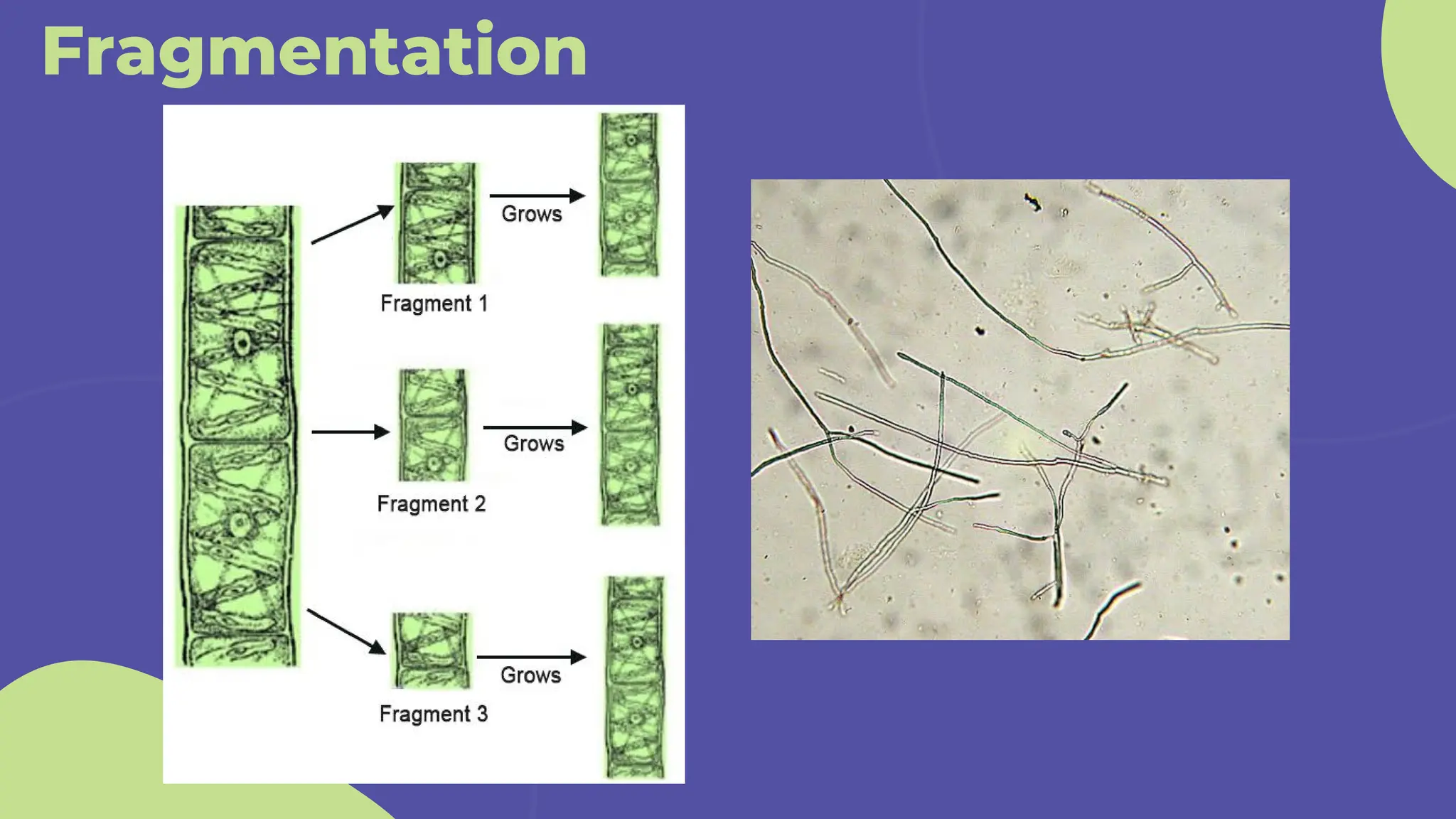
Fragmentation: In this method, a piece of the mycelium,
the body of the fungus, splits off. The resulting fragment
can eventually produce a new colony of fungi.
Sexual
Reproduction
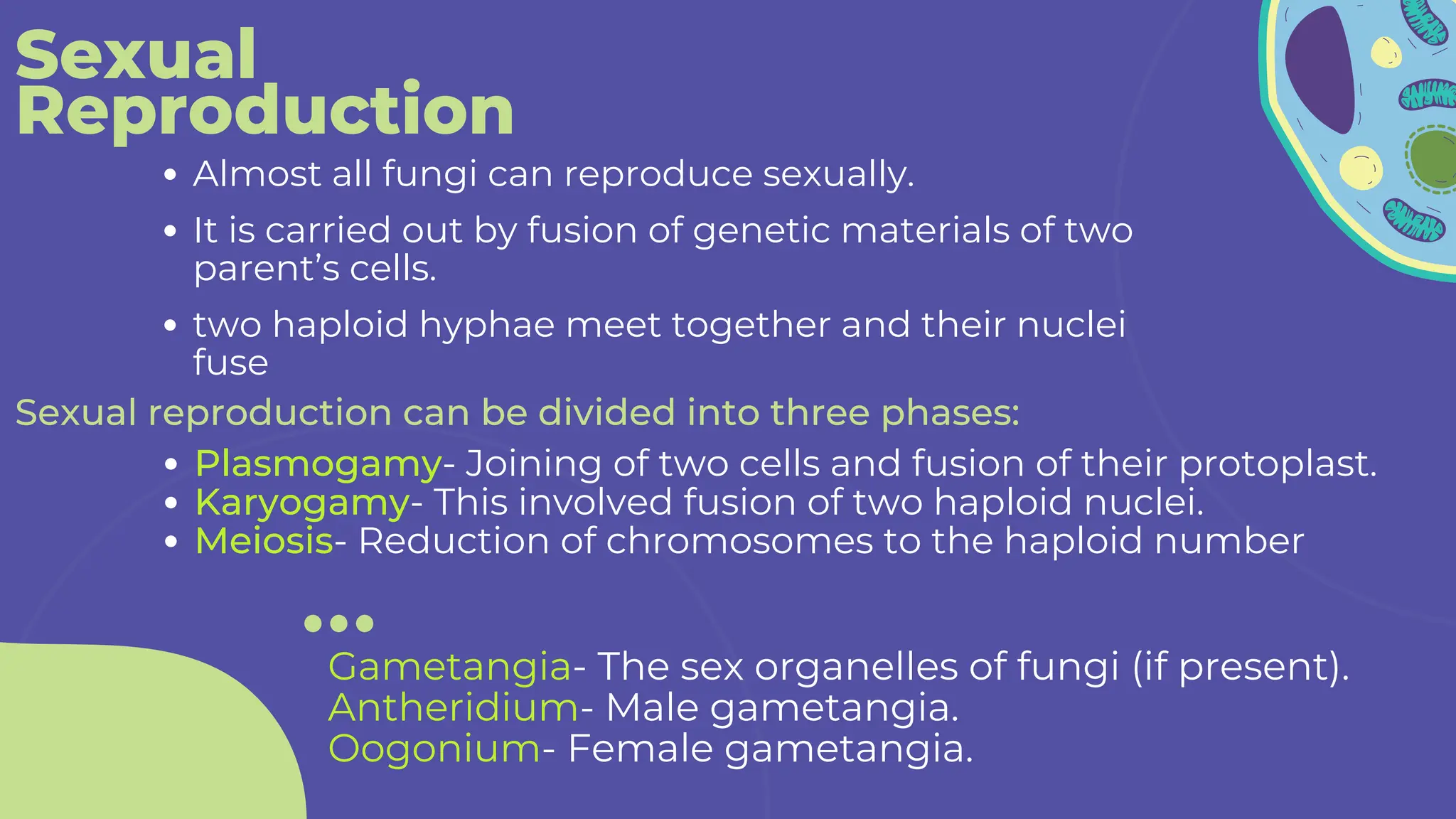
Almost all fungican reproduce sexually.
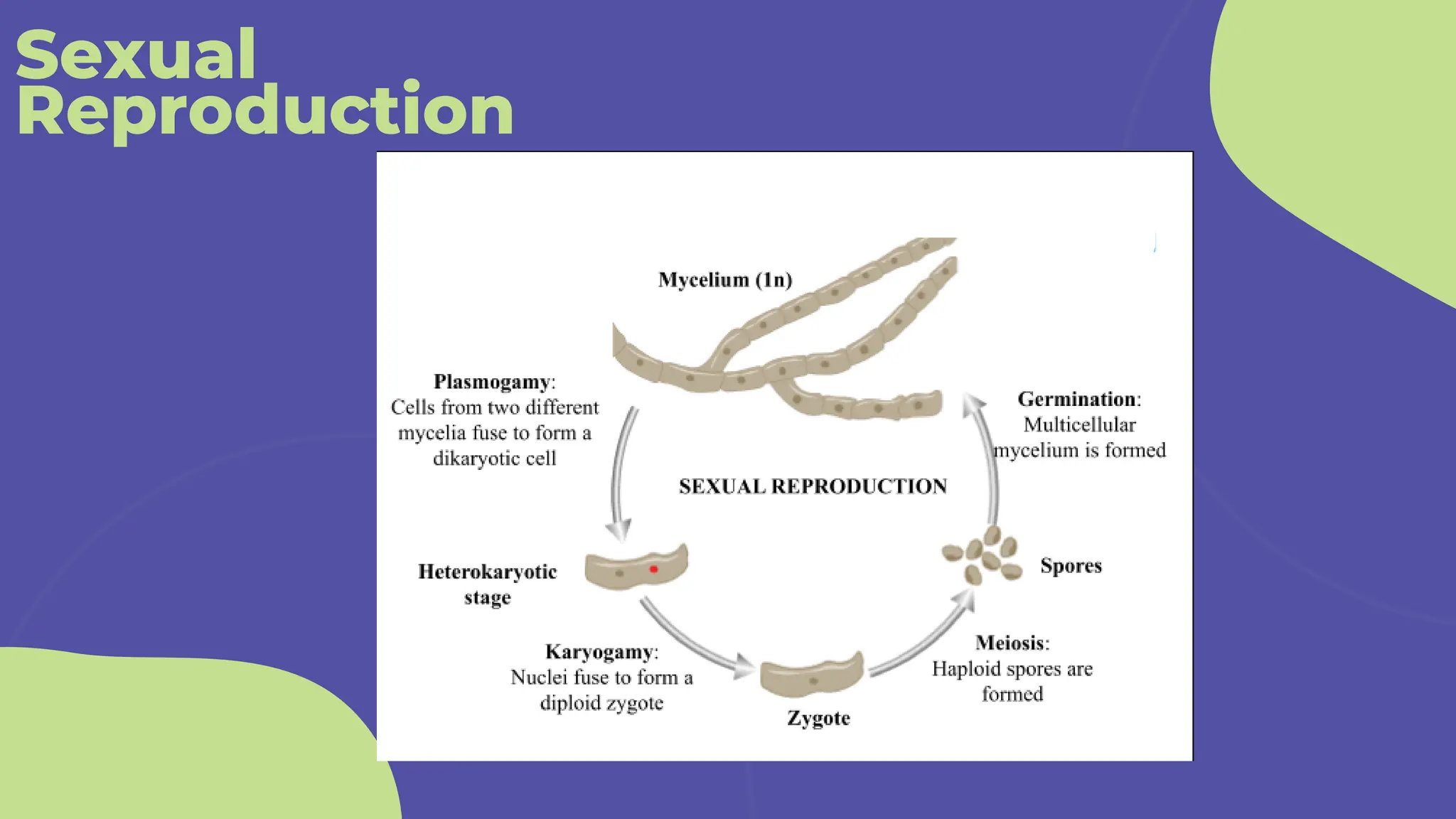
Sexual reproduction can be divided into three phases:
two haploid hyphae meet together and their nuclei
fuse
It is carried out by fusion of genetic materials of two
parent’s cells.
Plasmogamy- Joining of two cells and fusion of their protoplast.
Karyogamy- This involved fusion of two haploid nuclei.
Meiosis- Reduction of chromosomes to the haploid number
Gametangia- The sex organelles of fungi (if present).
Antheridium- Male gametangia.
Oogonium- Female gametangia.



![Fungi[1]](https://cdn.slidesharecdn.com/ss_thumbnails/fungi1-121031071432-phpapp02-thumbnail.jpg?width=640&height=640&fit=bounds)

![Fungi Project[1]](https://cdn.slidesharecdn.com/ss_thumbnails/fungiproject1-090519122520-phpapp01-thumbnail.jpg?width=640&height=640&fit=bounds)


